
Fox Terrier (Wire)
FOKS TER-ee-uhr WIRE
United Kingdom· Wales and the English Midlands
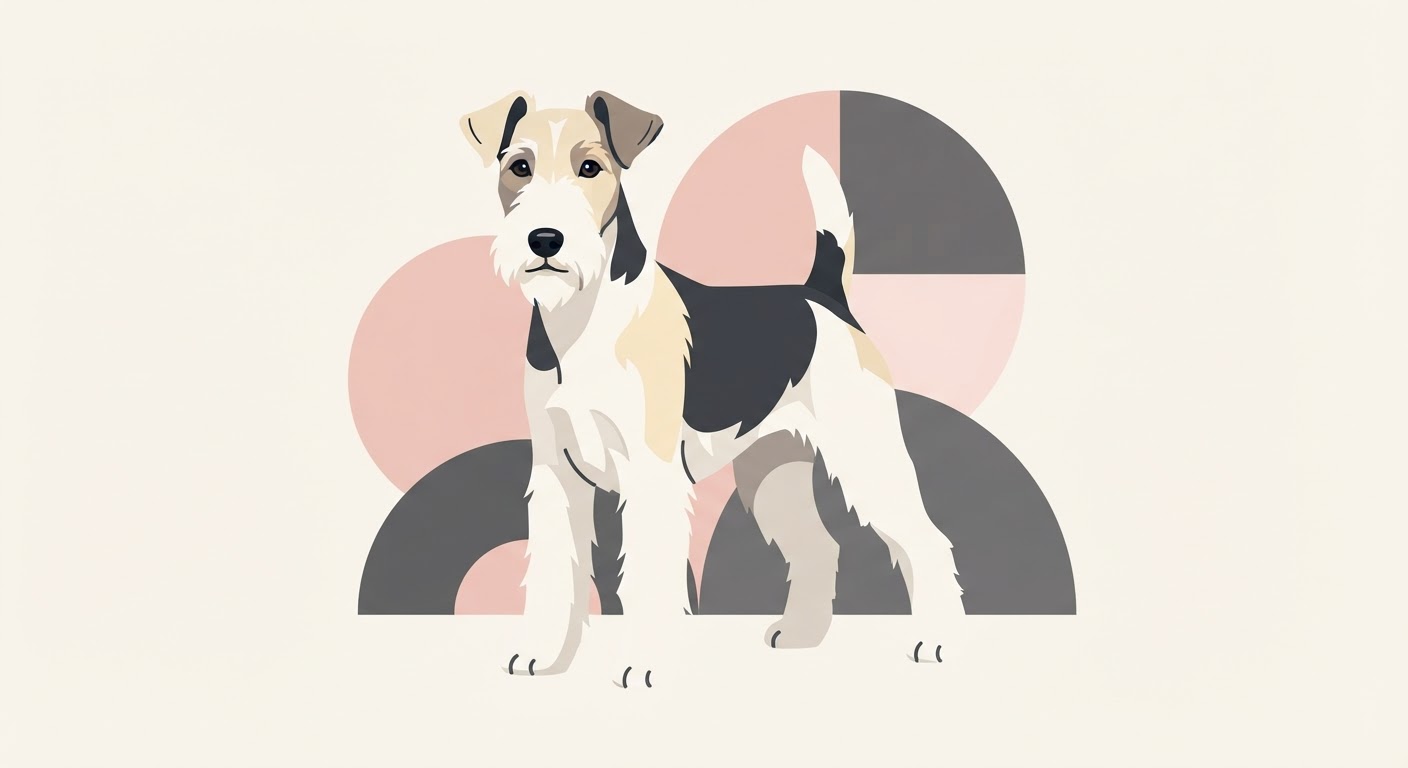
The Wire Fox Terrier is a rough-coated English terrier, near-identical in build and purpose to its smooth-coated cousin but carrying a dense, crinkly jacket that once gave better protection from bramble and bad weather in the field.
At a glance
Quick facts
Size
Small
Exercise needs
60 minutes daily
Home size suited to
Flat or small home
Grooming frequency
Weekly brush, hand-strip a few times a year
Coat length
Wiry
Sheds
Yes, heavily when moulting
Lifespan
12-15 years
Town or country
Either, with enough exercise
Garden size needed
Small garden or none
Where it comes from
Origins of the Fox Terrier (Wire)
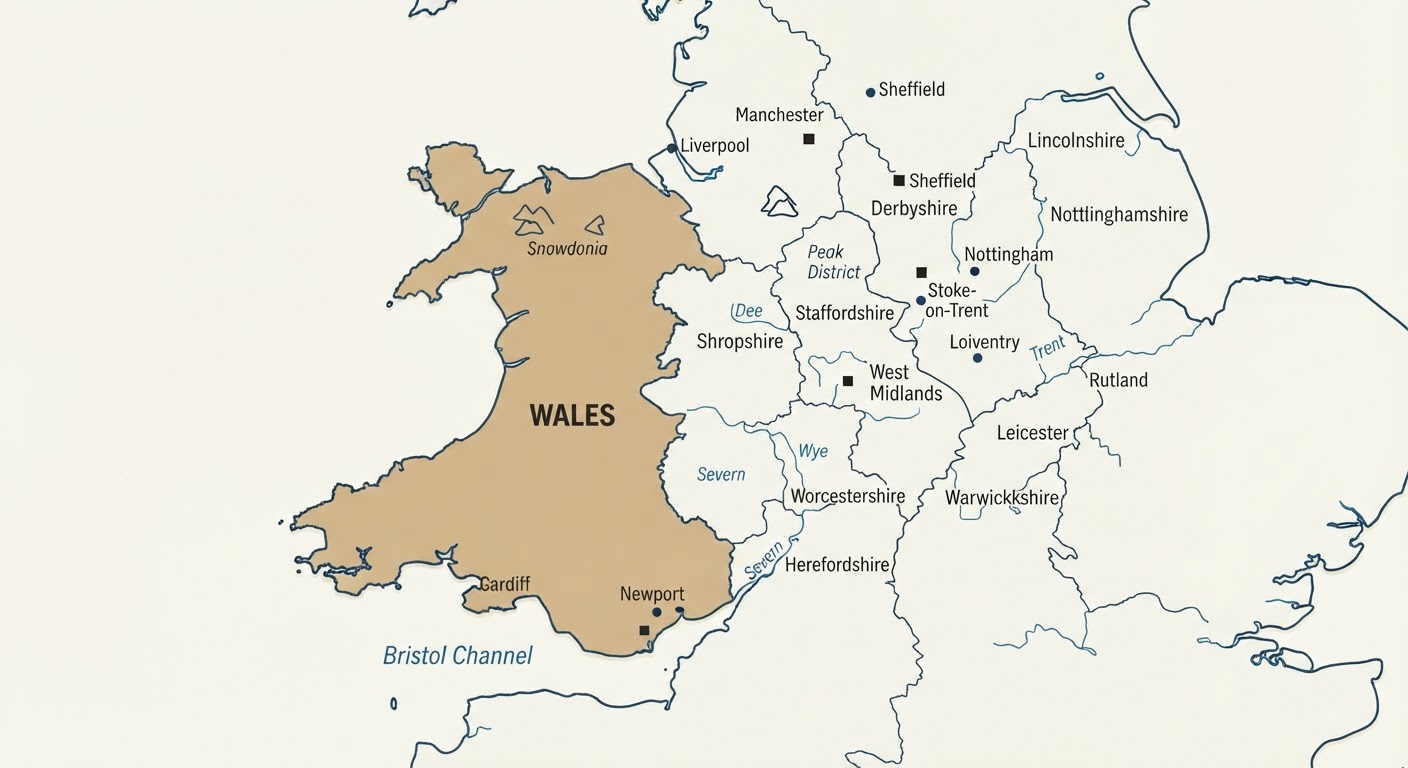
Developed from rough-coated terriers in Wales and the English Midlands, where a harsher coat gave better protection against thorny cover and cold, wet weather during a day's hunting.
- Region
- Wales and the English Midlands
- Climate it was bred for
- Temperate rural farmland
- Original job
- Bolting foxes from their earths
The long read
About the breed
Sharing the same origins as the Smooth Fox Terrier in nineteenth-century English foxhunting country, the Wire variety was developed from rough-coated terrier stock found in Wales, Derbyshire and Durham, and the two coat types were treated as one breed for decades before being formally separated. The Wire's harsh, wiry coat proved practical for a dog that spent time thrashing through undergrowth and squeezing into earths after foxes.
Living with a Wire Fox Terrier means living with an alert, high-spirited, and confident dog that carries the same strong prey drive and independent streak as the Smooth. They are cheerful companions but need consistent training and plenty of exercise to avoid boredom-driven digging or escaping. The wiry coat does not shed much but needs hand-stripping two or three times a year to keep its harsh texture, or clipping if a pet trim is acceptable, which softens the coat over time.
Today the Wire Fox Terrier is a familiar sight in the show ring, having produced more Best in Show winners at Crufts and Westminster than almost any other breed, and it remains a popular, characterful family companion for owners ready to match its energy and grooming needs.
Living with one
Temperament & needs
Our own ratings, based on the breed standard and how these dogs behave in ordinary homes.
Friendliness
3/5
How openly the Fox Terrier (Wire) greets people it does not know.
Trainability
3/5
Clever but headstrong, benefits from experienced handling.
Energy
5/5
Lively and active, needs a proper daily outlet.
Barking
4/5
Alert and quick to bark at anything unusual.
Grooming
4/5
Wiry coat needs hand-stripping a few times a year.
Suits a first-time owner
2/5
How forgiving the Fox Terrier (Wire) is for someone taking on their first dog.
Sociability
3/5
Confident and friendly with people, can be feisty with other dogs.
Independence
4/5
Bred to hunt alone underground, retains a strong independent streak.
Illustrated breed standard
The points of the breed
Hover or tap a numbered point to read what the standard asks for.
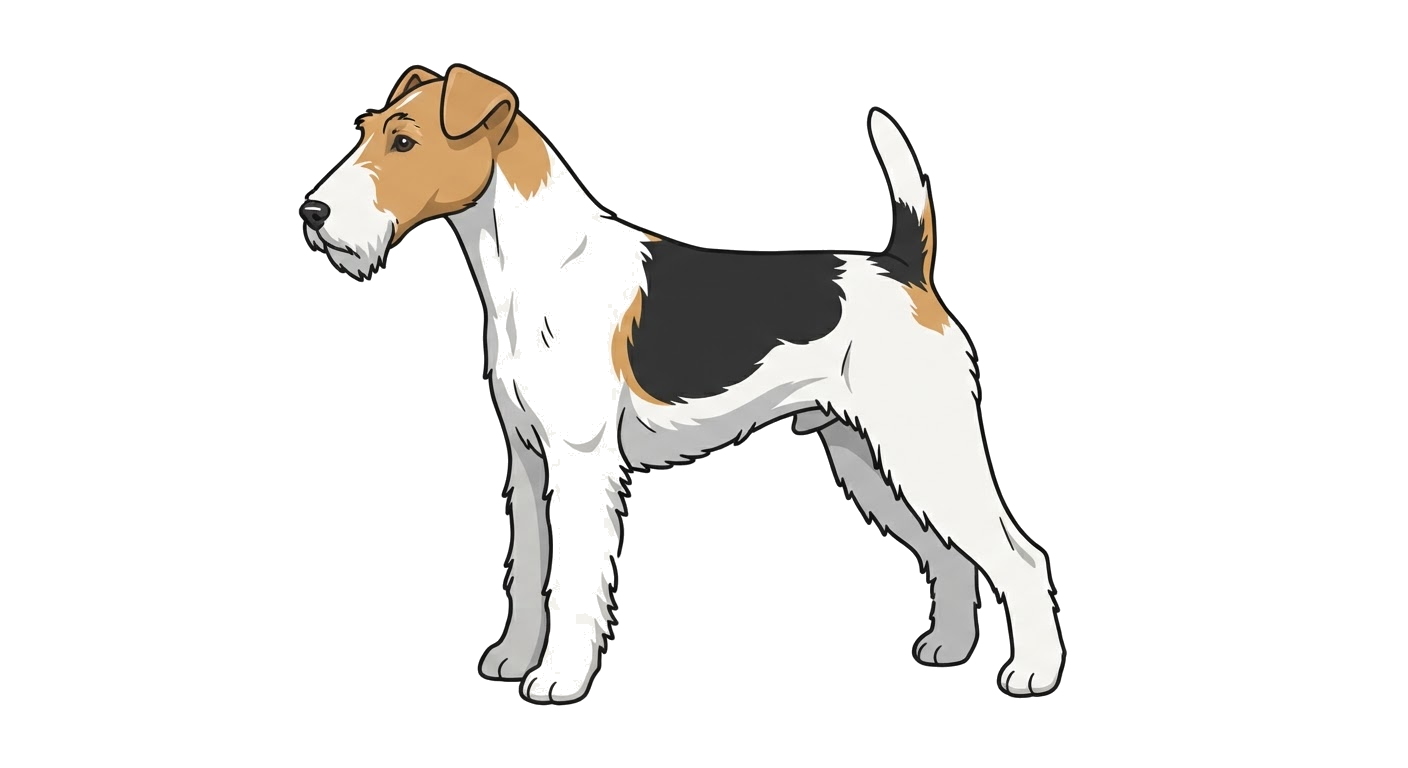
Point 1
Skull
The Fox Terrier (Wire)'s skull is judged on balance rather than size — proportionate to the body, with a clean cheek and a stop typical of the breed. Coarseness or an over-refined head are both faulted.
Colours & patterns
Recognised coats
Which coats the standard accepts — and which are simply popular.
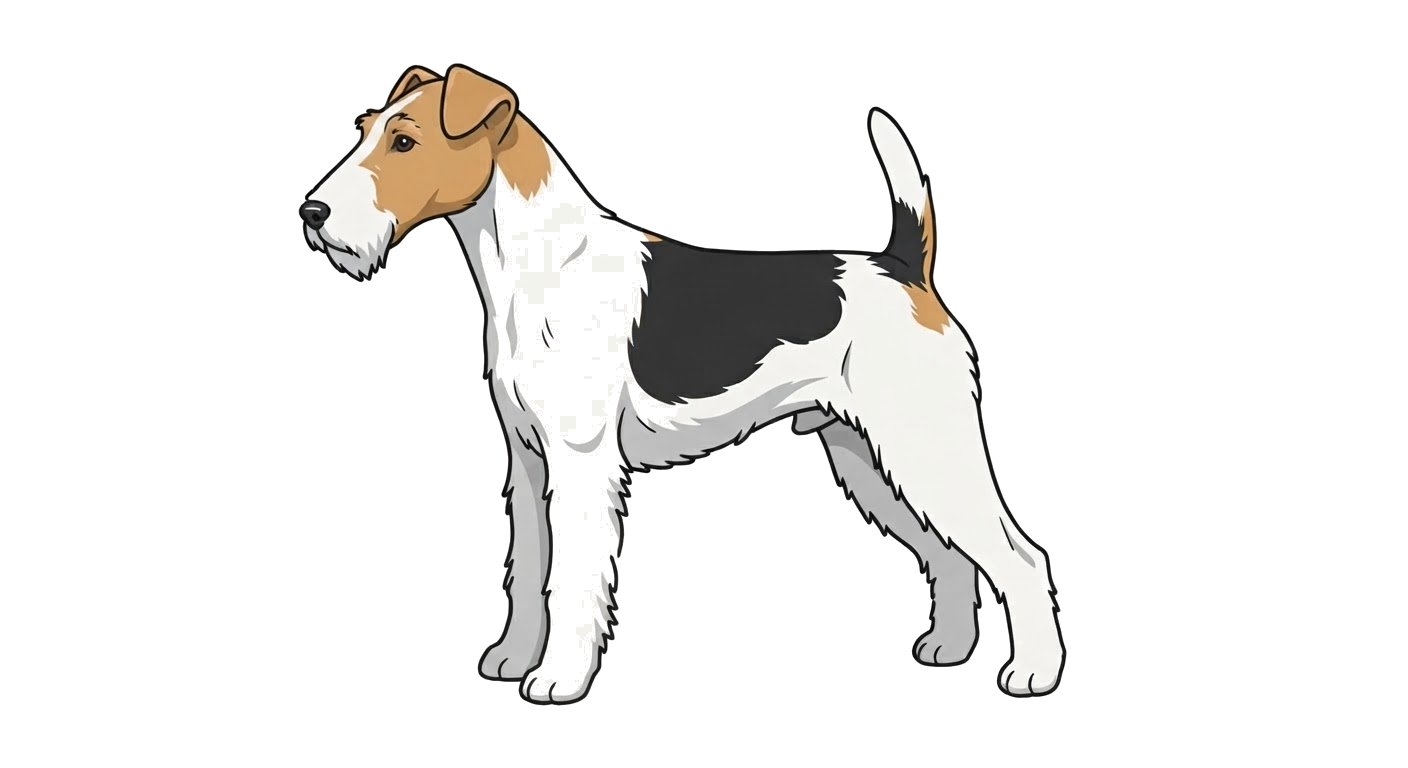
White, black and tan
Standard colour
The most common tricolour pattern.
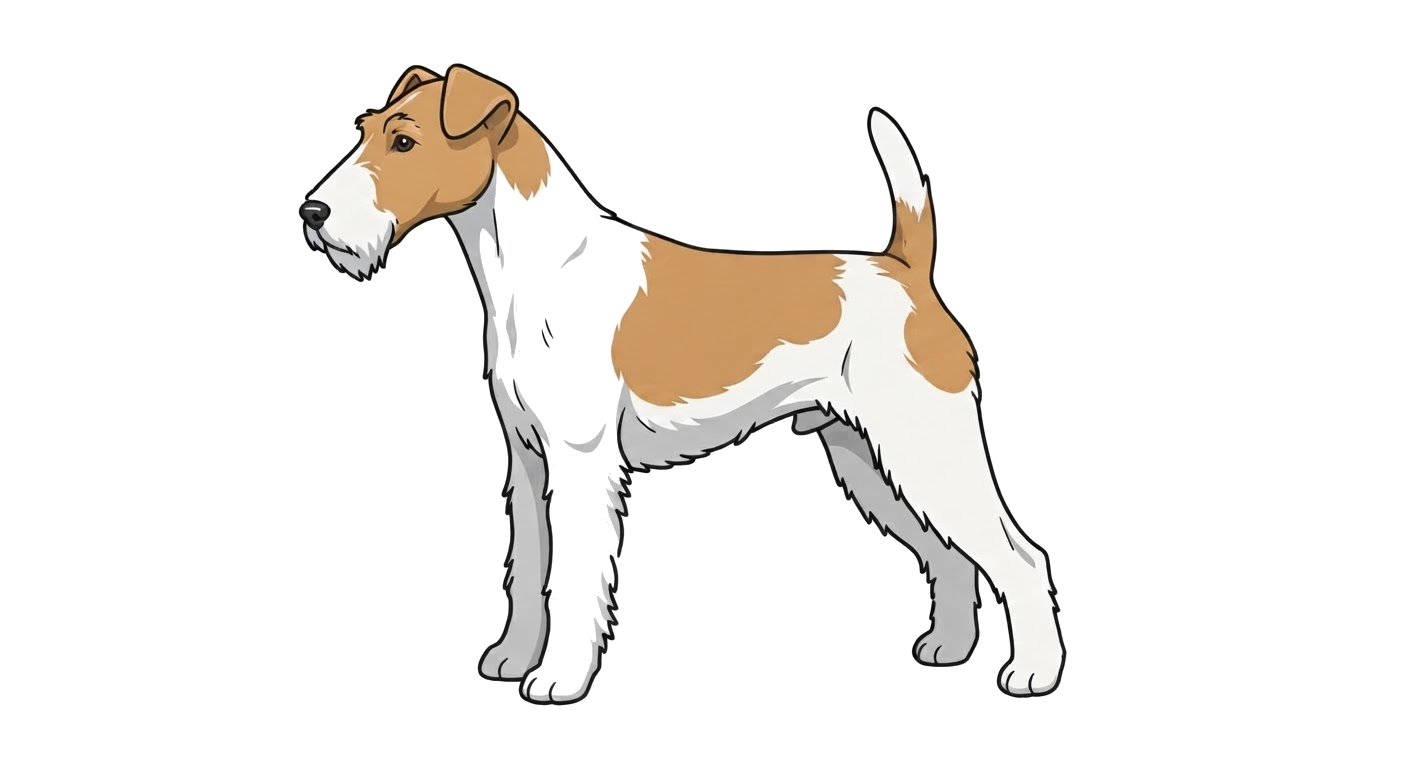
White and tan
Standard colour
White base with tan patches, no black present.
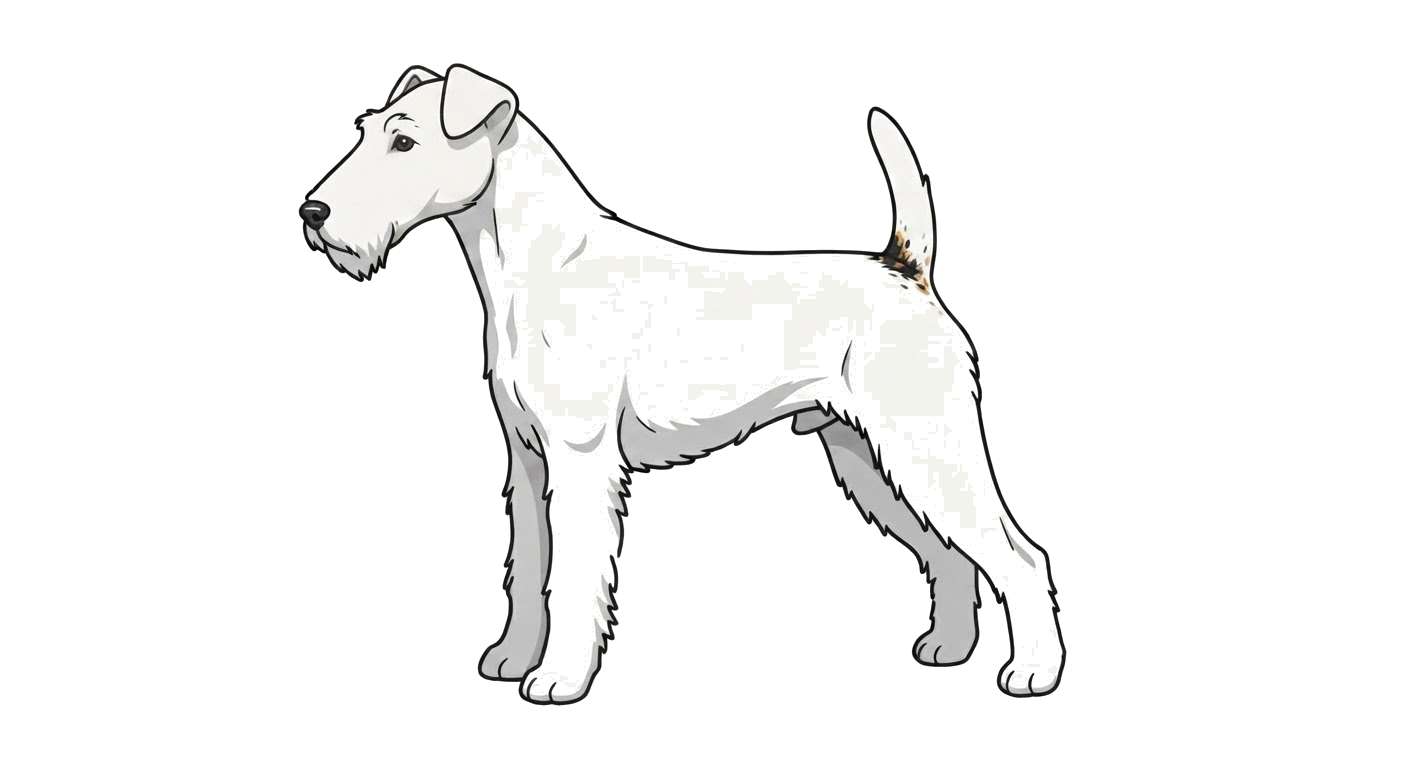
Predominantly white
Standard colour
White must always predominate in the standard.
Timeline
History & development
1800s
Rough-coated terriers
Wire-coated terriers used for fox bolting are recorded in Wales and Derbyshire.
1876
Shared breed club
Smooth and Wire varieties are governed by a single Fox Terrier Club and standard.
1915
Rising popularity
The Wire Fox Terrier becomes especially fashionable as a companion breed.
1985
Formal separation
The Kennel Club recognises Wire and Smooth Fox Terriers as fully distinct breeds.
Reference
Breed standard summary
- body
- Short-coupled, deep chest
- coat
- Dense, wiry, twisted texture
- ears
- V-shaped, folded forward
- eyes
- Dark, small, keen expression
- gait
- Free, straight, driving movement
- head
- Flat skull, jaws powerful
- size
- Small · 36-39cm · 7-8kg
- tail
- Set high, carried erect
- colour
- White, black and tan, White and tan, Predominantly white. Colours outside this list are seen but are not accepted by the kennel clubs.
- temperament
- Typical of the breed: strongest in energy, independence, barking. Nervousness or aggression are serious faults in the show ring and in the home.
- general appearance
- Compact, balanced, alert terrier
Health
What to screen for
Green means little to worry about, amber means ask the breeder for test results, red means manage it actively.
Lens luxation
Watch closely
DNA testing for the ADAMTS17 gene is recommended before breeding.
Patellar luxation
Screen for it
Vets check knee stability at routine exams.
Deafness
Watch closely
BAER testing is worth asking about given the predominantly white coat.
Distichiasis
Low concern
Occasional eye irritation from misplaced eyelashes.
General information only — always speak to your vet about your own dog.
From real owners
Dogs like this
Fox Terrier (Wire)s added by PawPoint members through their pet passports. Share yours to appear here.
Loading the wall…
Made for the Fox Terrier (Wire)
The book, plus prints, hoodies and mugs using our own Fox Terrier (Wire) illustration — and one everyday accessory that suits any dog.

The book
Pawpoint: The Complete Dog Breed Book
Every officially recognised breed plus the unofficial ones nobody else documents. 400+ pages, hardback, printed and shipped from the UK.
Own stock — shipped by us
Framed poster
Fox Terrier (Wire) Framed Poster
Museum-weight print of our Fox Terrier (Wire) illustration, framed or unframed.
Printed to order
Hoodie
Fox Terrier (Wire) Hoodie
Heavyweight hoodie carrying the Fox Terrier (Wire) illustration on the chest.
Printed to order
Mug
Fox Terrier (Wire) Mug
Ceramic mug with the Fox Terrier (Wire) illustration wrapped around it.
Printed to order
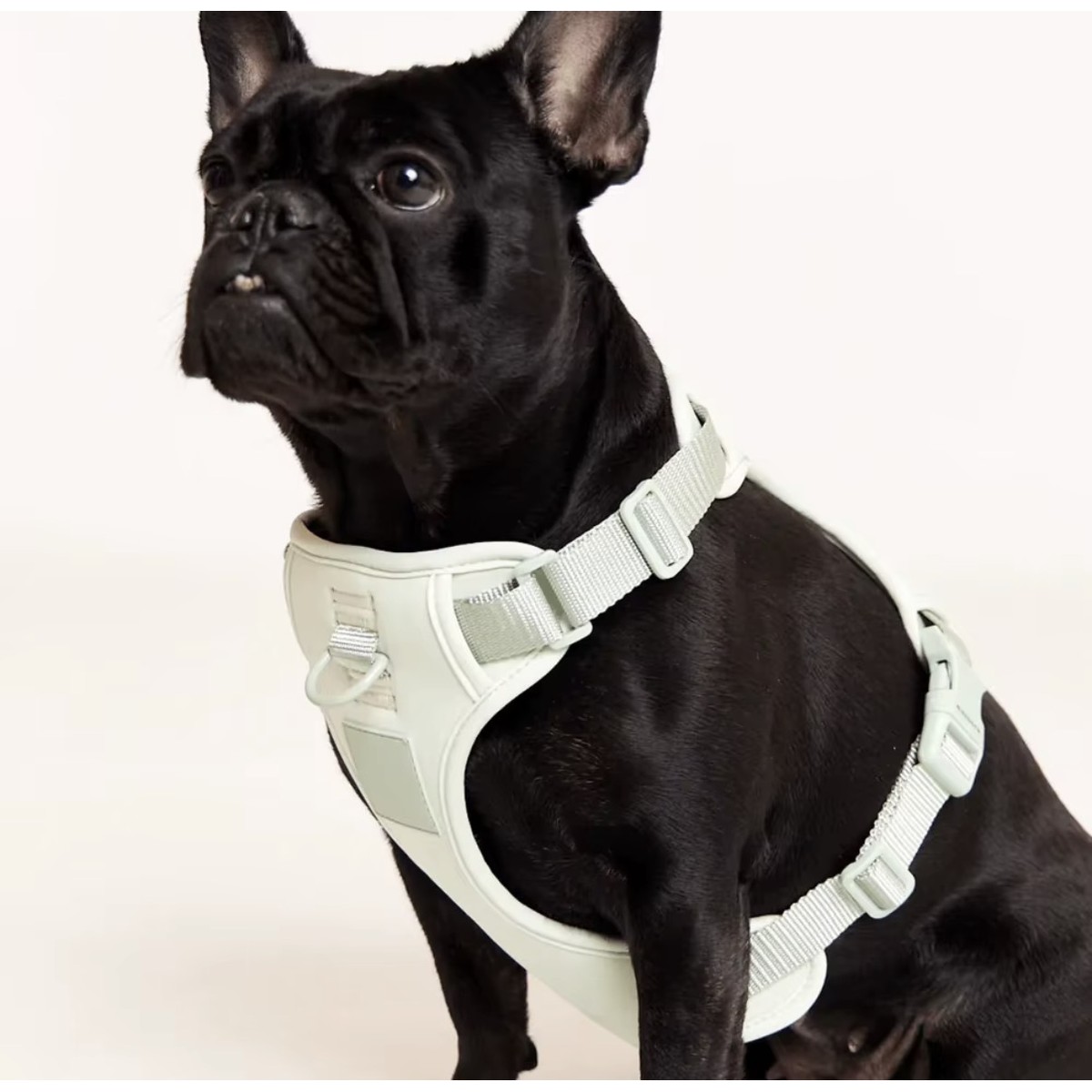
Accessory
Adjustable Harness (S/M/L)
Fully adjustable chest and girth straps — no fixed sizing.
Fits any dog
Pawpoint on YouTube
Watch the full Fox Terrier (Wire) video
Breed deep-dives, history and honest ownership talk. New film every week.
Watch now