
Français Blanc et Noir
frahn-SEH BLAHNK eh NWAHR
France· Western and Central France
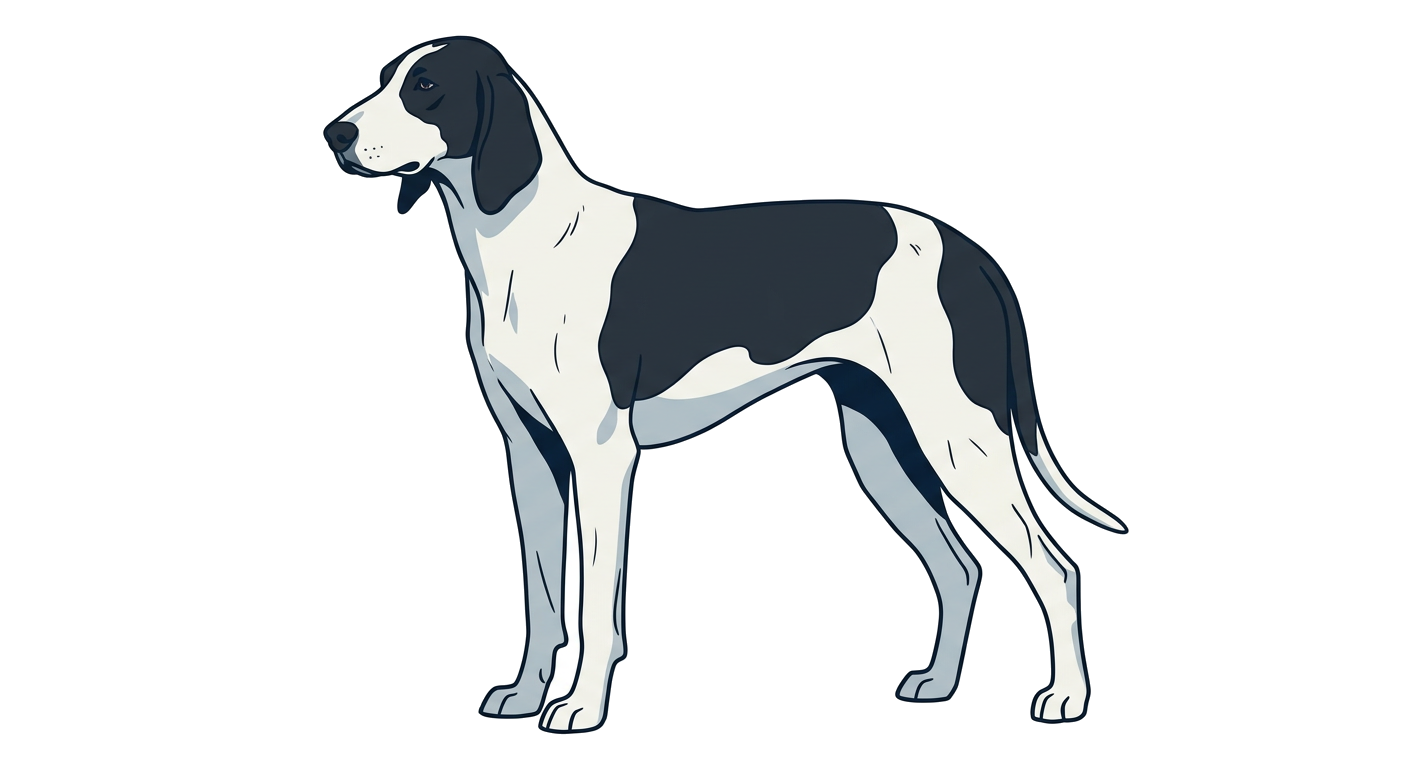
The Français Blanc et Noir, or French White and Black Hound, is a large, distinguished scent hound developed in France specifically for hunting big game in packs. Descended from historic regional lines—most notably the old Grand Chien de Saintonge—the breed was refined to track red deer, roe deer, and wild boar across vast tracts of woodland and countryside. In appearance, it is an aristocratic, athletic hound with balanced proportions, possessing a melodious voice, remarkable stamina, and an exceptionally fine sense of smell.
At a glance
Quick facts
Size
Large
Exercise needs
Very High
Home size suited to
Large rural property or dedicated kennel facility
Grooming frequency
Low
Coat length
Short
Sheds
Moderate
Lifespan
10–13 years
Town or country
Country only
Garden size needed
Extensive, securely fenced grounds
Where it comes from
Origins of the Français Blanc et Noir
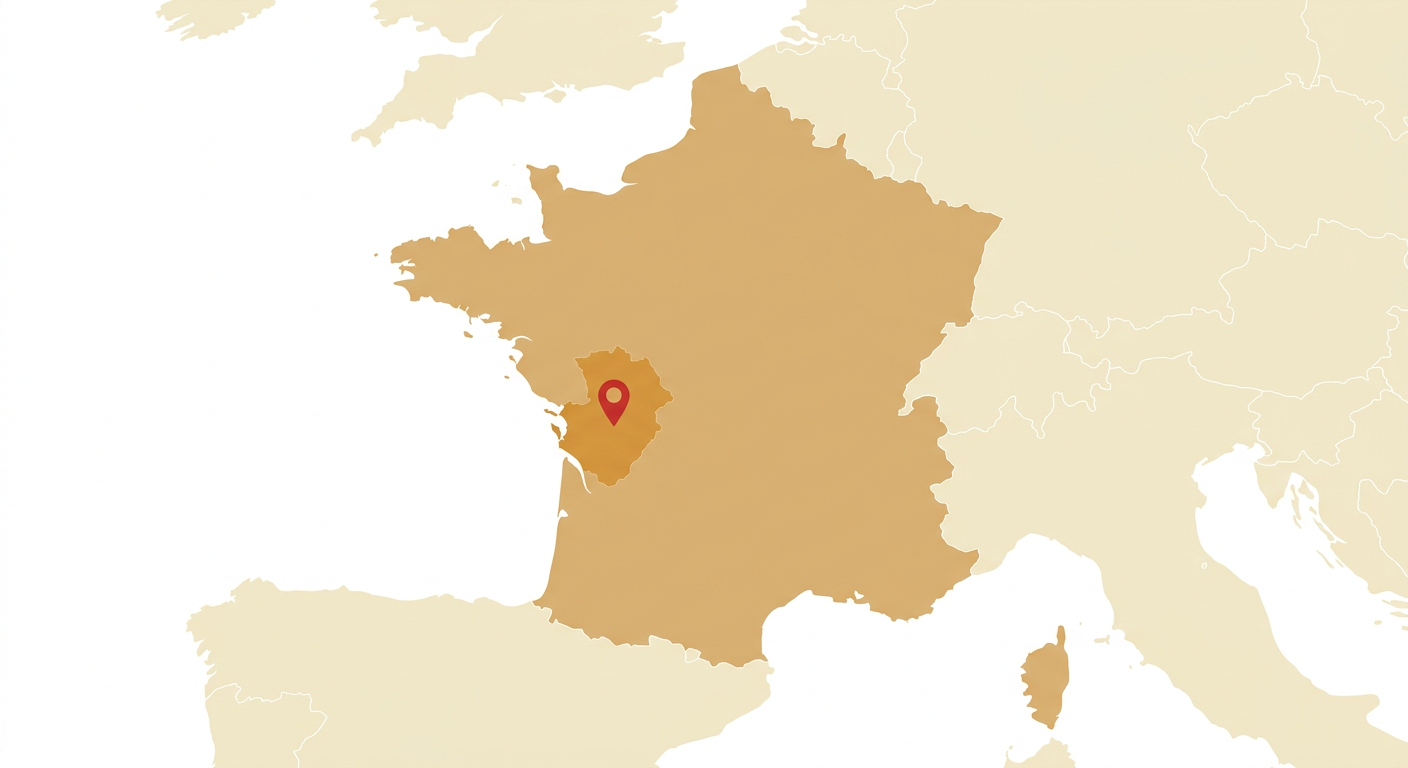
Developed in rural France to hunt big game across expansive forests, drawing upon ancient Saintonge hound ancestry.
- Region
- Western and Central France
- Climate it was bred for
- Temperate maritime and continental
- Original job
- Pack hunting large game, primarily deer and wild boar
The long read
About the breed
Slightly larger and heavier in build than its close relative, the Français Blanc et Orange, the Blanc et Noir is distinguished by its clean black-and-white coat, occasionally complemented by pale tan markings on the face and points. As with the other recognised Français hounds, its morphology reflects a functional balance between power and agility. Its deep chest and long, clean limbs facilitate a ground-covering, sustained gallop, whilst its supple drop ears and dignified head structure indicate its classical French hound heritage.
Today, the Français Blanc et Noir remains almost exclusively a working pack hound in its native France. It is seldom kept as an individual companion animal, meaning documented observations of its behaviour in standard domestic settings are relatively limited. Within a pack environment, it is known to be cooperative, calm, and social with conspecifics, though its strong hunting instincts and single-minded focus on scent trails make it unsuitable for conventional urban or sedentary living.
Living with one
Temperament & needs
Our own ratings, based on the breed standard and how these dogs behave in ordinary homes.
Energy
5/5
Calm and low-key around the home.
Barking
4/5
Quick to sound off.
Grooming
1/5
Wash-and-go coat.
Sociability
4/5
Friendly and outgoing.
Independence
4/5
Independent thinker; tolerates being left to it.
Trainability
3/5
Capable, with consistent fair handling.
Illustrated breed standard
The points of the breed
Hover or tap a numbered point to read what the standard asks for.
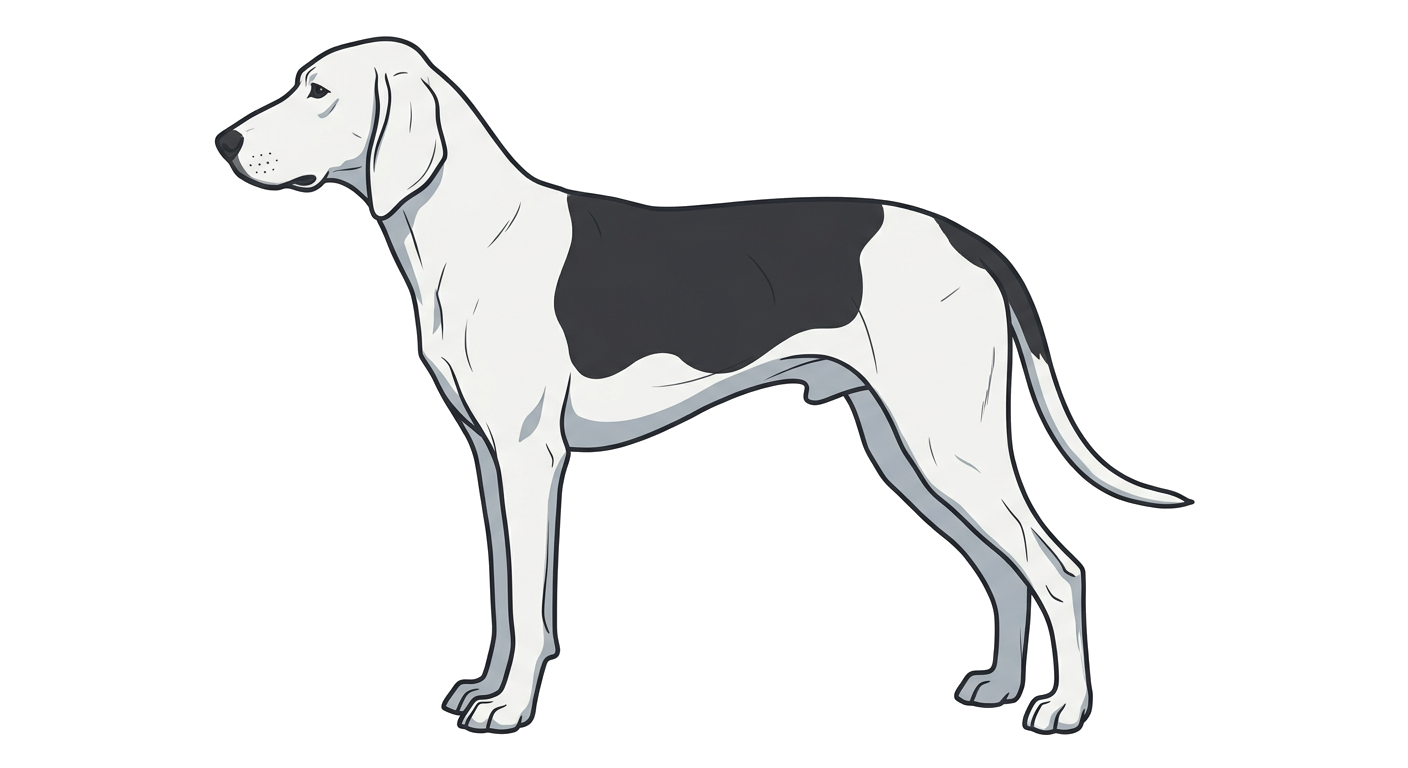
Point 1
Head
Fairly long and in harmony with the body; the skull is slightly domed and rather narrow, with a defined but not exaggerated stop.
Colours & patterns
Recognised coats
Which coats the standard accepts — and which are simply popular.
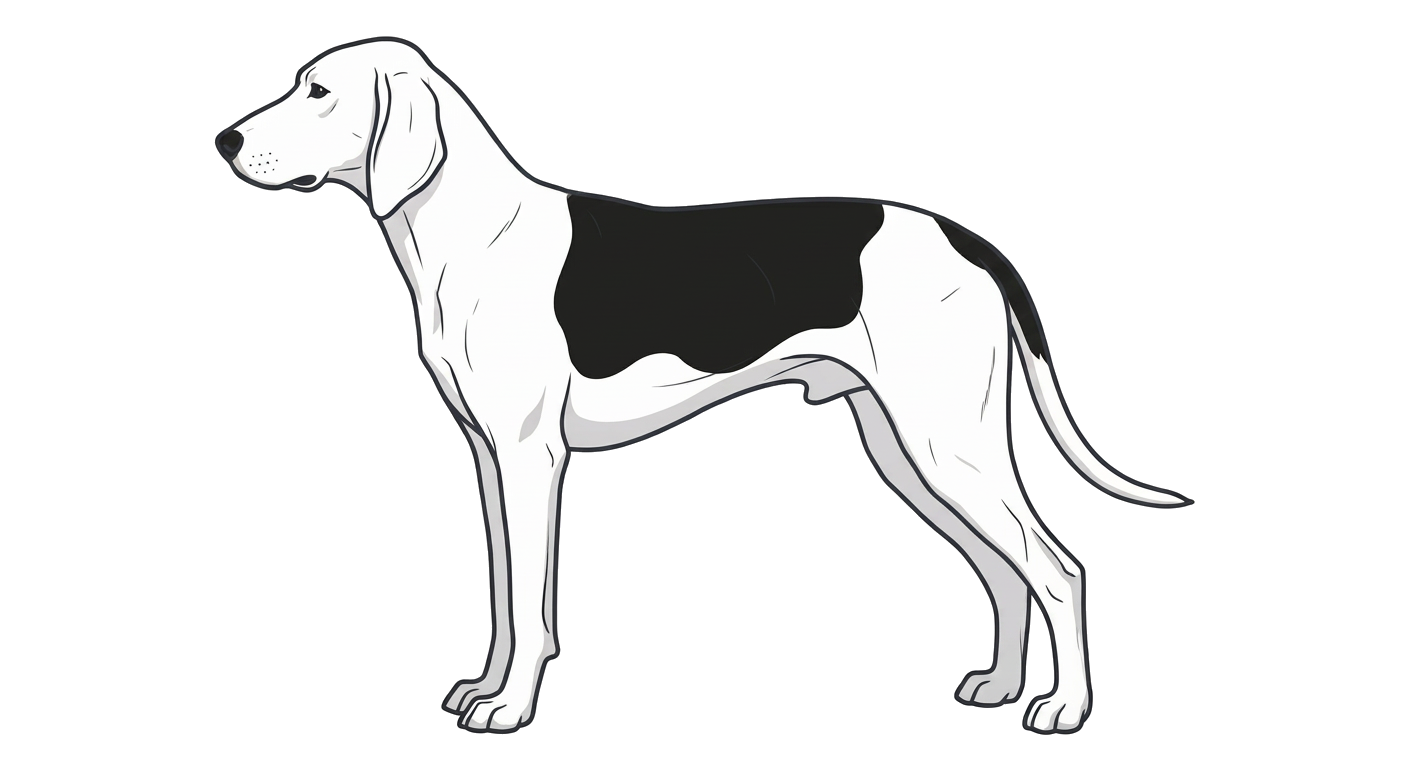
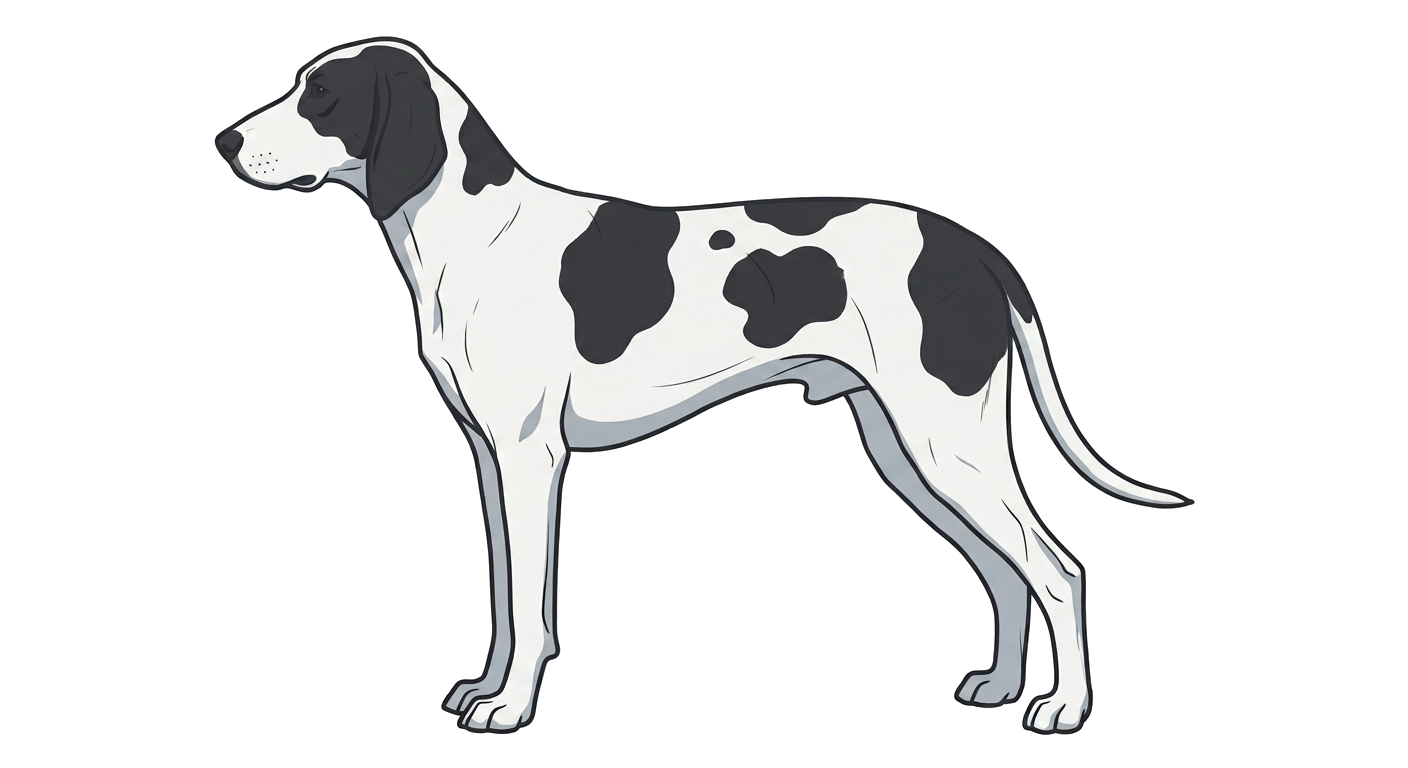
White and Black with Mantle
Standard colour
White ground colour with a solid black saddle or mantle covering the back and flanks.
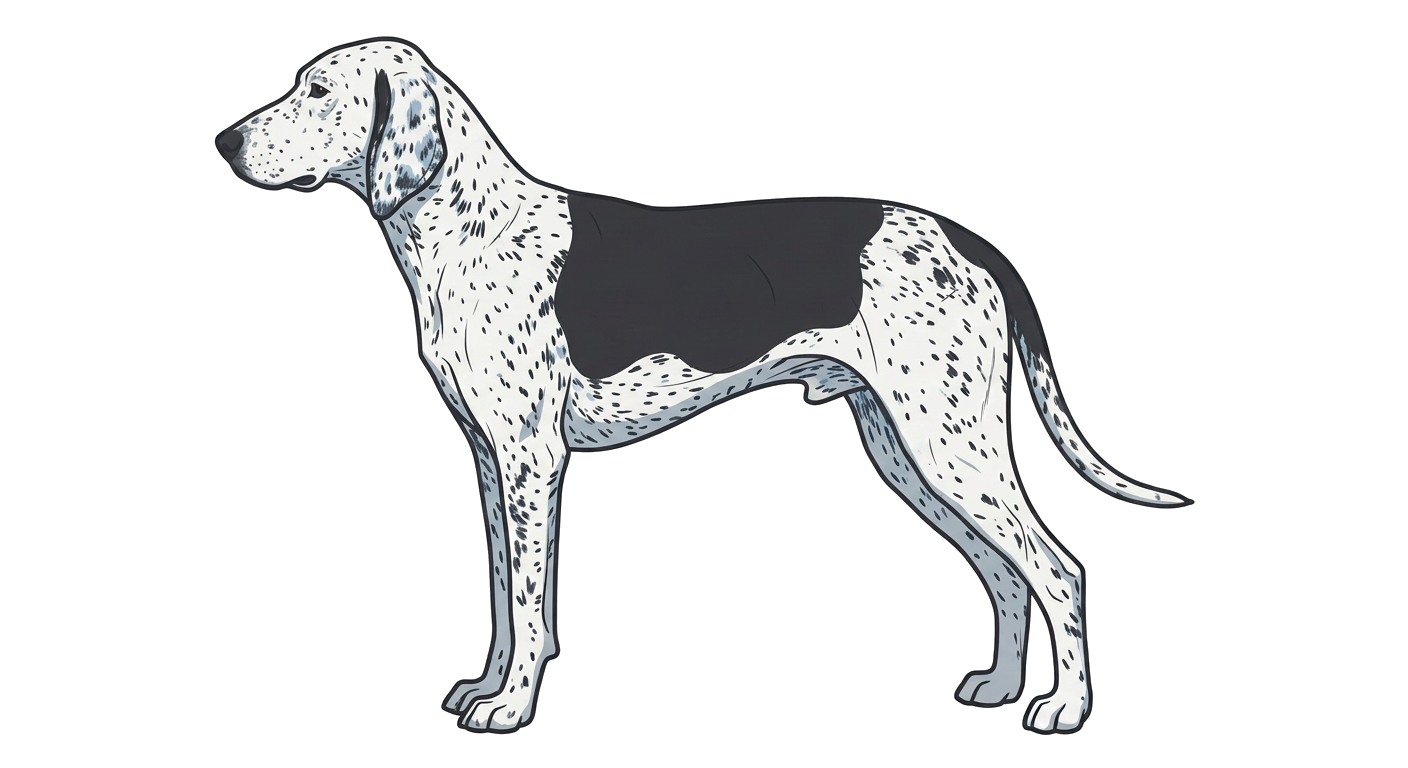
White and Black Patched
Standard colour
White body with distinct, irregular large black patches distributed across the torso and head.
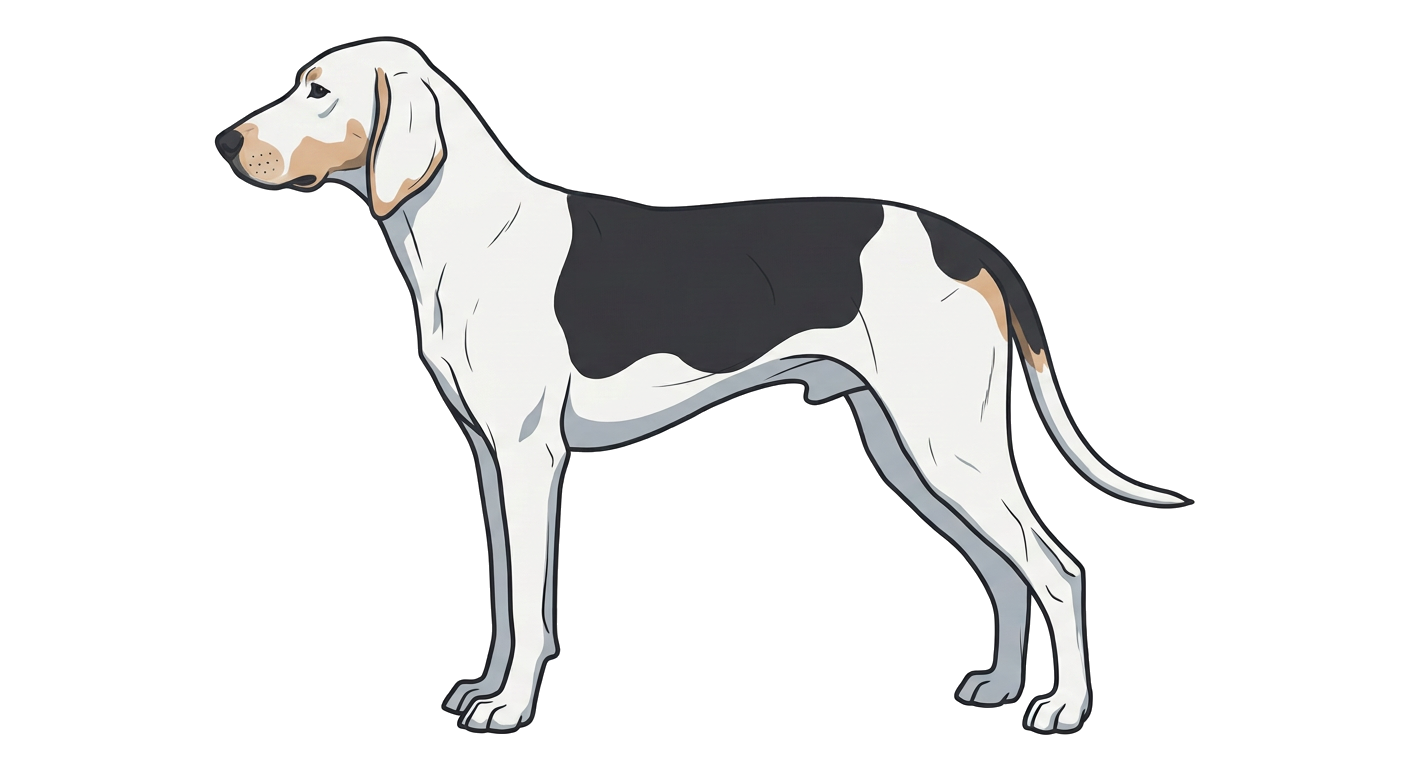
White and Black with Ticking
Standard colour
White base with black markings and fine black or bluish flecking throughout the white areas.
Black and White with Pale Tan Points
Standard colour
Permitted pale tan (fauve) highlights above the eyes, on the cheeks, beneath the ears, and at the tail base.
Timeline
History & development
c. 1850s
Ancestral Lineage
The breed emerged through the reconstitution of old Saintonge-type hounds following their post-revolutionary decline, blending regional scenthounds to preserve traditional tracking capabilities.
1957
Official Classification
The Société Centrale Canine consolidated distinct French pack hounds into formalised regional types, formally distinguishing the Français Blanc et Noir alongside its tricolour and orange counterparts.
1970s
International Recognition
The Fédération Cynologique Internationale (FCI) officially recognised the breed standard under Group 6, codifying its morphological criteria.
Present
Contemporary Role
The breed is maintained almost entirely within working hunting kennels across France, retaining its status as a specialised pack hound rather than a family pet.
Reference
Breed standard summary
- body
- Spacious and well-coupled, featuring a deep and well-let-down chest, a broad back, and a slightly arched, muscular loin.
- coat
- Short, close-lying, dense, and smooth, designed to provide weather resistance in dense undergrowth.
- ears
- Set on low, supple, slightly turned inwards, and reaching forward towards the base of the nose.
- eyes
- Dark brown, large, intelligent, and set comfortably within the orbits, conveying a gentle and calm expression.
- gait
- Easy, ground-covering, and balanced, with a powerful drive from the hindquarters and an effortless gallop.
- head
- Fairly long and in harmony with the body; the skull is slightly domed and rather narrow, with a defined but not exaggerated stop.
- size
- Height at the withers: males 65 to 72 cm; females 62 to 68 cm.
- tail
- Thick at the base, tapering towards the tip, carried high in a sabre curve when active, and reaching to the hock.
- colour
- Obligatory white and black, featuring a black mantle or large black patches, with pale tan or fawn points permitted on the cheeks, over the eyes, and under the tail; black or blue ticking is acceptable.
- muzzle
- Moderately long and straight, with upper lips covering the lower jaw neatly without excessive flews.
- temperament
- Hardy, cooperative, and pack-oriented in the field; generally calm and sociable with other hounds, though driven by strong scent instincts.
- general appearance
- A tall, elegant, and powerfully built scenthound of aristocratic distinction, combining stamina, bone strength, and fluid athleticism.
Health
What to screen for
Green means little to worry about, amber means ask the breeder for test results, red means manage it actively.
Gastric Dilatation-Volvulus (Bloat)
Screen for it
A deep chest predisposes the breed to rapid stomach twisting, requiring immediate emergency intervention.
Hip Dysplasia
Screen for it
Canine hip laxity can affect large scenthounds, exacerbated by intensive physical demands in the field.
Otitis Externa
Screen for it
Low-set, pendulous ears trap moisture and debris, predisposing the canal to bacterial and fungal infections.
Working & Musculoskeletal Injuries
Watch closely
Strenuous tracking over rough terrain carries risks of lacerations, sprains, and soft-tissue trauma.
General information only — always speak to your vet about your own dog.
From real owners
Dogs like this
Français Blanc et Noirs added by PawPoint members through their pet passports. Share yours to appear here.
Loading the wall…
Made for the Français Blanc et Noir
The book, plus prints, hoodies and mugs using our own Français Blanc et Noir illustration — and one everyday accessory that suits any dog.

The book
Pawpoint: The Complete Dog Breed Book
Every officially recognised breed plus the unofficial ones nobody else documents. 400+ pages, hardback, printed and shipped from the UK.
Own stock — shipped by us
Framed poster
Français Blanc et Noir Framed Poster
Museum-weight print of our Français Blanc et Noir illustration, framed or unframed.
Printed to order
Hoodie
Français Blanc et Noir Hoodie
Heavyweight hoodie carrying the Français Blanc et Noir illustration on the chest.
Printed to order
Mug
Français Blanc et Noir Mug
Ceramic mug with the Français Blanc et Noir illustration wrapped around it.
Printed to order
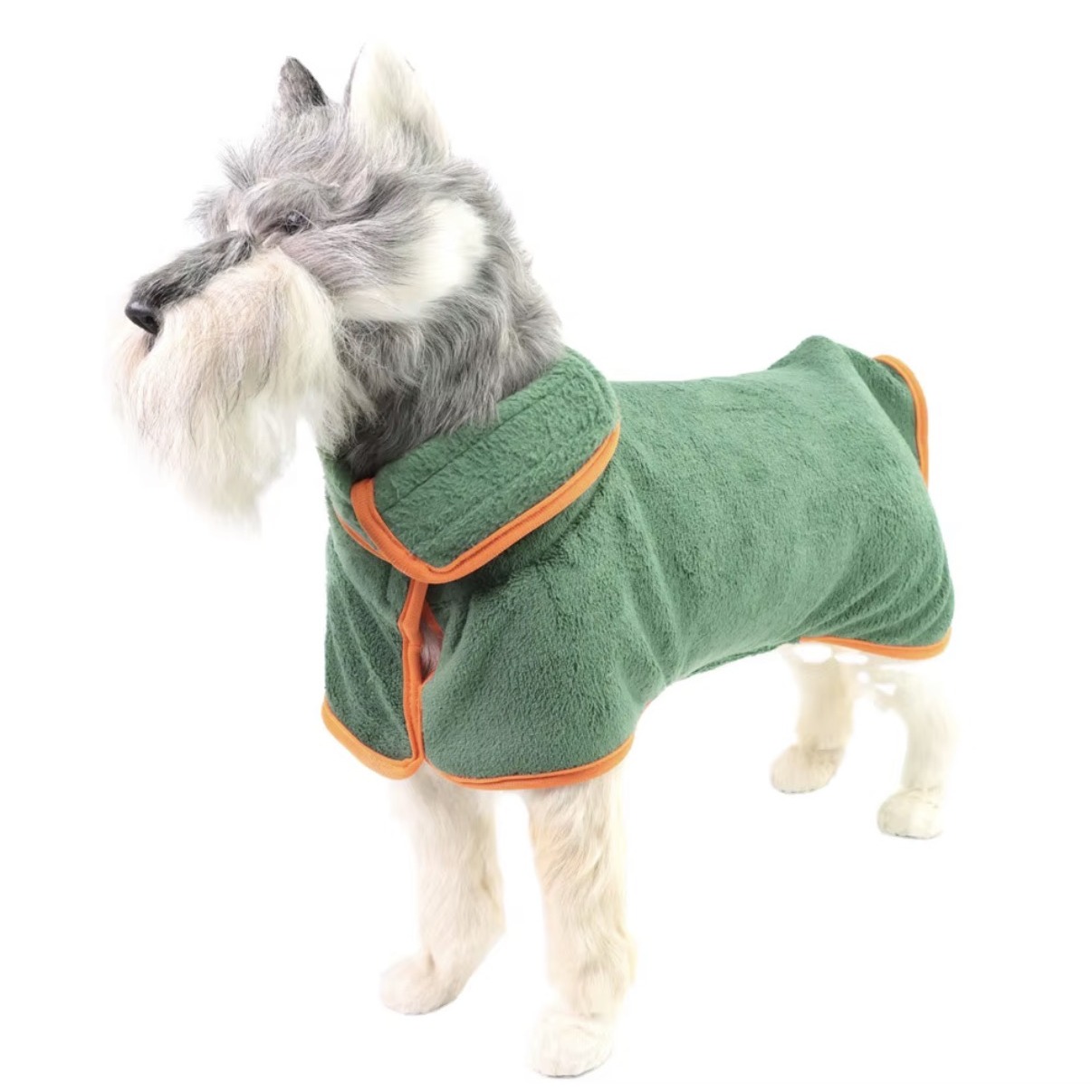
Accessory
Drying Towel Robe
Microfibre robe that soaks up a wet-walk shake.
Fits any dog
Pawpoint on YouTube
Watch the full Français Blanc et Noir video
Breed deep-dives, history and honest ownership talk. New film every week.
Watch now