German Wirehaired Pointer
JUR-muhn WIRE-haird POYN-tuhr
Germany· Northern Germany
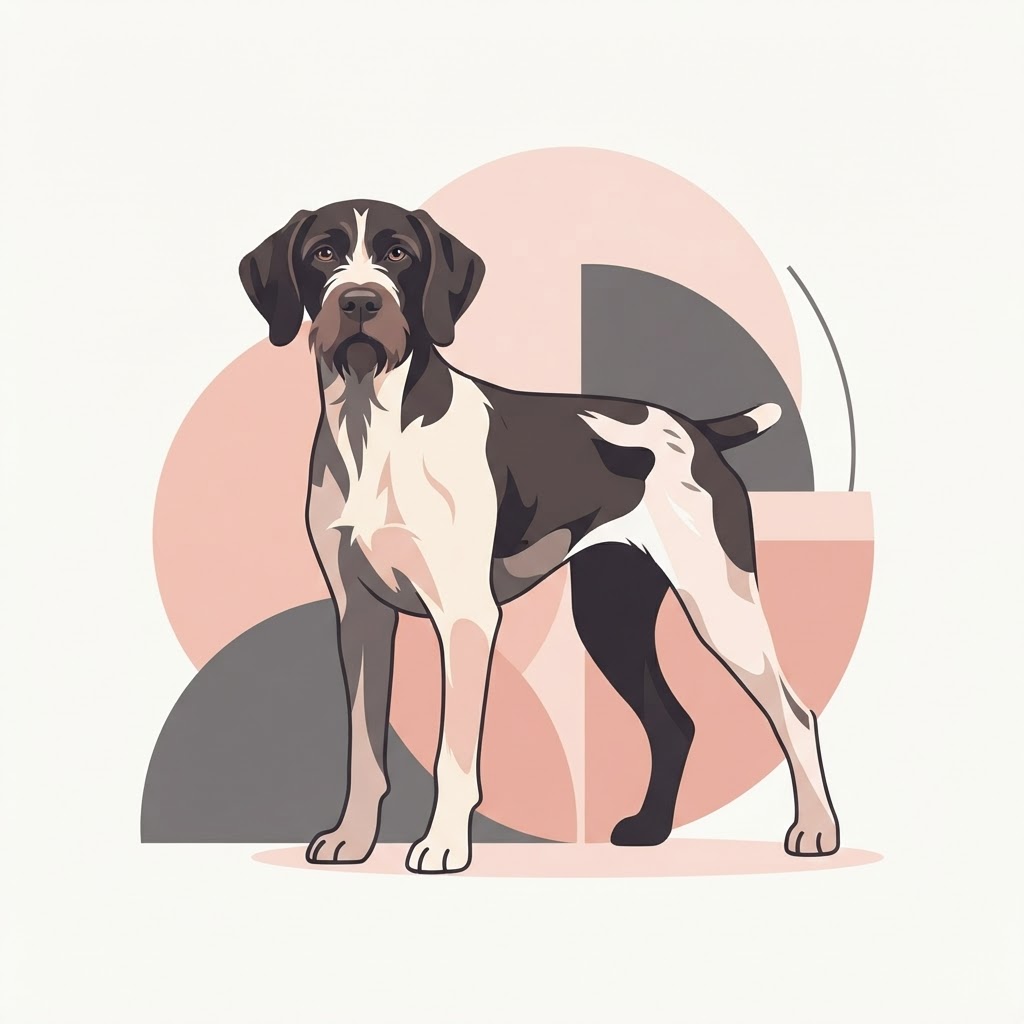
The German Wirehaired Pointer is a rugged, weatherproof gundog bred in late-19th-century Germany to point, retrieve and track across water, thorn and stubble in a single day's shooting.
At a glance
Quick facts
Size
Large
Exercise needs
2+ hours daily
Home size suited to
Medium to large home
Grooming frequency
Weekly brush, hand-strip a few times a year
Coat length
Wiry
Sheds
Yes, heavily when moulting
Lifespan
12-14 years
Town or country
Either, with enough exercise
Garden size needed
Medium or larger
Where it comes from
Origins of the German Wirehaired Pointer
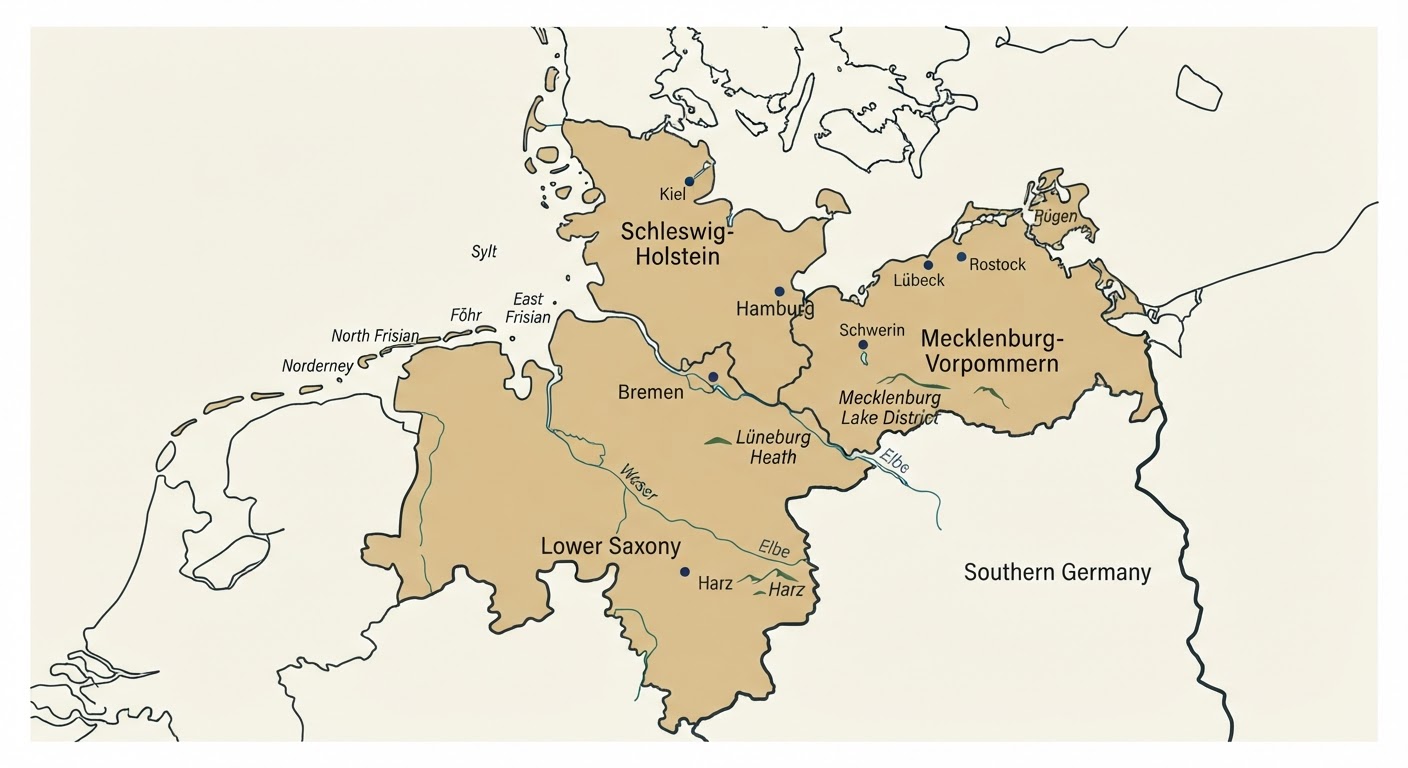
Developed on the flat, wet hunting grounds of northern Germany, where dogs needed a coat tough enough for reed beds and cold water. Breeders crossed pointer types with rough-coated water dogs to get an all-weather gundog.
- Region
- Northern Germany
- Climate it was bred for
- Cold, damp lowlands and marsh
- Original job
- All-round pointing, retrieving and tracking
The long read
About the breed
It descends from crosses of the Pudelpointer, Stichelhaar and German Shorthaired Pointer, with breeders in the 1880s selecting hard, wiry coats that shrugged off brambles and cold water on the North German lowlands. The German Hunting Pointer Club, founded in 1902, fixed the type still shown today.
Living with one means committing to daily off-lead exercise and a job to do; this is not a dog content with a garden and a short walk. It is intelligent and biddable with an experienced handler but can be pushy or vocal if bored, and the harsh double coat needs hand-stripping a couple of times a year to stay weatherproof rather than woolly.
In Britain it remains mostly a working and field-trial dog rather than a common pet, kept by shooting people who value its stamina and versatility on both feather and fur. Numbers are modest but steady, and the breed has changed little from its working template.
Living with one
Temperament & needs
Our own ratings, based on the breed standard and how these dogs behave in ordinary homes.
Friendliness
3/5
How openly the German Wirehaired Pointer greets people it does not know.
Trainability
4/5
Quick to learn with consistent, fair handling.
Energy
5/5
Needs long daily exercise and scope to run.
Barking
2/5
Not prone to needless barking.
Grooming
3/5
Wiry coat needs hand-stripping twice a year.
Suits a first-time owner
3/5
How forgiving the German Wirehaired Pointer is for someone taking on their first dog.
Sociability
3/5
Polite but reserved with strangers.
Independence
3/5
Can think for itself when tracking.
Illustrated breed standard
The points of the breed
Hover or tap a numbered point to read what the standard asks for.
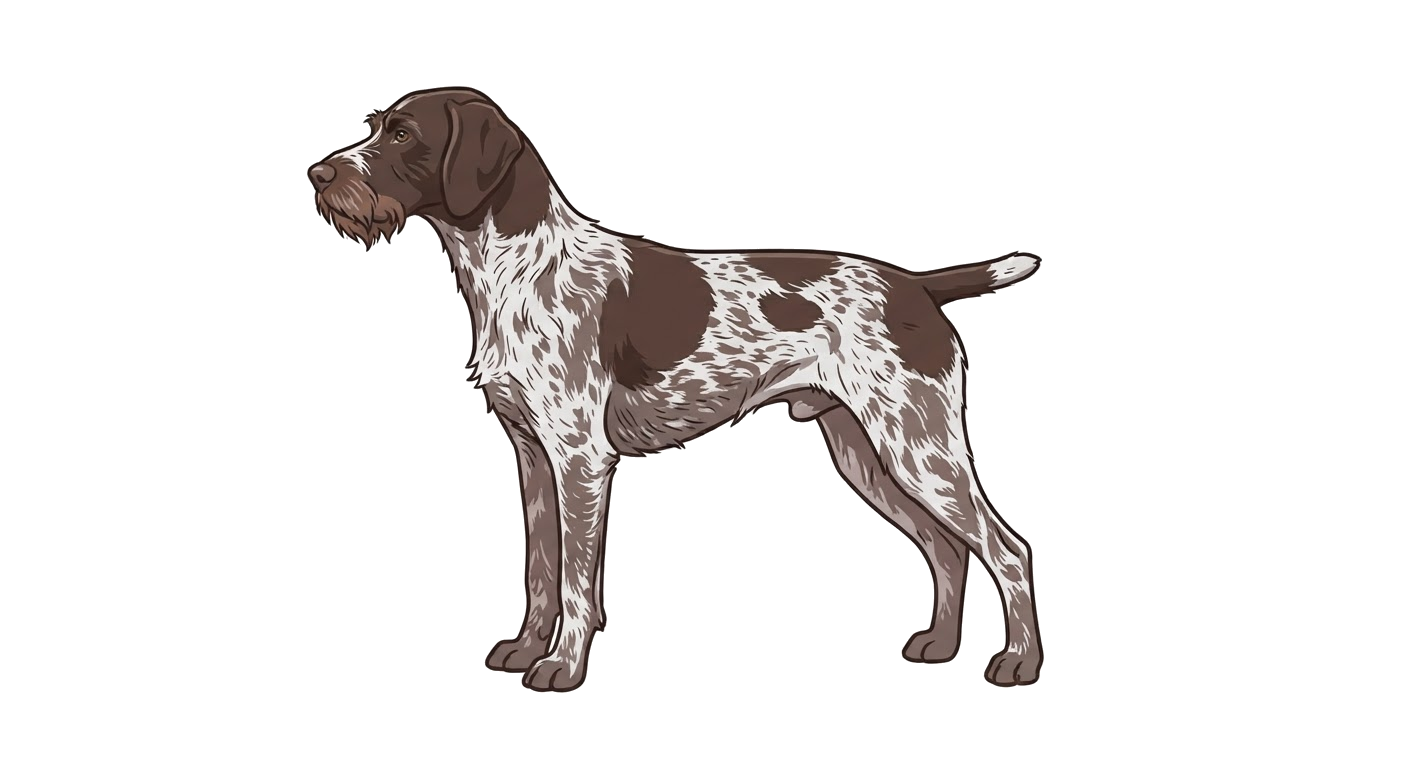
Point 1
Skull
The German Wirehaired Pointer's skull is judged on balance rather than size — proportionate to the body, with a clean cheek and a stop typical of the breed. Coarseness or an over-refined head are both faulted.
Colours & patterns
Recognised coats
Which coats the standard accepts — and which are simply popular.
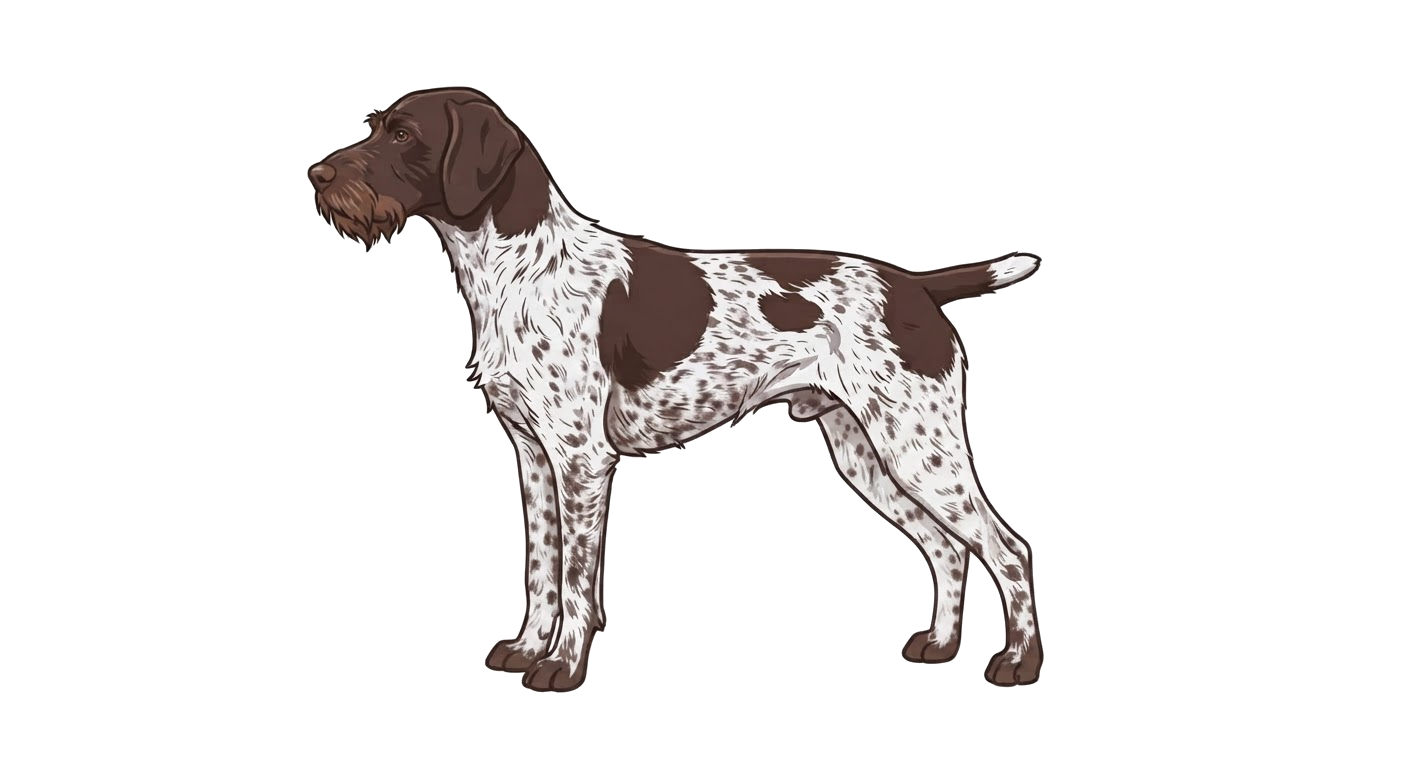
Liver and white
Standard colour
The classic ticked pattern.
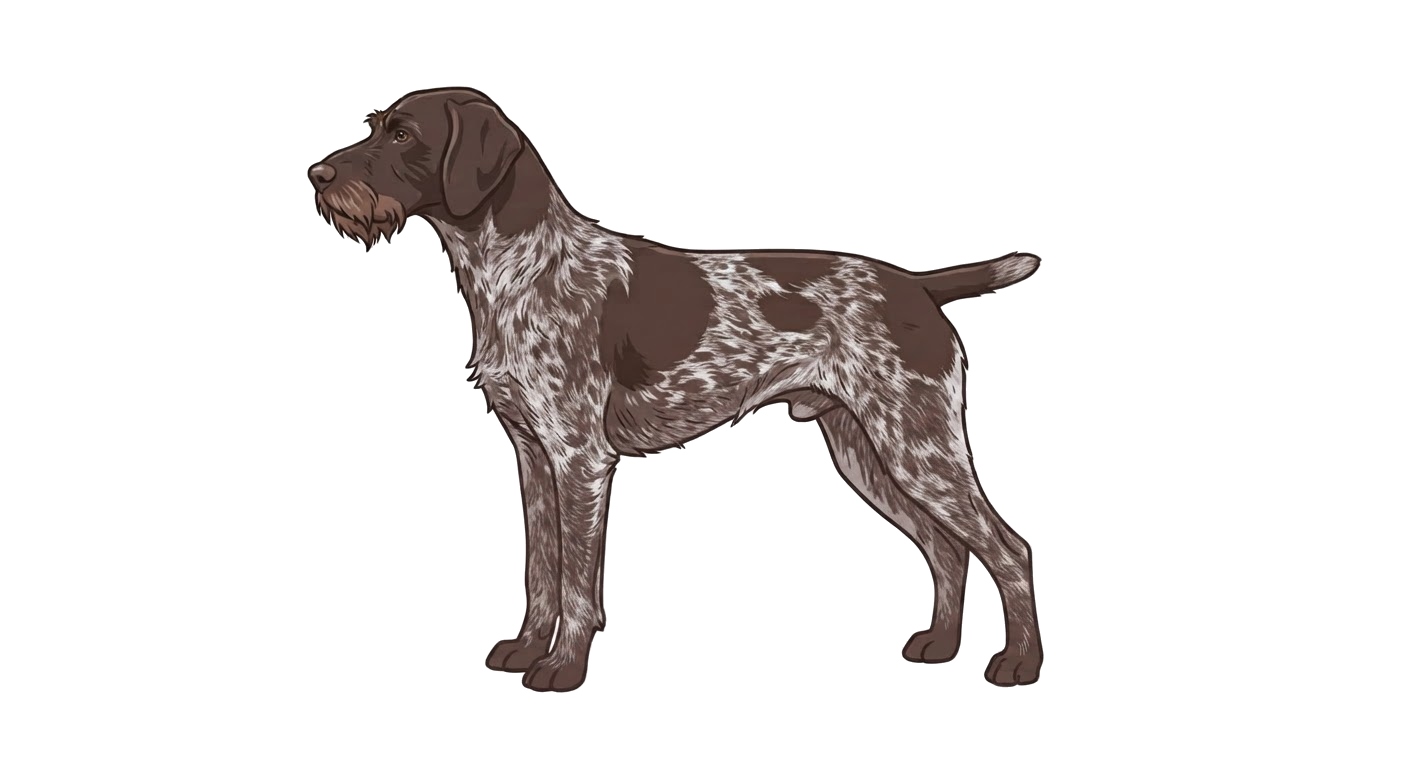
Liver roan
Standard colour
Fine mottling giving an overall grey-brown look.
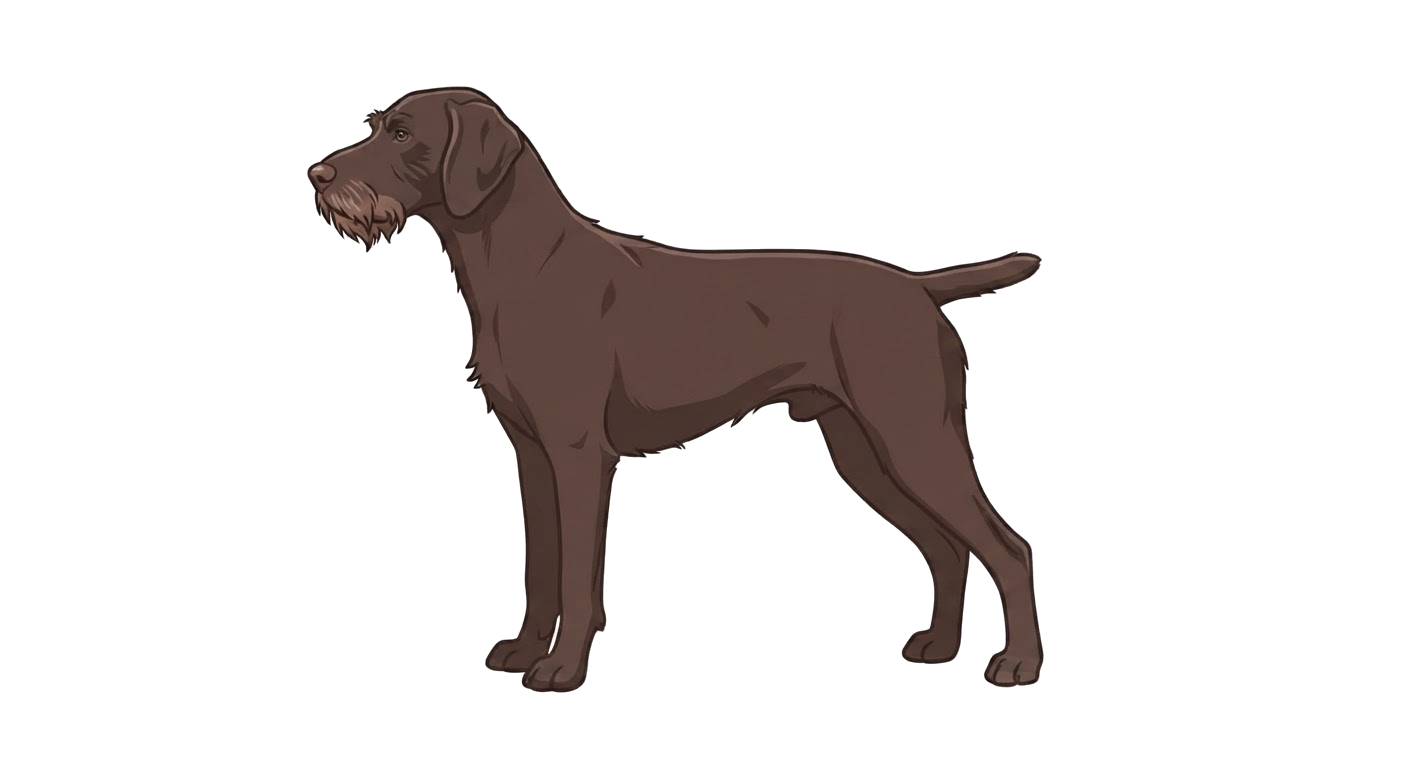
Solid liver
Standard colour
Less common but within standard.
Outside the standard
Other colours
Dilute coats you will see advertised. They are the same breed, but no kennel club accepts them.
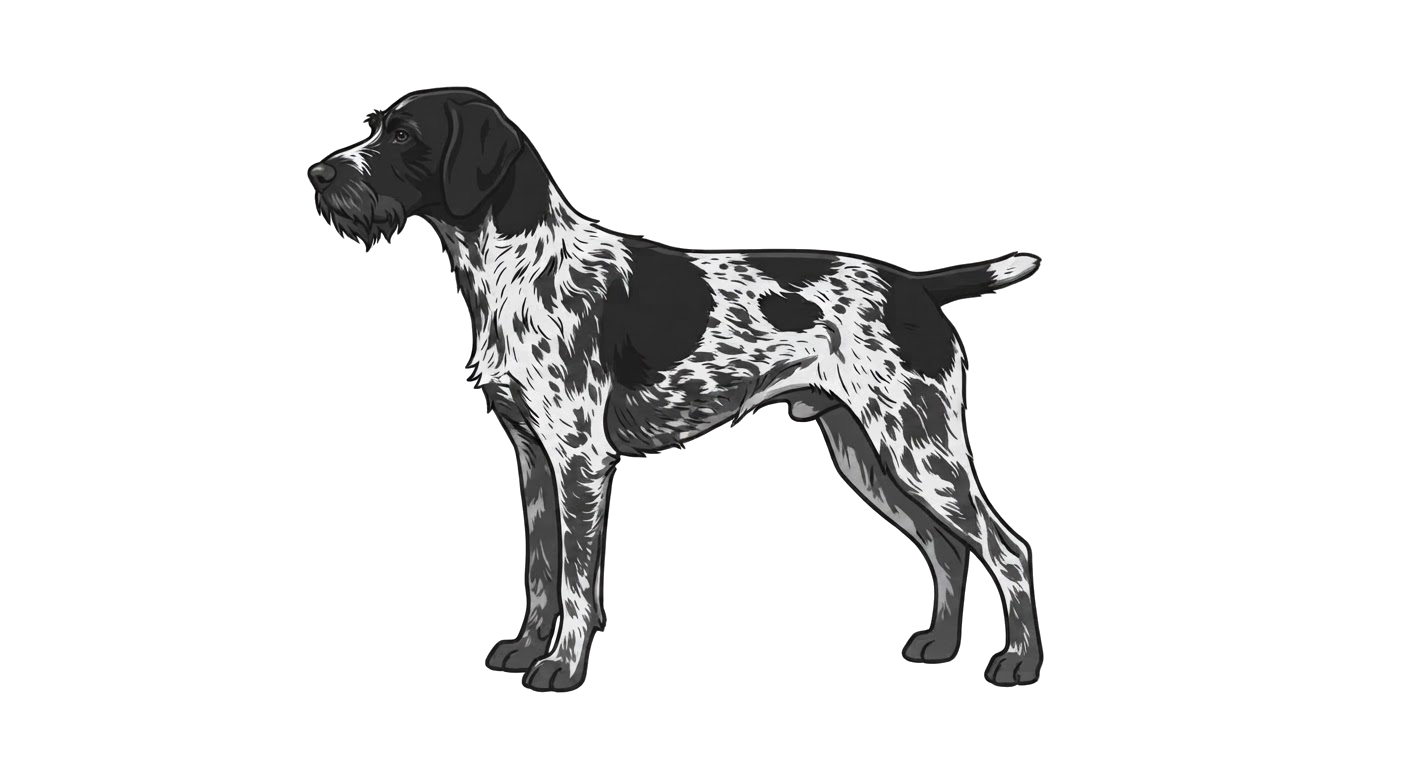
Black and white
Not in the standard
Occurs but is not the traditional colouring.
Timeline
History & development
1880s
Early crosses
German hunters crossed Pudelpointers, Stichelhaars and Shorthaired Pointers to fix a wire coat on a versatile gundog frame.
1902
Club founded
The Verein Deutscher Drahthaar was established to standardise the breed and control breeding.
1959
Reaches the USA
American sportsmen imported the breed, forming their own breed club soon after.
20th century
UK field trials
The breed found a niche among British shooting enthusiasts valuing its all-weather coat.
1950s onward
The breed today
Kennel club registrations settled into a steady pattern and the German Wirehaired Pointer moved from a working specialist to a family companion, with breed clubs in the UK and abroad now focused on health testing and keeping true type alive.
Reference
Breed standard summary
- body
- Strong, slightly longer than tall
- coat
- Straight, harsh, flat-lying with dense undercoat
- ears
- Rounded, set high, hanging close to the head
- eyes
- Medium, dark, alert
- gait
- Ground-covering, purposeful trot
- head
- Long, with a strong muzzle and bushy eyebrows
- size
- Large
- tail
- Set high, docked or natural, carried level
- colour
- Liver and white, Liver roan, Solid liver. Colours outside this list are seen but are not accepted by the kennel clubs.
- temperament
- Typical of the breed: strongest in energy, trainability, sociability. Nervousness or aggression are serious faults in the show ring and in the home.
- general appearance
- Medium to large, well-muscled, workmanlike gundog
Health
What to screen for
Green means little to worry about, amber means ask the breeder for test results, red means manage it actively.
Hip dysplasia
Screen for it
Ask breeders for BVA/KC hip scores on both parents.
Von Willebrand's disease
Watch closely
DNA testing is available and worth requesting.
Eye disorders
Screen for it
Request annual eye certification from breeding stock.
Bloat
Watch closely
Feed smaller meals and avoid vigorous exercise straight after eating.
General information only — always speak to your vet about your own dog.
From real owners
Dogs like this
German Wirehaired Pointers added by PawPoint members through their pet passports. Share yours to appear here.
Loading the wall…
Made for the German Wirehaired Pointer
The book, plus prints, hoodies and mugs using our own German Wirehaired Pointer illustration — and one everyday accessory that suits any dog.

The book
Pawpoint: The Complete Dog Breed Book
Every officially recognised breed plus the unofficial ones nobody else documents. 400+ pages, hardback, printed and shipped from the UK.
Own stock — shipped by us
Framed poster
German Wirehaired Pointer Framed Poster
Museum-weight print of our German Wirehaired Pointer illustration, framed or unframed.
Printed to order
Hoodie
German Wirehaired Pointer Hoodie
Heavyweight hoodie carrying the German Wirehaired Pointer illustration on the chest.
Printed to order
Mug
German Wirehaired Pointer Mug
Ceramic mug with the German Wirehaired Pointer illustration wrapped around it.
Printed to order
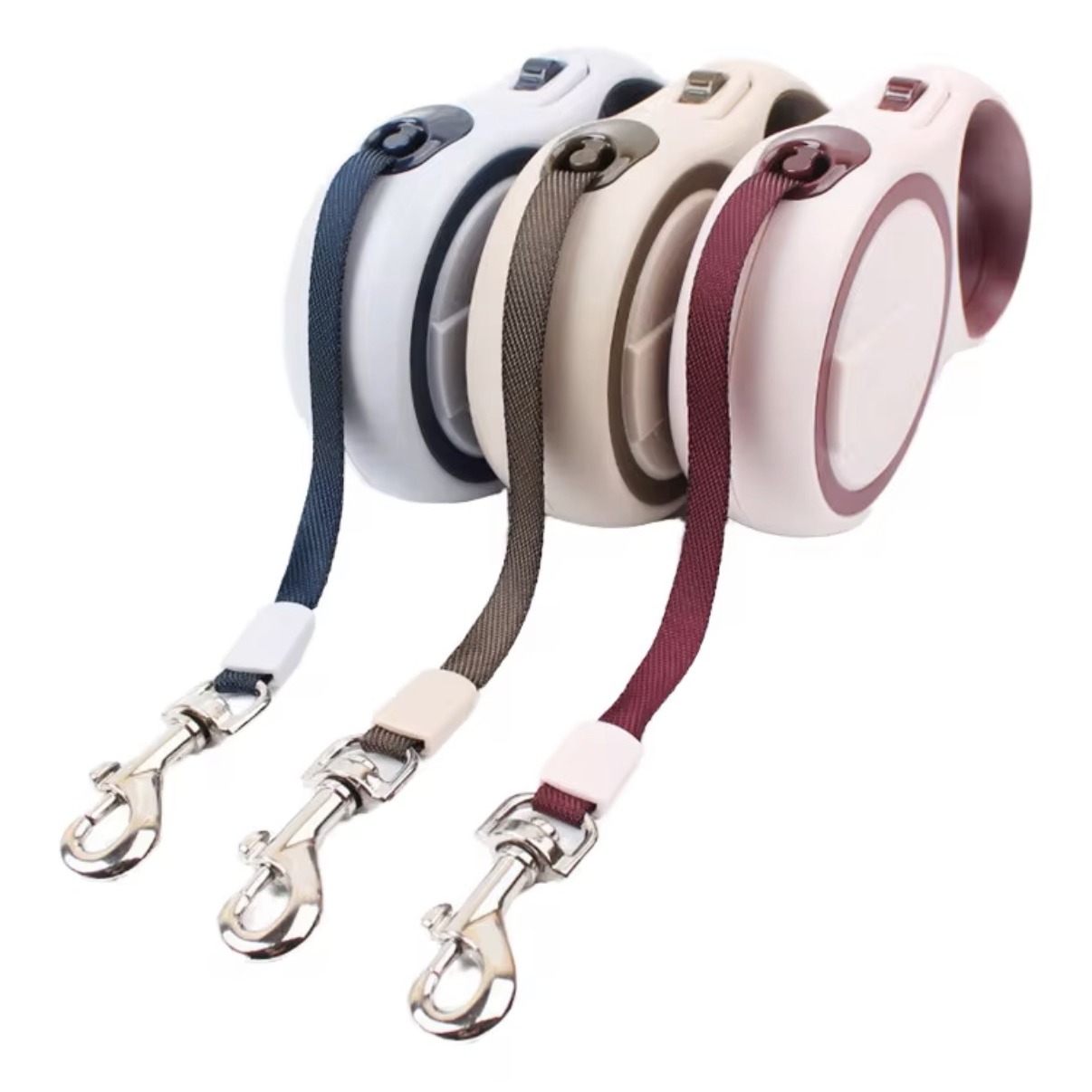
Accessory
Retractable Lead
5m retractable with one-touch brake.
Fits any dog
Pawpoint on YouTube
Watch the full German Wirehaired Pointer video
Breed deep-dives, history and honest ownership talk. New film every week.
Watch now