
Giant Schnauzer
"SHNOW-zer"
Germany· Bavaria
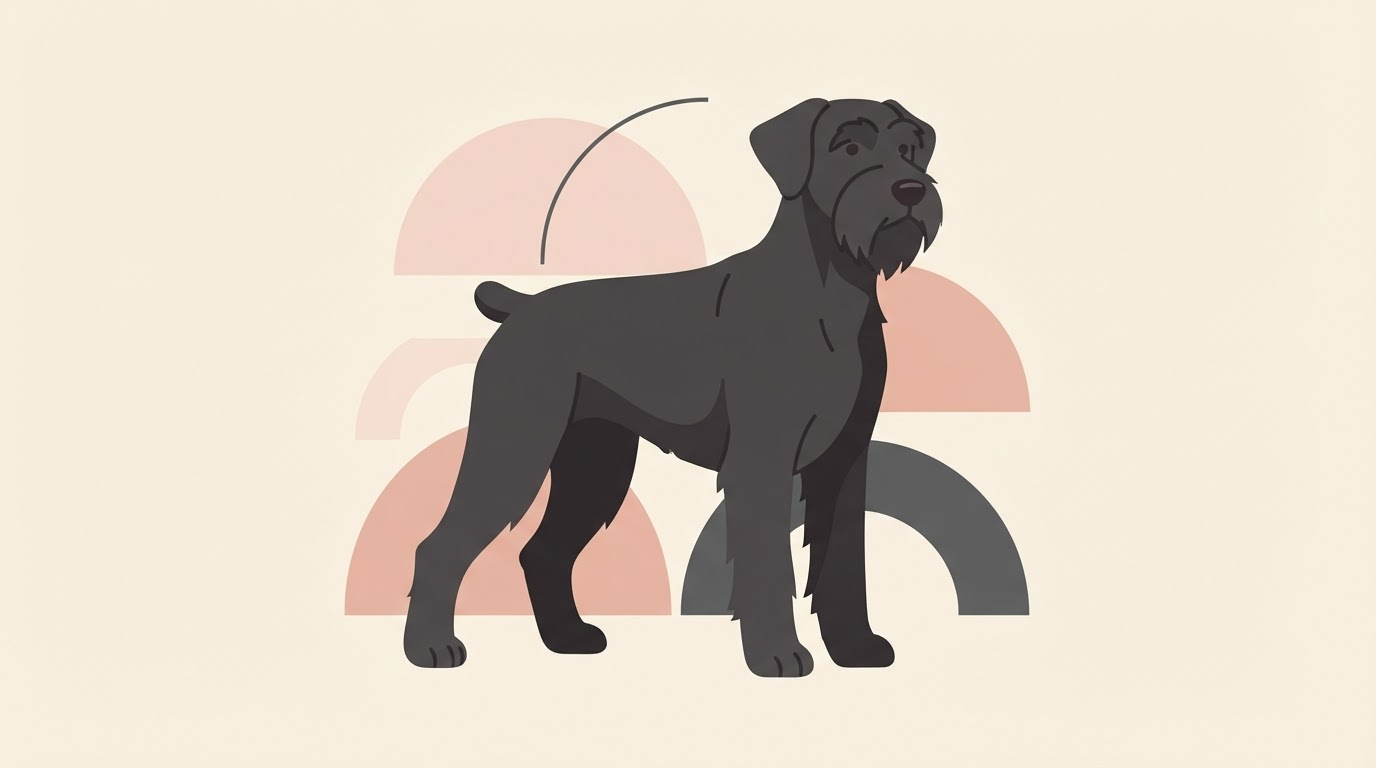
The Giant Schnauzer is a large, powerful working dog developed in Bavaria to drive cattle and guard breweries, and later used across Germany as a police and military dog.
At a glance
Quick facts
Size
Giant
Exercise needs
2 hours daily plus mental work
Home size suited to
Large home with space to stretch out
Grooming frequency
Weekly brush, hand-strip a few times a year
Coat length
Wiry
Sheds
Yes, heavily when moulting
Lifespan
10-12 years
Town or country
Better suited to the country
Garden size needed
Large and securely fenced
Where it comes from
Origins of the Giant Schnauzer
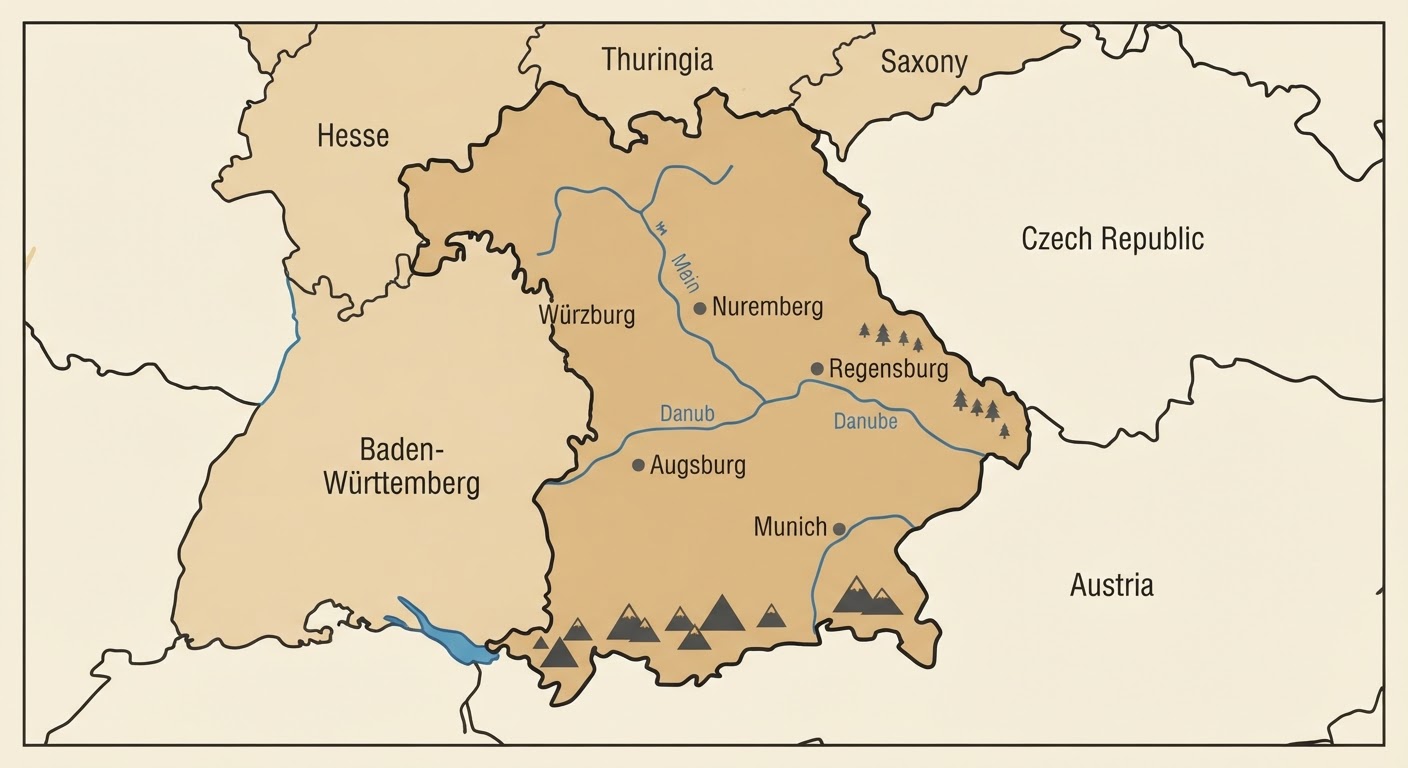
Bred in the farms and breweries of Bavaria and Wurttemberg, where cattlemen needed a dog able to move stock by day and guard premises by night. Its size and coarse coat suited the physical work and variable alpine-fringed climate.
- Region
- Bavaria
- Climate it was bred for
- Cool, alpine-fringed farmland
- Original job
- Cattle droving and brewery guarding
The long read
About the breed
It emerged in the late 19th century from Standard Schnauzers crossed with drover breeds such as the Bouvier des Flandres and possibly Great Dane, giving Bavarian and Wurttemberg cattlemen a dog strong enough to move stock and confident enough to guard property overnight. Munich brewers later used the breed to guard beer wagons and cellars.
Living with a Giant Schnauzer suits an experienced owner with time for serious training and exercise; it is intensely loyal to its family, watchful of visitors, and needs consistent leadership from puppyhood. The wiry black or pepper-and-salt coat requires stripping or clipping every six to eight weeks, and without enough mental and physical work the breed becomes bored and difficult.
Today it works as a police, protection and competitive obedience dog as well as a devoted, imposing family guardian, and remains a minority breed in Britain kept mostly by those already familiar with large working breeds.
Living with one
Temperament & needs
Our own ratings, based on the breed standard and how these dogs behave in ordinary homes.
Friendliness
2/5
How openly the Giant Schnauzer greets people it does not know.
Trainability
4/5
Highly capable but needs an experienced hand.
Energy
4/5
Needs substantial daily exercise and work.
Barking
3/5
Alert barker, good natural watchdog.
Grooming
4/5
Wiry coat needs regular stripping or clipping.
Suits a first-time owner
3/5
How forgiving the Giant Schnauzer is for someone taking on their first dog.
Sociability
2/5
Wary of strangers, loyal to its own family.
Independence
3/5
Confident and can be strong-willed.
Illustrated breed standard
The points of the breed
Hover or tap a numbered point to read what the standard asks for.
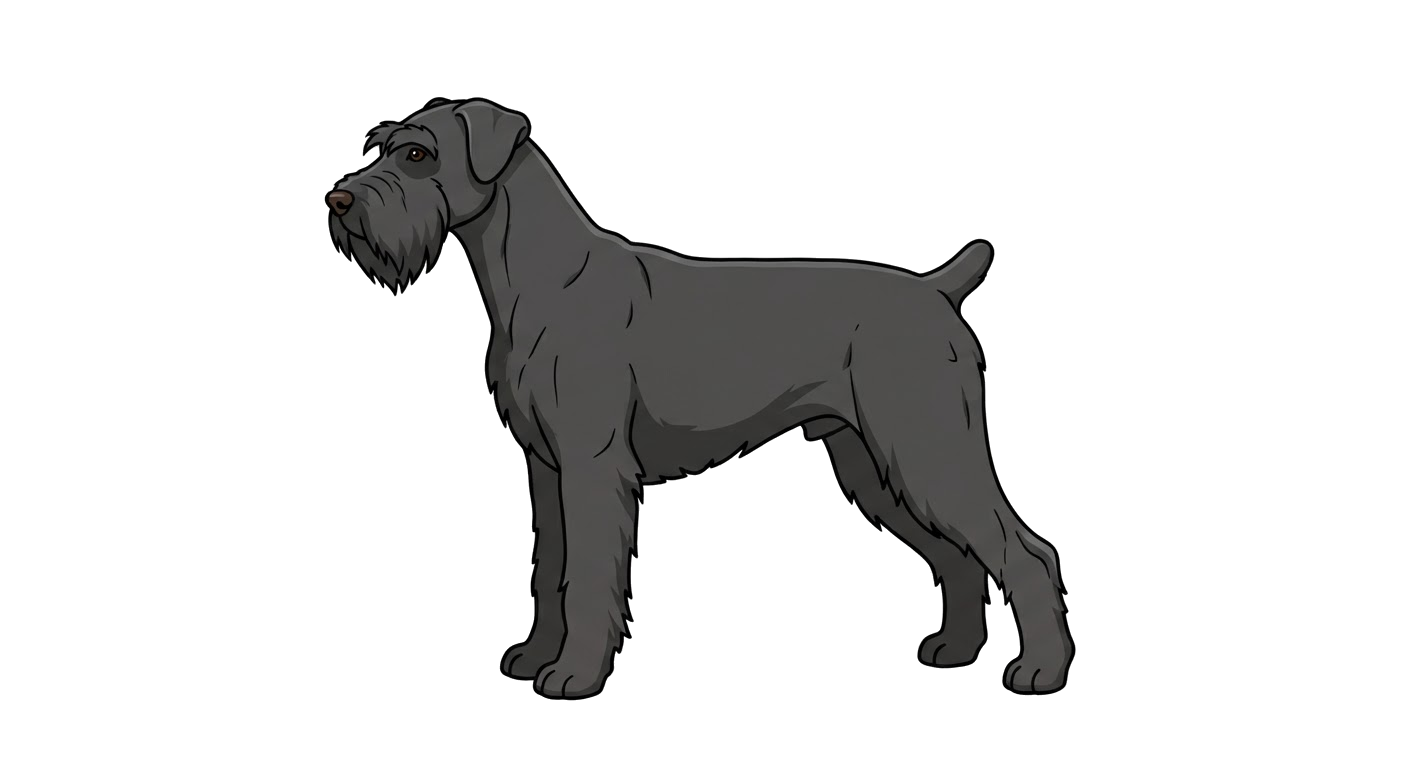
Point 1
Skull
The Giant Schnauzer's skull is judged on balance rather than size — proportionate to the body, with a clean cheek and a stop typical of the breed. Coarseness or an over-refined head are both faulted.
Colours & patterns
Recognised coats
Which coats the standard accepts — and which are simply popular.
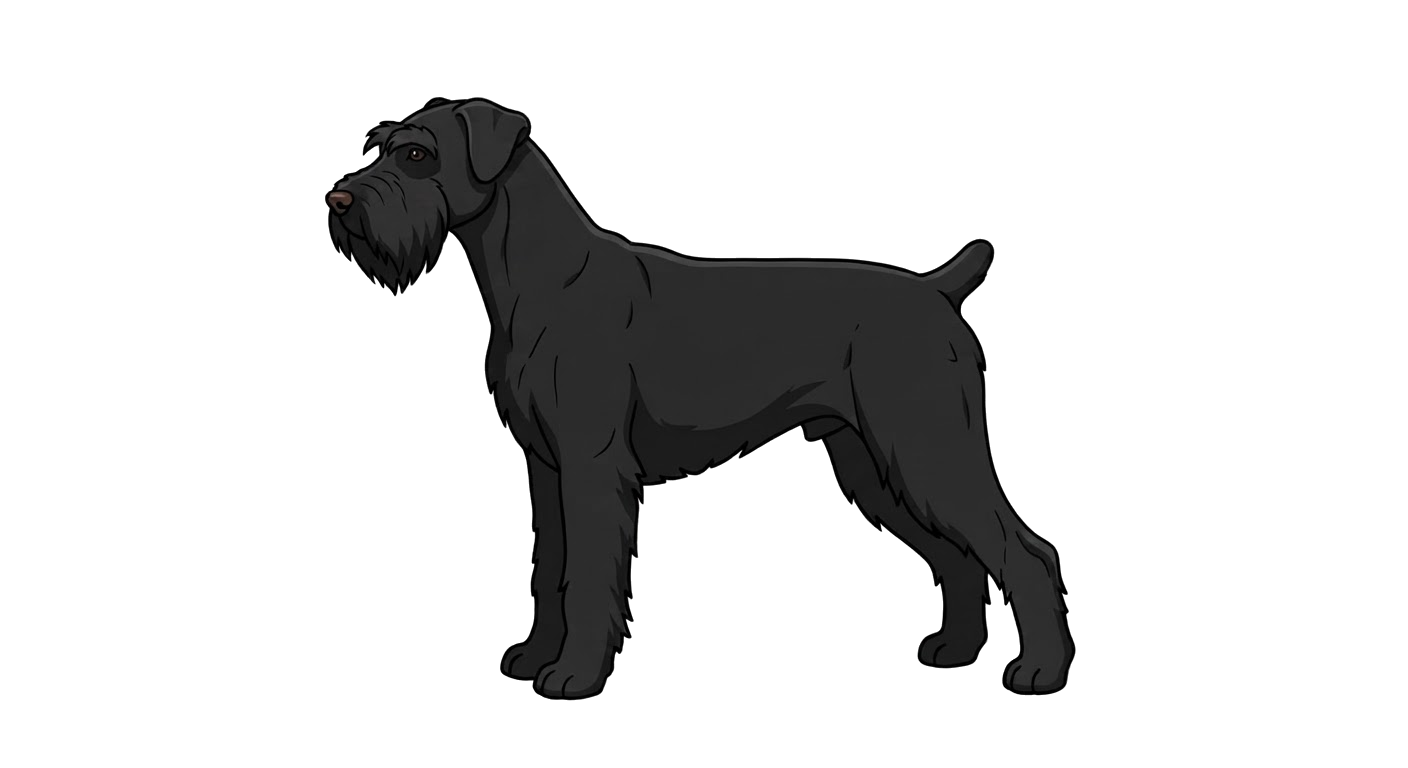
Solid black
Standard colour
The most common and striking colour.
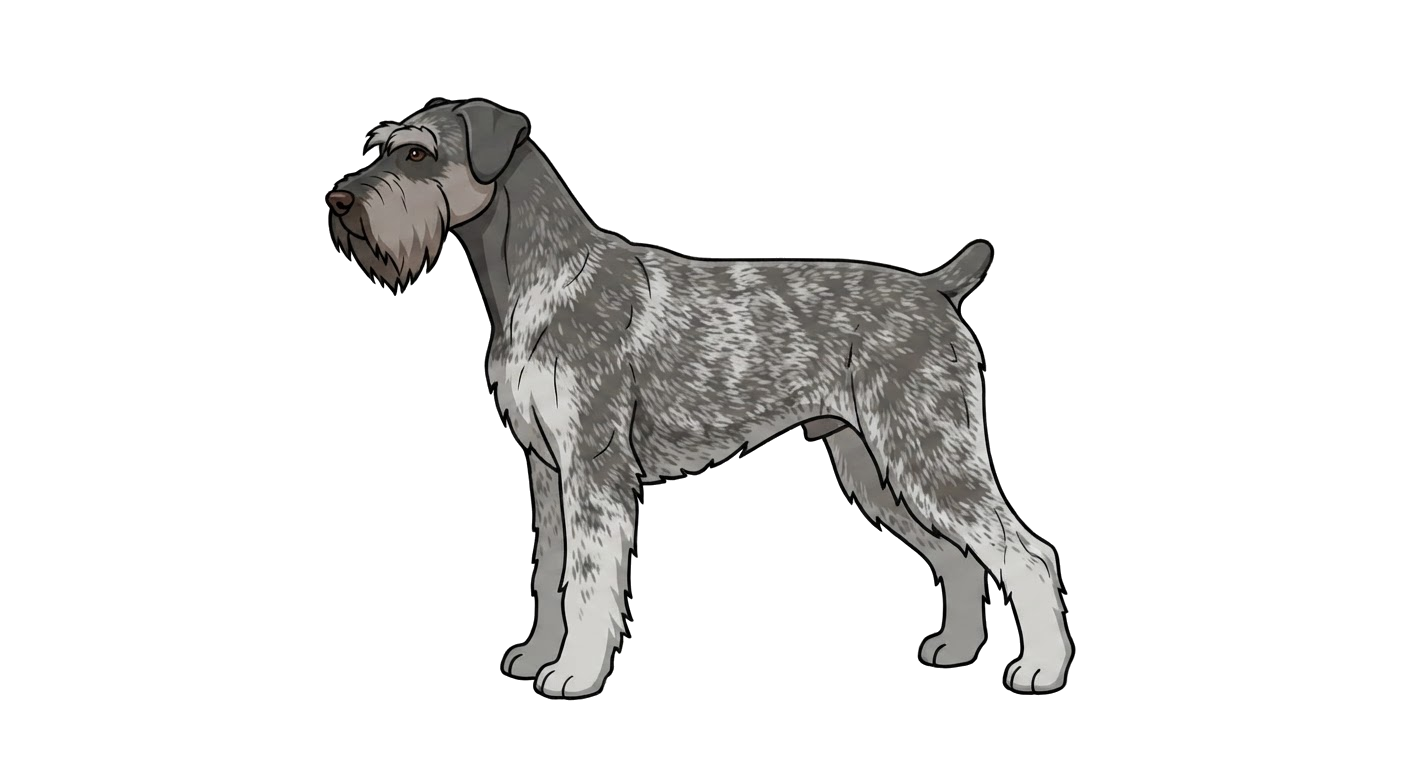
Pepper and salt
Standard colour
A banded grey-and-black coat, traditional working colour.
Outside the standard
Other colours
Dilute coats you will see advertised. They are the same breed, but no kennel club accepts them.
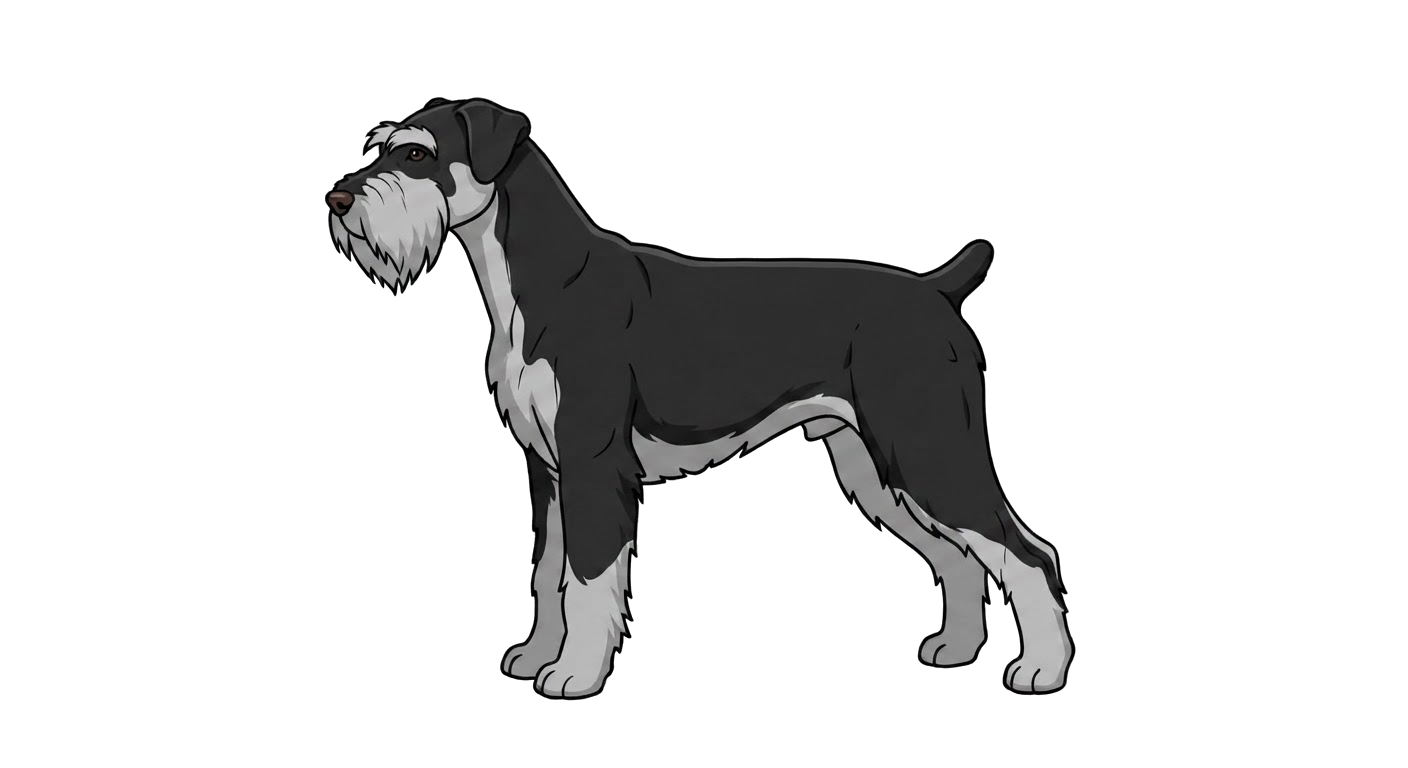
Black and silver
Not in the standard
Seen in some lines but not standard in all registries.
Timeline
History & development
1880s
Bavarian origins
Cattlemen developed a larger version of the Standard Schnauzer to drive stock and guard farms.
1909
First shown
The breed was exhibited in Munich under the name Russian Bear Schnauzer, later dropped.
Early 1900s
Guard work
Munich brewers used the breed to guard beer wagons and cellars overnight.
1930s
Police and military use
Germany adopted the breed for police, army and customs work.
1950s onward
The breed today
Kennel club registrations settled into a steady pattern and the Giant Schnauzer moved from a working specialist to a family companion, with breed clubs in the UK and abroad now focused on health testing and keeping true type alive.
Reference
Breed standard summary
- body
- Sturdy, square in proportion
- coat
- Hard, wiry, dense outer coat with soft undercoat
- ears
- Set high, folded forward when uncropped
- eyes
- Oval, dark, medium-sized
- gait
- Free, balanced, covering ground effortlessly
- head
- Strong, rectangular, with bushy brows and beard
- size
- Giant
- tail
- Set and carried high
- colour
- Solid black, Pepper and salt. Colours outside this list are seen but are not accepted by the kennel clubs.
- temperament
- Typical of the breed: strongest in energy, trainability, grooming. Nervousness or aggression are serious faults in the show ring and in the home.
- general appearance
- Large, robust, imposing working dog
Health
What to screen for
Green means little to worry about, amber means ask the breeder for test results, red means manage it actively.
Hip dysplasia
Screen for it
Ask for BVA/KC hip scores on both parents.
Hypothyroidism
Screen for it
Thyroid testing of breeding stock is advisable.
Bloat
Watch closely
Feed multiple smaller meals to reduce risk in this deep-chested breed.
Autoimmune disorders
Watch closely
Discuss family health history with the breeder.
General information only — always speak to your vet about your own dog.
From real owners
Dogs like this
Giant Schnauzers added by PawPoint members through their pet passports. Share yours to appear here.
Loading the wall…
Made for the Giant Schnauzer
The book, plus prints, hoodies and mugs using our own Giant Schnauzer illustration — and one everyday accessory that suits any dog.
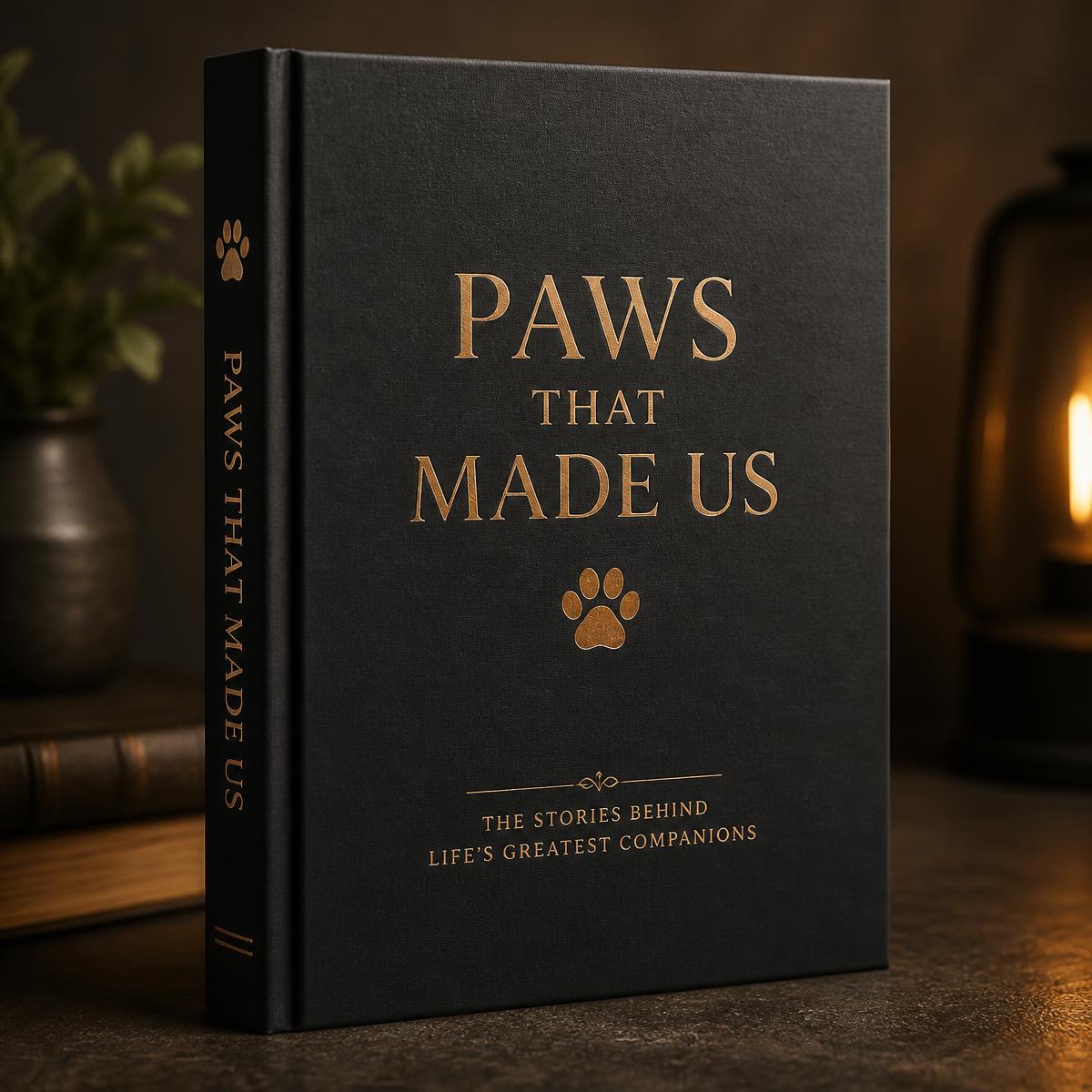
The book
Pawpoint: The Complete Dog Breed Book
Every officially recognised breed plus the unofficial ones nobody else documents. 400+ pages, hardback, printed and shipped from the UK.
Own stock — shipped by us
Framed poster
Giant Schnauzer Framed Poster
Museum-weight print of our Giant Schnauzer illustration, framed or unframed.
Printed to order
Hoodie
Giant Schnauzer Hoodie
Heavyweight hoodie carrying the Giant Schnauzer illustration on the chest.
Printed to order
Mug
Giant Schnauzer Mug
Ceramic mug with the Giant Schnauzer illustration wrapped around it.
Printed to order
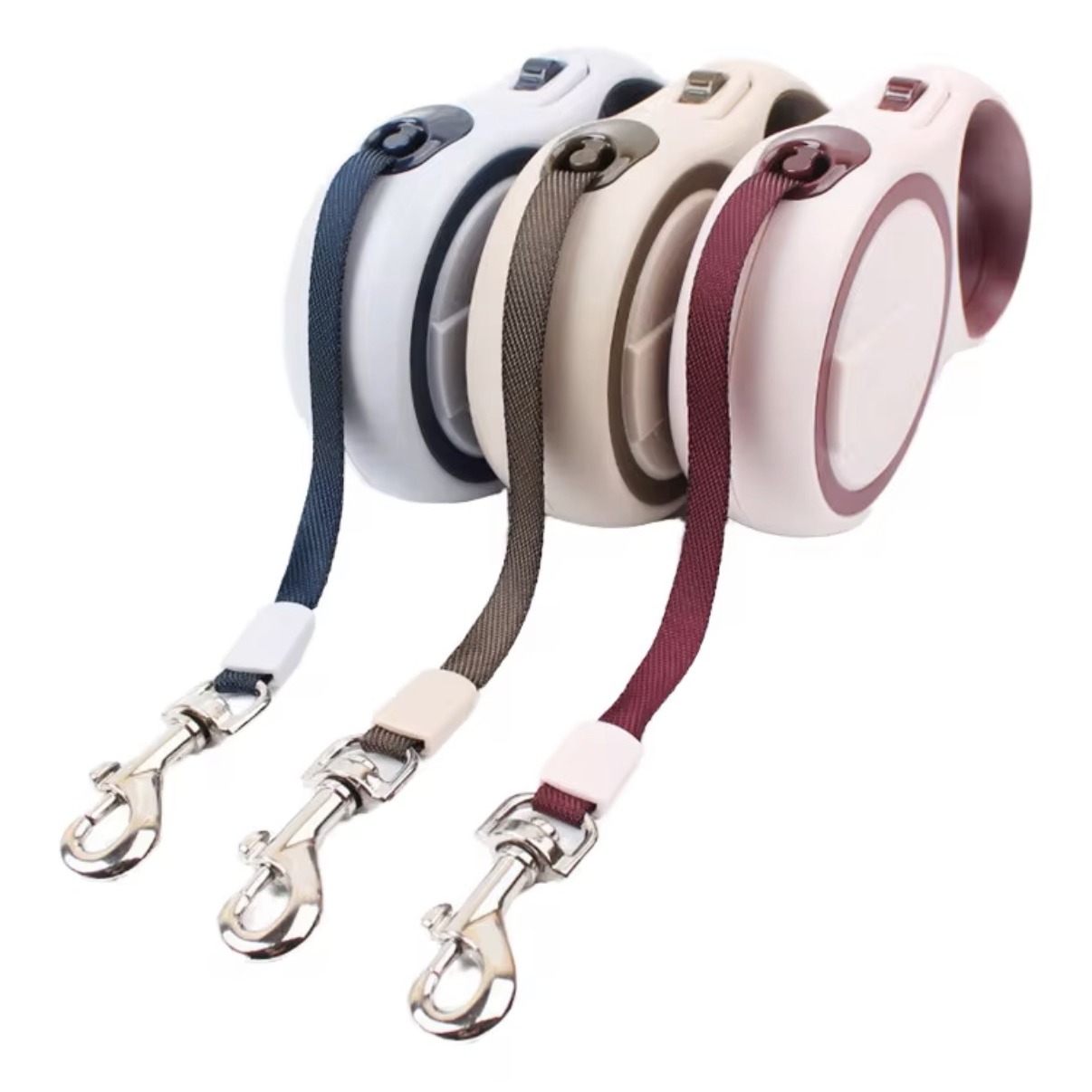
Accessory
Retractable Lead
5m retractable with one-touch brake.
Fits any dog
Pawpoint on YouTube
Watch the full Giant Schnauzer video
Breed deep-dives, history and honest ownership talk. New film every week.
Watch now