
Gordon Setter
GOR-duhn SET-uhr
United Kingdom· Banffshire, Scotland
The Gordon Setter is a large, black-and-tan gundog developed at Gordon Castle in Scotland to find game birds across moorland by scent, then hold a still point.
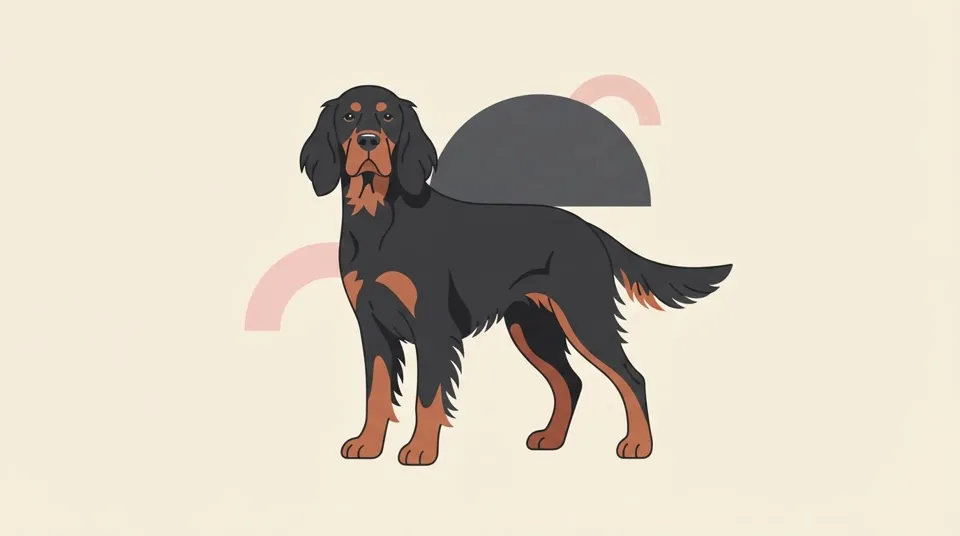
At a glance
Quick facts
- Size
- Large
- Exercise needs
- 1.5-2 hours daily
- Home size suited to
- Medium to large home
- Grooming frequency
- Daily brushing
- Coat length
- Long
- Sheds
- Yes
- Lifespan
- 10-12 years
- Town or country
- Either, with enough exercise
- Garden size needed
- Medium or larger
Where it comes from
Origins of the Gordon Setter

Refined at Gordon Castle in Banffshire, where the Dukes of Gordon needed a setter tough enough for long days on exposed moorland in changeable weather. The rugged terrain favoured a sturdier build than other setter breeds.
- Region
- Banffshire, Scotland
- Climate it was bred for
- Cold, exposed Scottish moorland
- Original job
- Pointing and setting game birds on moorland
The long read
About the breed
The Dukes of Gordon refined the breed at their Banffshire estate through the 18th and early 19th centuries, working from existing black-and-tan setting spaniels to produce a setter powerful and biddable enough to work the Scottish moors all day in variable weather. It is generally considered the most solidly built of the setter breeds.
Living with a Gordon Setter suits an active household, as it needs substantial daily exercise and enjoys having a task, whether formal fieldwork or simply a long free run. It is affectionate and loyal, often forming a particularly strong bond with one person, and can be reserved with strangers. The silky black-and-tan coat needs brushing several times a week and regular attention to feathering on the legs and ears.
Today it is less common than other setters, kept both by shooting people who value its stamina and steadiness, and by pet owners drawn to its striking colouring and devoted temperament, though its lower numbers mean prospective owners may need to travel further to find a litter.
Living with one
Temperament & needs
Our own ratings, based on the breed standard and how these dogs behave in ordinary homes.
Friendliness
3/5
How openly the Gordon Setter greets people it does not know.
Trainability
4/5
Intelligent and capable, responds well to patient training.
Energy
5/5
Needs long, vigorous daily exercise.
Barking
2/5
Not a habitual barker.
Grooming
4/5
Silky coat and feathering need regular brushing.
Suits a first-time owner
3/5
How forgiving the Gordon Setter is for someone taking on their first dog.
Sociability
3/5
Devoted to family, reserved with strangers.
Independence
2/5
Bonds closely, dislikes being left alone.
Illustrated breed standard
The points of the breed
Hover or tap a numbered point to read what the standard asks for.
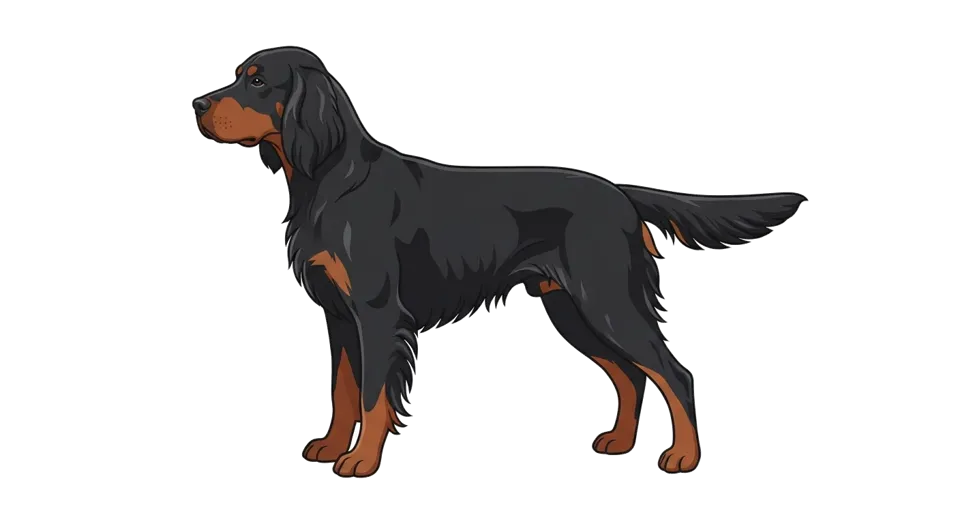
Point 1
Skull
The Gordon Setter's skull is judged on balance rather than size — proportionate to the body, with a clean cheek and a stop typical of the breed. Coarseness or an over-refined head are both faulted.
Colours & patterns
Recognised coats
Which coats the standard accepts — and which are simply popular.
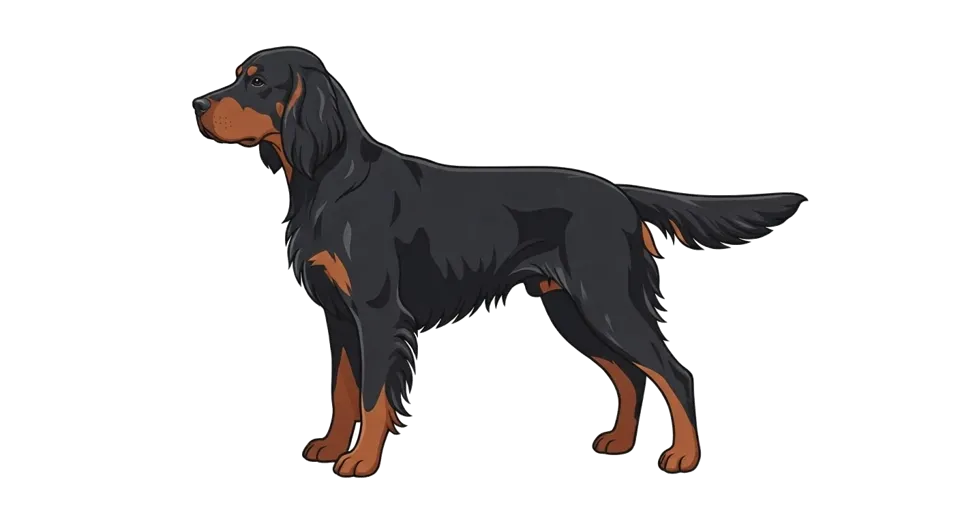
Black and tan
Standard colour
The only standard colouring, with rich chestnut tan points.
Timeline
History & development
1620s
Early references
Black-and-tan setting dogs were recorded at Gordon Castle in Scotland.
1770s-1830s
Refinement
The 4th Duke of Gordon developed a consistent type from existing setting spaniels.
1892
Kennel Club recognition
Formally recognised as a distinct breed, initially called the Black and Tan Setter.
1924
Name change
Officially renamed the Gordon Setter after the family that developed it.
1950s onward
The breed today
Kennel club registrations settled into a steady pattern and the Gordon Setter moved from a working specialist to a family companion, with breed clubs in the UK and abroad now focused on health testing and keeping true type alive.
Reference
Breed standard summary
- body
- Short-coupled, deep through the chest
- coat
- Soft and shining, straight or slightly waved
- ears
- Set low, hanging close to the head
- eyes
- Dark brown, bright expression
- gait
- Free, driving movement covering ground well
- head
- Deep, rather than broad, with a pronounced stop
- size
- Large
- tail
- Straight or slightly curved, carried level
- colour
- Black and tan. Colours outside this list are seen but are not accepted by the kennel clubs.
- temperament
- Typical of the breed: strongest in energy, trainability, grooming. Nervousness or aggression are serious faults in the show ring and in the home.
- general appearance
- Sturdy, well-built setter, the heaviest of the setter breeds
Health
What to screen for
Green means little to worry about, amber means ask the breeder for test results, red means manage it actively.
Hip dysplasia
Screen for it
Ask for BVA/KC hip scores on both parents.
Bloat
Watch closely
Feed smaller meals and avoid exercise straight after eating.
Progressive retinal atrophy
Screen for it
DNA testing is available and worth requesting.
Hypothyroidism
Screen for it
Thyroid testing of breeding stock is advisable.
General information only — always speak to your vet about your own dog.
From real owners
Gordon Setters in the PAWPOINT Pack
Gordon Setters added by PawPoint members through their pet passports. Share yours to appear here.
Loading the wall…
Made for the Gordon Setter
The book, plus hoodies, tees and mugs featuring the Gordon Setter.