Grand Anglo-Français Blanc et Noir
GRAHN AHN-gloh frahn-SEH BLAHN ay NWAHR
France· France
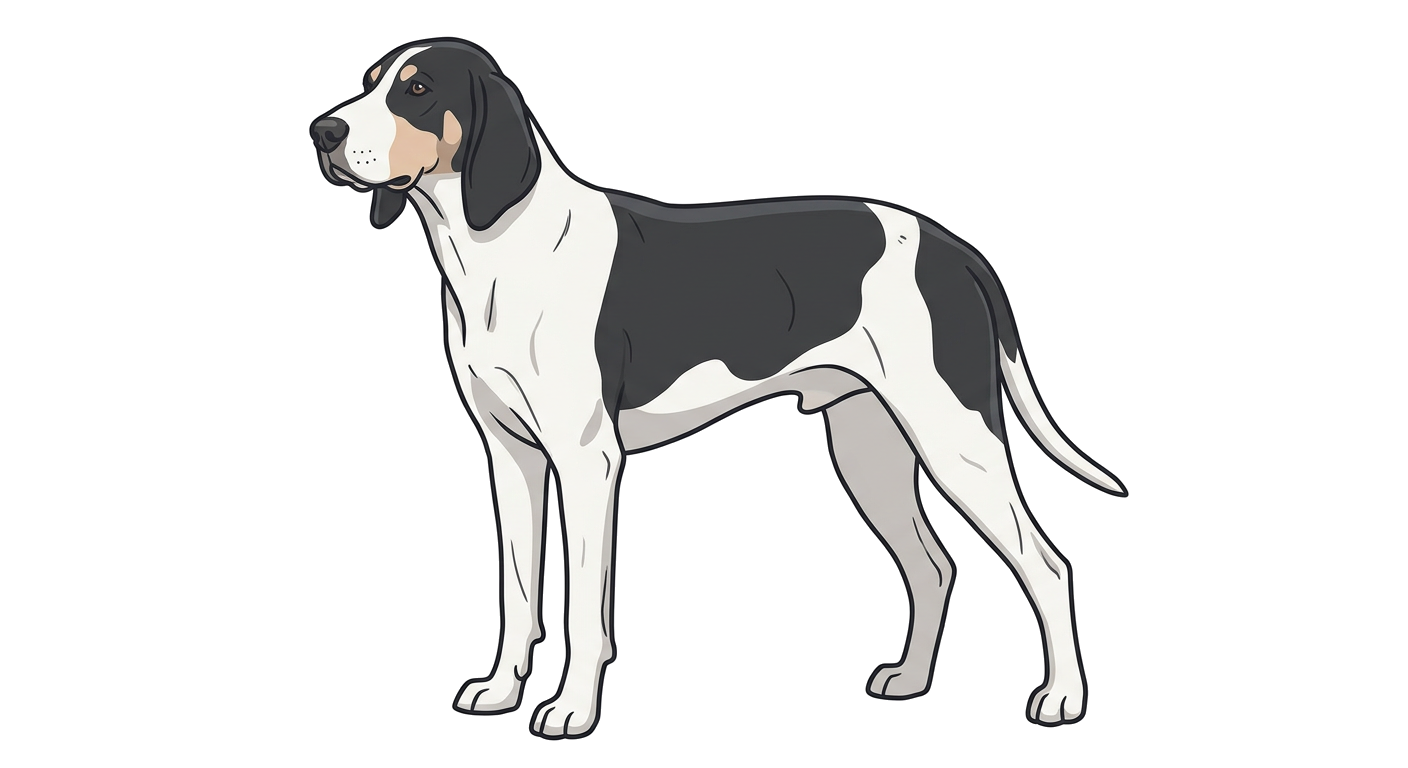
The Grand Anglo-Français Blanc et Noir (Great Anglo-French White and Black Hound) is a large, powerful scenthound developed in France for hunting big game in packs. Formed by crossing traditional French hounds with imported English Foxhounds, it combines the refined scenting ability and resonant voice of French stock with the stamina, bone, and galloping speed of English hunting hounds. Primarily utilised for pursuit of roe deer, red deer, and wild boar, it is distinguished from its close relatives within the Grand Anglo-Français group by its striking bicolour black-and-white coat.
At a glance
Quick facts
Size
Large
Exercise needs
Very high
Home size suited to
Large rural property or kennel
Grooming frequency
Low
Coat length
Short
Sheds
Moderate
Lifespan
10–12 years
Town or country
Country
Garden size needed
Large, securely fenced
Where it comes from
Origins of the Grand Anglo-Français Blanc et Noir
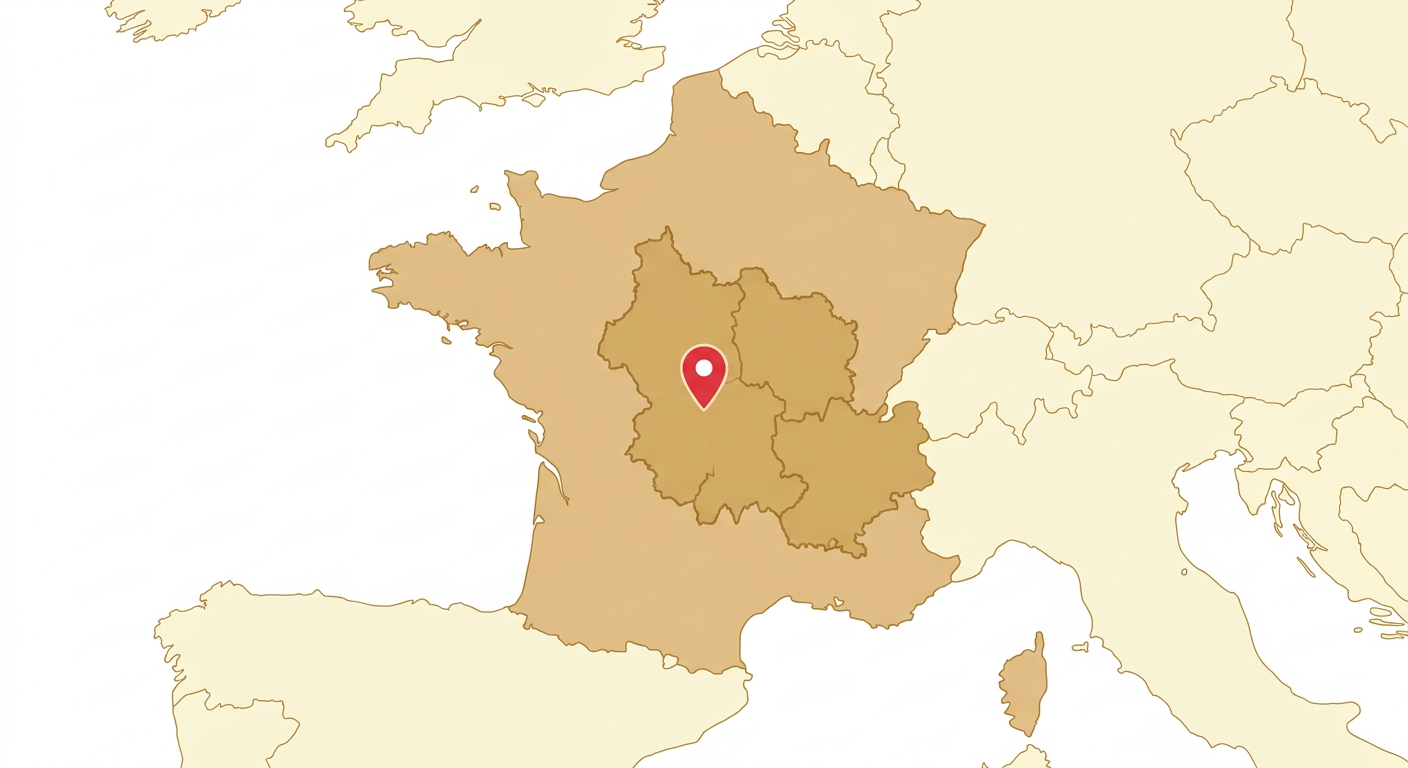
Developed across rural France by crossing native French scenthounds with English Foxhounds for tracking big game.
- Region
- France
- Climate it was bred for
- Temperate maritime and continental
- Original job
- Big game pack hunting (deer and wild boar)
The long read
About the breed
Physically, the breed presents a strong, harmonious, and athletic outline. It possesses a well-proportioned head with a slight stop, dark and expressive eyes, and medium-to-long drop ears that are lightly folded. The back is firm and supported by deep ribs and muscular loins, ending in a sturdy tail carried high when moving. Its short, dense coat offers good resistance to briars and inclement weather, reflecting its heritage as an active field hound capable of working across challenging forested terrain.
In character, the Grand Anglo-Français Blanc et Noir is quintessentially a pack hound: gregarious with other dogs, determined when following scent, and generally gentle though independent. It is rarely kept purely as a domestic companion, as its profound hunting drive, need for extensive physical activity, and ringing hound voice make it best suited to traditional hunt kennels or specialised working rural environments. When properly socialised, it tends to be calm and tractable around humans, though it retains a distinct working focus.
Living with one
Temperament & needs
Our own ratings, based on the breed standard and how these dogs behave in ordinary homes.
Energy
5/5
Calm and low-key around the home.
Barking
4/5
Quick to sound off.
Grooming
1/5
Wash-and-go coat.
Sociability
4/5
Friendly and outgoing.
Independence
4/5
Independent thinker; tolerates being left to it.
Trainability
3/5
Capable, with consistent fair handling.
Illustrated breed standard
The points of the breed
Hover or tap a numbered point to read what the standard asks for.
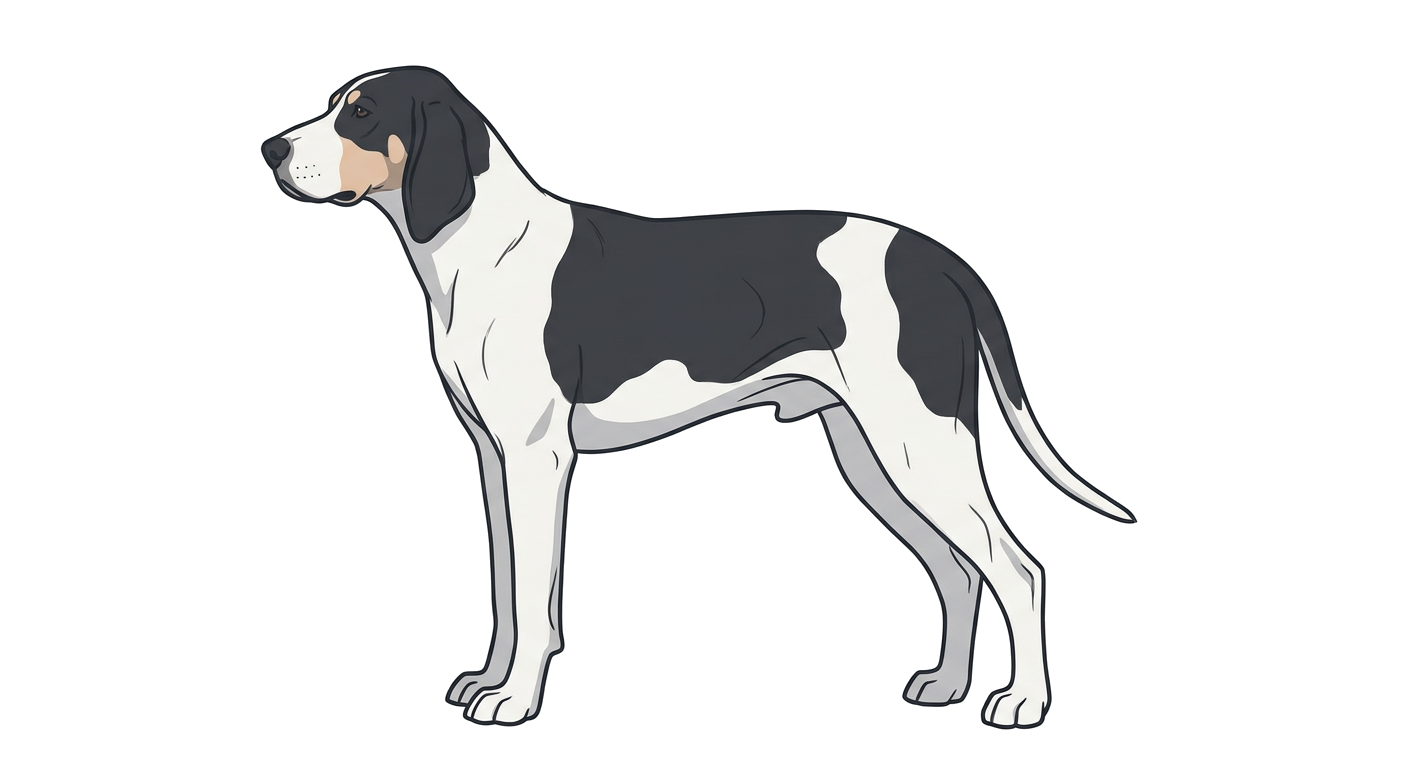
Point 1
Head
Fairly long and moderately broad, in harmony with the body, with a slightly accentuated occiput and gentle stop.
Colours & patterns
Recognised coats
Which coats the standard accepts — and which are simply popular.
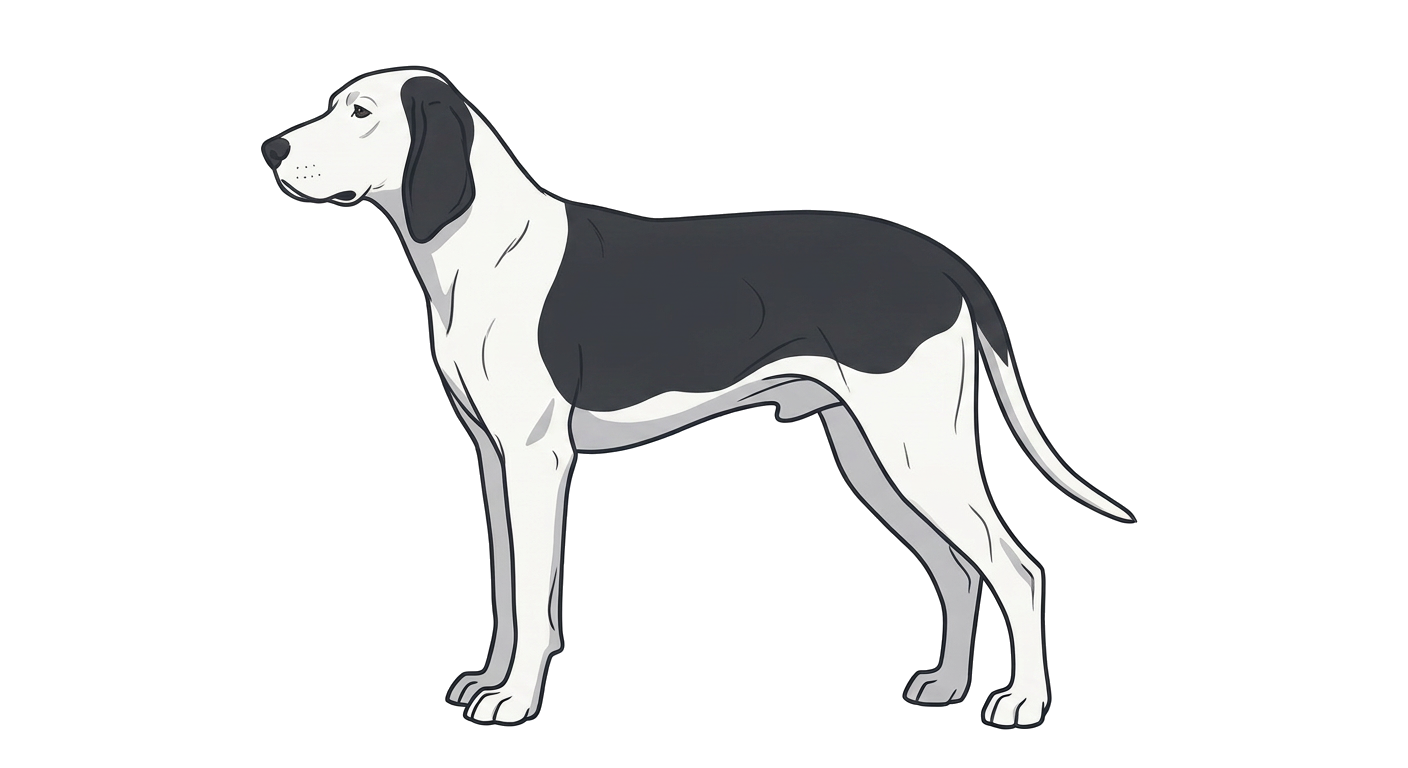
White & Black with Mantle
Standard colour
A solid black mantle over the back on a clean white ground.
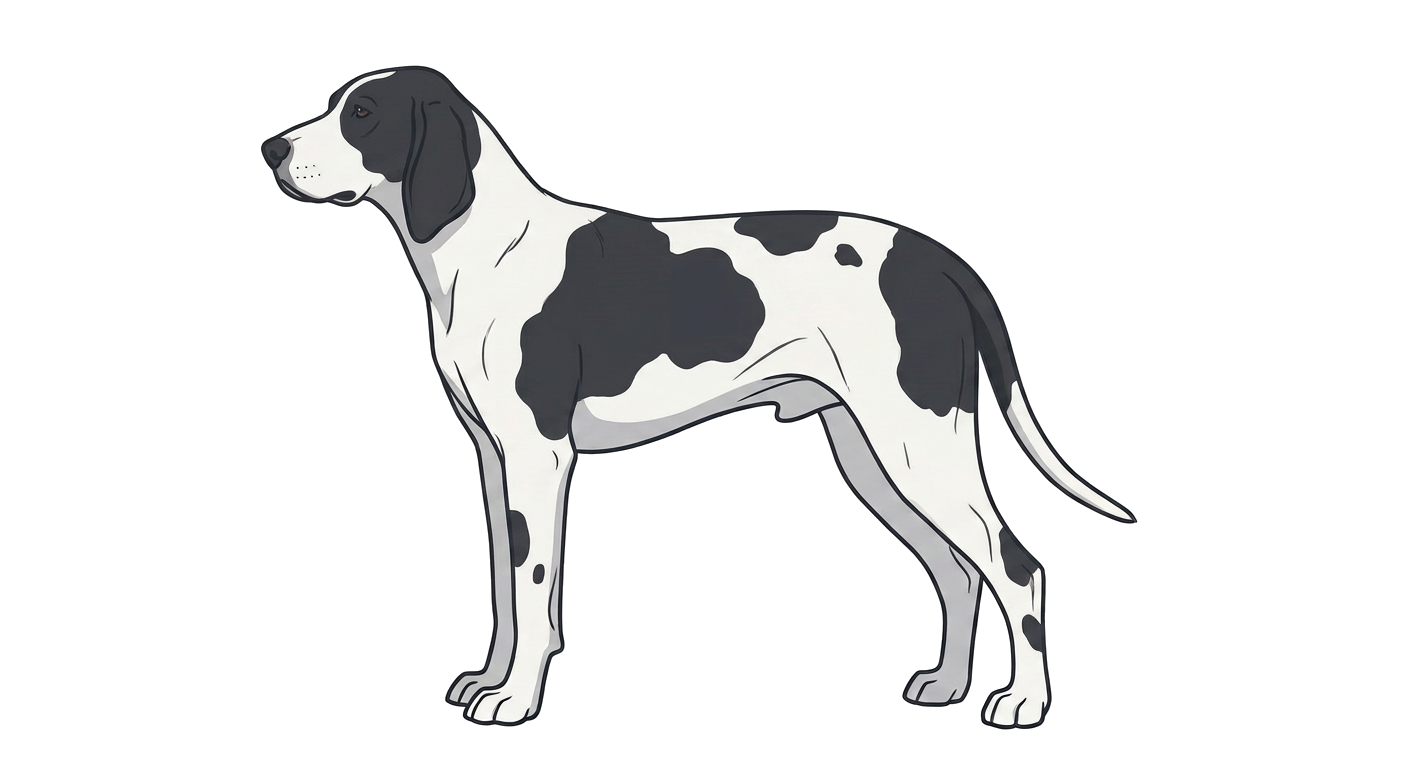
White & Black Patched
Standard colour
Distinct, large black patches distributed across a predominantly white body.
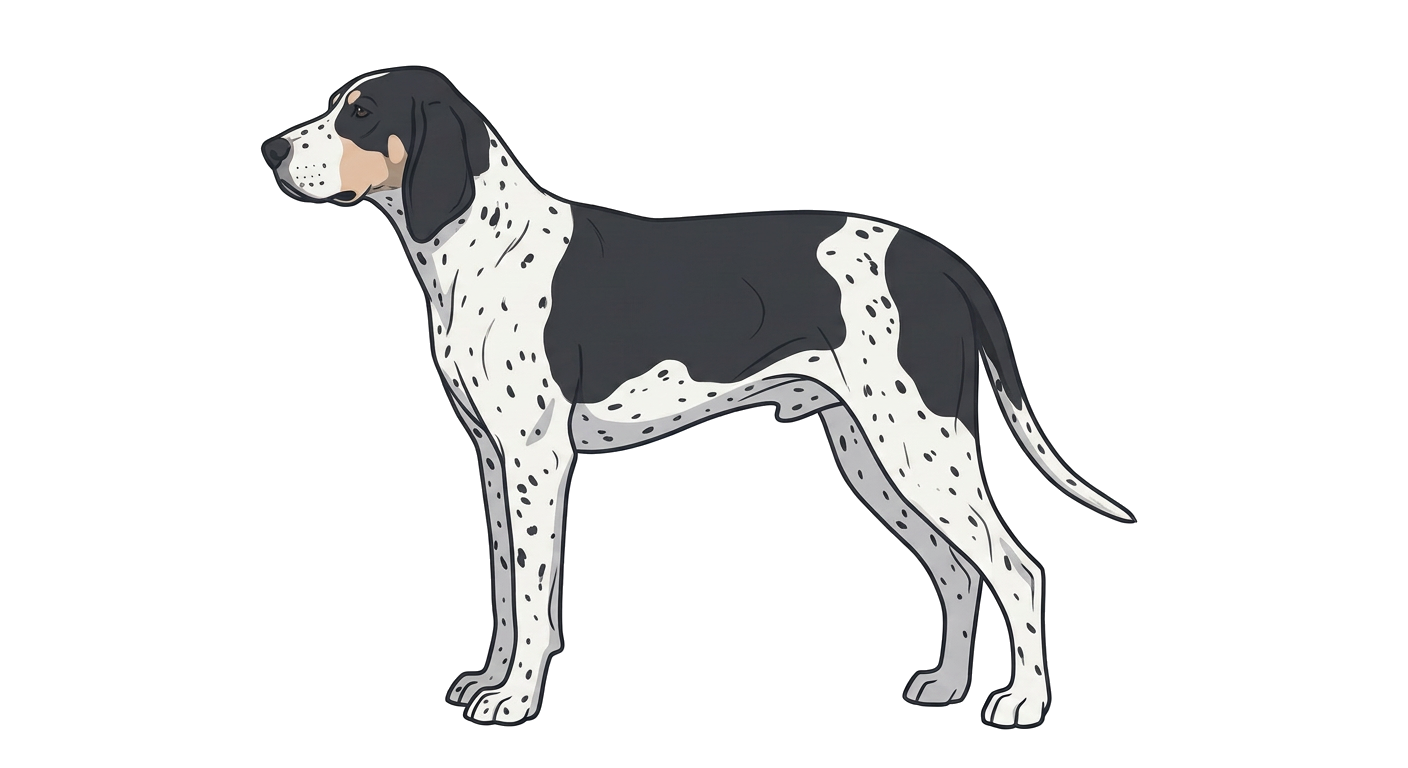
White & Black with Ticking
Standard colour
White ground with black patches accompanied by subtle black flecks or ticking.
Timeline
History & development
19th Century
Initial crossings
French huntsmen systematically cross native hounds, particularly the Poitevin and Saintongeois strains, with imported English Foxhounds to improve stamina and speed.
1957
Official breed classification
The various Anglo-French hunting hounds are formally categorised by the Société Centrale Canine into specific distinct breeds based on size and colour.
1983
FCI recognition
The Fédération Cynologique Internationale officially recognises the Grand Anglo-Français Blanc et Noir under standard number 323.
Present
Working status
The breed remains an active and respected pack hound in France, though it is exceptionally rare as an individual pet outside working sporting circles.
Reference
Breed standard summary
- body
- Deep and broad chest, well-sprung ribs, level and muscular back, strong loins, and slight tuck-up.
- coat
- Short, dense, and smooth, offering good protection against harsh undergrowth.
- ears
- Set at eye level or slightly below, moderately long, lightly folded, and turning inwards towards the tip.
- eyes
- Large, dark brown, with an intelligent and trusting expression; rims are black.
- gait
- Supple, light, and sustained gallop, showing great endurance and ground-covering ease.
- head
- Fairly long and moderately broad, in harmony with the body, with a slightly accentuated occiput and gentle stop.
- size
- Height at the withers is typically 65 to 72 cm for males and 62 to 68 cm for females.
- tail
- Strong at the root, tapering, fairly long, carried proudly with a slight sabre curve when working.
- colour
- White and black, consisting of a white ground with black mantle or large black patches; black ticking or slight roaning is tolerated.
- muzzle
- Substantially straight nasal bridge, of good length, with upper lips sufficiently developed to square off the muzzle.
- temperament
- Courageous, tenacious, and cooperative within a pack, displaying a placid and steady disposition towards humans.
- general appearance
- A large, athletic scenthound of balanced proportions, conveying power, substance, and elegance without heaviness.
Health
What to screen for
Green means little to worry about, amber means ask the breeder for test results, red means manage it actively.
Gastric Dilatation-Volvulus (Bloat)
Watch closely
Deep-chested anatomy creates a predisposition to gastric torsion; feeding management is advisable.
Hip Dysplasia
Screen for it
Large physical build makes screening of breeding stock prudent to reduce degenerative joint issues.
Otitis Externa
Watch closely
Pendent ears reduce ventilation in the ear canal, predisposing to wax accumulation and bacterial or yeast infections.
General information only — always speak to your vet about your own dog.
From real owners
Dogs like this
Grand Anglo-Français Blanc et Noirs added by PawPoint members through their pet passports. Share yours to appear here.
Loading the wall…
Made for the Grand Anglo-Français Blanc et Noir
The book, plus prints, hoodies and mugs using our own Grand Anglo-Français Blanc et Noir illustration — and one everyday accessory that suits any dog.
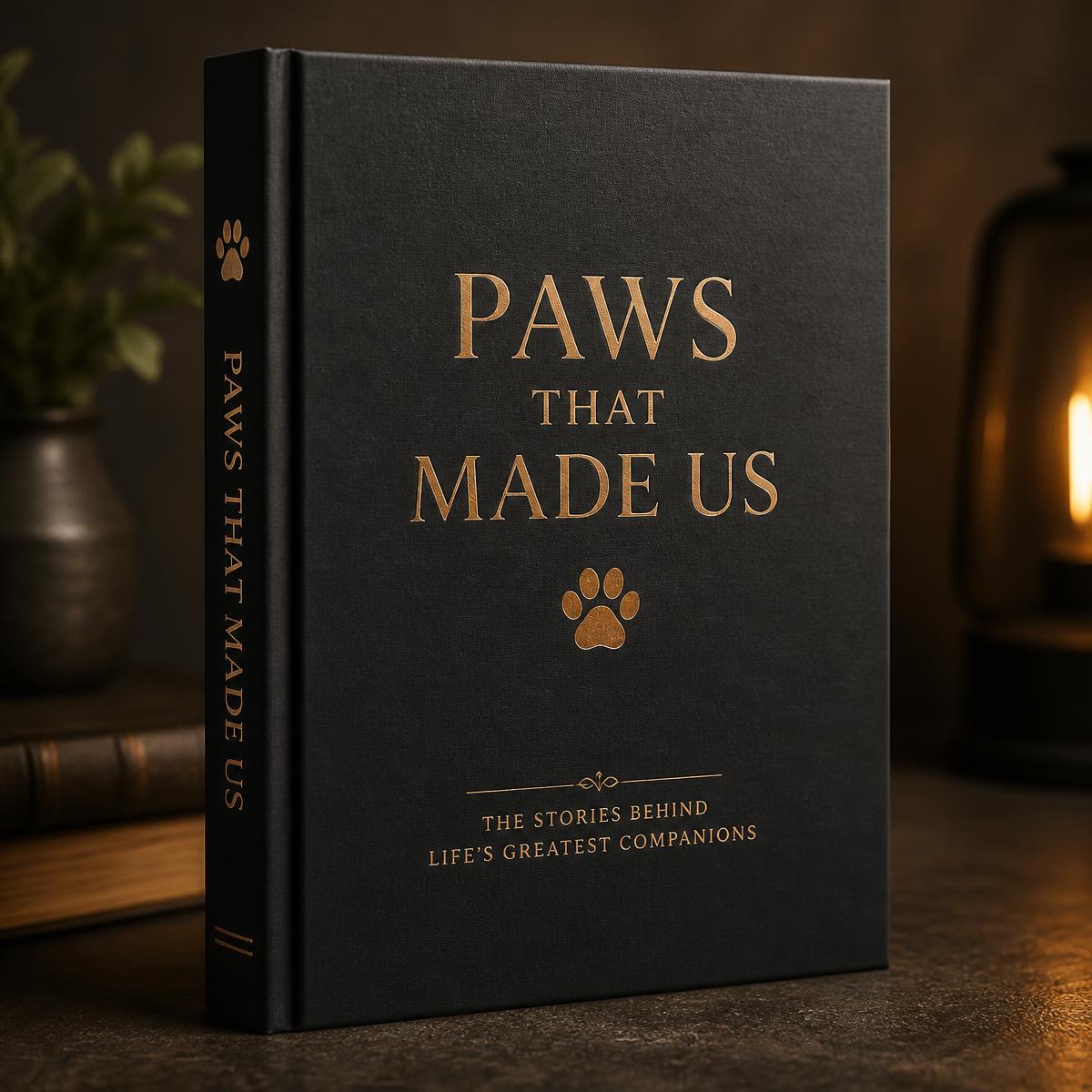
The book
Pawpoint: The Complete Dog Breed Book
Every officially recognised breed plus the unofficial ones nobody else documents. 400+ pages, hardback, printed and shipped from the UK.
Own stock — shipped by us
Framed poster
Grand Anglo-Français Blanc et Noir Framed Poster
Museum-weight print of our Grand Anglo-Français Blanc et Noir illustration, framed or unframed.
Printed to order
Hoodie
Grand Anglo-Français Blanc et Noir Hoodie
Heavyweight hoodie carrying the Grand Anglo-Français Blanc et Noir illustration on the chest.
Printed to order
Mug
Grand Anglo-Français Blanc et Noir Mug
Ceramic mug with the Grand Anglo-Français Blanc et Noir illustration wrapped around it.
Printed to order
Accessory
Slicker & Deshedding Brush
Self-cleaning slicker head for coats of every length.
Fits any dog
Pawpoint on YouTube
Watch the full Grand Anglo-Français Blanc et Noir video
Breed deep-dives, history and honest ownership talk. New film every week.
Watch now