Grand Anglo-Français Tricolore
grahn ahn-gloh frahn-SAY tree-kuh-LOR
France· France
The Grand Anglo-Français Tricolore, or Great Anglo-French Tricolour Hound, is a substantial French scenthound bred specifically for hunting large game in packs. Originating from deliberate crossings of English Foxhounds with traditional French hounds, this breed exemplifies a blend of British stamina and French scenting finesse. It remains predominantly a functional working hound, heavily relied upon in its native country for tracking red deer, roe deer, and wild boar across challenging woodland terrains.
At a glance
Quick facts
Size
Large
Exercise needs
Very High (2+ hours daily)
Home size suited to
Large rural property with specialised kennel facilities
Grooming frequency
Low (weekly brushing)
Coat length
Short
Sheds
Moderate
Lifespan
10–12 years
Town or country
Country only
Garden size needed
Extensive, securely fenced acreage
Where it comes from
Origins of the Grand Anglo-Français Tricolore
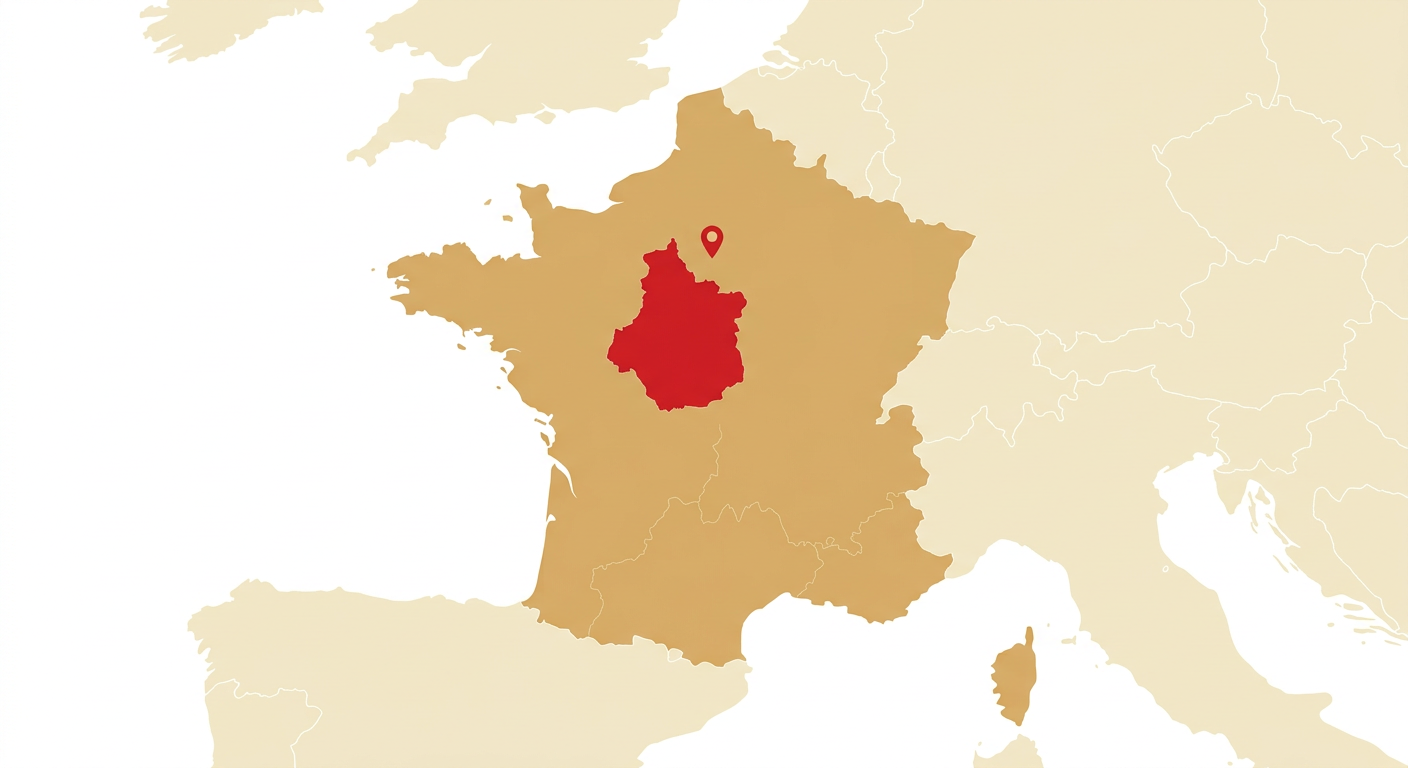
Bred in nineteenth-century France to combine the endurance of English Foxhounds with the keen nose of native French hounds.
- Region
- France
- Climate it was bred for
- Temperate maritime and continental
- Original job
- Pack hunting of big game, particularly wild boar and deer
The long read
About the breed
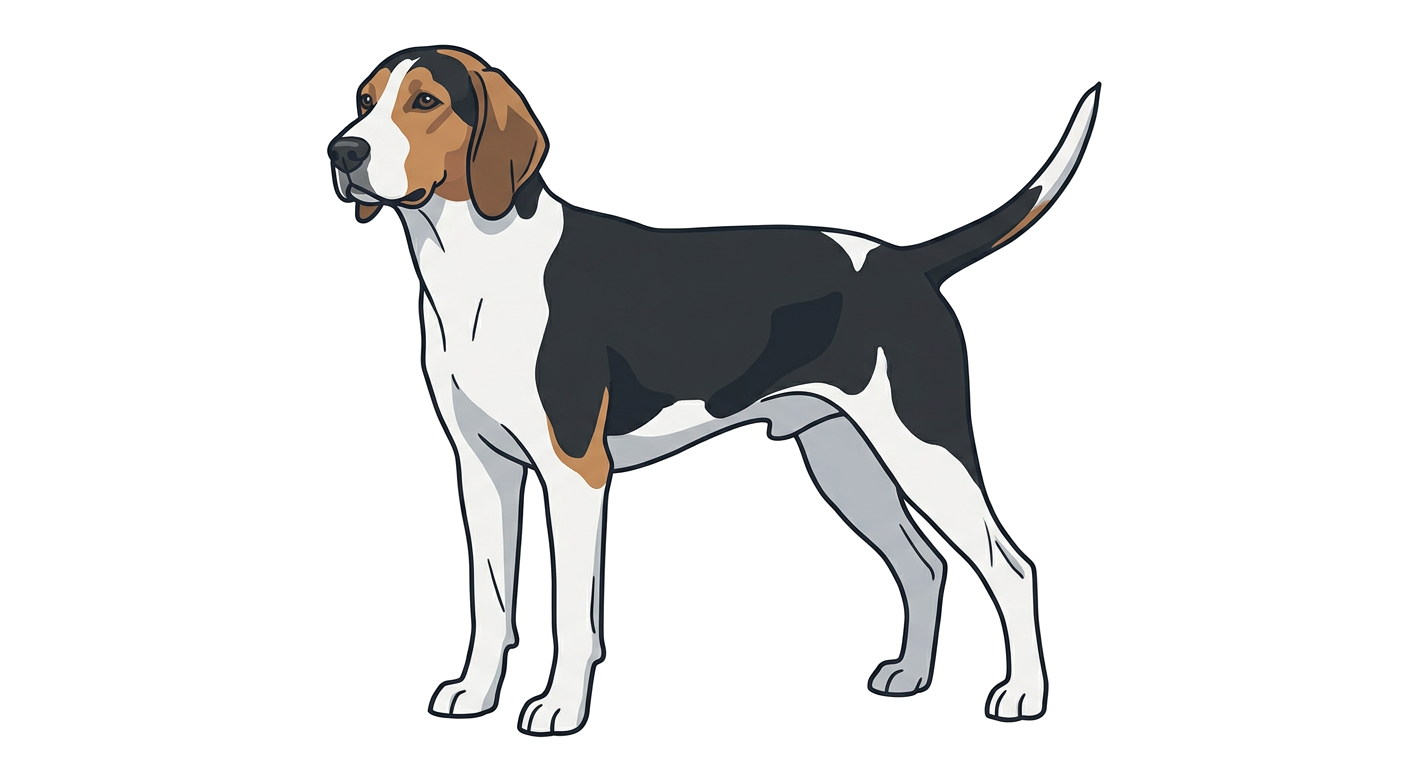
Physically, the breed is tall, robust, and athletic, typically measuring between 60 and 70 centimetres at the withers. Its short, weather-resistant coat exhibits a classic tricolour pattern consisting of black, bright tan, and clean white. Built with a deep chest, muscular quarters, and strong bone, the Grand Anglo-Français Tricolore is engineered for sustained endurance over long distances, possessing a resonant voice that carries well across extensive hunting estates.
In terms of temperament, this hound is courageous, tenacious, and single-minded in the field, yet generally calm when settled within a kennel environment. Because it is bred almost exclusively as a pack animal with an intense prey drive, it is poorly suited to life as a conventional family pet or an urban companion. The breed requires extensive exercise, secure containment, and handlers who understand the specific management needs of large working scenthounds.
Living with one
Temperament & needs
Our own ratings, based on the breed standard and how these dogs behave in ordinary homes.
Energy
5/5
Calm and low-key around the home.
Barking
4/5
Quick to sound off.
Grooming
1/5
Wash-and-go coat.
Sociability
3/5
Steady with people it knows.
Independence
4/5
Independent thinker; tolerates being left to it.
Trainability
2/5
Slow and stubborn — keep sessions short.
Illustrated breed standard
The points of the breed
Hover or tap a numbered point to read what the standard asks for.
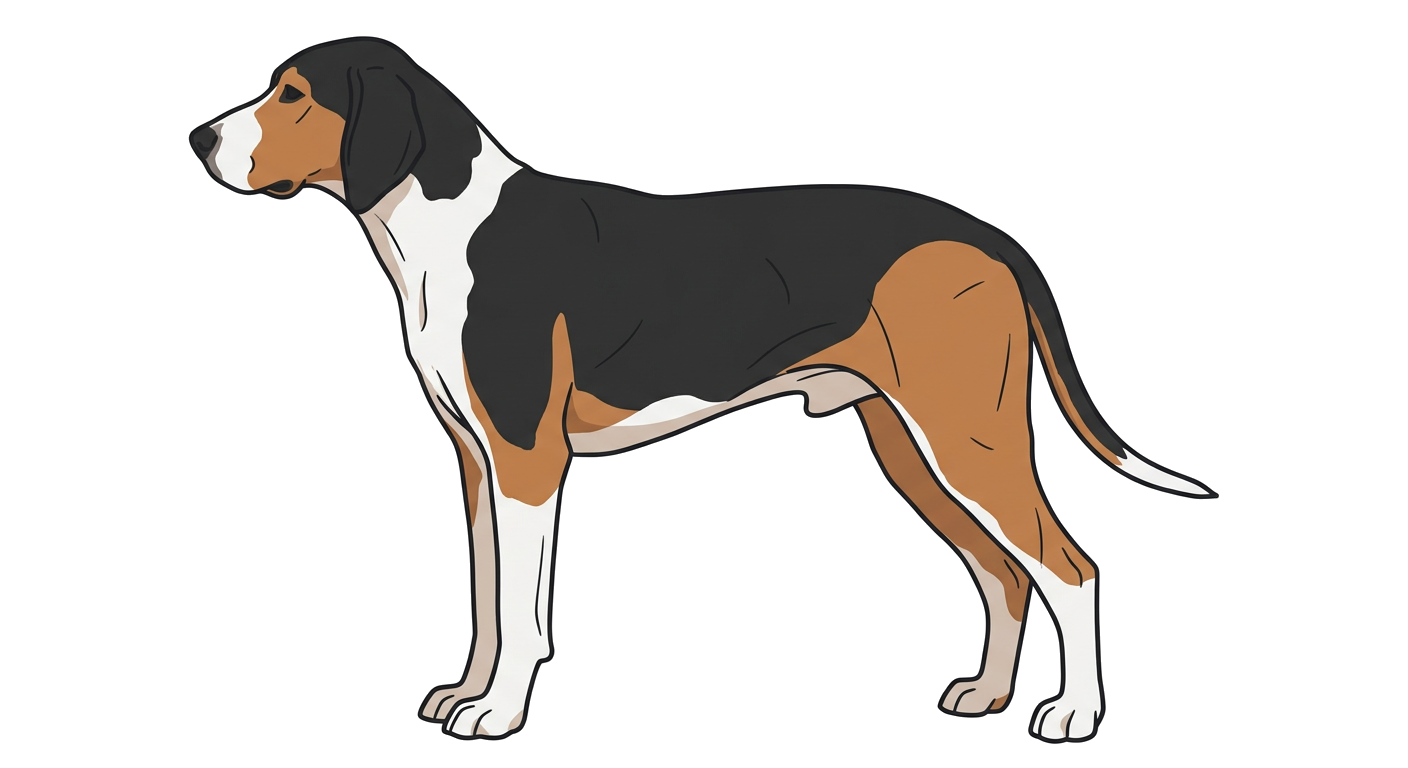
Point 1
Head
Moderately long and imposing, with a flat skull, moderate stop, and a straight nasal bridge.
Colours & patterns
Recognised coats
Which coats the standard accepts — and which are simply popular.
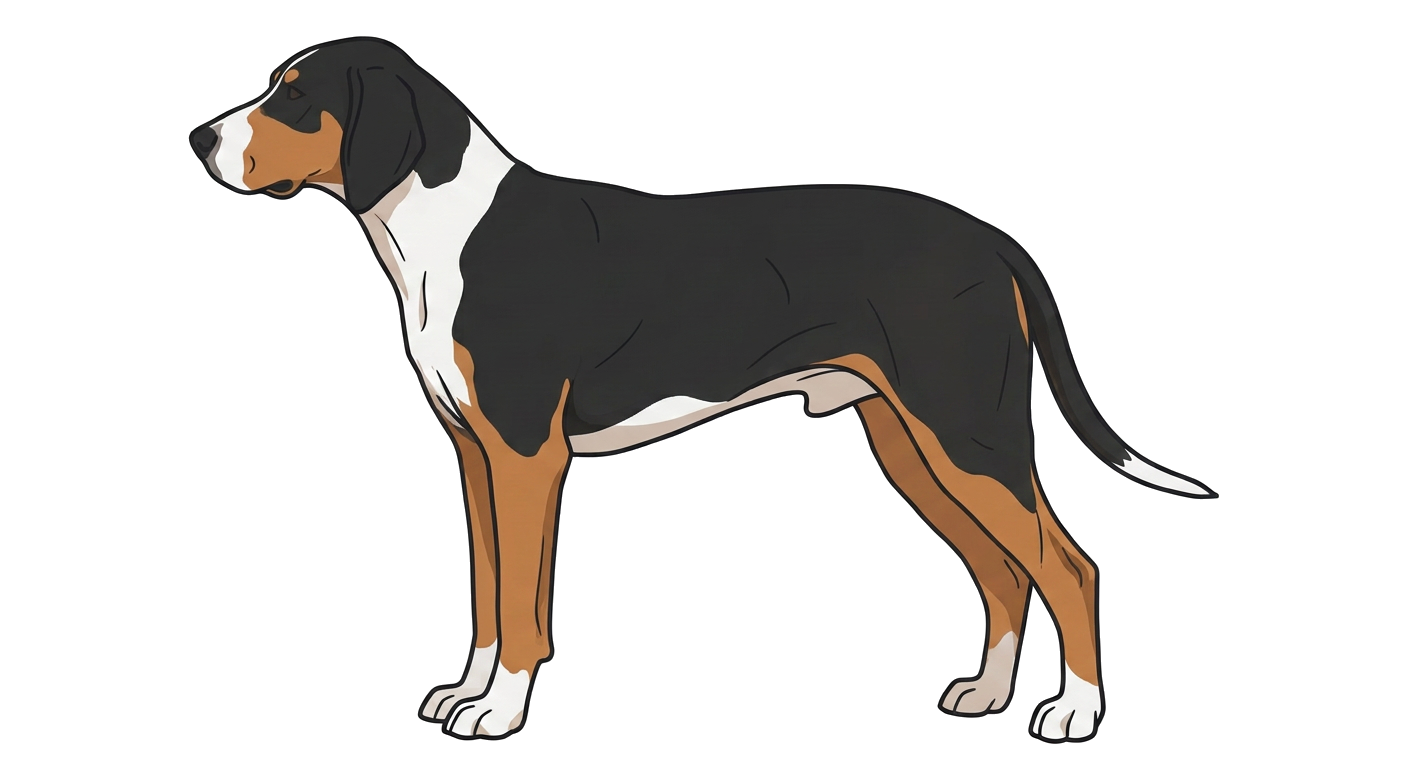
Black Mantle Tricolour
Standard colour
A solid black blanket over the back with vivid tan points on the head and limbs over a white ground.
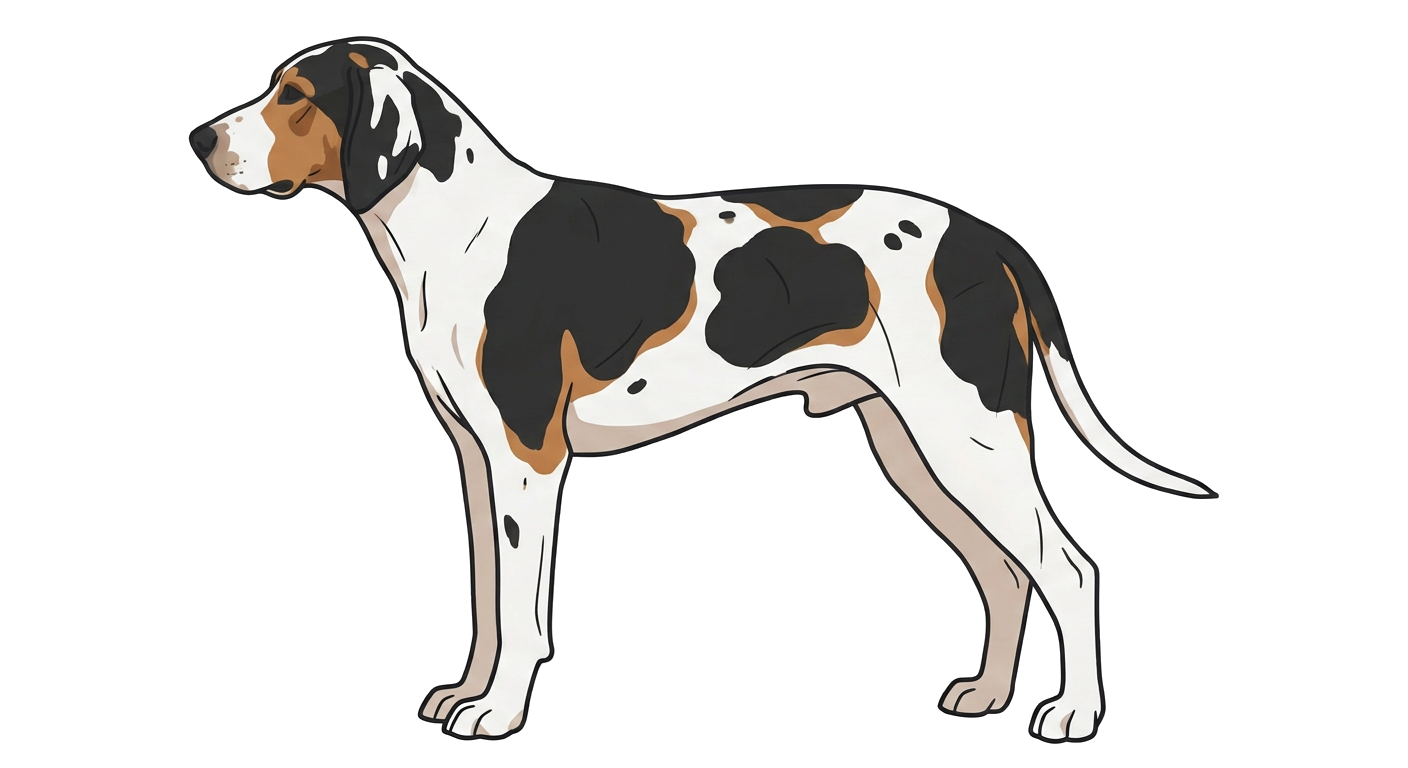
Piebald Tricolour
Standard colour
Predominantly white coat broken by distinct black patches and warm tan markings.
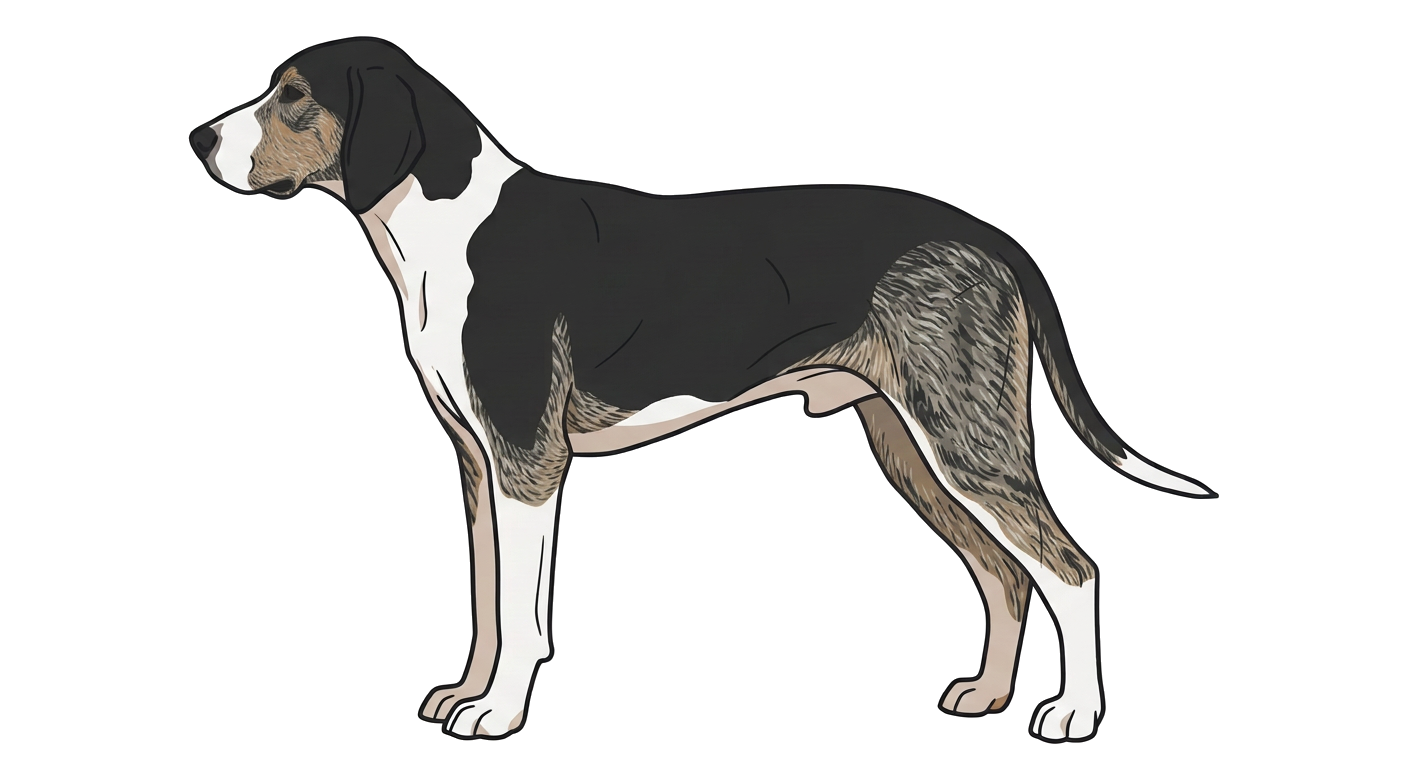
Tricolour with Louvard Shading
Standard colour
Tricolour pattern displaying wolf-like grizzled hairs (louvard or poil de lièvre) on the tan areas.
Timeline
History & development
19th Century
Foundation Crosses
French huntsmen systematically crossed imported English Foxhounds with native breeds such as the Poitevin and Saintongeois hounds to introduce speed and stamina into traditional packs.
1957
Breed Classification
The diverse Anglo-French pack hounds were formally categorised into distinct breeds based on size and coat colouration, establishing the Grand Anglo-Français Tricolore as an independent type.
1978
FCI Standardisation
The Fédération Cynologique Internationale officially recognised the breed standard under Group 6, cementing its status in international canine pedigree registries.
Present
Modern Working Role
The breed remains almost exclusively confined to working venery packs in rural France, with minimal presence in companion show rings or domestic homes.
Reference
Breed standard summary
- body
- Deep, well-developed chest reaching the elbows, with a broad, straight back, strong muscular loin, and slightly tucked-up flank.
- coat
- Short, dense, smooth, and reasonably coarse, offering protection against briars and inclement weather.
- ears
- Set at eye level, broad at the base, medium in length, flat or slightly turned, hanging close to the cheeks.
- eyes
- Large, brown, set moderately deep, giving a frank, intelligent, and focused hunting expression.
- gait
- Easy, ground-covering, and balanced, showing great endurance and an effortless galloping action.
- head
- Moderately long and imposing, with a flat skull, moderate stop, and a straight nasal bridge.
- size
- Height at the withers ranges from 60 to 70 cm for both dogs and bitches.
- tail
- Strong at the root, of good length, well-furnished with hair, and carried elegantly in a sabre curve when moving.
- colour
- Tricolour: typically a black mantle or large black patches, vivid tan markings on the head and legs, and clear white ground.
- muzzle
- Substantial and roughly equal in length to the skull, with neatly fitting upper lips covering the lower jaw.
- temperament
- Tenacious, brave, independent on scent, and highly cooperative within a pack hierarchy.
- general appearance
- A large, powerful, well-balanced scenthound displaying both French elegance in the head and English solidity throughout the frame.
Health
What to screen for
Green means little to worry about, amber means ask the breeder for test results, red means manage it actively.
Gastric Dilatation-Volvulus (GDV)
Screen for it
A deep thoracic cavity predisposes the breed to life-threatening stomach torsion, requiring vigilant post-feeding management.
Hip Dysplasia
Screen for it
Developmental joint laxity can occur in large working hounds, though systematic screening data remains limited.
Otitis Externa
Watch closely
Pendulous ears restrict ventilation, increasing the likelihood of bacterial or yeast infections if not regularly inspected.
Field Trauma
Watch closely
A vigorous hunting style exposes dogs to skin punctures, muscular strains, and encounters with dangerous game.
General information only — always speak to your vet about your own dog.
From real owners
Dogs like this
Grand Anglo-Français Tricolores added by PawPoint members through their pet passports. Share yours to appear here.
Loading the wall…
Made for the Grand Anglo-Français Tricolore
The book, plus prints, hoodies and mugs using our own Grand Anglo-Français Tricolore illustration — and one everyday accessory that suits any dog.
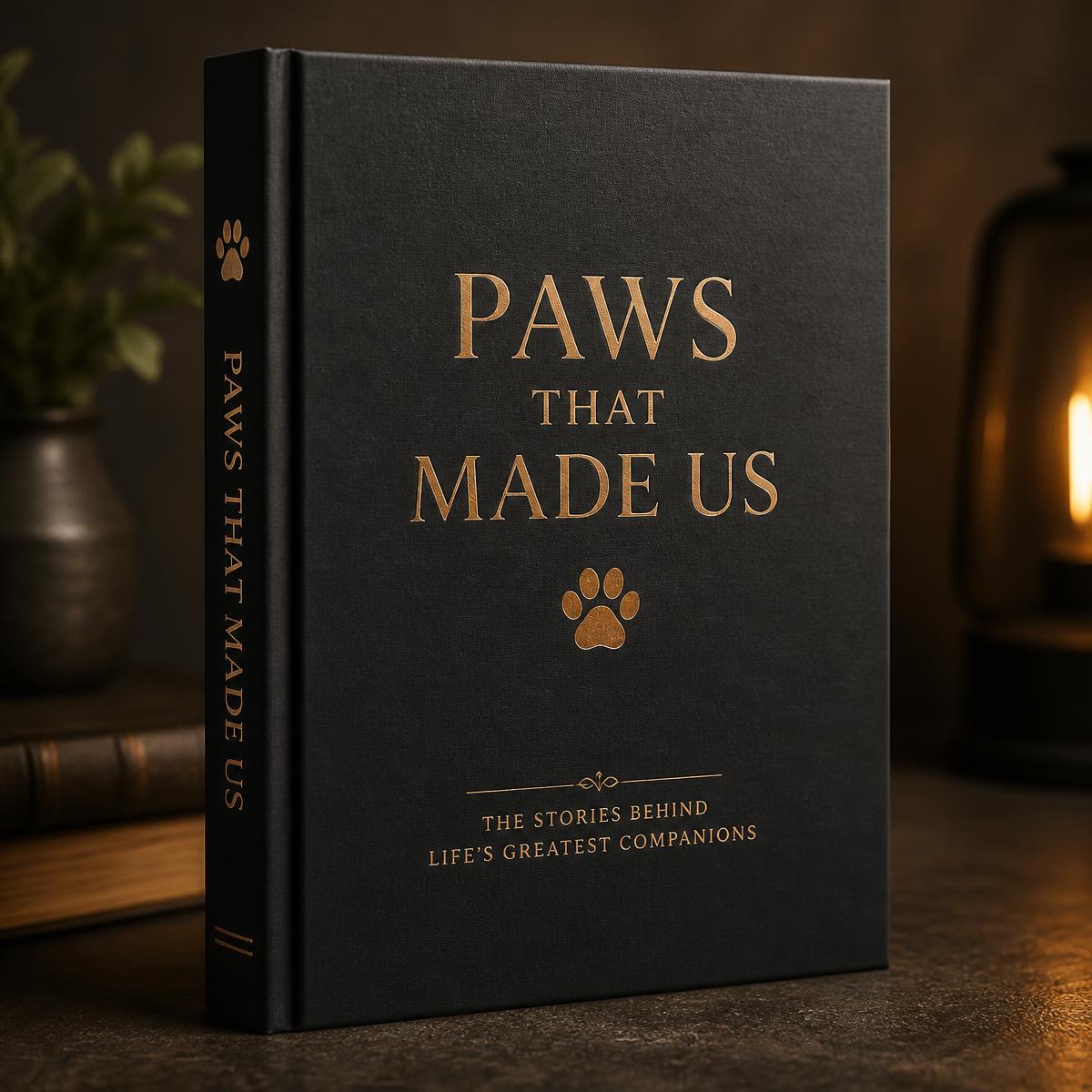
The book
Pawpoint: The Complete Dog Breed Book
Every officially recognised breed plus the unofficial ones nobody else documents. 400+ pages, hardback, printed and shipped from the UK.
Own stock — shipped by us
Framed poster
Grand Anglo-Français Tricolore Framed Poster
Museum-weight print of our Grand Anglo-Français Tricolore illustration, framed or unframed.
Printed to order
Hoodie
Grand Anglo-Français Tricolore Hoodie
Heavyweight hoodie carrying the Grand Anglo-Français Tricolore illustration on the chest.
Printed to order
Mug
Grand Anglo-Français Tricolore Mug
Ceramic mug with the Grand Anglo-Français Tricolore illustration wrapped around it.
Printed to order

Accessory
Travel Water Bottle & Bowl
550ml bottle with a fold-out drinking trough.
Fits any dog
Pawpoint on YouTube
Watch the full Grand Anglo-Français Tricolore video
Breed deep-dives, history and honest ownership talk. New film every week.
Watch now