
Greater Swiss Mountain Dog
GRAY-tuhr SWISS MOWN-tuhn
Switzerland· Swiss Alps
The Greater Swiss Mountain Dog is a large, tricolour draught and drover breed from the Swiss Alps, believed to descend from mastiff-type dogs brought by Roman legions.
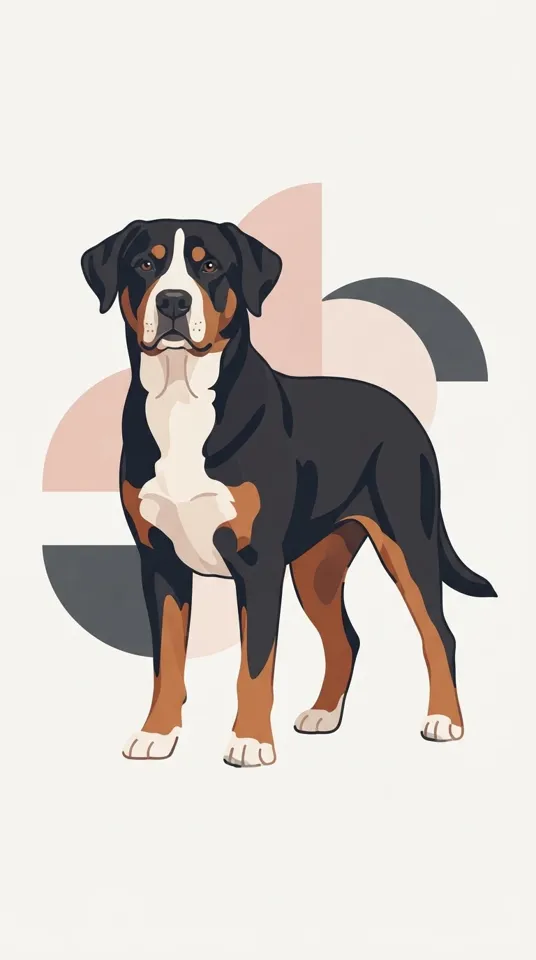
At a glance
Quick facts
- Size
- Giant
- Exercise needs
- 1 hour daily plus mental stimulation
- Home size suited to
- Large home with space to stretch out
- Grooming frequency
- Twice weekly brush
- Coat length
- Medium
- Sheds
- Yes, heavily when moulting
- Lifespan
- 8-11 years
- Town or country
- Better suited to the country
- Garden size needed
- Large and securely fenced
Where it comes from
Origins of the Greater Swiss Mountain Dog
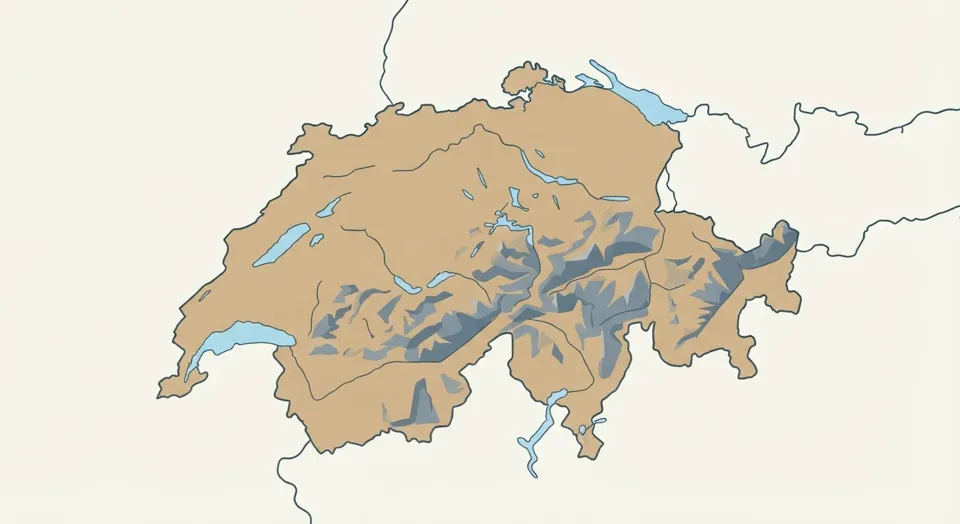
Bred in the Swiss Alps to haul carts and drive cattle between high pastures, requiring strength, sure-footedness and tolerance of cold mountain weather. Its dense double coat protected it through harsh winters.
- Region
- Swiss Alps
- Climate it was bred for
- Cold, mountainous alpine terrain
- Original job
- Draught work and cattle droving
The long read
About the breed
Farmers in the Swiss cantons used it for centuries to pull carts of milk and cheese to market and to drive cattle between alpine pastures, valuing its strength and calm temperament in mountain conditions. The breed nearly vanished by the early 20th century until Swiss cynologist Albert Heim identified surviving examples in 1908 and championed its revival.
Living with one requires space and an owner comfortable with a genuinely large, strong dog; it is calm, loyal and good-natured, generally excellent with children, but its size means training and boundaries need to be established early. It sheds a moderate amount year-round with heavier seasonal coat blows, and its working heritage means it is happiest with a task such as cart-pulling or hiking alongside its family.
Today it is kept mainly as a family companion and occasional draught or carting dog, still relatively rare outside Switzerland and North America, prized for a temperament that combines physical power with notable gentleness.
Living with one
Temperament & needs
Our own ratings, based on the breed standard and how these dogs behave in ordinary homes.
Friendliness
4/5
How openly the Greater Swiss Mountain Dog greets people it does not know.
Trainability
4/5
Calm and biddable, though can be slow-maturing.
Energy
3/5
Moderate exercise needs, enjoys work such as carting.
Barking
2/5
Not a frequent barker.
Grooming
3/5
Moderate shedding, heavier during seasonal coat blows.
Suits a first-time owner
4/5
How forgiving the Greater Swiss Mountain Dog is for someone taking on their first dog.
Sociability
4/5
Good-natured with family and generally with children.
Independence
2/5
Prefers to be near its people.
Illustrated breed standard
The points of the breed
Hover or tap a numbered point to read what the standard asks for.
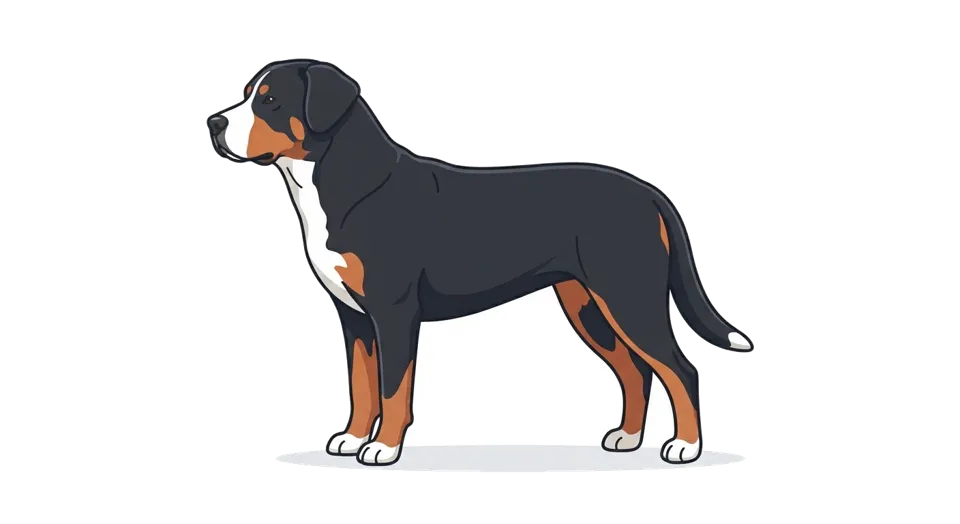
Point 1
Skull
The Greater Swiss Mountain Dog's skull is judged on balance rather than size — proportionate to the body, with a clean cheek and a stop typical of the breed. Coarseness or an over-refined head are both faulted.
Colours & patterns
Recognised coats
Which coats the standard accepts — and which are simply popular.
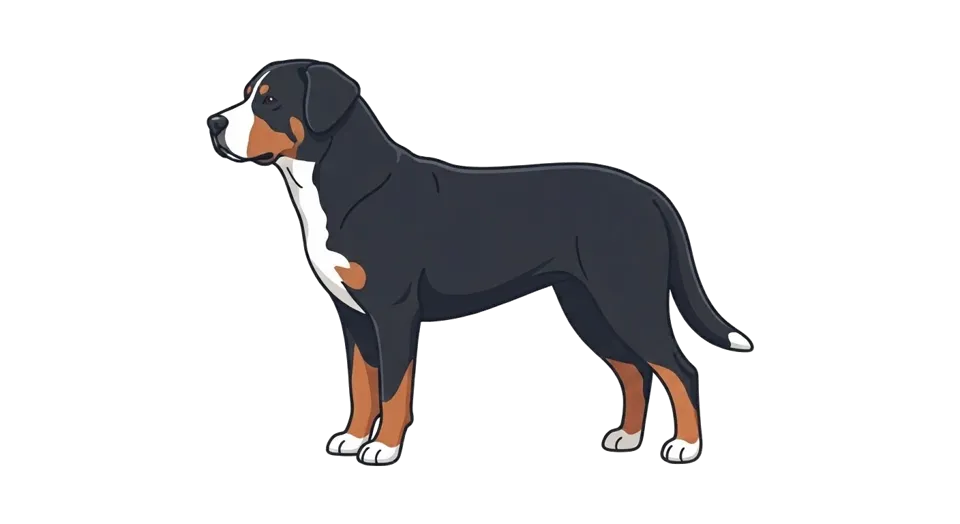
Black, red and white
Standard colour
The only recognised colour combination, with a symmetrical white blaze and chest marking.
Timeline
History & development
Roman era
Ancient origins
Large mastiff-type dogs are believed to have arrived with Roman legions and developed into Swiss farm dogs.
1908
Rediscovery
Cynologist Albert Heim identified surviving examples at a dog show and began championing the breed.
1910
Breed club founded
A Swiss breed club was formed to formalise the standard.
1968
Reaches North America
The breed was imported to the United States, later gaining AKC recognition.
Reference
Breed standard summary
- body
- Sturdy, level topline, deep chest
- coat
- Dense, short to medium double coat
- ears
- Medium, triangular, set high, hanging close
- eyes
- Almond-shaped, hazel to chestnut brown
- gait
- Powerful, ground-covering trot
- head
- Broad, flat skull with a strong muzzle
- size
- Giant
- tail
- Thick, carried low, slight upward curve at rest
- colour
- Black, red and white. Colours outside this list are seen but are not accepted by the kennel clubs.
- temperament
- Typical of the breed: strongest in trainability, sociability, energy. Nervousness or aggression are serious faults in the show ring and in the home.
- general appearance
- Large, powerful, confident tricolour mountain dog
Health
What to screen for
Green means little to worry about, amber means ask the breeder for test results, red means manage it actively.
Hip and elbow dysplasia
Screen for it
Ask for BVA/KC hip and elbow scores on both parents.
Bloat
Watch closely
Feed smaller meals and avoid vigorous exercise around feeding times.
Epilepsy
Watch closely
Discuss family history of seizures with the breeder.
Splenic conditions
Screen for it
Some lines show a predisposition; ask about family history.
General information only — always speak to your vet about your own dog.
From real owners
Greater Swiss Mountain Dogs in the PAWPOINT Pack
Greater Swiss Mountain Dogs added by PawPoint members through their pet passports. Share yours to appear here.
Loading the wall…
Made for the Greater Swiss Mountain Dog
The book, plus hoodies, tees and mugs featuring the Greater Swiss Mountain Dog.