
Griffon Bruxellois
"GRIFF-on broo-SEL-wah"
Belgium· Brussels
The Griffon Bruxellois is a small, wiry-coated toy breed from Brussels, bred originally to hunt rats in stable yards and later refined into a fashionable companion with an almost human, quizzical expression.
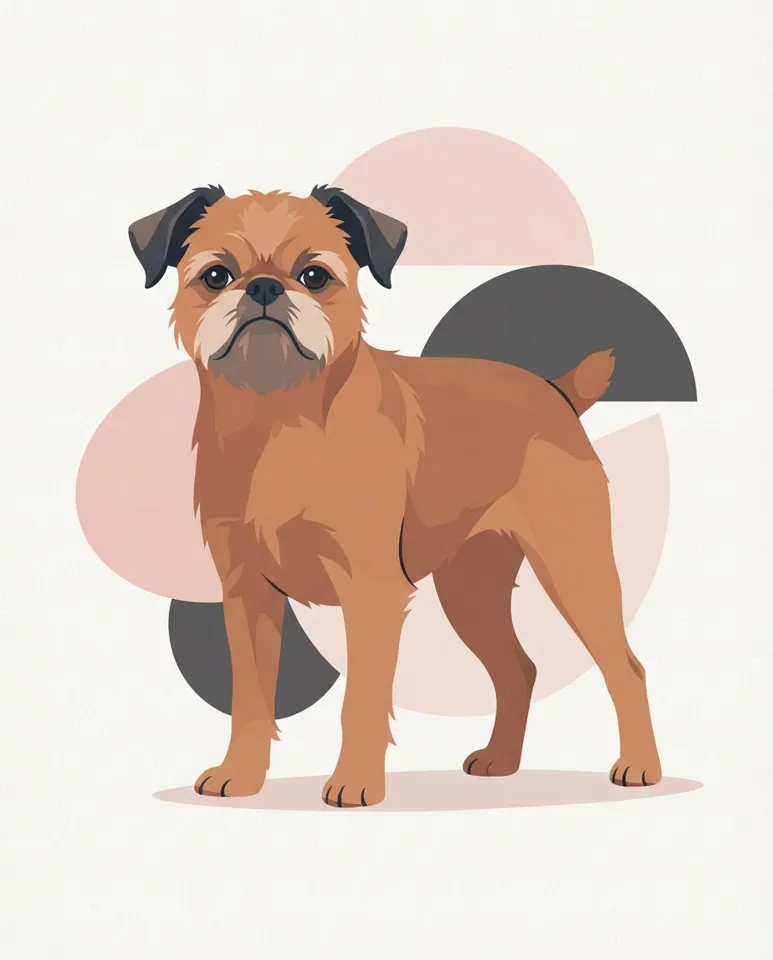
At a glance
Quick facts
- Size
- Toy
- Exercise needs
- 30-45 minutes daily
- Home size suited to
- Flat or any size home
- Grooming frequency
- Weekly brush, hand-strip a few times a year
- Coat length
- Wiry
- Sheds
- Little, needs stripping instead
- Lifespan
- 12-15 years
- Town or country
- Either, happy in town
- Garden size needed
- None needed
Where it comes from
Origins of the Griffon Bruxellois
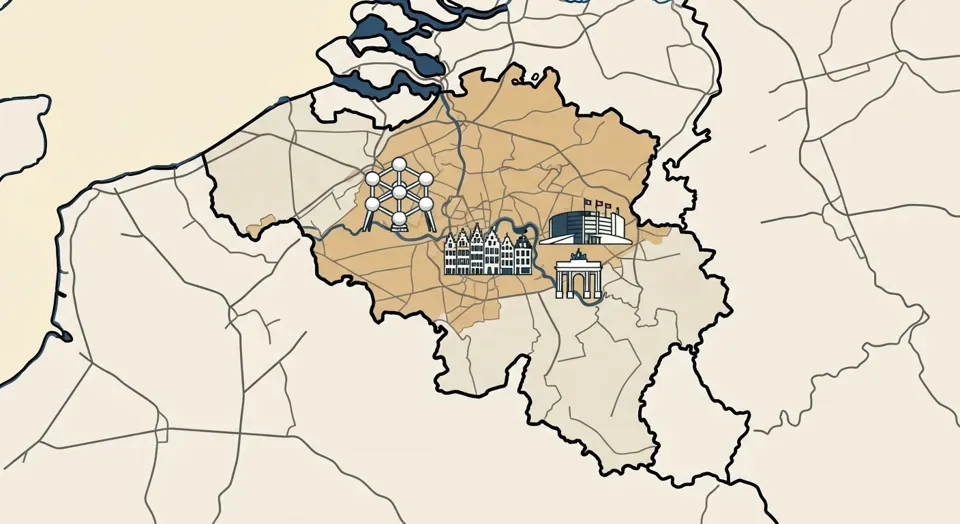
Bred in the cobbled stable yards and cab ranks of 19th-century Brussels, where a small, wiry terrier-type dog was needed to keep vermin down among the horses. Its compact size suited cramped city stables rather than open farmland.
- Region
- Brussels
- Climate it was bred for
- Mild, damp lowland city climate
- Original job
- Ratting in stable yards
The long read
About the breed
Its ancestors were the Griffon d'Ecurie ("stable griffon"), a rough little ratter kept by Brussels cab drivers in the early 19th century, crossed with the Pug and King Charles Spaniel to soften the coat and shorten the muzzle. Queen Marie Henriette of Belgium took up the breed in the 1870s and its popularity spread quickly among the Brussels middle classes, who valued a small, sturdy dog able to work in stables and ride in a cab.
Living with a Griffon Bruxellois means a dog that attaches closely to one or two people and can be genuinely unsettled by long absences or a houseful of strangers. It is alert, quick to learn and often comical, but the flat face brings breathing limitations in heat and after exercise, and the rough coat needs hand-stripping two or three times a year to stay smart rather than matted.
Today the breed is a minority but devoted presence on the British show and pet scene, kept mostly by owners who enjoy its terrier-like character in toy-dog form. Buyers should seek breeders prioritising open nostrils and a functional muzzle over extreme flatness.
Living with one
Temperament & needs
Our own ratings, based on the breed standard and how these dogs behave in ordinary homes.
Friendliness
3/5
How openly the Griffon Bruxellois greets people it does not know.
Trainability
3/5
Bright but can be stubborn without motivation.
Energy
3/5
Enjoys short brisk walks and indoor play.
Barking
3/5
Will alert bark at visitors and noises.
Grooming
3/5
Rough coat needs hand-stripping a few times a year.
Suits a first-time owner
3/5
How forgiving the Griffon Bruxellois is for someone taking on their first dog.
Sociability
3/5
Devoted to its people, wary of strangers.
Independence
2/5
Dislikes being left alone for long spells.
Illustrated breed standard
The points of the breed
Hover or tap a numbered point to read what the standard asks for.
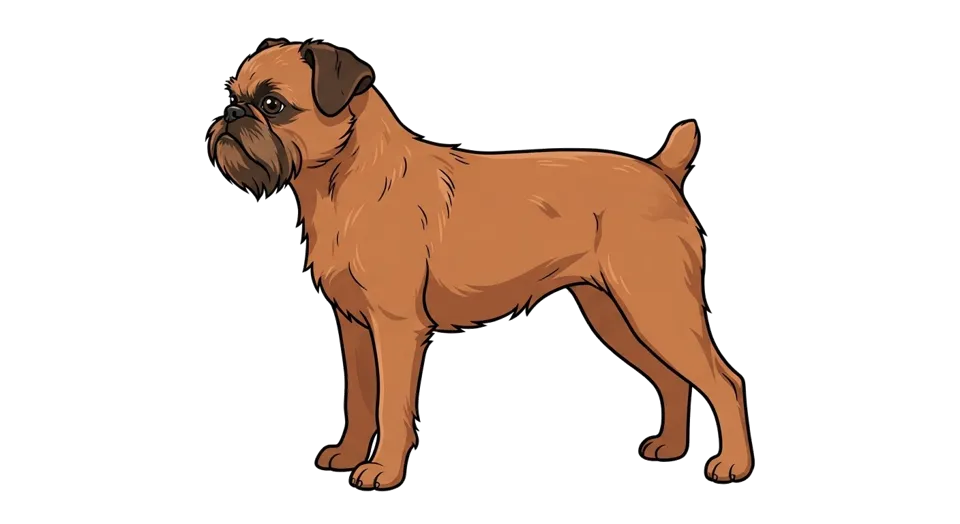
Point 1
Skull
The Griffon Bruxellois's skull is judged on balance rather than size — proportionate to the body, with a clean cheek and a stop typical of the breed. Coarseness or an over-refined head are both faulted.
Colours & patterns
Recognised coats
Which coats the standard accepts — and which are simply popular.
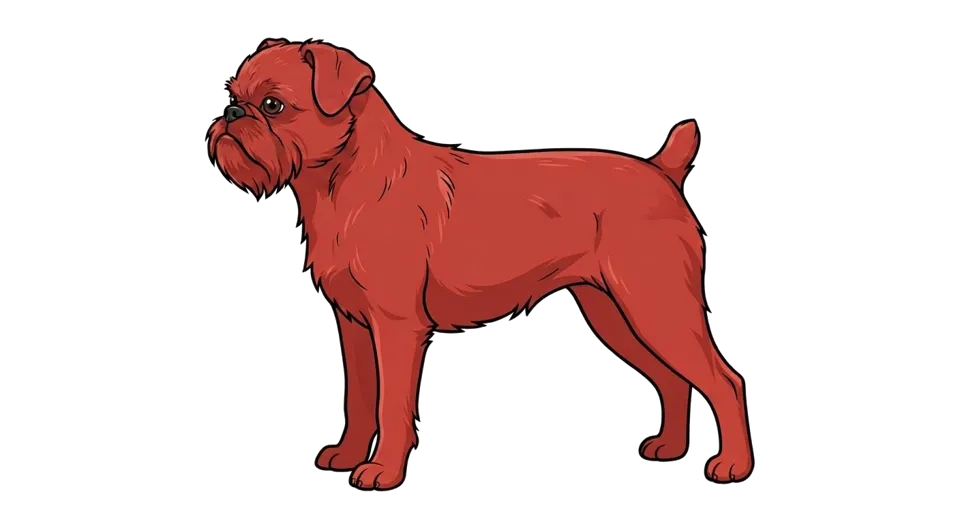
Red
Standard colour
The classic reddish-brown Griffon colour.
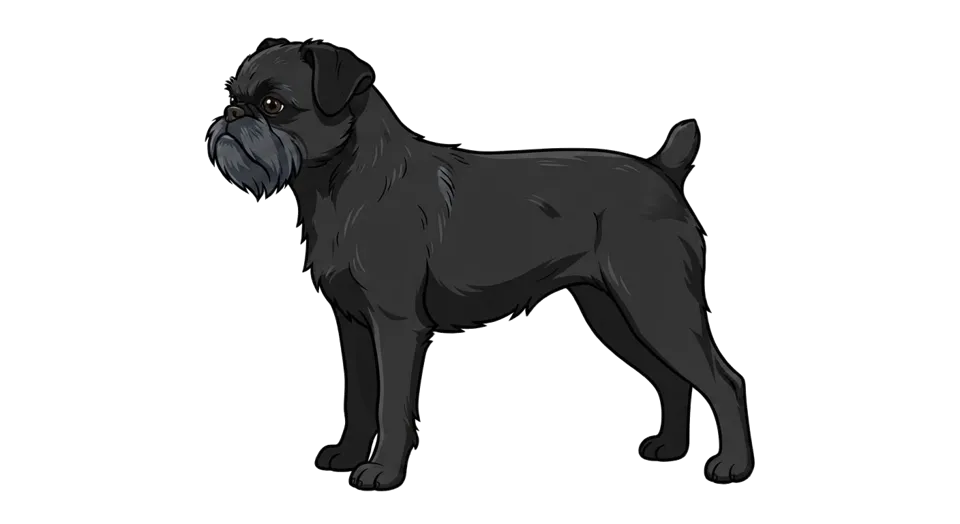
Black
Standard colour
Solid black, seen in the rough-coated Griffon.
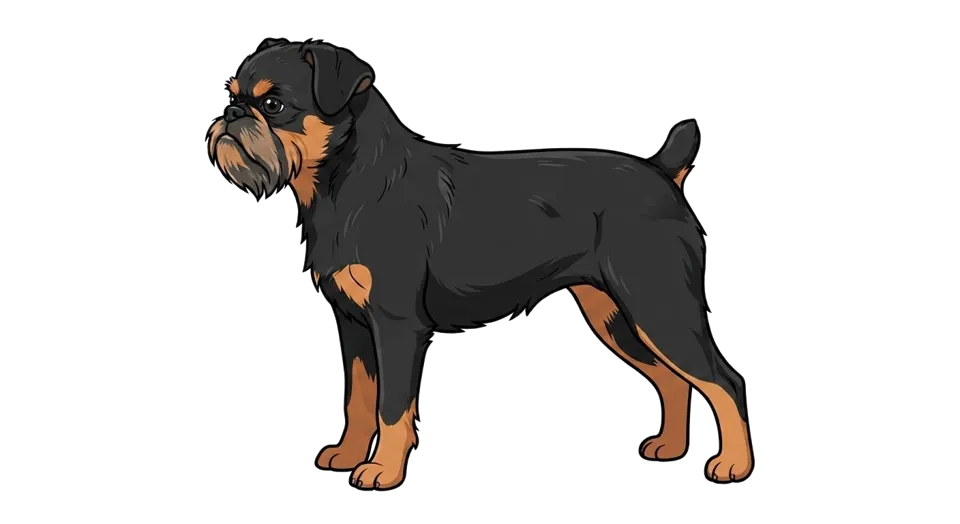
Black and tan
Standard colour
Black with clearly defined tan markings.
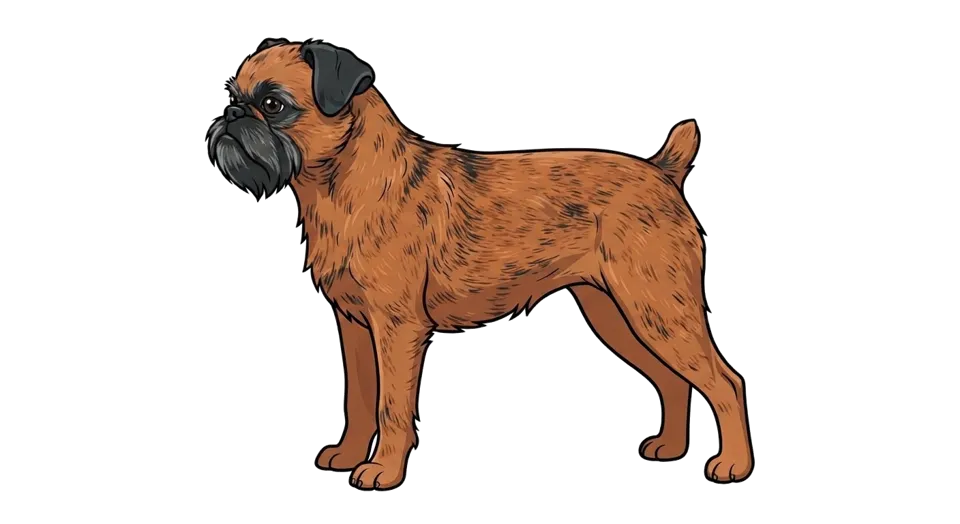
Belge (black and reddish-brown mix)
Standard colour
A mixed colouring recognised under some standards.
Timeline
History & development
early 1800s
Stable ratter
Brussels cab drivers kept small rough-coated terriers, the Griffon d'Ecurie, to control rats among the horses.
1870s
Royal patronage
Queen Marie Henriette of Belgium took an interest in the breed, boosting its popularity.
1883
First breed club
A club was formed in Brussels to standardise type and promote the breed.
1900s
Arrival in Britain
The breed was imported to the UK and recognised by the Kennel Club as Griffon Bruxellois.
1950s onward
The breed today
Kennel club registrations settled into a steady pattern and the Griffon Bruxellois moved from a working specialist to a family companion, with breed clubs in the UK and abroad now focused on health testing and keeping true type alive.
Reference
Breed standard summary
- body
- Short, thickset, well-ribbed
- coat
- Rough and wiry, or smooth in the Petit Brabancon
- ears
- Small, semi-erect or cropped where legal
- eyes
- Large, dark, prominent
- gait
- Jaunty, confident
- head
- Large and rounded for its size with a very short muzzle
- size
- Toy
- tail
- Set high, carried up
- colour
- Red, Black, Black and tan, Belge (black and reddish-brown mix). Colours outside this list are seen but are not accepted by the kennel clubs.
- temperament
- Typical of the breed: strongest in energy, trainability, sociability. Nervousness or aggression are serious faults in the show ring and in the home.
- general appearance
- Small, thickset toy dog with a near-human, alert expression
Health
What to screen for
Green means little to worry about, amber means ask the breeder for test results, red means manage it actively.
Brachycephalic airway syndrome
Watch closely
Choose breeders selecting for open nostrils and a functional muzzle length.
Patellar luxation
Screen for it
Ask for a vet check of the knees before buying.
Eye injuries
Screen for it
The prominent eyes are vulnerable to scratches; check for a corneal exam certificate.
Difficult whelping
Watch closely
Discuss whelping history with the breeder given the compact build.
General information only — always speak to your vet about your own dog.
From real owners
Griffon Bruxelloiss in the PAWPOINT Pack
Griffon Bruxelloiss added by PawPoint members through their pet passports. Share yours to appear here.
Loading the wall…
Made for the Griffon Bruxellois
The book, plus hoodies, tees and mugs featuring the Griffon Bruxellois.