Griffon Nivernais
gree-FOHN nee-vair-NAY
France· Nivernais (Burgundy), France
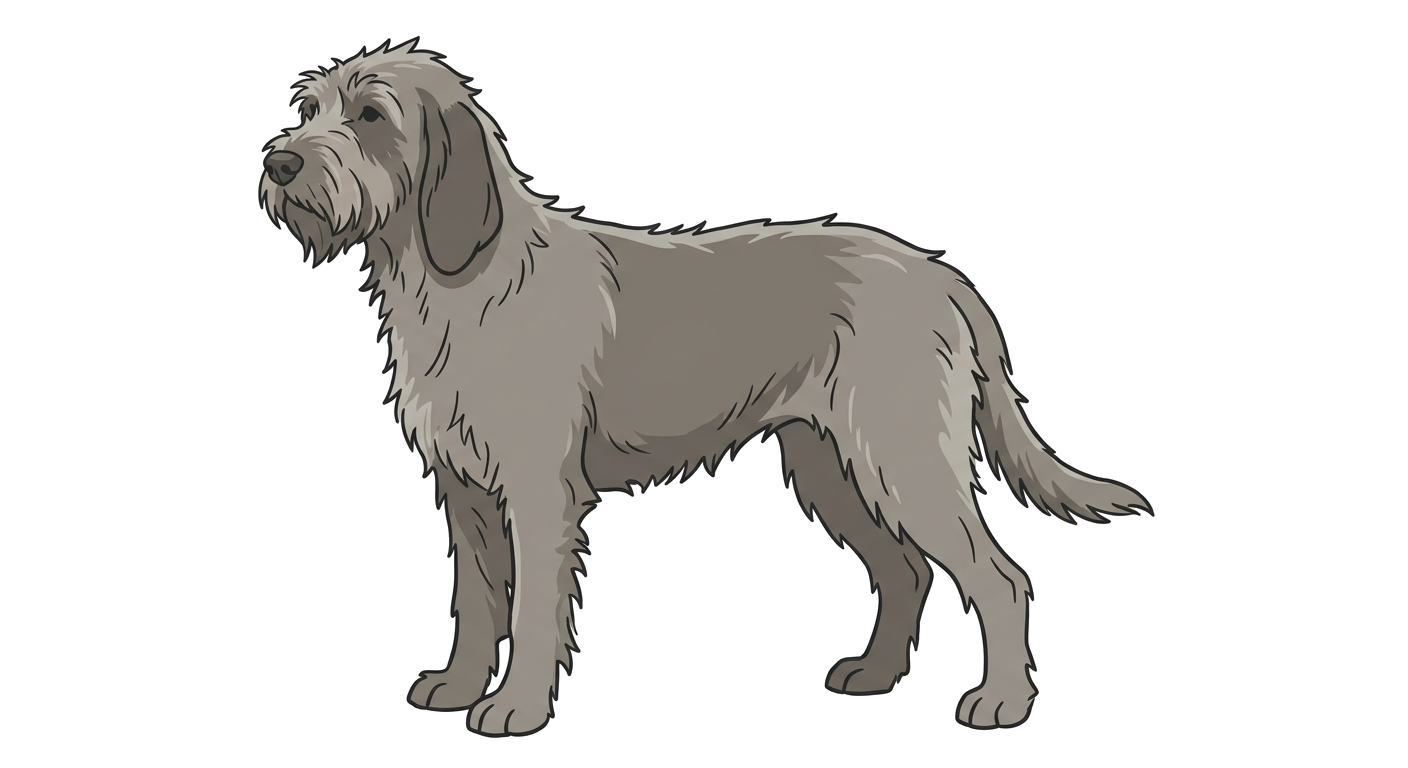
The Griffon Nivernais is a rugged, medium-to-large French scenthound historically developed to hunt wild boar across dense brush and difficult terrain. Renowned for its distinctive, unkempt coat and melancholic facial expression, the breed prioritises stamina, tracking ability, and resilience over sheer speed. It possesses a notably deep, resonant voice and works well either as a solo tracker or as part of a small pack.
At a glance
Quick facts
Size
Medium to Large
Exercise needs
High (at least 90 minutes daily)
Home size suited to
Rural home with acreage
Grooming frequency
Weekly brushing and occasional hand-stripping
Coat length
Medium
Sheds
Moderate
Lifespan
11–13 years
Town or country
Country
Garden size needed
Large, securely fenced garden
Where it comes from
Origins of the Griffon Nivernais
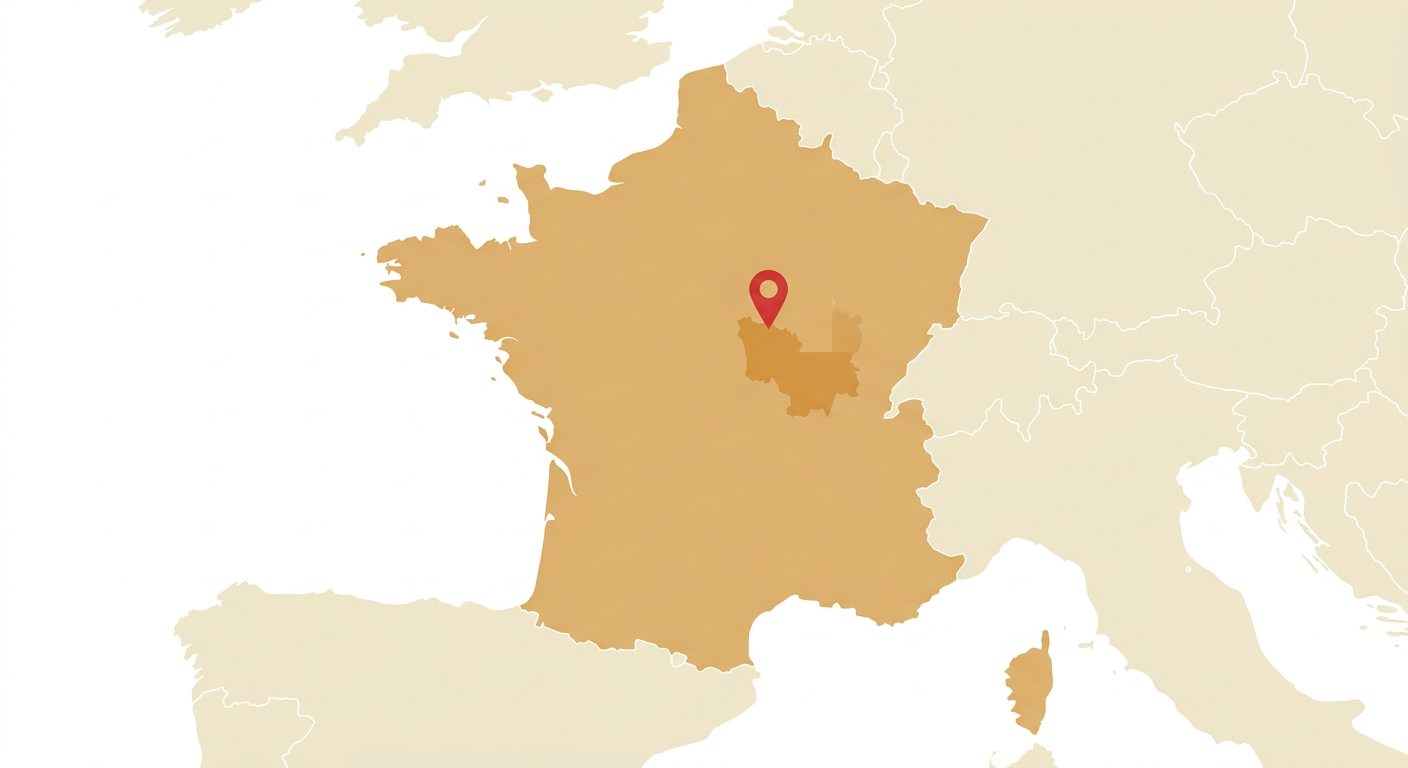
Developed in the heavily wooded Nivernais province of central France to pursue wild boar across arduous terrain.
- Region
- Nivernais (Burgundy), France
- Climate it was bred for
- Temperate European
- Original job
- Wild boar and big-game tracking hound
The long read
About the breed
While tradition traces the breed's ancestry to the legendary Chiens Gris de Saint-Louis favoured by the royal court of medieval France, historical documentation is sparse, and the original lineage was effectively decimated following the French Revolution. In the 1920s, dedicated huntsmen reconstructed the breed using remaining regional stock combined with crosses to the Grand Griffon Vendéen, Foxhound, and Otterhound, restoring a type suited to the demands of modern boar hunting.
In domestic settings, the Griffon Nivernais is typically calm, affectionate, and steady with its human family, though it retains strong hunting instincts and marked independence. It is rarely kept purely as a companion; its strong prey drive, stubborn streak, and high requirement for mental and physical stimulation mean it is best suited to rural environments and experienced handlers who can provide firm, patient guidance.
Living with one
Temperament & needs
Our own ratings, based on the breed standard and how these dogs behave in ordinary homes.
Energy
4/5
Settles well once exercised.
Barking
4/5
Quick to sound off.
Grooming
2/5
Minimal grooming beyond a weekly once-over.
Sociability
3/5
Steady with people it knows.
Independence
4/5
Independent thinker; tolerates being left to it.
Trainability
2/5
Slow and stubborn — keep sessions short.
Illustrated breed standard
The points of the breed
Hover or tap a numbered point to read what the standard asks for.
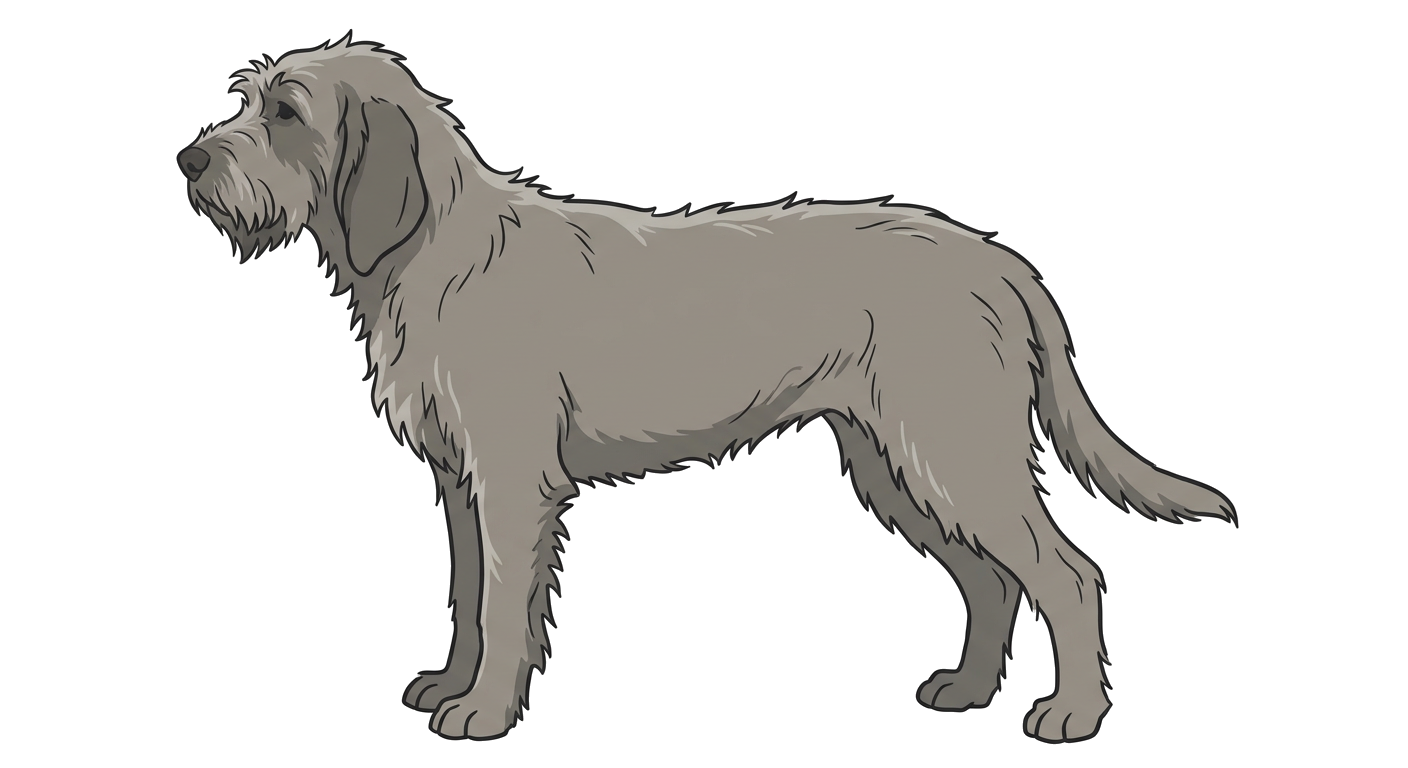
Point 1
Head
Dry and rather long, without heaviness; the skull is nearly flat, with a slight median furrow and a gentle stop.
Colours & patterns
Recognised coats
Which coats the standard accepts — and which are simply popular.
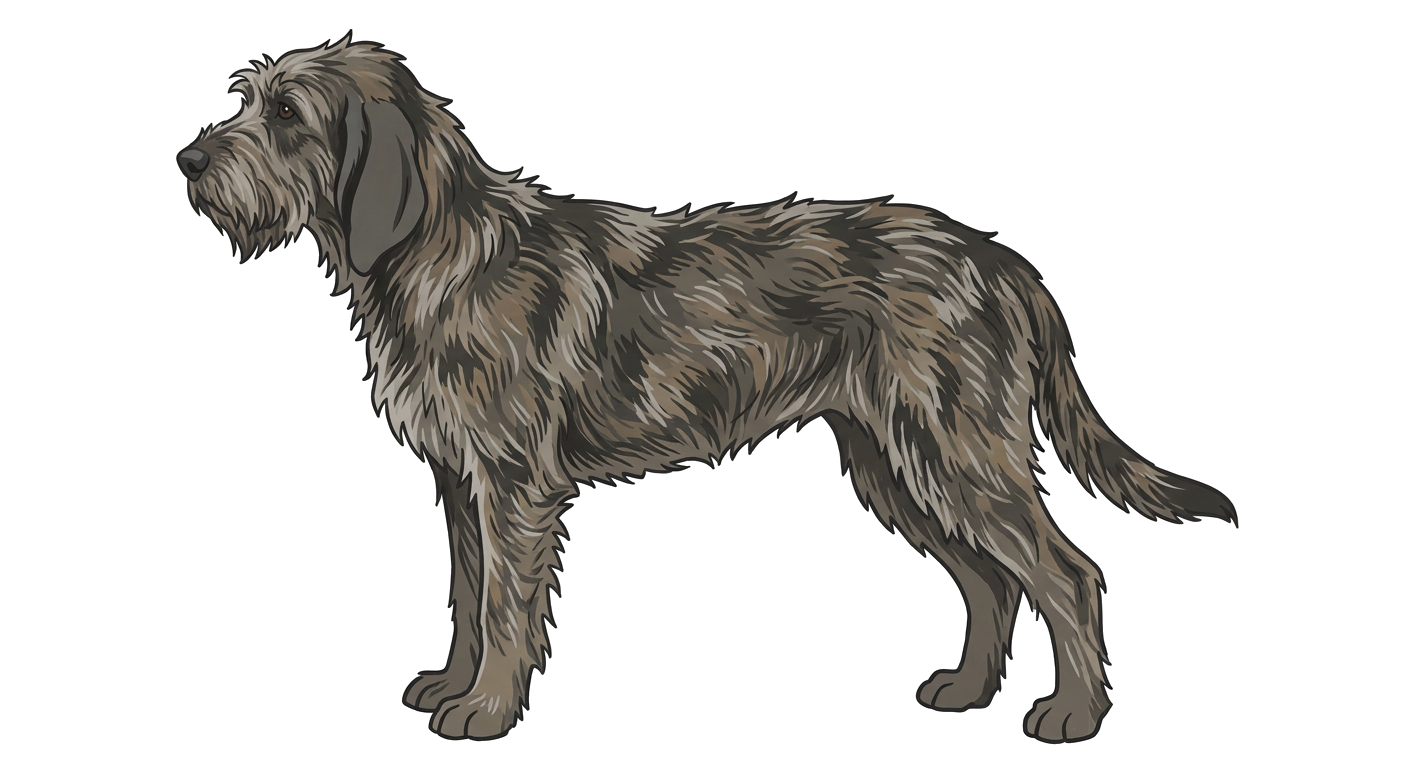
Boar Grey
Standard colour
The classic grizzled mixture of black, brown, and grey hairs resembling wild boar pelt.
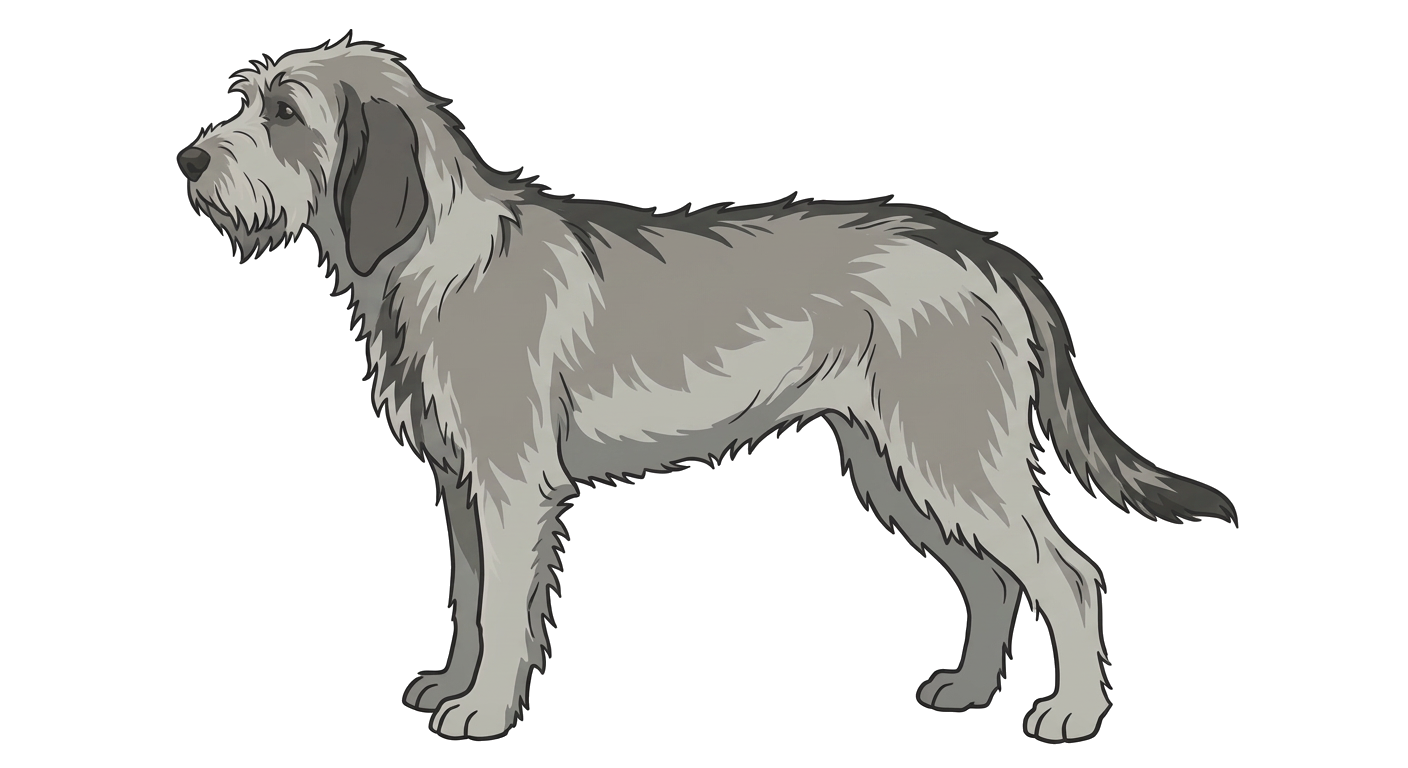
Wolf Grey
Standard colour
A predominantly grey coat with darker hair tips, typical of the breed's rustic appearance.
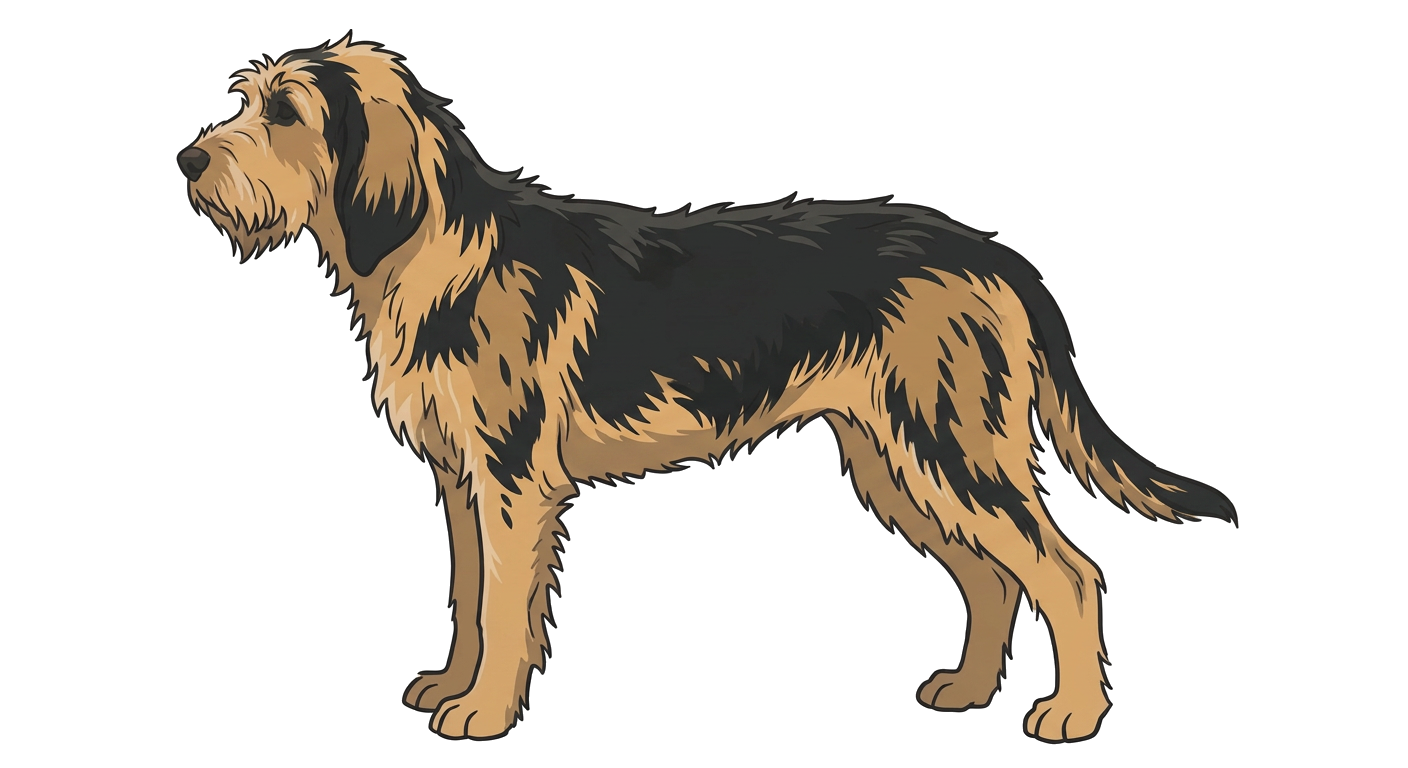
Fawn with Black Overlay
Standard colour
A base of fawn or wheat intermingled with varying degrees of black-tipped hairs.
Timeline
History & development
1200s–1300s
Medieval origins
Tradition links the breed to the 'Chiens Gris' (grey hounds) purportedly brought back to France by King Louis IX from the Crusades, which became favoured boar hounds of the French monarchy.
1789–1800s
Post-Revolution decline
With the fall of the French aristocracy and the dismantling of royal kennels during the French Revolution, the pure lineage of the original Nivernais hound virtually disappeared.
1925
Breed reconstruction
A group of French huntsmen founded a breed club to resurrect the type, crossing surviving local hounds with Grand Griffon Vendéens, Foxhounds, and Otterhounds.
1969
FCI recognition
The Fédération Cynologique Internationale formally recognised the reconstructed Griffon Nivernais under standard number 17, cementing its place among Europe's working hounds.
Reference
Breed standard summary
- body
- Slightly longer than tall; the back is firm and level, the loin robust and muscular, and the chest is deep, reaching down to the level of the elbows.
- coat
- Hard, rough, and shaggy (never woolly or curly); dense enough to protect against harsh weather and thorny undergrowth.
- ears
- Medium length, supple, set on at eye level, hanging flat with slightly curled edges, and covered with hair.
- eyes
- Dark, lively, and expressive, framed by bushy eyebrows that do not cover the eyes themselves; eyelids are well pigmented.
- gait
- Supple, light, and covering ground effortlessly, suitable for prolonged trotting and working across uneven ground.
- head
- Dry and rather long, without heaviness; the skull is nearly flat, with a slight median furrow and a gentle stop.
- size
- Males stand between 55 and 62 cm at the withers; females stand between 53 and 60 cm.
- tail
- Set moderately high, of medium length, carried upward in a slight sabre-like curve when in motion, covered with rough hair without forming a brush.
- colour
- Always dark agouti or grizzled: boar grey, wolf grey, or fawn overlaid with black, sometimes with a small white patch on the chest.
- muzzle
- Of equal length to the skull, straight or very slightly convex, featuring a slight beard and modest moustaches that do not obscure the expression.
- temperament
- Courageous, tenacious, and independent when working, yet calm, loyal, and gentle within a household context.
- general appearance
- A rustic, robust, and slightly elongated hound with a shaggy, unkempt appearance, built for stamina and endurance rather than speed.
Health
What to screen for
Green means little to worry about, amber means ask the breeder for test results, red means manage it actively.
Hip Dysplasia
Screen for it
Can occur in medium-to-large hounds; screening breeding stock helps reduce the incidence of joint laxity.
Gastric Dilatation-Volvulus (GDV)
Screen for it
Deep-chested build presents a potential risk; feeding multiple smaller meals and resting after eating is sensible.
Ear Infections (Otitis Externa)
Watch closely
Drop ears combined with hair growth can trap moisture and debris, warranting routine cleaning.
Field Injuries
Watch closely
Working closely in dense scrub exposes skin and eyes to bramble scratches, thorns, and parasites.
General information only — always speak to your vet about your own dog.
From real owners
Dogs like this
Griffon Nivernaiss added by PawPoint members through their pet passports. Share yours to appear here.
Loading the wall…
Made for the Griffon Nivernais
The book, plus prints, hoodies and mugs using our own Griffon Nivernais illustration — and one everyday accessory that suits any dog.
The book
Pawpoint: The Complete Dog Breed Book
Every officially recognised breed plus the unofficial ones nobody else documents. 400+ pages, hardback, printed and shipped from the UK.
Own stock — shipped by us
Framed poster
Griffon Nivernais Framed Poster
Museum-weight print of our Griffon Nivernais illustration, framed or unframed.
Printed to order
Hoodie
Griffon Nivernais Hoodie
Heavyweight hoodie carrying the Griffon Nivernais illustration on the chest.
Printed to order
Mug
Griffon Nivernais Mug
Ceramic mug with the Griffon Nivernais illustration wrapped around it.
Printed to order
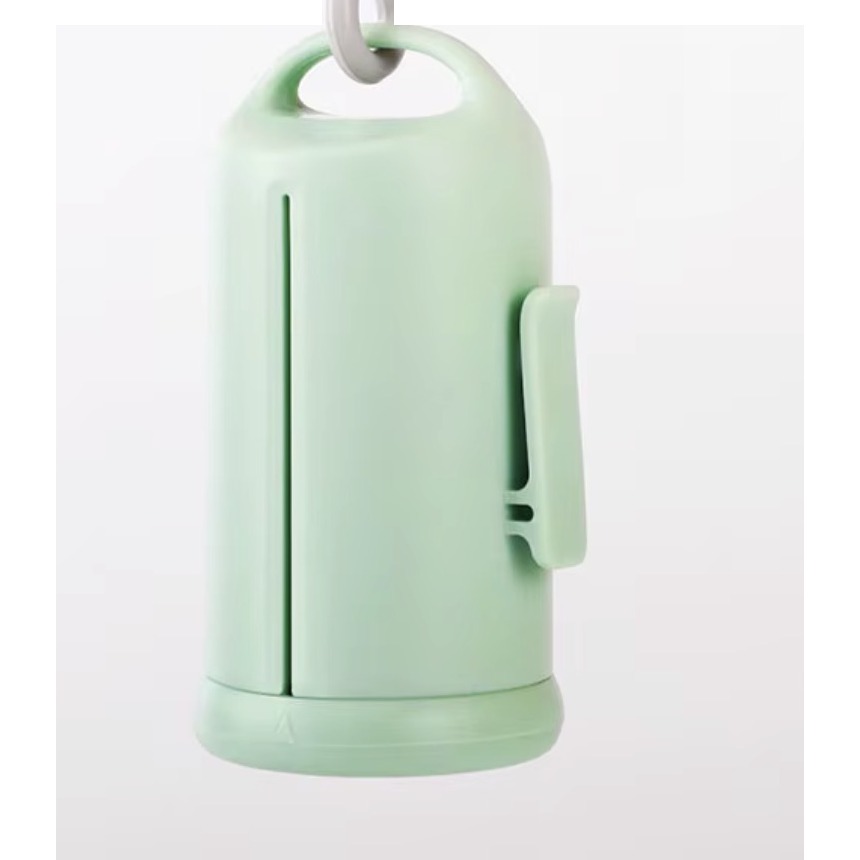
Accessory
Waste Bag Dispenser
Clips to the lead, holds one standard roll.
Fits any dog
Pawpoint on YouTube
Watch the full Griffon Nivernais video
Breed deep-dives, history and honest ownership talk. New film every week.
Watch now