
Havanese
"hah-VAH-nez"
Cuba· Havana
The Havanese is a small, silky-coated companion breed from Cuba, descended from Mediterranean bichon-type dogs brought over by Spanish settlers and refined on the island into the country's only native dog breed.
At a glance
Quick facts
Size
Small
Exercise needs
30-45 minutes daily
Home size suited to
Flat or small home
Grooming frequency
Daily brushing
Coat length
Long
Sheds
Yes, heavily when moulting
Lifespan
14-16 years
Town or country
Either, happy in town
Garden size needed
Small garden or none
Where it comes from
Origins of the Havanese
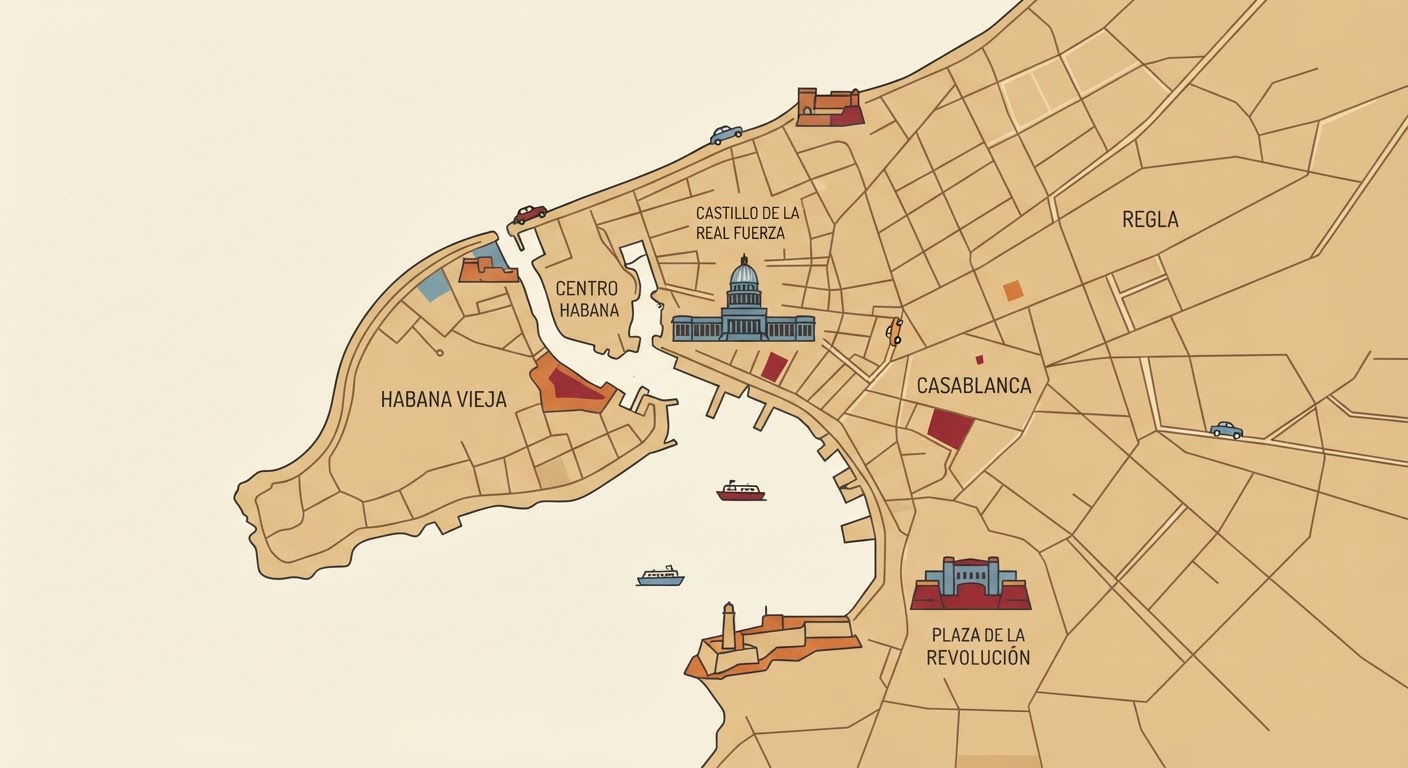
Bred among wealthy households in colonial Havana from small bichon-type dogs brought by Spanish and other European settlers. The warm, humid climate favoured a light-boned dog with a coat that, though long, is fine rather than dense.
- Region
- Havana
- Climate it was bred for
- Warm, humid Caribbean climate
- Original job
- Companion and household watchdog
The long read
About the breed
It traces to the Blanquito de la Habana, a small white dog kept by wealthy Cuban families from the 18th century, later crossed with Poodles and other bichon types brought by European traders. It became a fixture of Havana high society, often pampered as a lapdog but also useful as a small alert watchdog around the house.
Living with a Havanese suits owners who want a genuinely people-focused dog; it thrives on company, adapts well to apartment life, and is generally easy to train, though it can develop separation-related barking if left alone too often. The long silky coat mats without regular brushing, and many pet owners choose a shorter "puppy clip" to cut down on grooming time.
After the Cuban revolution some breeding lines left with emigrating families and were re-established in the United States in the 1970s, and the breed has since grown steadily in popularity in Britain as a sturdy, friendly small dog well suited to families and flats alike.
Living with one
Temperament & needs
Our own ratings, based on the breed standard and how these dogs behave in ordinary homes.
Friendliness
5/5
How openly the Havanese greets people it does not know.
Trainability
4/5
Eager to please and quick to learn tricks.
Energy
3/5
Playful indoors, happy with modest daily walks.
Barking
3/5
Can bark when anxious or bored if left alone.
Grooming
4/5
Long silky coat needs regular brushing or a shorter clip.
Suits a first-time owner
4/5
How forgiving the Havanese is for someone taking on their first dog.
Sociability
5/5
Extremely people-focused, does not like being left alone.
Independence
1/5
Wants to be with its family at all times.
Illustrated breed standard
The points of the breed
Hover or tap a numbered point to read what the standard asks for.
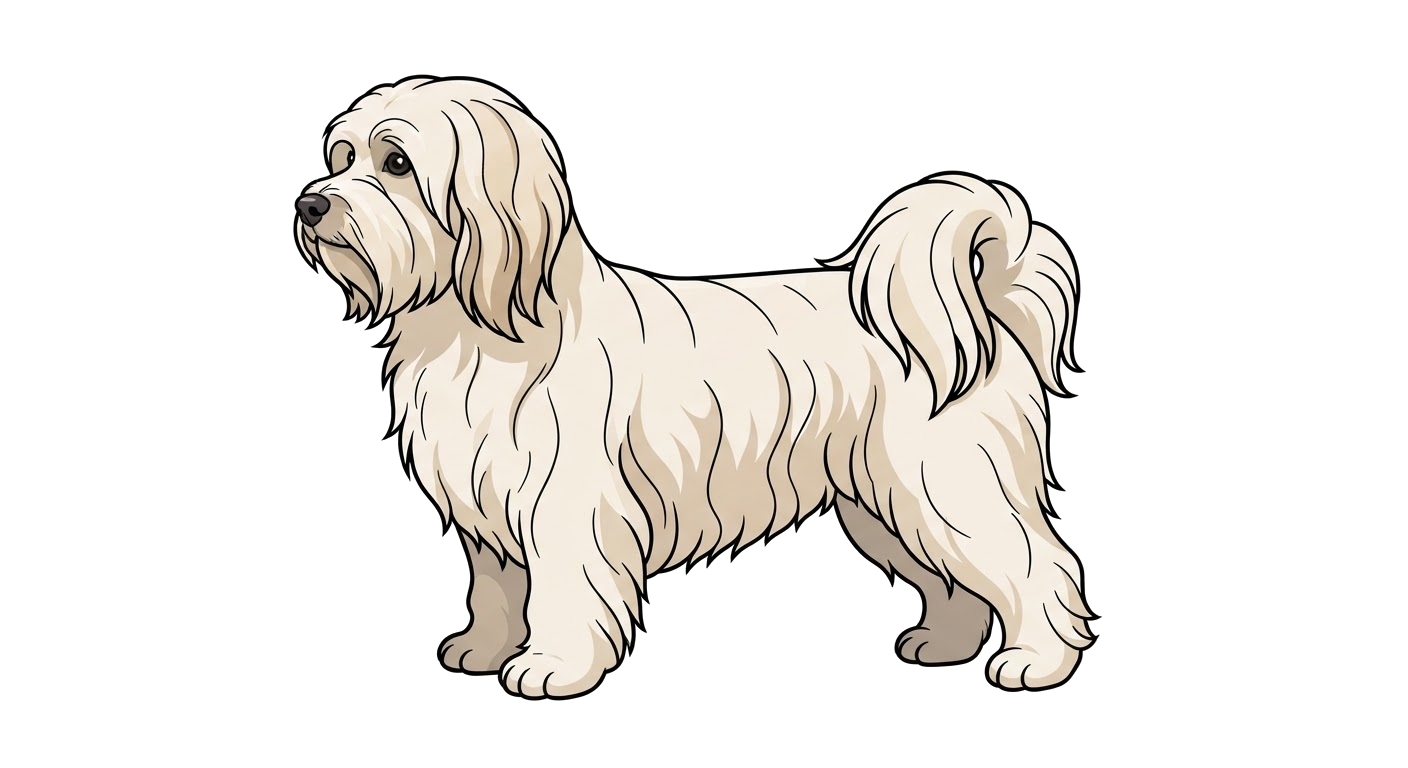
Point 1
Skull
The Havanese's skull is judged on balance rather than size — proportionate to the body, with a clean cheek and a stop typical of the breed. Coarseness or an over-refined head are both faulted.
Colours & patterns
Recognised coats
Which coats the standard accepts — and which are simply popular.
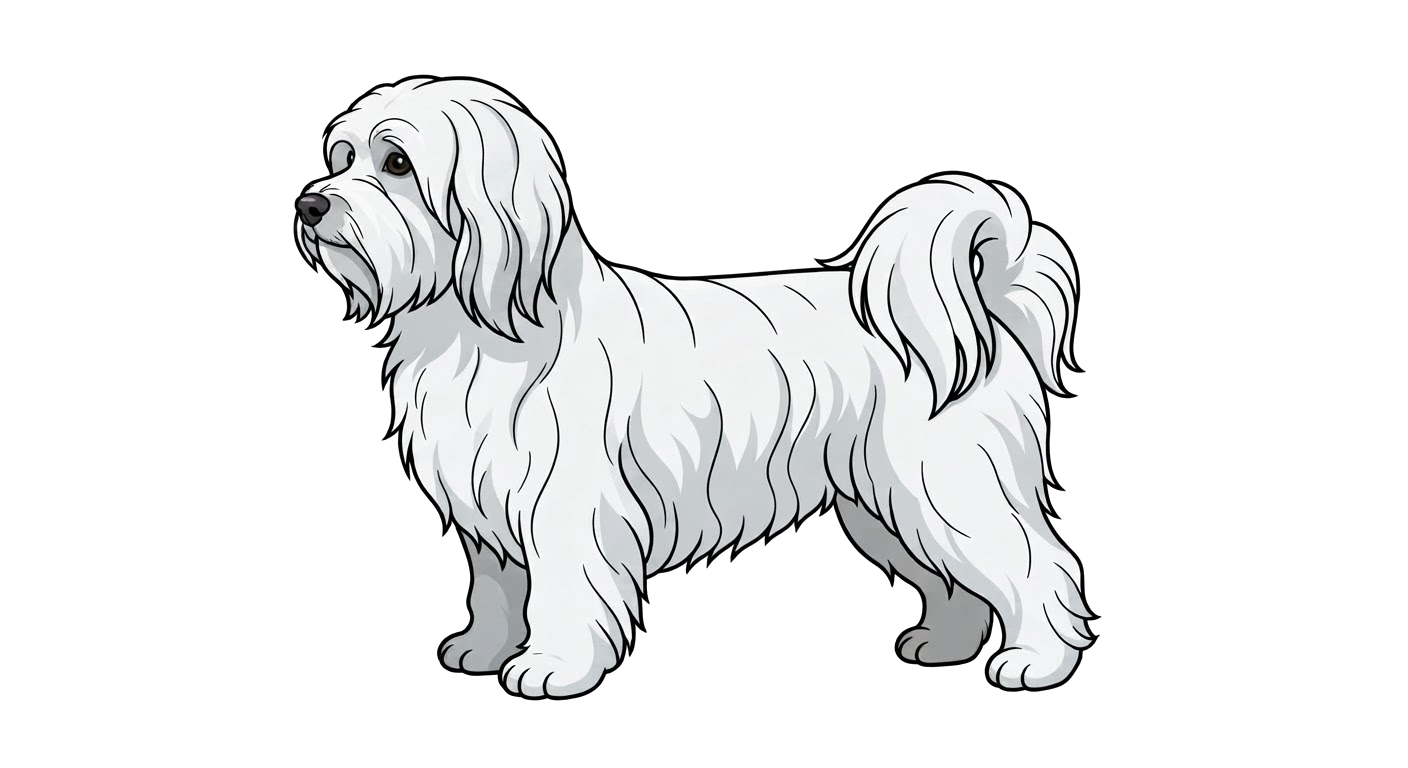
White
Standard colour
The original Blanquito colouring, still popular.
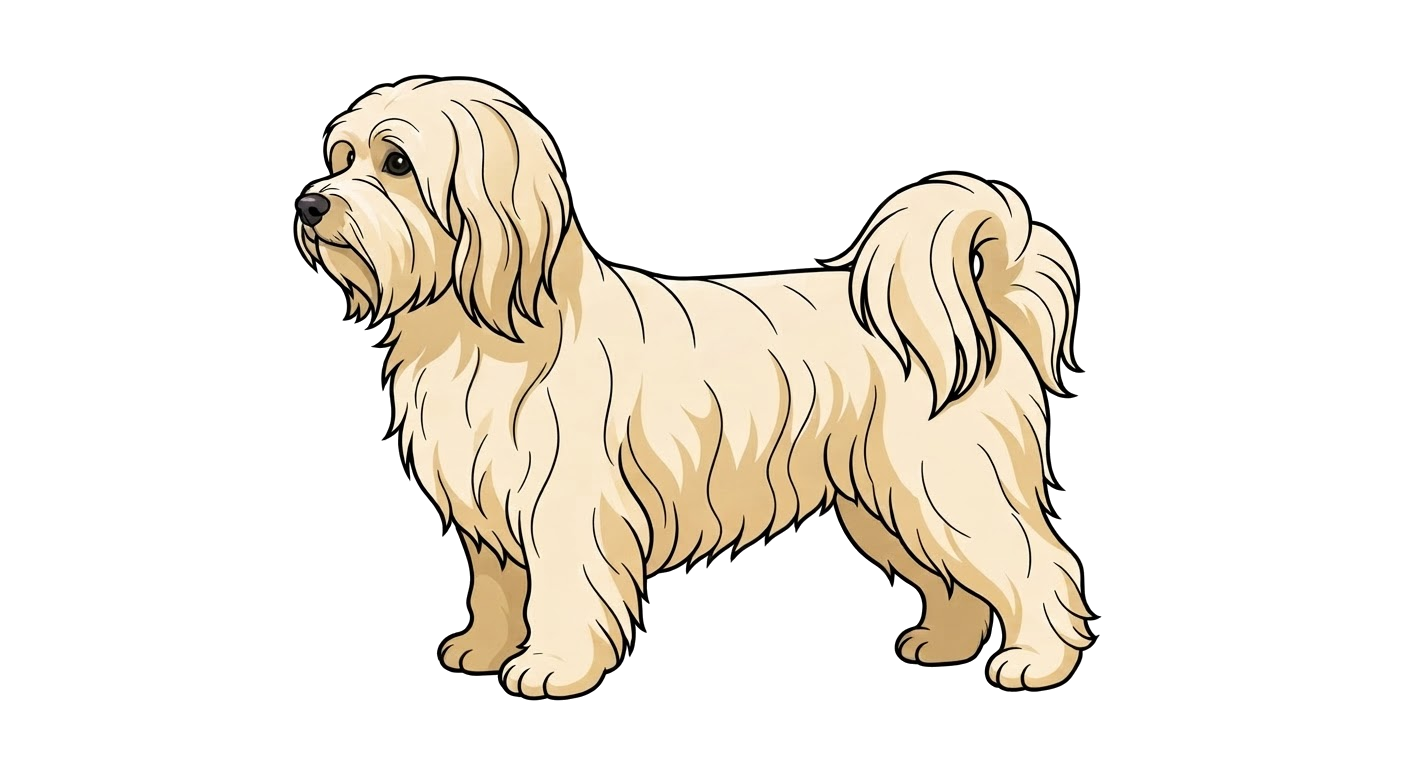
Cream
Standard colour
A common warm pale shade.
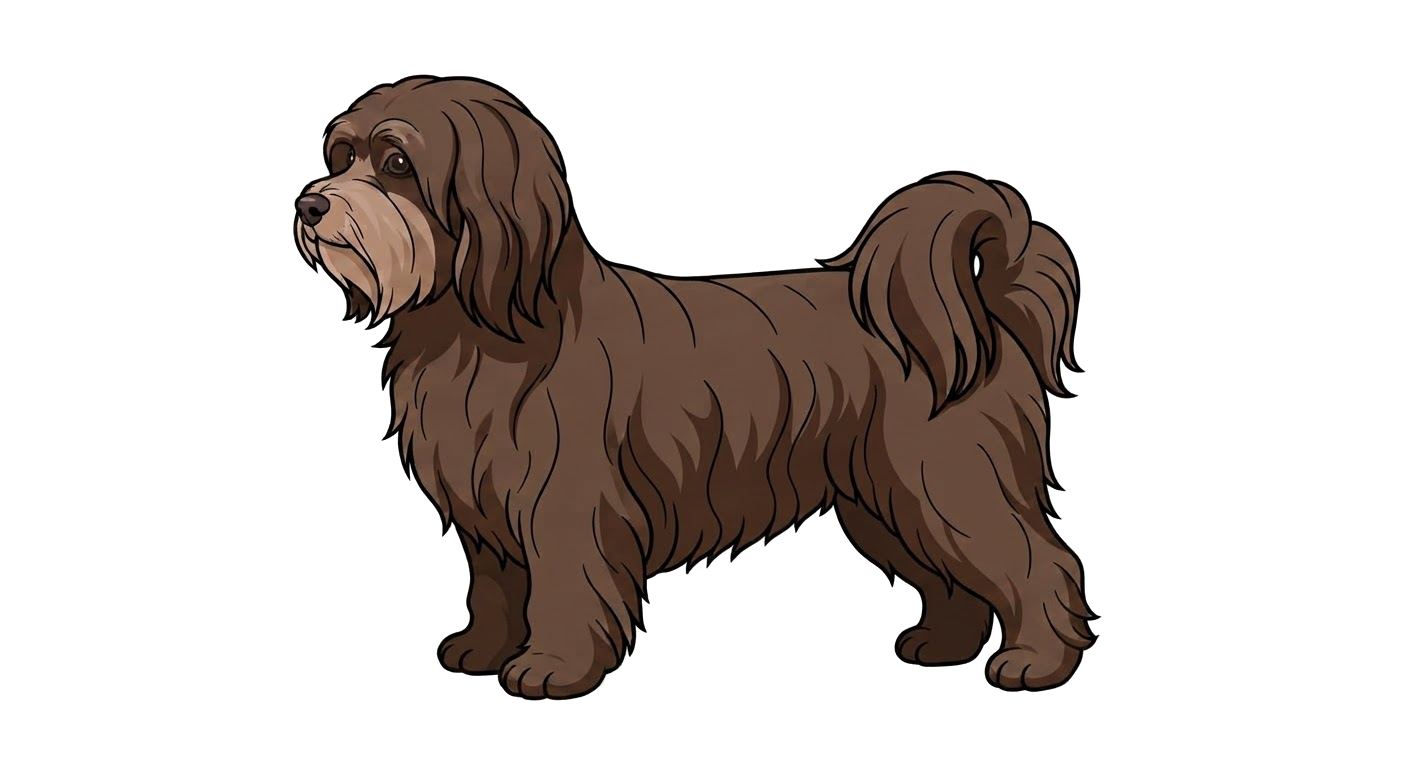
Chocolate
Standard colour
A rich brown, recognised in most standards.
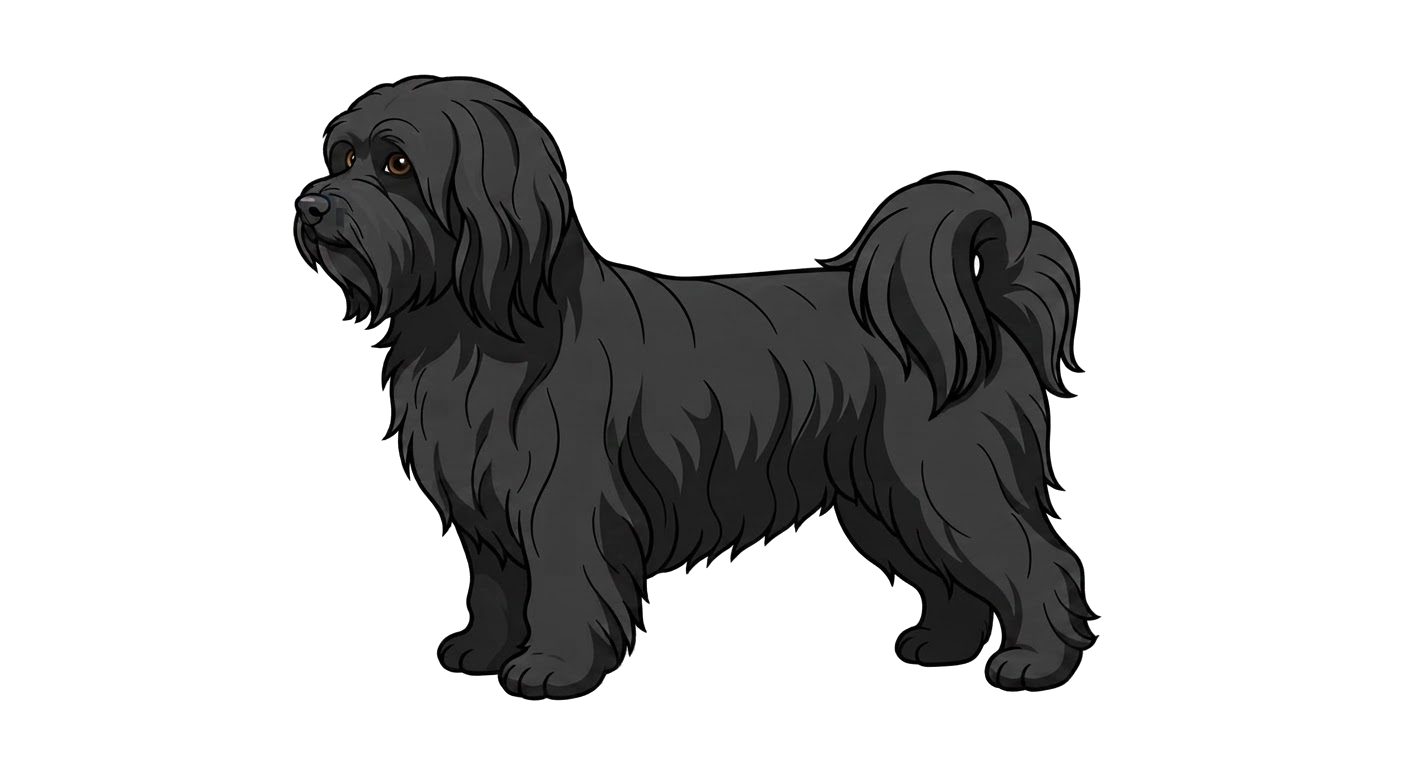
Black
Standard colour
Solid black, less common but accepted.
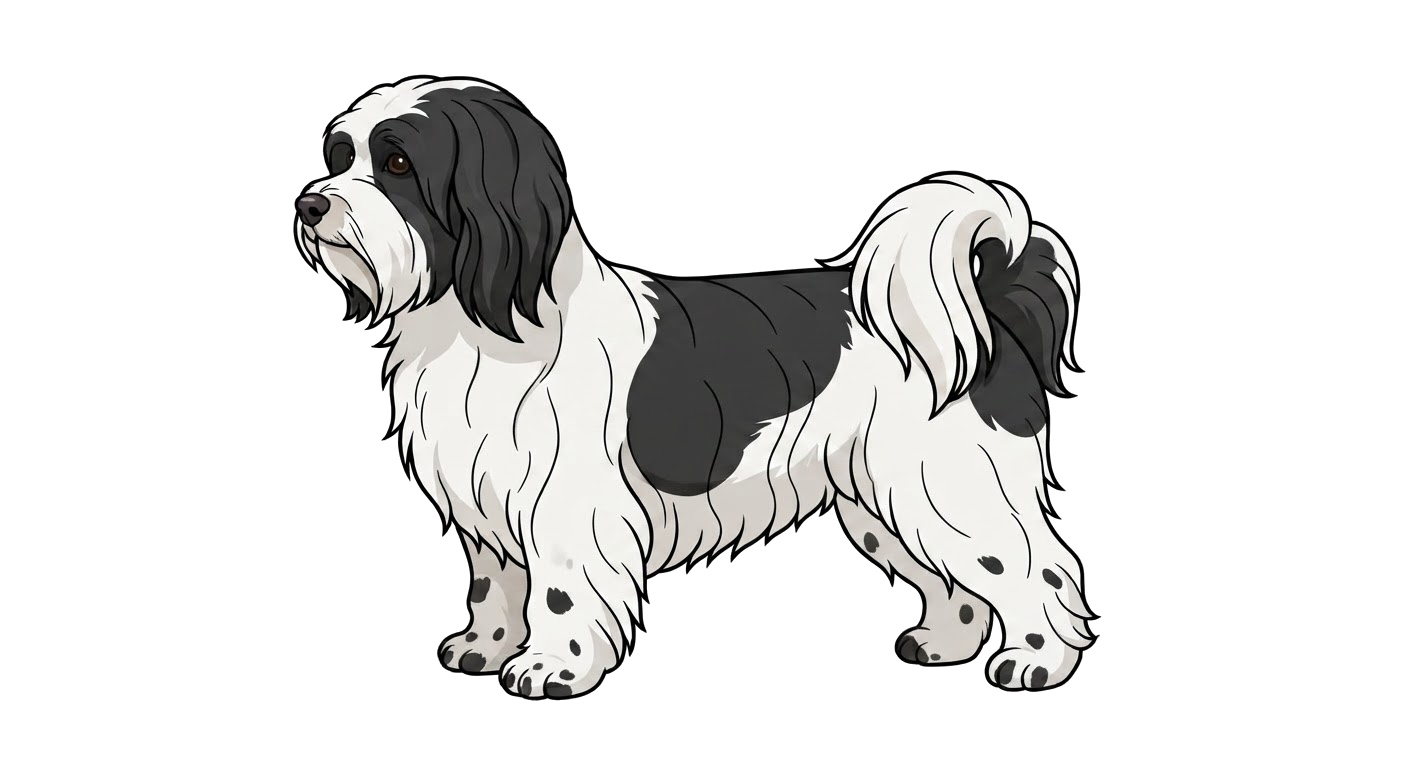
Parti-colour
Standard colour
Any combination of white with another colour.
Timeline
History & development
18th century
Blanquito de la Habana
Spanish settlers' small white bichon-type dogs became established among wealthy Cuban families.
19th century
Refinement in Cuba
Crosses with Poodles and other European toy breeds produced the modern Havanese type.
1959 onwards
Emigration
Families leaving Cuba after the revolution took a small number of dogs to the United States.
1970s
US revival
American breeders rebuilt the breed from a handful of surviving lines.
1996
UK recognition
The Kennel Club recognised the Havanese, and numbers have grown steadily since.
Reference
Breed standard summary
- body
- Slightly longer than tall, ribs well sprung
- coat
- Long, silky, wavy, does not shed heavily
- ears
- Set high, dropped, forming a rounded tip
- eyes
- Large, dark, almond-shaped
- gait
- Springy with a slight bounce
- head
- Broad, slightly rounded skull
- size
- Small
- tail
- Curled over the back, plumed
- colour
- White, Cream, Chocolate, Black, Parti-colour. Colours outside this list are seen but are not accepted by the kennel clubs.
- temperament
- Typical of the breed: strongest in sociability, trainability, grooming. Nervousness or aggression are serious faults in the show ring and in the home.
- general appearance
- Small, sturdy toy dog with a lively, springy gait
Health
What to screen for
Green means little to worry about, amber means ask the breeder for test results, red means manage it actively.
Patellar luxation
Screen for it
Ask for a vet check of the knees on breeding stock.
Hip dysplasia
Screen for it
BVA/KC hip scoring is worth requesting despite the small size.
Eye disorders
Screen for it
Request annual eye certification from the breeder.
Deafness
Watch closely
Hearing tests are advisable in dogs with significant white in the coat.
General information only — always speak to your vet about your own dog.
From real owners
Dogs like this
Havaneses added by PawPoint members through their pet passports. Share yours to appear here.
Loading the wall…
Made for the Havanese
The book, plus prints, hoodies and mugs using our own Havanese illustration — and one everyday accessory that suits any dog.

The book
Pawpoint: The Complete Dog Breed Book
Every officially recognised breed plus the unofficial ones nobody else documents. 400+ pages, hardback, printed and shipped from the UK.
Own stock — shipped by us
Framed poster
Havanese Framed Poster
Museum-weight print of our Havanese illustration, framed or unframed.
Printed to order
Hoodie
Havanese Hoodie
Heavyweight hoodie carrying the Havanese illustration on the chest.
Printed to order
Mug
Havanese Mug
Ceramic mug with the Havanese illustration wrapped around it.
Printed to order
Accessory
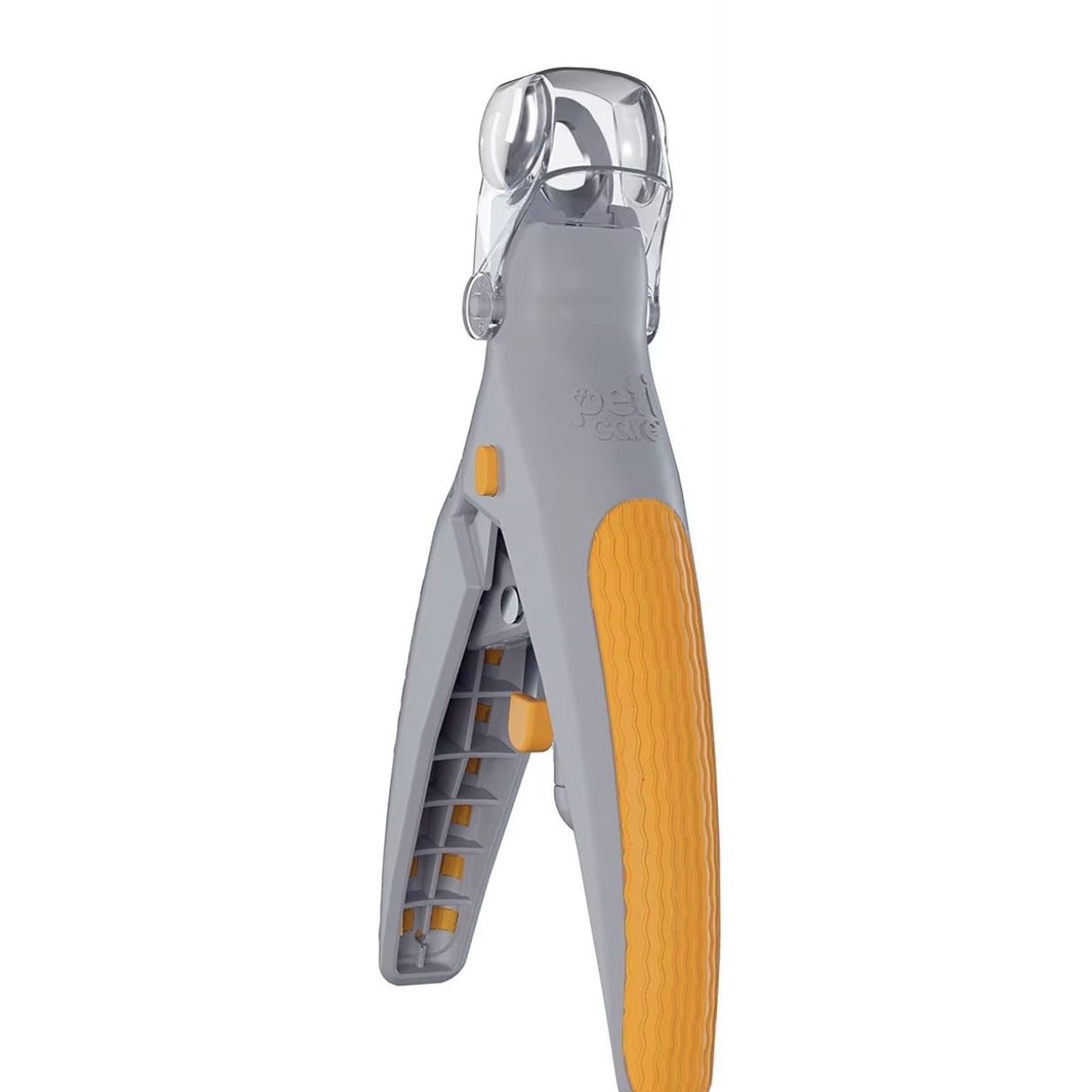
Nail Clippers & Grinder
Safety-guard clippers with a quiet rotary grinder.
Fits any dog

Pawpoint on YouTube
Watch the full Havanese video
Breed deep-dives, history and honest ownership talk. New film every week.
Watch now