
Hungarian Vizsla
VIZH-lah
Hungary· Great Hungarian Plain
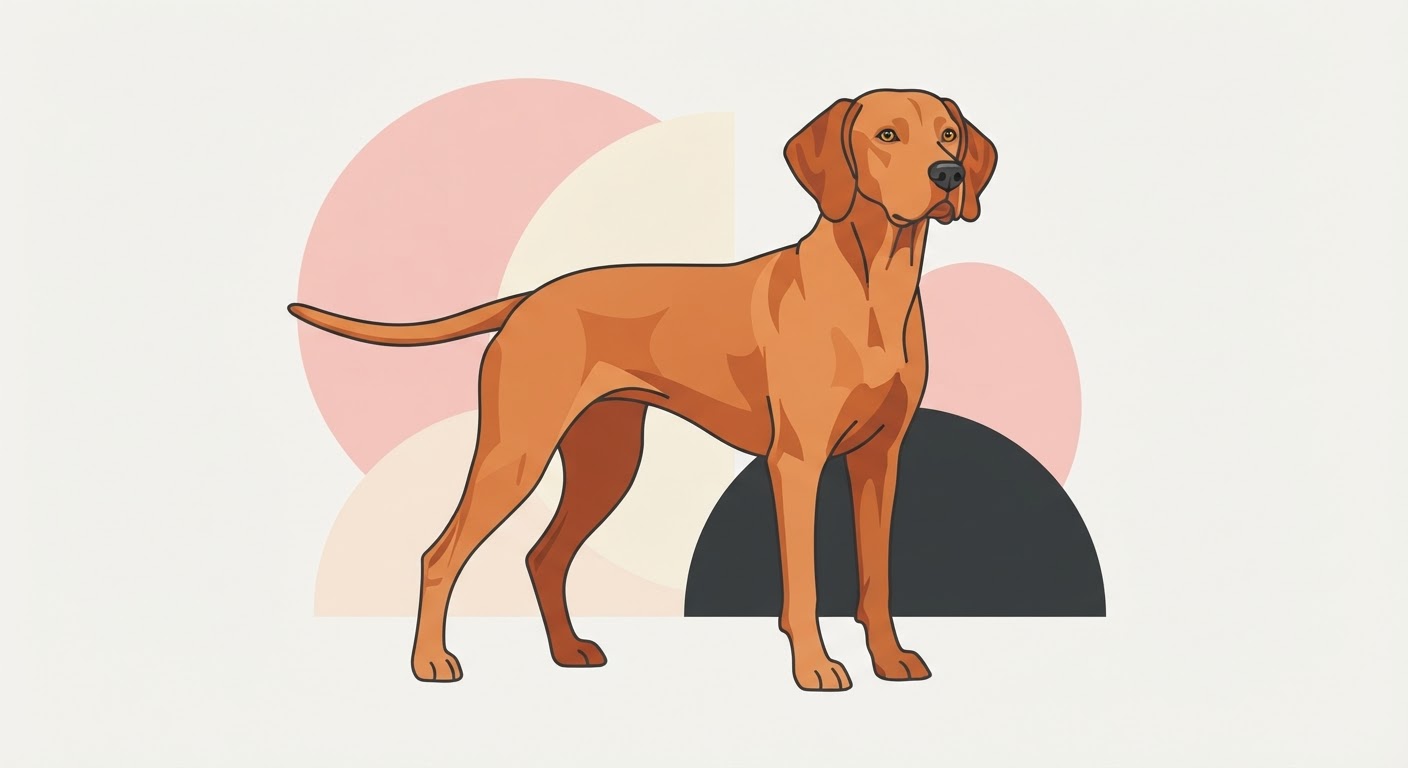
The Hungarian Vizsla is a lean, russet-gold pointer bred on the plains of Hungary to find, point and retrieve game for hunters travelling on horseback.
At a glance
Quick facts
Size
Medium
Exercise needs
90+ minutes daily
Home size suited to
Small to medium home
Grooming frequency
Weekly brush
Coat length
Short
Sheds
Yes, heavily when moulting
Lifespan
12-14 years
Town or country
Either, with enough exercise
Garden size needed
Small to medium
Where it comes from
Origins of the Hungarian Vizsla
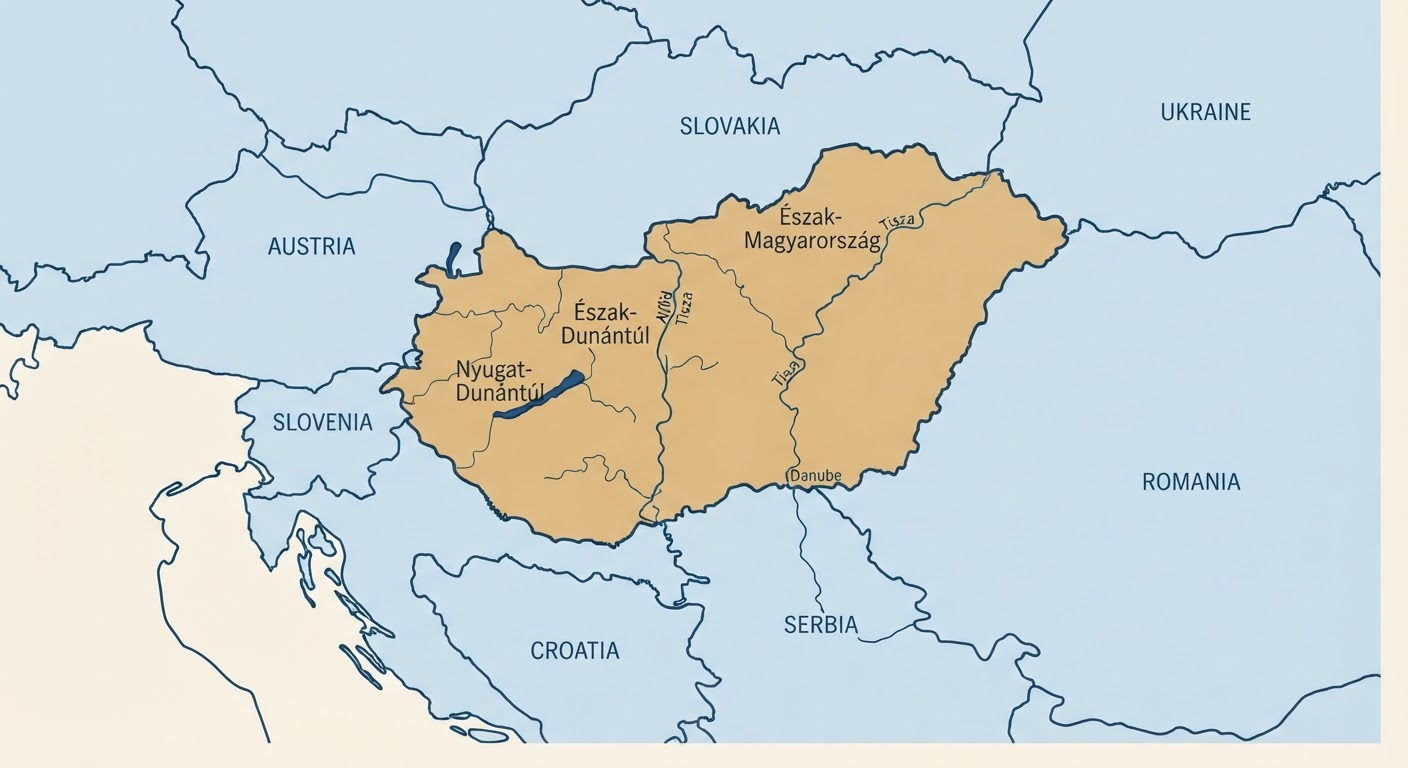
The Vizsla was shaped on the flat, open puszta of Hungary, where a hunter on horseback needed a dog that could range far, point cleanly and carry a lightweight, close coat suited to hot summers and cold winters alike.
- Region
- Great Hungarian Plain
- Climate it was bred for
- Continental, hot summers and open grassland
- Original job
- Pointing and retrieving game on horseback
The long read
About the breed
The breed's ancestors worked alongside Magyar tribes as early as the tenth century, but the Vizsla as known today was refined in the nineteenth century by Hungarian nobility who valued a dog that could hunt fur and feather over open grassland and marsh without the coarse coat of pointers bred further west. The name is thought to derive from a Slavic word for "seeker" or "tracker". Two World Wars and the Communist era nearly wiped the breed out, and it survived largely because a handful of breeders smuggled dogs out of Hungary in the 1930s and 1940s and re-established lines abroad.
Living with a Vizsla means accepting that the dog will want to be within touching distance at almost all times; the breed's nickname among owners is the "velcro dog". It needs a genuine amount of off-lead running, ideally an hour or more daily plus mental work such as scentwork or gundog training, and without it will find its own entertainment, usually destructive. The coat is short and needs little more than a weekly wipe-down, but the thin skin means the breed feels cold quickly and is not suited to being left outside.
Today the Vizsla is popular as a family dog with active owners as well as a working gundog, and does both jobs well provided its exercise needs are taken seriously. It is generally good with children it is raised with and sociable with other dogs, though its intensity and need for company make it a poor choice for households where it would be left alone for long hours.
Living with one
Temperament & needs
Our own ratings, based on the breed standard and how these dogs behave in ordinary homes.
Friendliness
5/5
How openly the Hungarian Vizsla greets people it does not know.
Trainability
4/5
Quick to learn but sensitive to harsh handling.
Energy
5/5
Needs well over an hour of proper exercise daily.
Barking
2/5
Not a habitual barker but can whine when anxious.
Grooming
1/5
Short coat needs only a weekly wipe-down.
Suits a first-time owner
3/5
How forgiving the Hungarian Vizsla is for someone taking on their first dog.
Sociability
5/5
Bonds intensely with its family and dislikes being left alone.
Independence
2/5
Wants to be within touching distance most of the time.
Illustrated breed standard
The points of the breed
Hover or tap a numbered point to read what the standard asks for.
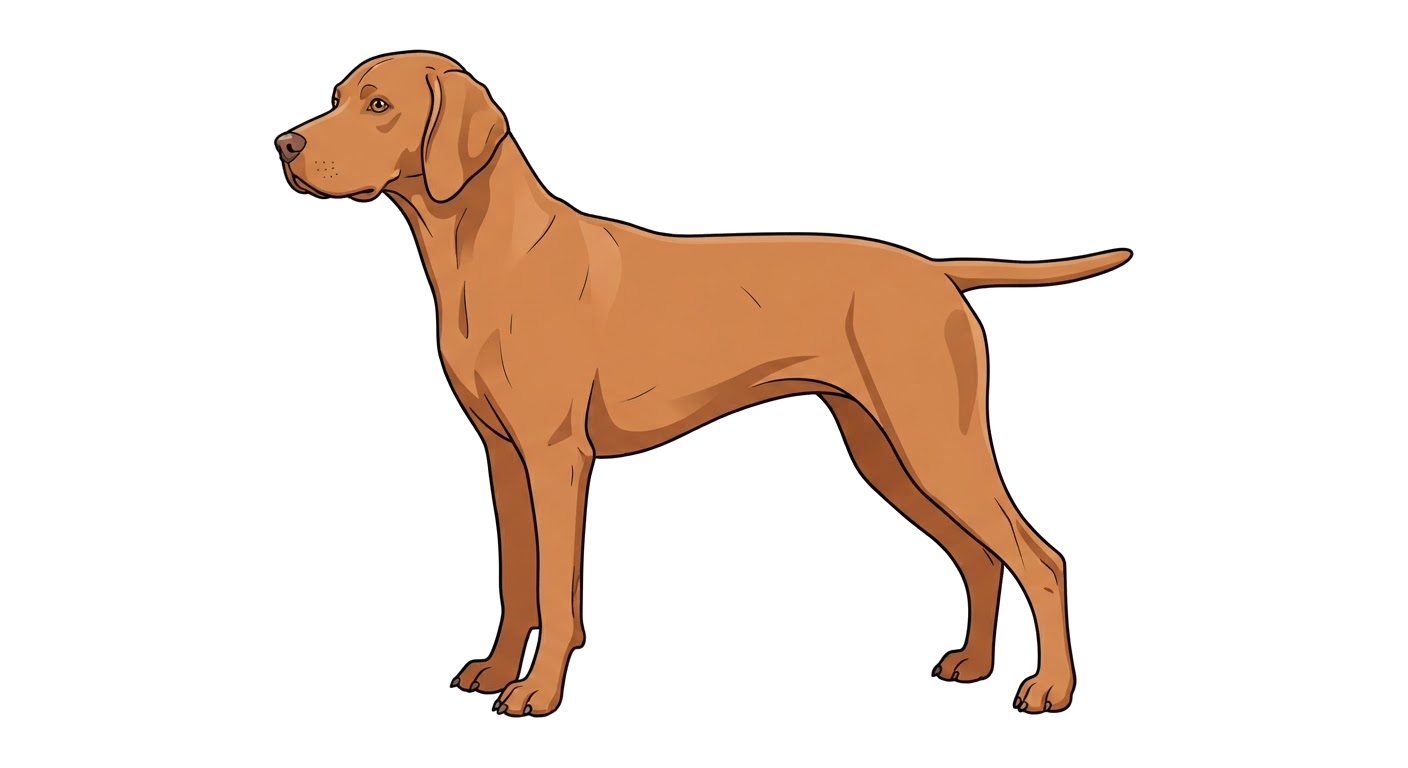
Point 1
Skull
The Hungarian Vizsla's skull is judged on balance rather than size — proportionate to the body, with a clean cheek and a stop typical of the breed. Coarseness or an over-refined head are both faulted.
Colours & patterns
Recognised coats
Which coats the standard accepts — and which are simply popular.
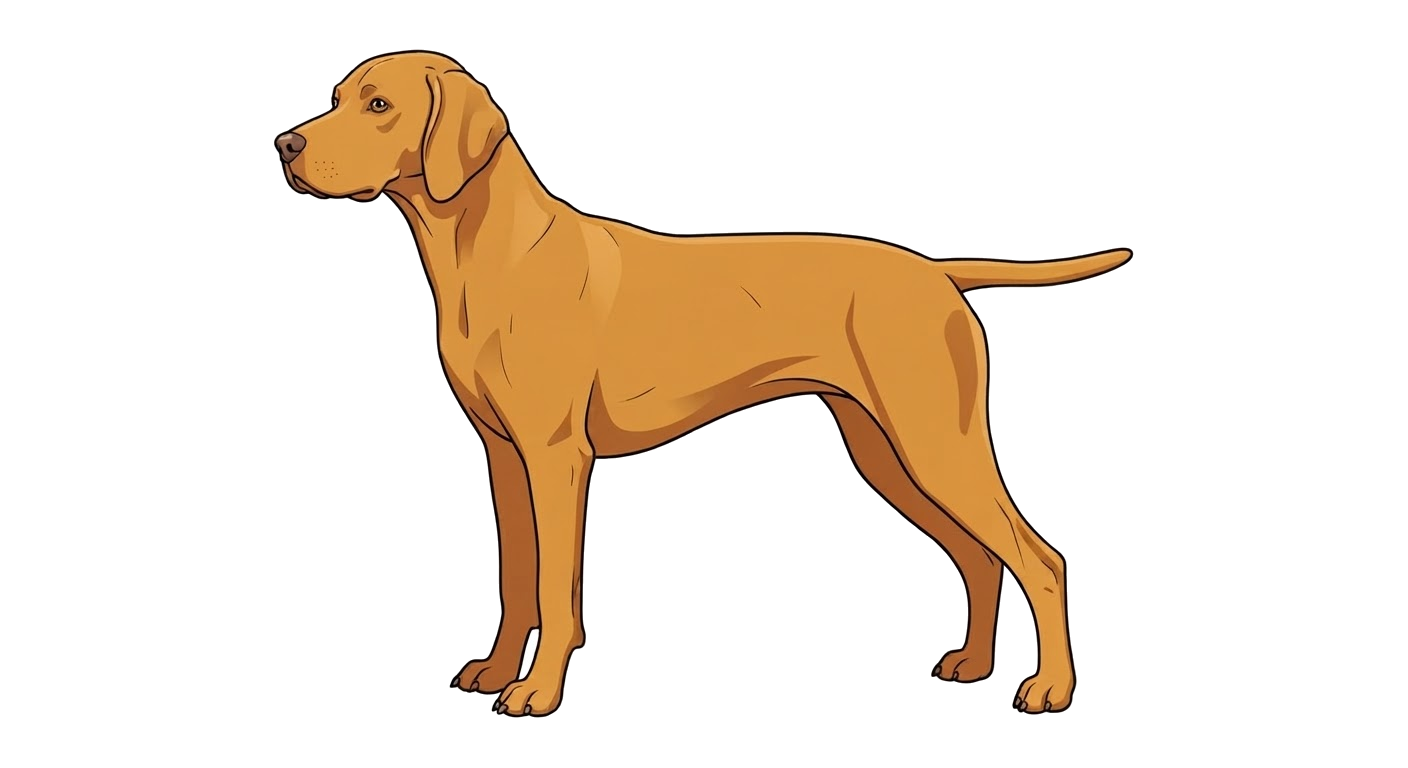
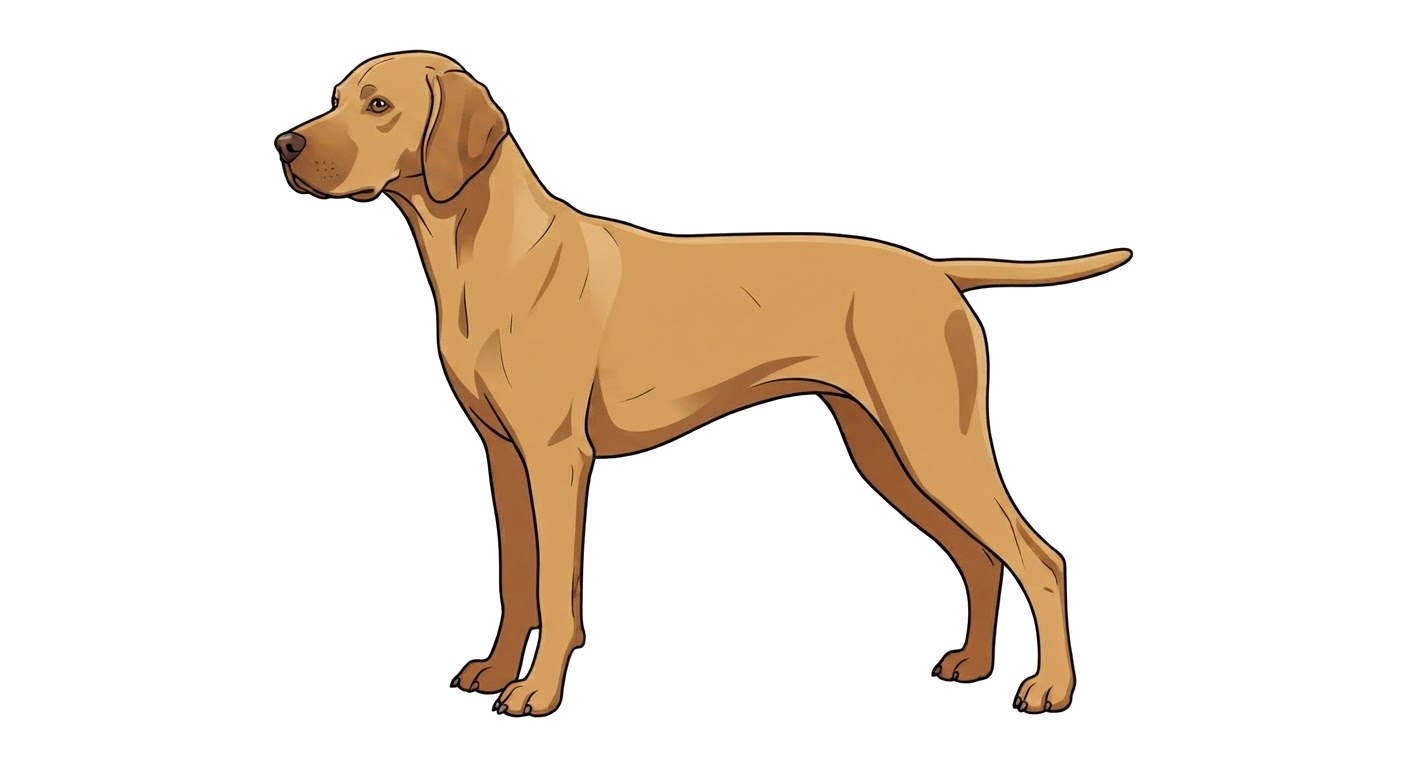
Golden rust
Standard colour
The classic and only fully accepted shade.
Dark sandy gold
Standard colour
A slightly deeper variant within standard.
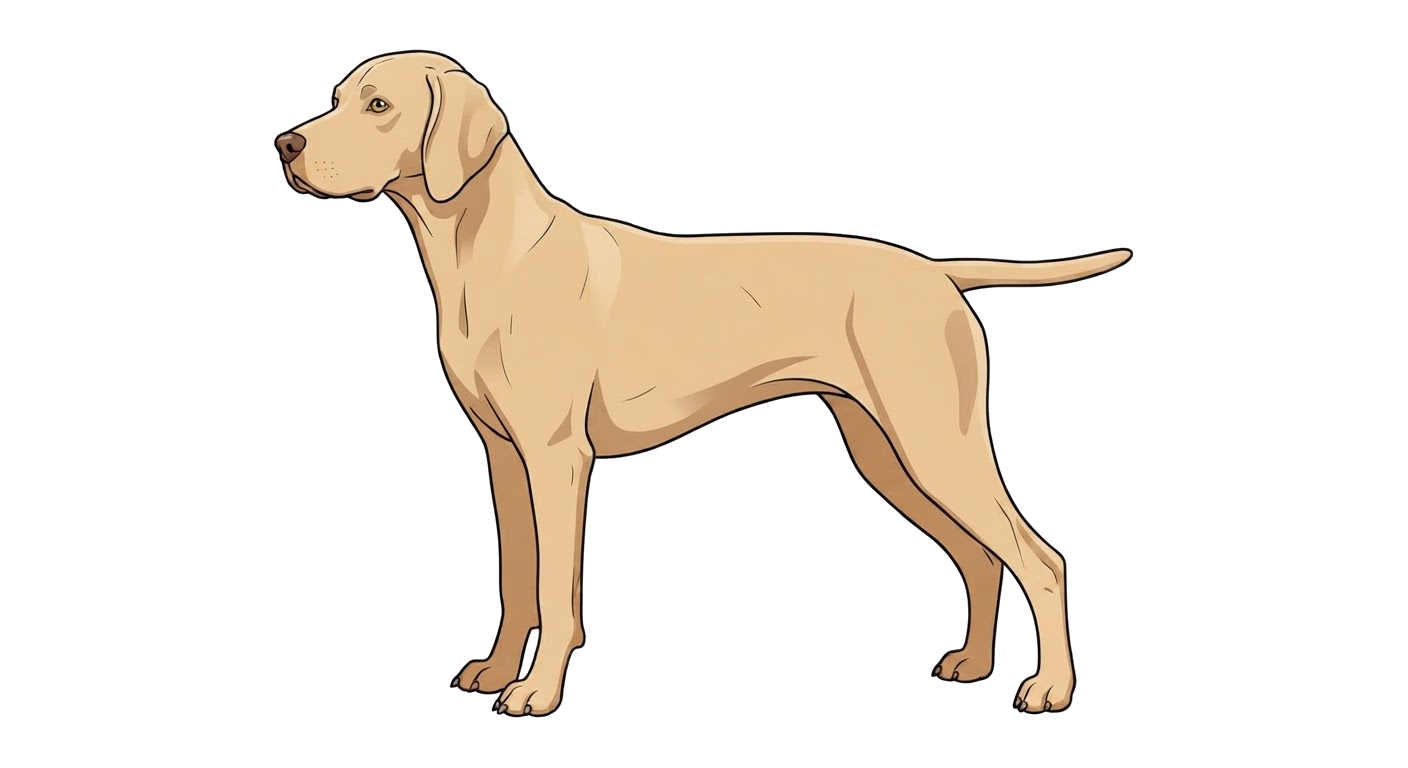
Light sandy gold
Standard colour
A paler variant, still within the accepted range.
Timeline
History & development
10th century
Early ancestors
Dogs resembling the Vizsla travelled with Magyar tribes into the Carpathian basin.
1800s
Refinement by nobility
Hungarian aristocrats bred a lighter, close-coated pointer suited to open-country hunting.
1920s-40s
Near extinction
Wars and political upheaval reduced the breed to a handful of dogs, some smuggled abroad.
1960
AKC recognition
The Vizsla was recognised in the United States, cementing its international revival.
Reference
Breed standard summary
- body
- Robust, slightly longer than tall, with a deep chest.
- coat
- Short, smooth, dense, no undercoat.
- ears
- Thin, silky, hanging close to the cheek.
- eyes
- Medium, harmonising with coat colour.
- gait
- Light, energetic, ground-covering trot.
- head
- Moderately wide, with a gentle stop.
- size
- Medium
- tail
- Traditionally docked by a third in origin countries; carried horizontally.
- colour
- Golden rust, Dark sandy gold, Light sandy gold. Colours outside this list are seen but are not accepted by the kennel clubs.
- temperament
- Typical of the breed: strongest in energy, sociability, trainability. Nervousness or aggression are serious faults in the show ring and in the home.
- general appearance
- Lean, muscular, aristocratic pointer with a golden-rust coat.
Health
What to screen for
Green means little to worry about, amber means ask the breeder for test results, red means manage it actively.
Hip dysplasia
Screen for it
Ask breeders for hip scoring under a recognised scheme.
Epilepsy
Watch closely
Discuss family history of seizures with the breeder.
Hypothyroidism
Screen for it
Thyroid panels can catch this in adult dogs showing coat or weight changes.
Lymphosarcoma
Watch closely
A known concern in the breed; ask about longevity in the pedigree.
General information only — always speak to your vet about your own dog.
From real owners
Dogs like this
Hungarian Vizslas added by PawPoint members through their pet passports. Share yours to appear here.
Loading the wall…
Made for the Hungarian Vizsla
The book, plus prints, hoodies and mugs using our own Hungarian Vizsla illustration — and one everyday accessory that suits any dog.

The book
Pawpoint: The Complete Dog Breed Book
Every officially recognised breed plus the unofficial ones nobody else documents. 400+ pages, hardback, printed and shipped from the UK.
Own stock — shipped by us
Framed poster
Hungarian Vizsla Framed Poster
Museum-weight print of our Hungarian Vizsla illustration, framed or unframed.
Printed to order
Hoodie
Hungarian Vizsla Hoodie
Heavyweight hoodie carrying the Hungarian Vizsla illustration on the chest.
Printed to order
Mug
Hungarian Vizsla Mug
Ceramic mug with the Hungarian Vizsla illustration wrapped around it.
Printed to order
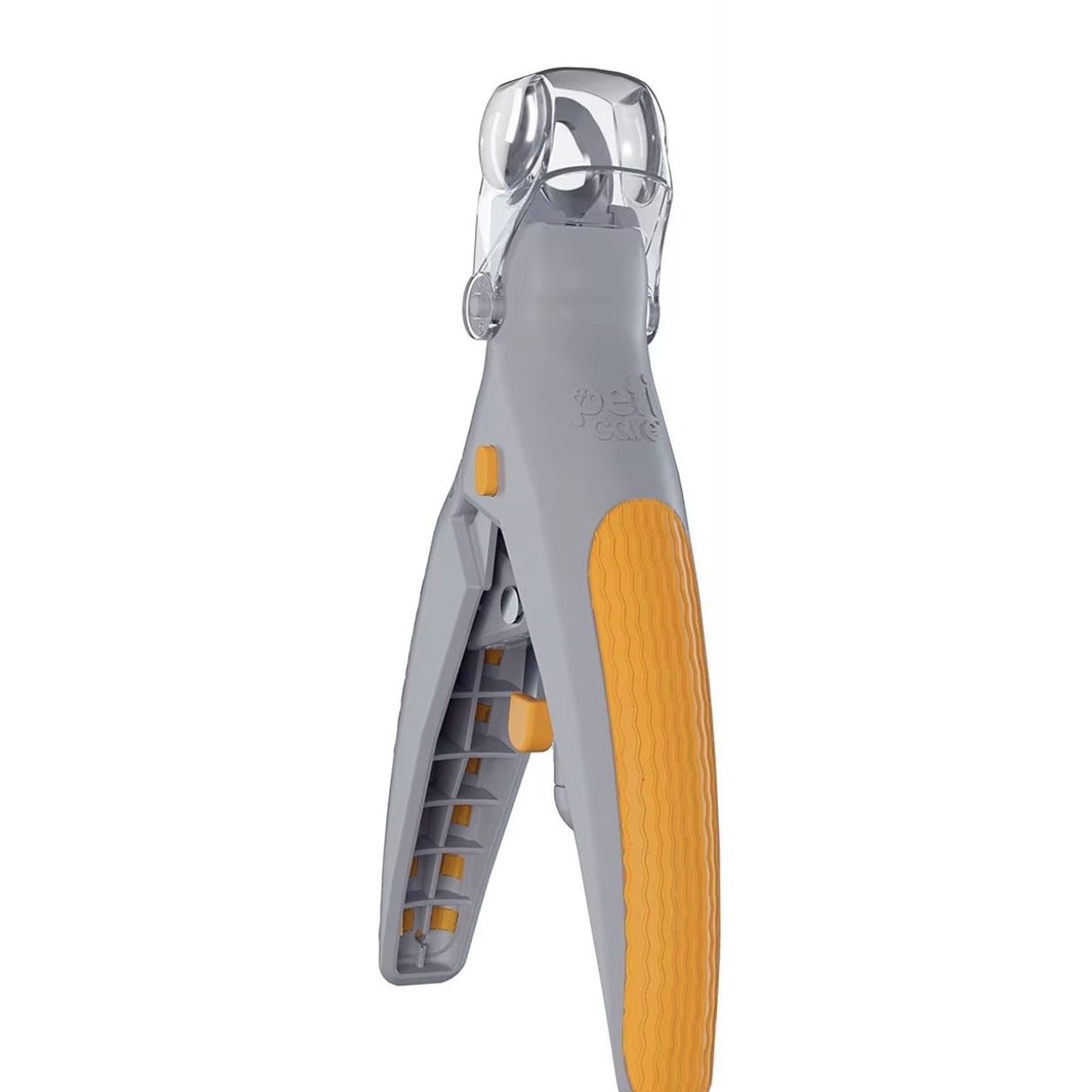
Accessory
Nail Clippers & Grinder
Safety-guard clippers with a quiet rotary grinder.
Fits any dog
Pawpoint on YouTube
Watch the full Hungarian Vizsla video
Breed deep-dives, history and honest ownership talk. New film every week.
Watch now