Indian Pariah Dog
IN-dee-uhn puh-RYE-uh dog
India· Indian Subcontinent
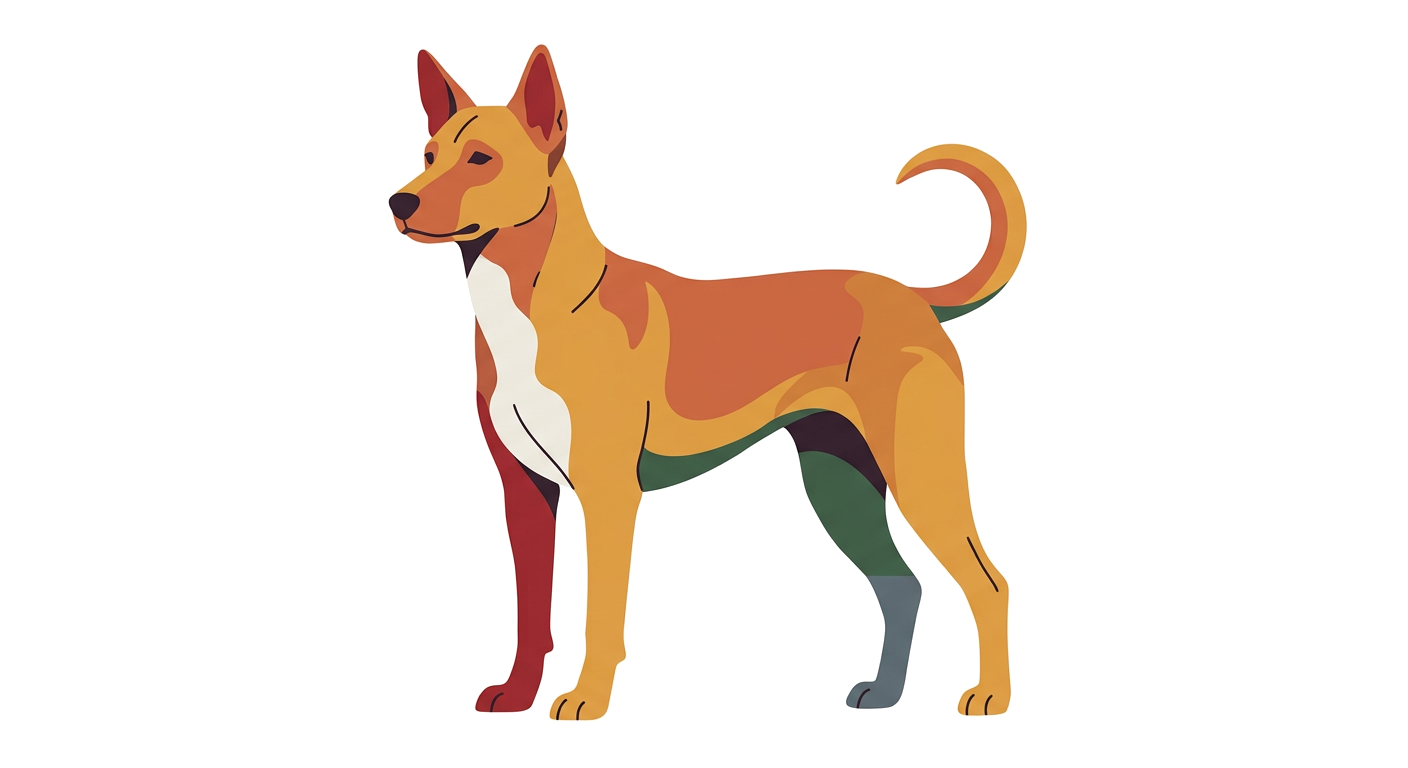
The Indian Pariah Dog, often termed the INDog or South Asian landrace, is an ancient, naturally evolved dog indigenous to the Indian subcontinent. Archaeological findings, including prehistoric rock art at Bhimbetka, suggest that canines conforming to this generalised pariah morphotype have lived alongside humans in the region for thousands of years. Unlike modern pedigree breeds, the Indian Pariah Dog has been shaped predominantly by natural selection rather than human-directed artificial breeding, resulting in an athletic, highly adaptable, and functional animal.
At a glance
Quick facts
Size
Medium
Exercise needs
Moderate (60 mins daily)
Home size suited to
Adaptable to flats or houses with secure perimeters
Grooming frequency
Low (weekly brush)
Coat length
Short
Sheds
Moderate
Lifespan
13–16 years
Town or country
Either, though thrives in semi-rural or quiet suburban environments
Garden size needed
Medium, securely fenced garden
Where it comes from
Origins of the Indian Pariah Dog
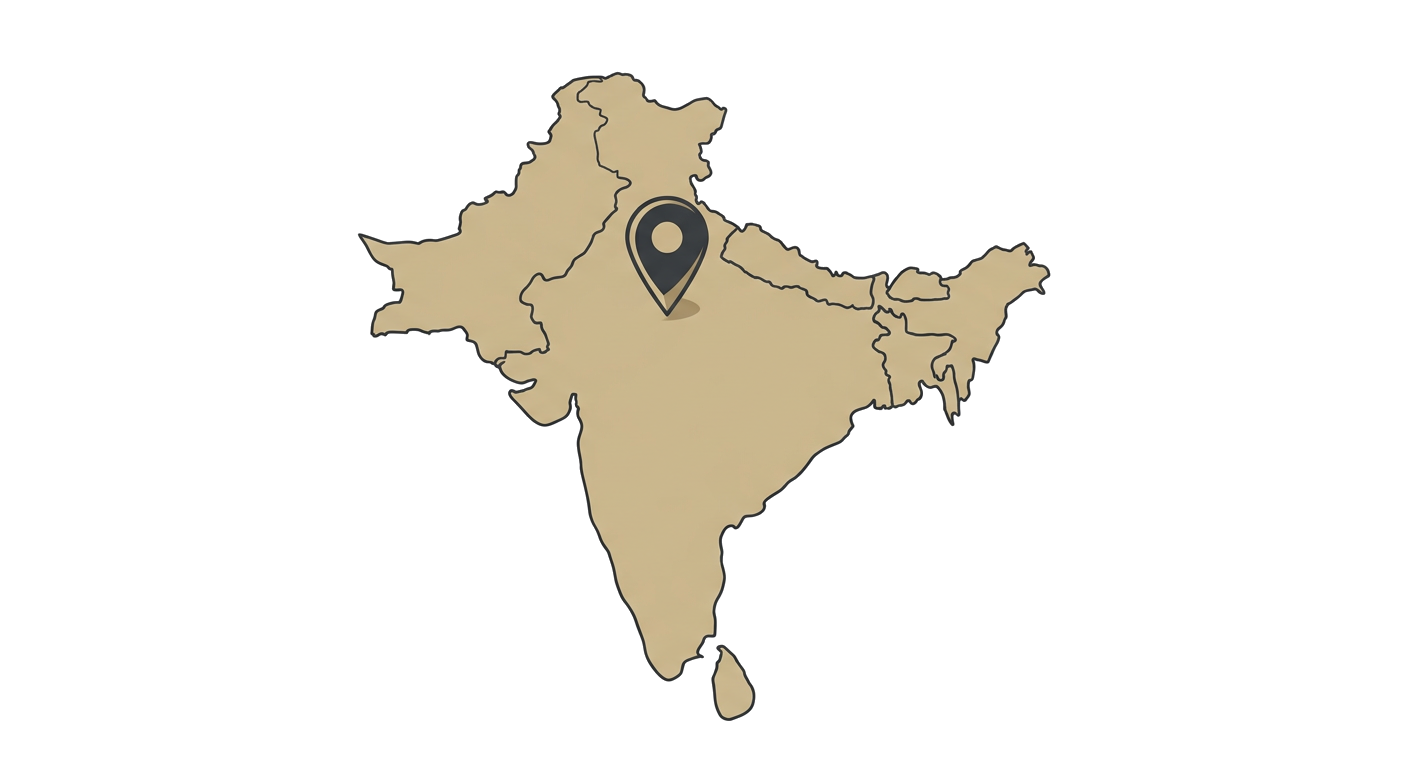
Evolved across the rural and semi-urban landscapes of the Indian subcontinent through thousands of years of natural selection.
- Region
- Indian Subcontinent
- Climate it was bred for
- Varied tropical, semi-arid, and temperate
- Original job
- Camp guardian, scavenger, and generalist village companion
The long read
About the breed
Physically, the Indian Pariah Dog represents a classic primitive canid blueprint, characterised by a wedge-shaped head, erect prick ears, a lean and muscular frame, and a tail that typically curls over the back when alert. Because they are a landrace rather than a closed-studbook kennel breed, regional variations in coat density, size, and markings exist across India's disparate climatic zones, though the fundamental anatomy remains remarkably consistent.
In domestic settings, the breed is renowned for its keen alertness, sharp territorial instincts, and independent intelligence. While they are naturally cautious of novel stimuli and unfamiliar humans, they typically form deep, loyal attachments to their human households when properly socialised. Documentation regarding formal breed standards is limited primarily to landrace conservation groups and the Kennel Club of India, which recognises the type as a distinct indigenous entity.
Illustrated breed standard
The points of the breed
Hover or tap a numbered point to read what the standard asks for.
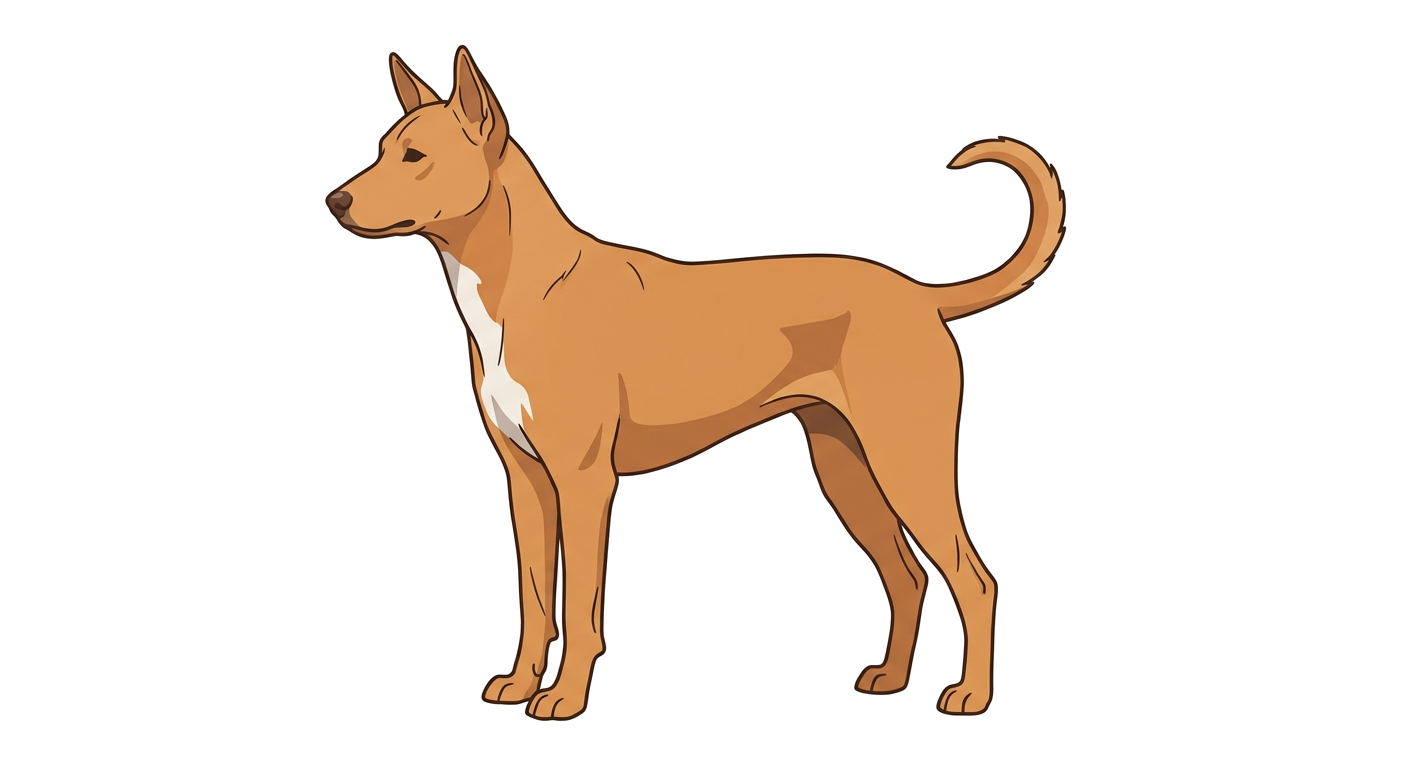
Point 1
Skull
The Indian Pariah Dog's skull is judged on balance rather than size — proportionate to the body, with a clean cheek and a stop typical of the breed. Coarseness or an over-refined head are both faulted.
Colours & patterns
Recognised coats
Which coats the standard accepts — and which are simply popular.
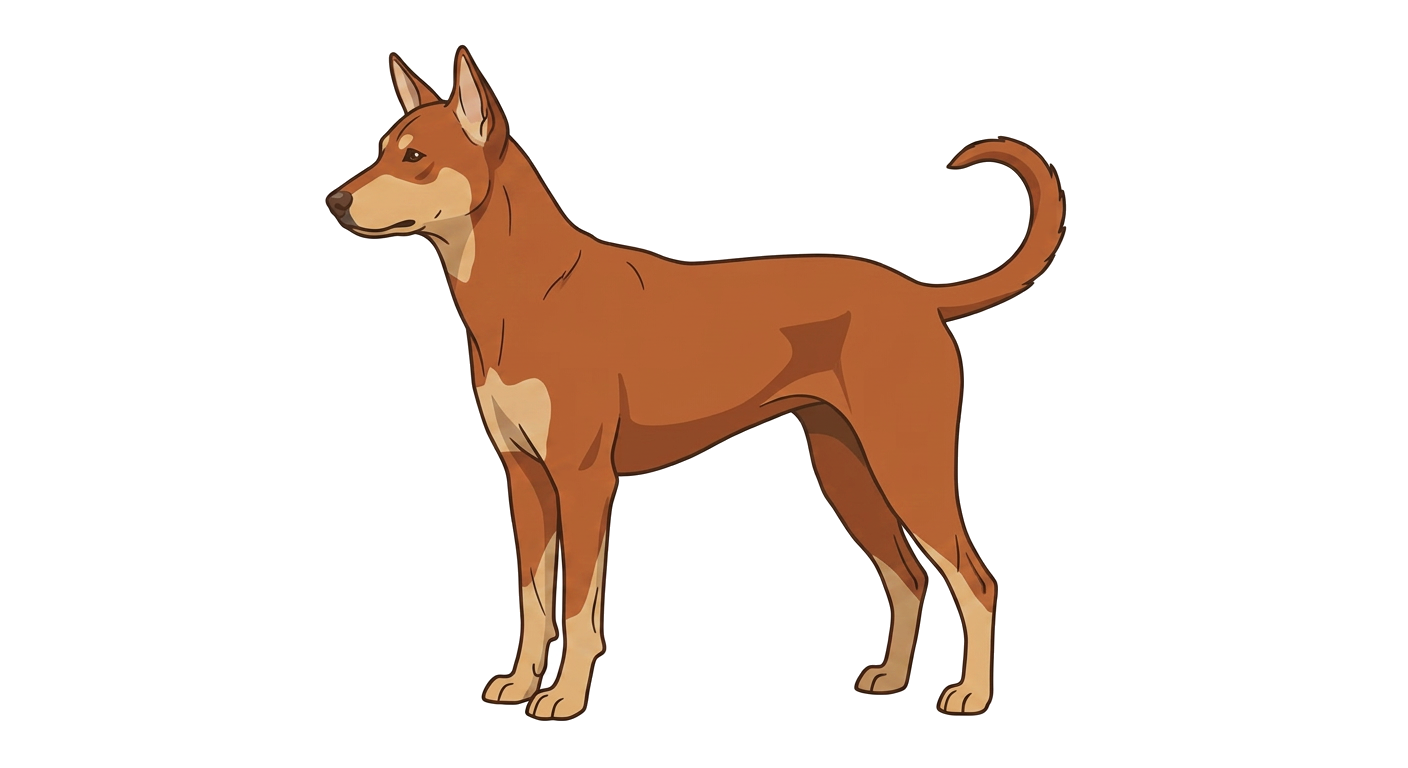
Fawn and Tan
Standard colour
The most common and ancestral colouration, ranging from pale biscuit to deep reddish-tan.
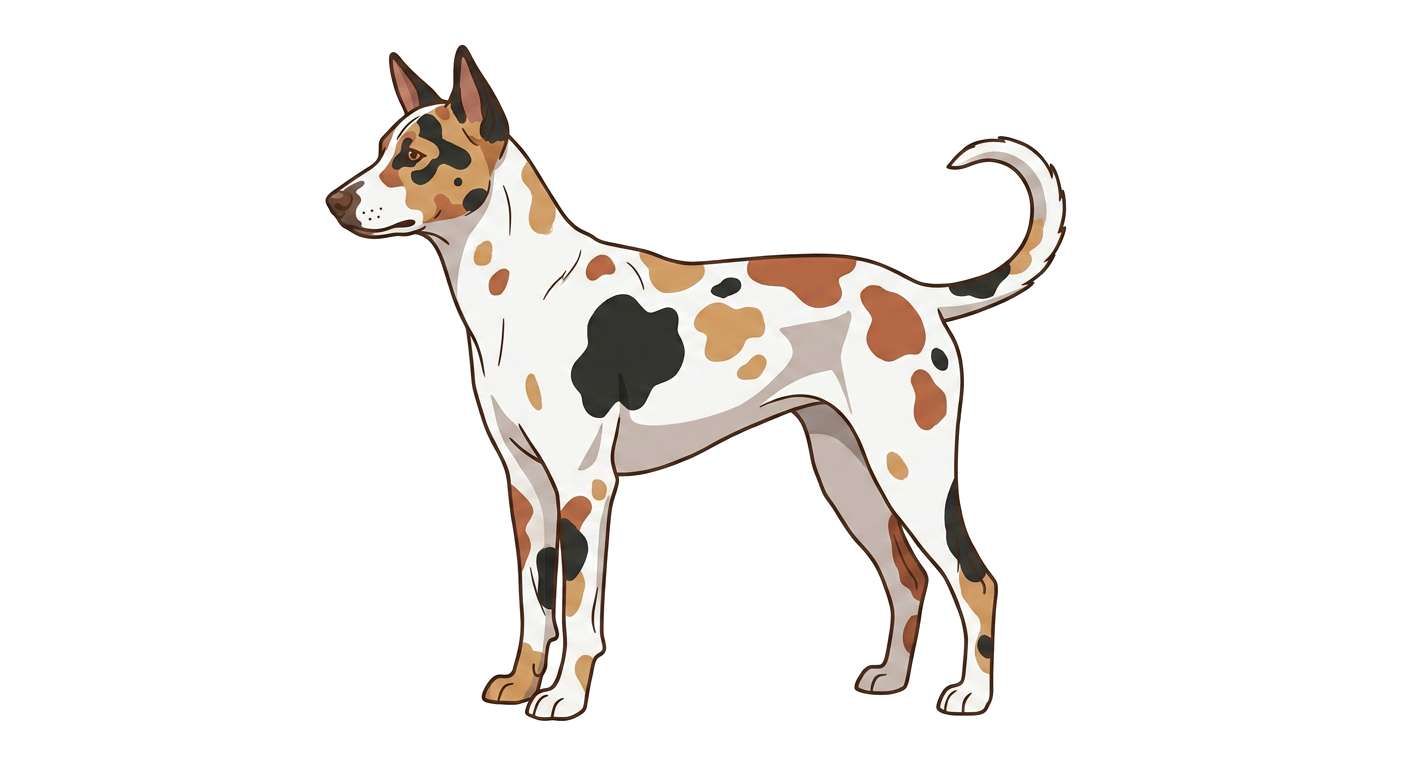
Piebald
Standard colour
White base coat with irregular tan, reddish-brown, or black patches across the body and head.
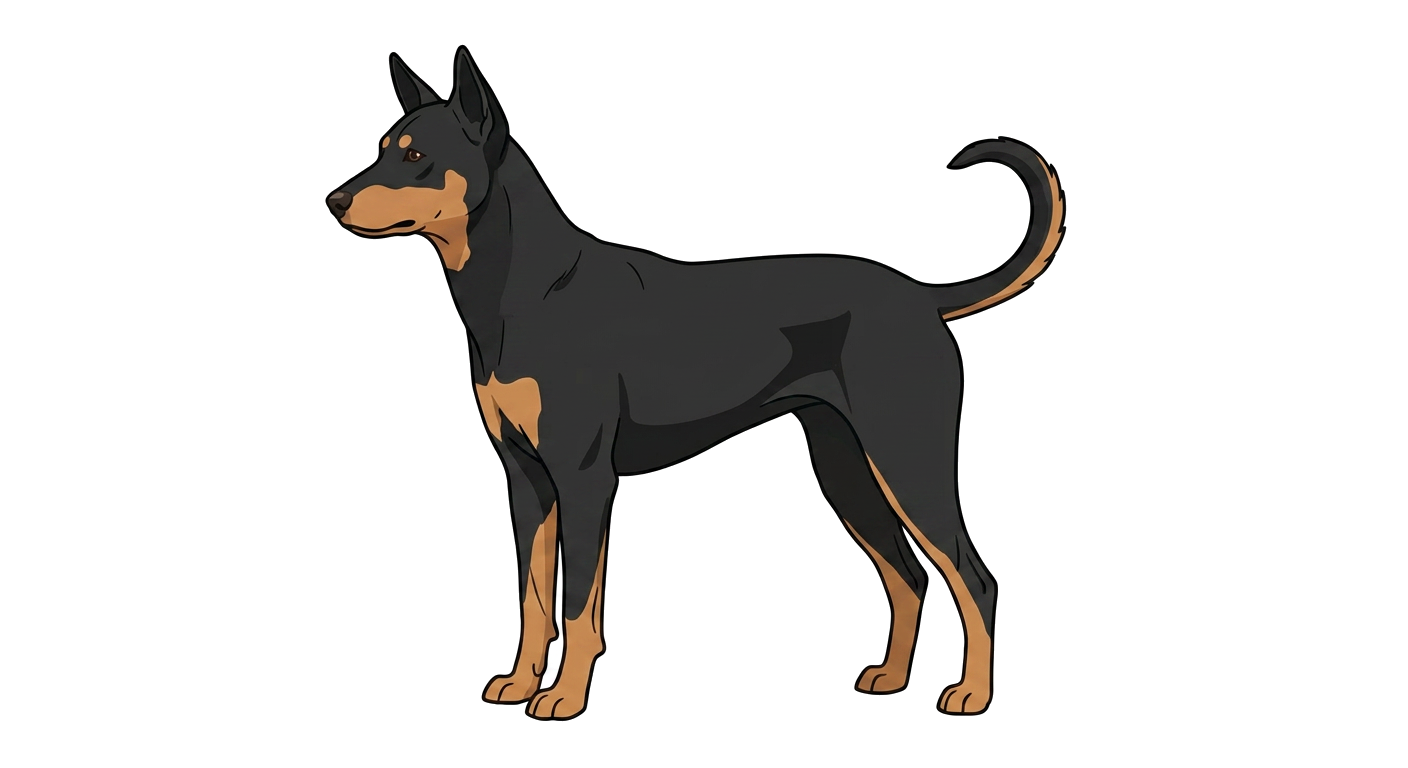
Black and Tan
Standard colour
Solid black base coat with distinct tan markings above the eyes, on the muzzle, chest, and legs.
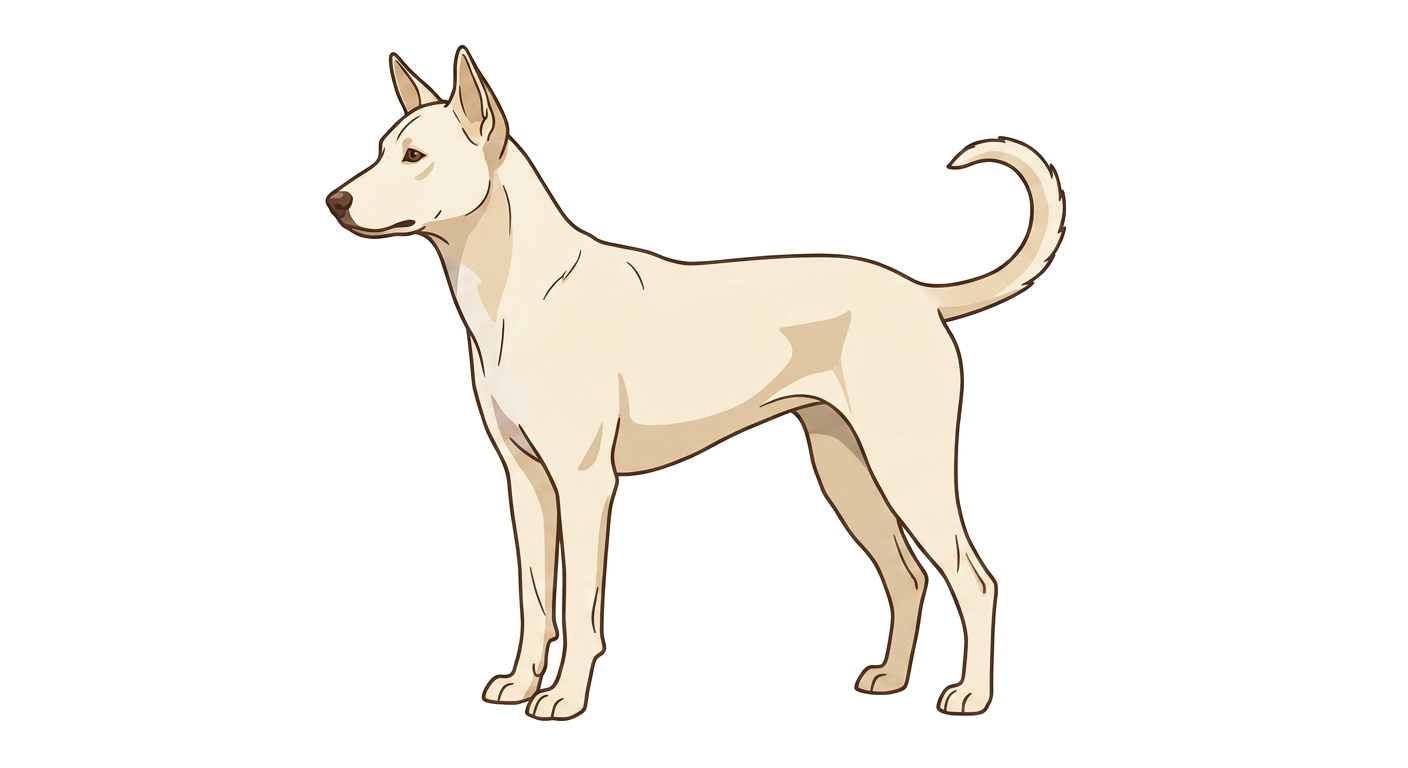
Solid White / Cream
Standard colour
Clean off-white or cream coat, occasionally found across varied rural regions.
Timeline
History & development
c. 4500 BCE
Prehistoric Evidence
Mesolithic rock art at sites such as Bhimbetka in central India depicts humans alongside pariah-type canines, providing some of the earliest visual records of indigenous South Asian dogs.
1800s
Colonial Classification
British naturalists and colonial administrators coined the term 'pariah dog' to describe the ubiquitous, free-ranging native landrace canines observed throughout towns and villages across India.
2000s
Landrace Conservation
Cynologists and advocacy groups began formal efforts to study, document, and preserve the pure aboriginal INDog, seeking to distinguish the true ancestral landrace from mixed-breed urban street populations.
Reference
Breed standard summary
- body
- Firm and lean; deep chest reaching near the elbows, with well-sprung ribs and a pronounced, athletic tuck-up at the loin.
- coat
- Short, harsh, and flat outer coat with a sparse undercoat suited to warm climates, lying close to the body.
- ears
- Medium in size, erect and mobile, broad at the base and pointed at the tips, carried alertly.
- eyes
- Almond-shaped, moderately deep-set, dark brown to hazel, possessing a keen, alert, and watchful expression.
- gait
- Light, effortless, and ground-covering trot exhibiting high efficiency and agile movement.
- head
- Wedge-shaped with a flat skull tapering gradually towards the muzzle; cleanly chiselled with moderate stop.
- size
- Height at the withers typically ranges from 46 to 64 cm (18 to 25 inches); weight ranges from 12 to 25 kg (26 to 55 lbs).
- tail
- Medium length, set moderately high, carried in a loose curl or sickle over the back when the dog is active or alert.
- colour
- Predominantly solid fawn, reddish-brown, tan, or piebald (white ground with brown or black patches); solid white, black, or black-and-tan also occur naturally.
- muzzle
- Equal in length to the skull, clean and tapering to a dark, well-pigmented nose; tight lips with complete scissor bite.
- temperament
- Vigilant, independent, cautious of strangers, yet deeply loyal, affectionate, and clean in the home.
- general appearance
- Medium-sized, square to slightly rectangular build with clean, functional lines, exhibiting a balanced, athletic, and primitive canid silhouette free of exaggeration.
Health
What to screen for
Green means little to worry about, amber means ask the breeder for test results, red means manage it actively.
Tick-Borne Diseases
Watch closely
Susceptible in tropical climates to tick-transmitted pathogens such as Ehrlichia and Babesia, requiring regular parasite prophylaxis.
Infectious Viral Diseases
Watch closely
Standard vulnerability to parvovirus, distemper, and rabies if unvaccinated, though immune resilience is generally strong.
Orthopaedic Soundness
Watch closely
Congenital hip dysplasia and patellar luxation are exceptionally rare owing to a self-regulating, functional anatomical design.
General information only — always speak to your vet about your own dog.
From real owners
Dogs like this
Indian Pariah Dogs added by PawPoint members through their pet passports. Share yours to appear here.
Loading the wall…
Made for the Indian Pariah Dog
The book, plus prints, hoodies and mugs using our own Indian Pariah Dog illustration — and one everyday accessory that suits any dog.
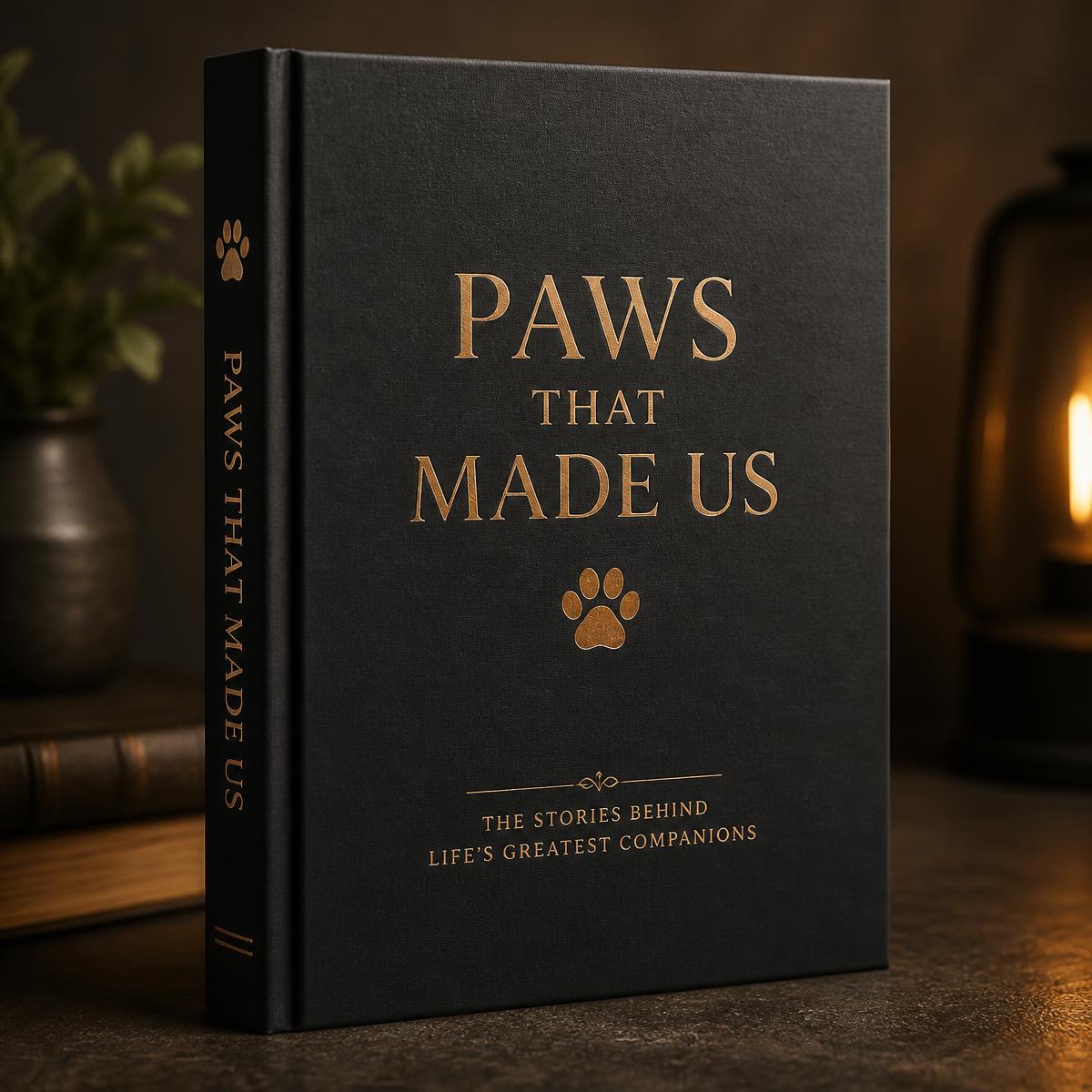
The book
Pawpoint: The Complete Dog Breed Book
Every officially recognised breed plus the unofficial ones nobody else documents. 400+ pages, hardback, printed and shipped from the UK.
Own stock — shipped by us
Framed poster
Indian Pariah Dog Framed Poster
Museum-weight print of our Indian Pariah Dog illustration, framed or unframed.
Printed to order
Hoodie
Indian Pariah Dog Hoodie
Heavyweight hoodie carrying the Indian Pariah Dog illustration on the chest.
Printed to order
Mug
Indian Pariah Dog Mug
Ceramic mug with the Indian Pariah Dog illustration wrapped around it.
Printed to order
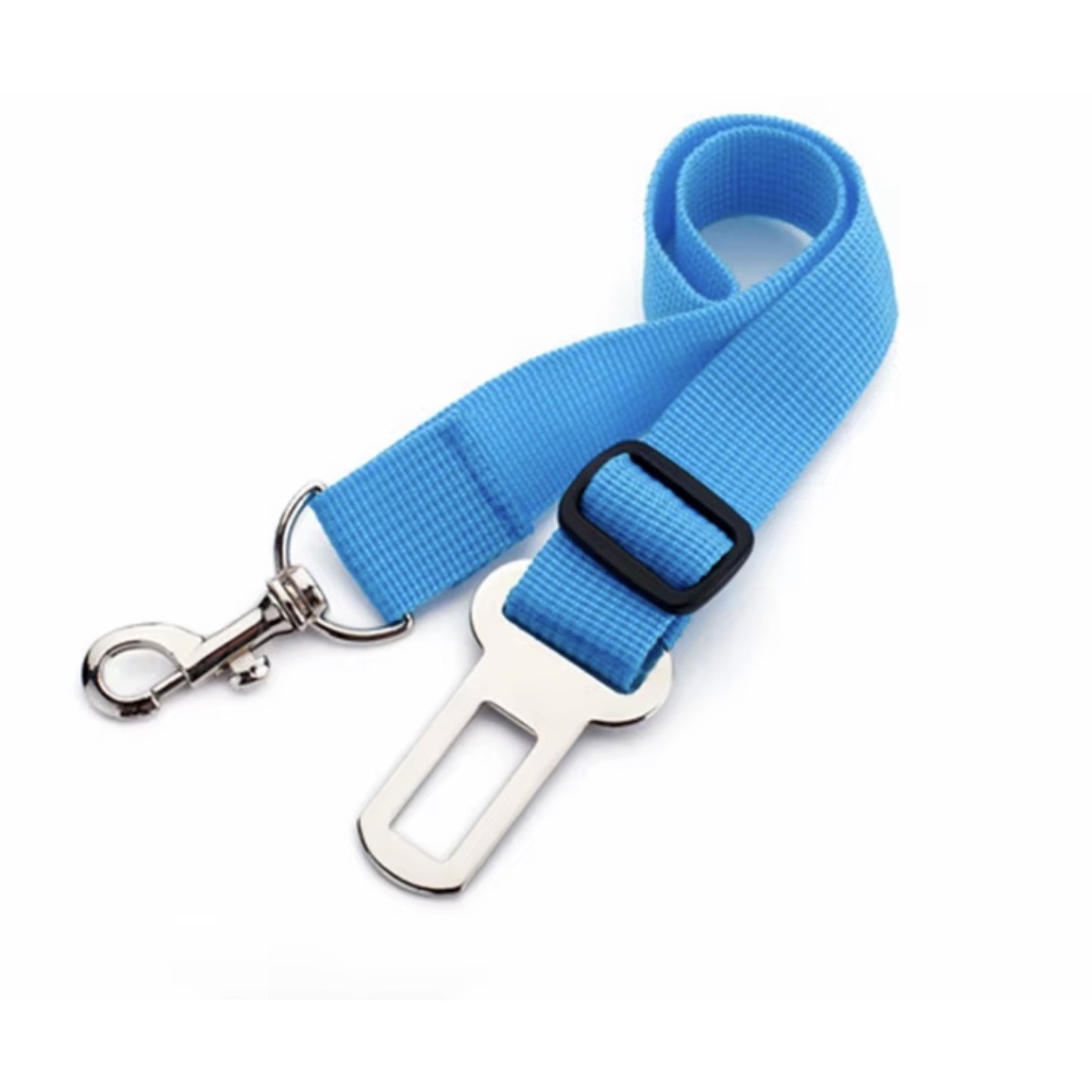
Accessory
Car Seatbelt Restraint
Clips any harness to a standard seatbelt buckle.
Fits any dog
Pawpoint on YouTube
Watch the full Indian Pariah Dog video
Breed deep-dives, history and honest ownership talk. New film every week.
Watch now