
Irish Setter
EYE-rish SET-uhr
Ireland· Ireland, countrywide
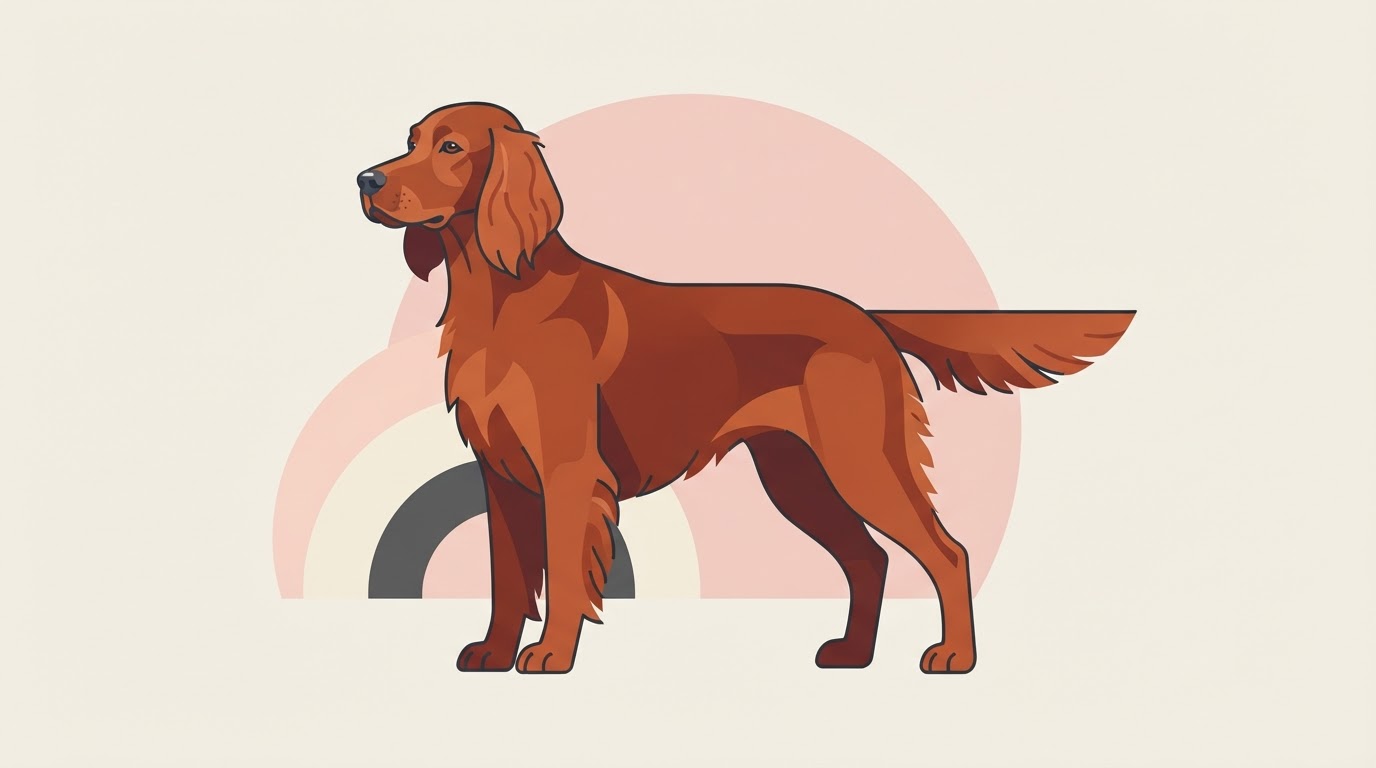
The Irish Setter is a tall, glossy mahogany-red gundog developed in Ireland to find and point game birds across open country at a fast, wide-ranging gallop.
At a glance
Quick facts
Size
Large
Exercise needs
90+ minutes daily
Home size suited to
Medium to large home
Grooming frequency
Daily brushing
Coat length
Long
Sheds
Yes
Lifespan
12-15 years
Town or country
Either, with enough exercise
Garden size needed
Medium or larger
Where it comes from
Origins of the Irish Setter

Bred across Irish sporting estates to range fast and wide over grouse moor and farmland, the setter's build and rich red coat became a hallmark of Irish field sport.
- Region
- Ireland, countrywide
- Climate it was bred for
- Cool, damp, open farmland and moor
- Original job
- Pointing game birds over open country
The long read
About the breed
Setters of mixed red and white ancestry were refined into the solid red type through the eighteenth and nineteenth centuries, with Irish sporting estates and later show breeders favouring the rich, uniform colour that gives the breed its name. The dogs were prized for covering ground quickly on grouse moor and farmland, working well ahead of the gun and freezing on point once game was found, a very different job from a flushing spaniel or a retrieving Labrador.
An Irish Setter in the home is affectionate, sociable and, particularly as a young dog, considerably more boisterous than its elegant looks suggest; the breed is slow to mature, often not settling until three or four years old. It needs substantial daily exercise, ideally with room to run rather than just lead walks, and without it can become destructive or simply impossible to live with indoors. The silky coat requires regular brushing, especially the feathering on the ears, legs and tail, to prevent mats.
Modern breeding has split into working and show lines, with the show type generally taller, heavier-coated and calmer than the working strain still used by some shooting enthusiasts. Either way, the Irish Setter suits an active household with time for training and grooming, rather than one looking for a low-maintenance companion.
Living with one
Temperament & needs
Our own ratings, based on the breed standard and how these dogs behave in ordinary homes.
Friendliness
5/5
How openly the Irish Setter greets people it does not know.
Trainability
3/5
Intelligent but slow to mature and easily distracted.
Energy
5/5
Needs substantial daily running, not just walks.
Barking
2/5
Not a persistent barker.
Grooming
4/5
Silky coat and feathering need regular brushing.
Suits a first-time owner
2/5
How forgiving the Irish Setter is for someone taking on their first dog.
Sociability
5/5
Exuberantly friendly with people and other dogs.
Independence
3/5
Can wander off following a scent if not well recalled.
Illustrated breed standard
The points of the breed
Hover or tap a numbered point to read what the standard asks for.
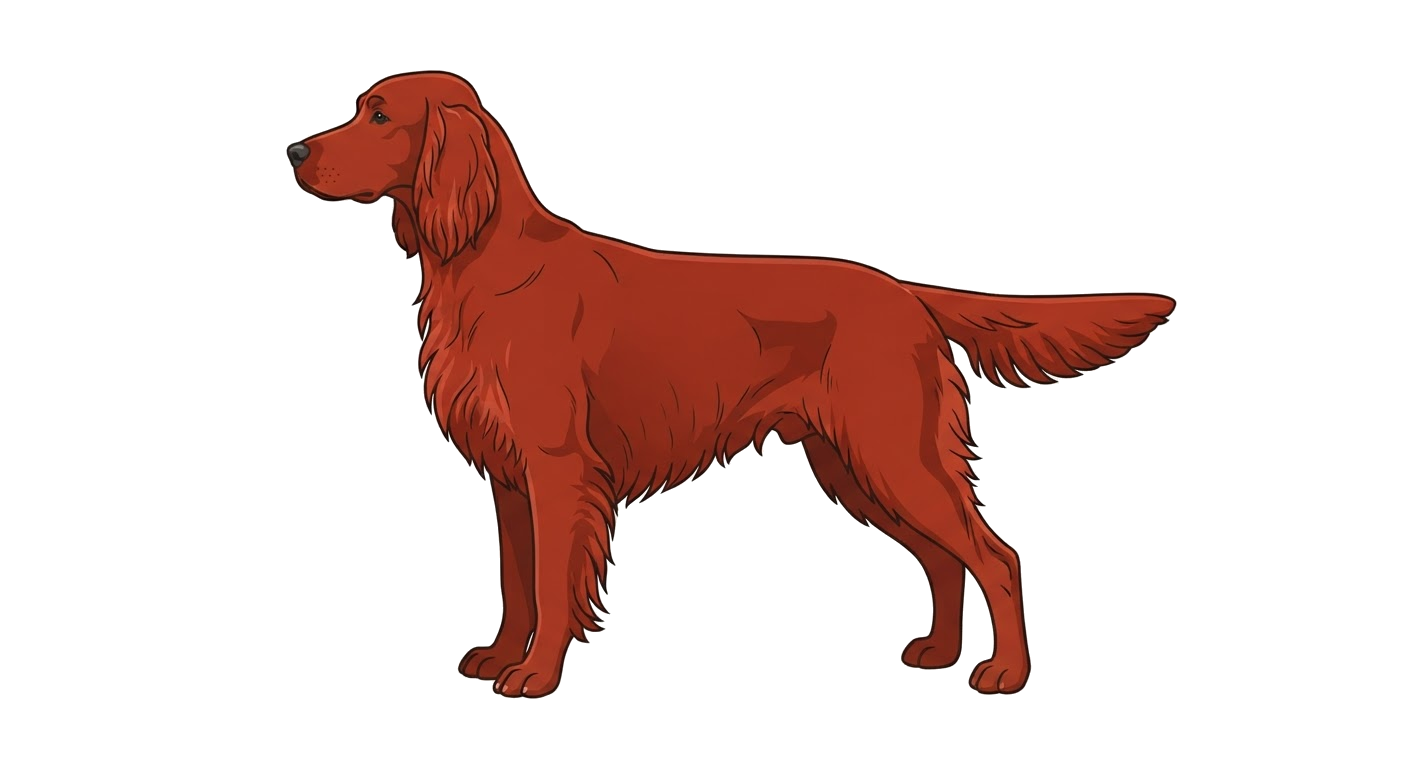
Point 1
Skull
The Irish Setter's skull is judged on balance rather than size — proportionate to the body, with a clean cheek and a stop typical of the breed. Coarseness or an over-refined head are both faulted.
Colours & patterns
Recognised coats
Which coats the standard accepts — and which are simply popular.
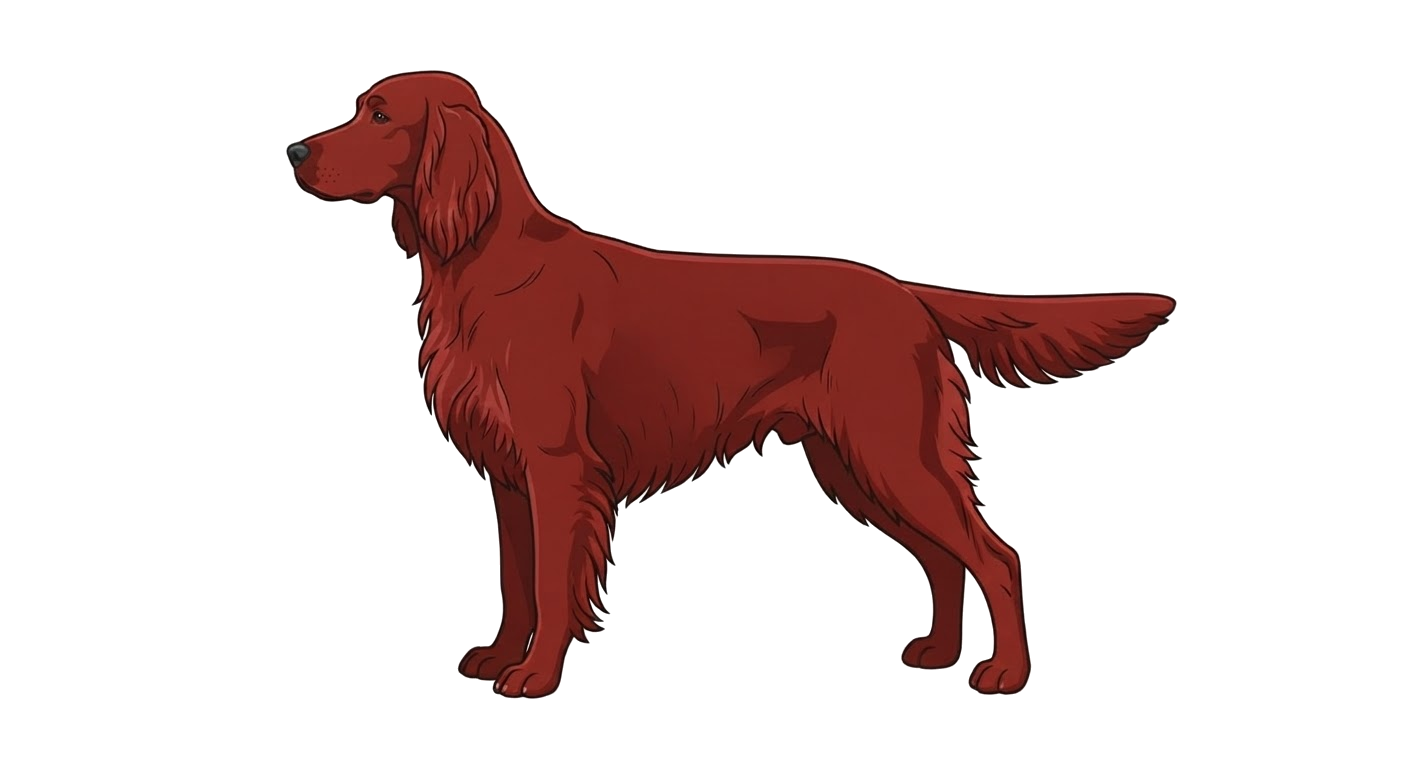
Mahogany red
Standard colour
The classic, richly saturated standard colour.
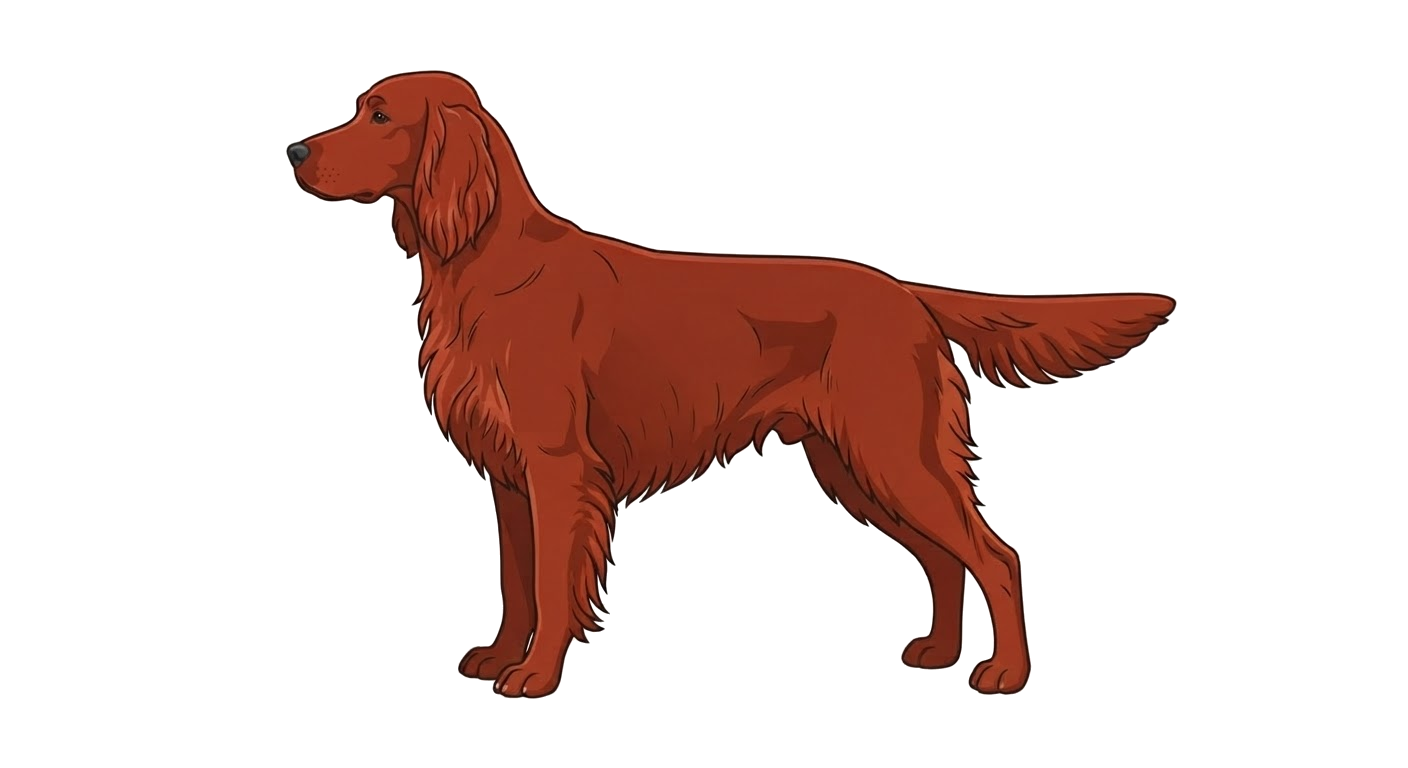
Chestnut red
Standard colour
A slightly lighter shade also within standard.
Timeline
History & development
1700s
Development in Ireland
Red and white setters were selectively bred toward a solid red type on Irish estates.
1812
Early recorded lines
Named kennels began documenting the solid red setter as distinct from its red and white ancestor.
1875
Breed standard drafted
Formal standards were set down as the breed entered the show ring.
1878
AKC recognition
The Irish Setter became one of the earliest breeds recognised in the United States.
1950s onward
The breed today
Kennel club registrations settled into a steady pattern and the Irish Setter moved from a working specialist to a family companion, with breed clubs in the UK and abroad now focused on health testing and keeping true type alive.
Reference
Breed standard summary
- body
- Deep chest, moderately tucked loin.
- coat
- Short on head, silky and feathered elsewhere.
- ears
- Set low, hanging close to the head.
- eyes
- Dark to medium brown, almond-shaped.
- gait
- Free, ground-covering, with good reach.
- head
- Long, lean, with a moderate stop.
- size
- Large
- tail
- Strong at the base, tapering to a point.
- colour
- Mahogany red, Chestnut red. Colours outside this list are seen but are not accepted by the kennel clubs.
- temperament
- Typical of the breed: strongest in energy, sociability, grooming. Nervousness or aggression are serious faults in the show ring and in the home.
- general appearance
- Racy, elegant setter with a rich mahogany coat.
Health
What to screen for
Green means little to worry about, amber means ask the breeder for test results, red means manage it actively.
Hip dysplasia
Screen for it
Ask for hip scores on breeding parents.
Bloat (GDV)
Watch closely
A deep-chested breed; feed smaller meals and avoid exercise straight after eating.
Progressive retinal atrophy
Screen for it
DNA testing is available and worth asking about.
Hypothyroidism
Screen for it
Thyroid panels are useful if coat or weight changes appear.
General information only — always speak to your vet about your own dog.
From real owners
Dogs like this
Irish Setters added by PawPoint members through their pet passports. Share yours to appear here.
Loading the wall…
Made for the Irish Setter
The book, plus prints, hoodies and mugs using our own Irish Setter illustration — and one everyday accessory that suits any dog.

The book
Pawpoint: The Complete Dog Breed Book
Every officially recognised breed plus the unofficial ones nobody else documents. 400+ pages, hardback, printed and shipped from the UK.
Own stock — shipped by us
Framed poster
Irish Setter Framed Poster
Museum-weight print of our Irish Setter illustration, framed or unframed.
Printed to order
Hoodie
Irish Setter Hoodie
Heavyweight hoodie carrying the Irish Setter illustration on the chest.
Printed to order
Mug
Irish Setter Mug
Ceramic mug with the Irish Setter illustration wrapped around it.
Printed to order
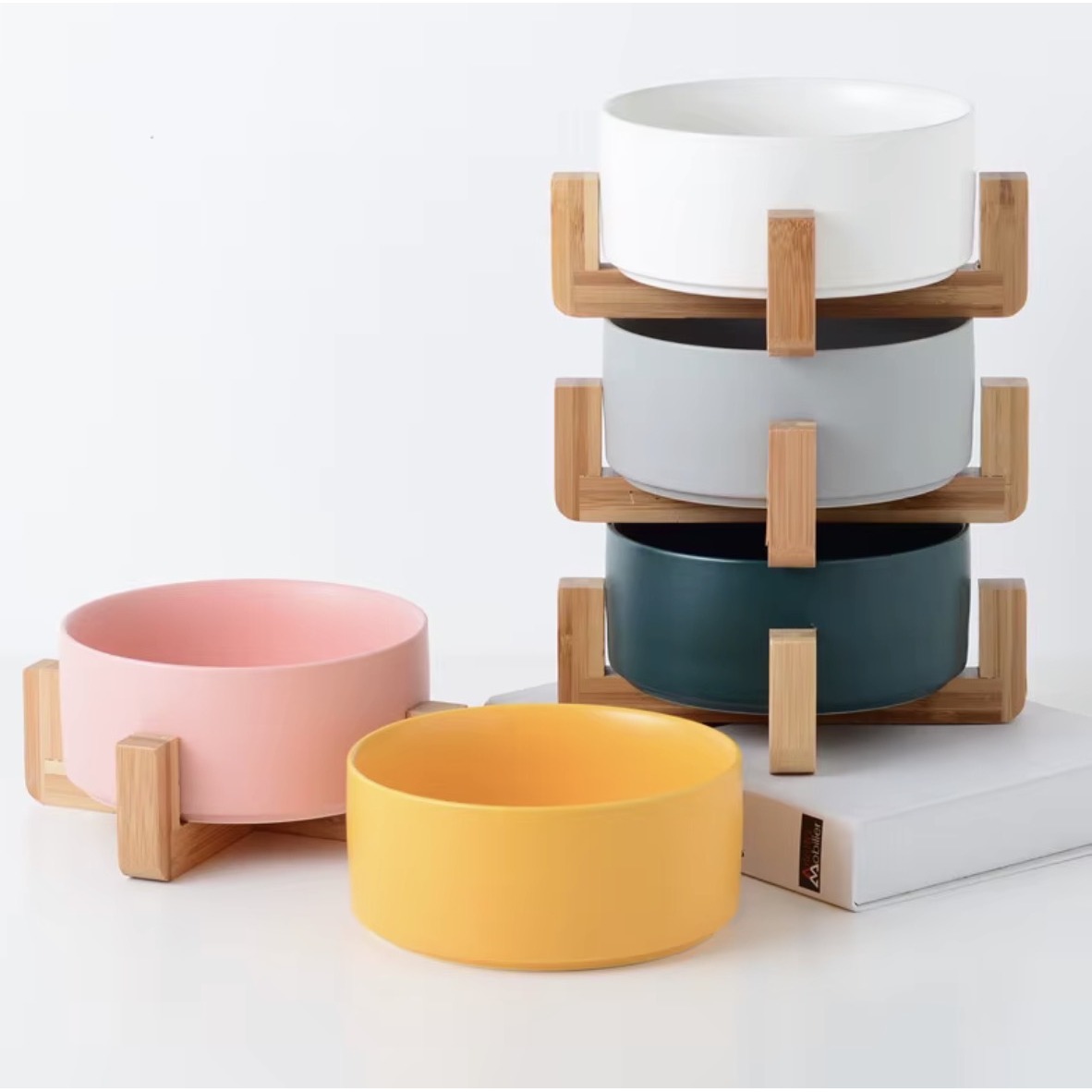
Accessory
Stainless Dog Bowl
Weighted, non-slip base. Dishwasher safe.
Fits any dog

Pawpoint on YouTube
Watch the full Irish Setter video
Breed deep-dives, history and honest ownership talk. New film every week.
Watch now