
Irish Water Spaniel
EYE-rish WAW-tuhr SPAN-yuhl
Ireland· River Shannon and County Cork
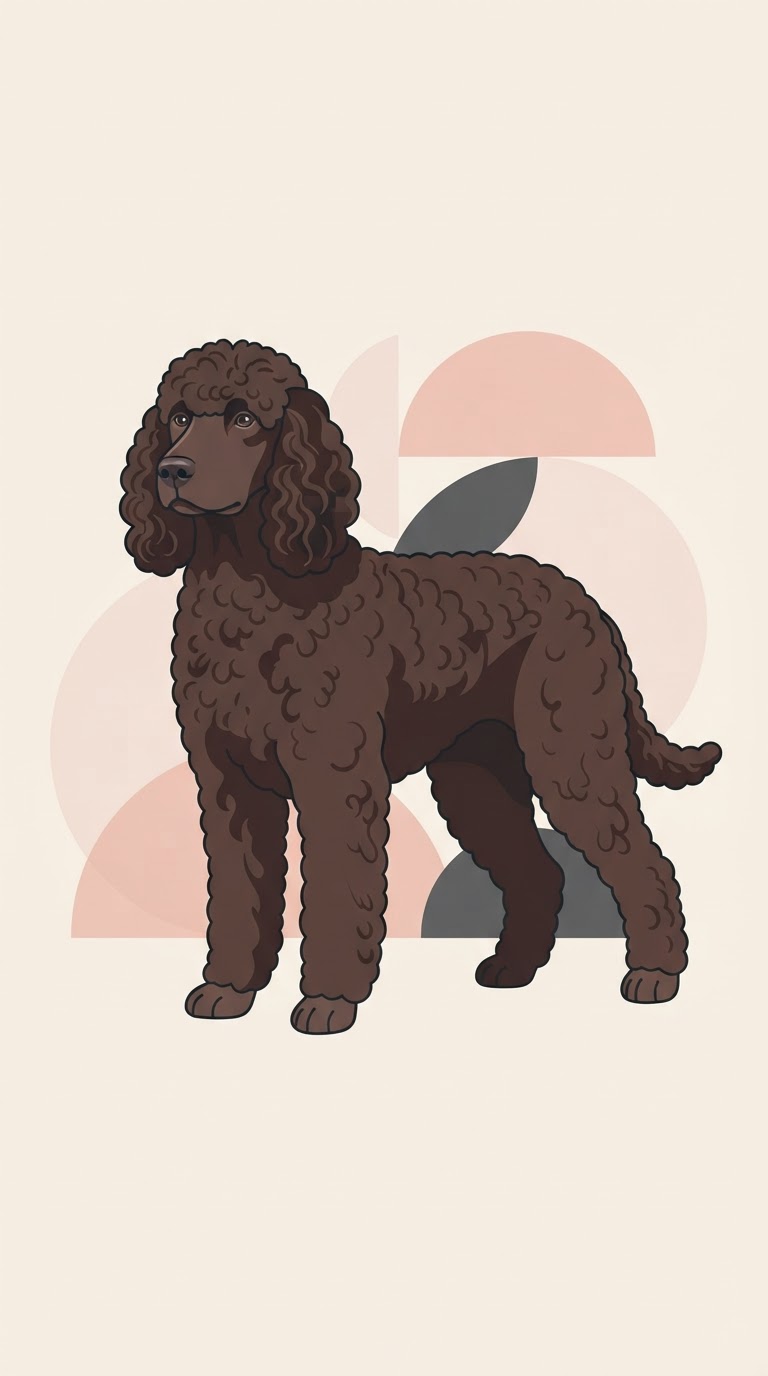
The Irish Water Spaniel is a tall, curly-coated retriever bred in Ireland to work cold rivers and lakes, fetching waterfowl for hunters in conditions that would deter most other spaniels.
At a glance
Quick facts
Size
Large
Exercise needs
60-90 minutes daily, ideally with water access
Home size suited to
Medium to large home
Grooming frequency
Brush every other day, clip regularly
Coat length
Curly
Sheds
Very little
Lifespan
10-12 years
Town or country
Either, with enough exercise
Garden size needed
Medium or larger
Where it comes from
Origins of the Irish Water Spaniel
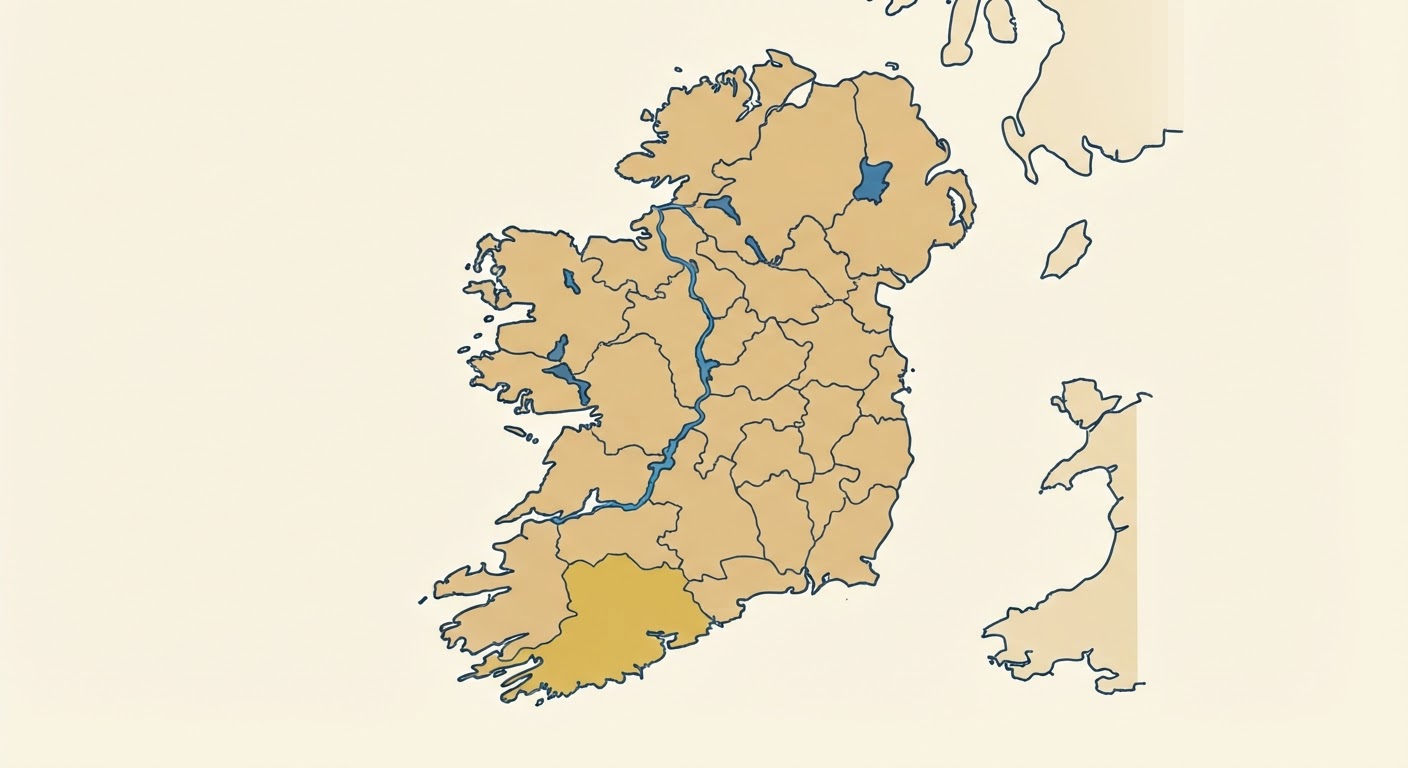
Working the cold rivers and lakes of western Ireland, the breed developed tight, oily curls and a bare rat tail to shed water quickly during long days retrieving duck.
- Region
- River Shannon and County Cork
- Climate it was bred for
- Cold, wet rivers, lakes and marshland
- Original job
- Retrieving waterfowl from cold water
The long read
About the breed
Developed in the west of Ireland, particularly around the River Shannon and County Cork, the breed was standardised in the mid-nineteenth century largely through the efforts of Justin McCarthy of Dublin, whose dogs form the basis of the modern breed. Its tight, oily ringlets and bare "rat tail" evolved to shed cold water efficiently, letting it retrieve duck and other game from icy lakes and marshes for hours without becoming waterlogged.
Living with an Irish Water Spaniel means living with a clownish, intelligent dog that often forms a very strong bond with one person and can be reserved with strangers, a trait some owners mistake for aloofness rather than a genuine one-family temperament. It needs daily exercise and, ideally, access to water, which it will seek out given the chance. The dense curly coat requires regular brushing and periodic trimming to prevent matting, and unlike many curly-coated breeds it does not shed heavily, which suits some allergy sufferers though no breed is truly hypoallergenic.
The breed remains one of the rarer spaniels, both in Ireland and internationally, valued today by wildfowlers and by owners drawn to its unusual coat and sense of humour. It is not the easiest breed for a first-time owner given its independence and need for consistent, engaging training.
Living with one
Temperament & needs
Our own ratings, based on the breed standard and how these dogs behave in ordinary homes.
Friendliness
3/5
How openly the Irish Water Spaniel greets people it does not know.
Trainability
4/5
Clever and capable, but can be a touch stubborn.
Energy
4/5
Needs daily exercise, ideally with access to water.
Barking
2/5
Not prone to excessive barking.
Grooming
4/5
Dense curls need regular brushing and periodic trimming.
Suits a first-time owner
3/5
How forgiving the Irish Water Spaniel is for someone taking on their first dog.
Sociability
3/5
Devoted to its family, reserved with strangers.
Independence
3/5
Thinks for itself, especially around water and game.
Illustrated breed standard
The points of the breed
Hover or tap a numbered point to read what the standard asks for.
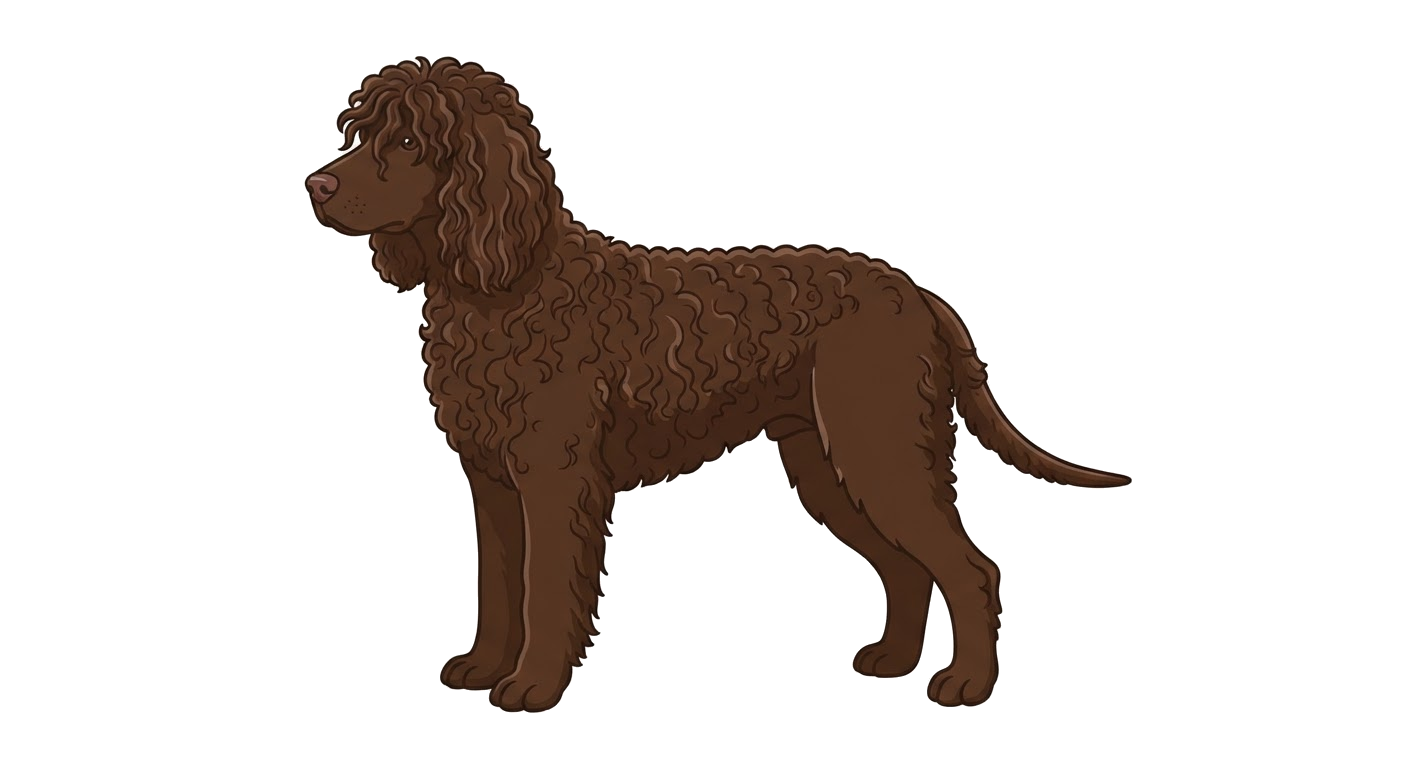
Point 1
Skull
The Irish Water Spaniel's skull is judged on balance rather than size — proportionate to the body, with a clean cheek and a stop typical of the breed. Coarseness or an over-refined head are both faulted.
Colours & patterns
Recognised coats
Which coats the standard accepts — and which are simply popular.
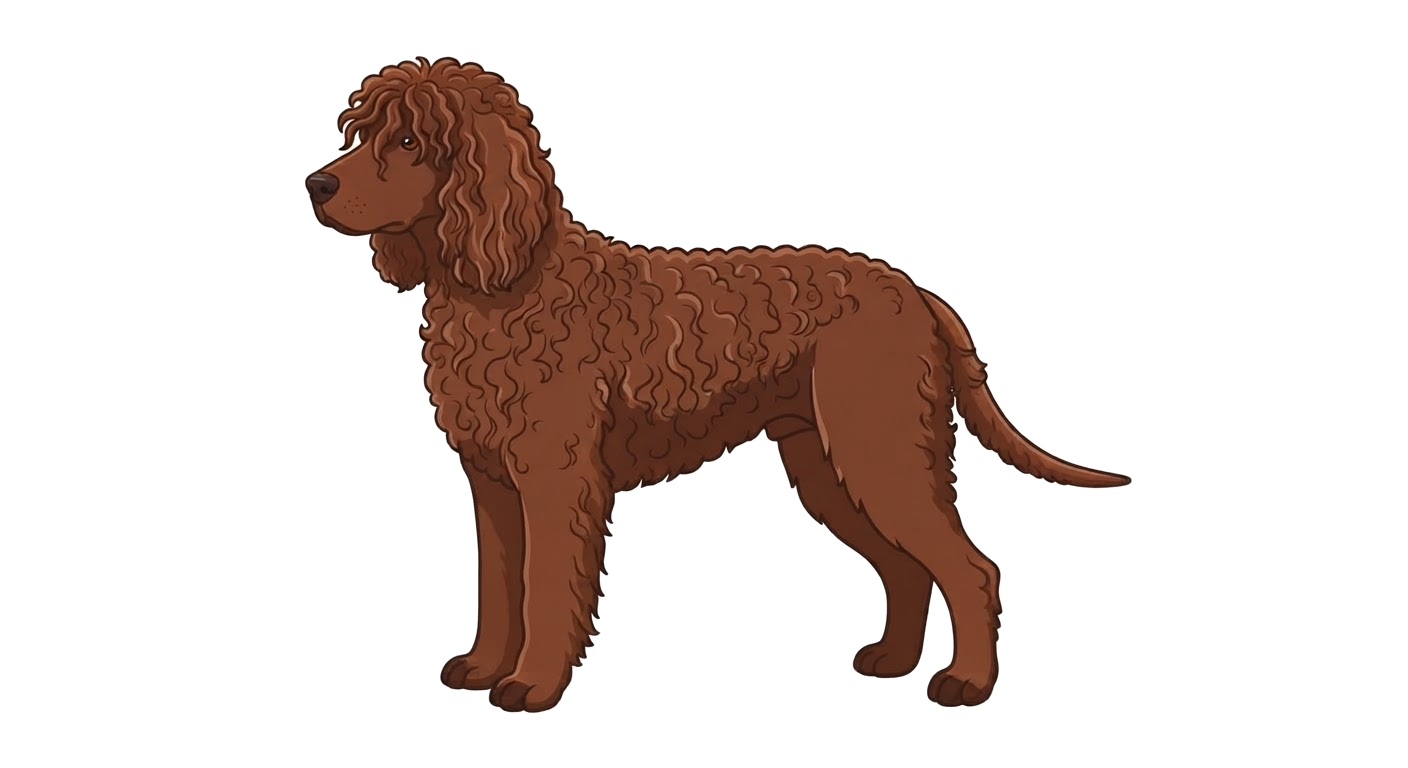
Liver
Standard colour
The only accepted colour, ranging from dark liver with a purplish sheen.
Timeline
History & development
early 1800s
Regional water spaniels
Various curly-coated water dog types existed across Ireland before standardisation.
1830s-40s
Justin McCarthy's kennel
McCarthy of Dublin developed the type that forms the basis of the modern breed.
1859
First shown
The breed was exhibited at a show in Birmingham, England.
1874
AKC recognition
The Irish Water Spaniel became one of the first ten breeds registered by the American Kennel Club.
1950s onward
The breed today
Kennel club registrations settled into a steady pattern and the Irish Water Spaniel moved from a working specialist to a family companion, with breed clubs in the UK and abroad now focused on health testing and keeping true type alive.
Reference
Breed standard summary
- body
- Compact, well-ribbed, deep chest.
- coat
- Dense, tight, crisp ringlets, oily texture.
- ears
- Long, lobular, covered in curls.
- eyes
- Small, almond-shaped, amber to brown.
- gait
- Smooth, powerful, businesslike.
- head
- High, domed skull with a pronounced topknot of curls.
- size
- Large
- tail
- Round at the base, tapering to a fine point, bare of coat.
- colour
- Liver. Colours outside this list are seen but are not accepted by the kennel clubs.
- temperament
- Typical of the breed: strongest in energy, trainability, grooming. Nervousness or aggression are serious faults in the show ring and in the home.
- general appearance
- Tall, curly-coated spaniel with a distinctive topknot.
Health
What to screen for
Green means little to worry about, amber means ask the breeder for test results, red means manage it actively.
Hip dysplasia
Screen for it
Ask for hip scores on both parents.
Distichiasis
Low concern
An eyelash condition affecting the eye; screening is available.
Hypothyroidism
Screen for it
Thyroid testing is useful in adult dogs with energy or coat changes.
Follicular dysplasia
Low concern
A coat condition reported in the breed; ask the breeder about family history.
General information only — always speak to your vet about your own dog.
From real owners
Dogs like this
Irish Water Spaniels added by PawPoint members through their pet passports. Share yours to appear here.
Loading the wall…
Made for the Irish Water Spaniel
The book, plus prints, hoodies and mugs using our own Irish Water Spaniel illustration — and one everyday accessory that suits any dog.

The book
Pawpoint: The Complete Dog Breed Book
Every officially recognised breed plus the unofficial ones nobody else documents. 400+ pages, hardback, printed and shipped from the UK.
Own stock — shipped by us
Framed poster
Irish Water Spaniel Framed Poster
Museum-weight print of our Irish Water Spaniel illustration, framed or unframed.
Printed to order
Hoodie
Irish Water Spaniel Hoodie
Heavyweight hoodie carrying the Irish Water Spaniel illustration on the chest.
Printed to order
Mug
Irish Water Spaniel Mug
Ceramic mug with the Irish Water Spaniel illustration wrapped around it.
Printed to order
Accessory
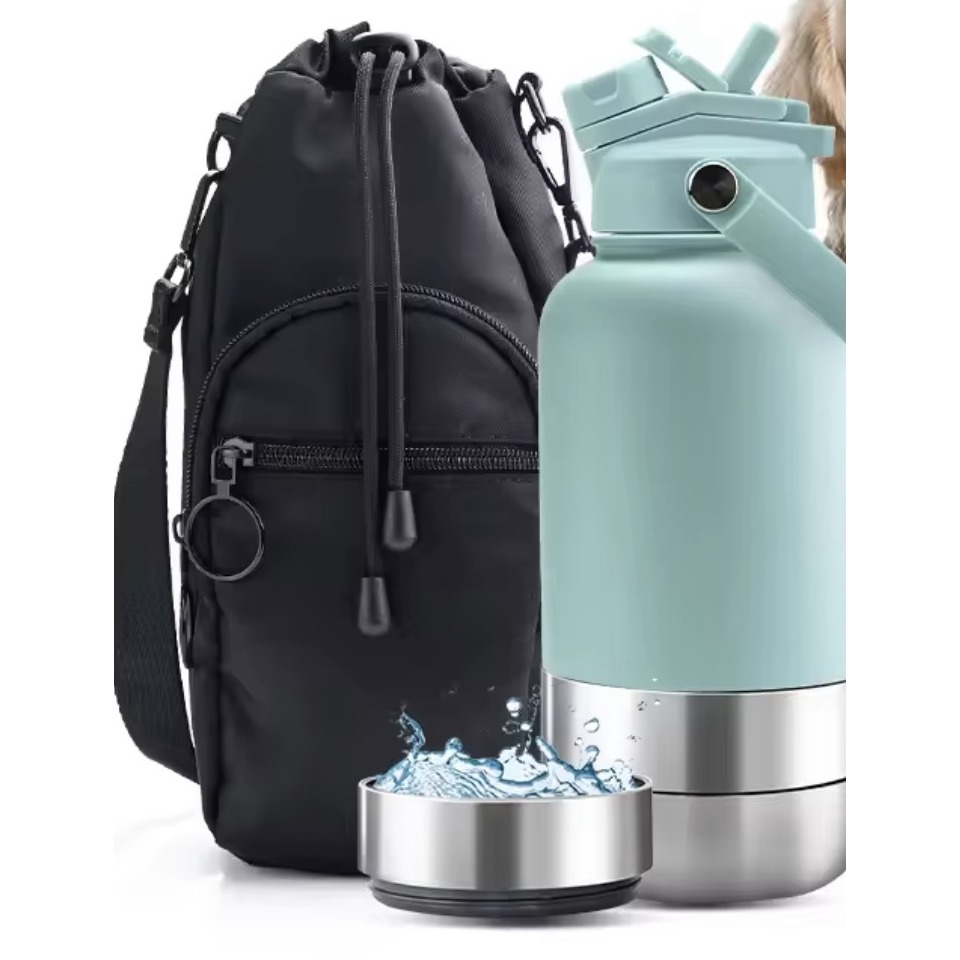
Travel Water Bottle & Bowl
550ml bottle with a fold-out drinking trough.
Fits any dog

Pawpoint on YouTube
Watch the full Irish Water Spaniel video
Breed deep-dives, history and honest ownership talk. New film every week.
Watch now