
Jack Russell Terrier
JAK RUSS-uhl TER-ee-uhr
England· Devon
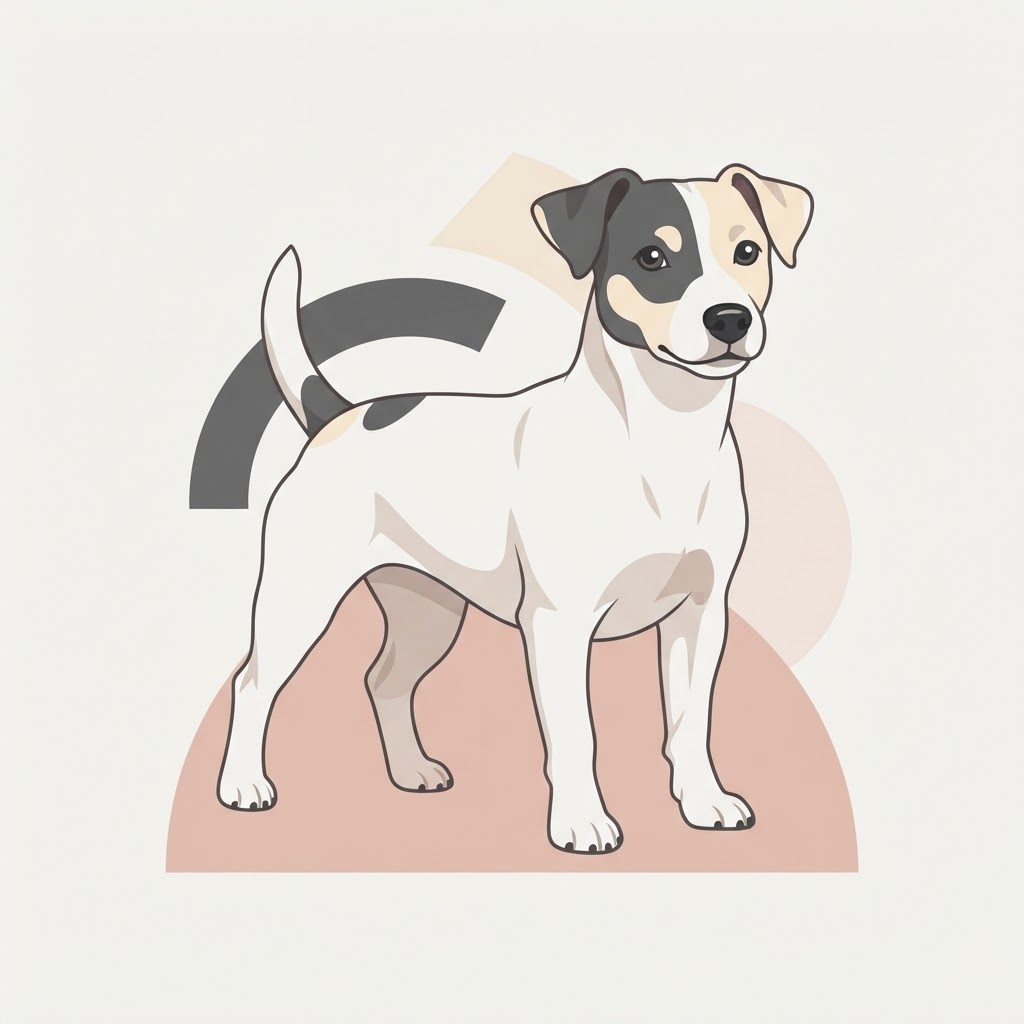
The Jack Russell Terrier is a small, tenacious working terrier developed in England to go to ground after foxes, prized above all for courage and drive rather than looks.
At a glance
Quick facts
Size
Small
Exercise needs
60+ minutes daily
Home size suited to
Flat or small home
Grooming frequency
Weekly brush, hand-strip a few times a year
Coat length
Wiry
Sheds
Little, needs stripping instead
Lifespan
13-16 years
Town or country
Either, with enough exercise
Garden size needed
Small garden or none
Where it comes from
Origins of the Jack Russell Terrier
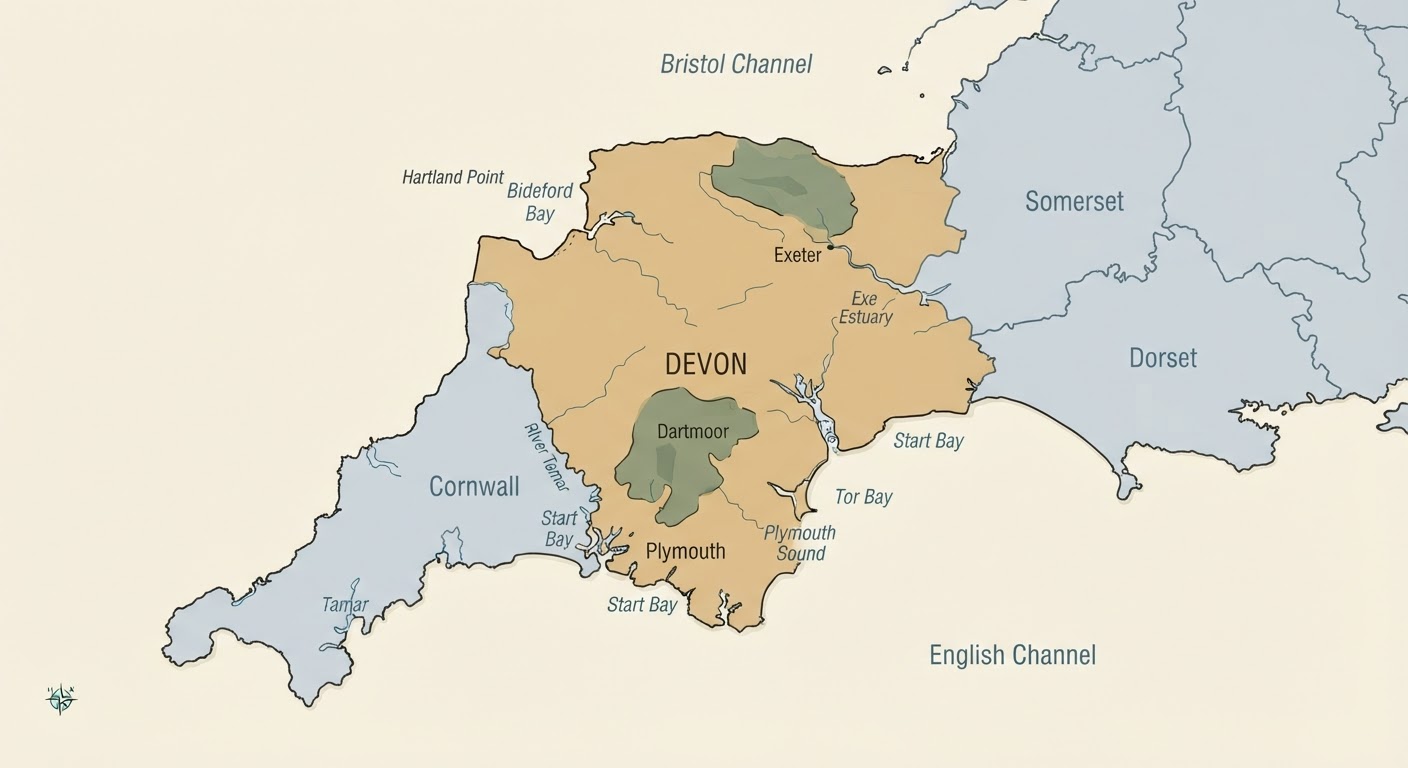
Bred by a Devon parson to run with foxhounds and bolt foxes without harming them, the terrier needed long legs for stamina and a mostly white coat to be told apart from its quarry underground.
- Region
- Devon
- Climate it was bred for
- Temperate, damp countryside
- Original job
- Bolting foxes from their dens
The long read
About the breed
The breed takes its name from the Reverend John Russell, a nineteenth-century Devon parson and keen fox hunter who bred terriers to run with hounds and bolt foxes from their dens without harming them, favouring a mostly white, leggy terrier that could be told apart from the fox underground and that could keep pace with horses in the field. Unlike many breeds developed in this period, the Jack Russell was bred purely for working ability, and its appearance has always varied more than most recognised breeds.
Living with a Jack Russell means living with an enormous amount of dog packed into a small body; it is intelligent, fearless and often single-minded once fixated on a scent or a small animal, traits that make it entertaining but sometimes exhausting for owners expecting a quiet lap dog. It needs proper daily exercise and mental stimulation, and left under-occupied it will dig, bark or escape gardens with impressive determination. Training benefits from an early start and consistency, since the breed is clever enough to find shortcuts around half-hearted rules.
Today the Jack Russell remains widely kept both as a working terrier on farms and as a companion, and different registries recognise slightly different standards and even separate related breeds, such as the Parson Russell Terrier, based on leg length and build. It suits owners who want a genuinely characterful, active dog rather than one that fits neatly into passive family life.
Living with one
Temperament & needs
Our own ratings, based on the breed standard and how these dogs behave in ordinary homes.
Friendliness
3/5
How openly the Jack Russell Terrier greets people it does not know.
Trainability
4/5
Sharp and capable but can be single-minded.
Energy
5/5
Needs substantial daily exercise and mental stimulation.
Barking
4/5
Alert and vocal, quick to sound off.
Grooming
1/5
Smooth or broken coat needs minimal grooming.
Suits a first-time owner
2/5
How forgiving the Jack Russell Terrier is for someone taking on their first dog.
Sociability
3/5
Bold and confident, can be selective with other dogs and small pets.
Independence
4/5
Bred to work alone underground and think for itself.
Illustrated breed standard
The points of the breed
Hover or tap a numbered point to read what the standard asks for.
Point 1
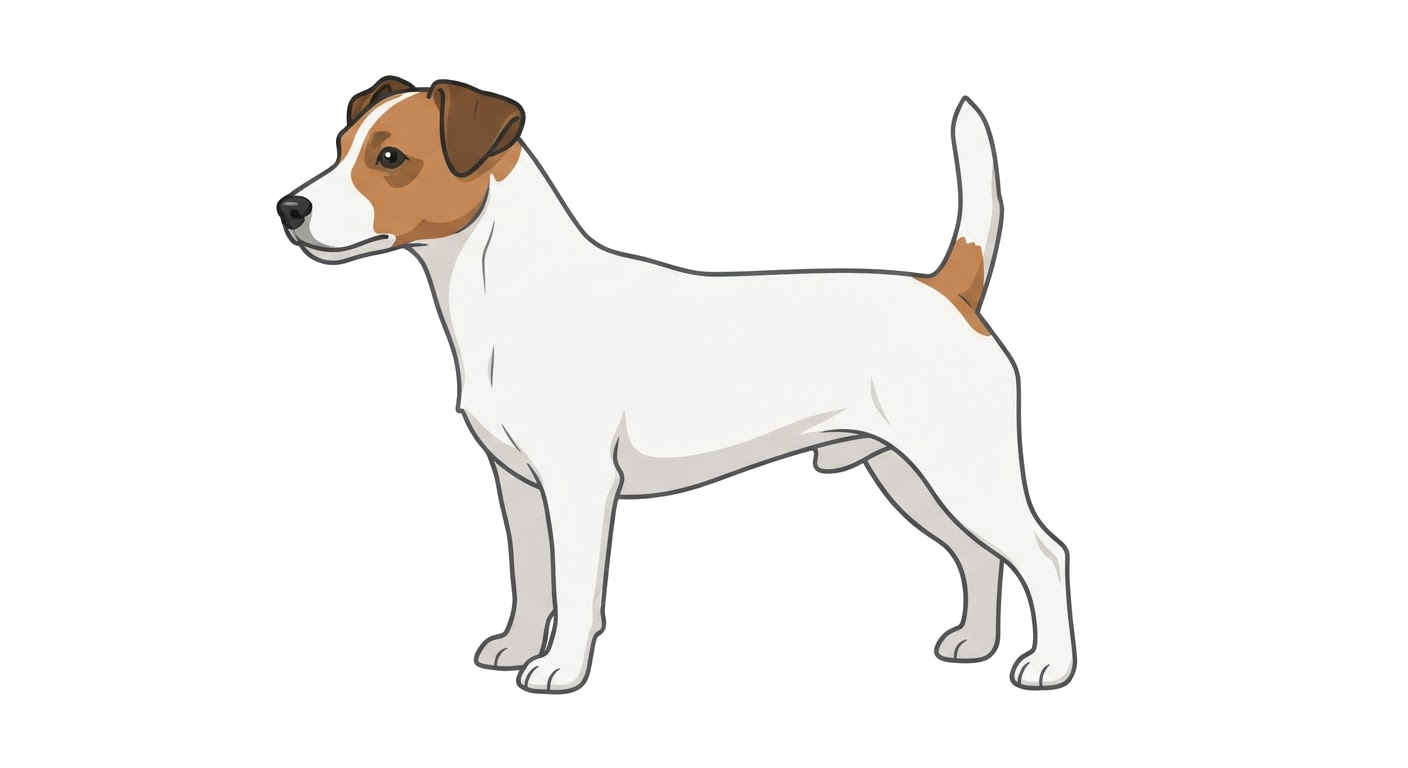
Skull
The Jack Russell Terrier's skull is judged on balance rather than size — proportionate to the body, with a clean cheek and a stop typical of the breed. Coarseness or an over-refined head are both faulted.
Colours & patterns
Recognised coats
Which coats the standard accepts — and which are simply popular.
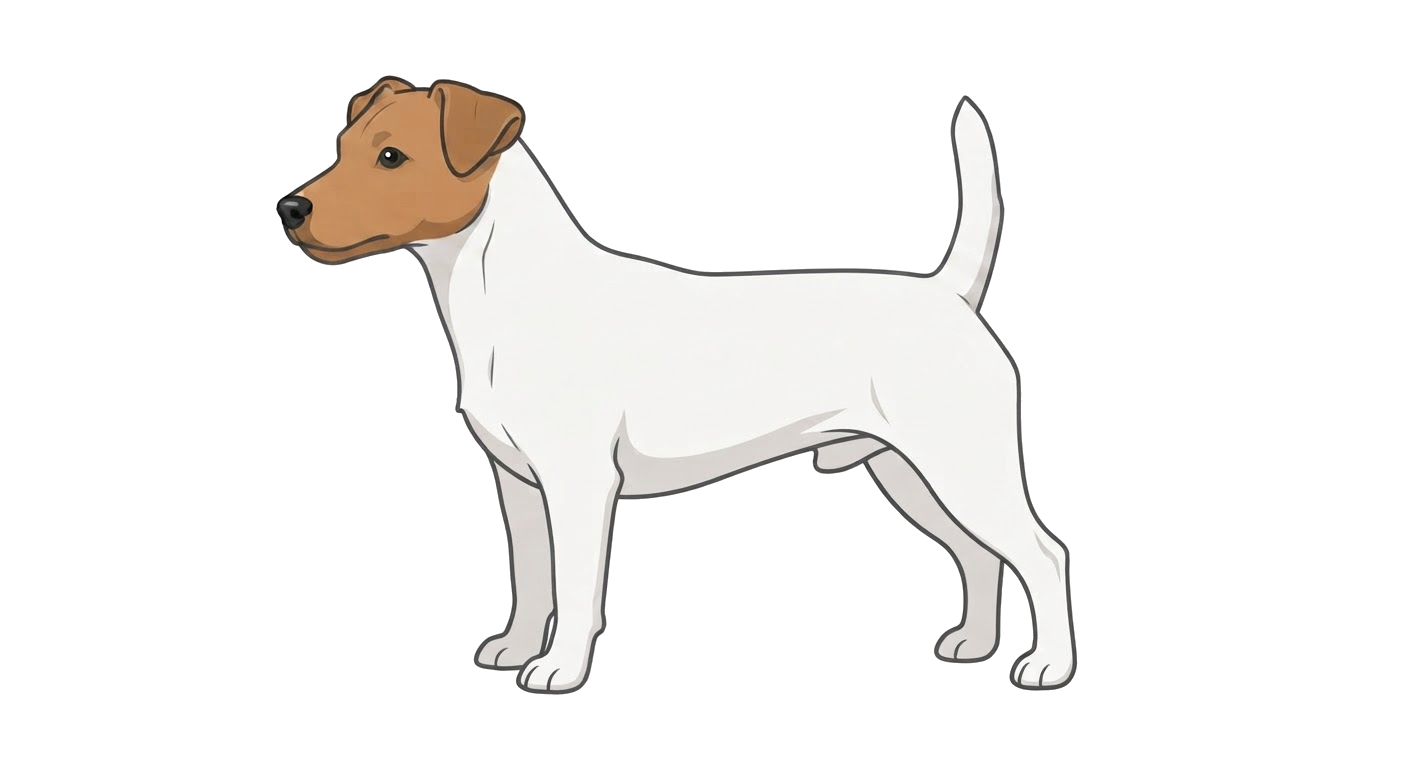
White with tan
Standard colour
A common and typical marking pattern.
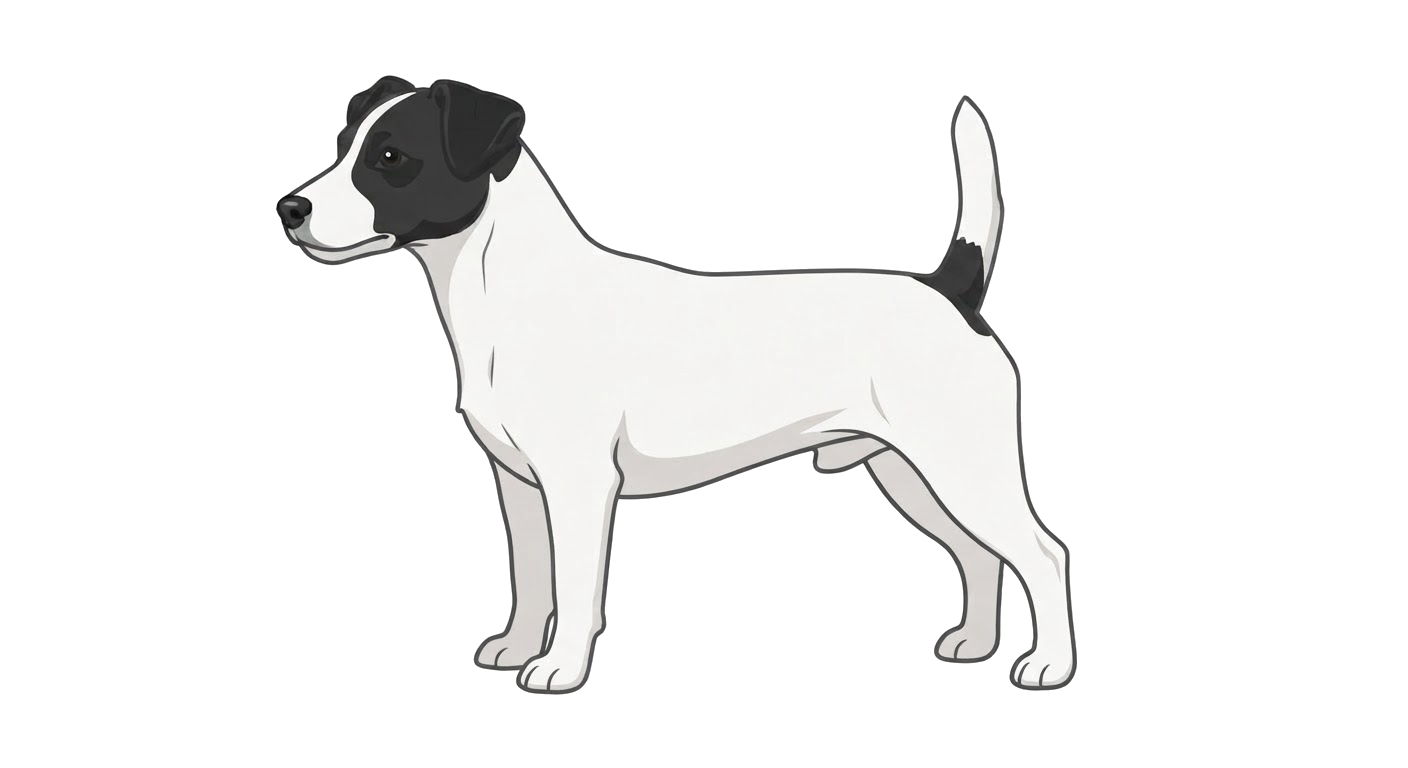
White with black
Standard colour
Another widely seen and accepted pattern.
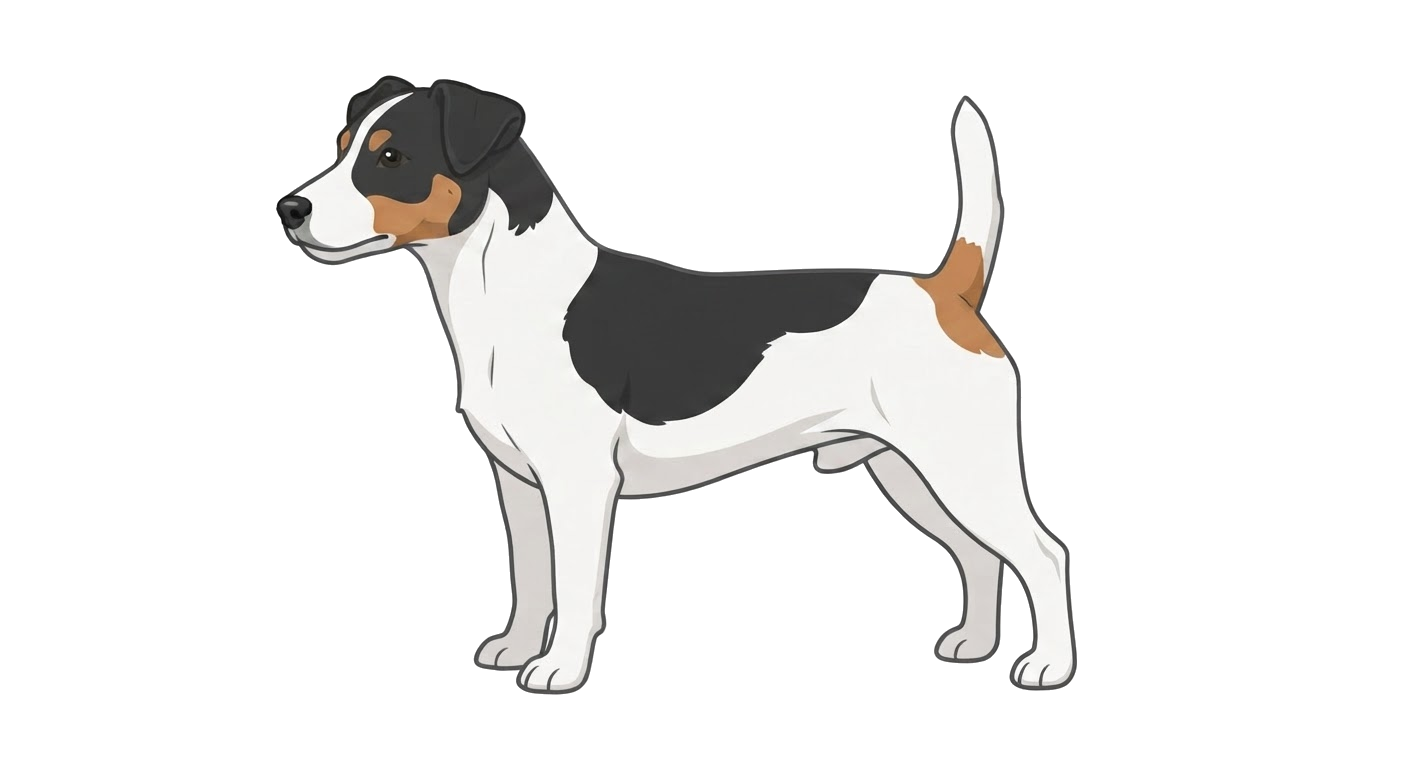
Tricolour
Standard colour
White with both black and tan markings.
Outside the standard
Other colours
Dilute coats you will see advertised. They are the same breed, but no kennel club accepts them.
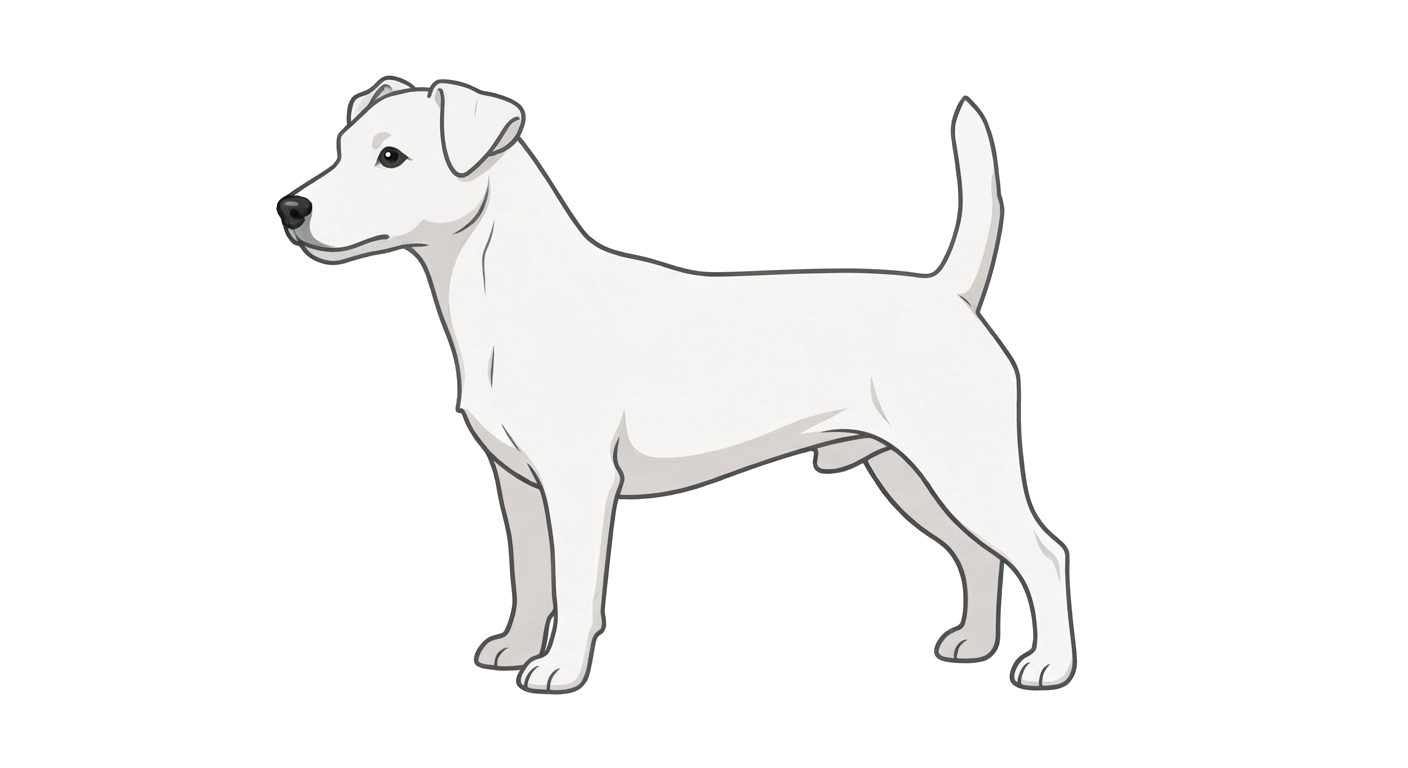
Solid white
Not in the standard
Rare and not typical, since some marking is usually required.
Timeline
History & development
1819
John Russell's first terrier
The Reverend John Russell acquired a terrier named Trump, considered the foundation of the type.
1800s
Development for fox work
Russell bred generations of terriers selected purely for working ability underground.
1894
Russell's death
Following his death, breeders continued developing the type with varied leg lengths and builds.
1990s-2000s
Split into related breeds
Kennel clubs began recognising related but distinct breeds, including the Parson Russell Terrier.
Reference
Breed standard summary
- body
- Compact, athletic, spanned by hand.
- coat
- Smooth, broken or rough, weatherproof.
- ears
- Small, dropped, V-shaped.
- eyes
- Dark, almond-shaped, keen expression.
- gait
- Free, straight, energetic.
- head
- Flat skull, moderate stop.
- size
- Small
- tail
- Traditionally docked in origin countries; carried upright.
- colour
- White with tan, White with black, Tricolour. Colours outside this list are seen but are not accepted by the kennel clubs.
- temperament
- Typical of the breed: strongest in energy, trainability, independence. Nervousness or aggression are serious faults in the show ring and in the home.
- general appearance
- Small, sturdy, mostly white working terrier.
Health
What to screen for
Green means little to worry about, amber means ask the breeder for test results, red means manage it actively.
Lens luxation
Watch closely
An inherited eye condition; ask for DNA test results on the parents.
Patellar luxation
Screen for it
Ask whether parents have been checked for kneecap stability.
Legg-Calvé-Perthes disease
Screen for it
A hip joint condition seen in small breeds; report limping promptly.
Deafness
Watch closely
More common in predominantly white dogs; hearing testing is available.
General information only — always speak to your vet about your own dog.
From real owners
Dogs like this
Jack Russell Terriers added by PawPoint members through their pet passports. Share yours to appear here.
Loading the wall…
Made for the Jack Russell Terrier
The book, plus prints, hoodies and mugs using our own Jack Russell Terrier illustration — and one everyday accessory that suits any dog.

The book
Pawpoint: The Complete Dog Breed Book
Every officially recognised breed plus the unofficial ones nobody else documents. 400+ pages, hardback, printed and shipped from the UK.
Own stock — shipped by us
Framed poster
Jack Russell Terrier Framed Poster
Museum-weight print of our Jack Russell Terrier illustration, framed or unframed.
Printed to order
Hoodie
Jack Russell Terrier Hoodie
Heavyweight hoodie carrying the Jack Russell Terrier illustration on the chest.
Printed to order
Mug
Jack Russell Terrier Mug
Ceramic mug with the Jack Russell Terrier illustration wrapped around it.
Printed to order
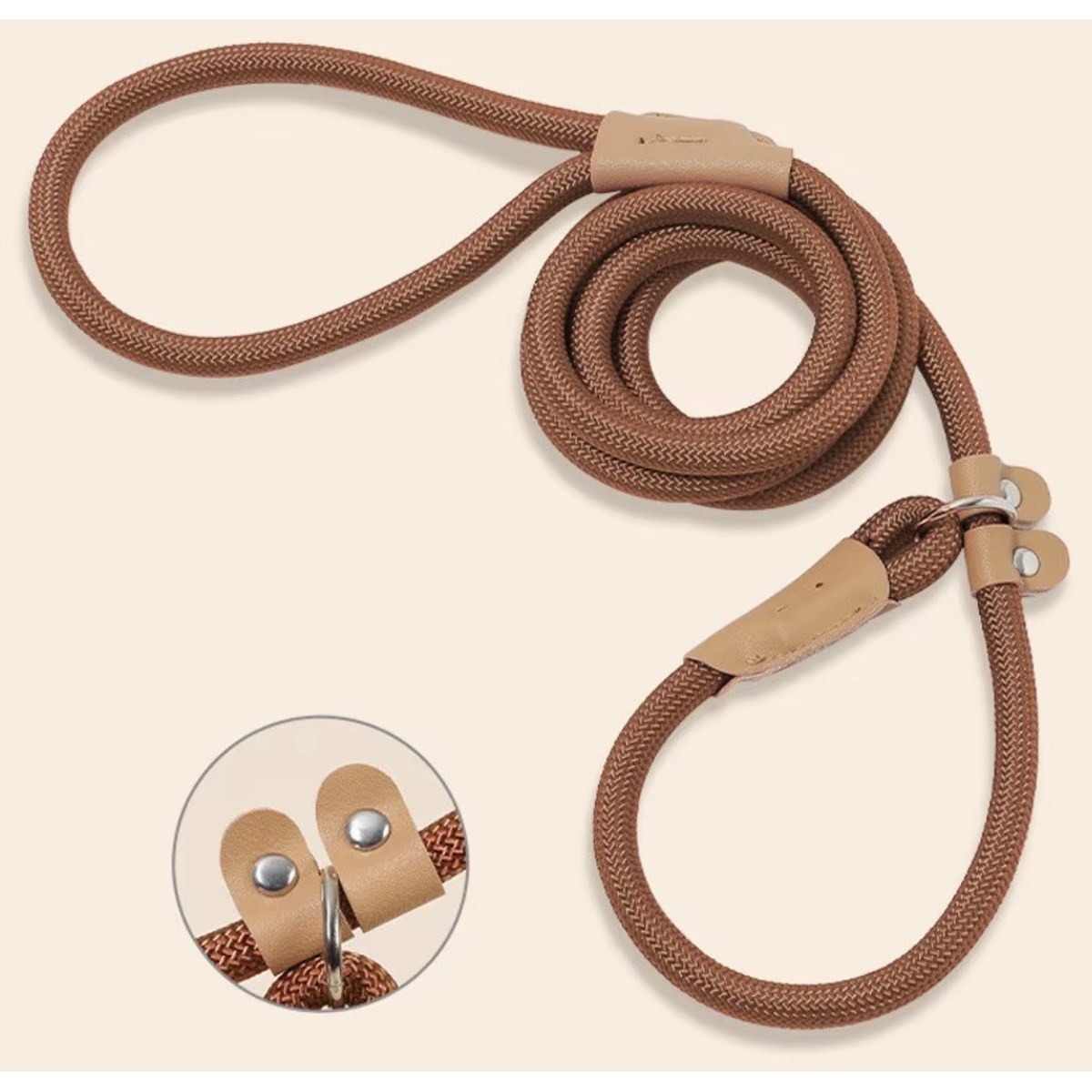
Accessory
Rope Slip Lead
Braided rope lead with a leather stop, 150cm. Good for training walks.
Fits any dog
Pawpoint on YouTube
Watch the full Jack Russell Terrier video
Breed deep-dives, history and honest ownership talk. New film every week.
Watch now