
King Charles Spaniel
KING CHARLZ SPAN-yuhl
England· English royal court
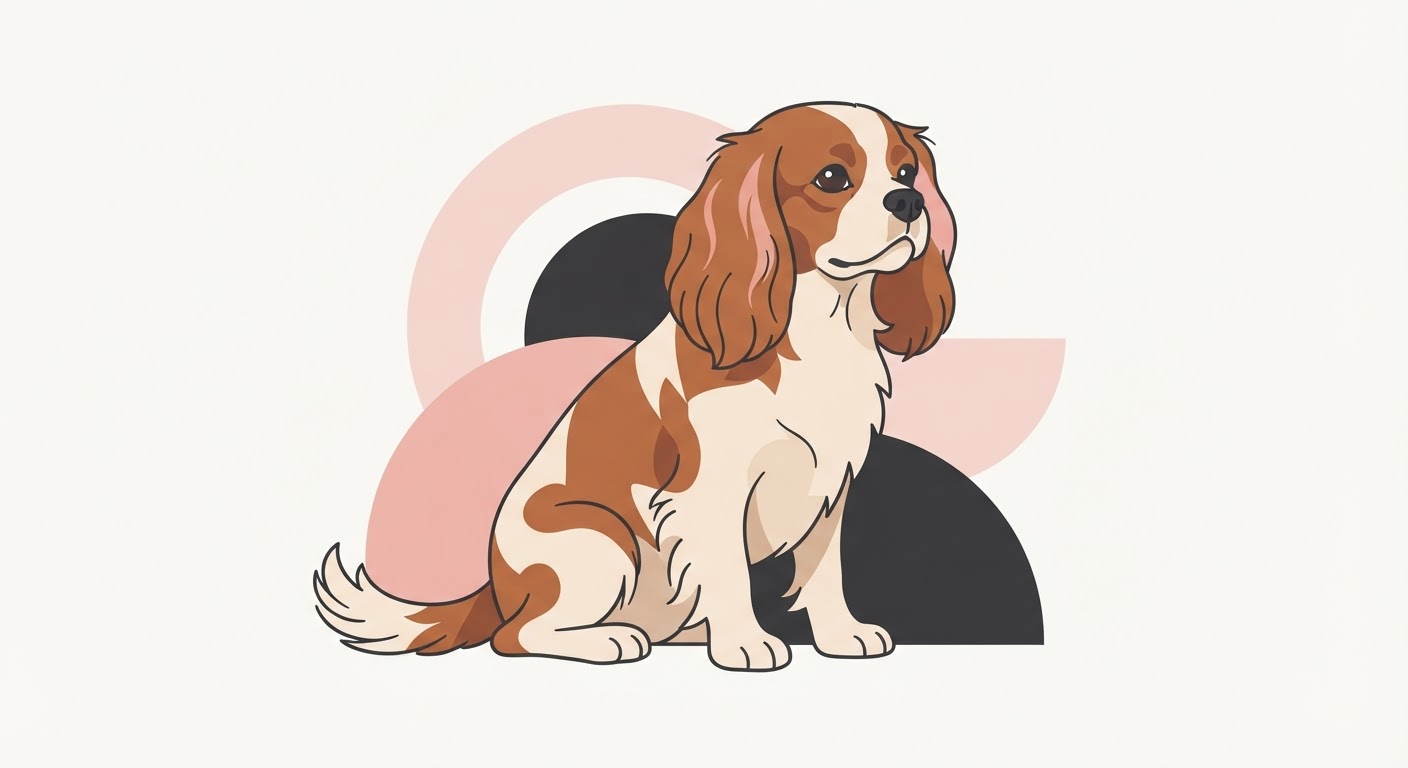
The King Charles Spaniel, also known as the English Toy Spaniel, is a small flat-faced companion breed with a long history in the English royal court, distinct from the more athletic Cavalier King Charles Spaniel developed later.
At a glance
Quick facts
Size
Toy
Exercise needs
30 minutes daily
Home size suited to
Flat or any size home
Grooming frequency
Daily brushing
Coat length
Long
Sheds
Yes
Lifespan
9-12 years
Town or country
Either, happy in town
Garden size needed
None needed
Where it comes from
Origins of the King Charles Spaniel

Favoured for centuries in the English royal court, the King Charles Spaniel's flat face and small size were shaped by breeders selecting purely for an indoor companion rather than any working ability.
- Region
- English royal court
- Climate it was bred for
- Temperate, indoor court life
- Original job
- Companion dog for English royalty and nobility
The long read
About the breed
Toy spaniels of this general type were fixtures of European courts from the sixteenth century onward, and King Charles II of England was so devoted to the breed in the seventeenth century that he reportedly allowed them free run of Whitehall Palace and decreed they could not be barred from any public place, a legal privilege the breed's fans still cite today. Over the following centuries breeders favoured an increasingly flat face and domed skull, moving the breed further from its more moderate spaniel-like ancestors, which is what eventually distinguished it from the Cavalier, bred in the twentieth century to restore the older, longer-muzzled look.
Living with a King Charles Spaniel means living with an affectionate, calm companion suited well to indoor life and considerably less driven to exercise than many spaniel breeds. It is generally gentle with familiar people and enjoys lounging as much as playing, though its flat face brings breathing sensitivity in heat and during exertion, and its prominent eyes need protecting from scratches and require regular checking. The silky coat needs regular brushing, particularly around the ears and feathering, to avoid matting.
Today the breed is considerably rarer than its Cavalier cousin, kept by devoted specialist breeders more than as a mainstream family pet, and prospective owners should expect a longer search and should ask breeders directly about health screening for the breed's known flat-face and heart concerns.
Living with one
Temperament & needs
Our own ratings, based on the breed standard and how these dogs behave in ordinary homes.
Friendliness
4/5
How openly the King Charles Spaniel greets people it does not know.
Trainability
3/5
Gentle and willing but not highly driven.
Energy
2/5
Content with modest daily walks and indoor play.
Barking
2/5
Generally quiet.
Grooming
3/5
Silky coat needs regular brushing, especially around the ears.
Suits a first-time owner
4/5
How forgiving the King Charles Spaniel is for someone taking on their first dog.
Sociability
4/5
Affectionate with familiar people, can be reserved with strangers.
Independence
2/5
Prefers company and lounging with its family.
Illustrated breed standard
The points of the breed
Hover or tap a numbered point to read what the standard asks for.
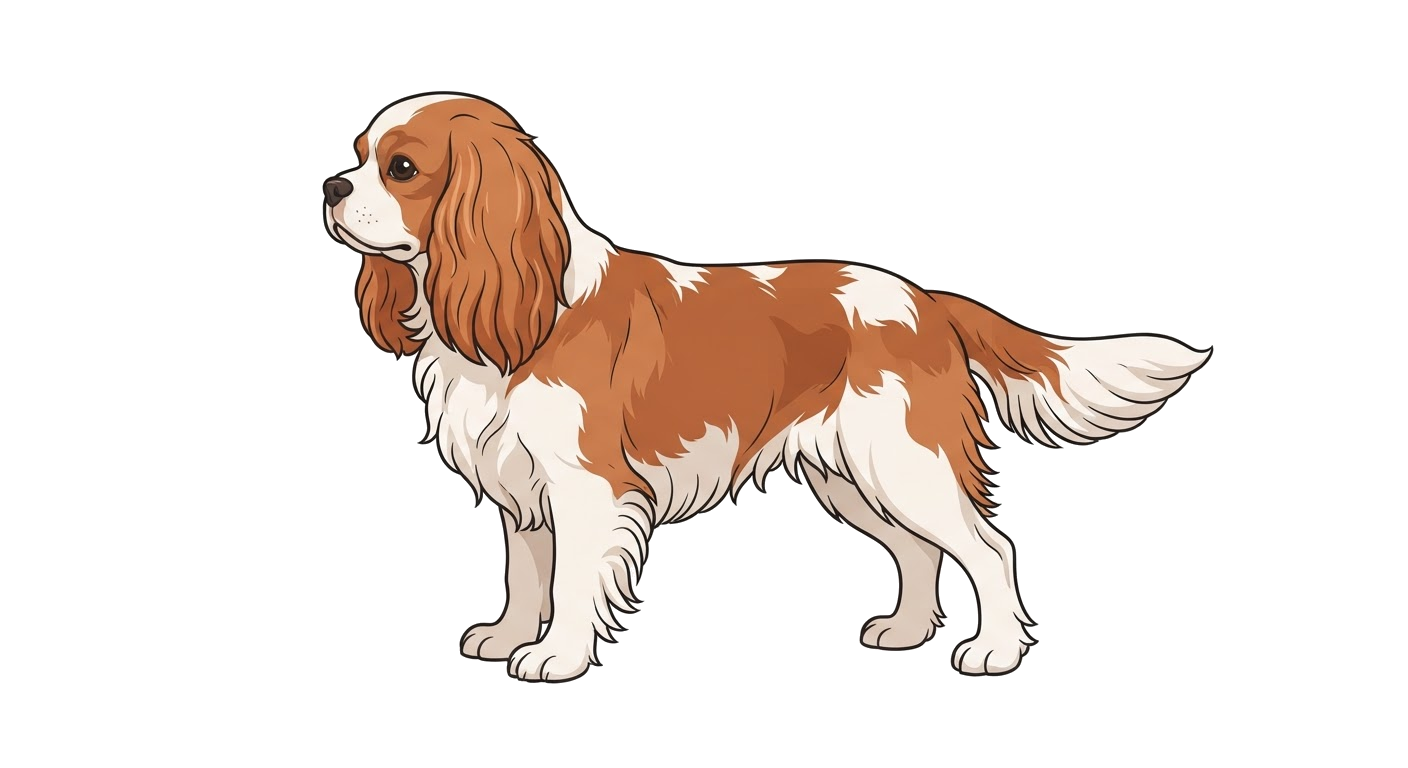
Point 1
Skull
The King Charles Spaniel's skull is judged on balance rather than size — proportionate to the body, with a clean cheek and a stop typical of the breed. Coarseness or an over-refined head are both faulted.
Colours & patterns
Recognised coats
Which coats the standard accepts — and which are simply popular.
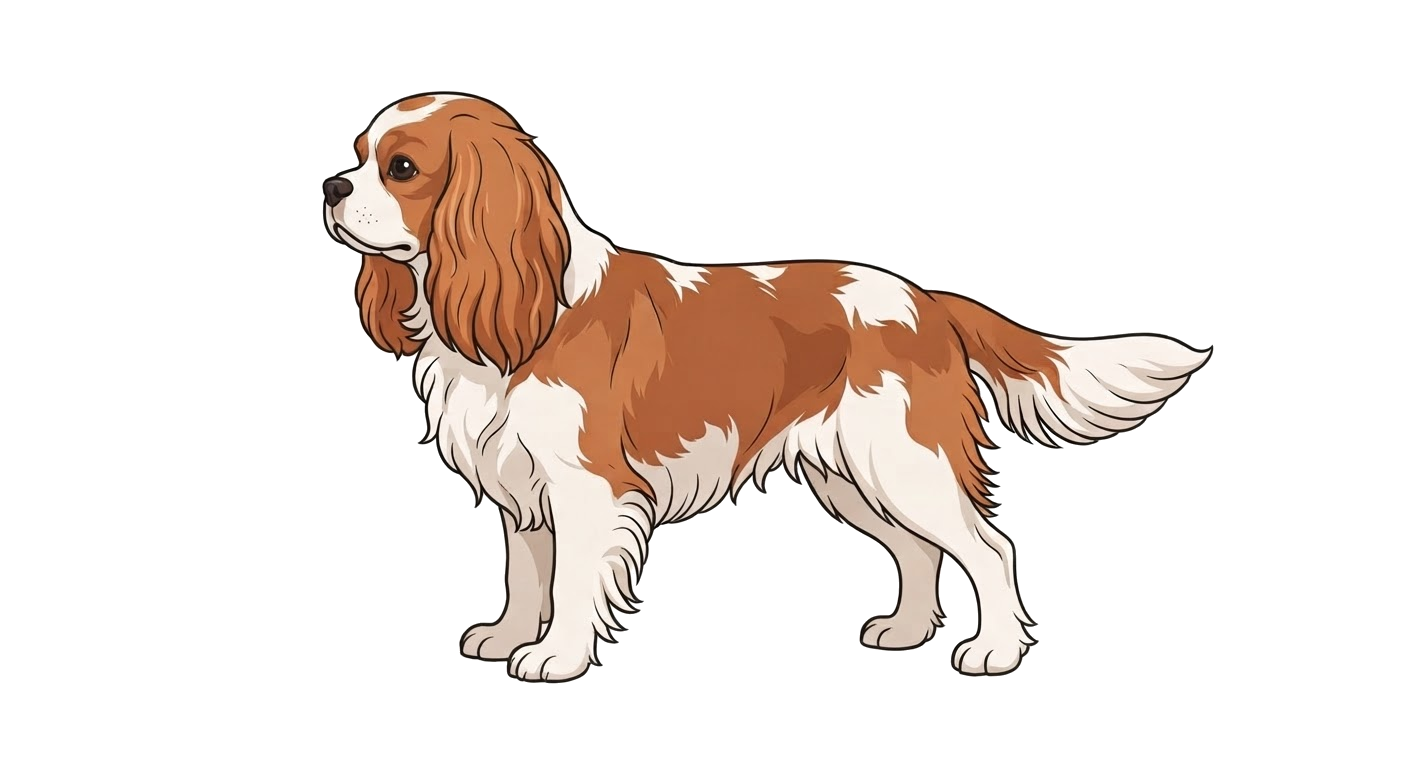
Blenheim
Standard colour
Chestnut markings on a pearly white background.
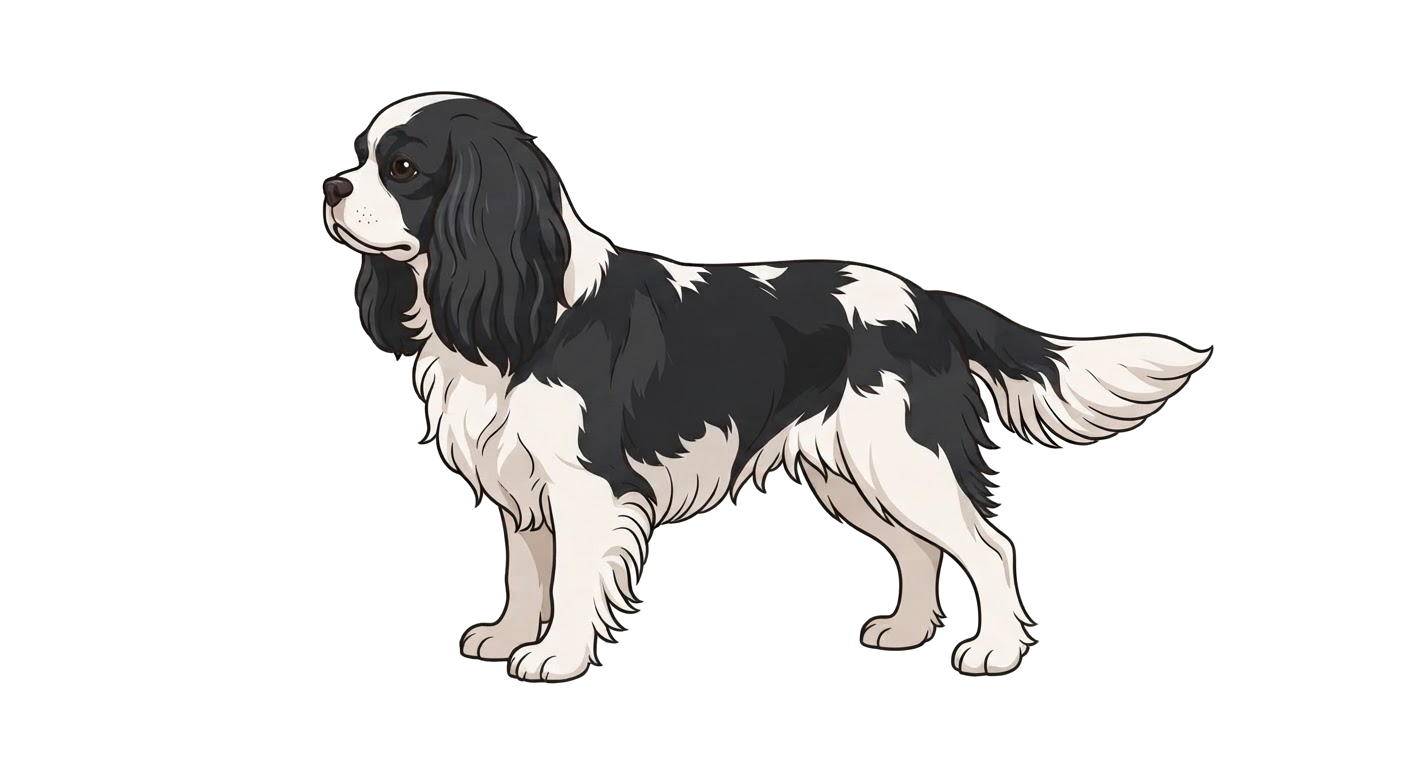
Tricolour
Standard colour
Black and white with tan markings.
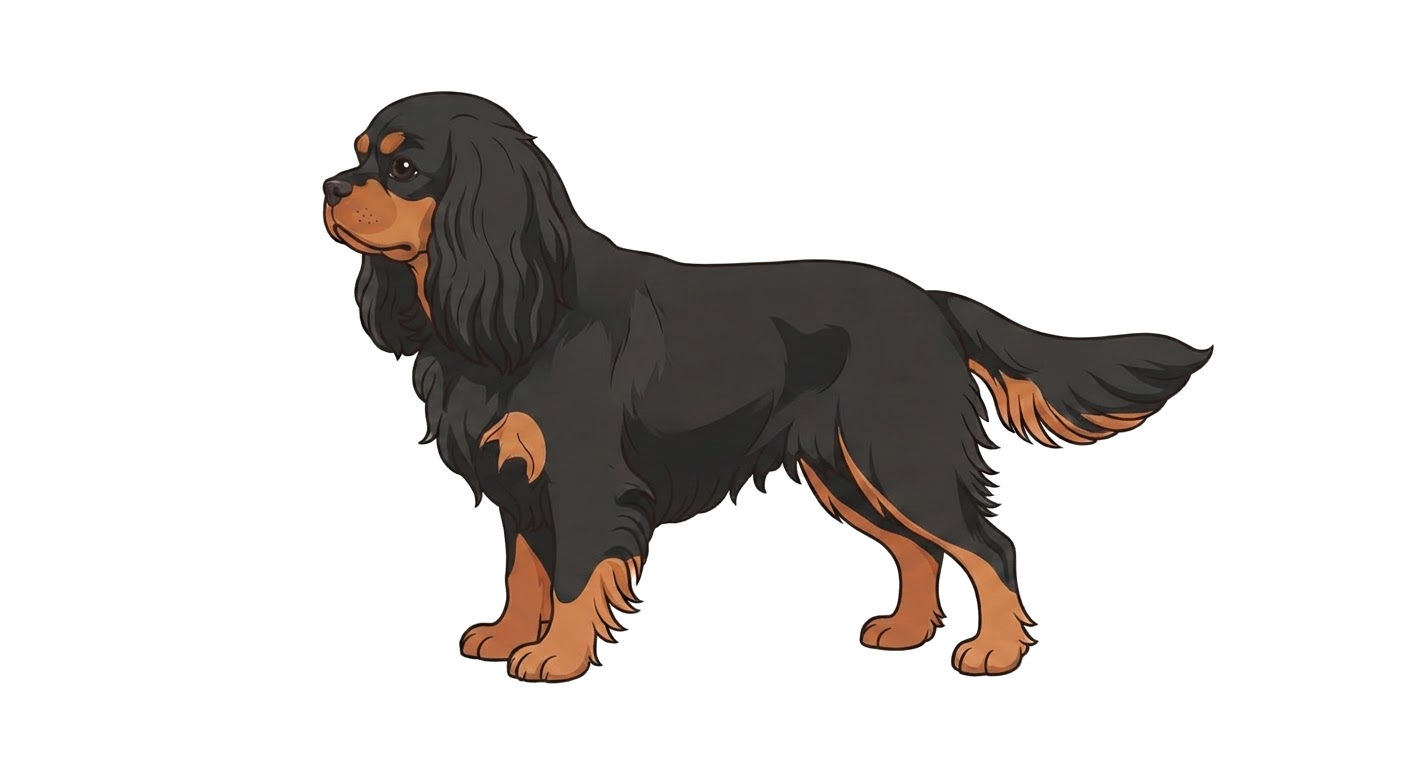
Black and tan
Standard colour
A rich black coat with tan points.
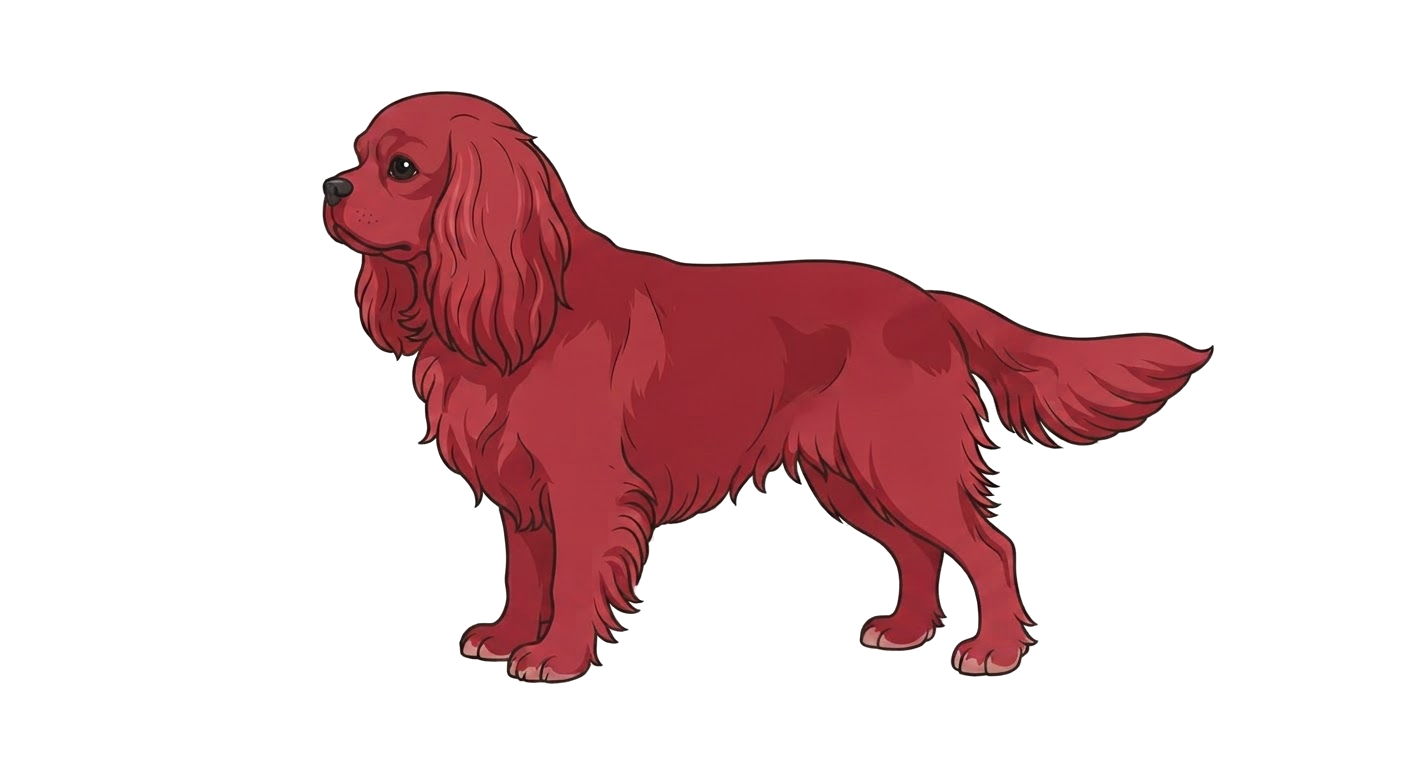
Ruby
Standard colour
A solid, rich red colour.
Timeline
History & development
1500s
Early toy spaniels in Europe
Small companion spaniels were kept in courts across Europe, forerunners of the breed.
1660s
King Charles II's patronage
The king's devotion to the breed gave it both its name and lasting popularity.
1800s
Flatter face develops
Breeders increasingly favoured a domed skull and shorter muzzle.
1920s
Cavalier split
Breeders seeking the older, longer-muzzled look developed the separate Cavalier King Charles Spaniel.
1950s onward
The breed today
Kennel club registrations settled into a steady pattern and the King Charles Spaniel moved from a working specialist to a family companion, with breed clubs in the UK and abroad now focused on health testing and keeping true type alive.
Reference
Breed standard summary
- body
- Compact, cobby.
- coat
- Long, silky, slightly wavy.
- ears
- Long, set low, heavily feathered.
- eyes
- Large, dark, set well apart.
- gait
- Free, unhurried, elegant.
- head
- Large, domed, well-defined stop.
- size
- Toy
- tail
- Traditionally docked in origin countries; carried level.
- colour
- Blenheim, Tricolour, Black and tan, Ruby. Colours outside this list are seen but are not accepted by the kennel clubs.
- temperament
- Typical of the breed: strongest in sociability, trainability, grooming. Nervousness or aggression are serious faults in the show ring and in the home.
- general appearance
- Small, compact toy spaniel with a domed skull.
Health
What to screen for
Green means little to worry about, amber means ask the breeder for test results, red means manage it actively.
Mitral valve disease
Watch closely
A significant concern in the breed; ask for cardiac screening on both parents.
Syringomyelia
Watch closely
A neurological condition linked to skull shape; ask about MRI screening in the line.
Brachycephalic airway issues
Watch closely
Avoid exercise in heat and check airway conformation before buying.
Patellar luxation
Screen for it
Ask whether parents have been checked for kneecap stability.
General information only — always speak to your vet about your own dog.
From real owners
Dogs like this
King Charles Spaniels added by PawPoint members through their pet passports. Share yours to appear here.
Loading the wall…
Made for the King Charles Spaniel
The book, plus prints, hoodies and mugs using our own King Charles Spaniel illustration — and one everyday accessory that suits any dog.

The book
Pawpoint: The Complete Dog Breed Book
Every officially recognised breed plus the unofficial ones nobody else documents. 400+ pages, hardback, printed and shipped from the UK.
Own stock — shipped by us
Framed poster
King Charles Spaniel Framed Poster
Museum-weight print of our King Charles Spaniel illustration, framed or unframed.
Printed to order
Hoodie
King Charles Spaniel Hoodie
Heavyweight hoodie carrying the King Charles Spaniel illustration on the chest.
Printed to order
Mug
King Charles Spaniel Mug
Ceramic mug with the King Charles Spaniel illustration wrapped around it.
Printed to order

Accessory
Travel Water Bottle & Bowl
550ml bottle with a fold-out drinking trough.
Fits any dog

Pawpoint on YouTube
Watch the full King Charles Spaniel video
Breed deep-dives, history and honest ownership talk. New film every week.
Watch now