
Kombai
KOM-bye
India· Tamil Nadu, Southern India
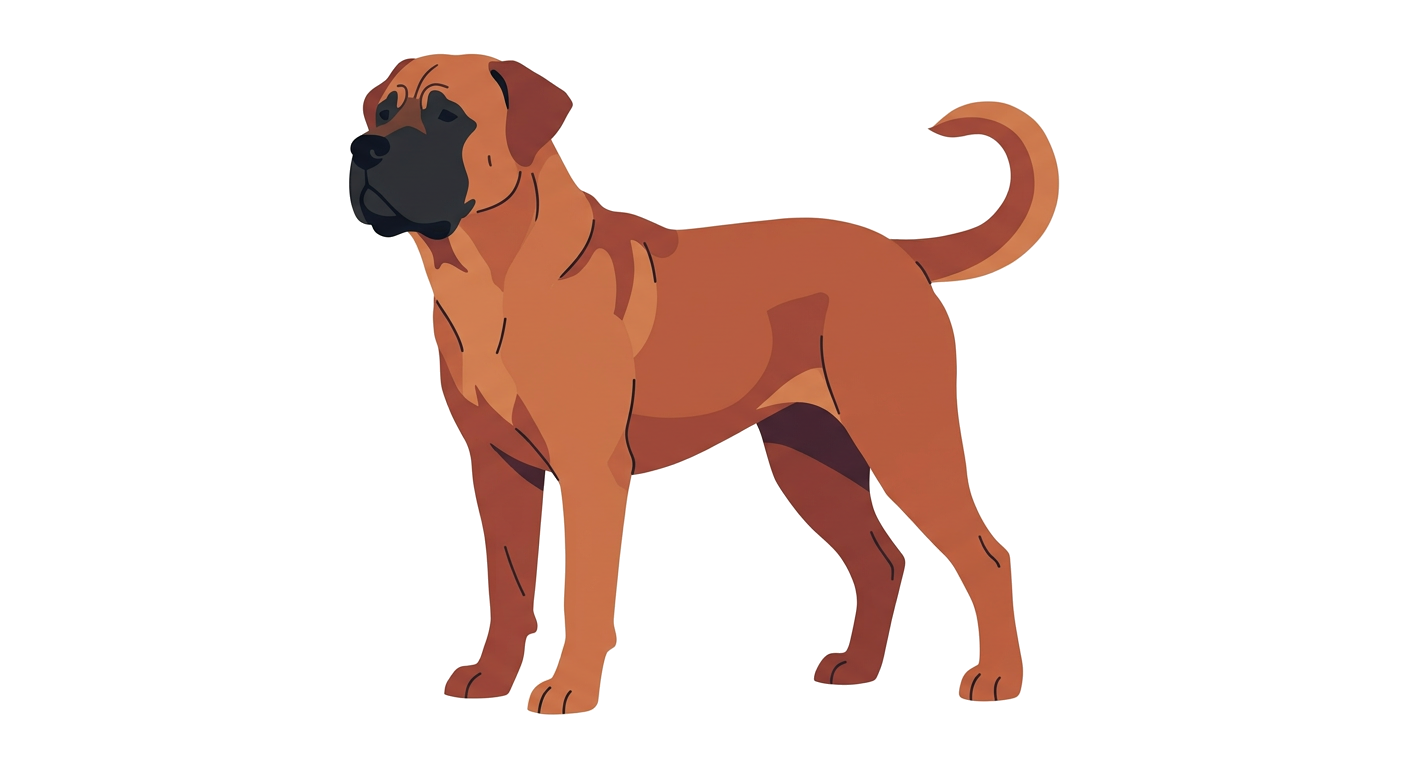
The Kombai is an ancient indigenous working hound originating from the state of Tamil Nadu in Southern India. Characterised by a compact, muscular build and a distinctive reddish-tan coat often complemented by a dark muzzle, the breed was historically prized for its exceptional tenacity and physical resilience. While precise genealogical records are limited due to centuries of oral tradition, it is widely considered an integral landrace of the region.
At a glance
Quick facts
Size
Medium
Exercise needs
High (60–90 minutes daily)
Home size suited to
Spacious home with secure boundary
Grooming frequency
Minimal (weekly brushing)
Coat length
Short
Sheds
Low to moderate
Lifespan
12–15 years
Town or country
Rural or semi-rural
Garden size needed
Medium to large
Where it comes from
Origins of the Kombai
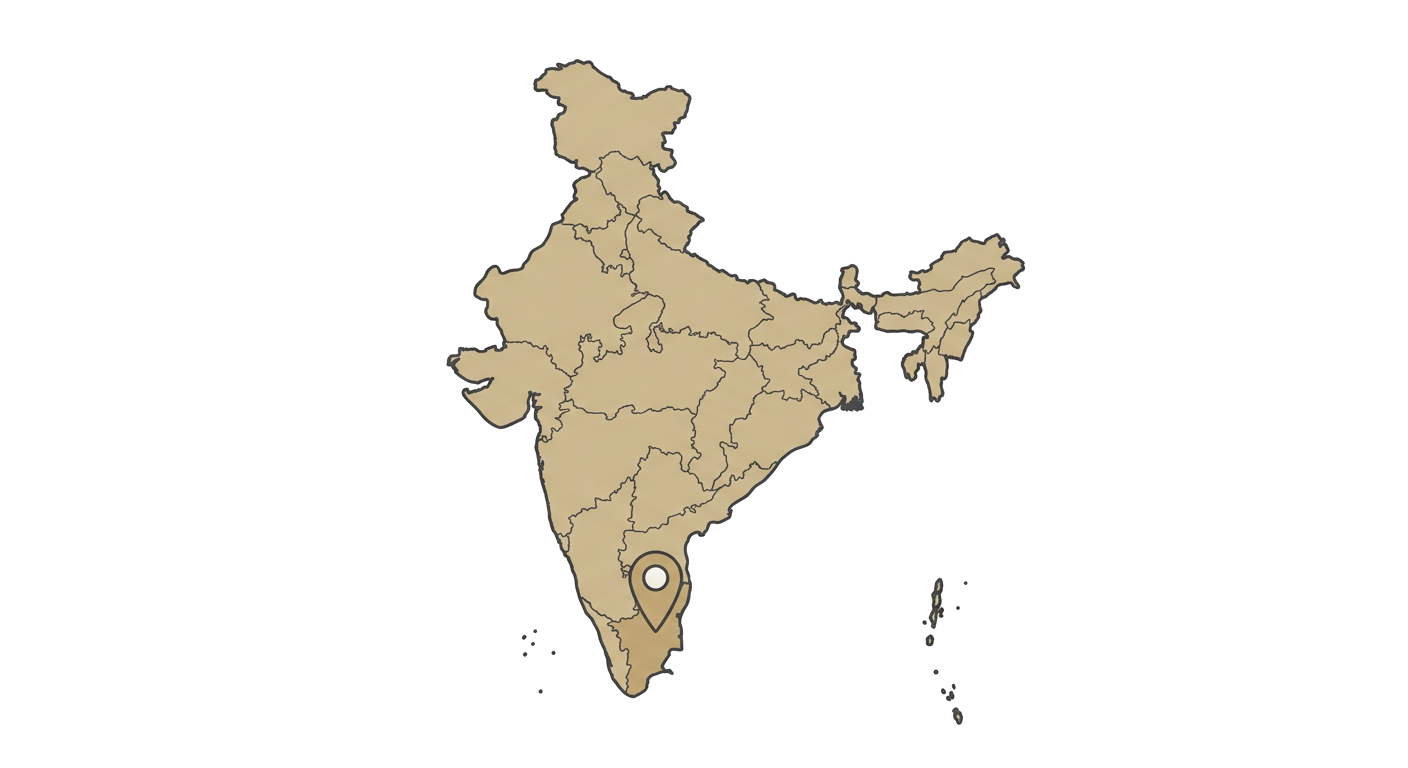
Developed in the foothills of Tamil Nadu as a robust hunter and estate guard.
- Region
- Tamil Nadu, Southern India
- Climate it was bred for
- Tropical and semi-arid
- Original job
- Boar hunting and livestock guarding
The long read
About the breed
Historically bred by local communities, including tribal hunters and zamindars, the Kombai functioned primarily as a catch dog and estate guardian. Its quarry typically included wild boar, deer, and other large game, where its powerful bite and fearless disposition were crucial. In addition to hunting, these dogs served as dependable deterrents against predators and intruders, developing a reputation for deep loyalty to their immediate households.
In contemporary times, the Kombai remains relatively rare and is largely confined to its native habitat and dedicated Indian preservation circles. Documentation regarding formal population numbers is sparse, though regional kennel clubs and enthusiasts have initiated conservation programmes to protect the pure gene pool. In a domestic context, the breed is best suited to experienced handlers who understand the exercise and containment requirements of an energetic, territorial working hound.
Illustrated breed standard
The points of the breed
Hover or tap a numbered point to read what the standard asks for.
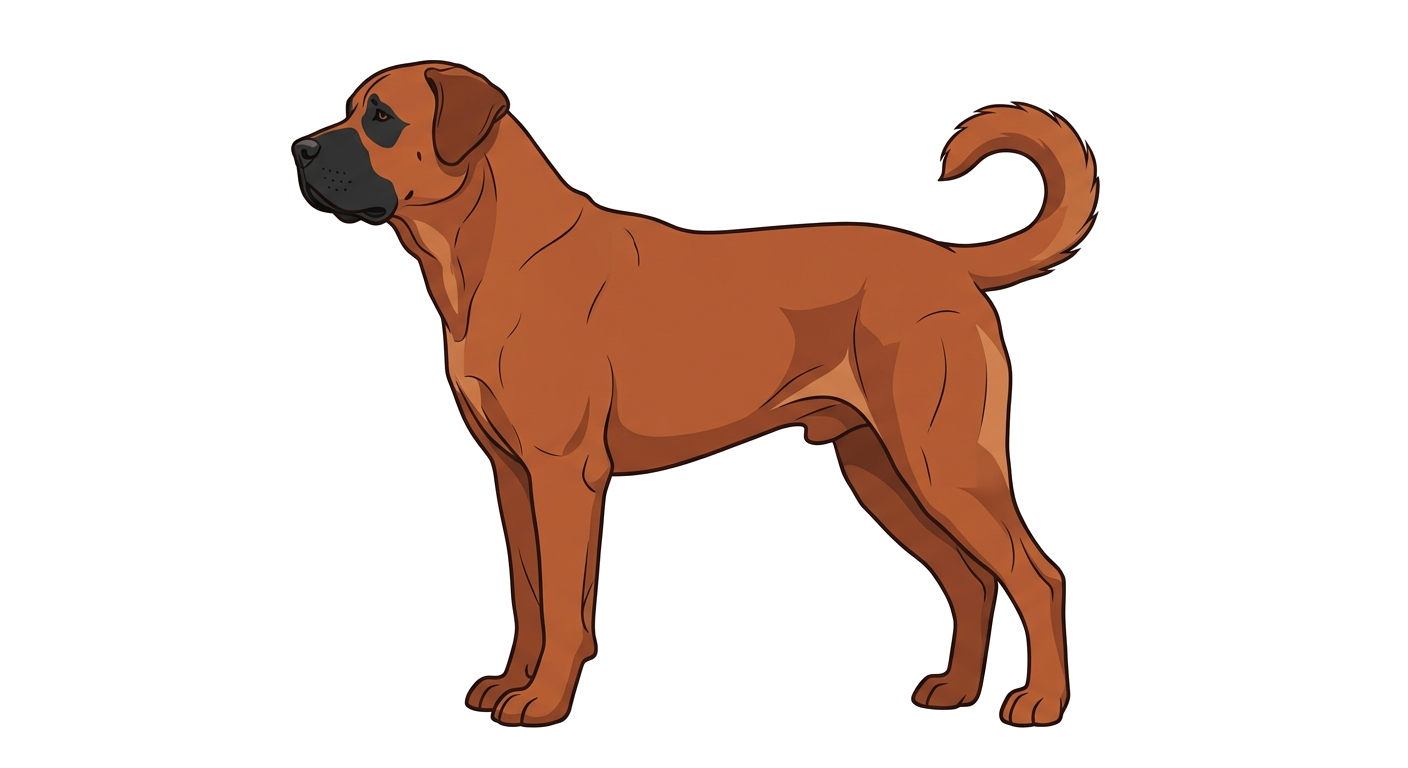
Point 1
Skull
The Kombai's skull is judged on balance rather than size — proportionate to the body, with a clean cheek and a stop typical of the breed. Coarseness or an over-refined head are both faulted.
Colours & patterns
Recognised coats
Which coats the standard accepts — and which are simply popular.
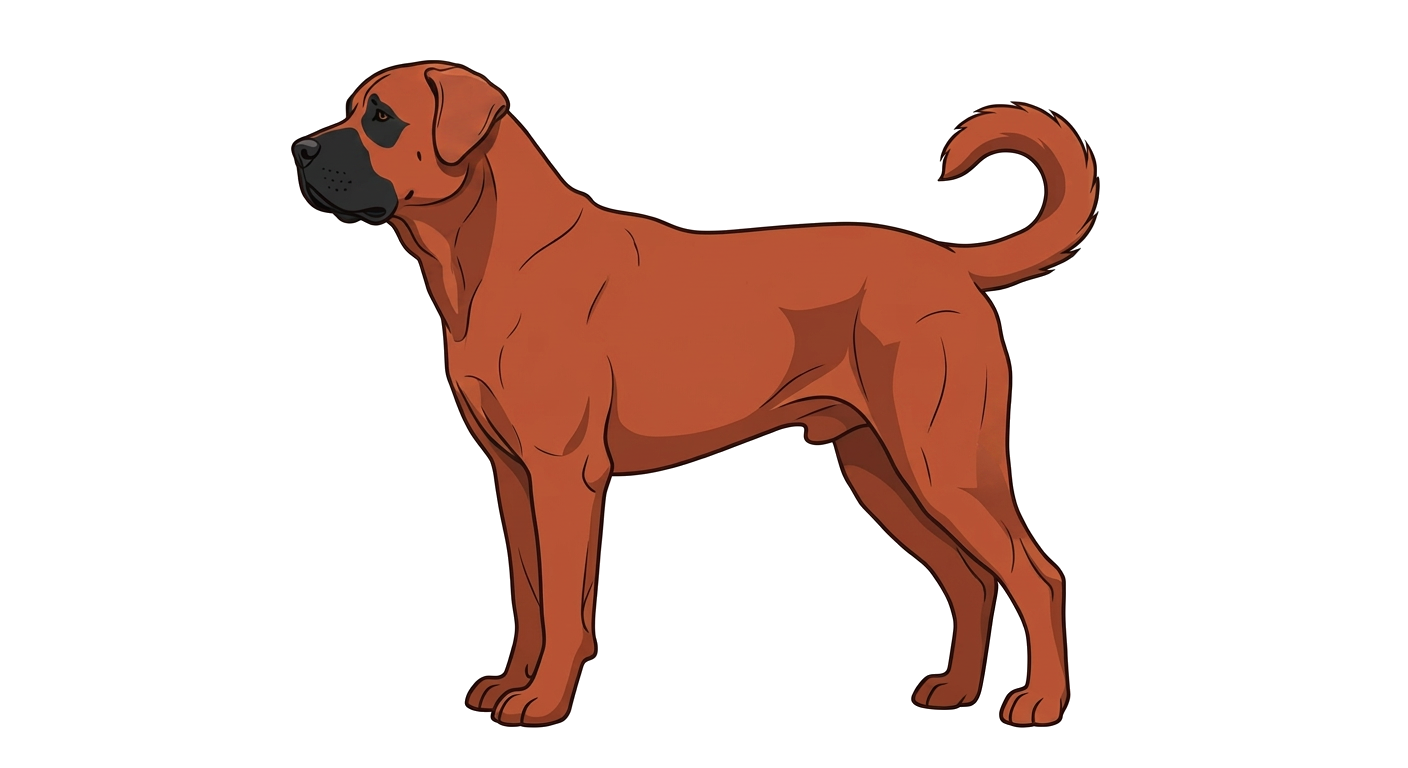
Red Tan with Black Mask
Standard colour
The most traditional and commonly recognised colouration for the breed.
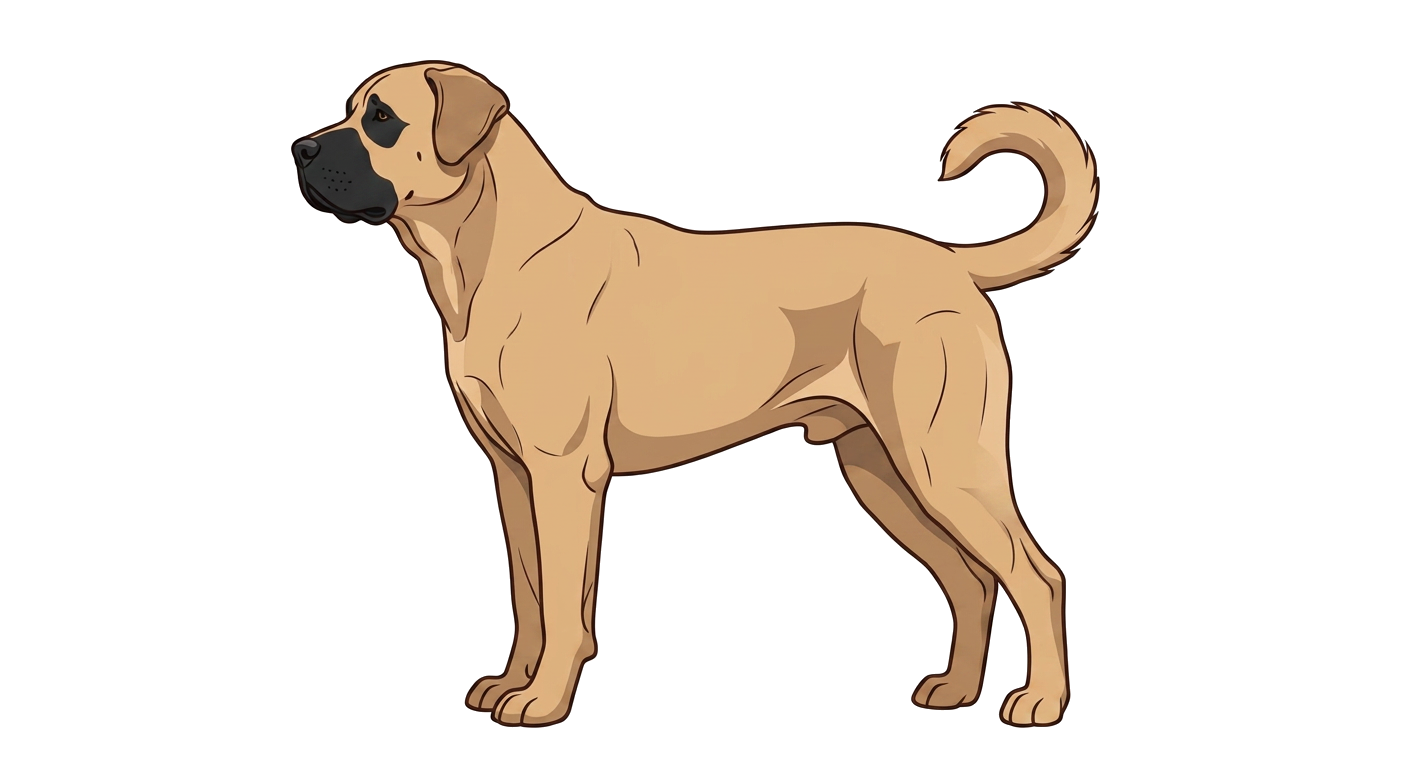
Fawn with Black Mask
Standard colour
Lighter shades of sandy tan or fawn, often retaining the characteristic dark muzzle.
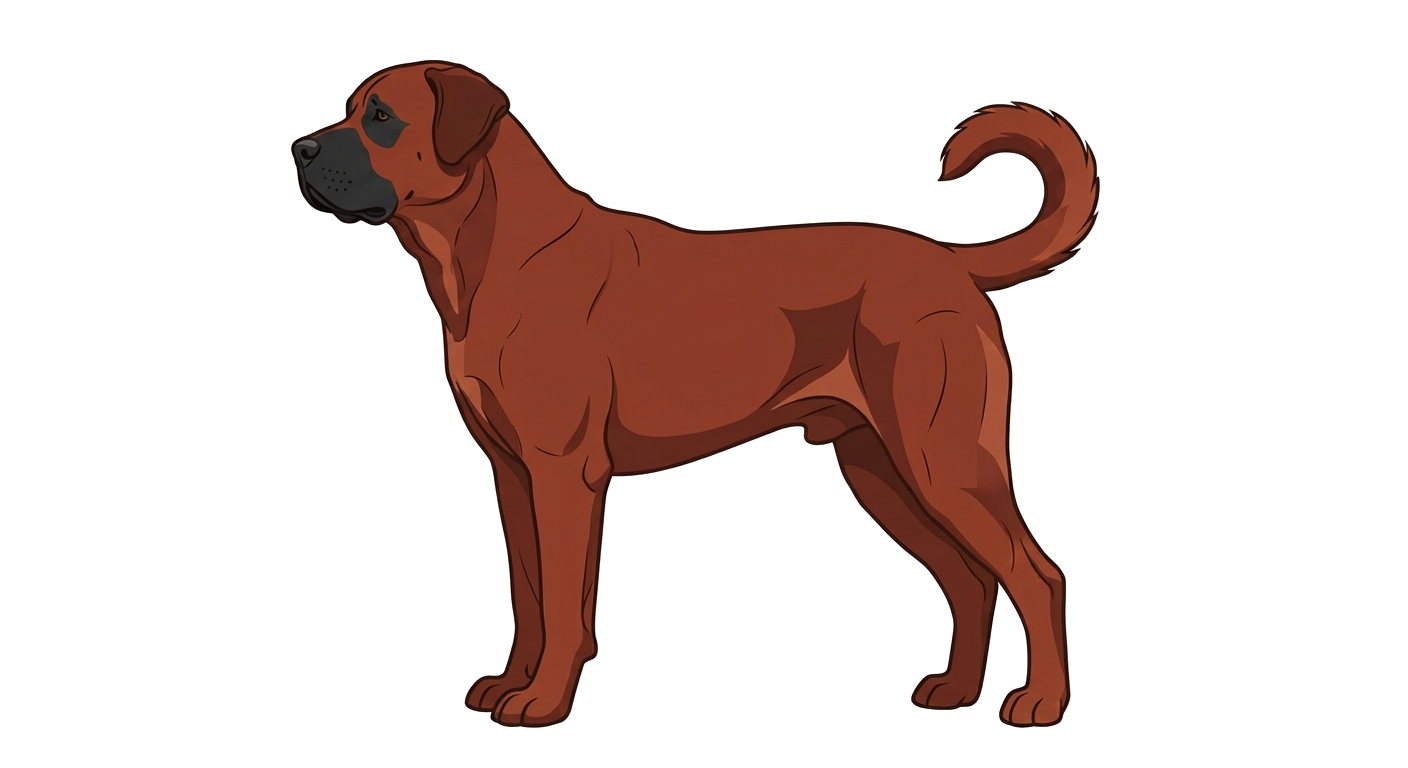
Rich Mahogany Brown
Standard colour
A deep, warm reddish-brown hue found across certain regional working strains.
Timeline
History & development
c. 9th–15th Century
Early Roots
Folklore and regional accounts link ancestral Kombai hounds to southern Indian royal lineages and local hunting communities who required resolute dogs for dangerous game.
18th–19th Century
Working Selection
The breed was widely maintained by landholders and villagers across Tamil Nadu, selected primarily for endurance, guarding instincts, and hunting prowess against wild boar.
20th Century
Population Decline
Shifts in rural lifestyles, changing wildlife protection laws, and the influx of foreign dog breeds led to a sharp decrease in traditional Kombai breeding.
2010s–Present
Preservation Efforts
Indian kennel organisations and native breed revivalists initiated systematic documentation and breeding schemes to prevent the loss of the indigenous bloodline.
Reference
Breed standard summary
- body
- Well-balanced with a deep chest, well-sprung ribs, a firm level topline, and a moderate tuck-up at the loin.
- coat
- Short, smooth, and dense, lying tight to the skin to provide natural protection against heat and brush.
- ears
- Medium-sized, folded forward or carried in a neat rose shape, set high on the skull.
- eyes
- Almond-shaped, ranging from hazel to dark brown, displaying an alert, intense, and watchful expression.
- gait
- Free, rhythmic, and tireless, with good reach and strong drive from the hindquarters.
- head
- Broad between the ears and moderately tapering towards the nose, with a slight but distinct stop.
- size
- Medium; height generally ranges between 45 and 60 cm at the withers.
- tail
- Thick at the base and tapering, usually carried in a slight upward sickle curve when the dog is active.
- colour
- Shades of red, tan, or fawn, predominantly featuring a black muzzle, occasionally with a dark dorsal line.
- muzzle
- Deep, powerful, and strong-jawed, typically finished with tight lips and a dark or black mask.
- temperament
- Courageous, alert, and fiercely devoted to family, displaying natural aloofness and vigilance towards unfamiliar persons.
- general appearance
- A medium-sized, muscular, and compact hound built for speed and endurance, conveying power without bulkiness.
Health
What to screen for
Green means little to worry about, amber means ask the breeder for test results, red means manage it actively.
Skin and Coat Dermatitis
Watch closely
Though resistant to heat, exposure to humid conditions and biting parasites can occasionally cause superficial skin irritations.
Tick-Borne Diseases
Watch closely
Given their native environment, preventative care against tick-borne pathogens such as canine ehrlichiosis is essential.
Musculoskeletal Strain
Watch closely
Working and active individuals may experience sprains or joint wear associated with high-impact hunting or running.
General information only — always speak to your vet about your own dog.
From real owners
Dogs like this
Kombais added by PawPoint members through their pet passports. Share yours to appear here.
Loading the wall…
Made for the Kombai
The book, plus prints, hoodies and mugs using our own Kombai illustration — and one everyday accessory that suits any dog.

The book
Pawpoint: The Complete Dog Breed Book
Every officially recognised breed plus the unofficial ones nobody else documents. 400+ pages, hardback, printed and shipped from the UK.
Own stock — shipped by us
Framed poster
Kombai Framed Poster
Museum-weight print of our Kombai illustration, framed or unframed.
Printed to order
Hoodie
Kombai Hoodie
Heavyweight hoodie carrying the Kombai illustration on the chest.
Printed to order
Mug
Kombai Mug
Ceramic mug with the Kombai illustration wrapped around it.
Printed to order
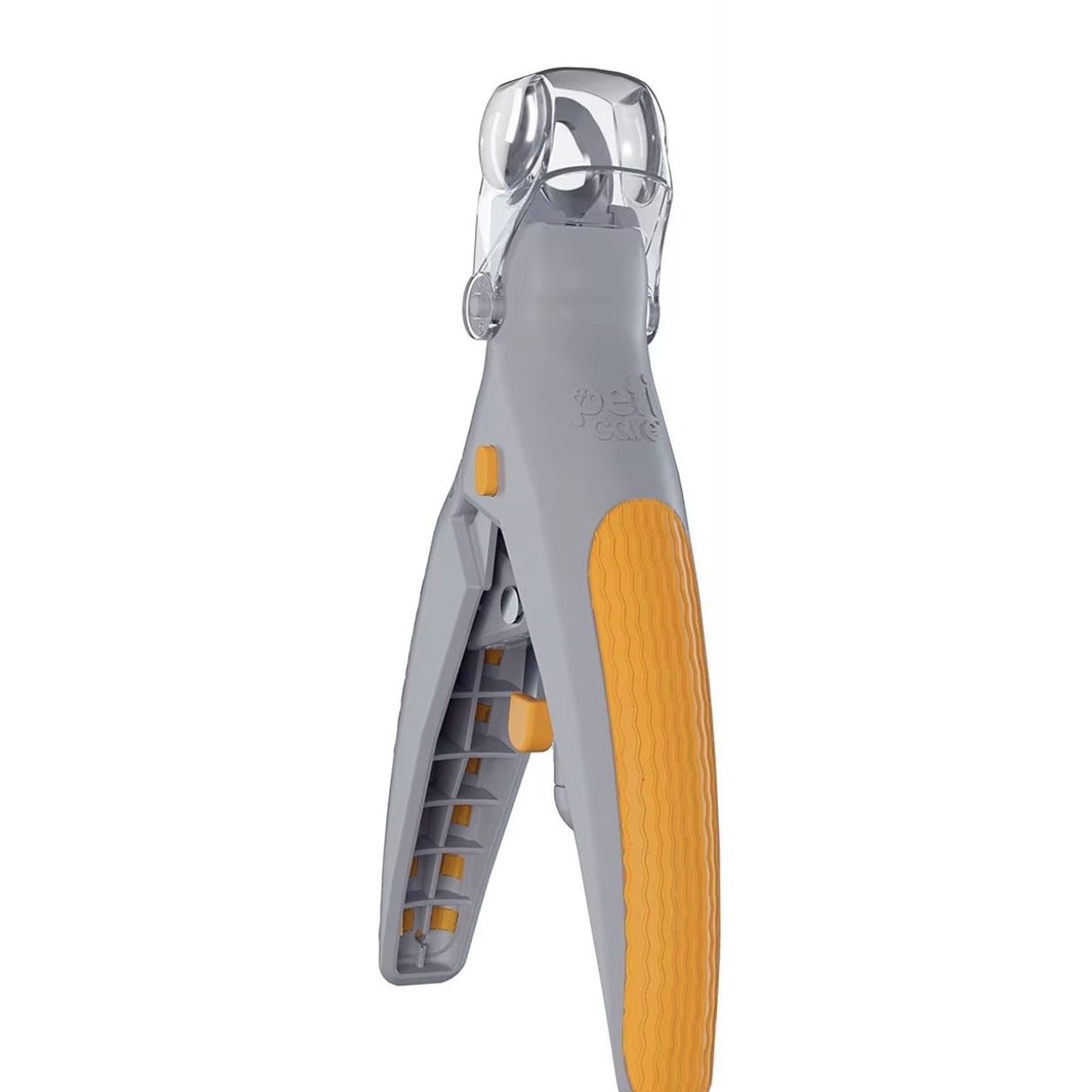
Accessory
Nail Clippers & Grinder
Safety-guard clippers with a quiet rotary grinder.
Fits any dog

Pawpoint on YouTube
Watch the full Kombai video
Breed deep-dives, history and honest ownership talk. New film every week.
Watch now