
Kooikerhondje
KOY-ker-hond-yuh
Netherlands· Dutch lowlands and polders
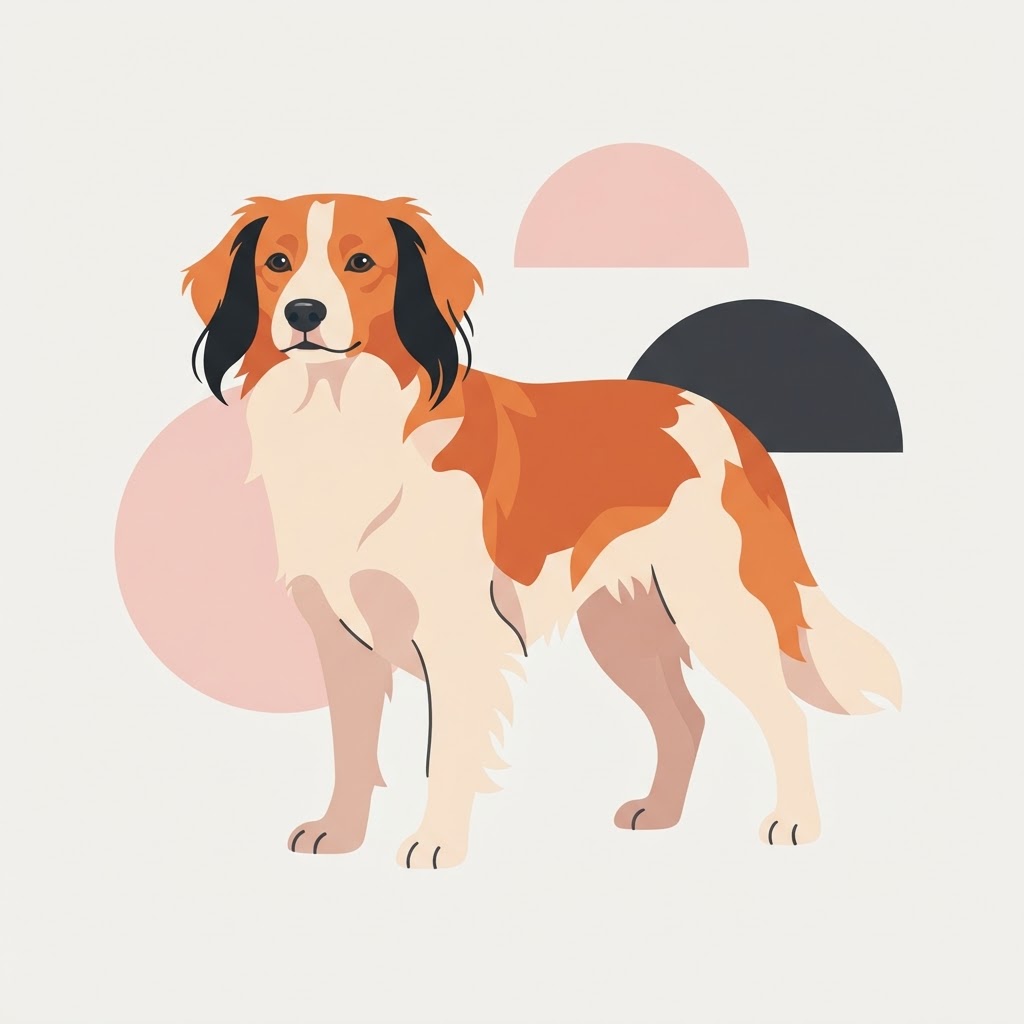
The Kooikerhondje is a small, spaniel-like Dutch gundog bred to lure ducks into netted traps, recognisable by its orange-and-white coat and the black-tipped fringes of fur on its ears, called earrings.
At a glance
Quick facts
Size
Small
Exercise needs
1-1.5 hours daily
Home size suited to
Small to medium home
Grooming frequency
Twice weekly brush
Coat length
Medium
Sheds
Yes
Lifespan
12-14 years
Town or country
Either, with enough exercise
Garden size needed
Small to medium
Where it comes from
Origins of the Kooikerhondje
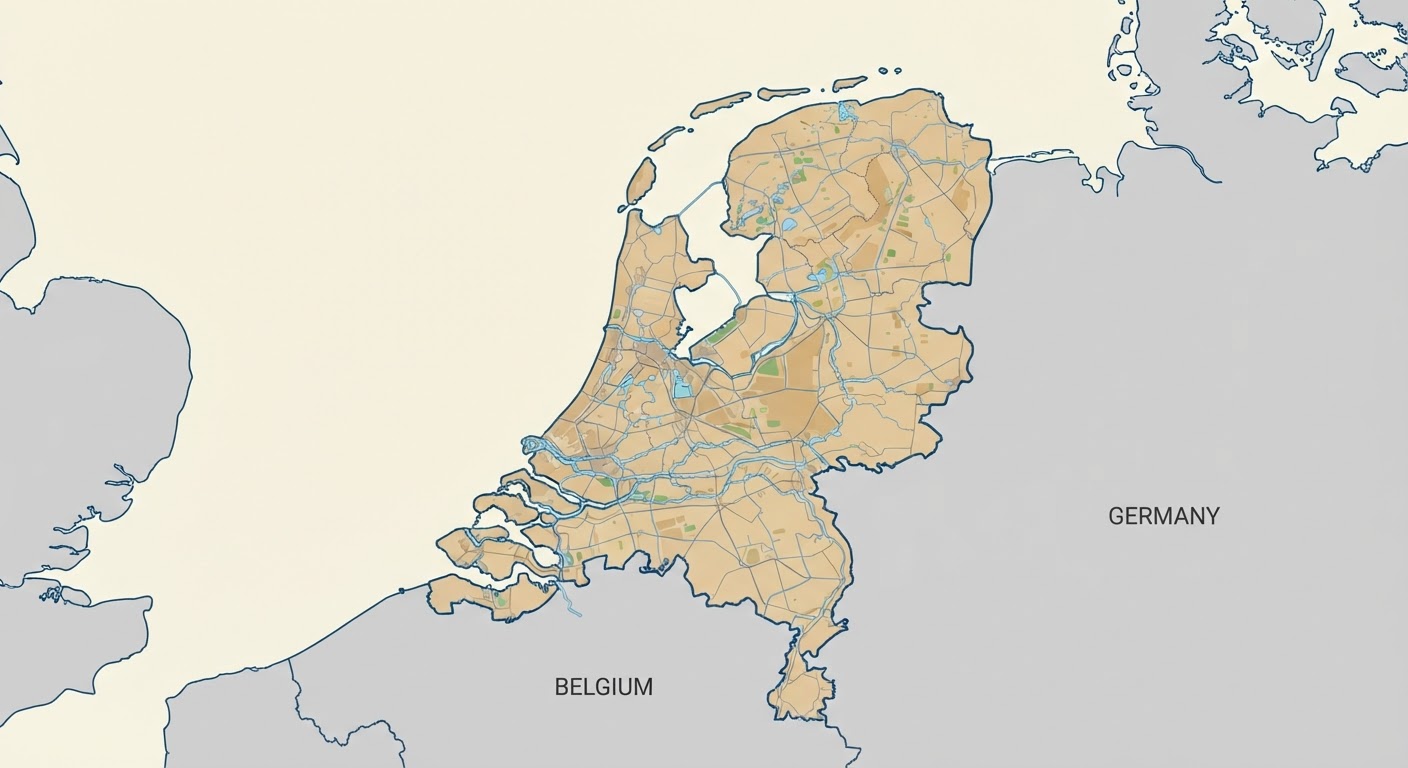
Bred for the flat, waterlogged polders of the Netherlands, where duck decoy ponds (eendenkooien) relied on a small orange dog to tempt wildfowl within reach of the nets.
- Region
- Dutch lowlands and polders
- Climate it was bred for
- Flat, wet, temperate lowlands
- Original job
- Luring ducks into decoy traps
The long read
About the breed
The breed's history is tied to the eendenkooi, a duck decoy pond system used across the Netherlands from at least the 17th century. A small, active, white-flagged dog would trot along fenced channels beside the water, teasing curious ducks into following it deeper into narrowing pipes, where the kooiker waited with nets. Paintings by Dutch masters such as Jan Steen show dogs closely resembling today's Kooikerhondje, suggesting the type is centuries old. By the Second World War, numbers had collapsed to near extinction; the breed survived largely through the efforts of Baroness van Hardenbroek van Ammerstol, who tracked down remaining examples from farms in the 1940s and rebuilt the population from a handful of dogs.
At home the Kooikerhondje is alert, watchful of strangers without being aggressive, and deeply attached to its own family. It needs a fair amount of exercise and mental engagement, having been bred to work independently over long stretches near water, and can become anxious or vocal if left under-stimulated. The feathered coat sheds seasonally and needs a weekly brush to keep the ear fringes and tail plume free of tangles and burrs.
Today the breed is still uncommon outside the Netherlands, though it has a small, dedicated following in Britain and North America as a companion and occasional working retriever. It does well in households that can offer daily walks, some off-lead time, and company, but it is not suited to being left alone for long hours, and its wariness of unfamiliar people means early, varied socialisation matters more than with many gundog breeds.
Living with one
Temperament & needs
Our own ratings, based on the breed standard and how these dogs behave in ordinary homes.
Friendliness
3/5
How openly the Kooikerhondje greets people it does not know.
Trainability
4/5
Quick to learn but can be sensitive to harsh handling.
Energy
4/5
Needs a proper daily walk plus games, not just a garden potter.
Barking
3/5
Will alert bark, especially if bored or under-exercised.
Grooming
3/5
Weekly brushing to manage feathering and seasonal shedding.
Suits a first-time owner
3/5
How forgiving the Kooikerhondje is for someone taking on their first dog.
Sociability
3/5
Devoted to its family, reserved with strangers.
Independence
3/5
Was bred to work alone at a distance from its handler.
Illustrated breed standard
The points of the breed
Hover or tap a numbered point to read what the standard asks for.
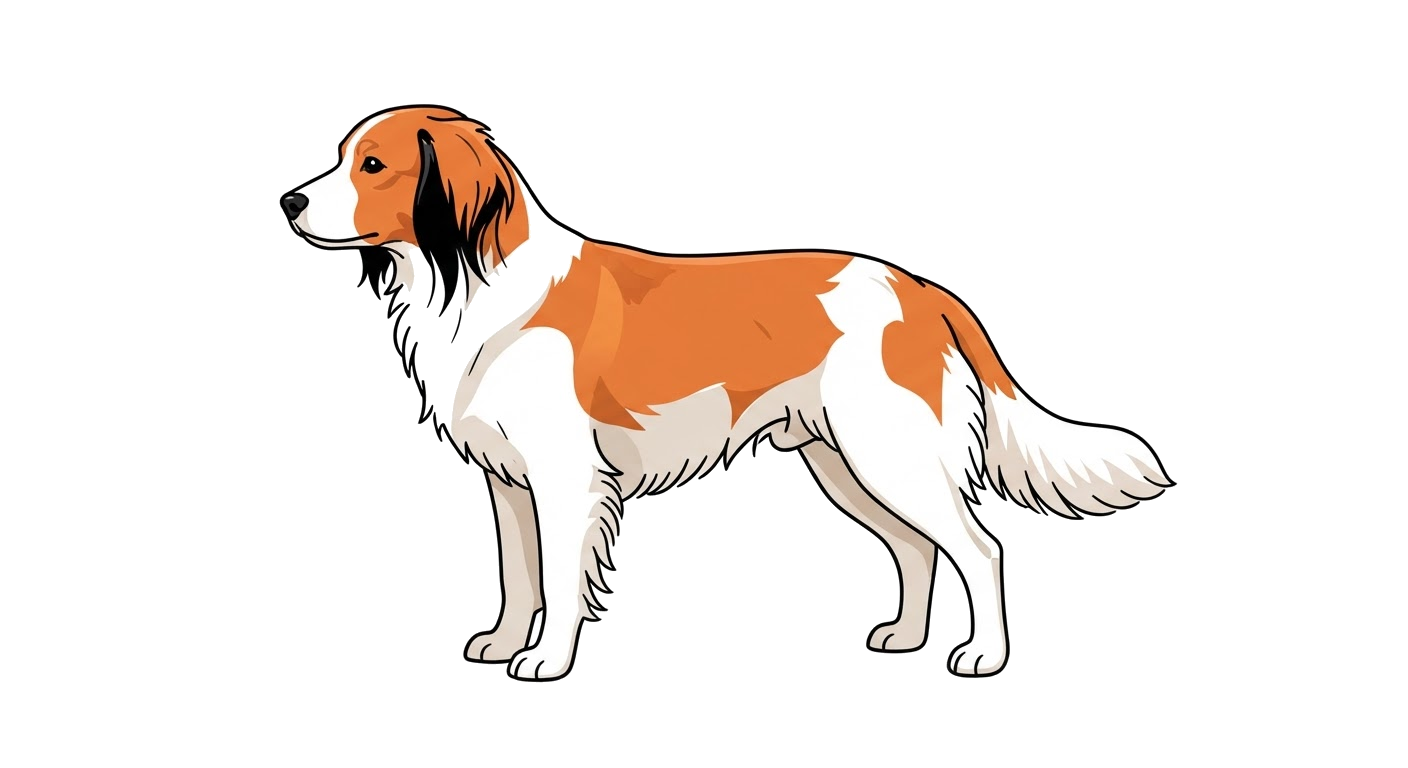
Point 1
Skull
The Kooikerhondje's skull is judged on balance rather than size — proportionate to the body, with a clean cheek and a stop typical of the breed. Coarseness or an over-refined head are both faulted.
Colours & patterns
Recognised coats
Which coats the standard accepts — and which are simply popular.
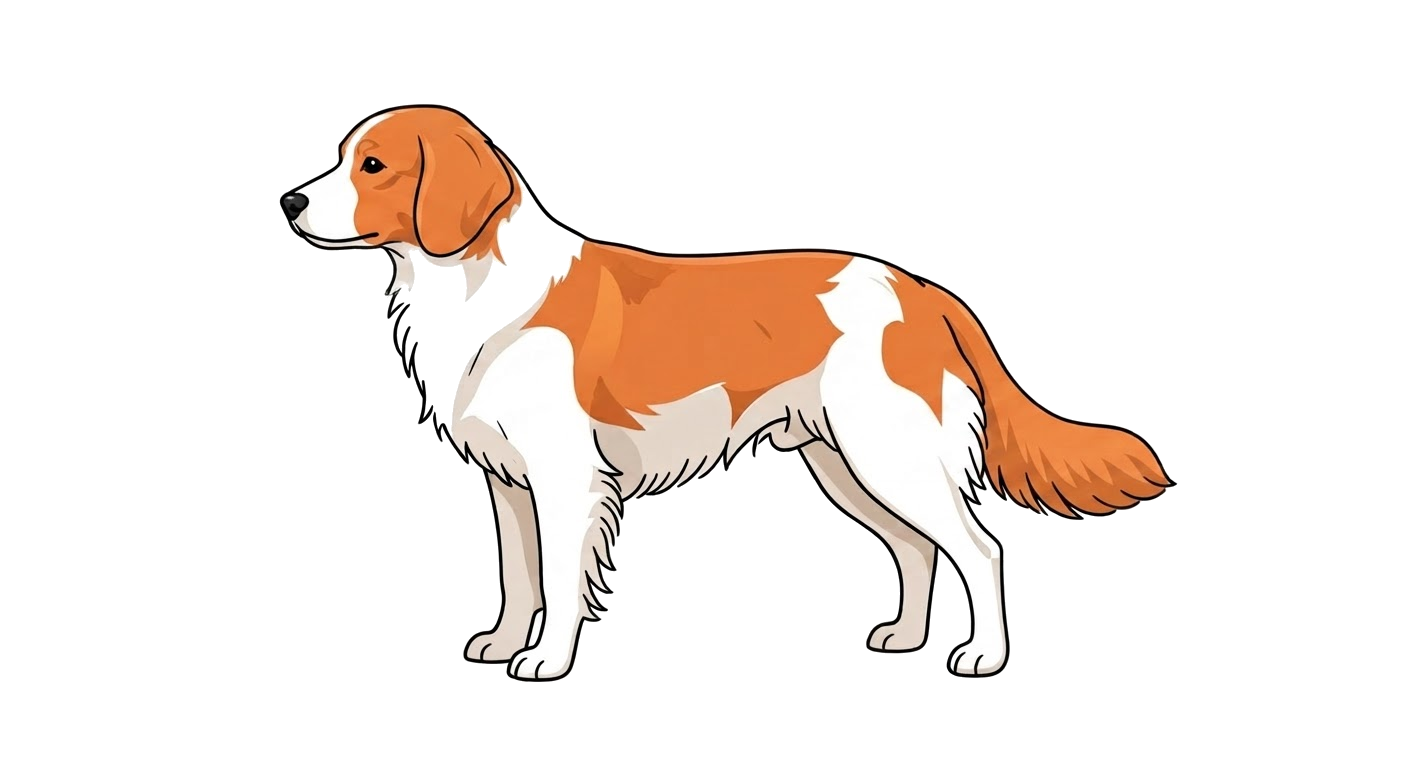
Orange and white
Standard colour
The only standard colour combination, with clearly defined patches.
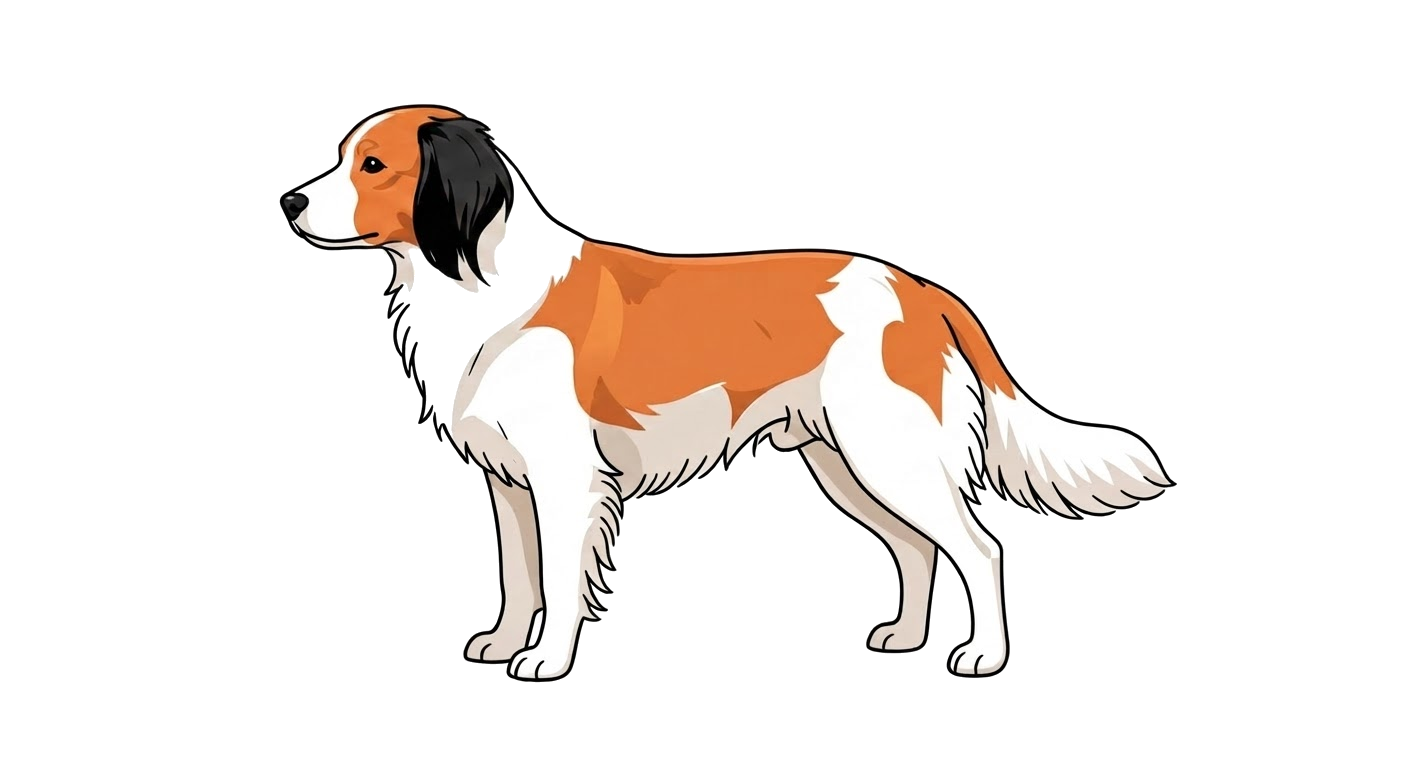
Black ear fringe (earrings)
Standard colour
Black-tipped hairs on the ears are a breed hallmark, not a fault.
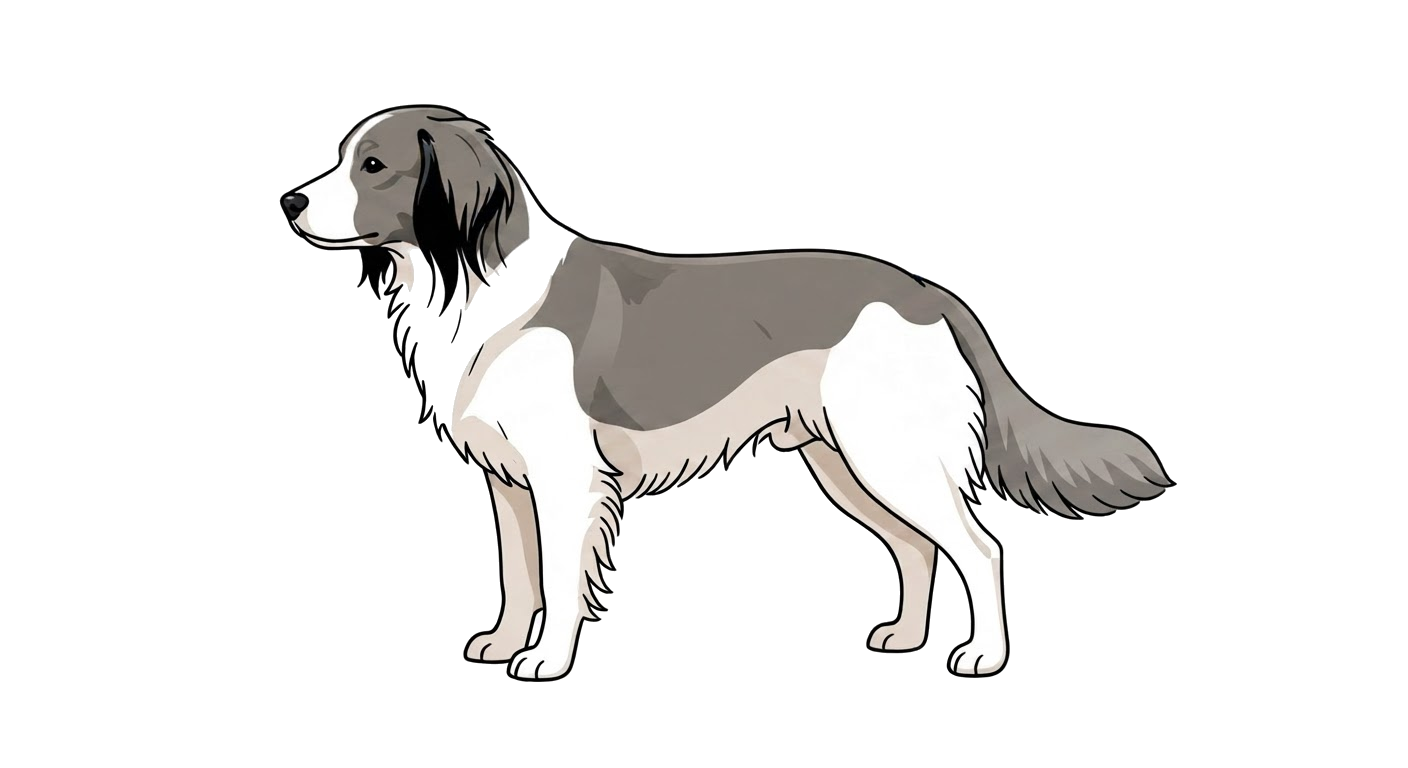
Grey badger-marked tail
Standard colour
Grey guard hairs along the tail plume are typical and desired.
Timeline
History & development
1600s
Duck decoy origins
Small orange-and-white dogs appear working duck decoy ponds across the Dutch lowlands, a role recorded in paintings of the period.
1930s-40s
Near extinction
The breed's numbers fell drastically during the Second World War, leaving only a small number of true examples in rural Holland.
1943
Rescue by Baroness van Hardenbroek
Baroness van Hardenbroek van Ammerstol began tracing and gathering surviving dogs, rebuilding the breed from this remnant population.
1966
Dutch Kennel Club recognition
The Raad van Beheer formally recognised the Kooikerhondje as a distinct Dutch breed.
2012
UK Kennel Club recognition
The breed was recognised by the UK Kennel Club in the Gundog group.
Reference
Breed standard summary
- body
- Slightly longer than tall, with a level topline and moderate chest depth.
- coat
- Medium length, slightly wavy, with feathering on ears, legs, and tail.
- ears
- Hanging close to the head, fringed with long hair and black-tipped points called earrings.
- eyes
- Dark brown, medium-sized, with an alert, intelligent expression.
- gait
- Light, elegant and quick, covering ground efficiently.
- head
- Moderately broad skull with a distinct but gentle stop.
- size
- 35-40cm at the withers.
- tail
- Well-feathered, carried gaily but not curled over the back.
- colour
- Orange and white, Black ear fringe (earrings), Grey badger-marked tail. Colours outside this list are seen but are not accepted by the kennel clubs.
- temperament
- Typical of the breed: strongest in energy, trainability, sociability. Nervousness or aggression are serious faults in the show ring and in the home.
- general appearance
- A small, well-proportioned spaniel-type dog, elegant but sturdy, with a lively, alert bearing.
Health
What to screen for
Green means little to worry about, amber means ask the breeder for test results, red means manage it actively.
Hereditary necrotising myelopathy
Screen for it
A DNA test exists; ask breeders for clear or carrier-only pairings.
Patellar luxation
Screen for it
Ask for a vet check of the knees on breeding stock.
Von Willebrand's disease
Watch closely
A DNA test is available and widely used in the breeding population.
Ear infections
Low concern
Check and clean the feathered ears regularly, especially after swimming.
General information only — always speak to your vet about your own dog.
From real owners
Dogs like this
Kooikerhondjes added by PawPoint members through their pet passports. Share yours to appear here.
Loading the wall…
Made for the Kooikerhondje
The book, plus prints, hoodies and mugs using our own Kooikerhondje illustration — and one everyday accessory that suits any dog.

The book
Pawpoint: The Complete Dog Breed Book
Every officially recognised breed plus the unofficial ones nobody else documents. 400+ pages, hardback, printed and shipped from the UK.
Own stock — shipped by us
Framed poster
Kooikerhondje Framed Poster
Museum-weight print of our Kooikerhondje illustration, framed or unframed.
Printed to order
Hoodie
Kooikerhondje Hoodie
Heavyweight hoodie carrying the Kooikerhondje illustration on the chest.
Printed to order
Mug
Kooikerhondje Mug
Ceramic mug with the Kooikerhondje illustration wrapped around it.
Printed to order
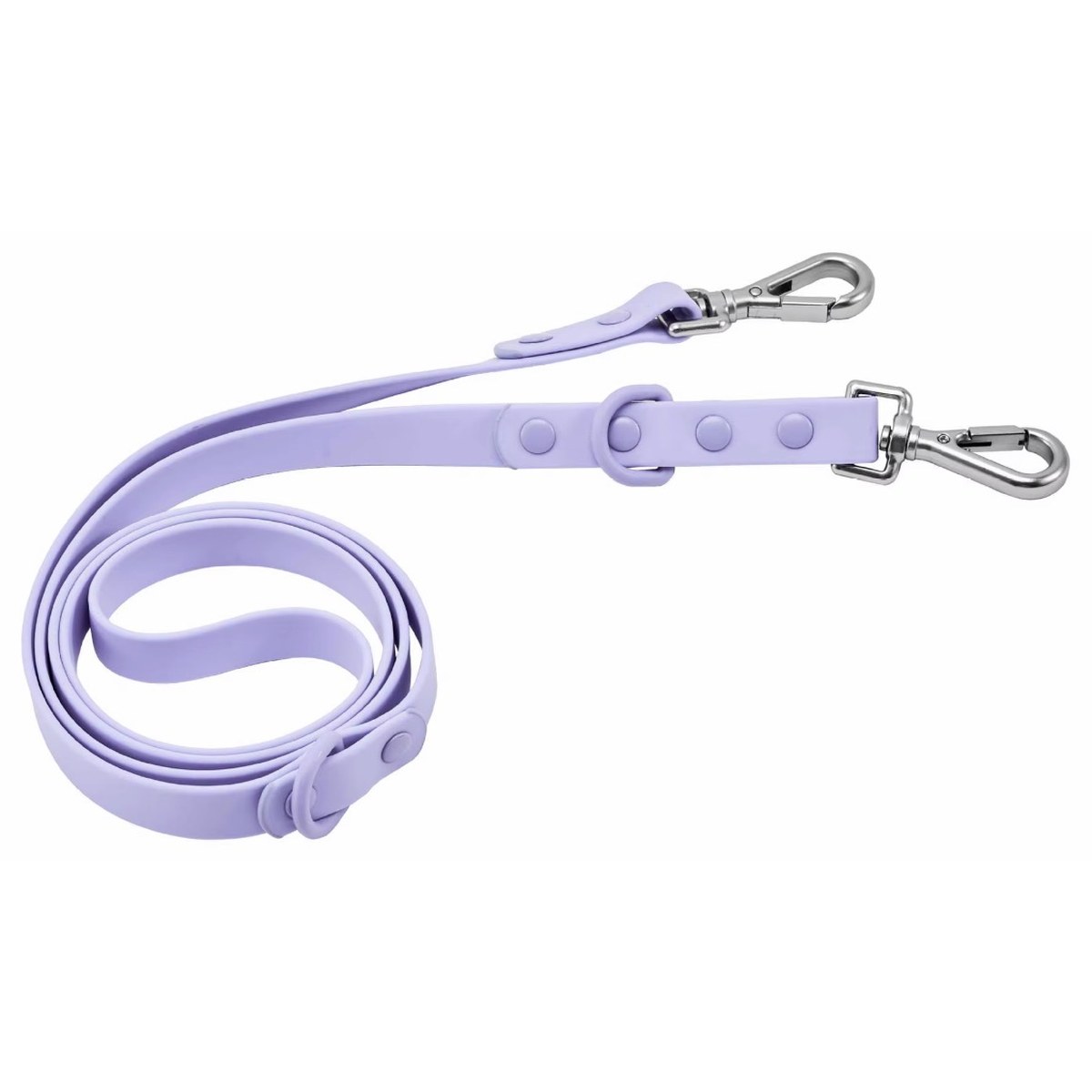
Accessory
Standard Lead
Padded-handle 1.2m lead in Pawpoint tan.
Fits any dog

Pawpoint on YouTube
Watch the full Kooikerhondje video
Breed deep-dives, history and honest ownership talk. New film every week.
Watch now