
Korean Jindo
JIN-doh
South Korea· Jindo Island, South Jeolla Province
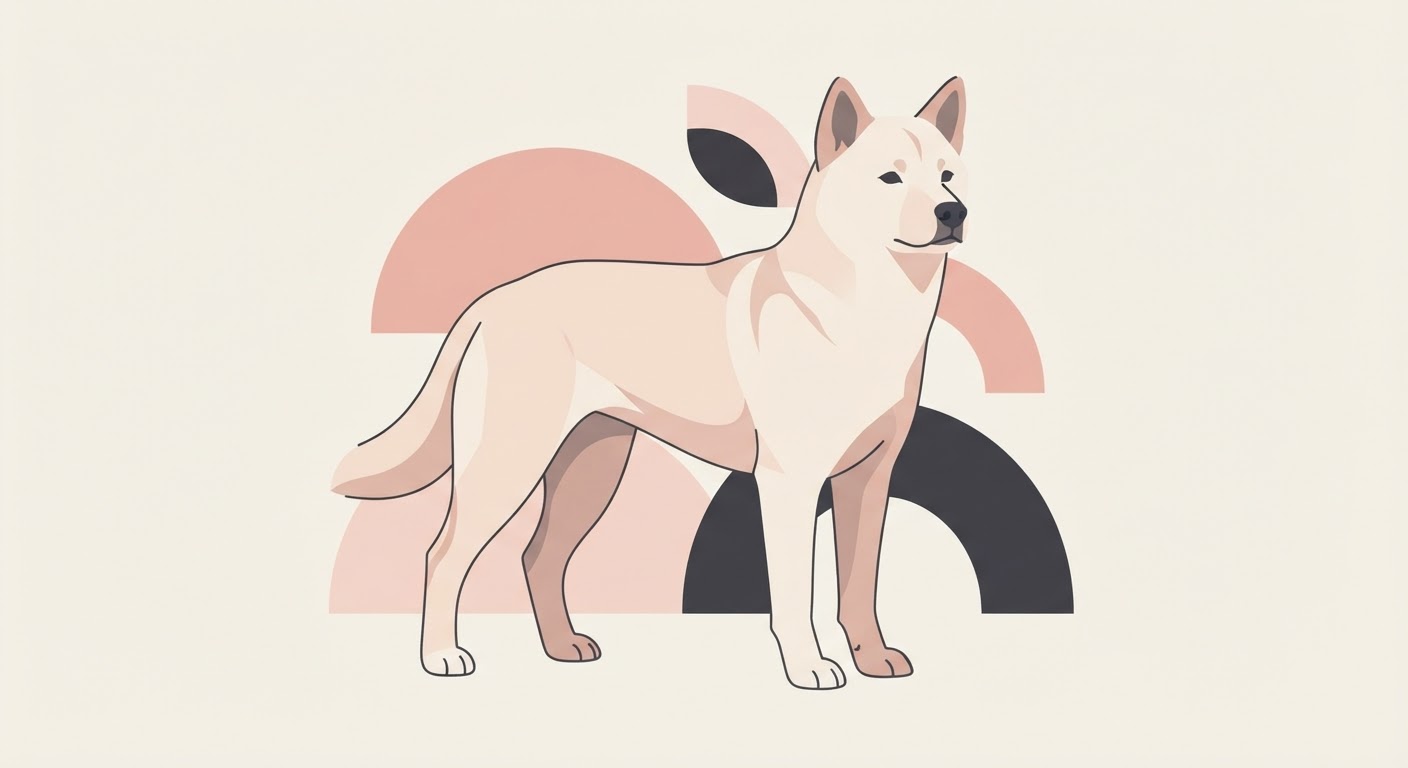
The Jindo is a medium spitz from the island of Jindo off the south-west coast of South Korea, known for extreme loyalty to one household and an unusually strong hunting drive.
At a glance
Quick facts
Size
Medium
Exercise needs
1–2 hours daily, mostly on lead or long line
Home size suited to
Small to medium home
Grooming frequency
Weekly brush, hand-strip a few times a year
Coat length
Wiry
Sheds
Yes, heavily when moulting
Lifespan
12–15 years
Town or country
Either, happy in town
Garden size needed
Small to medium
Where it comes from
Origins of the Korean Jindo
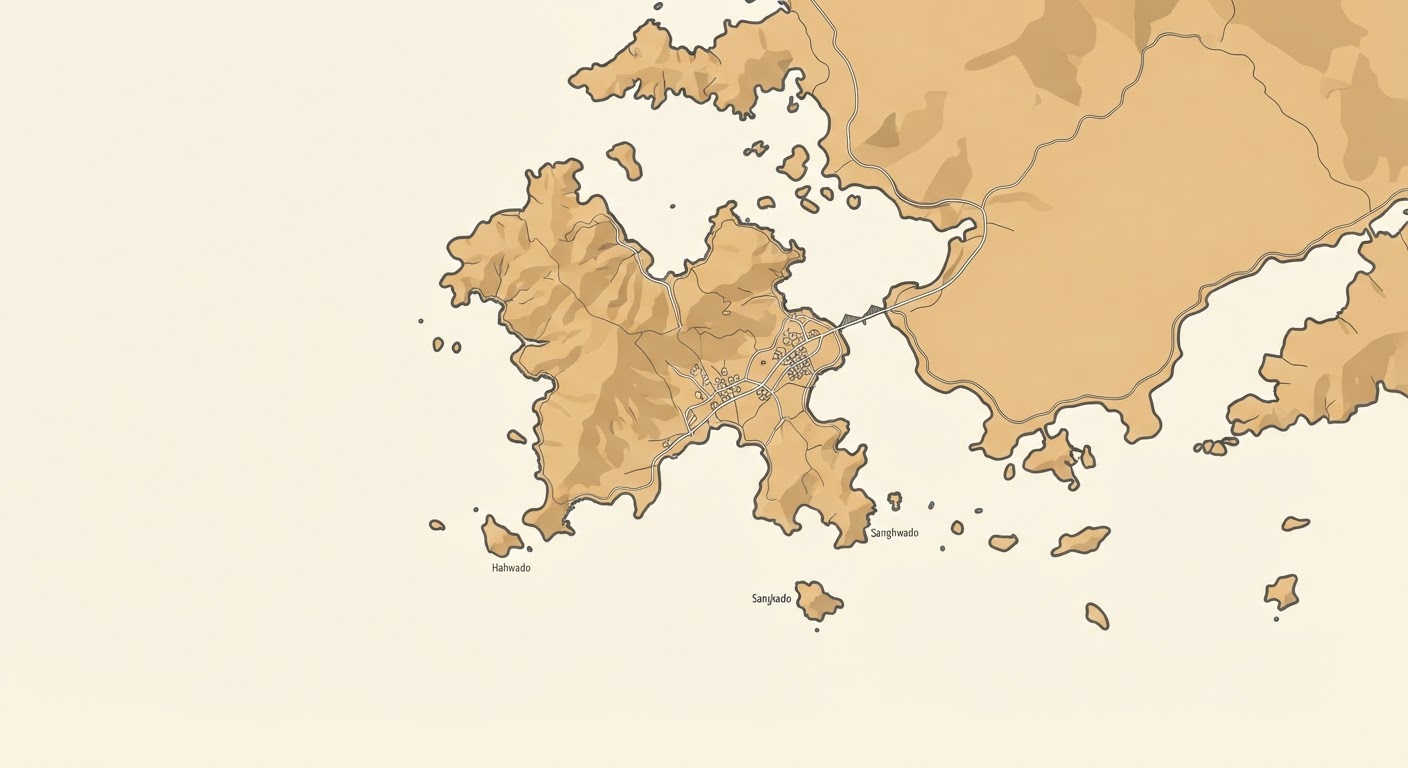
Jindo Island sits off the south-west corner of the Korean peninsula, separated from the mainland by a fast, narrow strait. That isolation kept the population closed and consistent for centuries. Rough, wooded hills favoured a dog that could hunt alone and find its own way home.
- Region
- Jindo Island, South Jeolla Province
- Climate it was bred for
- Humid subtropical island with cold winters
- Original job
- Independent hunting of hare, badger and deer
The long read
About the breed
The island gave the breed its shape. Jindo lies far enough from the mainland that its dogs bred largely among themselves for centuries, producing a compact, prick-eared, curl-tailed hunter of roughly 17 to 22 kilograms. Villagers used them on hare, badger and deer, often in pairs, and the dogs were expected to find, hold and sometimes return game with little direction. South Korea designated the breed a Natural Monument in 1962, and export from the island remains restricted.
Living with a Jindo is not like living with a herding or gundog breed. It bonds tightly, usually to one or two people, keeps itself scrupulously clean and is often house-trained with almost no effort. It is also independent to a degree that frustrates handlers who expect biddability. Recall off lead is unreliable, small animals are treated as quarry, and same-sex dog tolerance is frequently poor. Fences need height and a dug-in base; Jindos climb.
Today the breed is common across Korea and thinly spread elsewhere, with a persistent gap between its reputation for devotion and the reality of its prey drive. It suits an experienced owner with secure ground and a preference for a dog that thinks rather than waits for instruction. It is a poor match for a busy household wanting an easy, sociable pet.
Living with one
Temperament & needs
Our own ratings, based on the breed standard and how these dogs behave in ordinary homes.
Friendliness
2/5
How openly the Korean Jindo greets people it does not know.
Trainability
2/5
Learns fast, obeys when it sees the point.
Energy
4/5
Needs real daily exercise, but settles quietly indoors.
Barking
2/5
Reserved; barks with purpose rather than habit.
Grooming
4/5
Heavy seasonal moult twice a year, otherwise low maintenance.
Suits a first-time owner
2/5
How forgiving the Korean Jindo is for someone taking on their first dog.
Sociability
2/5
Devoted at home, indifferent or wary outside it.
Independence
5/5
Bred to hunt without a handler and behaves accordingly.
Illustrated breed standard
The points of the breed
Hover or tap a numbered point to read what the standard asks for.
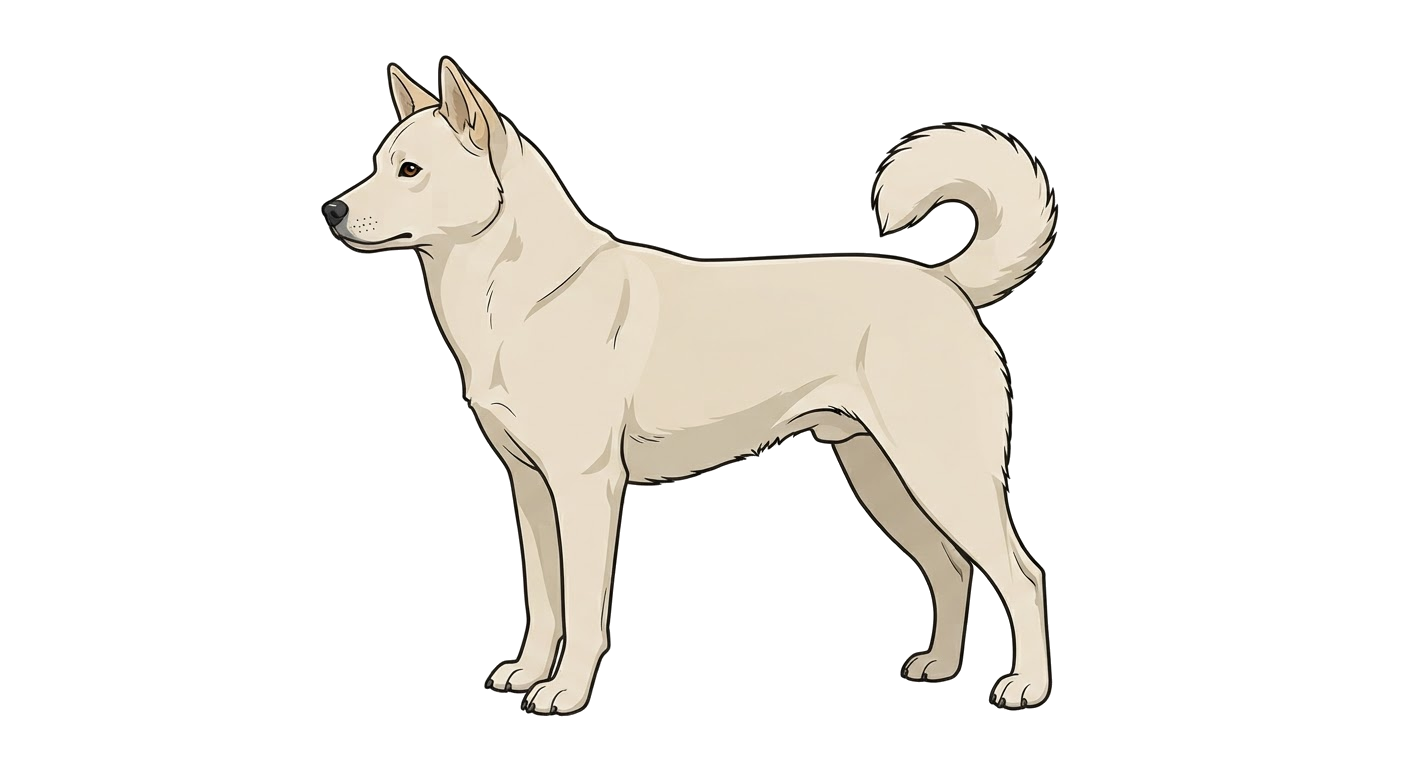
Point 1
Skull
The Korean Jindo's skull is judged on balance rather than size — proportionate to the body, with a clean cheek and a stop typical of the breed. Coarseness or an over-refined head are both faulted.
Colours & patterns
Recognised coats
Which coats the standard accepts — and which are simply popular.
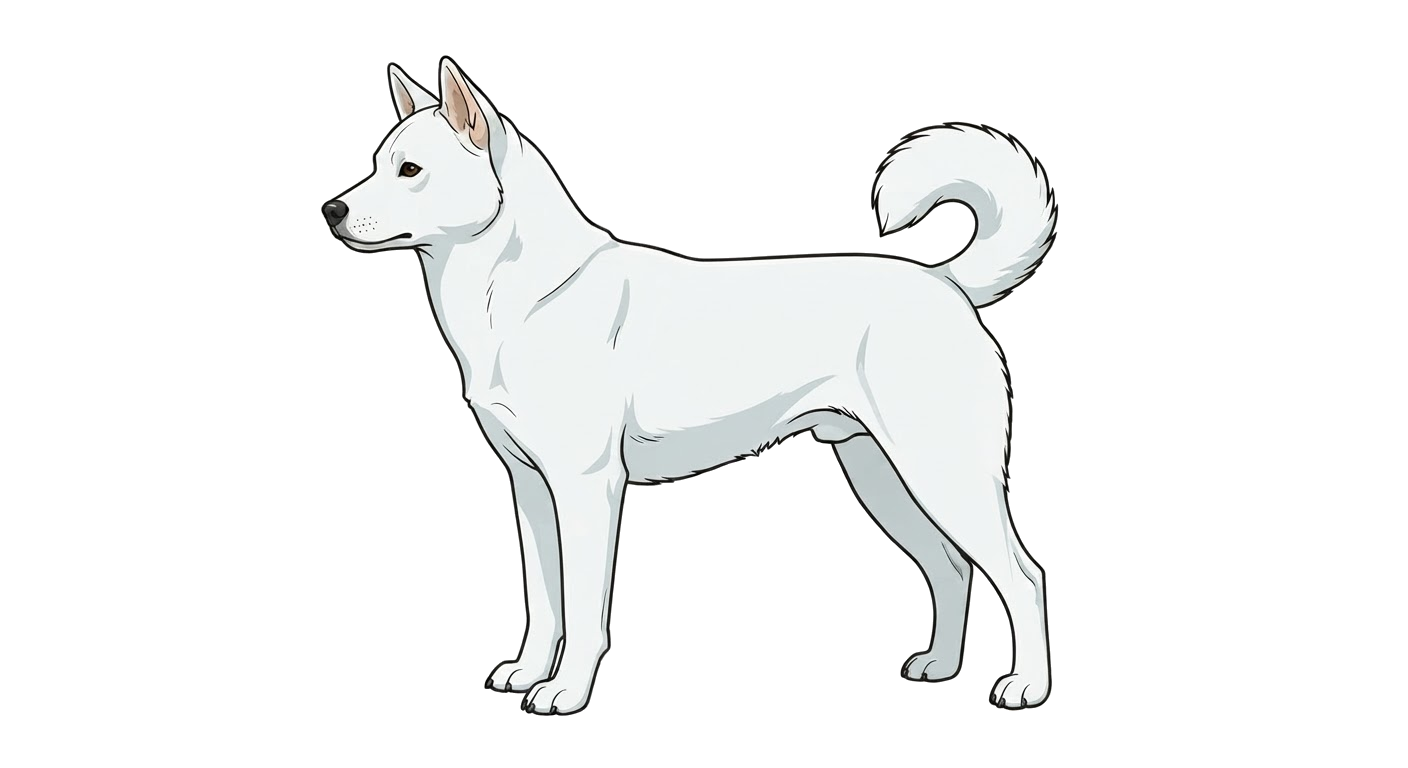
White
Standard colour
The most recognised colour on the island.
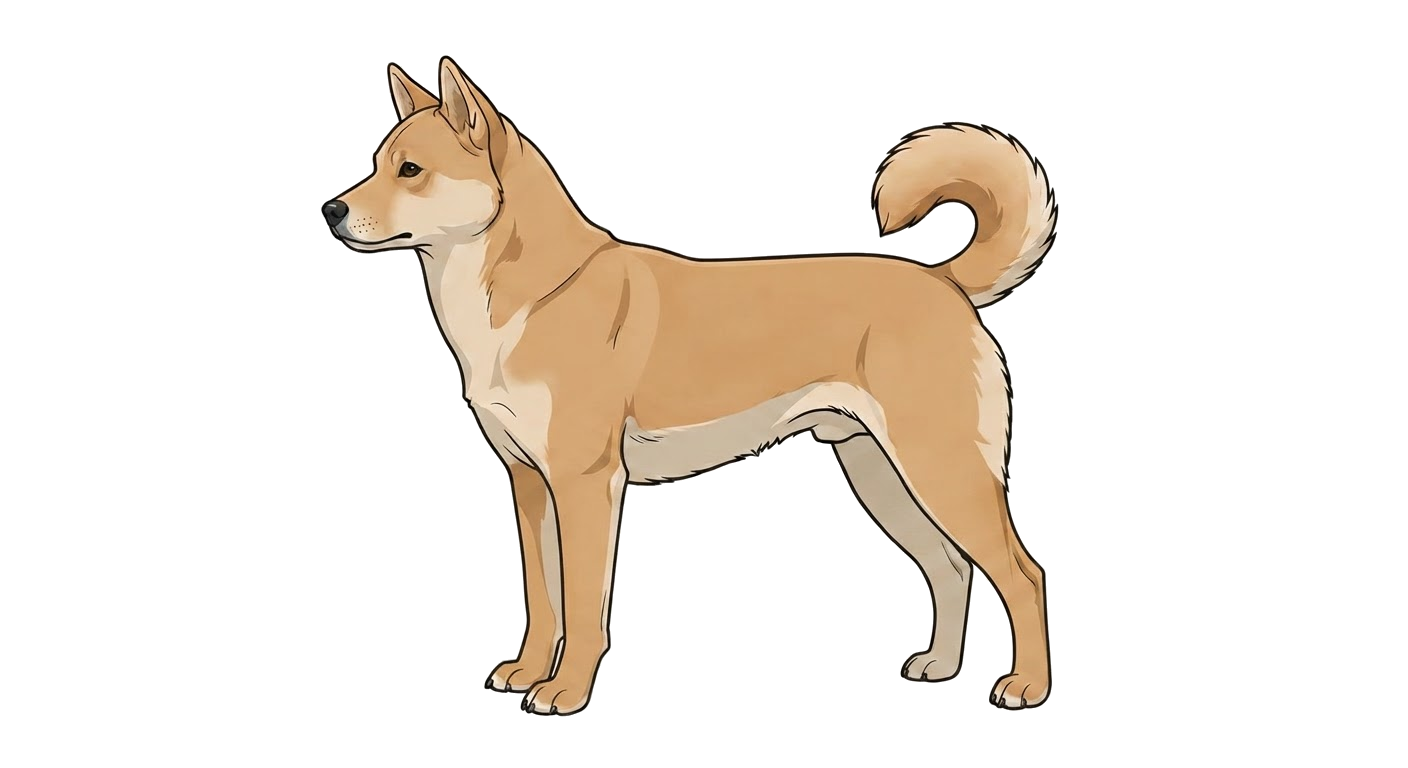
Fawn (yellow)
Standard colour
Ranges from pale wheaten to deep red-gold.
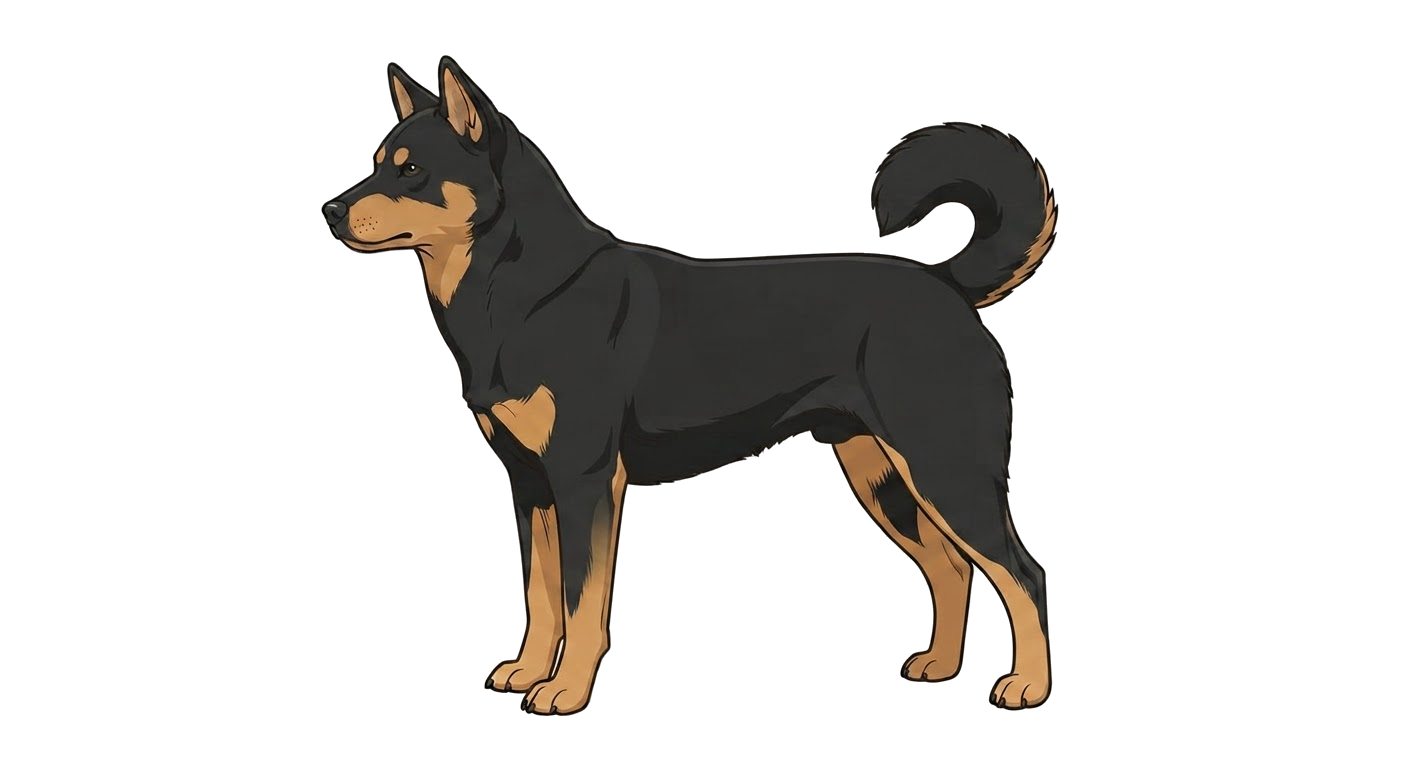
Black and tan
Standard colour
Tan points on cheeks, chest and legs.
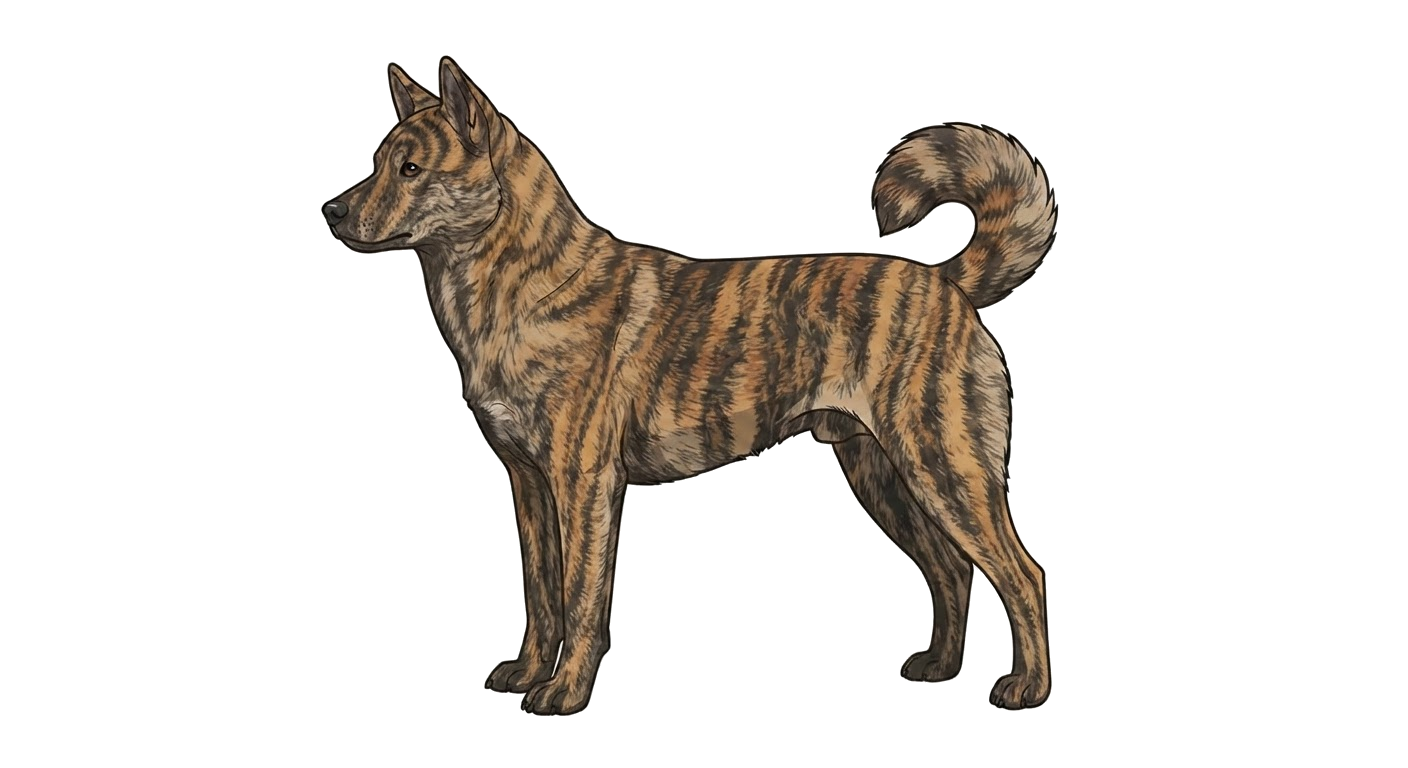
Brindle (tiger)
Standard colour
Known in Korea as the tiger pattern.
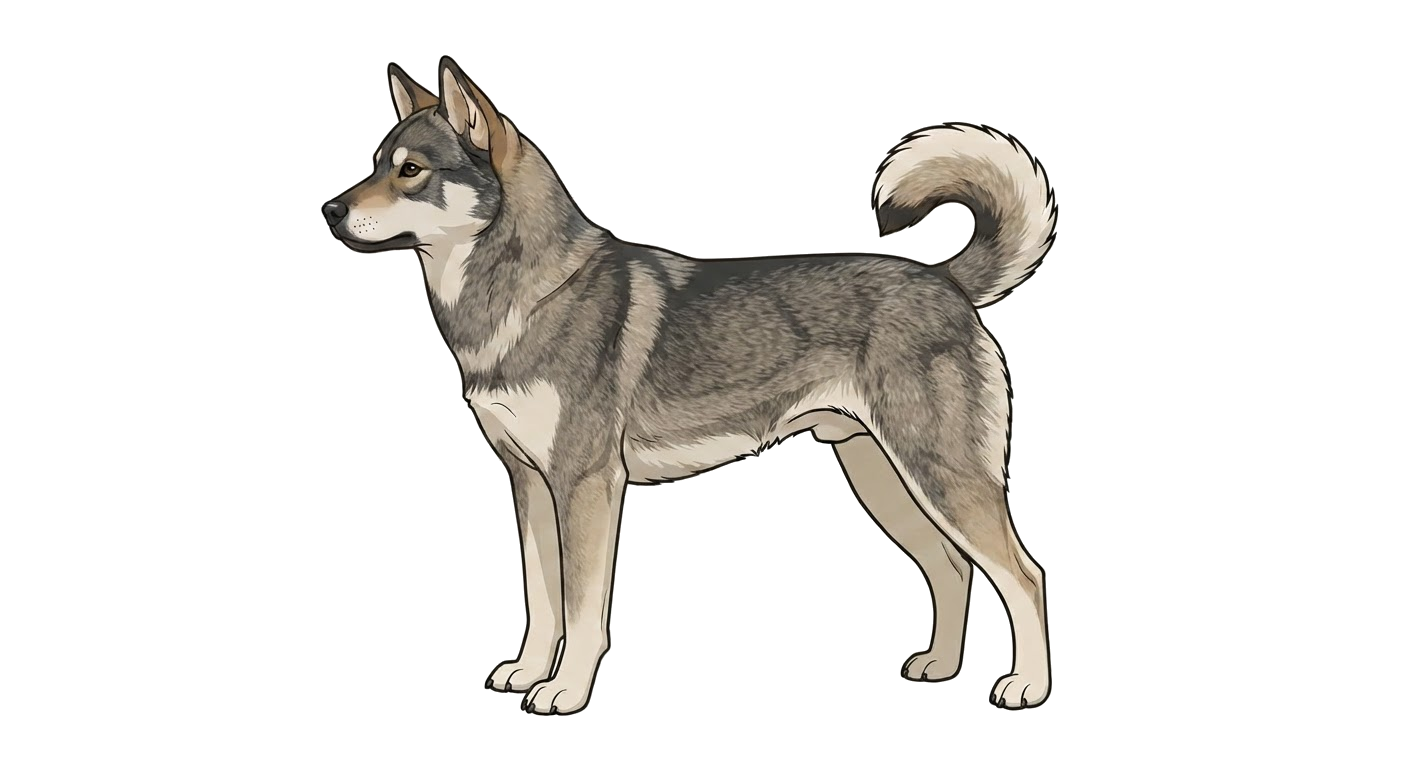
Wolf grey
Standard colour
Uncommon and often mistaken for a mixed-breed coat.
Timeline
History & development
pre-1600s
Island stock
A closed population of hunting dogs develops on Jindo Island, isolated from mainland breeding.
1938
First protection
The colonial administration records the Jindo as a protected native dog.
1962
Natural Monument
South Korea designates the Jindo as Natural Monument No. 53, restricting export from the island.
2005
International recognition
The FCI accepts the breed, and small numbers appear in Europe and North America.
Reference
Breed standard summary
- body
- Slightly longer than tall at the withers, deep chest, taut loin.
- coat
- Harsh, straight outer coat standing off from a soft, dense undercoat.
- ears
- Small, triangular, thick and firmly erect, inclining forward.
- eyes
- Almond, dark brown, set slightly obliquely.
- gait
- Light, quick and springy with good reach.
- head
- Blunt wedge, moderate stop, strong jaw.
- size
- Dogs 50–55 cm, bitches 45–50 cm.
- tail
- Thick, carried curled over the back or in a sickle.
- colour
- White, Fawn (yellow), Black and tan, Brindle (tiger), Wolf grey. Colours outside this list are seen but are not accepted by the kennel clubs.
- temperament
- Typical of the breed: strongest in independence, energy, grooming. Nervousness or aggression are serious faults in the show ring and in the home.
- general appearance
- Compact, square, muscular spitz of medium size with an alert bearing.
Health
What to screen for
Green means little to worry about, amber means ask the breeder for test results, red means manage it actively.
Hypothyroidism
Screen for it
Ask whether the breeder thyroid-tests adults before breeding.
Hip dysplasia
Low concern
Uncommon, but parental hip scores are still worth seeing.
Escape and chase injuries
Watch closely
Prey drive and climbing ability make secure fencing a health issue.
Dog-to-dog aggression
Screen for it
Same-sex intolerance is common; early managed socialisation helps.
General information only — always speak to your vet about your own dog.
From real owners
Dogs like this
Korean Jindos added by PawPoint members through their pet passports. Share yours to appear here.
Loading the wall…
Made for the Korean Jindo
The book, plus prints, hoodies and mugs using our own Korean Jindo illustration — and one everyday accessory that suits any dog.
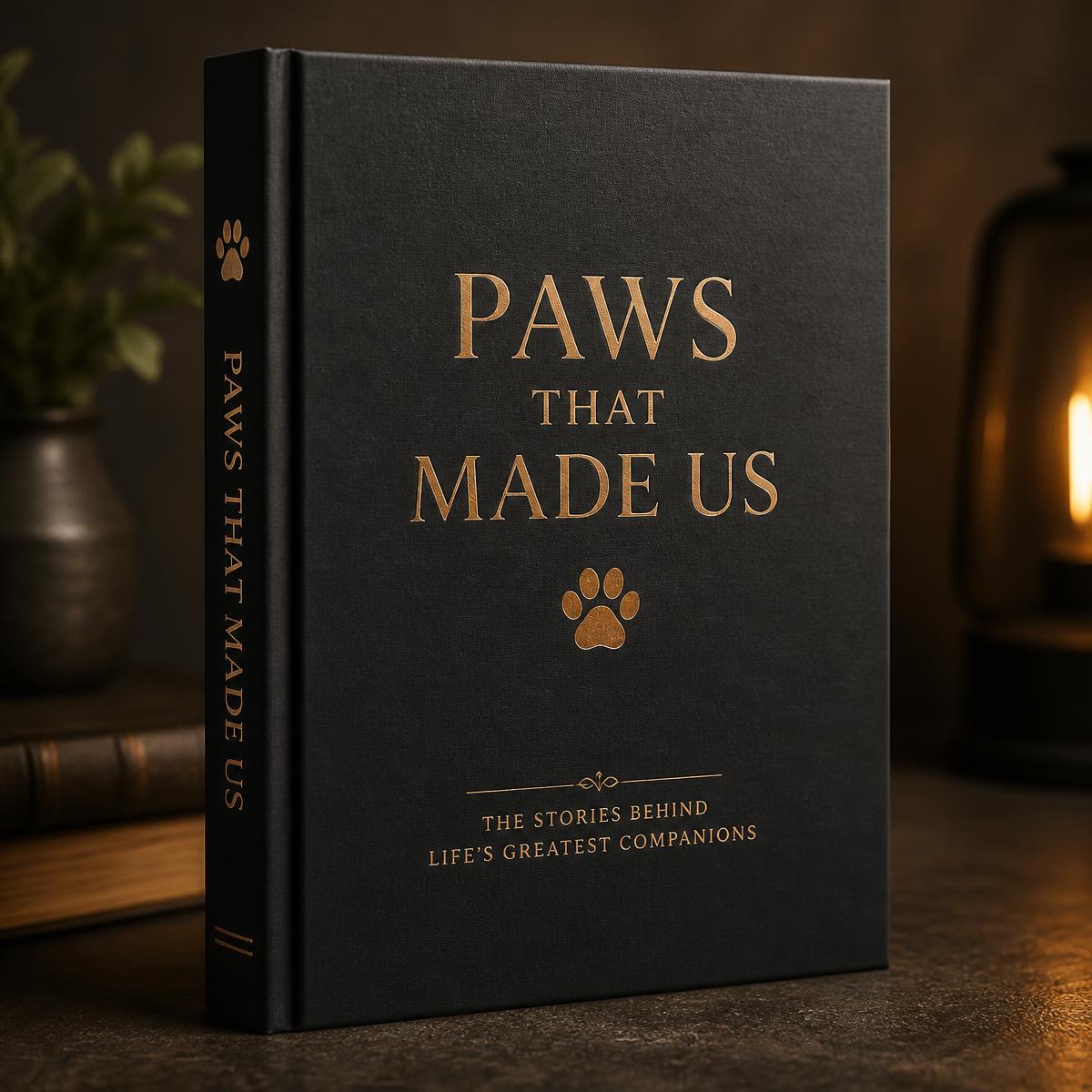
The book
Pawpoint: The Complete Dog Breed Book
Every officially recognised breed plus the unofficial ones nobody else documents. 400+ pages, hardback, printed and shipped from the UK.
Own stock — shipped by us
Framed poster
Korean Jindo Framed Poster
Museum-weight print of our Korean Jindo illustration, framed or unframed.
Printed to order
Hoodie
Korean Jindo Hoodie
Heavyweight hoodie carrying the Korean Jindo illustration on the chest.
Printed to order
Mug
Korean Jindo Mug
Ceramic mug with the Korean Jindo illustration wrapped around it.
Printed to order
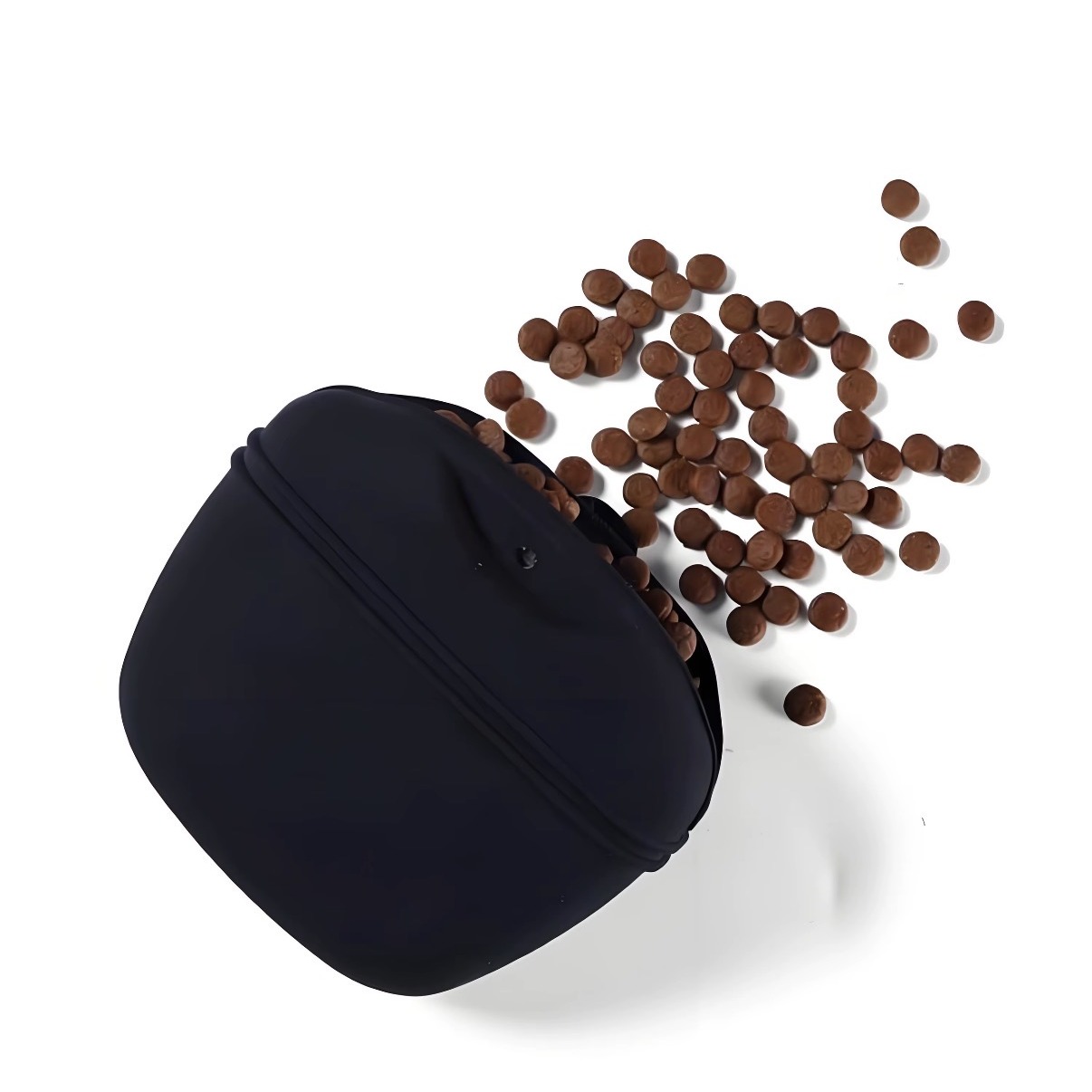
Accessory
Treat Pouch
Magnetic-close belt pouch for training sessions.
Fits any dog
Pawpoint on YouTube
Watch the full Korean Jindo video
Breed deep-dives, history and honest ownership talk. New film every week.
Watch now