Labradoodle
LAB-ra-doo-dul
Australia· Victoria, Royal Guide Dogs Association
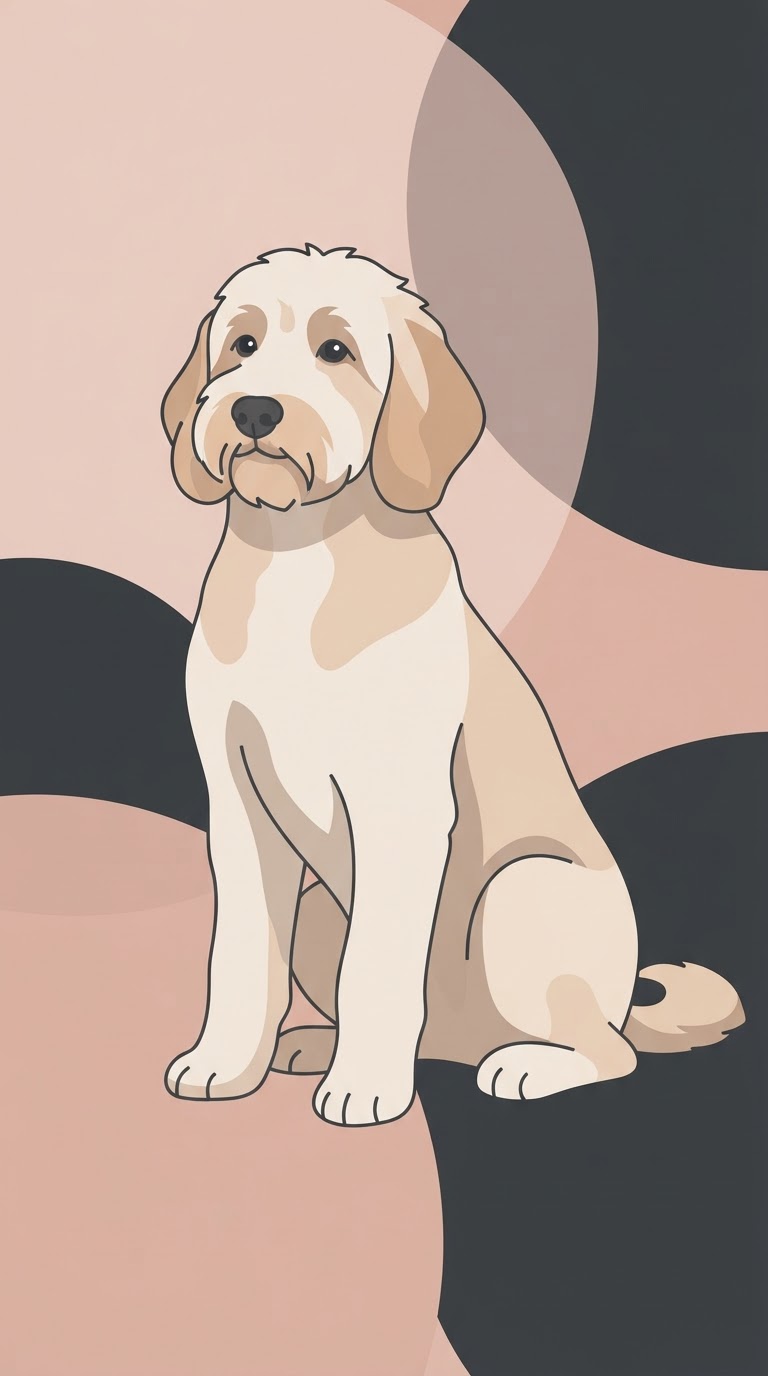
The Labradoodle is a cross between a Labrador Retriever and a Poodle, first bred deliberately in Australia in 1989 to produce a guide dog for a client whose husband was allergic to dog hair.
At a glance
Quick facts
Size
Large
Exercise needs
1–2 hours daily plus scent and puzzle work
Home size suited to
Medium to large home
Grooming frequency
Brush every other day, clip regularly
Coat length
Curly
Sheds
Very little
Lifespan
12–14 years
Town or country
Either, with enough exercise
Garden size needed
Medium or larger
Where it comes from
Origins of the Labradoodle
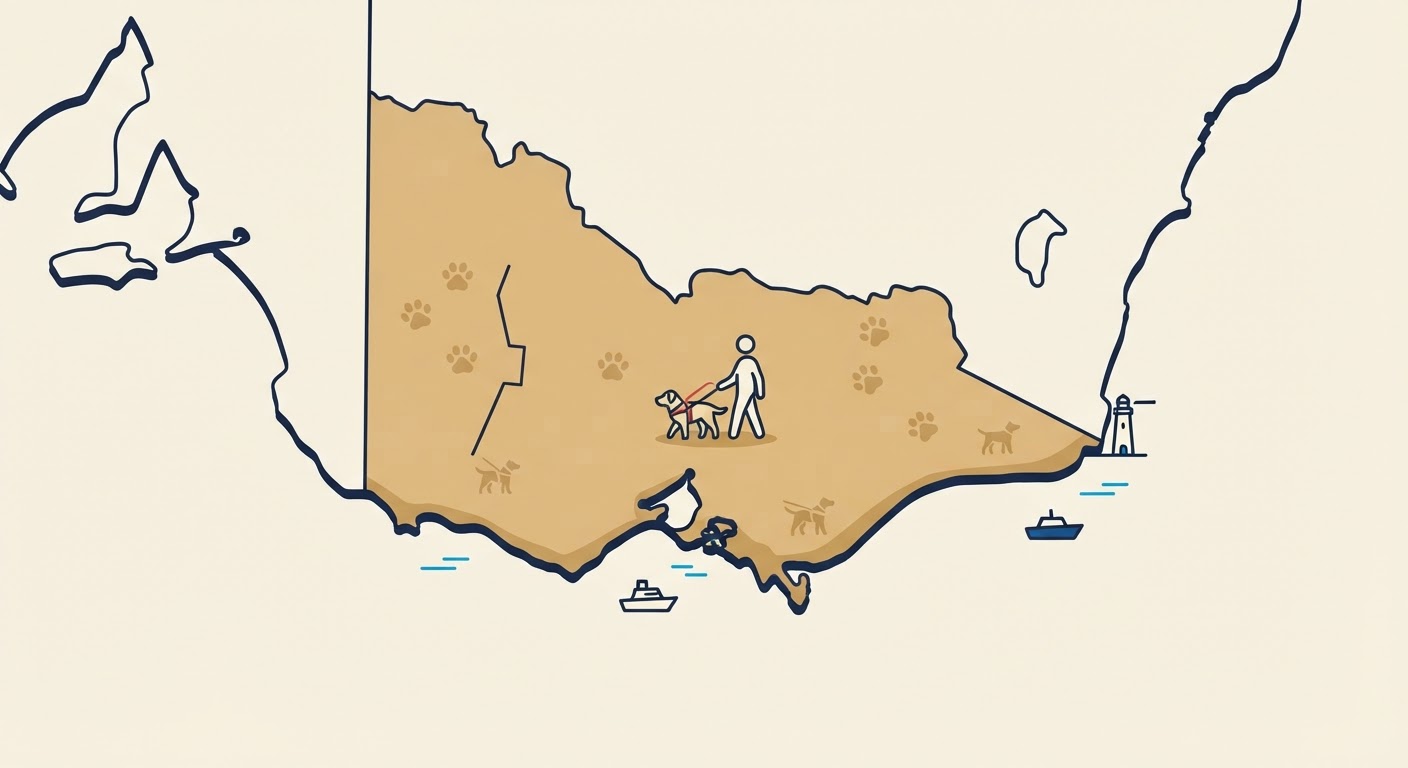
The cross was created inside a guide dog programme in Victoria, Australia, not on a farm or in a field. Its purpose was practical and narrow: a working assistance dog whose coat a partially allergic household could tolerate. Everything about the modern Labradoodle follows from that single 1989 decision.
- Region
- Victoria, Royal Guide Dogs Association
- Climate it was bred for
- Temperate; a service and household dog
- Original job
- A low-shedding guide dog for an allergic household
The long read
About the breed
Wally Conron, then at the Royal Guide Dogs Association of Australia, made the original cross after two years of failed attempts to find a suitable low-shedding candidate. The first litter produced one dog, Sultan, who worked successfully in Hawaii. The name and the idea escaped the guide dog programme almost immediately, and within a decade the cross was being bred commercially worldwide. Conron later said publicly that he regretted opening the door.
In practice the Labradoodle is not a single predictable animal. A first cross inherits a lottery of coats: some shed like a Labrador, some carry a poodle fleece that mats within weeks, and none is reliably hypoallergenic, since allergens come from dander and saliva rather than hair. Size ranges from around 14 kilograms for a miniature-poodle cross to over 30 kilograms. What is fairly consistent is temperament: sociable, food-driven, energetic and poor at being left alone.
The Australian Labradoodle is a separate matter, a partly stabilised breed incorporating spaniel lines and bred over multiple generations. Neither type is recognised by the Kennel Club. A good Labradoodle comes from a breeder who health-tests both parents to the standards of both parent breeds and is honest that coat and size are not guaranteed.
Living with one
Temperament & needs
Our own ratings, based on the breed standard and how these dogs behave in ordinary homes.
Friendliness
5/5
How openly the Labradoodle greets people it does not know.
Trainability
5/5
Both parent breeds are highly biddable and food-motivated.
Energy
4/5
Retriever stamina; a short daily walk is not enough.
Barking
3/5
Alerts readily and can bark when bored or left alone.
Grooming
5/5
Fleece and wool coats need brushing to the skin and clipping every six to eight weeks.
Suits a first-time owner
4/5
How forgiving the Labradoodle is for someone taking on their first dog.
Sociability
5/5
Indiscriminately friendly with people and dogs.
Independence
1/5
Separation-related distress is the most common complaint.
Illustrated breed standard
The points of the breed
Hover or tap a numbered point to read what the standard asks for.
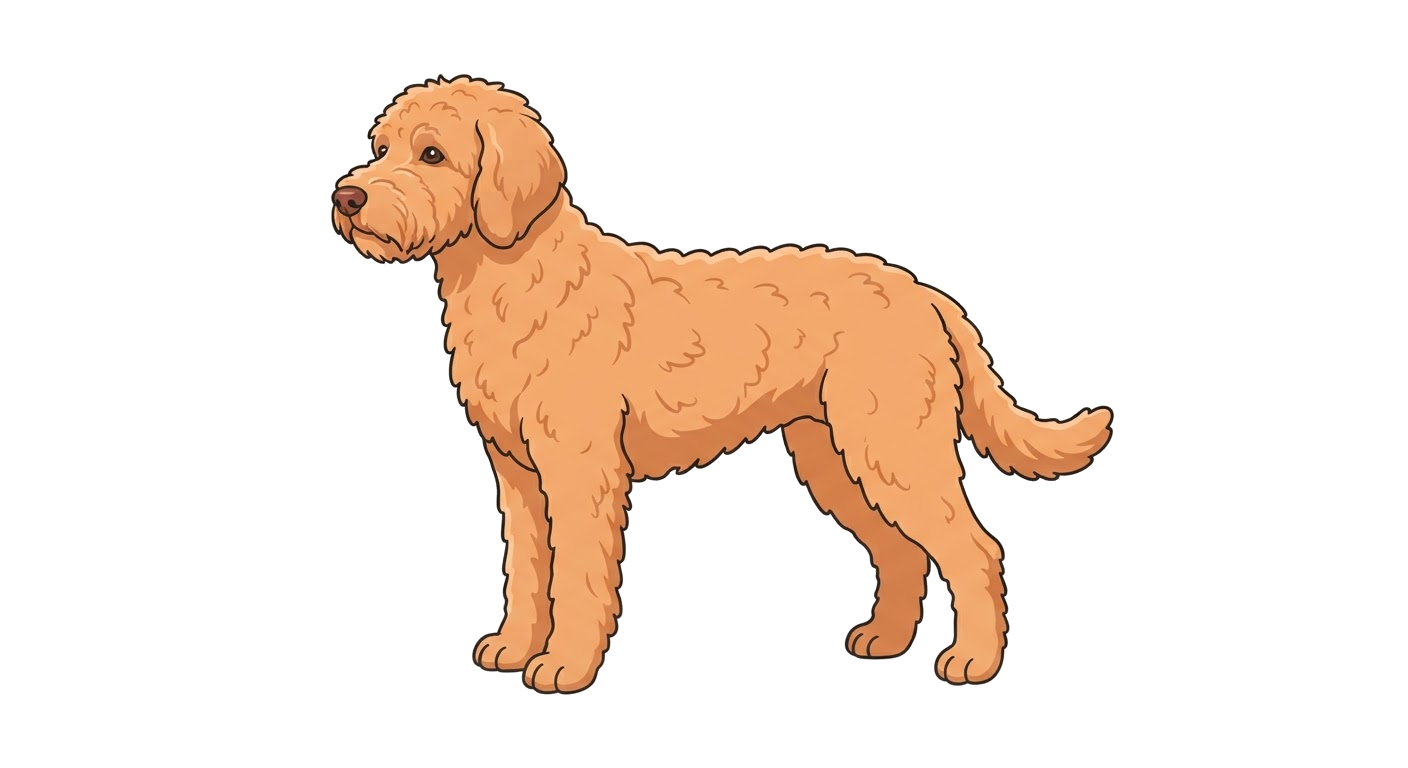
Point 1
Skull
The Labradoodle's skull is judged on balance rather than size — proportionate to the body, with a clean cheek and a stop typical of the breed. Coarseness or an over-refined head are both faulted.
Outside the standard
Other colours
Dilute coats you will see advertised. They are the same breed, but no kennel club accepts them.
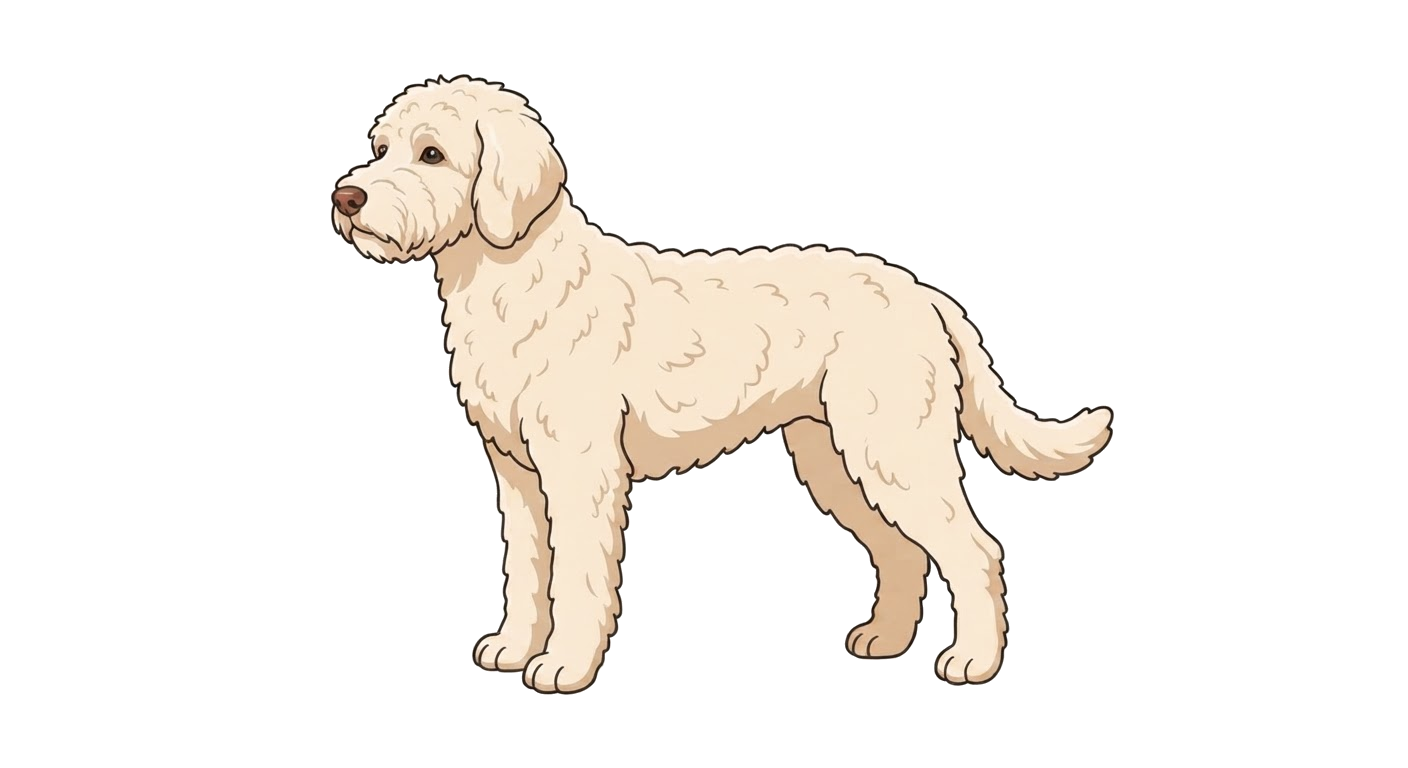
Cream
Not in the standard
Very common; no kennel club standard applies.
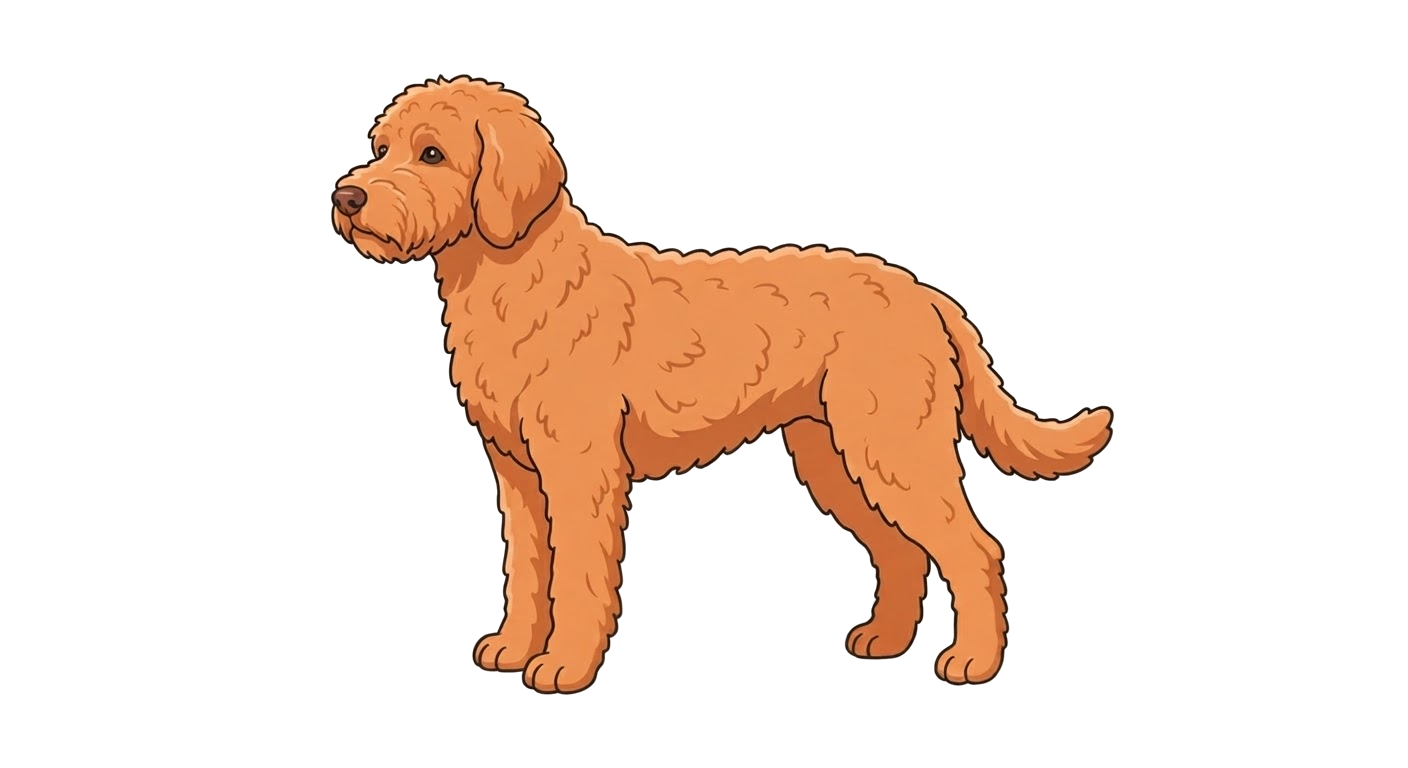
Apricot
Not in the standard
Frequently fades towards cream with age.
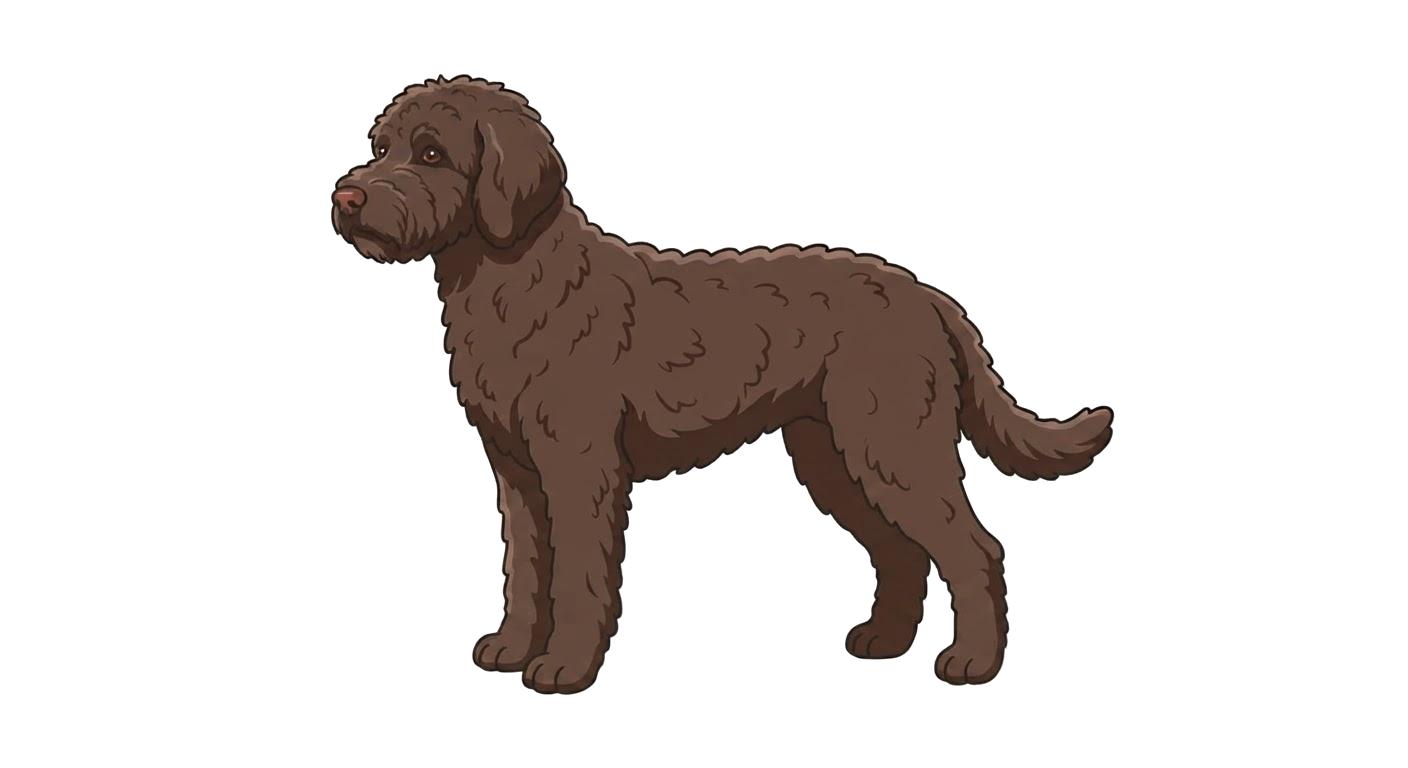
Chocolate
Not in the standard
Liver pigment on nose and eye rims.
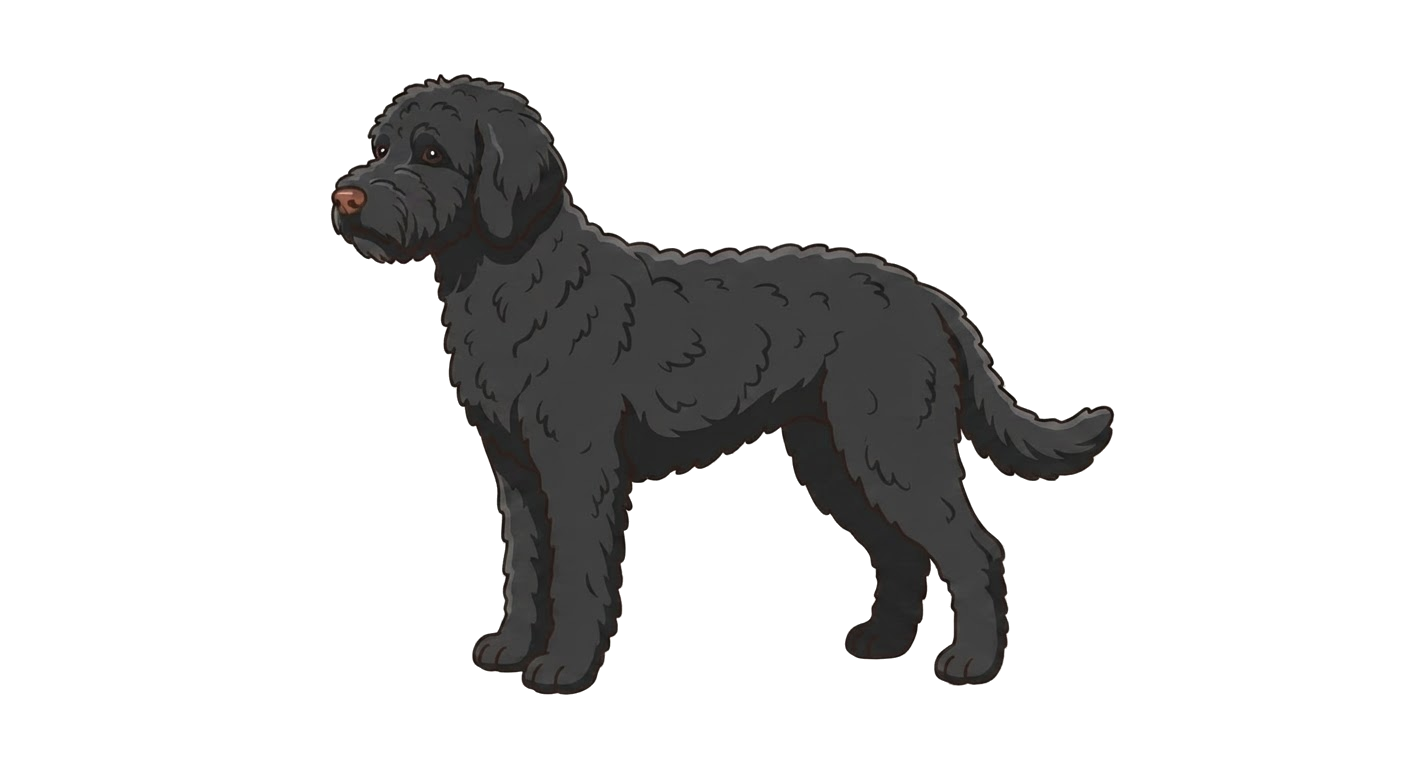
Black
Not in the standard
Often with a small white chest patch.
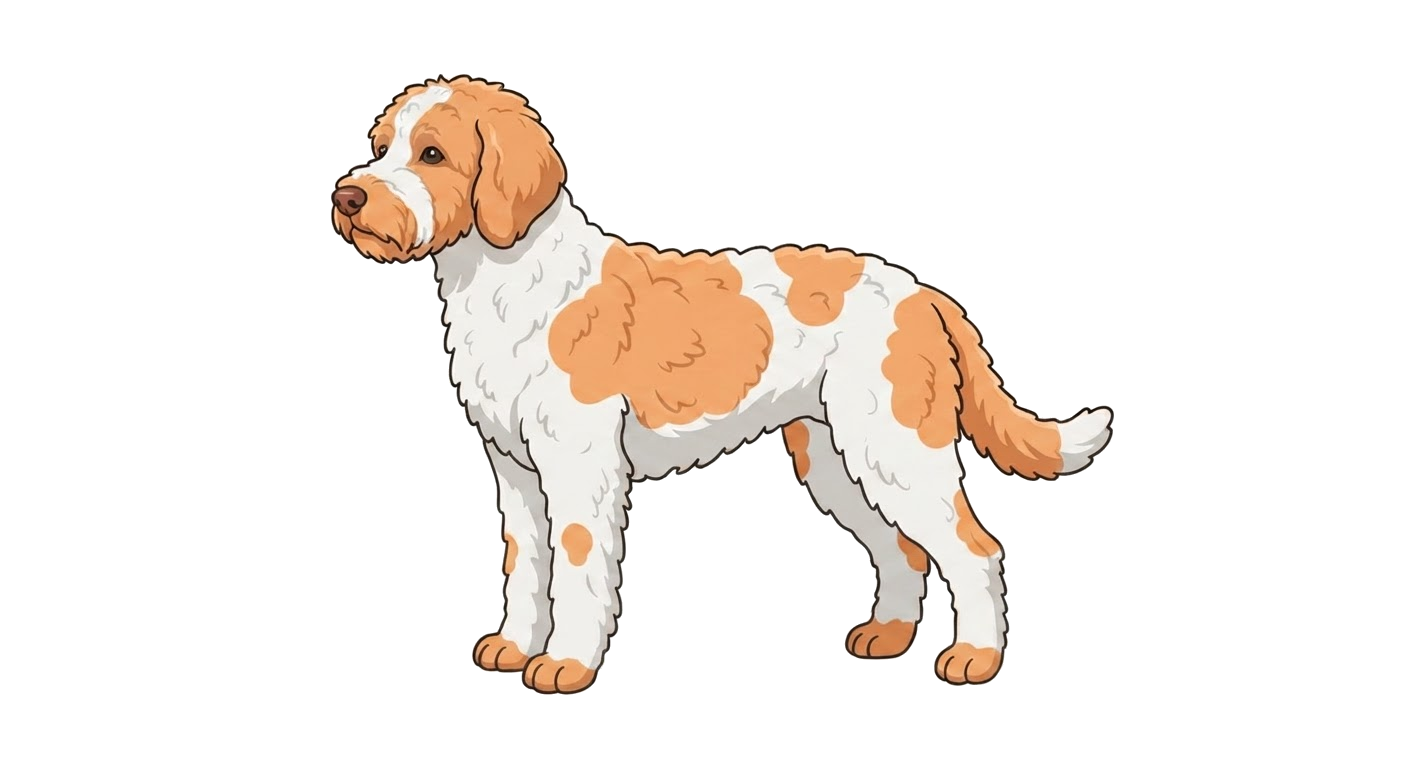
Parti
Not in the standard
Two-colour patching, popular in Australian Labradoodle lines.
Timeline
History & development
1989
The first cross
Wally Conron crosses a Labrador with a Standard Poodle at the Royal Guide Dogs Association of Australia.
1990s
Commercial spread
Breeders worldwide adopt the cross, marketing it as hypoallergenic despite no evidence for the claim.
1997
Australian Labradoodle
Australian breeders begin multigenerational programmes adding spaniel lines to stabilise coat and type.
2014
Second thoughts
Conron publicly criticises the trade the cross created, describing it as his life's regret.
Reference
Breed standard summary
- body
- Athletic and slightly rectangular, rarely heavy.
- coat
- Straight hair, wavy fleece or curled wool.
- ears
- Drop, set at eye level, well feathered.
- eyes
- Round to oval, dark, with a soft expression.
- gait
- Free and effortless with good drive from behind.
- head
- Moderate, with a poodle-influenced muzzle in most crosses.
- size
- Miniature, medium and standard, following the poodle parent.
- tail
- Carried level or in a gentle curve, often feathered.
- colour
- The standard asks for the Labradoodle's recognised colours only; novelty or dilute shades are not accepted.
- temperament
- Typical of the breed: strongest in trainability, sociability, grooming. Nervousness or aggression are serious faults in the show ring and in the home.
- general appearance
- No breed standard exists; type varies widely between and within litters.
Health
What to screen for
Green means little to worry about, amber means ask the breeder for test results, red means manage it actively.
Hip and elbow dysplasia
Screen for it
Ask for hip and elbow scores on both parents, not just one.
Progressive retinal atrophy
Screen for it
A DNA test covers both parent breeds; insist on seeing it.
Ear infections
Low concern
Hairy drop ears need weekly checks and thorough drying after swimming.
Addison's disease
Screen for it
Inherited from the poodle side; ask about cases in the wider family.
Coat and size unpredictability
Screen for it
No first cross can be guaranteed low-shedding or a particular adult size.
General information only — always speak to your vet about your own dog.
From real owners
Dogs like this
Labradoodles added by PawPoint members through their pet passports. Share yours to appear here.
Loading the wall…
Made for the Labradoodle
The book, plus prints, hoodies and mugs using our own Labradoodle illustration — and one everyday accessory that suits any dog.
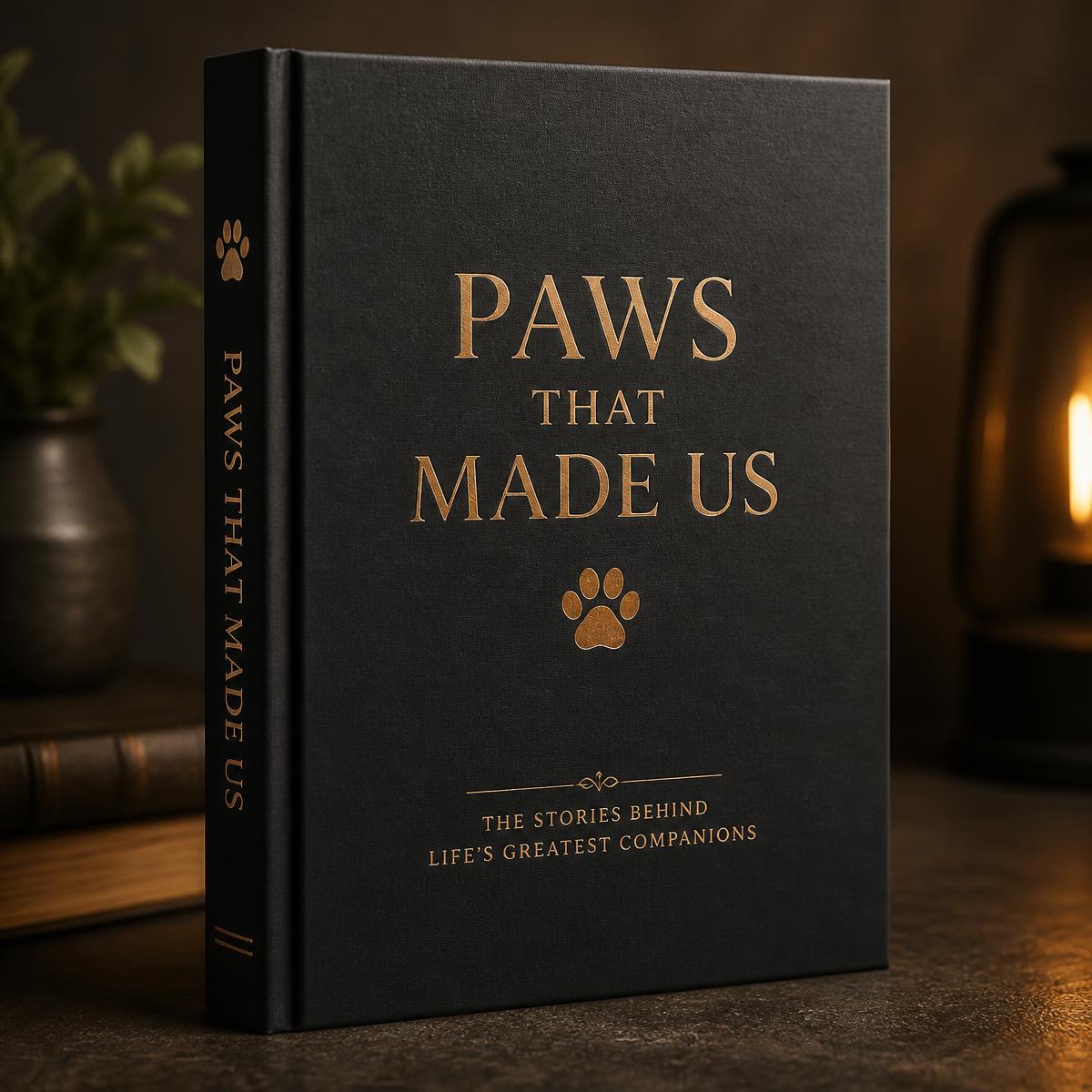
The book
Pawpoint: The Complete Dog Breed Book
Every officially recognised breed plus the unofficial ones nobody else documents. 400+ pages, hardback, printed and shipped from the UK.
Own stock — shipped by us
Framed poster
Labradoodle Framed Poster
Museum-weight print of our Labradoodle illustration, framed or unframed.
Printed to order
Hoodie
Labradoodle Hoodie
Heavyweight hoodie carrying the Labradoodle illustration on the chest.
Printed to order
Mug
Labradoodle Mug
Ceramic mug with the Labradoodle illustration wrapped around it.
Printed to order
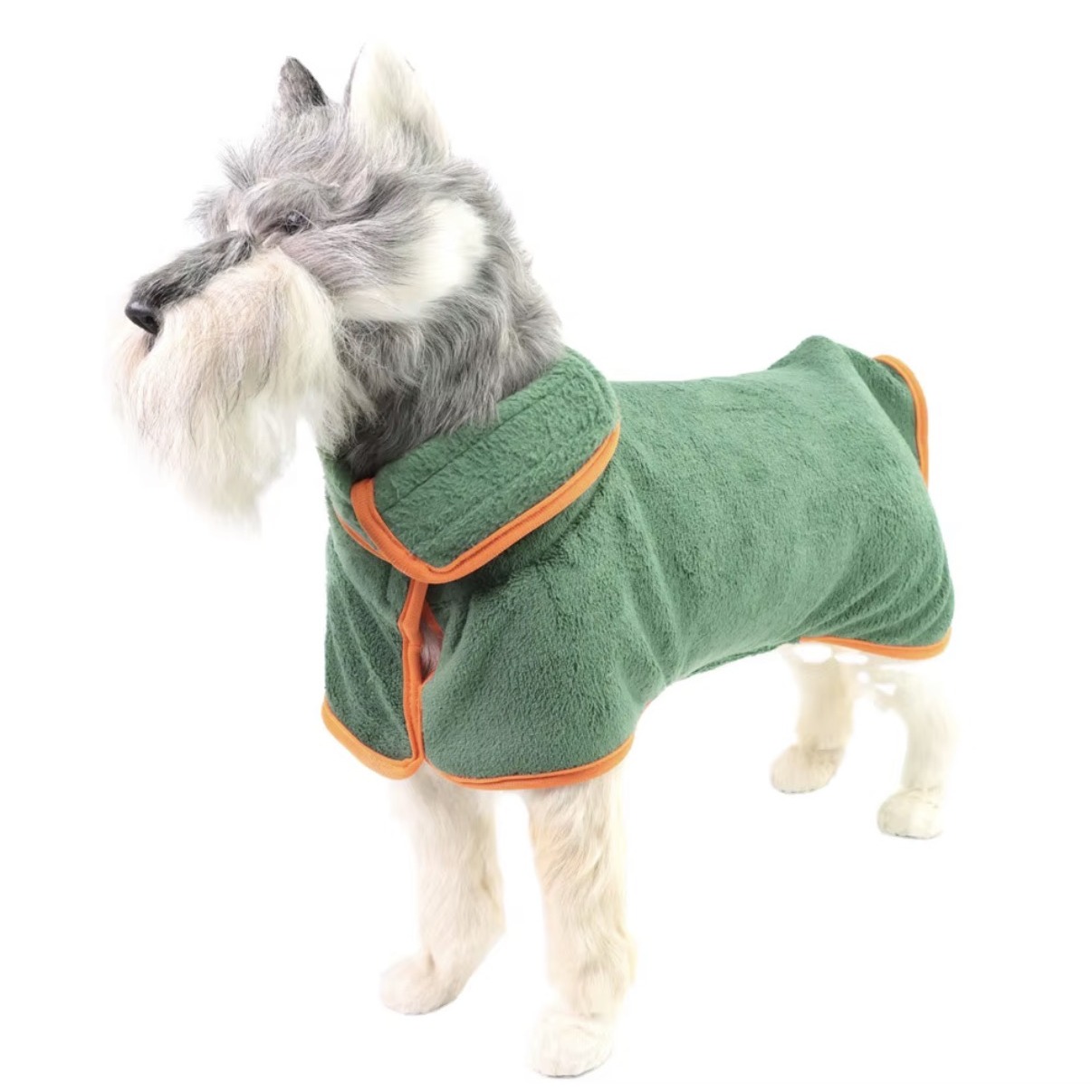
Accessory
Drying Towel Robe
Microfibre robe that soaks up a wet-walk shake.
Fits any dog
Pawpoint on YouTube
Watch the full Labradoodle video
Breed deep-dives, history and honest ownership talk. New film every week.
Watch now