
Lakeland Terrier
LAYK-luhnd TER-ee-uhr
England· Lake District, Cumbria
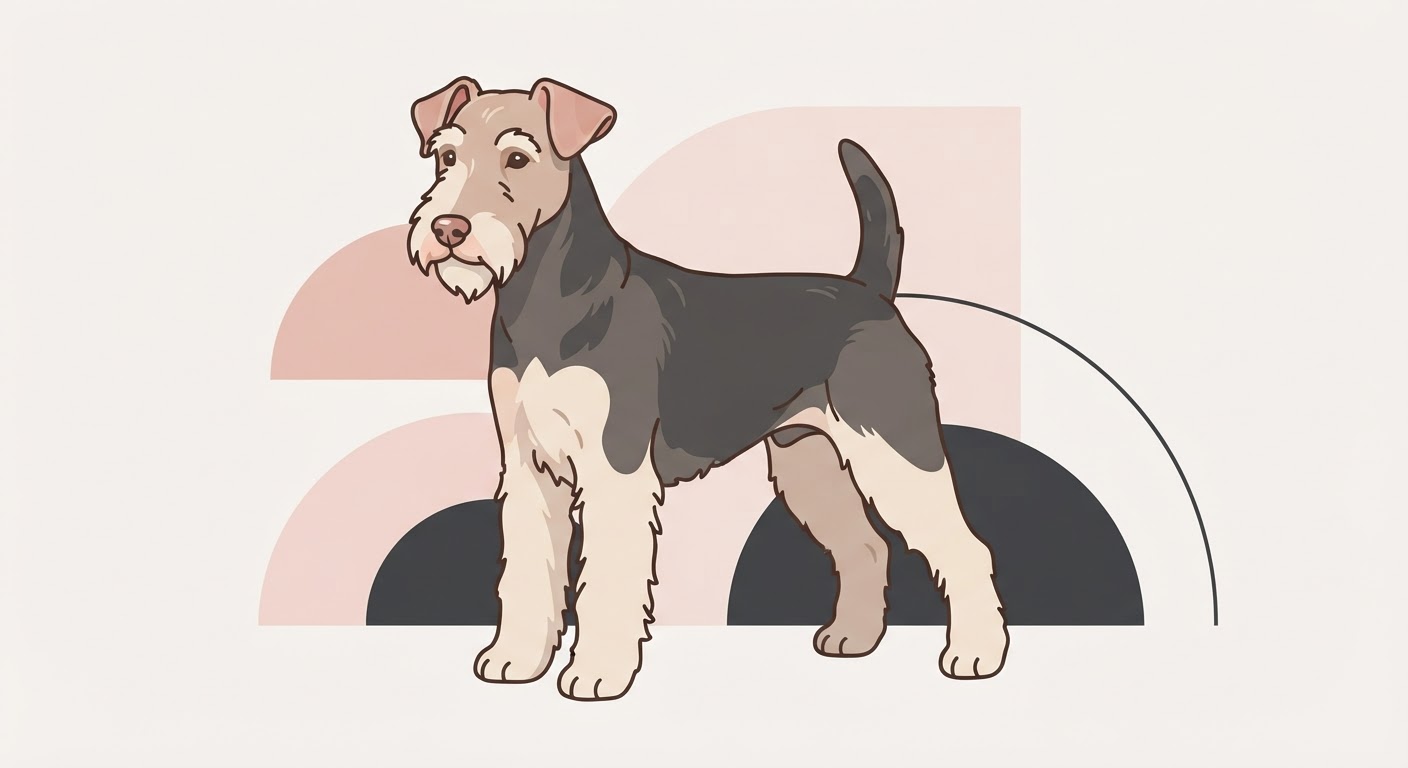
The Lakeland Terrier is a small, wiry-coated terrier bred in the fell country of England's Lake District to bolt and kill foxes that preyed on hill farmers' sheep.
At a glance
Quick facts
Size
Small
Exercise needs
45-60 minutes daily
Home size suited to
Flat or small home
Grooming frequency
Weekly brush, hand-strip a few times a year
Coat length
Wiry
Sheds
Yes, heavily when moulting
Lifespan
12-16 years
Town or country
Either, with enough exercise
Garden size needed
Small garden or none
Where it comes from
Origins of the Lakeland Terrier
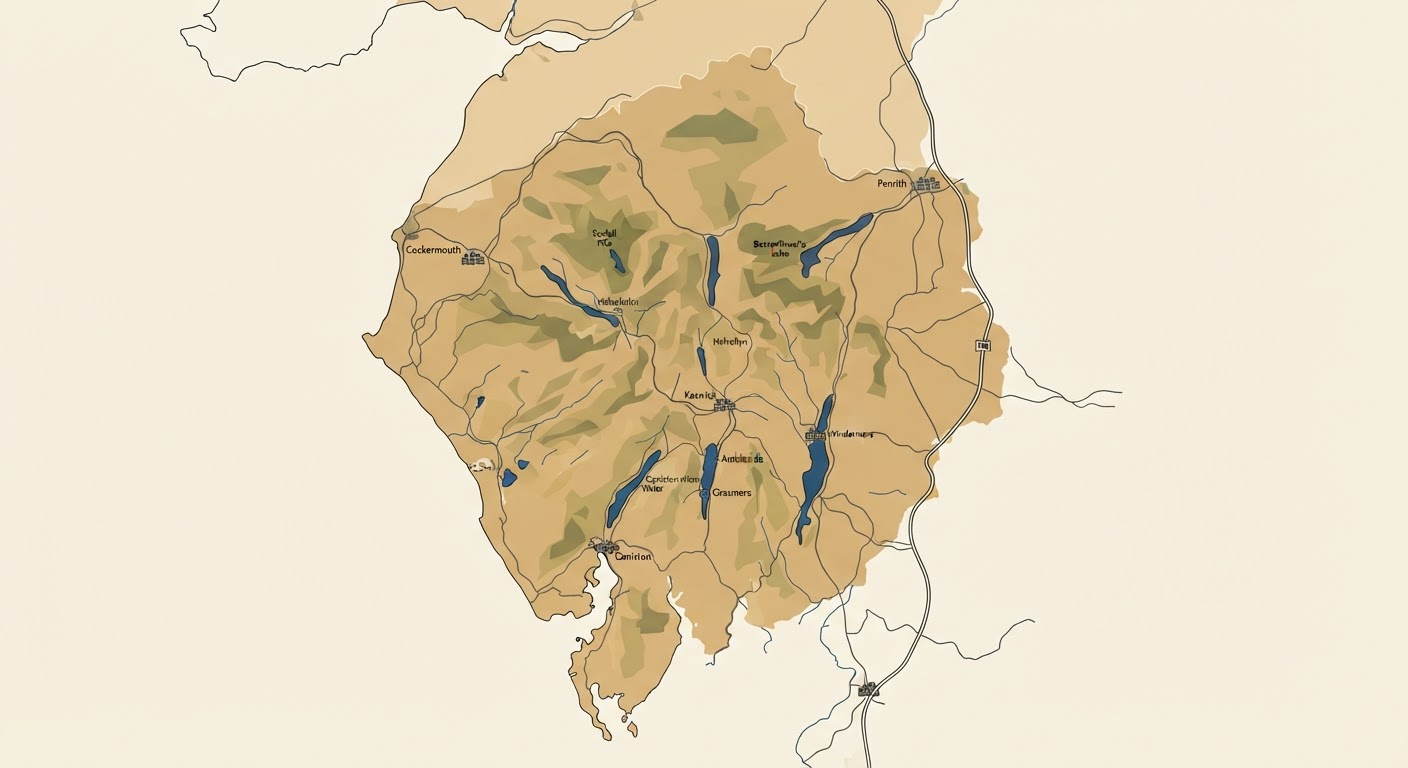
Bred in the steep, rocky fells of Cumbria's Lake District, where farmers needed a terrier tough and small enough to follow foxes into rock crevices that larger hounds could never reach.
- Region
- Lake District, Cumbria
- Climate it was bred for
- Wet, cold, mountainous fell country
- Original job
- Bolting and killing foxes among rocky fells
The long read
About the breed
The breed developed in the rugged terrain around the Lake District's fells from the mid-19th century, where farmers needed a terrier small and tenacious enough to follow a fox to ground through rocky crevices known locally as earths, then either bolt it or dispatch it underground. It shares ancestry with other fell terriers of the region, including the Border Terrier and the now-extinct old English black-and-tan terrier, and was selected purely for working ability long before appearance mattered to anyone breeding it. It was recognised as a distinct breed by the Kennel Club in 1921, taking its name from the Lake District itself.
As a companion, the Lakeland Terrier is bold, self-assured and often quite stubborn, a legacy of generations spent making independent decisions underground far from any handler. It is affectionate with its family and generally good with children who treat it with respect, but its terrier instincts mean small pets such as rabbits or guinea pigs are best kept well out of reach. The wiry double coat is low-shedding, which suits some allergy sufferers, but it requires regular hand-stripping or clipping to keep in condition, along with a firm, consistent approach to training.
Today the Lakeland Terrier is more often a family pet and show dog than a working terrier, and numbers have declined enough that the Kennel Club lists it as a vulnerable native breed. It suits owners who enjoy a characterful, energetic dog and are prepared for a certain amount of terrier stubbornness, rather than those wanting an easily biddable companion.
Living with one
Temperament & needs
Our own ratings, based on the breed standard and how these dogs behave in ordinary homes.
Friendliness
3/5
How openly the Lakeland Terrier greets people it does not know.
Trainability
3/5
Intelligent but independent-minded, needs consistent, patient handling.
Energy
4/5
Needs daily walks and enjoys digging, so a secure garden helps.
Barking
3/5
Will bark at intruders and small moving creatures.
Grooming
3/5
Wiry coat needs regular hand-stripping or clipping.
Suits a first-time owner
2/5
How forgiving the Lakeland Terrier is for someone taking on their first dog.
Sociability
3/5
Confident and friendly with people, less reliable with small pets.
Independence
4/5
Bred to make its own decisions underground, far from a handler.
Illustrated breed standard
The points of the breed
Hover or tap a numbered point to read what the standard asks for.
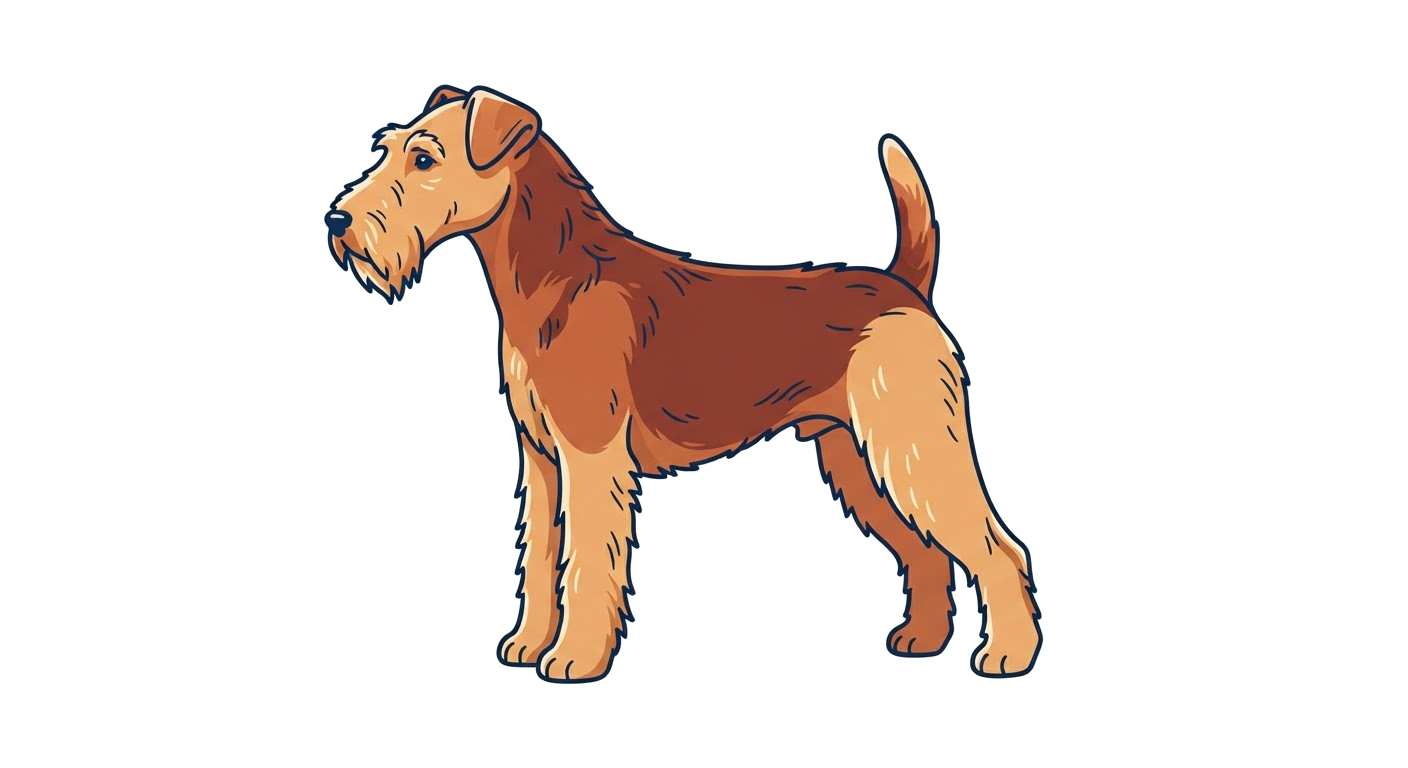
Point 1
Skull
The Lakeland Terrier's skull is judged on balance rather than size — proportionate to the body, with a clean cheek and a stop typical of the breed. Coarseness or an over-refined head are both faulted.
Colours & patterns
Recognised coats
Which coats the standard accepts — and which are simply popular.
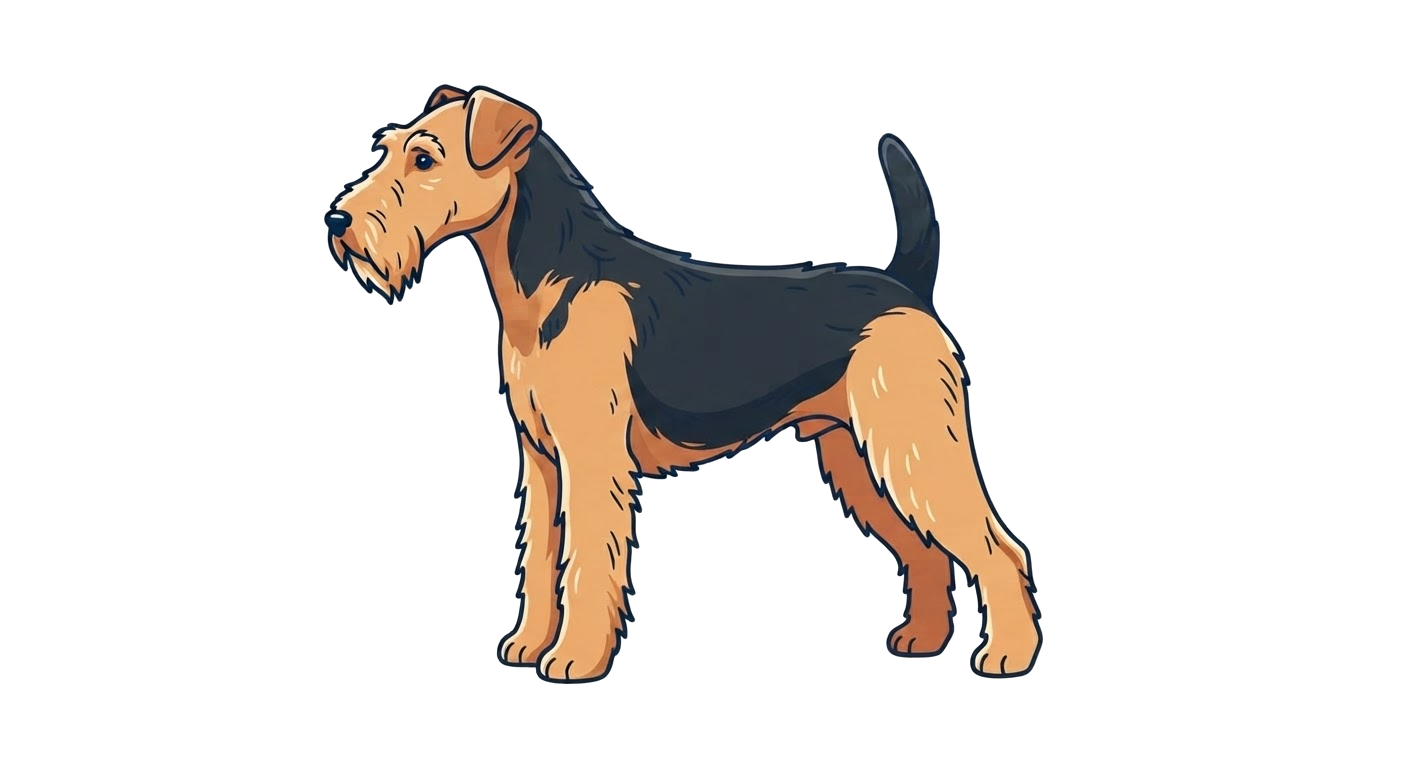
Black and tan
Standard colour
A classic and common Lakeland colour combination.
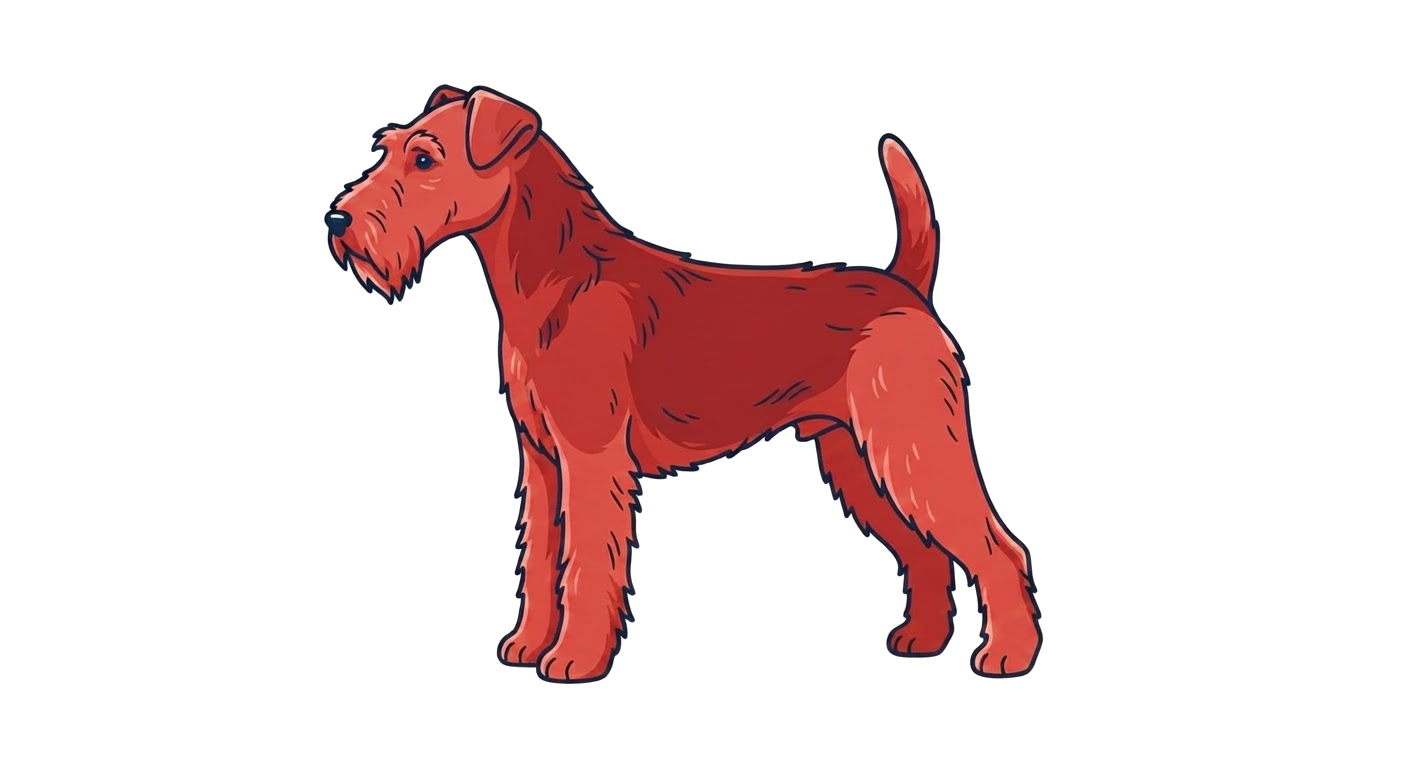
Red
Standard colour
A solid warm red, accepted in the standard.
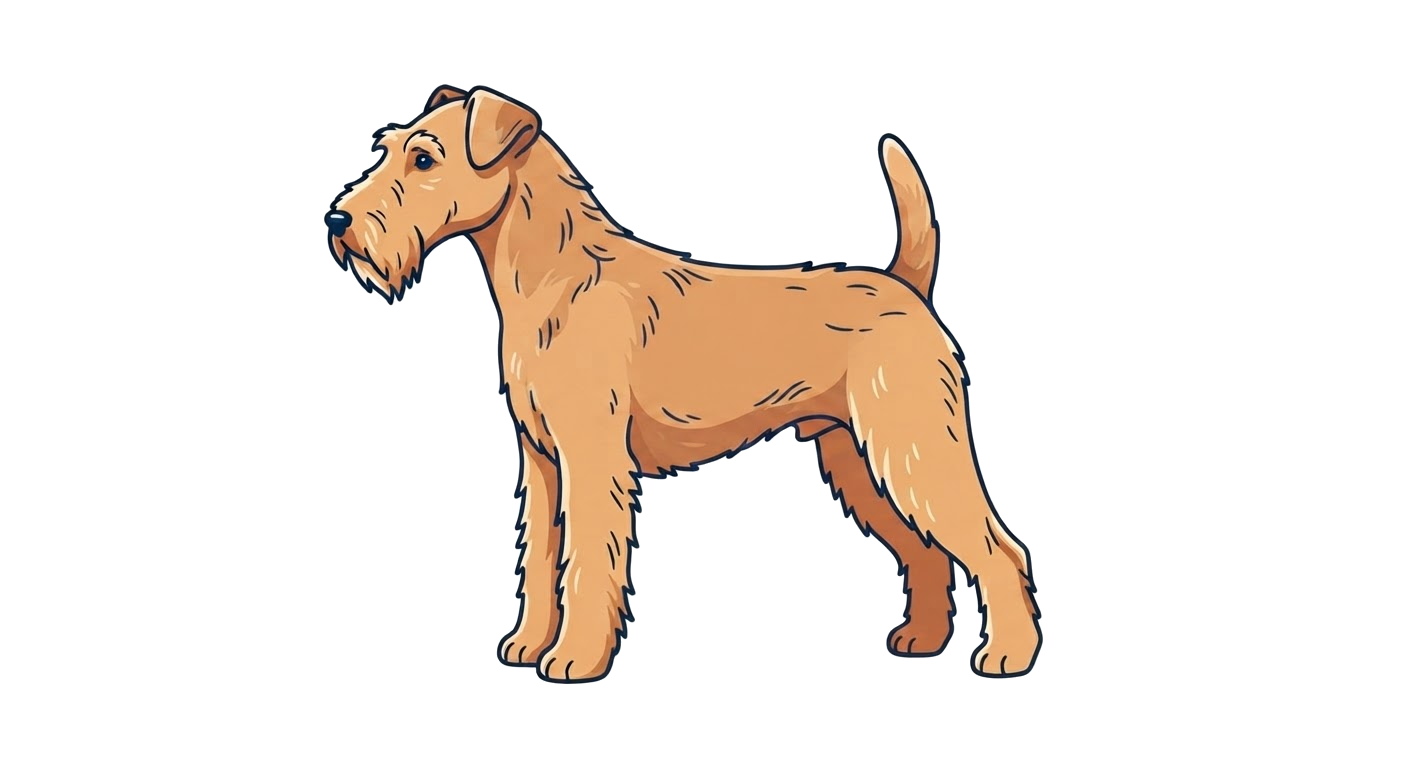
Wheaten
Standard colour
A pale straw shade, one of several accepted solid colours.
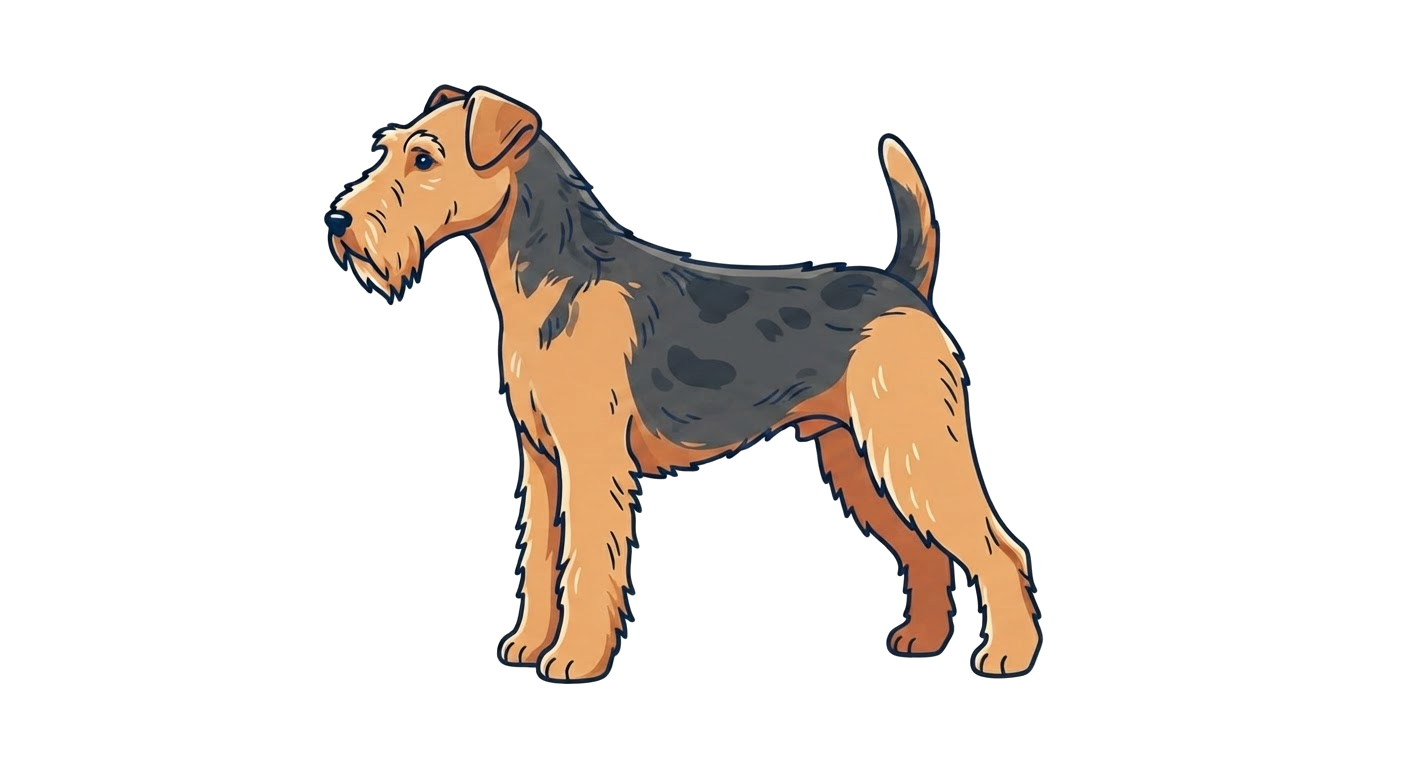
Grizzle and tan
Standard colour
Grey-flecked body with tan points, a traditional working colour.
Timeline
History & development
Mid-1800s
Fell farming origins
Farmers in the Lake District bred small, gritty terriers to protect lambs from foxes across the region's rocky fells.
Late 1800s
Shared ancestry
The breed developed alongside other fell terriers including the Border Terrier, from a common pool of working stock.
1921
Kennel Club recognition
The Lakeland Terrier was formally recognised as a distinct breed by the Kennel Club.
1934
US recognition
The American Kennel Club recognised the breed, and it gained a following on the show circuit.
2000s
Vulnerable native breed status
Declining registration numbers led the Kennel Club to list the Lakeland Terrier among its vulnerable native breeds.
Reference
Breed standard summary
- body
- Fairly narrow, allowing it to work in tight rock crevices, with a level topline.
- coat
- Dense, wiry outer coat over a softer undercoat.
- ears
- Small, V-shaped, folded forward close to the cheek.
- eyes
- Small, dark or hazel, with a keen, alert expression.
- gait
- Straight, free-moving, covering ground with a purposeful stride.
- head
- Rectangular, well-filled, with a moderate stop.
- size
- 33-37cm at the withers.
- tail
- Traditionally docked to balance the outline, carried gaily.
- colour
- Black and tan, Red, Wheaten, Grizzle and tan. Colours outside this list are seen but are not accepted by the kennel clubs.
- temperament
- Typical of the breed: strongest in energy, independence, trainability. Nervousness or aggression are serious faults in the show ring and in the home.
- general appearance
- A small, workmanlike terrier, well-balanced and squarely built, with a bold and gay demeanour.
Health
What to screen for
Green means little to worry about, amber means ask the breeder for test results, red means manage it actively.
Lens luxation
Watch closely
A DNA test exists; ask breeders for clear or hereditary-clear parents.
Legg-Calve-Perthes disease
Screen for it
Watch for hindlimb lameness in young dogs and discuss screening with your vet.
Von Willebrand's disease
Watch closely
A DNA test is available and worth checking in breeding lines.
Patellar luxation
Low concern
A simple vet check of the knees is worth requesting from the breeder.
General information only — always speak to your vet about your own dog.
From real owners
Dogs like this
Lakeland Terriers added by PawPoint members through their pet passports. Share yours to appear here.
Loading the wall…
Made for the Lakeland Terrier
The book, plus prints, hoodies and mugs using our own Lakeland Terrier illustration — and one everyday accessory that suits any dog.

The book
Pawpoint: The Complete Dog Breed Book
Every officially recognised breed plus the unofficial ones nobody else documents. 400+ pages, hardback, printed and shipped from the UK.
Own stock — shipped by us
Framed poster
Lakeland Terrier Framed Poster
Museum-weight print of our Lakeland Terrier illustration, framed or unframed.
Printed to order
Hoodie
Lakeland Terrier Hoodie
Heavyweight hoodie carrying the Lakeland Terrier illustration on the chest.
Printed to order
Mug
Lakeland Terrier Mug
Ceramic mug with the Lakeland Terrier illustration wrapped around it.
Printed to order

Accessory
Treat Pouch
Magnetic-close belt pouch for training sessions.
Fits any dog

Pawpoint on YouTube
Watch the full Lakeland Terrier video
Breed deep-dives, history and honest ownership talk. New film every week.
Watch now