
Large Munsterlander
LARJ MUUN-stuh-lan-duhr
Germany· Munster region, north-west Germany
The Large Munsterlander is a black-and-white German pointing breed developed as an all-round gundog capable of pointing, flushing and retrieving over a full day in the field.
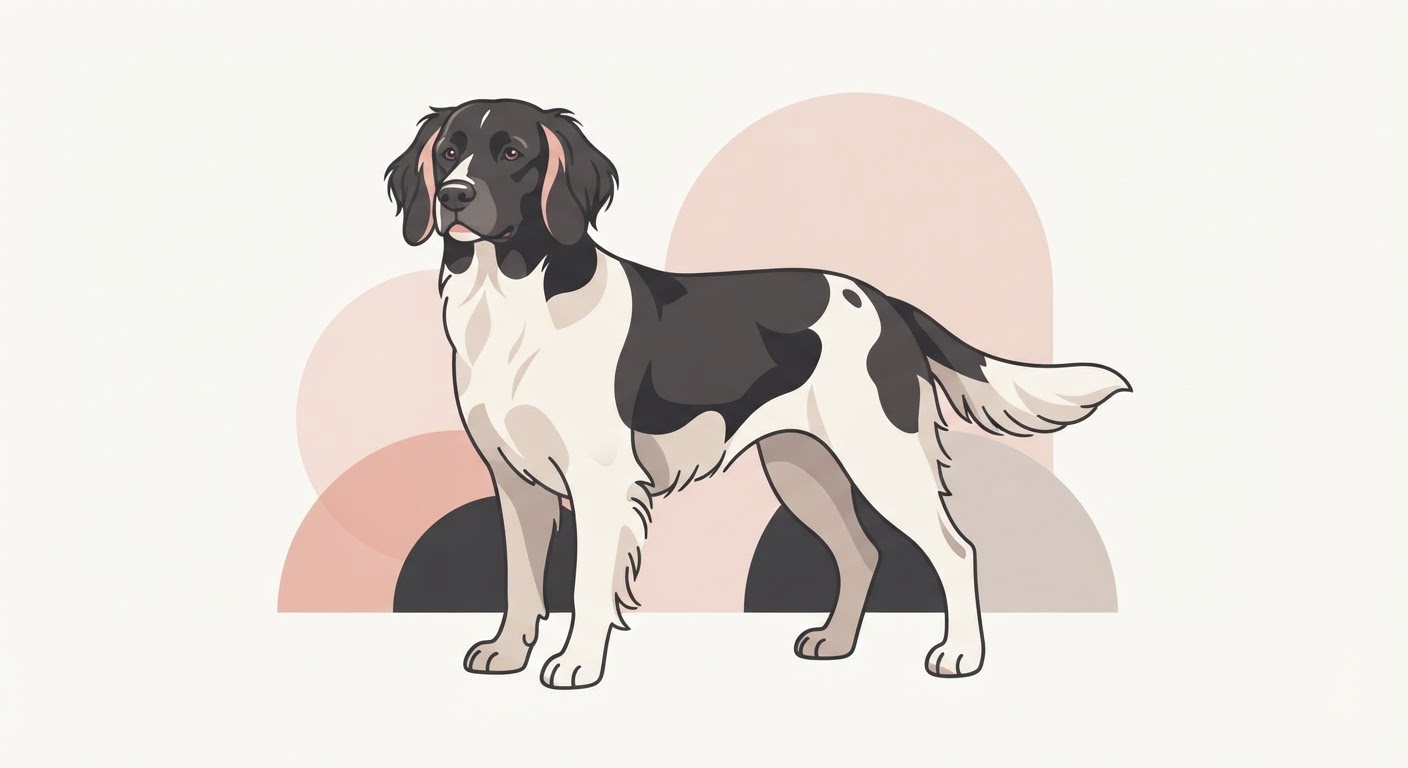
At a glance
Quick facts
Size
Large
Exercise needs
2 hours or more daily
Home size suited to
Medium to large home
Grooming frequency
Twice weekly brush
Coat length
Medium
Sheds
Yes, heavily when moulting
Lifespan
12-13 years
Town or country
Either, with enough exercise
Garden size needed
Medium or larger
Where it comes from
Origins of the Large Munsterlander
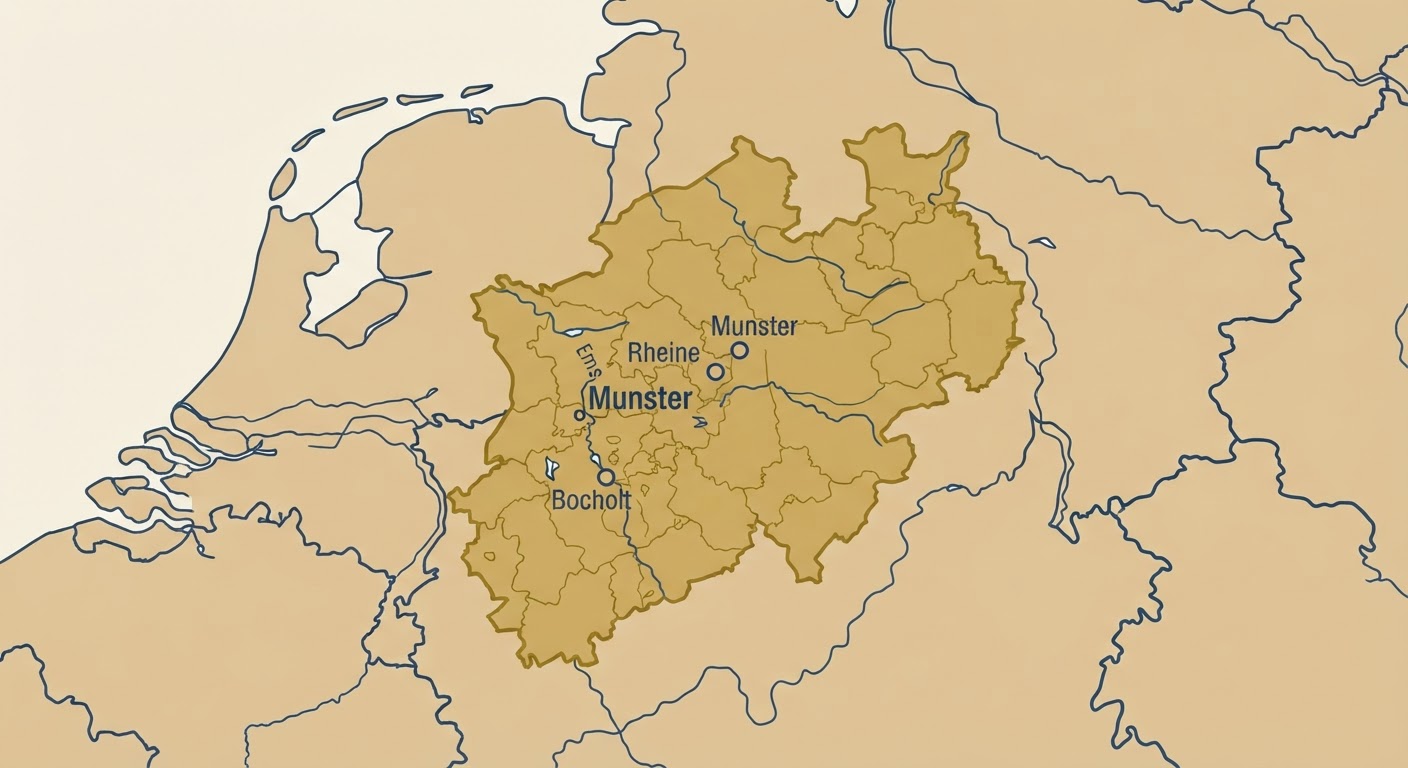
Named for the Munster region of north-west Germany, an area of mixed farmland, woodland and wetland that called for a versatile gundog able to point, flush and retrieve both feather and fur.
- Region
- Munster region, north-west Germany
- Climate it was bred for
- Cool, damp lowland farmland
- Original job
- Pointing and retrieving game on foot and in water
The long read
About the breed
Its roots lie in the long-haired German bird dogs used across German-speaking Europe from at least the 17th century, dogs that came in a range of colours including solid black-and-white. When German breeders standardised their pointing breeds in the late 19th and early 20th centuries, brown-and-white dogs were grouped into the newly formed Small Munsterlander club, while black-and-white individuals were initially left out. A dedicated club for the black-and-white type was founded in the Munster region in 1919, giving the Large Munsterlander its own identity despite sharing much of its working history with its smaller cousin.
Living with a Large Munsterlander means committing to a proper working gundog's exercise needs; this is not a breed content with a short lead walk. It is intelligent, biddable and eager to please, which makes it responsive to structured training, but it wants a genuine outlet for its energy and nose, whether that is formal gundog work, scent games, or long off-lead hikes. It is typically affectionate and loyal with its own family, reserved but polite with strangers, and gets on well with other dogs.
In Britain and North America today the breed is kept mainly by rough shooters, wildfowlers and active families rather than as a purely ornamental companion. Because it has been bred largely for working ability rather than show type, the breed has stayed relatively free of exaggerated features, and most lines remain sound, biddable and genuinely versatile in the field.
Living with one
Temperament & needs
Our own ratings, based on the breed standard and how these dogs behave in ordinary homes.
Friendliness
4/5
How openly the Large Munsterlander greets people it does not know.
Trainability
4/5
Intelligent and eager, responds well to structured gundog training.
Energy
5/5
A working gundog that needs several hours of proper exercise most days.
Barking
2/5
Not naturally prone to nuisance barking.
Grooming
3/5
Weekly brushing, more when moulting or after muddy walks.
Suits a first-time owner
3/5
How forgiving the Large Munsterlander is for someone taking on their first dog.
Sociability
4/5
Loyal and affectionate with its family, polite with visitors.
Independence
3/5
Bred to think for itself in the field but wants a job from its handler.
Illustrated breed standard
The points of the breed
Hover or tap a numbered point to read what the standard asks for.
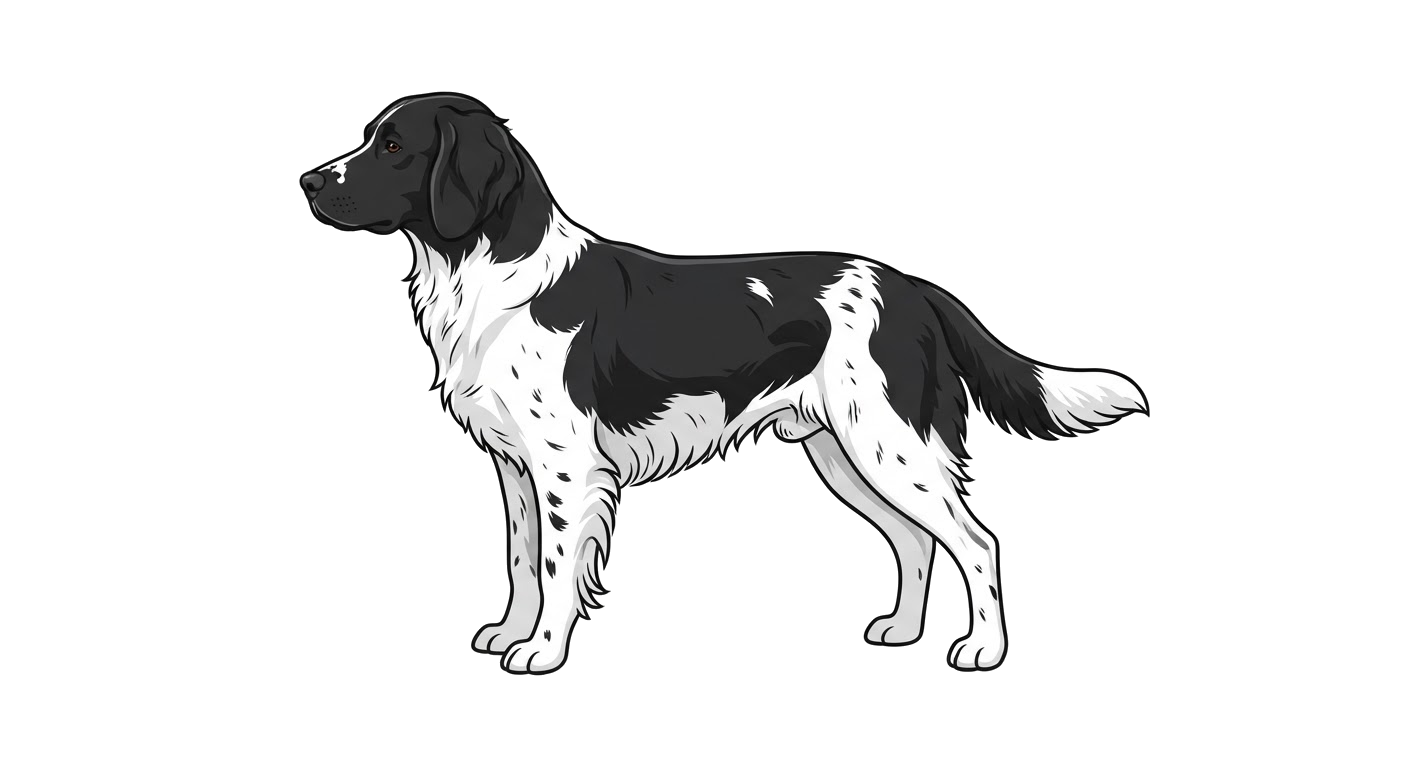
Point 1
Skull
The Large Munsterlander's skull is judged on balance rather than size — proportionate to the body, with a clean cheek and a stop typical of the breed. Coarseness or an over-refined head are both faulted.
Colours & patterns
Recognised coats
Which coats the standard accepts — and which are simply popular.
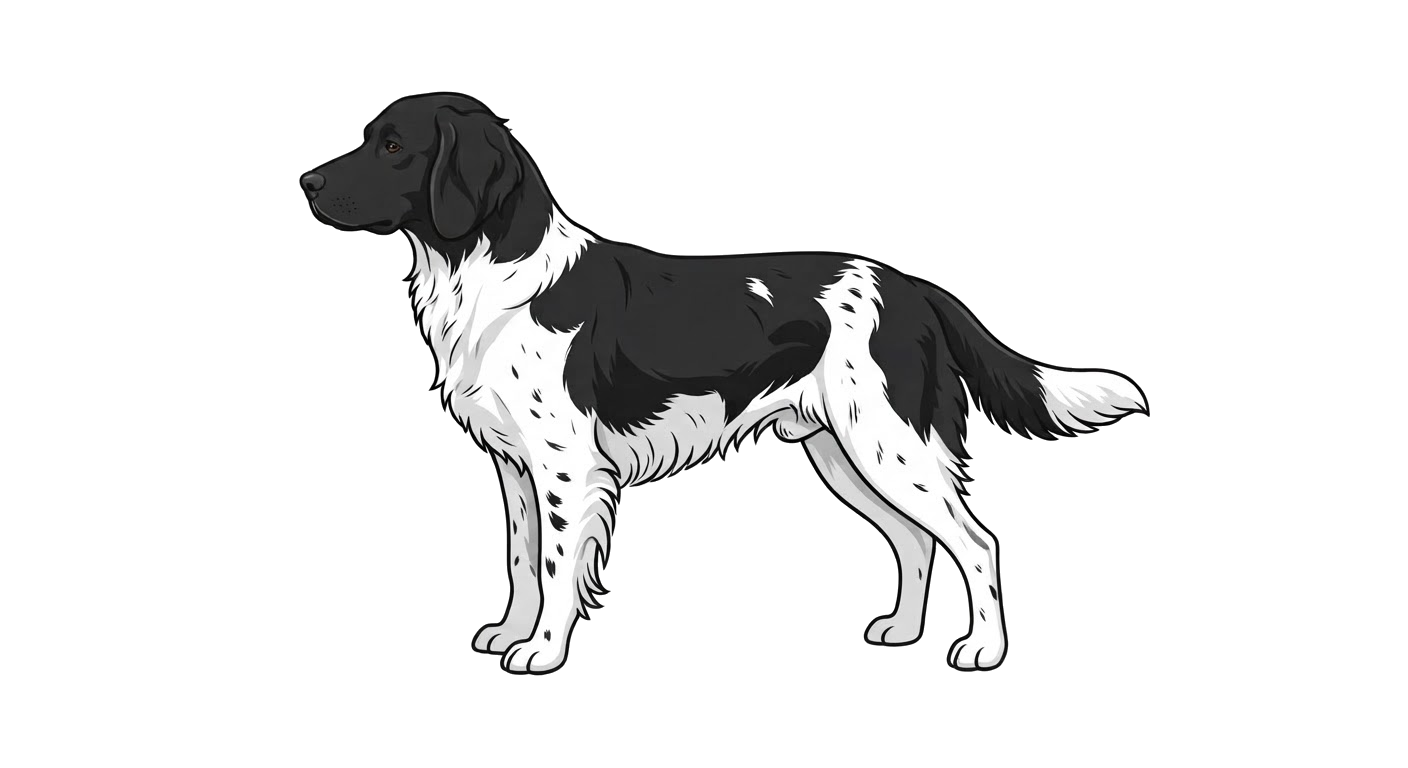
Black and white
Standard colour
The only accepted colour, usually with a solid-coloured head and ticking on the body.
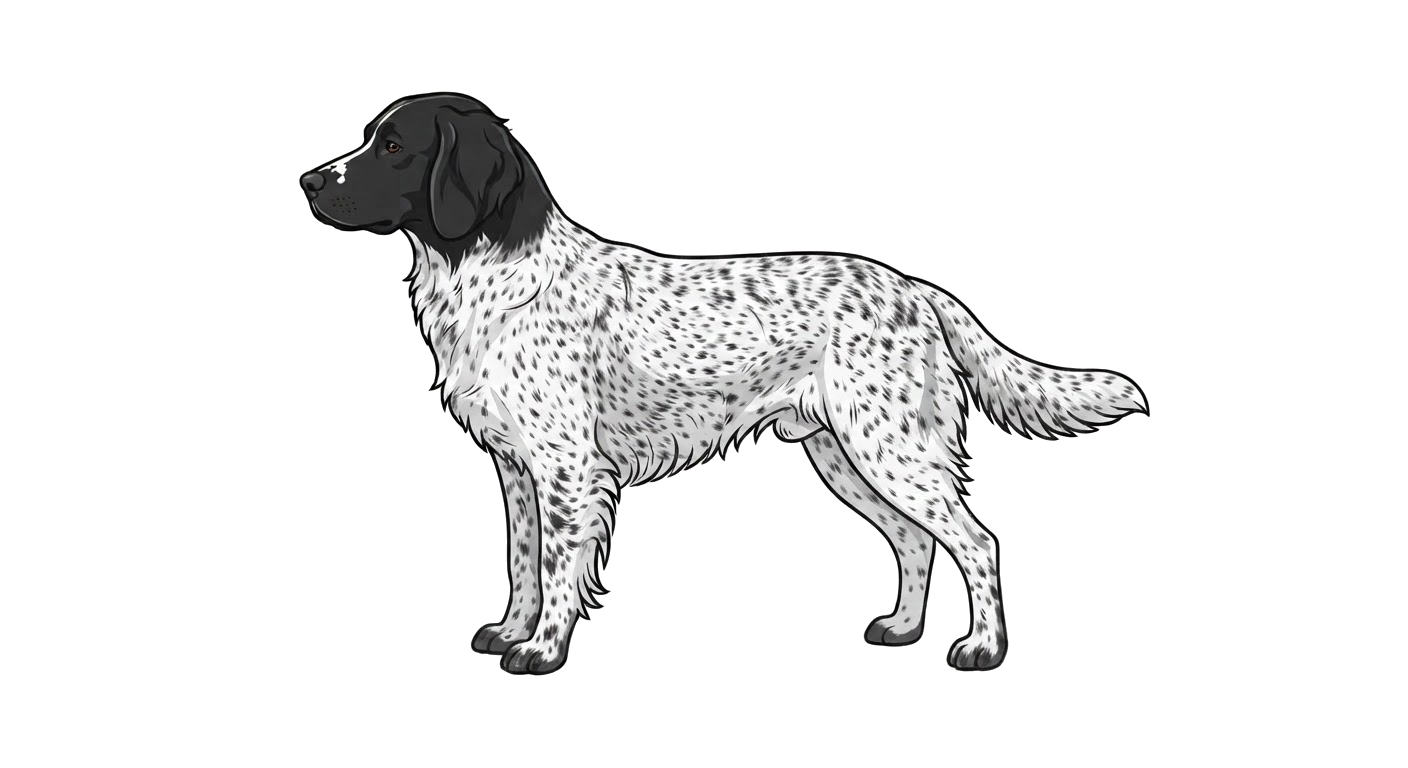
Blue roan ticking
Standard colour
Fine black-and-white ticking through the white areas is typical and desirable.
Timeline
History & development
1600s
German pointer roots
Long-haired German bird dogs of mixed colour, including black and white individuals, were used across German-speaking regions for falconry and net hunting.
1800s
Colour-based separation
As German pointing breeds were standardised, brown-and-white dogs became the Small Munsterlander while black-and-white dogs were initially excluded from that club.
1919
Breed club founded
Enthusiasts in the Munster region formed a dedicated club for the black-and-white type, establishing the Large Munsterlander as its own breed.
1971
UK introduction
The breed was imported to Britain and began to be used by British wildfowlers and rough shooters.
1919 onward
Working trials
The breed has continued to be tested and bred primarily through field trial performance rather than show type.
Reference
Breed standard summary
- body
- Slightly longer than tall, with a deep chest and strong, level back.
- coat
- Medium-length, dense and flat, with feathering on ears, chest, legs and tail.
- ears
- Set high, hanging close to the head, moderately large.
- eyes
- Dark brown, medium-sized, with an attentive, intelligent expression.
- gait
- Ground-covering trot with good drive from the hindquarters.
- head
- Long, well-chiselled, with a moderate stop and a solid black skull.
- size
- 58-65cm at the withers.
- tail
- Well-feathered, carried horizontally or slightly raised when working.
- colour
- Black and white, Blue roan ticking. Colours outside this list are seen but are not accepted by the kennel clubs.
- temperament
- Typical of the breed: strongest in energy, trainability, sociability. Nervousness or aggression are serious faults in the show ring and in the home.
- general appearance
- A noble, well-proportioned pointing dog of medium-large size, built for stamina rather than speed.
Health
What to screen for
Green means little to worry about, amber means ask the breeder for test results, red means manage it actively.
Hip dysplasia
Screen for it
Ask for official hip scores on both parents before buying a puppy.
Elbow dysplasia
Screen for it
Request elbow grading alongside hip scores from the breeder.
Exercise-induced collapse
Watch closely
A DNA test exists for some related lines; ask about testing history.
Ear infections
Low concern
Regular checks are sensible given the low-set, feathered ears.
General information only — always speak to your vet about your own dog.
From real owners
Dogs like this
Large Munsterlanders added by PawPoint members through their pet passports. Share yours to appear here.
Loading the wall…
Made for the Large Munsterlander
The book, plus prints, hoodies and mugs using our own Large Munsterlander illustration — and one everyday accessory that suits any dog.

The book
Pawpoint: The Complete Dog Breed Book
Every officially recognised breed plus the unofficial ones nobody else documents. 400+ pages, hardback, printed and shipped from the UK.
Own stock — shipped by us
Framed poster
Large Munsterlander Framed Poster
Museum-weight print of our Large Munsterlander illustration, framed or unframed.
Printed to order
Hoodie
Large Munsterlander Hoodie
Heavyweight hoodie carrying the Large Munsterlander illustration on the chest.
Printed to order
Mug
Large Munsterlander Mug
Ceramic mug with the Large Munsterlander illustration wrapped around it.
Printed to order
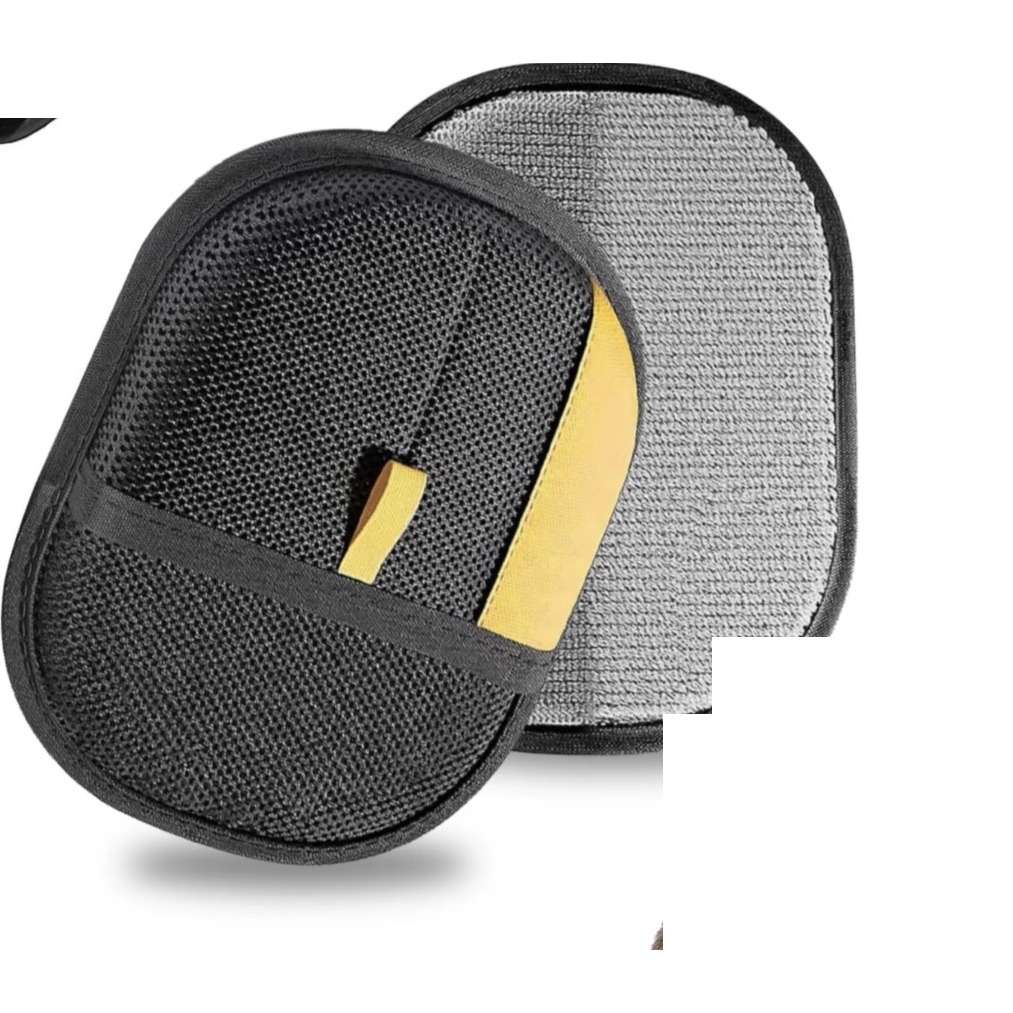
Accessory
Slicker & Deshedding Brush
Self-cleaning slicker head for coats of every length.
Fits any dog
Pawpoint on YouTube
Watch the full Large Munsterlander video
Breed deep-dives, history and honest ownership talk. New film every week.
Watch now