
Lhasa Apso
LAH-suh AP-so
Tibet· Lhasa
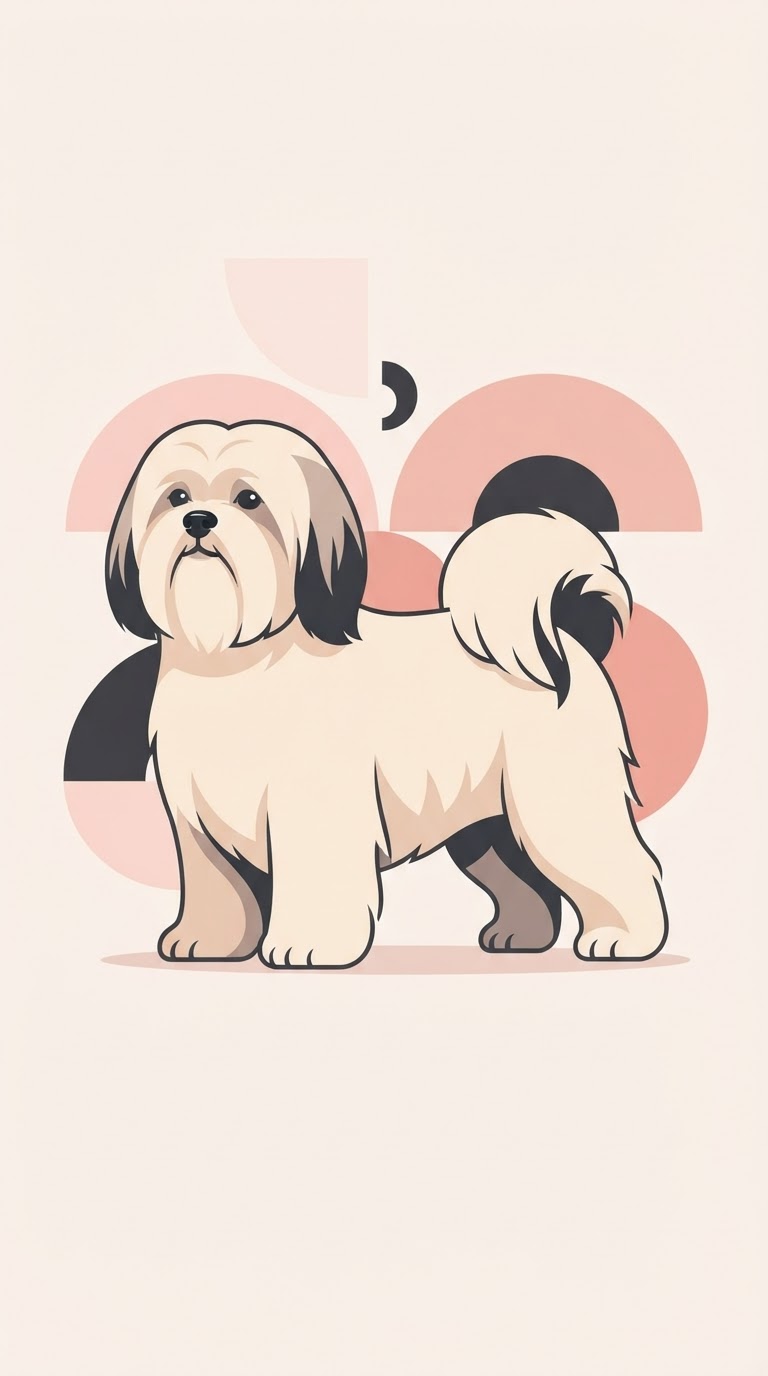
The Lhasa Apso is a small, long-coated Tibetan breed originally kept in monasteries and homes in Lhasa as an indoor watchdog and companion.
At a glance
Quick facts
Size
Small
Exercise needs
30-45 minutes daily
Home size suited to
Flat or small home
Grooming frequency
Brush every other day, clip regularly
Coat length
Curly
Sheds
Very little
Lifespan
12-14 years
Town or country
Either, happy in town
Garden size needed
Small garden or none
Where it comes from
Origins of the Lhasa Apso
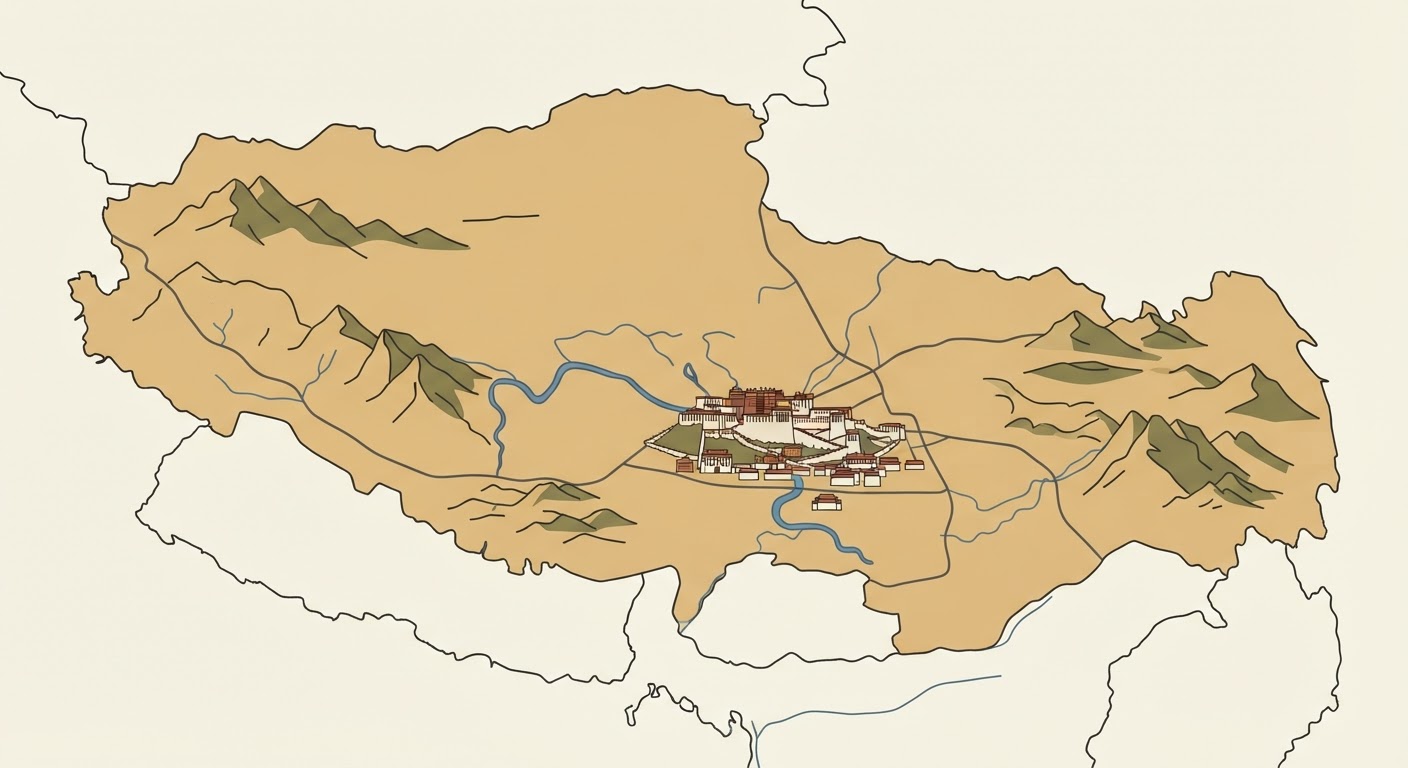
Lhasa sits over 3,600 metres up on the Tibetan plateau, where winters are harsh and dry. The breed's dense coat and sharp ears suited a life spent guarding thick-walled homes and monasteries from the inside.
- Region
- Lhasa
- Climate it was bred for
- High-altitude, cold and dry
- Original job
- Indoor watchdog in monasteries and homes
Living with one
Temperament & needs
Our own ratings, based on the breed standard and how these dogs behave in ordinary homes.
Friendliness
3/5
How openly the Lhasa Apso greets people it does not know.
Trainability
3/5
Intelligent but can be stubborn about repetitive commands.
Energy
2/5
Content with modest daily walks and indoor play.
Barking
4/5
Quick to bark at unfamiliar sounds, true to its watchdog job.
Grooming
5/5
Long coat needs daily brushing to avoid matting.
Suits a first-time owner
3/5
How forgiving the Lhasa Apso is for someone taking on their first dog.
Sociability
3/5
Loyal to its family, more reserved with strangers.
Independence
4/5
Bred to make its own judgement about who to trust.
Illustrated breed standard
The points of the breed
Hover or tap a numbered point to read what the standard asks for.
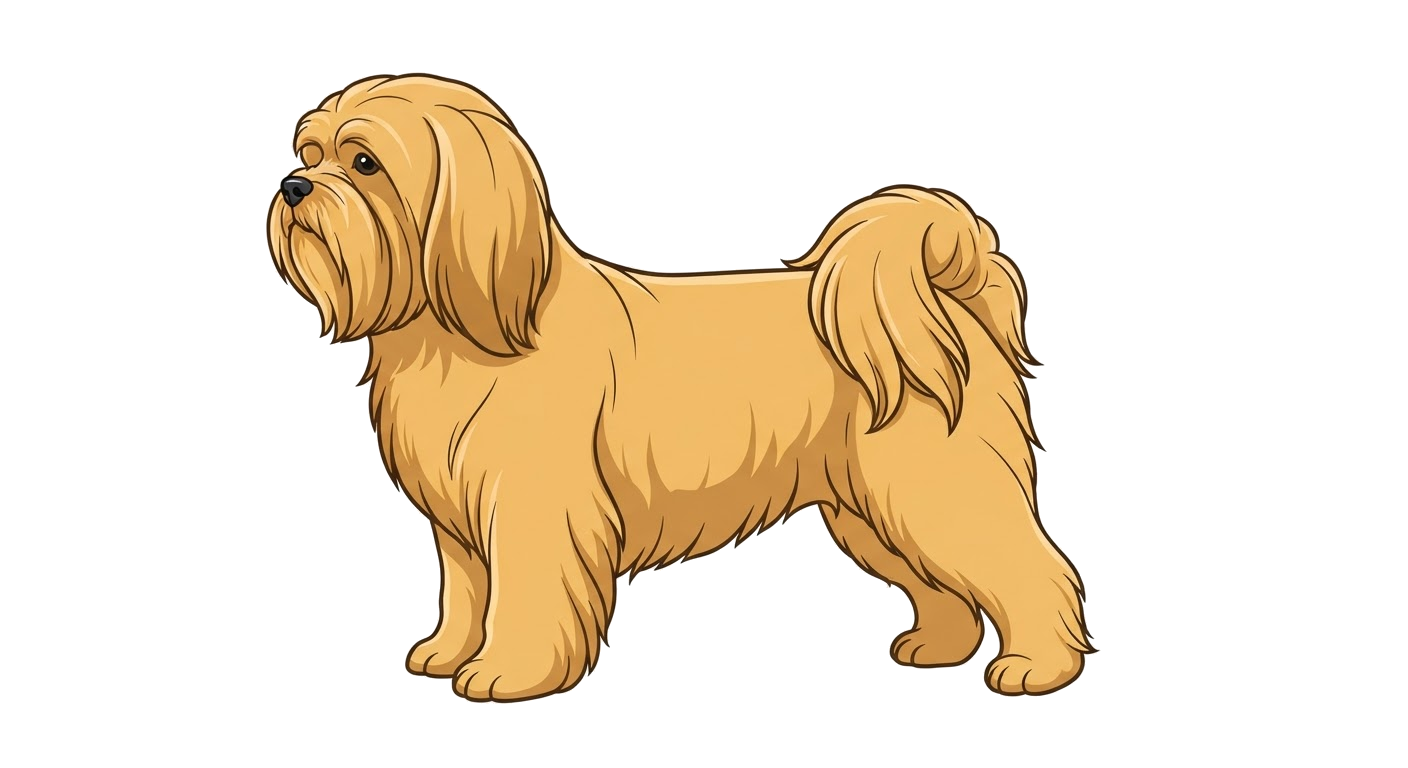
Point 1
Skull
The Lhasa Apso's skull is judged on balance rather than size — proportionate to the body, with a clean cheek and a stop typical of the breed. Coarseness or an over-refined head are both faulted.
Colours & patterns
Recognised coats
Which coats the standard accepts — and which are simply popular.
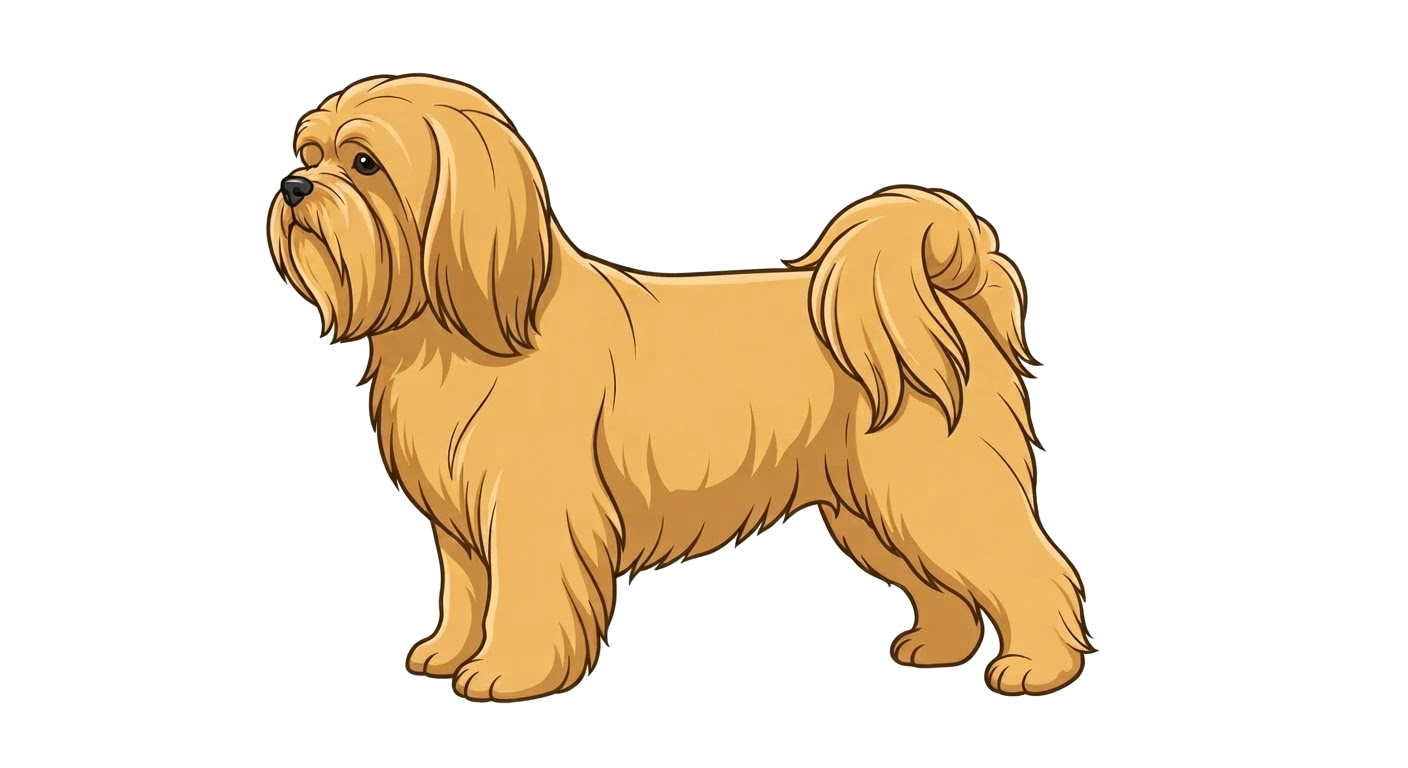
Golden
Standard colour
One of the most common and traditionally favoured shades.
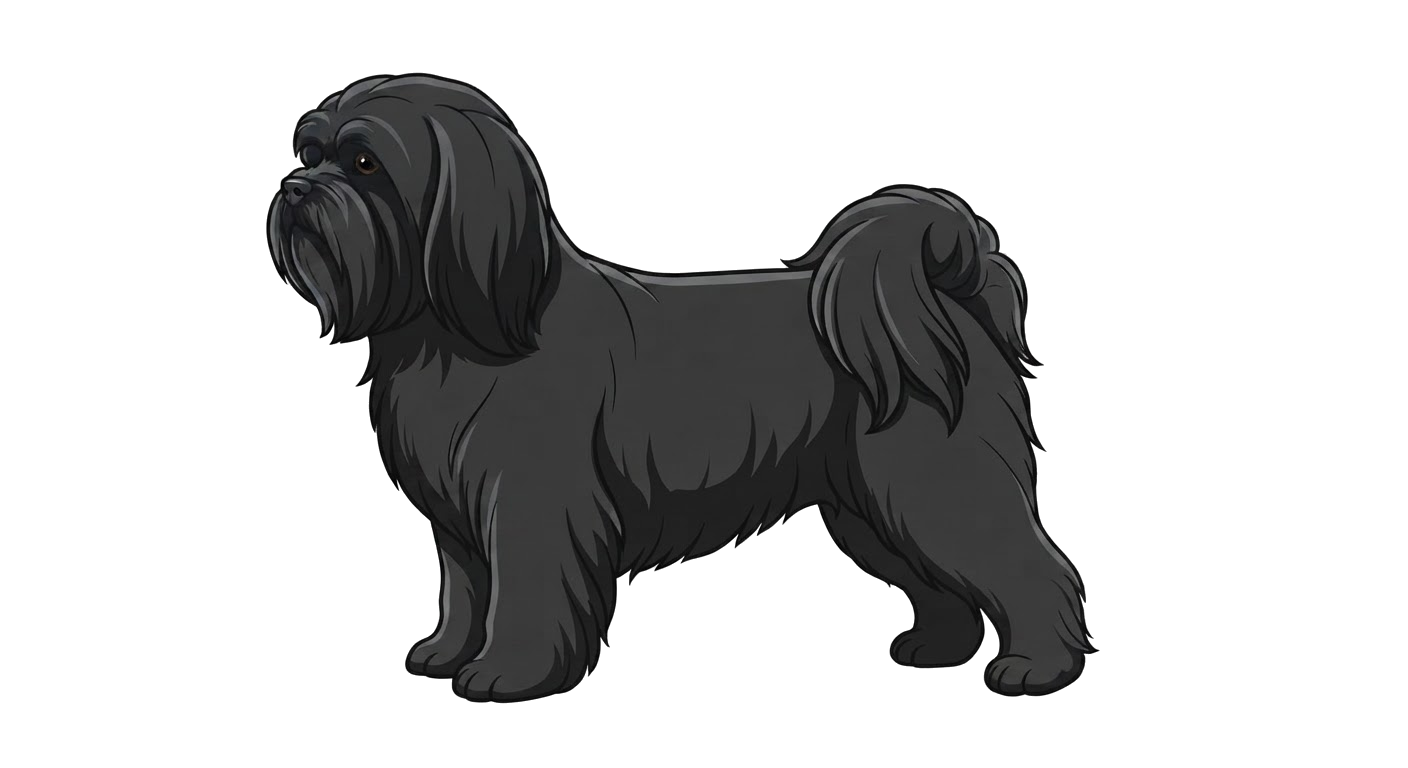
Black
Standard colour
Solid black is accepted and was historically kept for temple guarding.
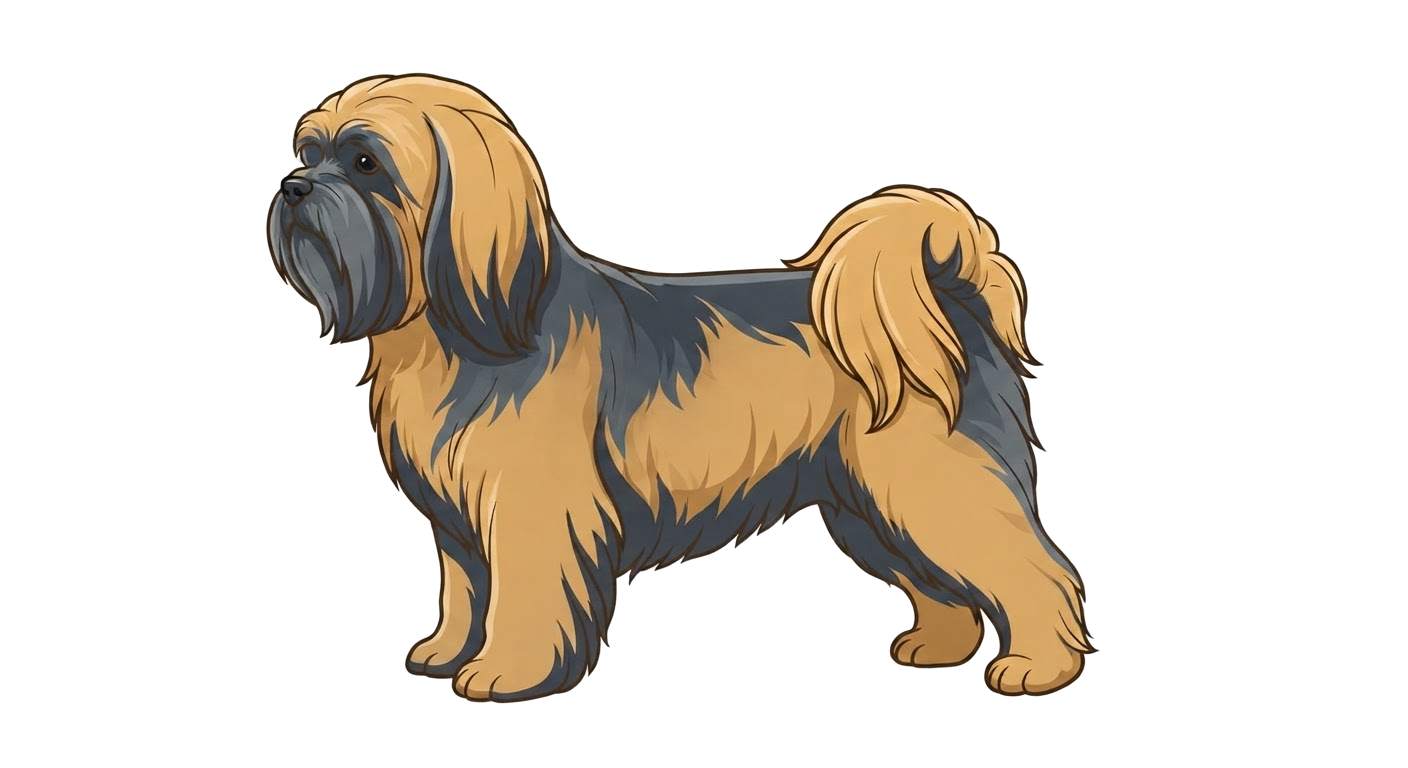
Grizzle
Standard colour
A grey-brown mix giving a mottled effect.
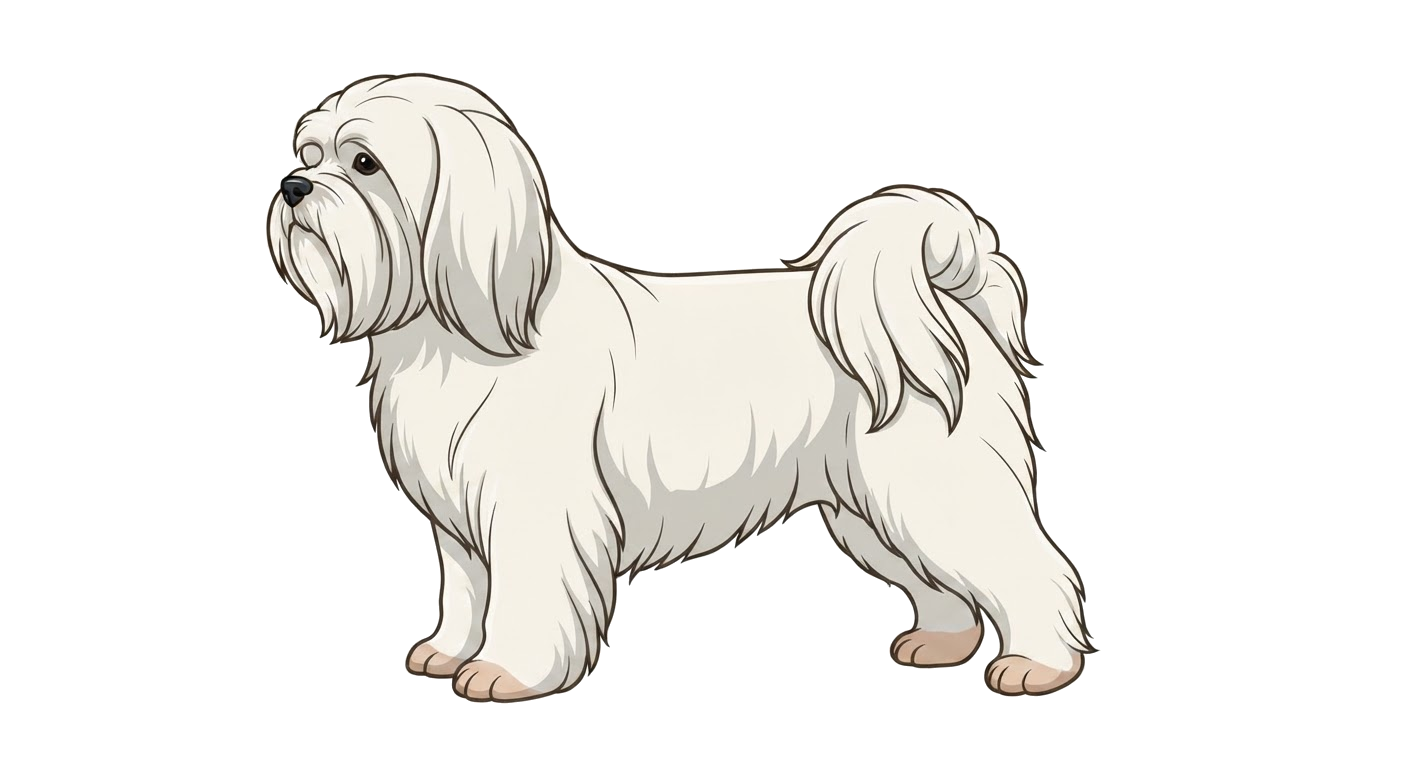
White
Standard colour
A rarer but accepted colour in the standard.
Timeline
History & development
800 AD
Monastery origins
Ancestors of the breed are kept as indoor sentinels in Tibetan monasteries and noble households.
1901
First exports
Dogs begin reaching Britain as gifts from Tibetan nobility.
1933
Standard formalised
The breed is given a formal written standard by Western kennel clubs.
1950s
Wider popularity
The Lhasa Apso becomes established as a show and companion breed in the West.
Reference
Breed standard summary
- body
- Well-bodied and sound: a firm level topline, deep chest with well-sprung ribs and a strong, muscular loin.
- coat
- Long, heavy, straight, not woolly or silky.
- ears
- Ear set, size and carriage follow the Lhasa Apso standard, clean and mobile, never thickened or badly carried.
- eyes
- Dark, medium-sized, not prominent.
- head
- Heavily furnished, with a moderate stop.
- size
- Small, slightly longer than tall.
- tail
- Well feathered, carried over the back.
- colour
- Golden, Black, Grizzle, White. Colours outside this list are seen but are not accepted by the kennel clubs.
- temperament
- Typical of the breed: strongest in grooming, independence, barking. Nervousness or aggression are serious faults in the show ring and in the home.
- general appearance
- Small, sturdy and heavily coated, with a confident, assertive carriage.
Health
What to screen for
Green means little to worry about, amber means ask the breeder for test results, red means manage it actively.
Progressive retinal atrophy
Screen for it
Ask breeders for eye clearance certificates on breeding stock.
Hip dysplasia
Screen for it
Less common than in larger breeds but worth a hip check.
Renal cortical hypoplasia
Watch closely
A known kidney condition in the breed; ask about family history.
Dental crowding
Low concern
The short muzzle can crowd teeth, so regular dental checks help.
General information only — always speak to your vet about your own dog.
From real owners
Dogs like this
Lhasa Apsos added by PawPoint members through their pet passports. Share yours to appear here.
Loading the wall…
Made for the Lhasa Apso
The book, plus prints, hoodies and mugs using our own Lhasa Apso illustration — and one everyday accessory that suits any dog.

The book
Pawpoint: The Complete Dog Breed Book
Every officially recognised breed plus the unofficial ones nobody else documents. 400+ pages, hardback, printed and shipped from the UK.
Own stock — shipped by us
Framed poster
Lhasa Apso Framed Poster
Museum-weight print of our Lhasa Apso illustration, framed or unframed.
Printed to order
Hoodie
Lhasa Apso Hoodie
Heavyweight hoodie carrying the Lhasa Apso illustration on the chest.
Printed to order
Mug
Lhasa Apso Mug
Ceramic mug with the Lhasa Apso illustration wrapped around it.
Printed to order
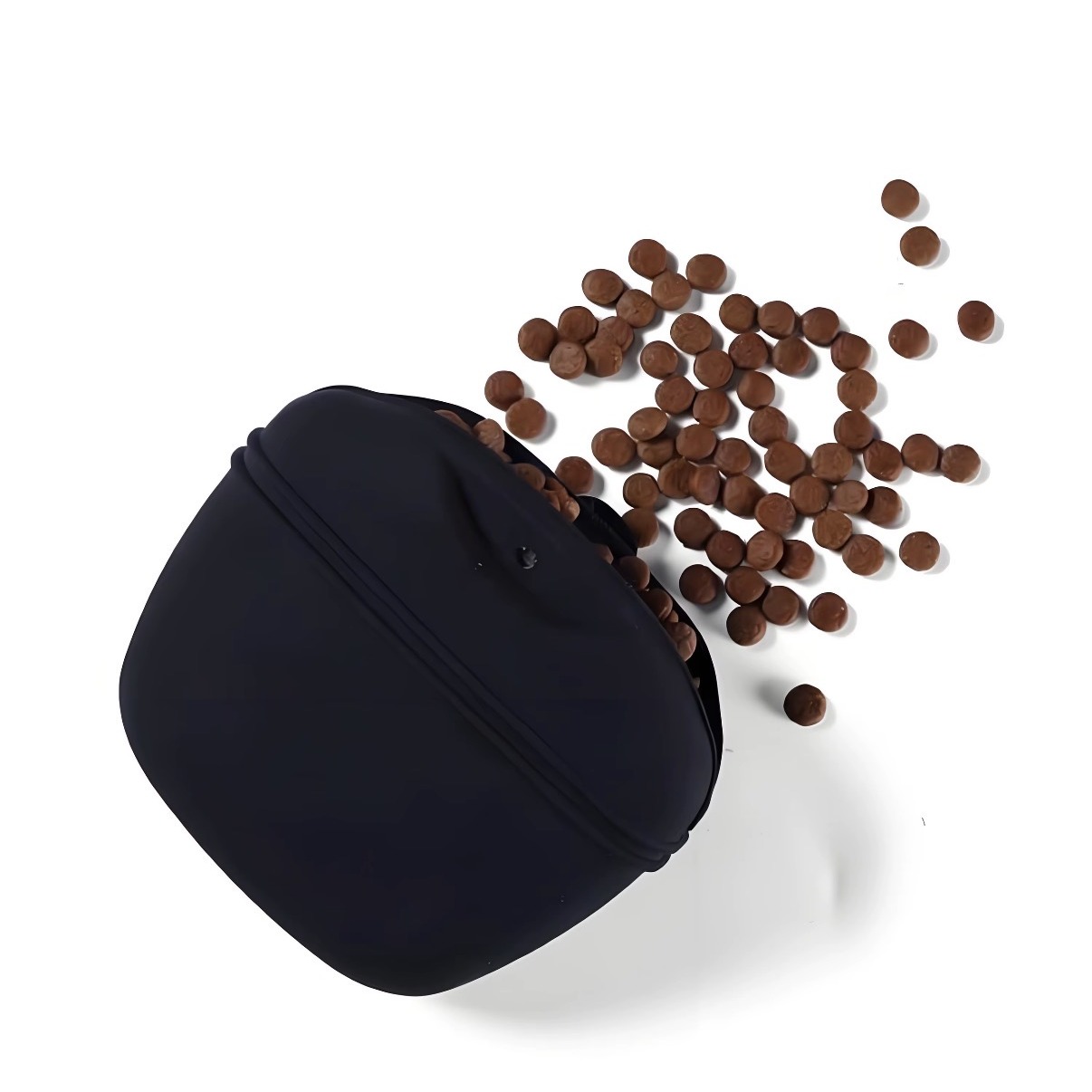
Accessory
Treat Pouch
Magnetic-close belt pouch for training sessions.
Fits any dog
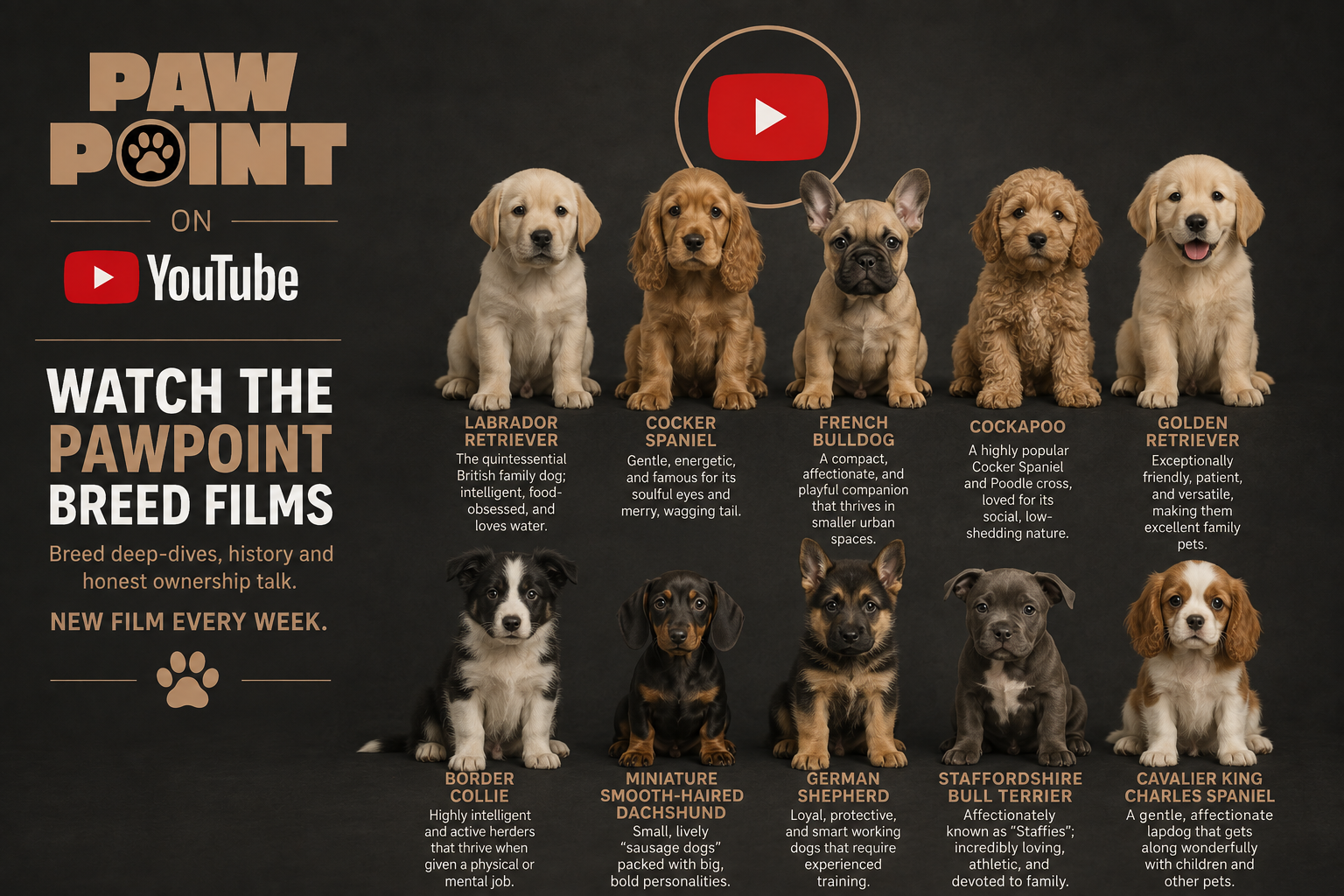
Pawpoint on YouTube
Watch the full Lhasa Apso video
Breed deep-dives, history and honest ownership talk. New film every week.
Watch now