
Lucas Terrier
LUCAS TERRIER
United Kingdom· England and Scotland
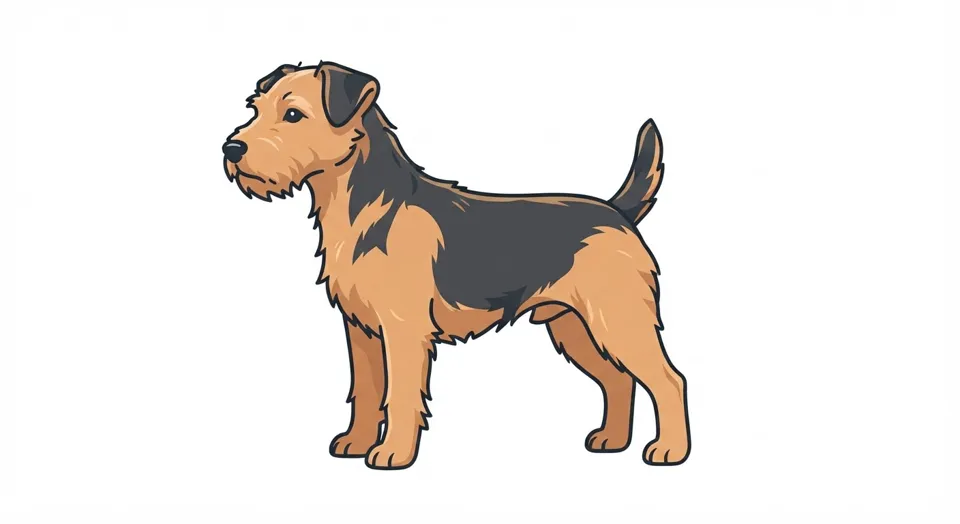
Lucas Terrier is recorded by the American Kennel Club through a developing-breed programme rather than full breed recognition. It developed in England and Scotland, where it was selected for vermin control and companionship. Its form and temperament still reflect that practical background.
At a glance
Quick facts
- Size
- Small
- Exercise needs
- At least 60–90 minutes daily, adjusted for age and health
- Home size suited to
- Any suitably managed home with enough activity
- Grooming frequency
- Weekly brush
- Coat length
- Short
- Sheds
- Yes
- Lifespan
- 12–15 years
- Town or country
- Either, when exercise and breed-specific needs are met
- Garden size needed
- Securely fenced space preferred
Where it comes from
Origins of the Lucas Terrier
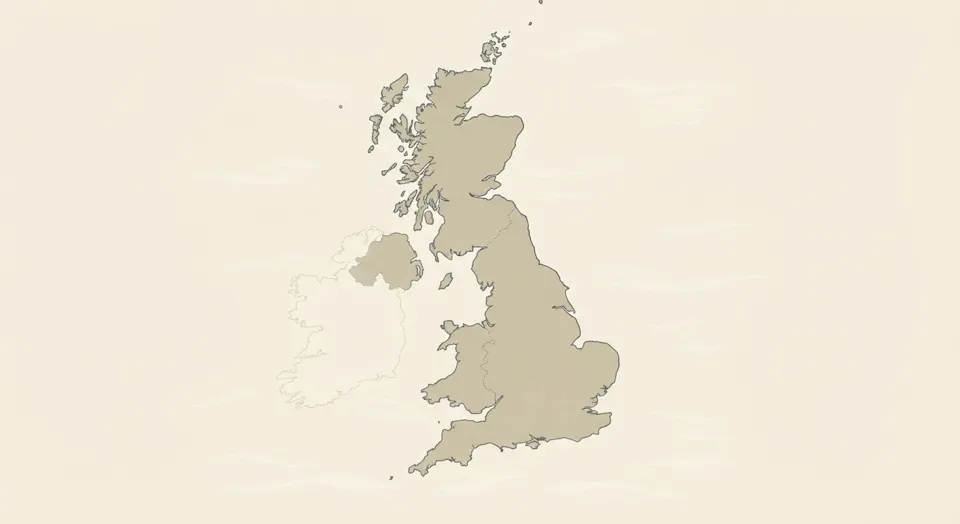
The Lucas Terrier was shaped in England and Scotland for vermin control and companionship.
- Region
- England and Scotland
- Climate it was bred for
- Varied temperate conditions
- Original job
- Vermin control and companionship
The long read
About the breed
The breed is small low-set rough-coated terrier with drop ears, strong muzzle and workmanlike body. Prospective owners should judge individual dogs and breeders rather than relying on the registry label alone: provisional status describes the registry pathway, not quality or suitability.
This is an active, purpose-bred dog that benefits from consistent training, early socialisation and daily physical and mental work. Breed-specific drives can be strong, so secure management and an honest match between dog and household matter.
Living with one
Temperament & needs
Our own ratings, based on the breed standard and how these dogs behave in ordinary homes.
Friendliness
3/5
The Lucas Terrier benefits from calm, positive early socialisation.
Trainability
4/5
Purposeful and responsive when training is clear, consistent and rewarding.
Energy
4/5
A working background creates a real need for daily activity and mental tasks.
Barking
3/5
Vocal tendency varies, but alerting or working voice may be pronounced.
Grooming
1/5
Routine coat, nail, ear and dental care keeps the dog comfortable.
Suits a first-time owner
2/5
Best with an owner prepared to understand and channel breed-specific drives.
Sociability
3/5
Early, thoughtful introductions support reliable social behaviour.
Independence
3/5
Working heritage can produce confident decision-making away from the handler.
Illustrated breed standard
The points of the breed
Hover or tap a numbered point to read what the standard asks for.
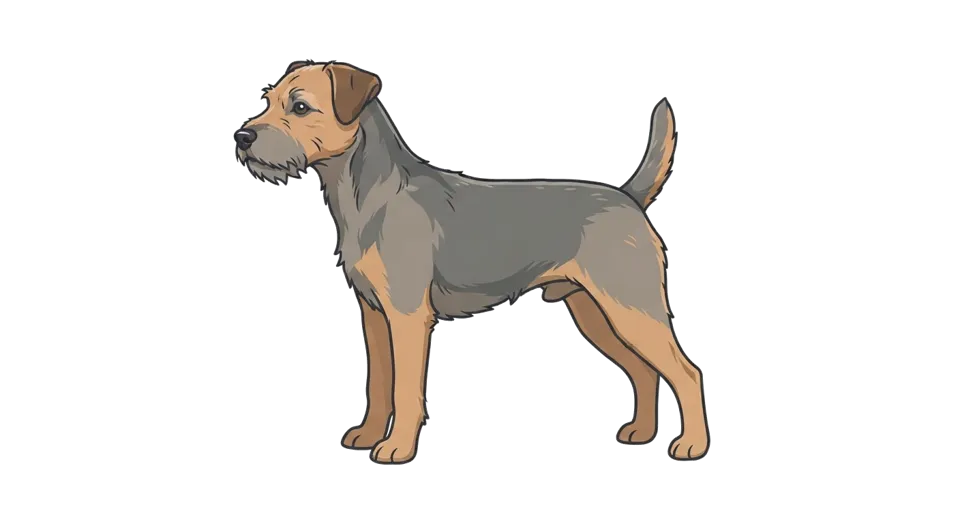
Point 1
Head
The Lucas Terrier's head and expression should remain characteristic of its working history.
Colours & patterns
Recognised coats
Which coats the standard accepts — and which are simply popular.
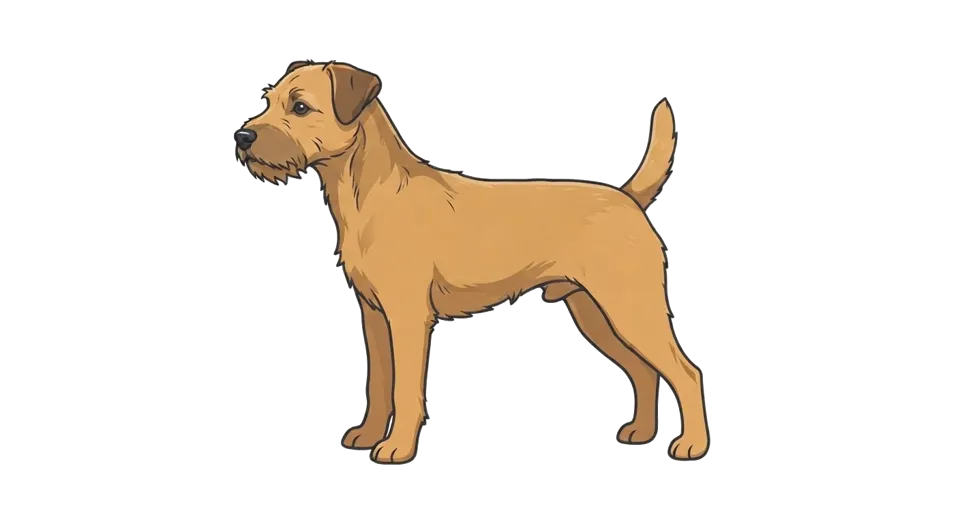
Tan
Standard colour
A documented tan presentation in the breed.
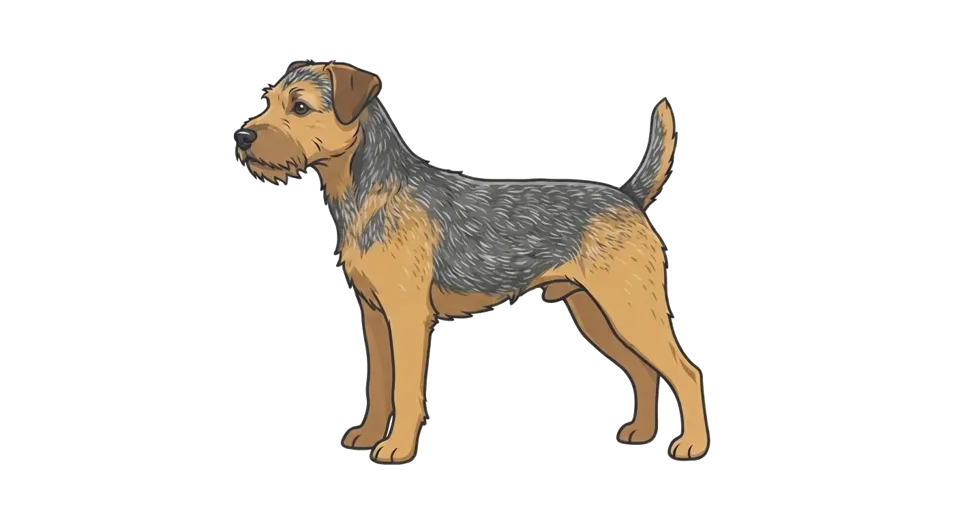
Grizzle & Tan
Standard colour
A documented grizzle tan presentation in the breed.
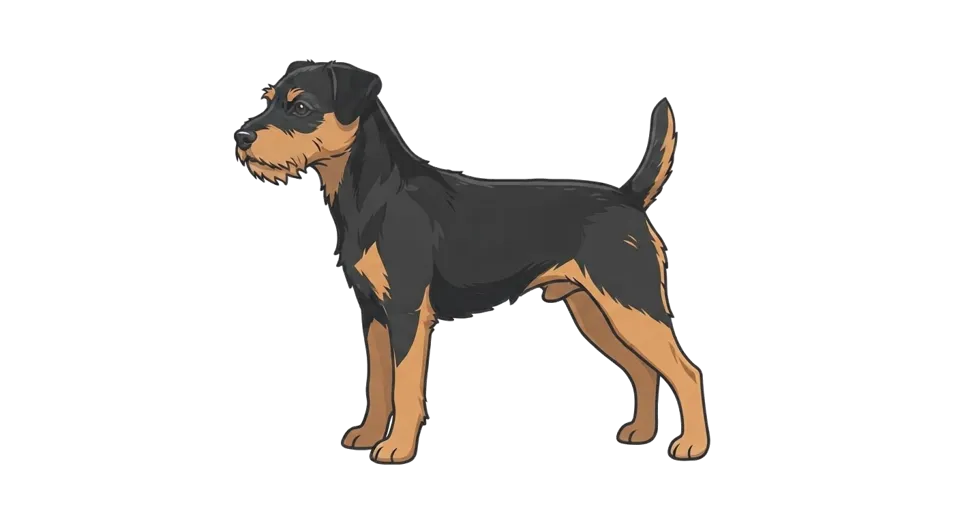
Black & Tan
Standard colour
A documented black tan presentation in the breed.
Timeline
History & development
Origins
Development in England and Scotland
Local breeders shaped the type for vermin control and companionship, favouring soundness and practical ability.
20th century
A defined breed
Breeders documented a more consistent type and organised registration around shared working and physical traits.
Today
Modern status
Current registry recognition is recorded as AKC (FSS).
Reference
Breed standard summary
- body
- Balanced in length and height, with adequate chest depth, firm back and muscular loin.
- coat
- Harsh, weather-resistant coat, often tan or grizzle
- ears
- Set and carried in the manner characteristic of the breed, mobile and balanced with the head.
- eyes
- Clear, alert and well set, with colour harmonising with the coat.
- gait
- Free, balanced and economical, with reach and drive suited to the breed's original purpose.
- head
- In proportion to the body, cleanly formed and characteristic of the breed, without exaggeration.
- size
- Height 25–30 cm; weight 5–9 kg.
- tail
- Set as a natural continuation of the topline and carried according to breed type.
- colour
- Tan, Grizzle & Tan, Black & Tan
- muzzle
- Strong enough for the original work, with sound jaws and a complete bite.
- temperament
- Alert, responsive and capable of its traditional work; steadiness and confidence are essential.
- general appearance
- A balanced, functional small dog: small low-set rough-coated terrier with drop ears, strong muzzle and workmanlike body.
Health
What to screen for
Green means little to worry about, amber means ask the breeder for test results, red means manage it actively.
Hip and elbow health
Screen for it
Use joint screening where the breed club recommends it and keep the dog lean.
Eye health
Watch closely
Ask for a current veterinary eye examination in breeding stock.
Breed DNA tests
Watch closely
Check the current national breed-club testing list, because recommendations evolve.
Working injuries
Watch closely
Build fitness gradually and examine feet, skin and joints after demanding exercise.
General information only — always speak to your vet about your own dog.
From real owners
Lucas Terriers in the PAWPOINT Pack
Lucas Terriers added by PawPoint members through their pet passports. Share yours to appear here.
Loading the wall…
Made for the Lucas Terrier
The book, plus hoodies, tees and mugs featuring the Lucas Terrier.