
Mahratta Hound
muh-RAH-tuh HOWND
India· Maharashtra, India
The Mahratta Hound is an elusive and historical sighthound native to Maharashtra and the broader Deccan Plateau of west-central India. Historically associated with the Maratha people, these lean, athletic dogs were maintained primarily as coursing hounds, valued for their ability to pursue swift quarry across rugged, semi-arid terrain.
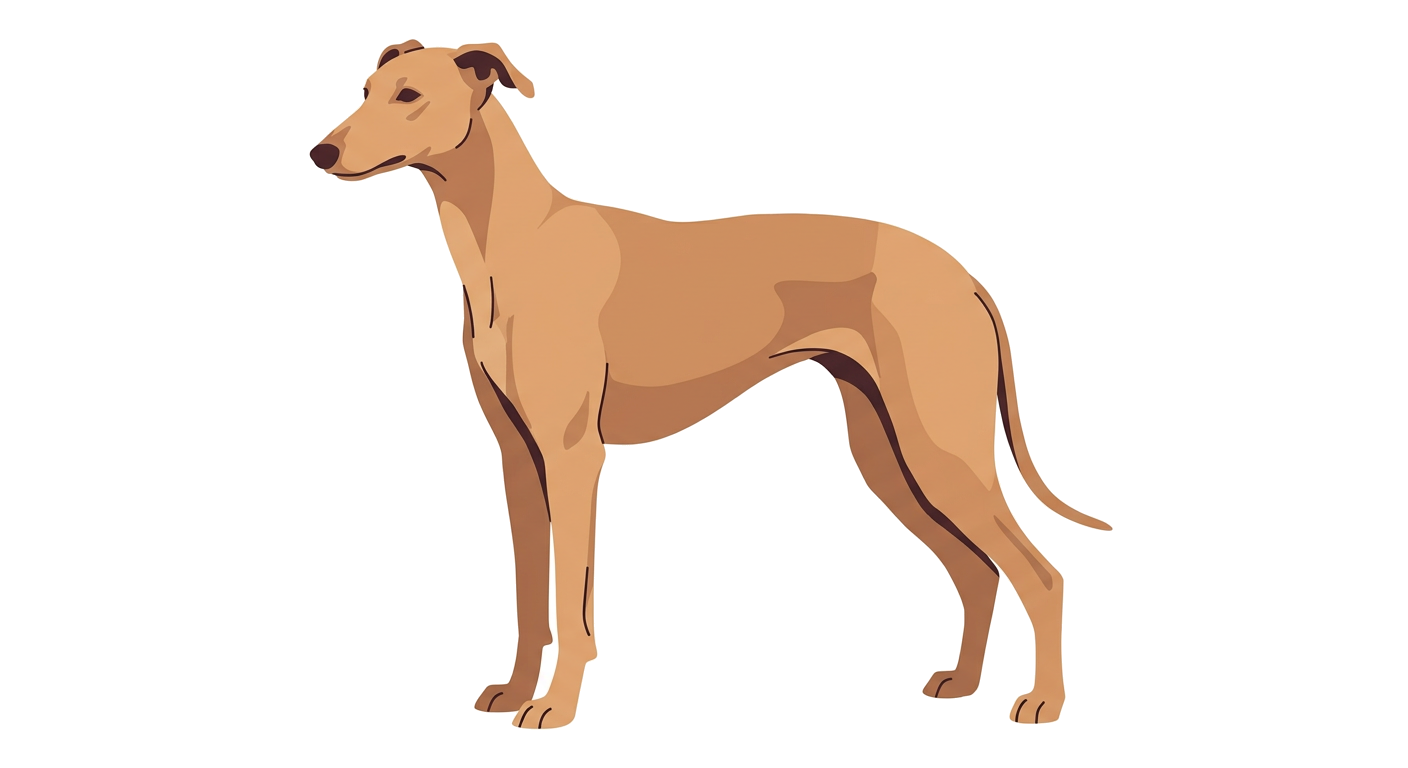
At a glance
Quick facts
Size
Medium
Exercise needs
High
Home size suited to
Spacious home or rural property
Grooming frequency
Low
Coat length
Short
Sheds
Low
Lifespan
10–13 years
Town or country
Country or rural
Garden size needed
Large and securely fenced
Where it comes from
Origins of the Mahratta Hound
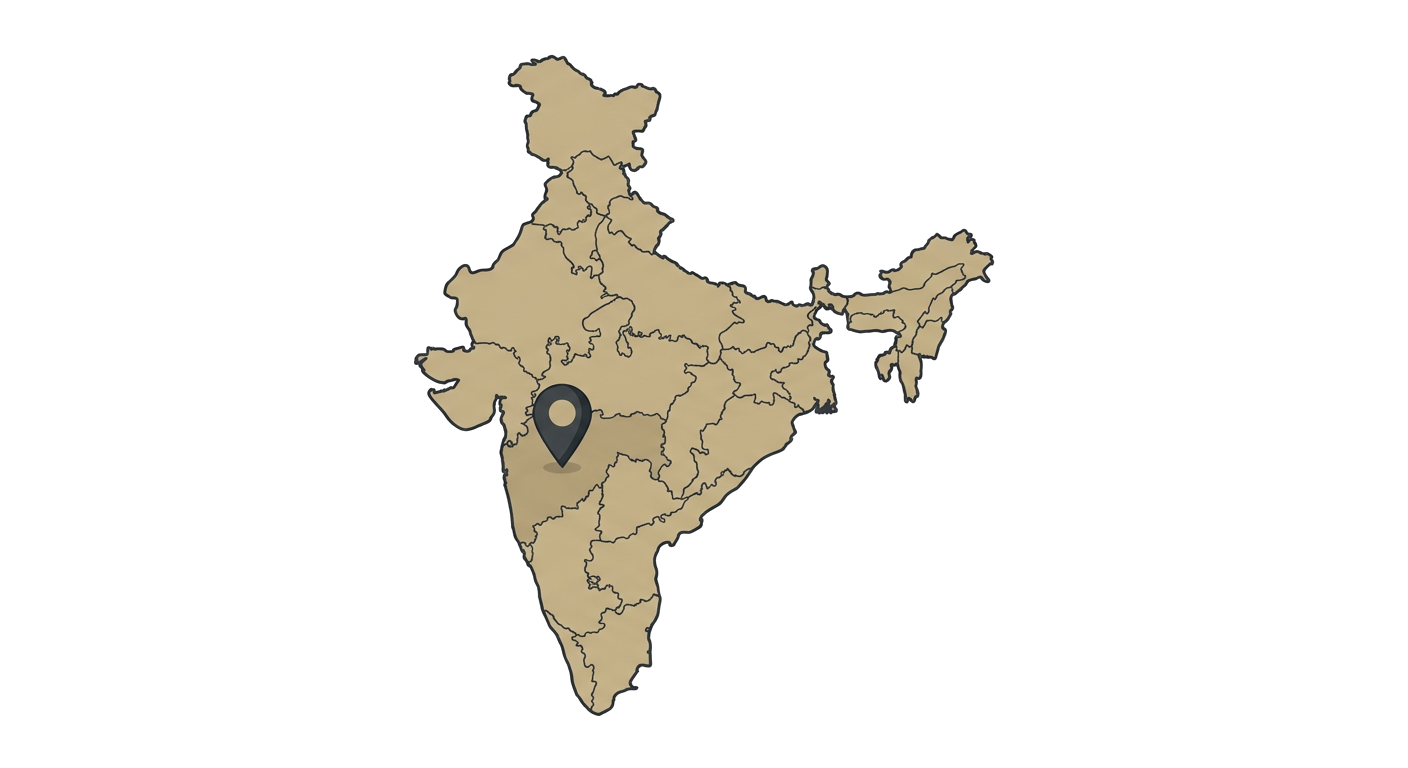
Originating from the rugged Deccan Plateau of Maharashtra, the Mahratta Hound served as a swift coursing companion to regional hunters.
- Region
- Maharashtra, India
- Climate it was bred for
- Tropical semi-arid
- Original job
- Coursing hare, small deer, and game hunting
The long read
About the breed
While historical references occasionally distinguish the Mahratta from neighbouring sighthounds such as the Caravan Hound and Mudhol Hound, formal documentation regarding unique breed standards remains exceptionally thin. Some authorities consider the hound a regional subtype or ancestral strain within the wider complex of Indian sighthounds, characterised by a somewhat compact build, hardy constitution, and occasionally slight feathering on the ears and limbs.
Today, distinct specimens conforming strictly to historical descriptions of the Mahratta Hound are exceedingly rare, and the type has largely been absorbed into the broader working landrace populations of the region. As with many traditional working sighthounds of South Asia, systematic breed preservation efforts have been limited, leaving much of its exact lineage open to ongoing historical debate.
Illustrated breed standard
The points of the breed
Hover or tap a numbered point to read what the standard asks for.
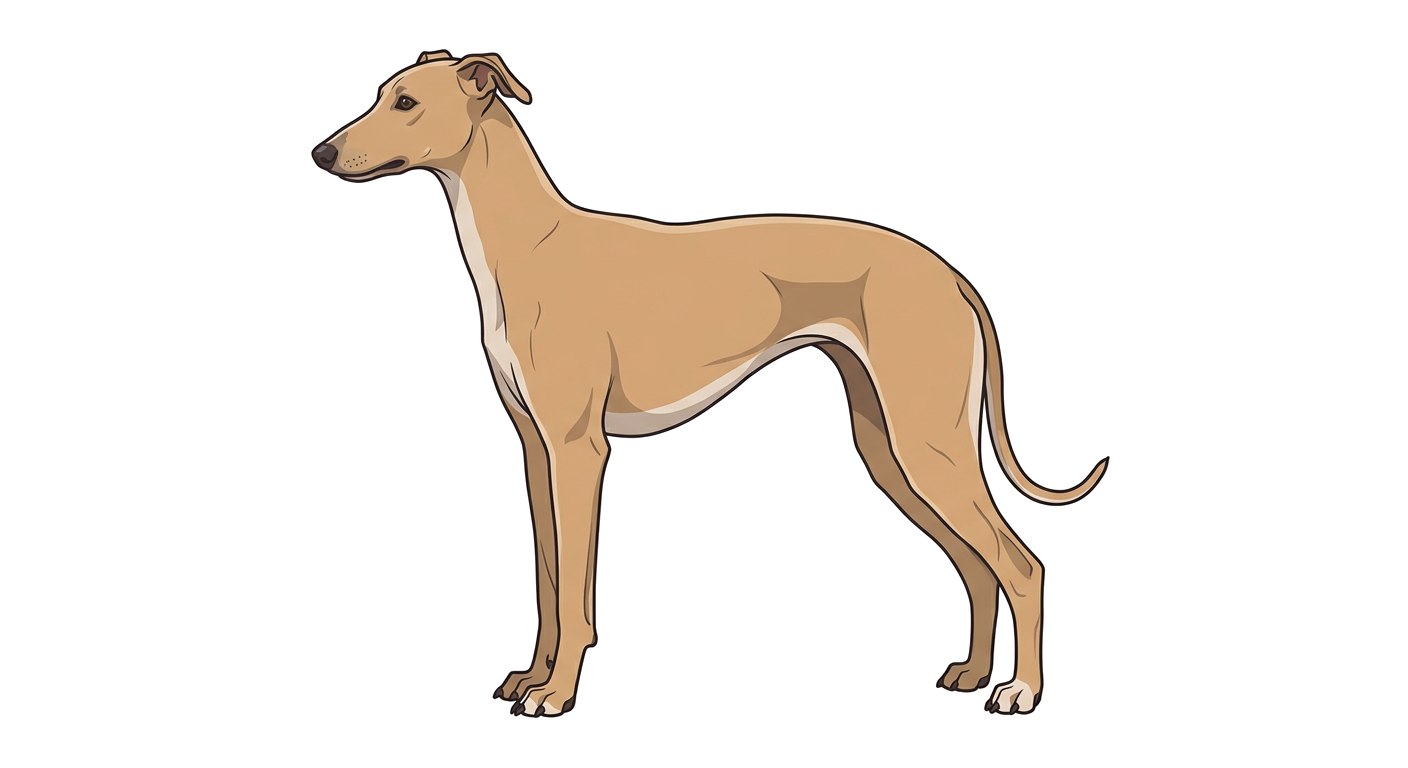
Point 1
Skull
The Mahratta Hound's skull is judged on balance rather than size — proportionate to the body, with a clean cheek and a stop typical of the breed. Coarseness or an over-refined head are both faulted.
Colours & patterns
Recognised coats
Which coats the standard accepts — and which are simply popular.
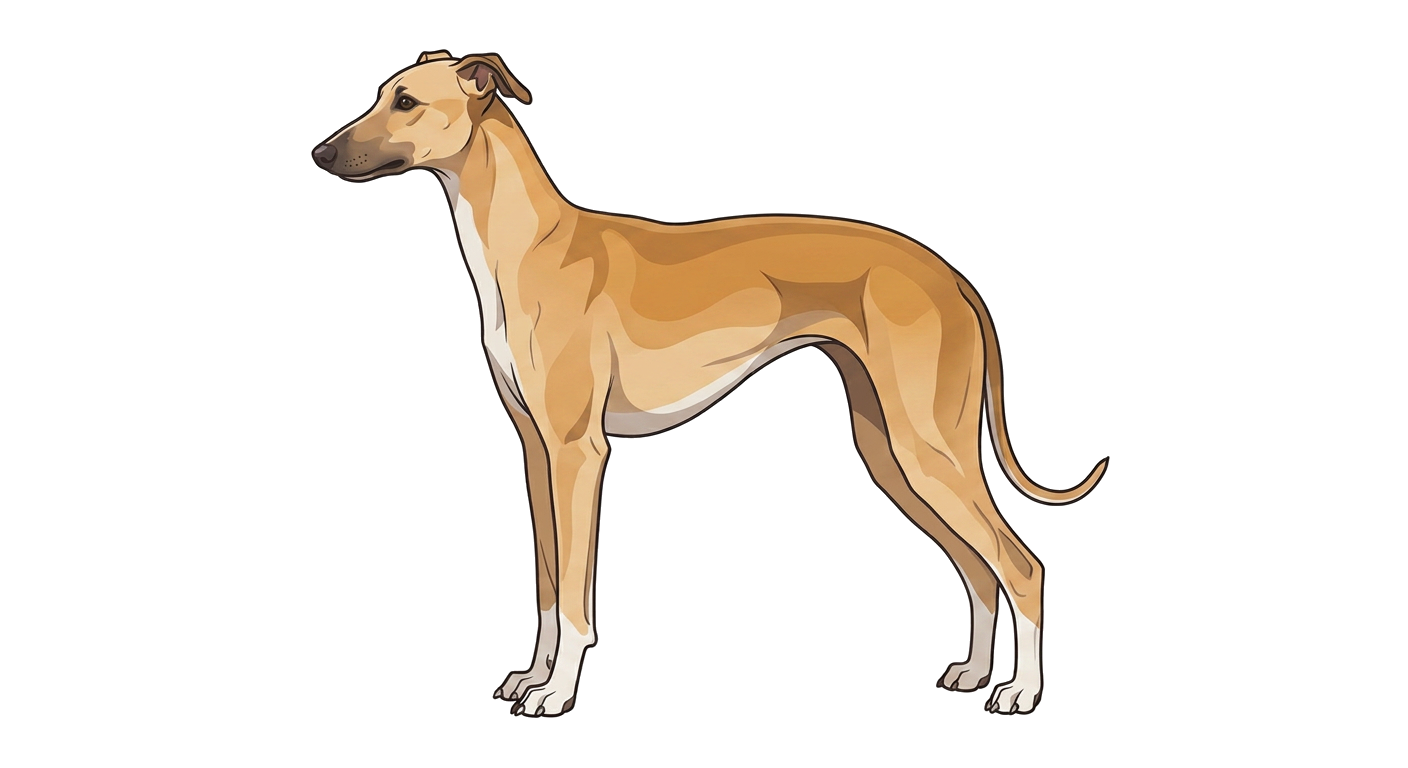
Fawn
Standard colour
Ranging from light sandy shades to deep golden fawn, often with subtle white marks.
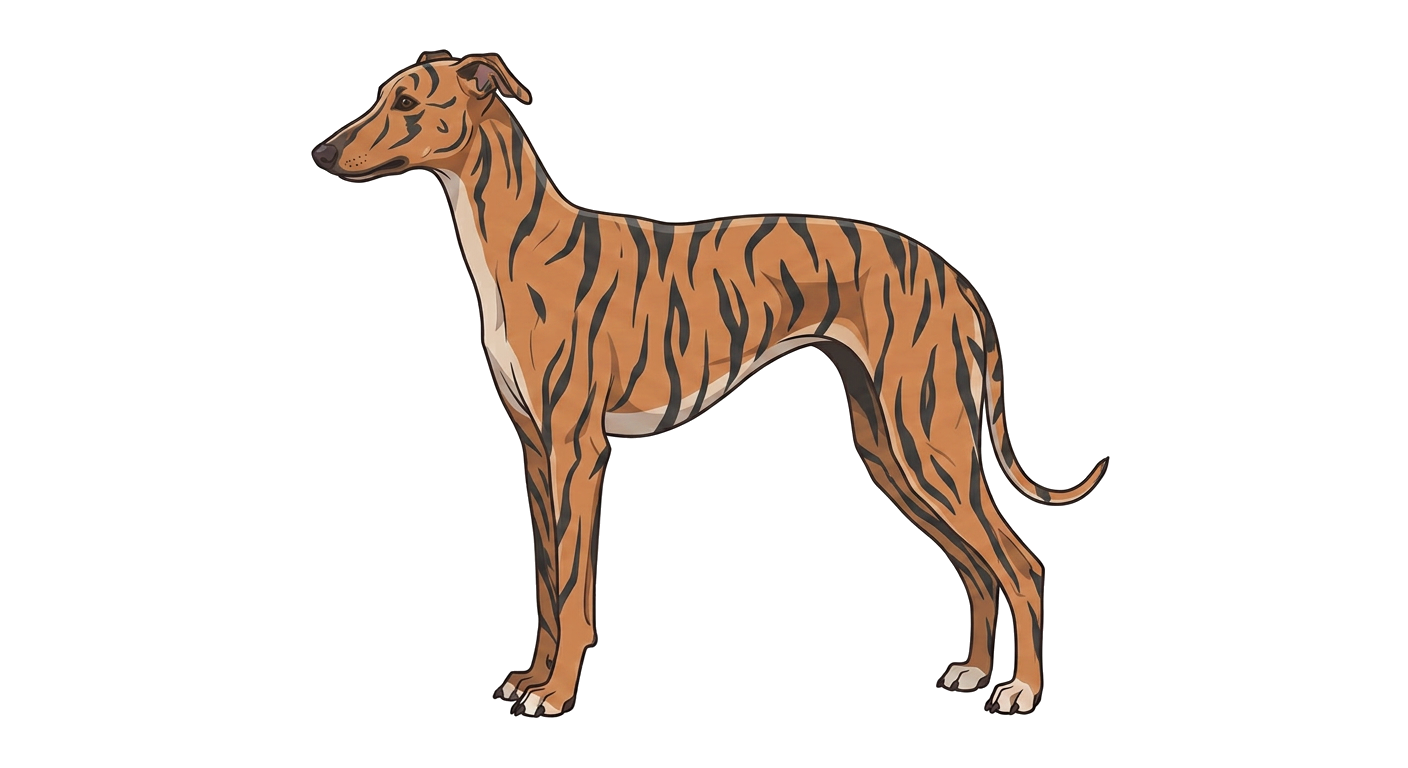
Brindle
Standard colour
Dark striping over a lighter fawn or reddish base, typical of regional coursers.
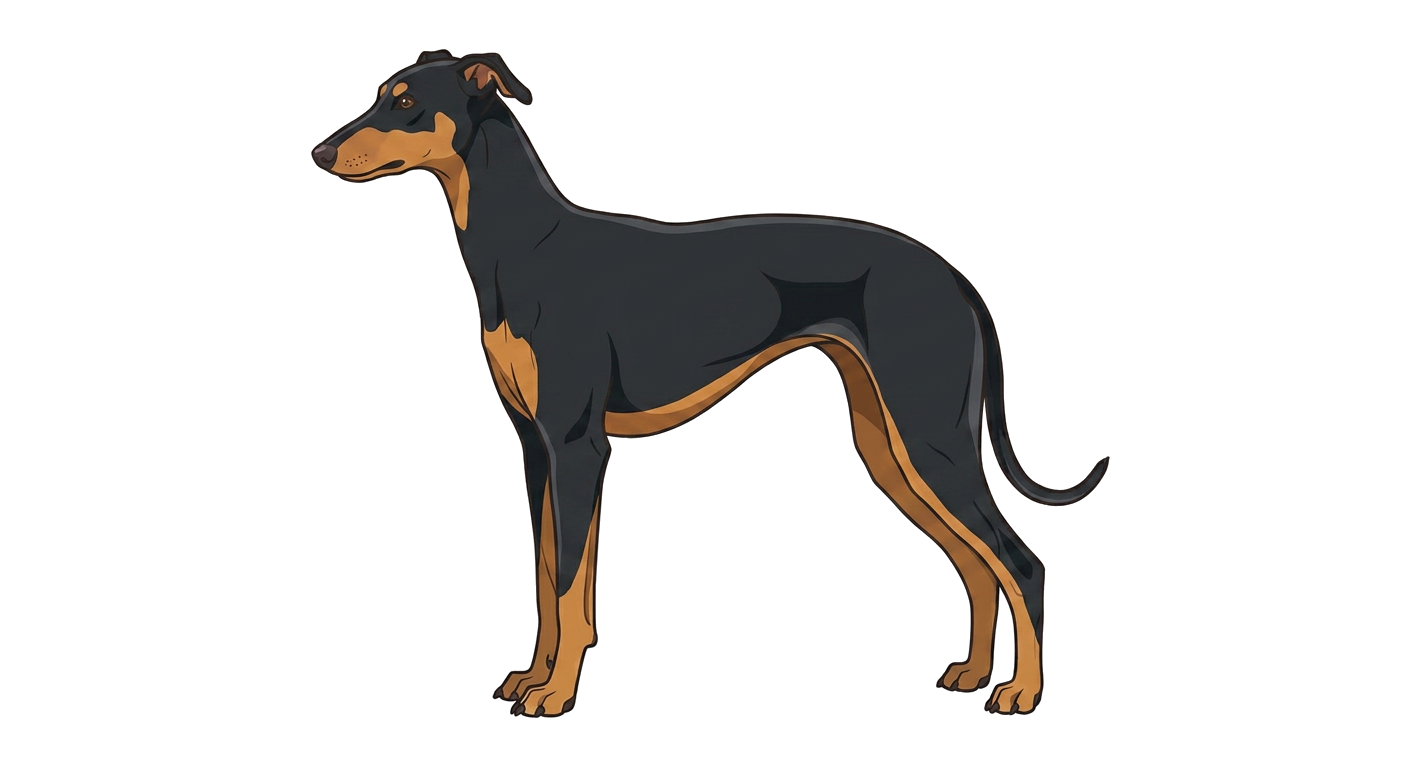
Black and Tan
Standard colour
Predominantly dark coat with rich tan markings on the face, limbs, and chest.
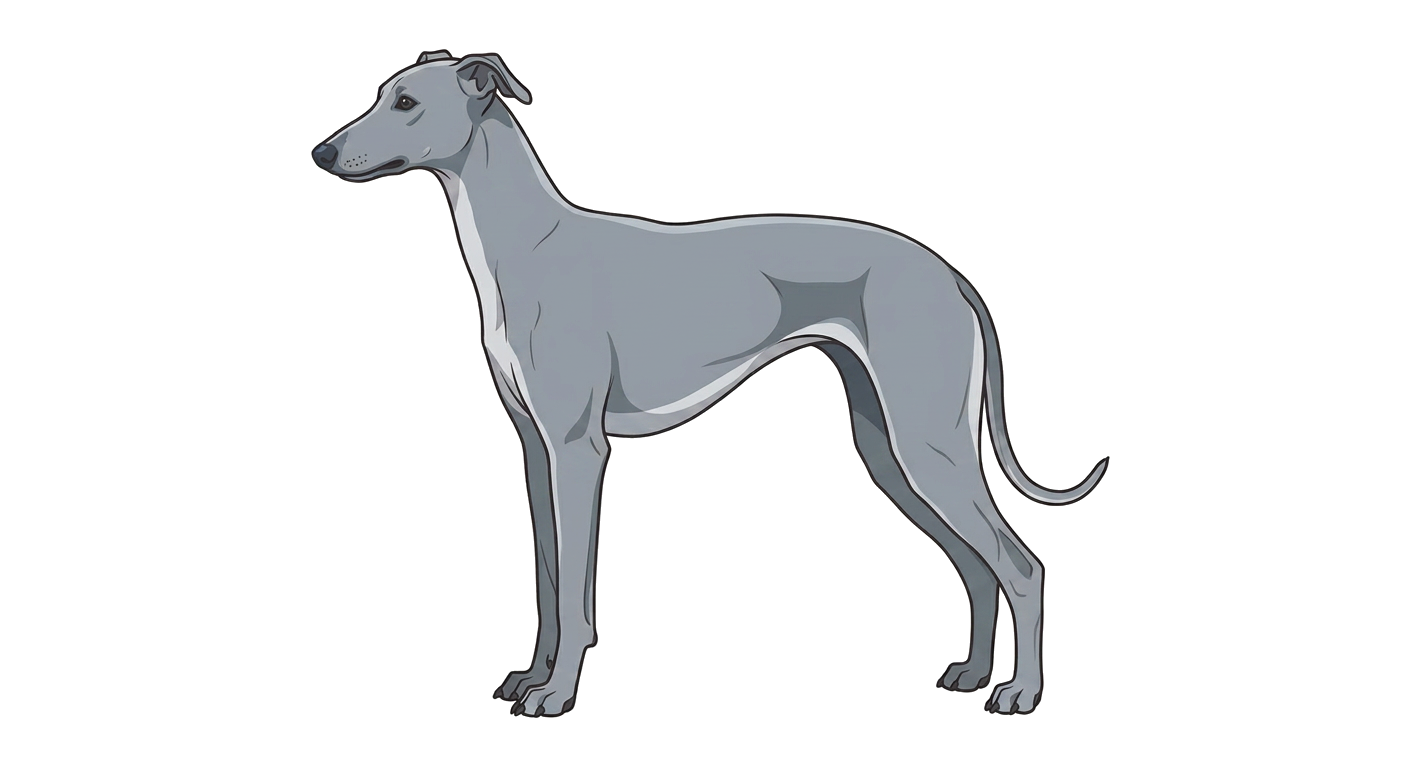
Slate Blue
Standard colour
A dilute grey or slate colouration historically observed in Deccan sighthounds.
Timeline
History & development
c. 17th–18th Century
Maratha Empire Association
The breed emerged as a functional coursing hound among the hunting communities and nobility of the Maratha Empire, valued for stamina across rocky scrubland.
Early 20th Century
Colonial Documentation
British naturalists and sporting writers documented local varieties of Indian sighthounds, noting the Mahratta as a distinct regional courser akin to a smaller, rugged greyhound.
Late 20th Century–Present
Decline and Absorption
Changing agricultural practices and lack of formal pedigree recording led to steep population declines, with remaining bloodlines largely subsumed into generalised regional sighthound populations.
Reference
Breed standard summary
- body
- Dry and muscular; neck is long and arched, chest deep to allow ample heart and lung room, with well-sprung ribs and a pronounced tuck-up at the loin.
- coat
- Short, close-lying, and smooth across the body, though historical records sometimes noted light feathering along the back of the legs and ears.
- ears
- Small to medium in size, carried semi-erect or folded back in a rose shape when relaxed, occasionally possessing sparse feathering.
- eyes
- Almond-shaped, moderately large, set slightly obliquely, ranging from dark hazel to deep brown with an alert, keen expression.
- gait
- Light, effortless, and ground-covering, demonstrating great acceleration and flexibility at full gallop.
- head
- Long, clean, and moderately narrow, tapering gradually towards the nose with minimal stop.
- size
- Typically standing between 53 and 61 cm at the withers.
- tail
- Long, slender, set low, tapering to the tip and carried low in a slight upward curve when in motion.
- colour
- Commonly fawn, brindle, black, blue, or tan, frequently with white markings on the chest, feet, and tail tip.
- muzzle
- Tapered and strong, with tight-fitting lips and powerful jaws meeting in a scissor bite.
- temperament
- Aloof and reserved with strangers, independent, yet placid and loyal in a familiar household setting.
- general appearance
- A medium-sized, lithe sighthound of functional, unexaggerated proportions, combining speed, stamina, and light-footed agility.
Health
What to screen for
Green means little to worry about, amber means ask the breeder for test results, red means manage it actively.
Anaesthetic Sensitivity
Watch closely
Like other sighthounds, low body fat and altered liver metabolism require tailored anaesthetic protocols.
Cold and Damp Intolerance
Screen for it
A lean frame and thin single coat provide little insulation against freezing or prolonged wet conditions.
Musculoskeletal Injuries
Watch closely
High sprint speeds over rough terrain carry inherent risk of toe fractures, sprains, and lacerations.
General information only — always speak to your vet about your own dog.
From real owners
Dogs like this
Mahratta Hounds added by PawPoint members through their pet passports. Share yours to appear here.
Loading the wall…
Made for the Mahratta Hound
The book, plus prints, hoodies and mugs using our own Mahratta Hound illustration — and one everyday accessory that suits any dog.

The book
Pawpoint: The Complete Dog Breed Book
Every officially recognised breed plus the unofficial ones nobody else documents. 400+ pages, hardback, printed and shipped from the UK.
Own stock — shipped by us
Framed poster
Mahratta Hound Framed Poster
Museum-weight print of our Mahratta Hound illustration, framed or unframed.
Printed to order
Hoodie
Mahratta Hound Hoodie
Heavyweight hoodie carrying the Mahratta Hound illustration on the chest.
Printed to order
Mug
Mahratta Hound Mug
Ceramic mug with the Mahratta Hound illustration wrapped around it.
Printed to order
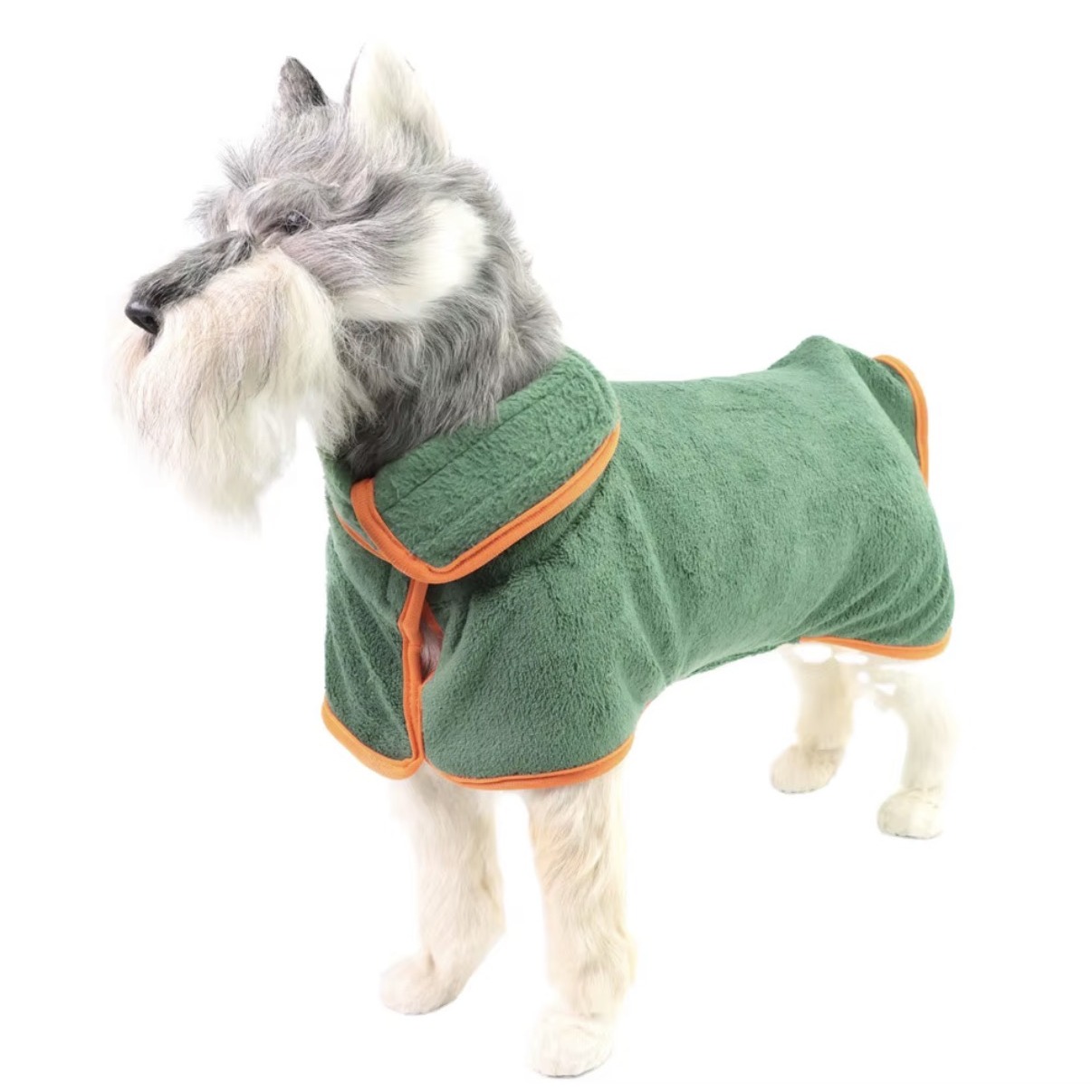
Accessory
Drying Towel Robe
Microfibre robe that soaks up a wet-walk shake.
Fits any dog

Pawpoint on YouTube
Watch the full Mahratta Hound video
Breed deep-dives, history and honest ownership talk. New film every week.
Watch now