
Miniature Pinscher
MIN-ee-uh-cher PIN-sher
Germany· Southern Germany
The Miniature Pinscher is a small, sharply built terrier-like companion known in Germany as the "Zwergpinscher", bred down in size from the Standard Pinscher rather than from the Doberman it superficially resembles.
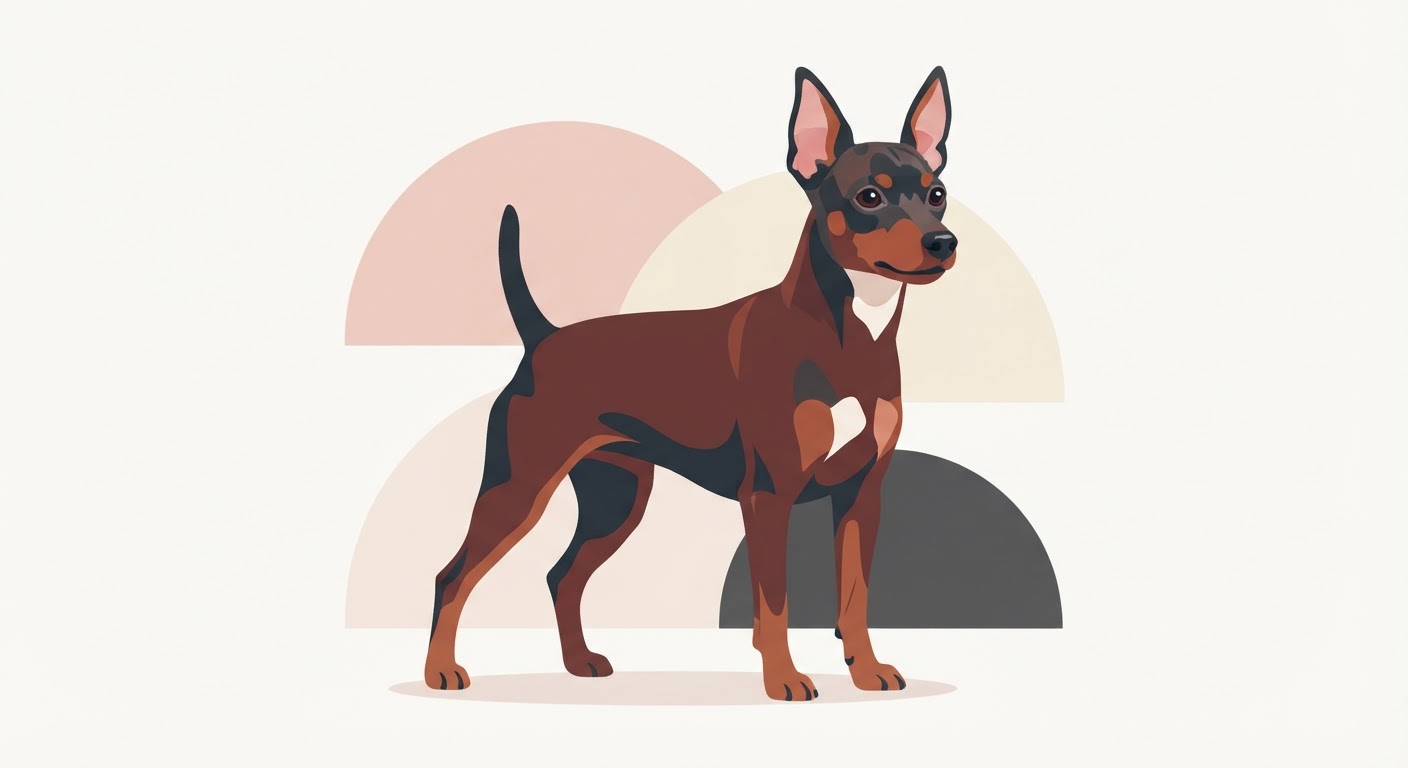
At a glance
Quick facts
Size
Toy
Exercise needs
30-45 minutes daily
Home size suited to
Flat or any size home
Grooming frequency
Weekly brush
Coat length
Short
Sheds
Yes
Lifespan
12-16 years
Town or country
Either, happy in town
Garden size needed
None needed
Where it comes from
Origins of the Miniature Pinscher
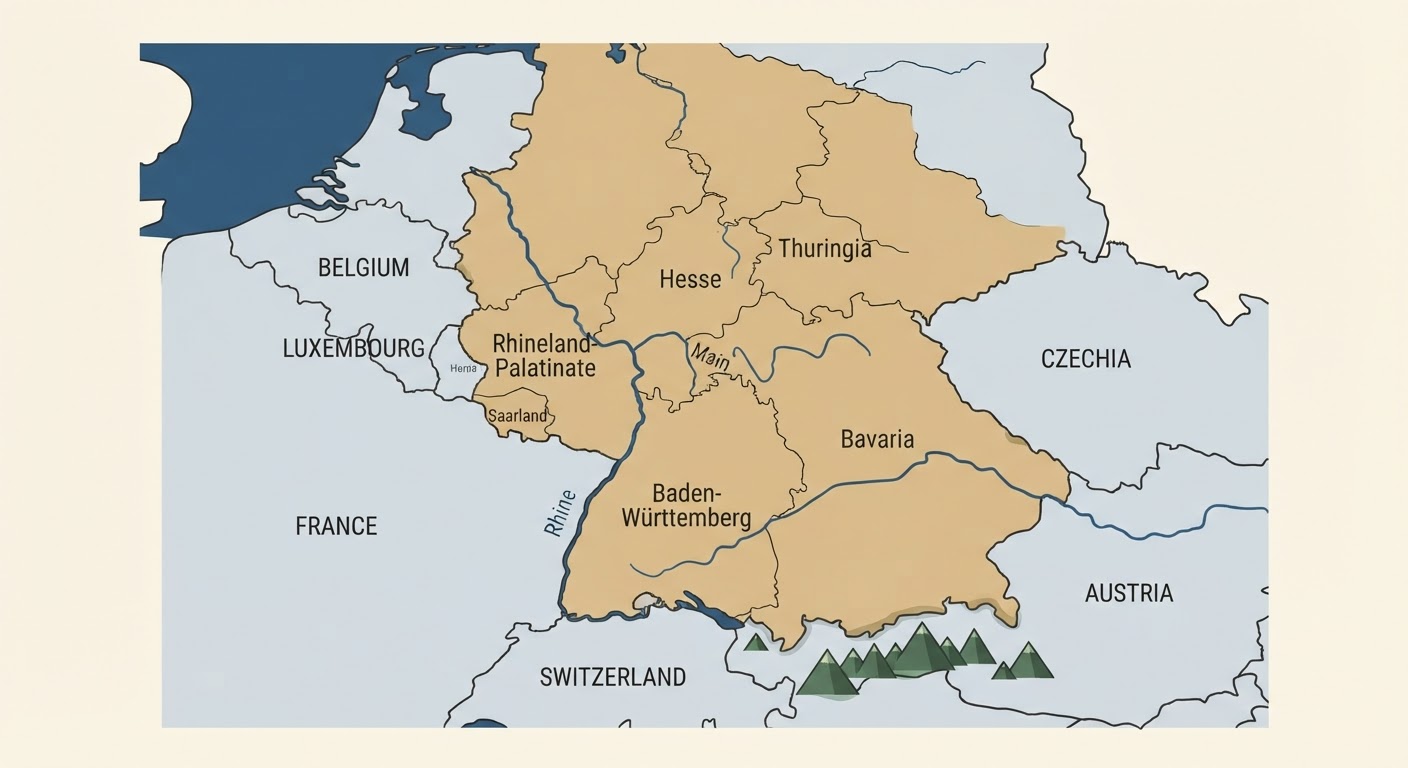
Developed in southern Germany from old Pinscher stock, the breed was shaped by farmyard life where a small, fast dog earned its keep clearing rats from barns and grain stores. Its confident temperament reflects generations of standing its ground against animals bigger than itself.
- Region
- Southern Germany
- Climate it was bred for
- Temperate continental, cold winters
- Original job
- Ratting on farms and in stables
The long read
About the breed
The breed developed in Germany over several centuries as a farmyard ratter, valued for its speed and fearlessness against vermin far larger than itself. Its hackney-like high-stepping trot, still prized in the show ring today, was originally just an efficient way of covering ground on short legs. German breeders fixed the type through the 1800s, and the first breed club was founded in Stuttgart in 1895, well before the dog reached Britain or America.
Living with a Miniature Pinscher means living with a dog that has no idea it is small. It is alert, confident to the point of stubbornness, and will patrol a garden or challenge a much larger dog without hesitation. Early, consistent training pays off, since the breed can be wilful with owners who are inconsistent. It forms close bonds with its household but is often wary of strangers and will bark to announce them, so it makes a surprisingly good watchdog for its size.
The short, smooth coat needs only weekly brushing, but the breed feels the cold badly and needs a coat on winter walks. Exercise requirements are moderate for its size — brisk walks and games rather than long hikes — though it is a keen escape artist and needs secure fencing, since it will happily follow a scent or a squirrel through the smallest gap.
Today the Min Pin is kept almost entirely as a companion, its ratting days long behind it. It suits owners who want a small dog with genuine character and do not mind a bit of independence, but it is not the easiest breed for very young children, who can be knocked about by its boisterous confidence, or be nipped if they provoke it.
Living with one
Temperament & needs
Our own ratings, based on the breed standard and how these dogs behave in ordinary homes.
Friendliness
3/5
How openly the Miniature Pinscher greets people it does not know.
Trainability
3/5
Sharp but can be wilful without consistent handling.
Energy
4/5
Lively and always on the move indoors and out.
Barking
4/5
Quick to sound the alarm at anything unfamiliar.
Grooming
1/5
Smooth coat needs only a weekly wipe over.
Suits a first-time owner
2/5
How forgiving the Miniature Pinscher is for someone taking on their first dog.
Sociability
3/5
Devoted to its family, reserved with strangers.
Independence
4/5
Confident and self-assured, sometimes to a fault.
Illustrated breed standard
The points of the breed
Hover or tap a numbered point to read what the standard asks for.
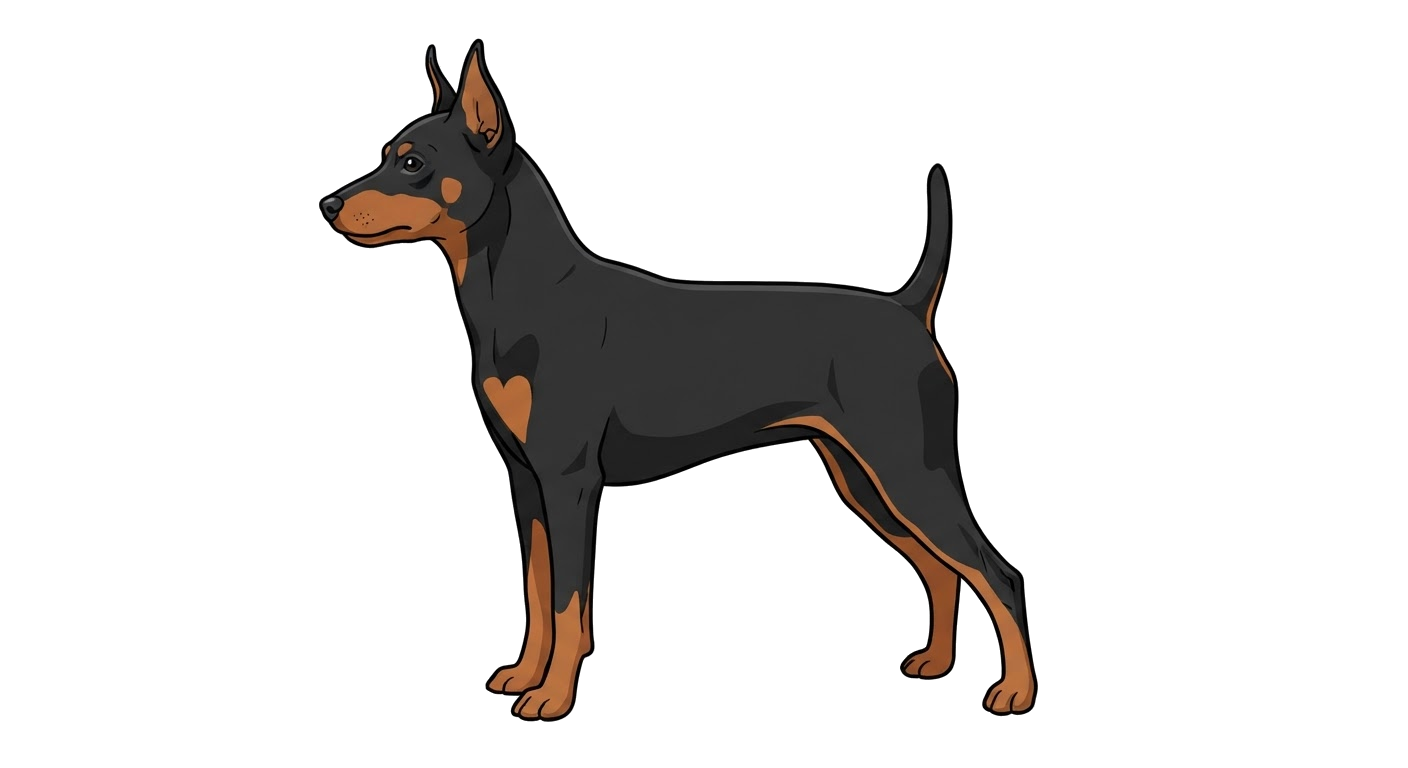
Point 1
Skull
The Miniature Pinscher's skull is judged on balance rather than size — proportionate to the body, with a clean cheek and a stop typical of the breed. Coarseness or an over-refined head are both faulted.
Colours & patterns
Recognised coats
Which coats the standard accepts — and which are simply popular.
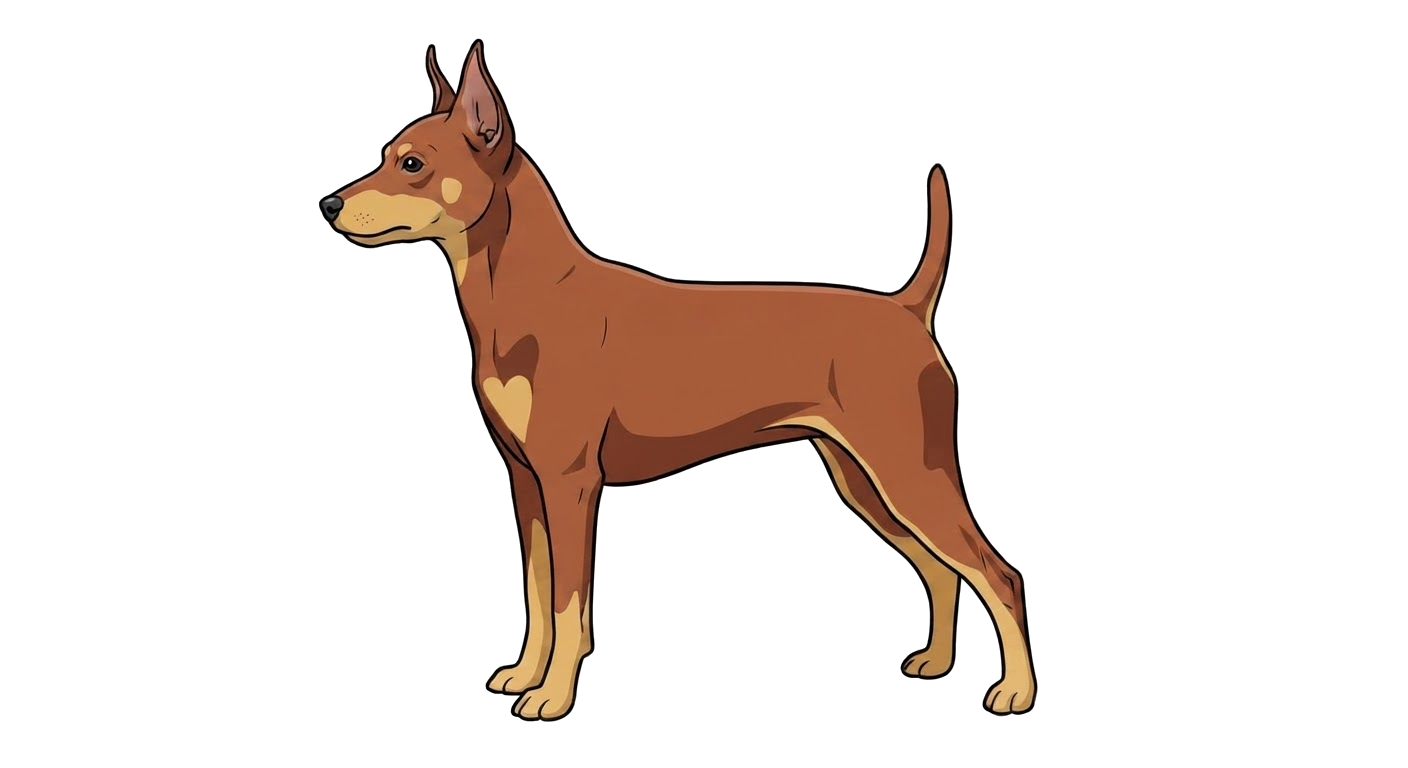
Red
Standard colour
The classic solid red seen in most Min Pins.
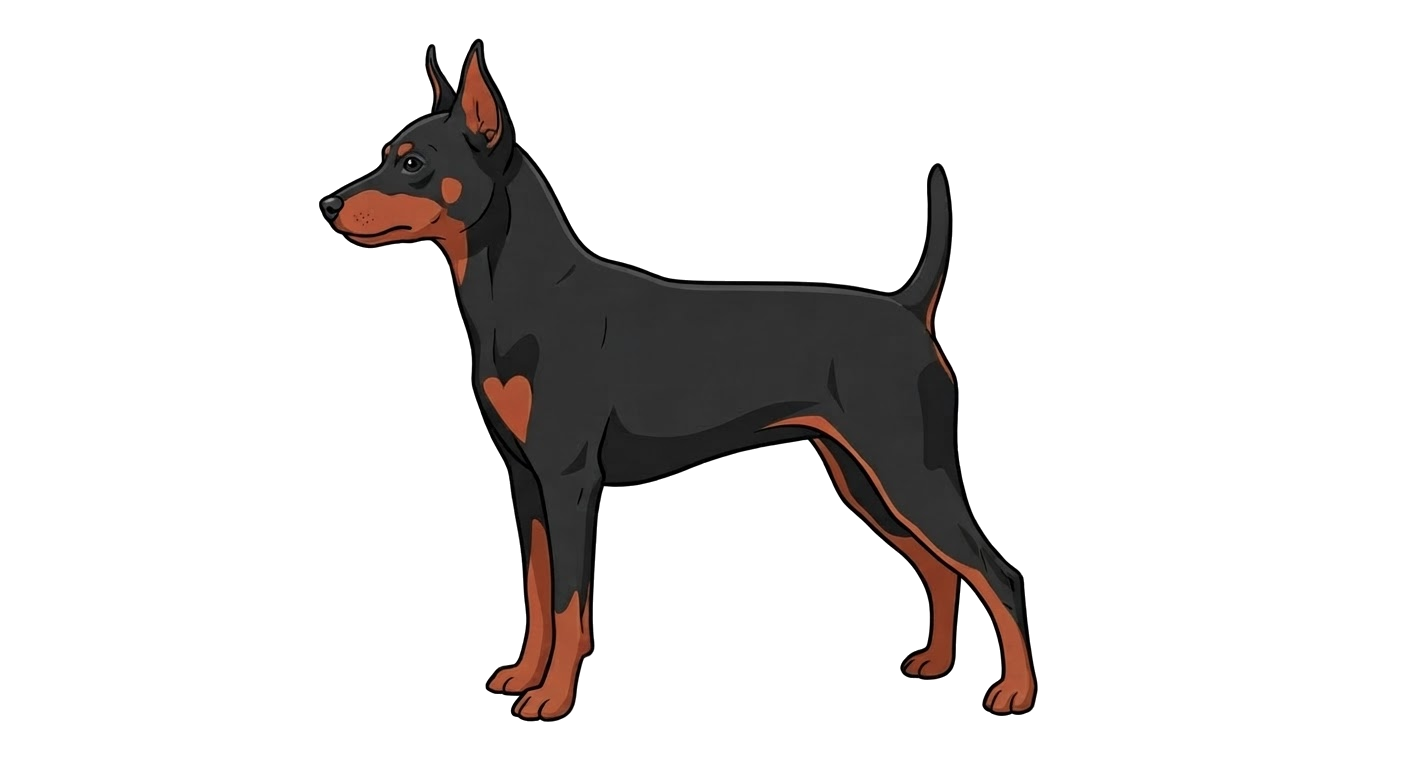
Black and rust
Standard colour
Black body with sharply defined rust markings.
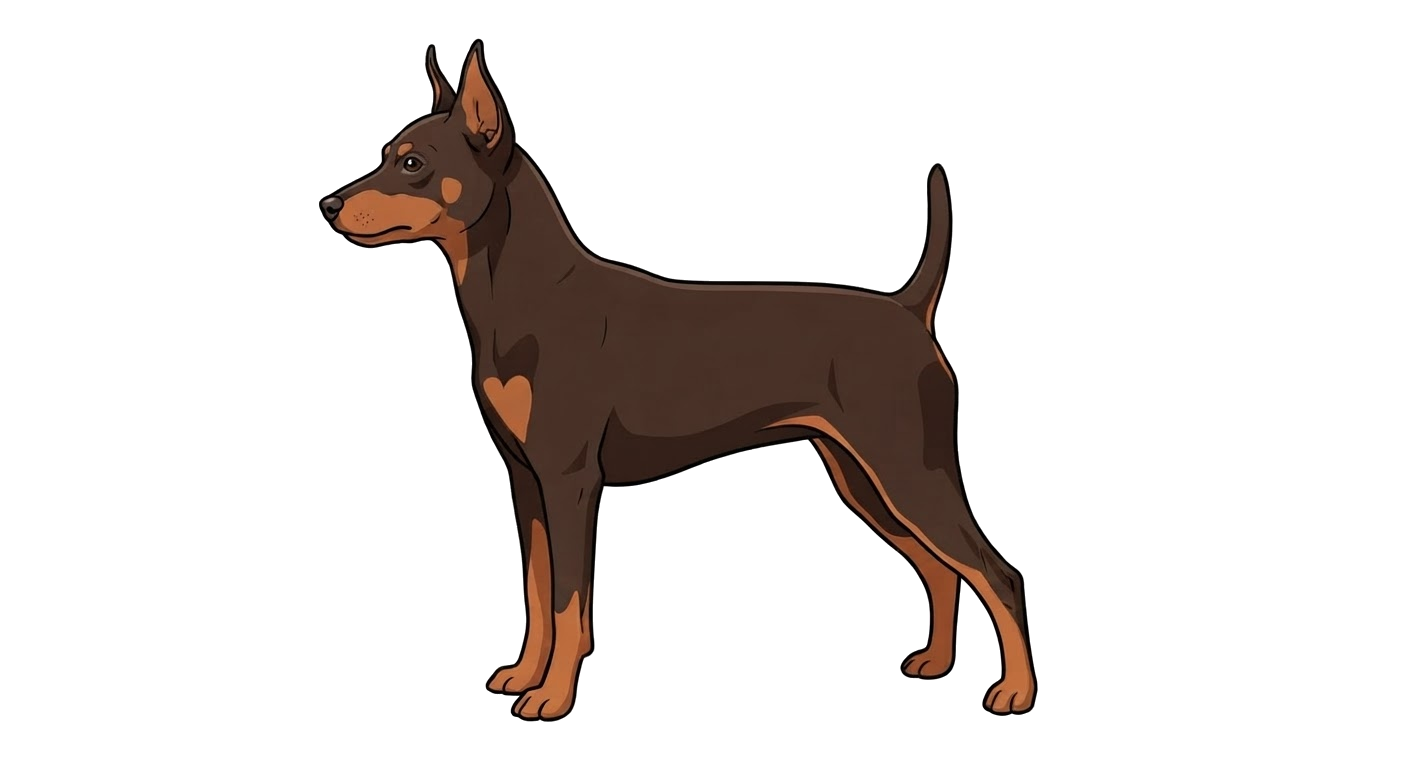
Chocolate and rust
Standard colour
A warm brown base with the same rust pattern.
Outside the standard
Other colours
Dilute coats you will see advertised. They are the same breed, but no kennel club accepts them.
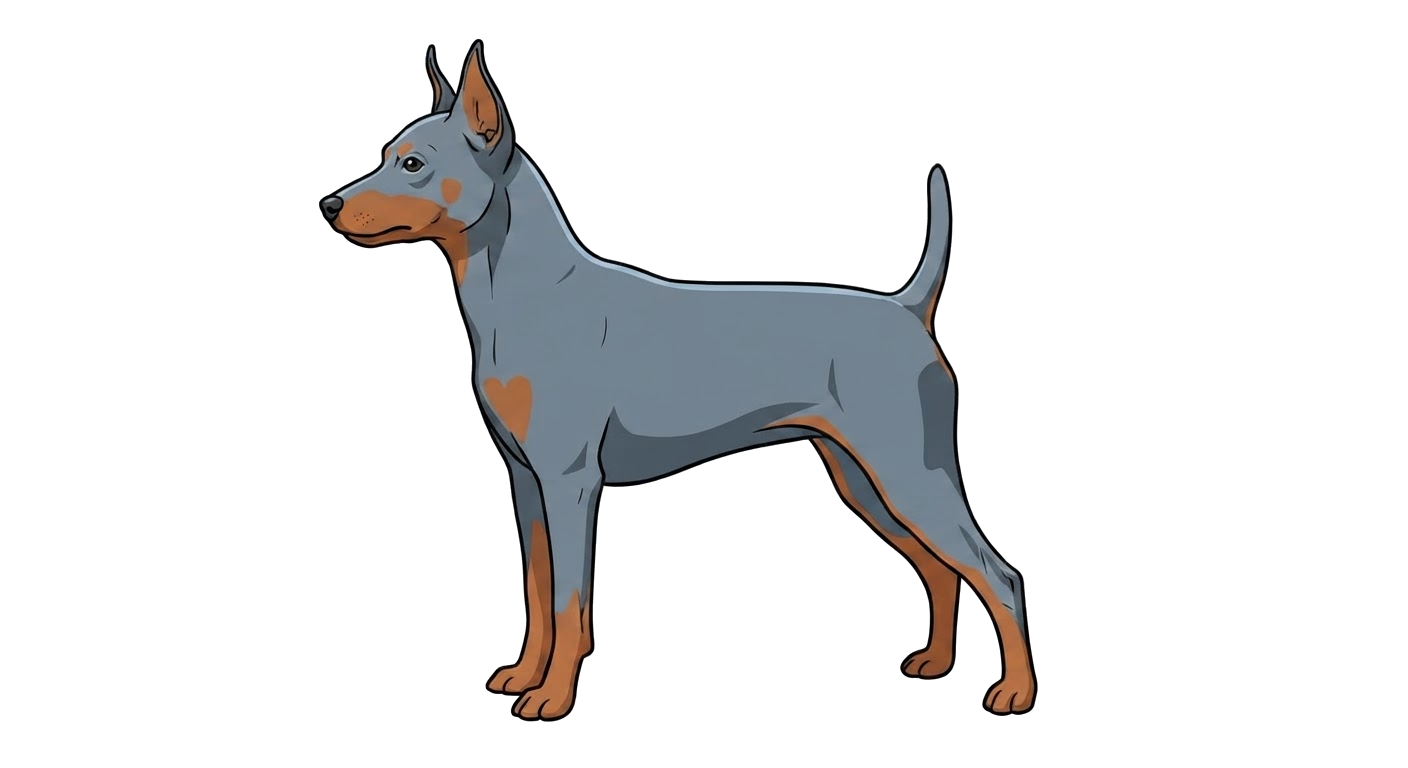
Blue and rust
Not in the standard
A diluted colour seen occasionally but outside most standards.
Timeline
History & development
1600s
Early German origins
Small pinscher-type dogs bred for ratting appear in German farm records well before formal breeding began.
1895
First breed club
The Pinscher-Klub was founded in Stuttgart to standardise the Miniature Pinscher and its larger relatives.
1929
Arrival in America
The breed was recognised by the American Kennel Club, initially under the name Pinscher.
1950s
UK establishment
The breed became firmly established in Britain after post-war imports, gaining Kennel Club recognition in the Toy group.
Reference
Breed standard summary
- body
- Short, strong back with a level topline.
- coat
- Smooth, hard, short, shining.
- ears
- Set high, small, either erect or dropped.
- eyes
- Dark, round, full of fire and intelligence.
- gait
- Distinctive hackney-like high-stepping action.
- head
- Narrow, tapering, with a flat skull and well-defined stop.
- size
- Toy, 25-32cm at the shoulder.
- tail
- Set high and carried erect.
- colour
- Red, Black and rust, Chocolate and rust. Colours outside this list are seen but are not accepted by the kennel clubs.
- temperament
- Typical of the breed: strongest in energy, independence, barking. Nervousness or aggression are serious faults in the show ring and in the home.
- general appearance
- A compact, sturdy, well-balanced toy dog with a proud, confident carriage.
Health
What to screen for
Green means little to worry about, amber means ask the breeder for test results, red means manage it actively.
Patellar luxation
Screen for it
Ask breeders for a recent patella check on both parents.
Legg-Calve-Perthes disease
Screen for it
A hip condition of small breeds; screen for lameness in growing pups.
Progressive retinal atrophy
Screen for it
Request confirmation of clear eye test results in the breeding line.
Cold sensitivity
Low concern
Not a disease, but a coat for cold walks prevents unnecessary shivering.
General information only — always speak to your vet about your own dog.
From real owners
Dogs like this
Miniature Pinschers added by PawPoint members through their pet passports. Share yours to appear here.
Loading the wall…
Made for the Miniature Pinscher
The book, plus prints, hoodies and mugs using our own Miniature Pinscher illustration — and one everyday accessory that suits any dog.
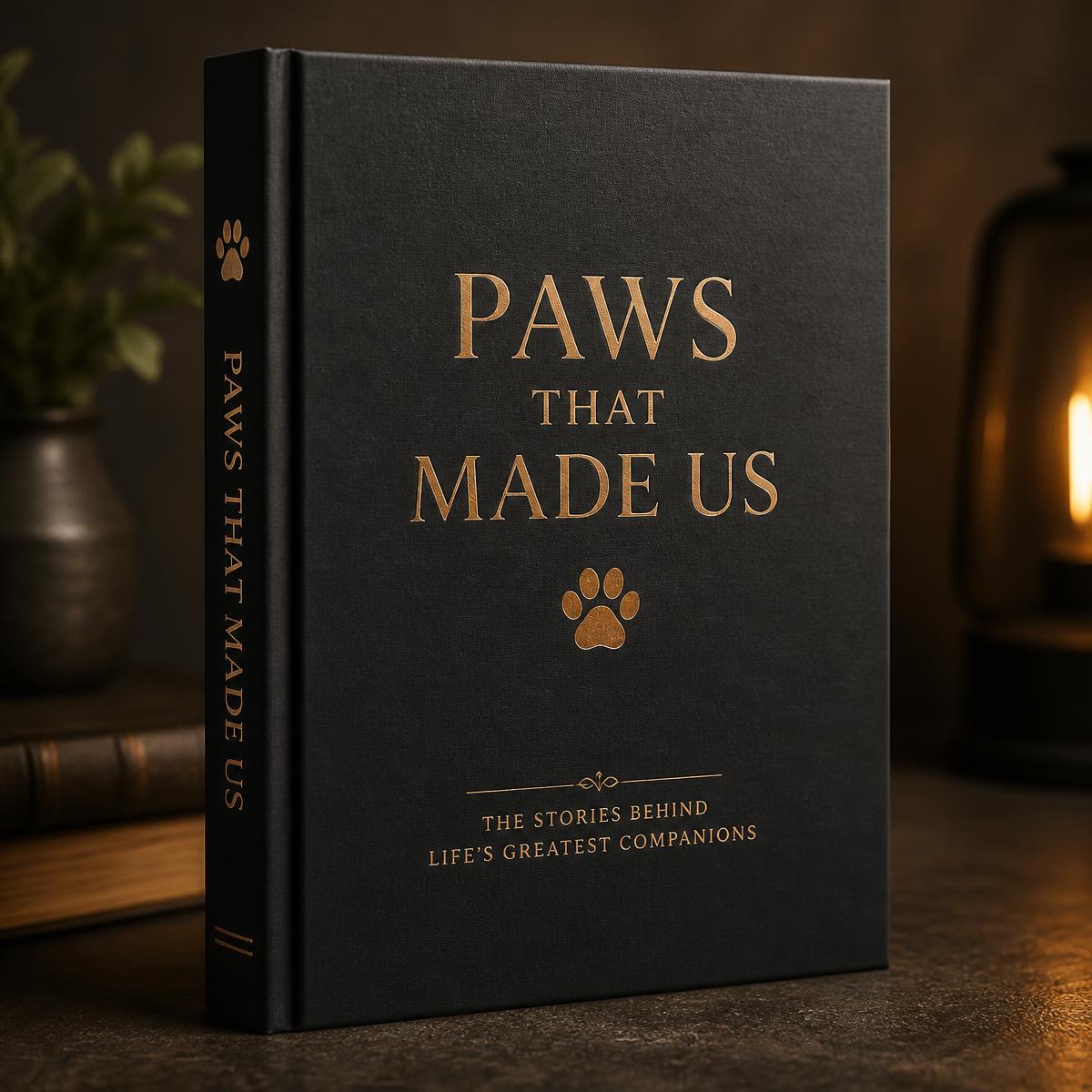
The book
Pawpoint: The Complete Dog Breed Book
Every officially recognised breed plus the unofficial ones nobody else documents. 400+ pages, hardback, printed and shipped from the UK.
Own stock — shipped by us
Framed poster
Miniature Pinscher Framed Poster
Museum-weight print of our Miniature Pinscher illustration, framed or unframed.
Printed to order
Hoodie
Miniature Pinscher Hoodie
Heavyweight hoodie carrying the Miniature Pinscher illustration on the chest.
Printed to order
Mug
Miniature Pinscher Mug
Ceramic mug with the Miniature Pinscher illustration wrapped around it.
Printed to order
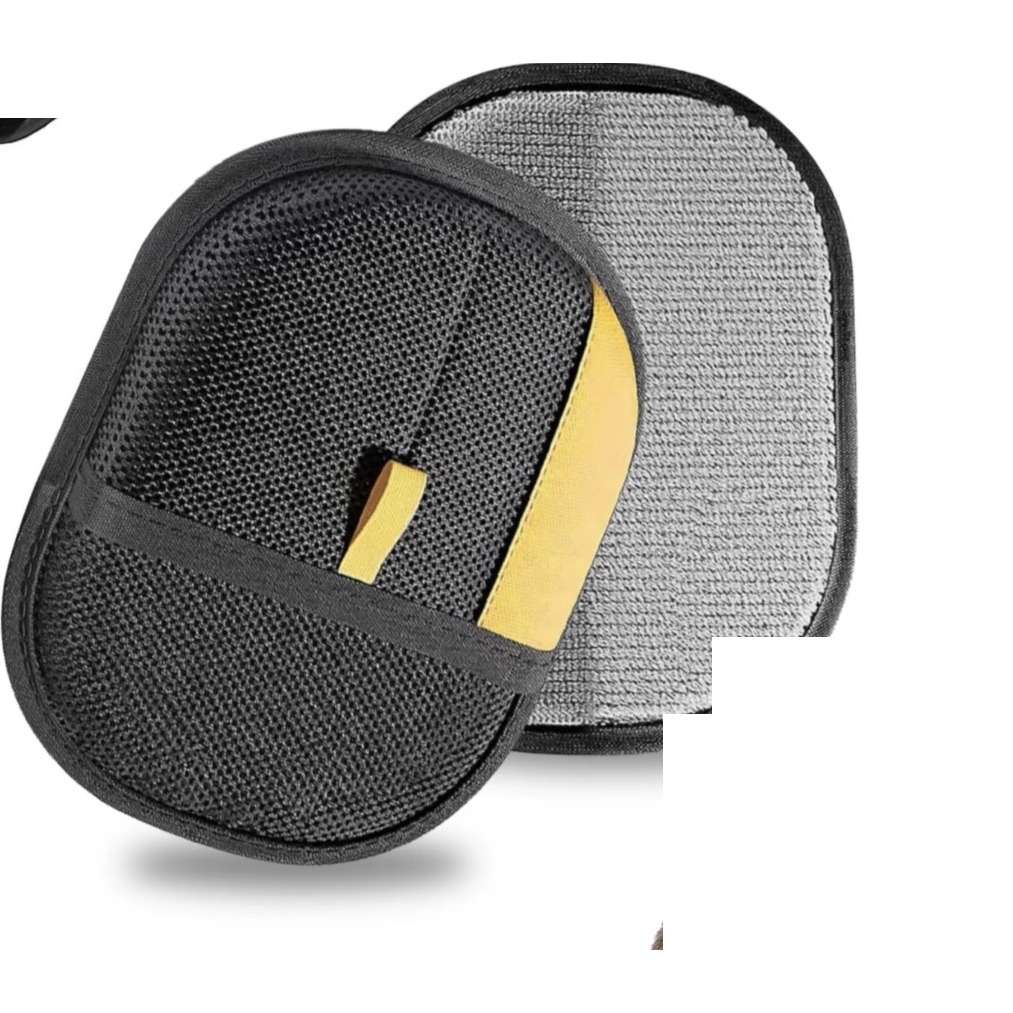
Accessory
Slicker & Deshedding Brush
Self-cleaning slicker head for coats of every length.
Fits any dog
Pawpoint on YouTube
Watch the full Miniature Pinscher video
Breed deep-dives, history and honest ownership talk. New film every week.
Watch now