
Miniature Schnauzer
MIN-ee-uh-cher SHNOW-zer
Germany· Bavaria and Wurttemberg
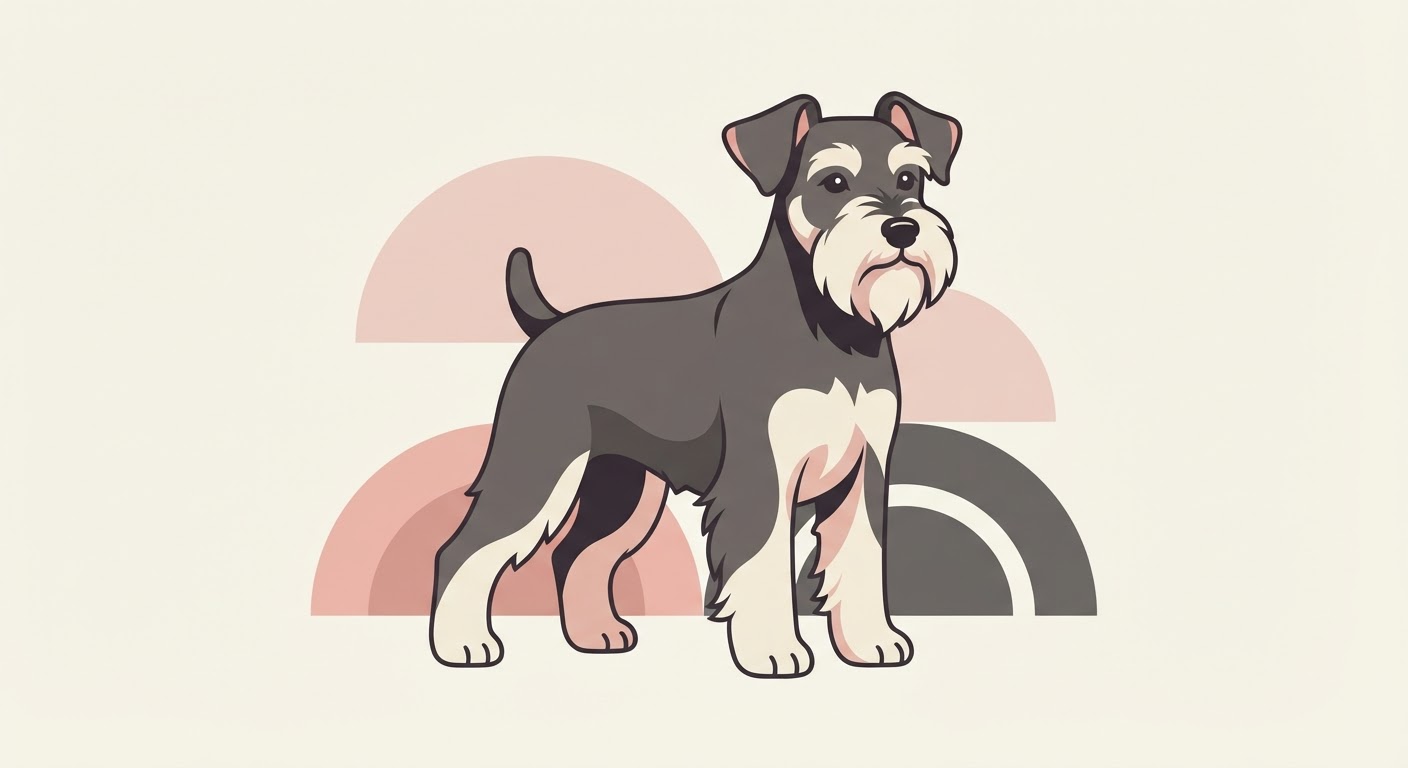
The Miniature Schnauzer is a compact, wiry-coated terrier-type dog from Germany, bred down from the Standard Schnauzer to make a smaller, more manageable ratter for farms and households.
At a glance
Quick facts
Size
Small
Exercise needs
45-60 minutes daily
Home size suited to
Flat or small home
Grooming frequency
Weekly brush, hand-strip a few times a year
Coat length
Wiry
Sheds
Yes, heavily when moulting
Lifespan
12-15 years
Town or country
Either, happy in town
Garden size needed
Small garden or none
Where it comes from
Origins of the Miniature Schnauzer
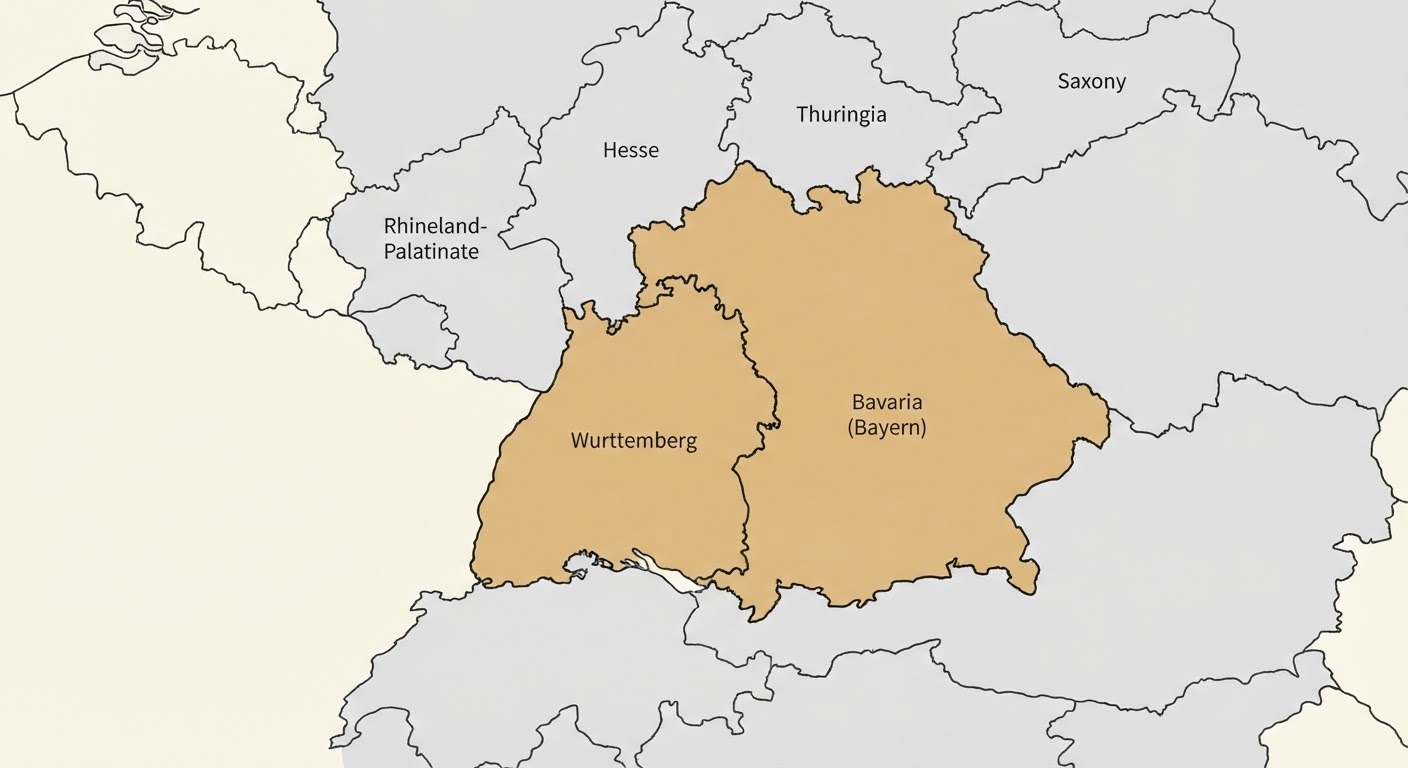
Bred down from the Standard Schnauzer in southern Germany, the Miniature Schnauzer was developed to be small enough for household work yet tough enough to see off rats in barns and grain stores. Its wiry coat protected it from brambles and rough weather during outdoor work.
- Region
- Bavaria and Wurttemberg
- Climate it was bred for
- Temperate continental, cold winters
- Original job
- Ratting around farms and stables
The long read
About the breed
Breeders in Bavaria and Wurttemberg in the late nineteenth century crossed smaller Standard Schnauzers with Affenpinschers and Poodles to fix a reduced size while keeping the breed's harsh, weatherproof coat and terrier temperament. The result, first shown in Germany in 1899, proved an efficient ratter around stables and outbuildings, and its small size made it far more practical as a household dog than its larger cousin.
Life with a Miniature Schnauzer is lively and busy. The breed is alert, intelligent and eager to work, which makes it highly trainable but also prone to boredom if left without occupation. It bonds closely with its family and gets on well with children, though its terrier instincts mean small pets such as hamsters are best kept out of reach. It tends to bark at visitors and passing traffic, useful as a watchdog trait but one that needs managing in a quiet household.
The wiry double coat does not shed heavily but does require regular stripping or clipping, plus the distinctive beard needs wiping after meals to avoid staining and matting. Most owners visit a groomer every six to eight weeks. Exercise needs are moderate — daily walks and some off-lead time satisfy the breed, though it enjoys agility and other dog sports if given the chance.
Today the Miniature Schnauzer is one of the most popular terrier-type breeds worldwide, kept almost entirely as a companion, but it retains its working instincts underneath the smart show trim.
Living with one
Temperament & needs
Our own ratings, based on the breed standard and how these dogs behave in ordinary homes.
Friendliness
4/5
How openly the Miniature Schnauzer greets people it does not know.
Trainability
5/5
Quick to learn and keen to please with consistent handling.
Energy
4/5
Busy and alert, enjoys having a job to do.
Barking
4/5
Vocal watchdog, quick to announce visitors.
Grooming
4/5
Wiry coat needs stripping or clipping every six to eight weeks.
Suits a first-time owner
4/5
How forgiving the Miniature Schnauzer is for someone taking on their first dog.
Sociability
4/5
Good with children and generally friendly once settled.
Independence
2/5
Prefers company and can be clingy with its family.
Illustrated breed standard
The points of the breed
Hover or tap a numbered point to read what the standard asks for.
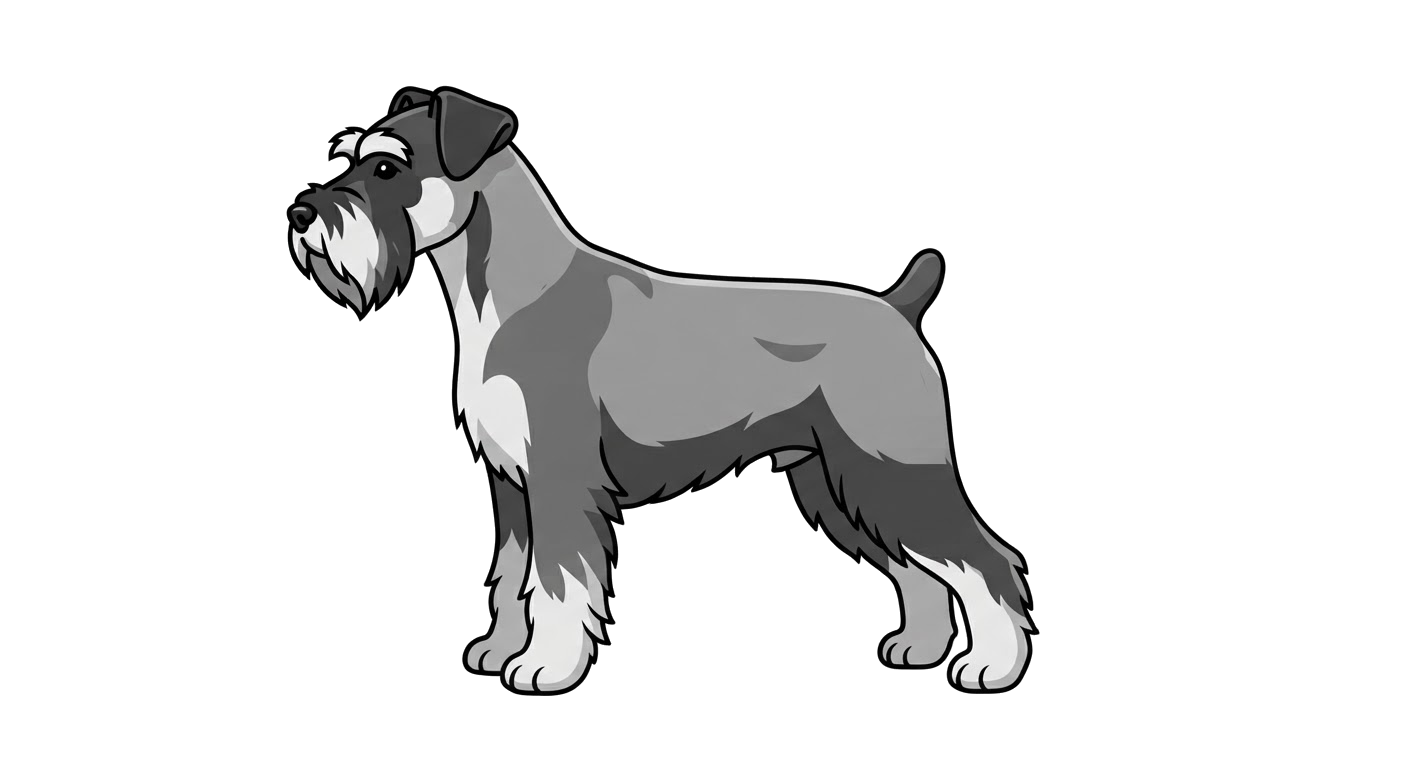
Point 1
Skull
The Miniature Schnauzer's skull is judged on balance rather than size — proportionate to the body, with a clean cheek and a stop typical of the breed. Coarseness or an over-refined head are both faulted.
Colours & patterns
Recognised coats
Which coats the standard accepts — and which are simply popular.
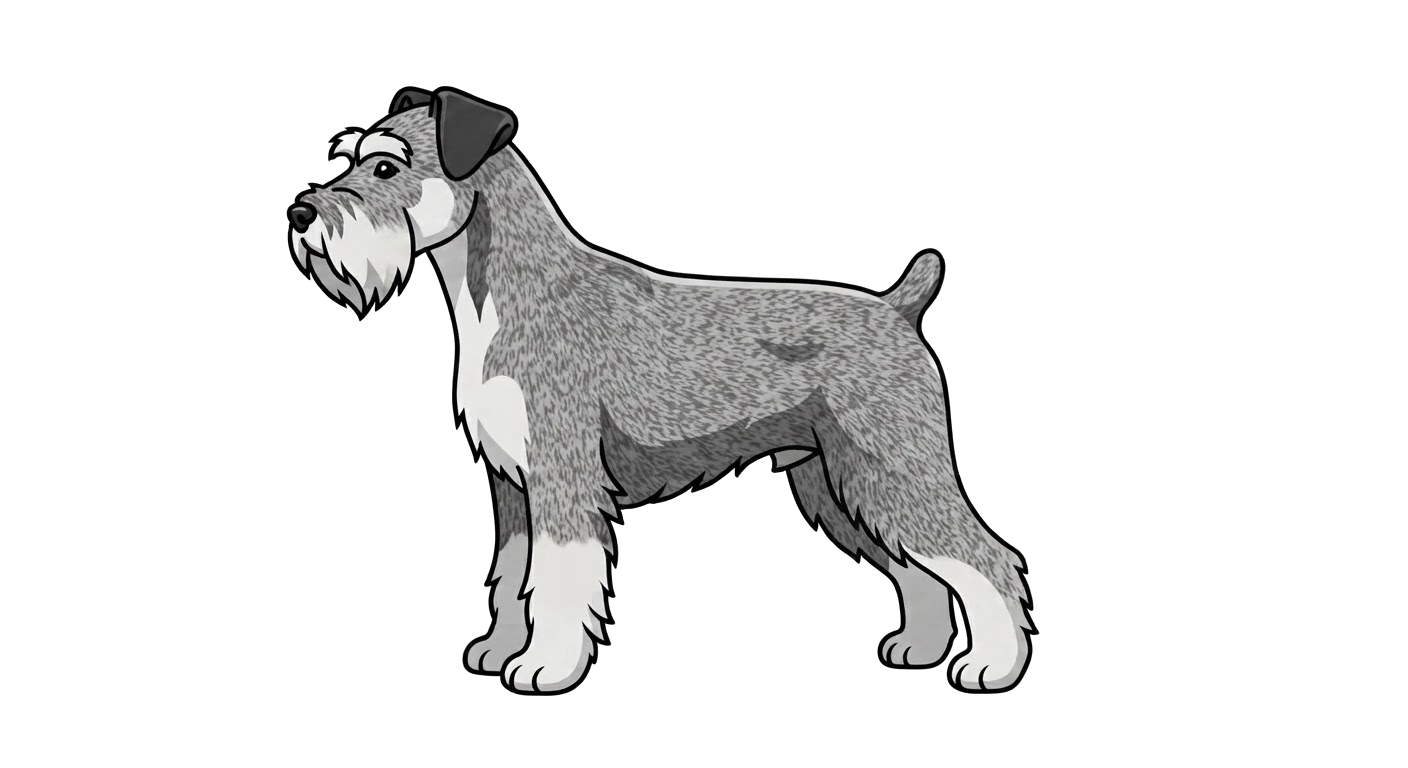
Salt and pepper
Standard colour
The classic banded grey coat, most common colour of the breed.
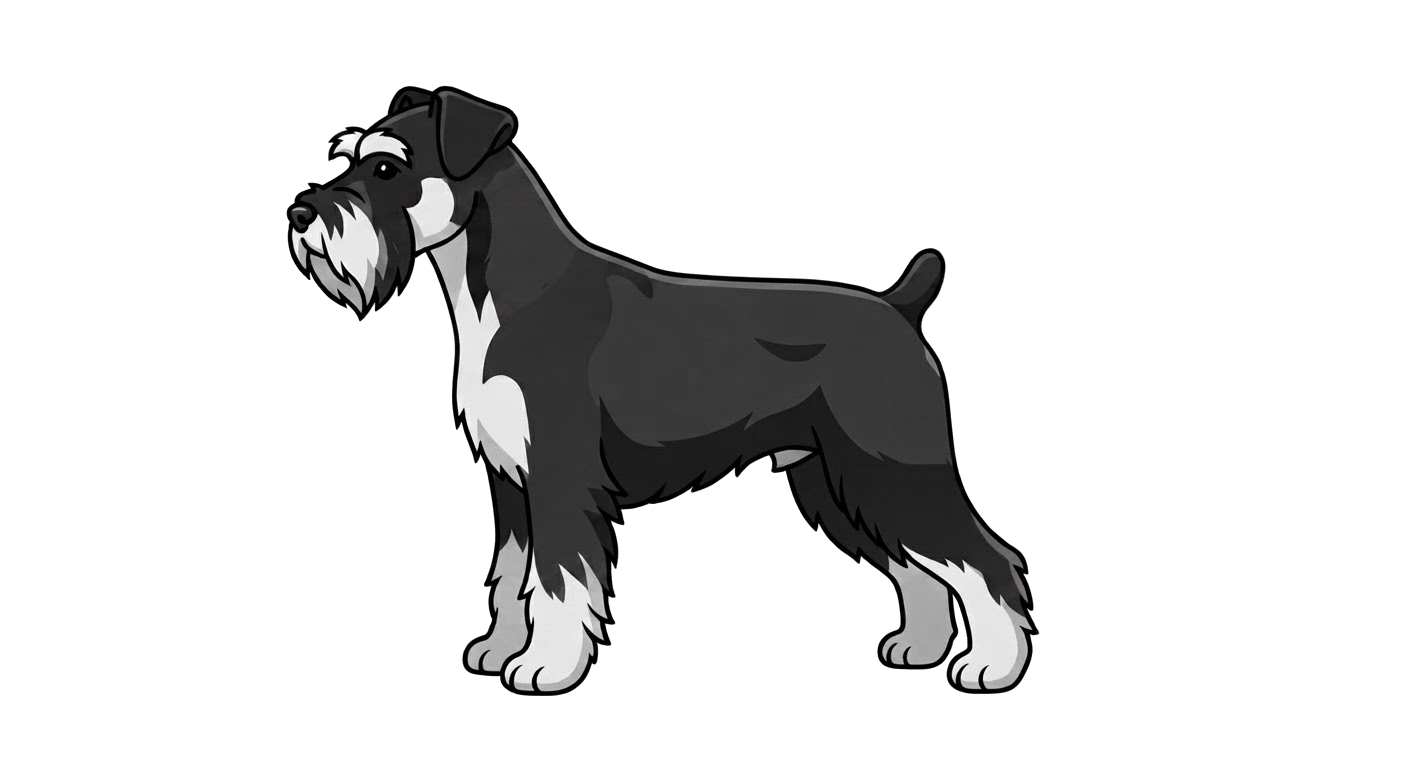
Black and silver
Standard colour
Black body with silver-white markings on face and legs.
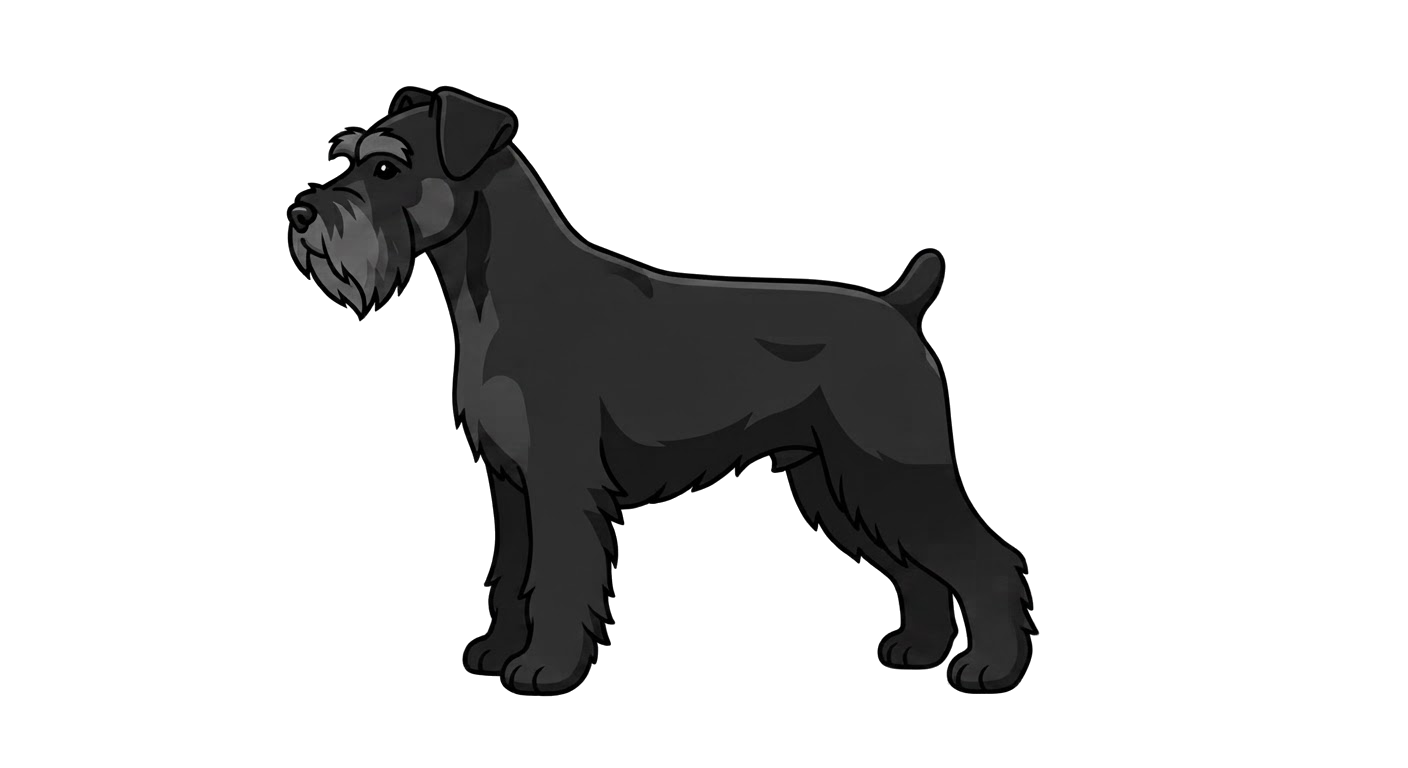
Solid black
Standard colour
An entirely black coat with no other markings.
Outside the standard
Other colours
Dilute coats you will see advertised. They are the same breed, but no kennel club accepts them.
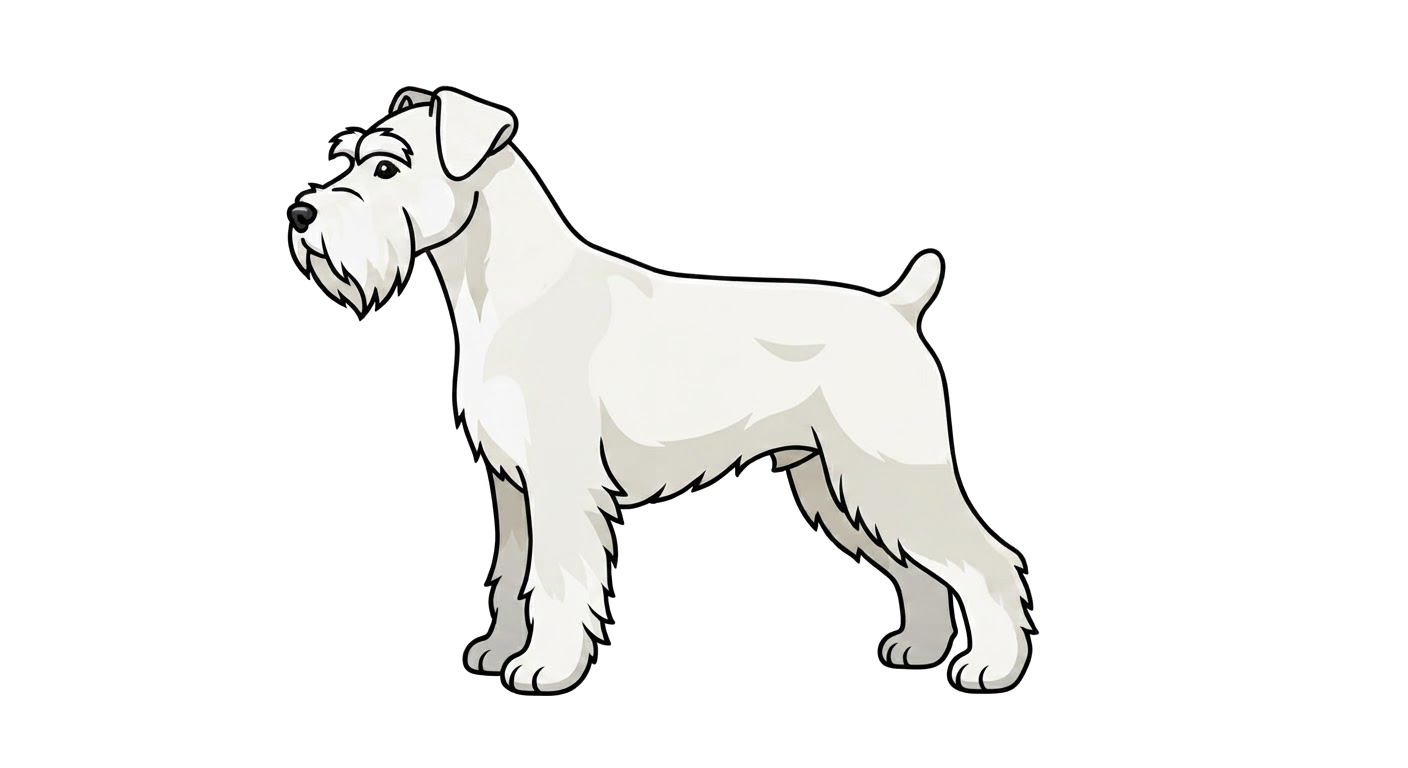
White
Not in the standard
Recognised in some countries but not accepted by the UK standard.
Timeline
History & development
1880s
Development begins
German breeders began reducing the size of the Standard Schnauzer using smaller dogs and Affenpinscher crosses.
1899
First shown
The breed was exhibited in Germany as a distinct, smaller type of Schnauzer.
1926
Arrival in the United States
The Miniature Schnauzer was imported to America, where it quickly grew in popularity.
1930s
UK recognition
The Kennel Club recognised the breed, placing it in the Utility group.
1950s onward
The breed today
Kennel club registrations settled into a steady pattern and the Miniature Schnauzer moved from a working specialist to a family companion, with breed clubs in the UK and abroad now focused on health testing and keeping true type alive.
Reference
Breed standard summary
- body
- Short, deep, with a strong level back.
- coat
- Wiry, hard topcoat with a close undercoat.
- ears
- Small, V-shaped, folded close to the head.
- eyes
- Small, dark, oval, with a keen expression.
- gait
- Free, balanced, and covers ground with drive.
- head
- Strong and rectangular, with a dense moustache and beard.
- size
- Small, 30-36cm at the shoulder.
- tail
- Set and carried high.
- colour
- Salt and pepper, Black and silver, Solid black. Colours outside this list are seen but are not accepted by the kennel clubs.
- temperament
- Typical of the breed: strongest in trainability, energy, sociability. Nervousness or aggression are serious faults in the show ring and in the home.
- general appearance
- A robust, sturdily built terrier of square proportion with a distinctive bearded muzzle.
Health
What to screen for
Green means little to worry about, amber means ask the breeder for test results, red means manage it actively.
Myotonia congenita
Watch closely
A rare muscle stiffness condition; ask breeders about genetic screening.
Urinary stones
Screen for it
The breed can be prone to bladder stones; discuss diet with a vet if signs appear.
Progressive retinal atrophy
Screen for it
Request eye test certificates for both parents.
Pancreatitis
Watch closely
Sensitive digestion in some lines; avoid fatty scraps and rich treats.
General information only — always speak to your vet about your own dog.
From real owners
Dogs like this
Miniature Schnauzers added by PawPoint members through their pet passports. Share yours to appear here.
Loading the wall…
Made for the Miniature Schnauzer
The book, plus prints, hoodies and mugs using our own Miniature Schnauzer illustration — and one everyday accessory that suits any dog.

The book
Pawpoint: The Complete Dog Breed Book
Every officially recognised breed plus the unofficial ones nobody else documents. 400+ pages, hardback, printed and shipped from the UK.
Own stock — shipped by us
Framed poster
Miniature Schnauzer Framed Poster
Museum-weight print of our Miniature Schnauzer illustration, framed or unframed.
Printed to order
Hoodie
Miniature Schnauzer Hoodie
Heavyweight hoodie carrying the Miniature Schnauzer illustration on the chest.
Printed to order
Mug
Miniature Schnauzer Mug
Ceramic mug with the Miniature Schnauzer illustration wrapped around it.
Printed to order
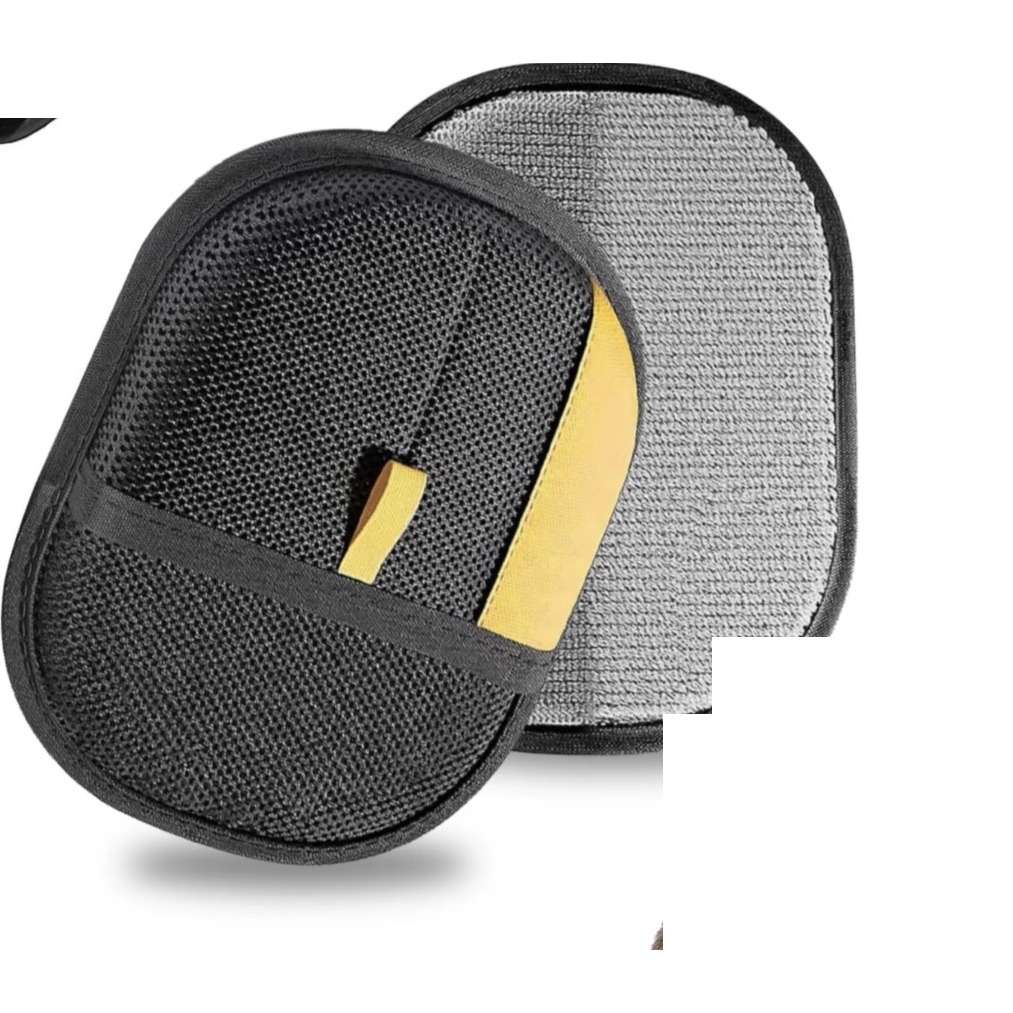
Accessory
Slicker & Deshedding Brush
Self-cleaning slicker head for coats of every length.
Fits any dog
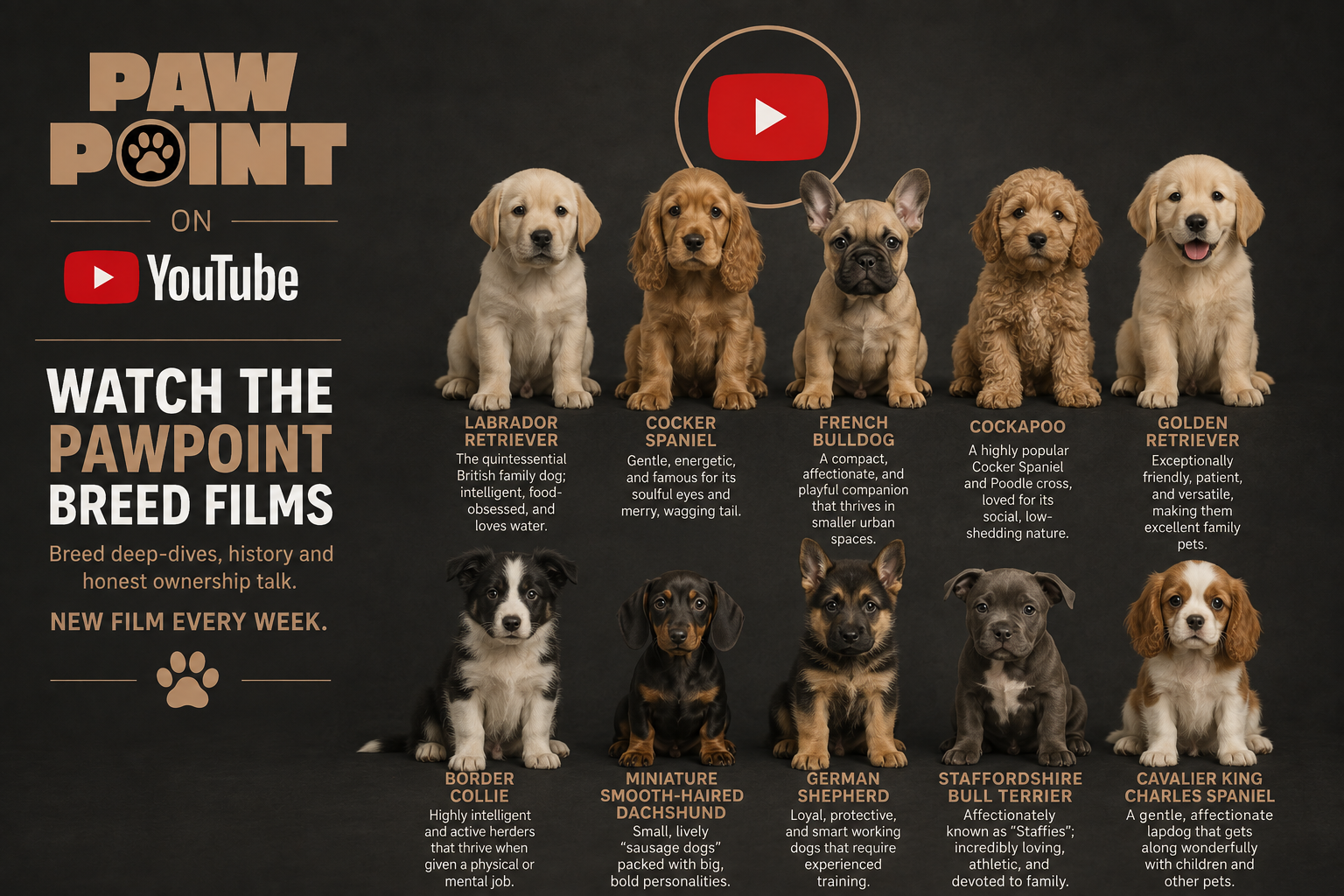
Pawpoint on YouTube
Watch the full Miniature Schnauzer video
Breed deep-dives, history and honest ownership talk. New film every week.
Watch now