
Neapolitan Mastiff
nee-uh-poh-LEE-tan MASS-tiff
Italy· Campania, near Naples
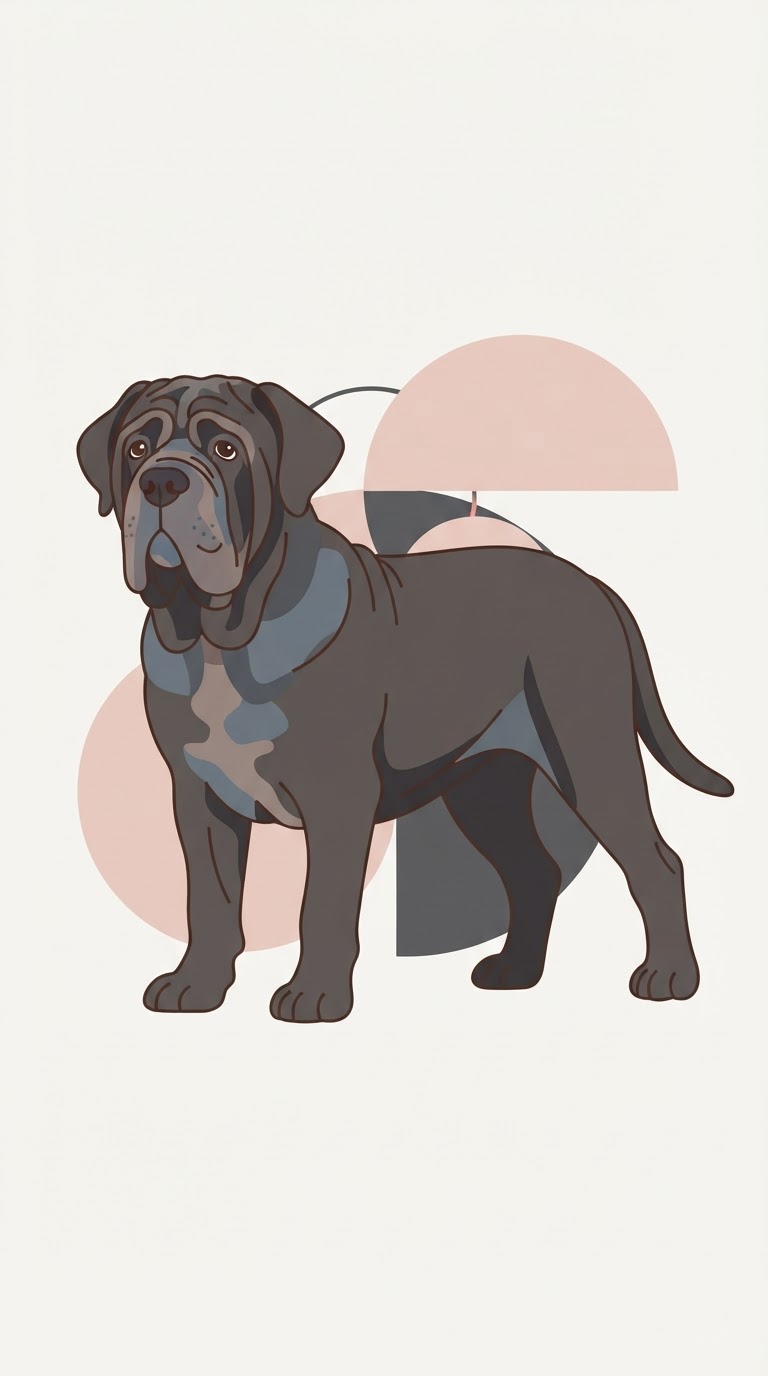
The Neapolitan Mastiff is a giant, heavily wrinkled guard dog from southern Italy, descended from ancient Roman fighting mastiffs and bred for centuries to protect property with sheer size and presence.
At a glance
Quick facts
Size
Giant
Exercise needs
30-45 minutes daily
Home size suited to
Large home with space to stretch out
Grooming frequency
Weekly brush
Coat length
Short
Sheds
Yes, heavily when moulting
Lifespan
8-10 years
Town or country
Better suited to the country
Garden size needed
Large and securely fenced
Where it comes from
Origins of the Neapolitan Mastiff
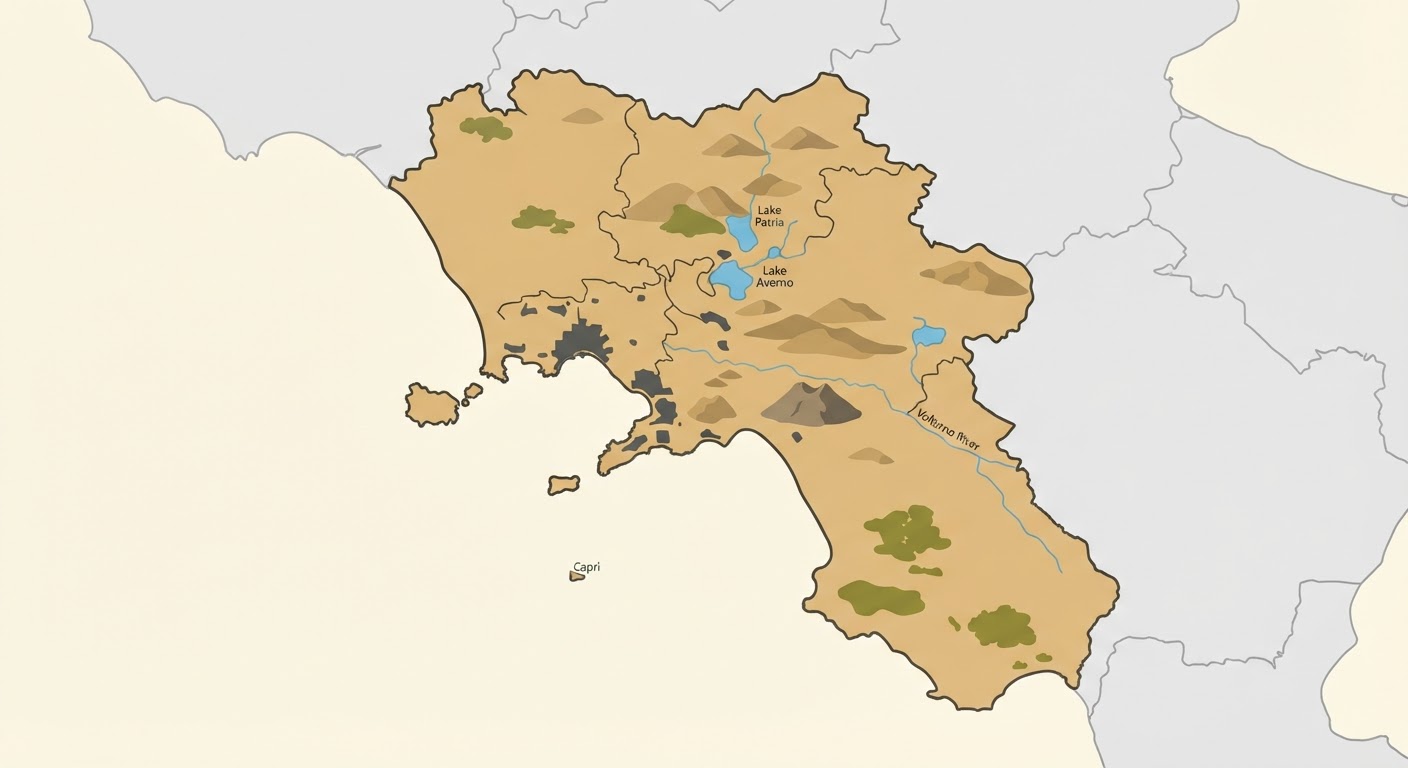
Descended from ancient Roman mastiffs, the breed was preserved by farmers in the Campania countryside around Naples, where a large, imposing guard dog was needed to deter thieves from isolated farms and estates. Its loose skin and heavy build reflect a job based on presence rather than speed.
- Region
- Campania, near Naples
- Climate it was bred for
- Warm Mediterranean
- Original job
- Guarding property and estates
The long read
About the breed
The breed's ancestors were used by Roman legions and later by farmers and landowners around Naples to guard estates, livestock and homes. Its loose, abundant skin, thought to have helped it survive bites during confrontations with intruders or predators, became a defining feature. The modern Neapolitan Mastiff was standardised in the 1940s by Italian fanciers who sought out surviving farm dogs of the type in Campania and codified the breed we recognise today.
Living with a Neapolitan Mastiff means accepting a very large, very calm dog that drools copiously and does not want for much beyond space, food and its family's company. It is naturally protective and wary of strangers, forming a deep bond with its household while remaining aloof or suspicious of visitors, which requires careful socialisation from puppyhood. It is not a breed for first-time owners, given its size, strength and strong guarding instincts.
Exercise needs are moderate rather than high — this is not an athletic breed and can overheat easily, so short, cool walks suit it better than long runs. The loose skin needs regular checking for skin fold infections, and the drool needs a fair amount of housekeeping tolerance. Its enormous size also means a shortened lifespan compared with smaller breeds, and joint problems are common given the strain of its own bulk.
Today the Neapolitan Mastiff remains primarily a guardian and companion for those who can manage its size and its considerable slobber, valued for its calm, watchful presence rather than for any showy athleticism.
Living with one
Temperament & needs
Our own ratings, based on the breed standard and how these dogs behave in ordinary homes.
Friendliness
2/5
How openly the Neapolitan Mastiff greets people it does not know.
Trainability
3/5
Intelligent but independent, needs a confident handler.
Energy
2/5
Calm and low-key, content to laze for much of the day.
Barking
2/5
A deep, infrequent bark rather than constant noise.
Grooming
3/5
Short coat is easy but skin folds need regular cleaning.
Suits a first-time owner
3/5
How forgiving the Neapolitan Mastiff is for someone taking on their first dog.
Sociability
2/5
Loyal to family but naturally wary of strangers.
Independence
4/5
Makes its own decisions, especially around perceived threats.
Illustrated breed standard
The points of the breed
Hover or tap a numbered point to read what the standard asks for.
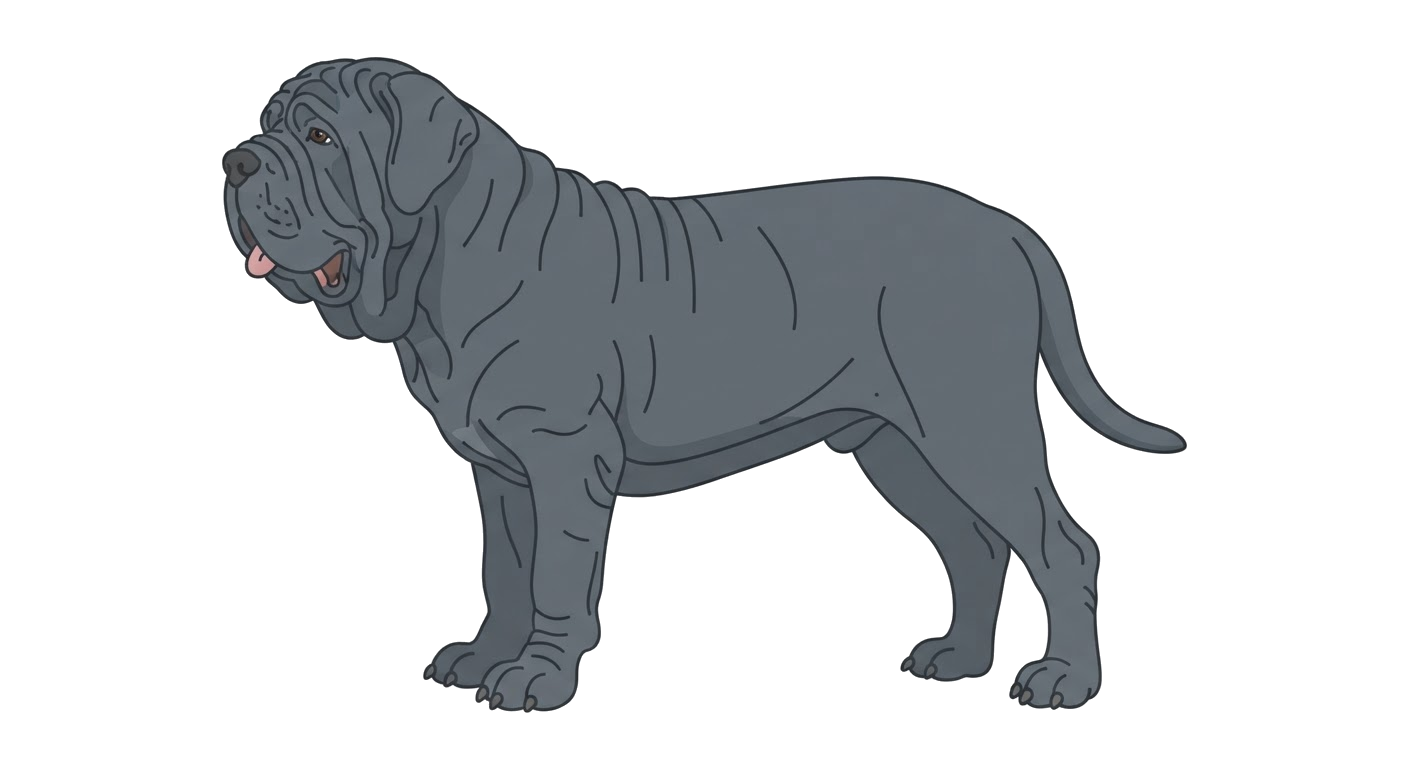
Point 1
Skull
The Neapolitan Mastiff's skull is judged on balance rather than size — proportionate to the body, with a clean cheek and a stop typical of the breed. Coarseness or an over-refined head are both faulted.
Colours & patterns
Recognised coats
Which coats the standard accepts — and which are simply popular.
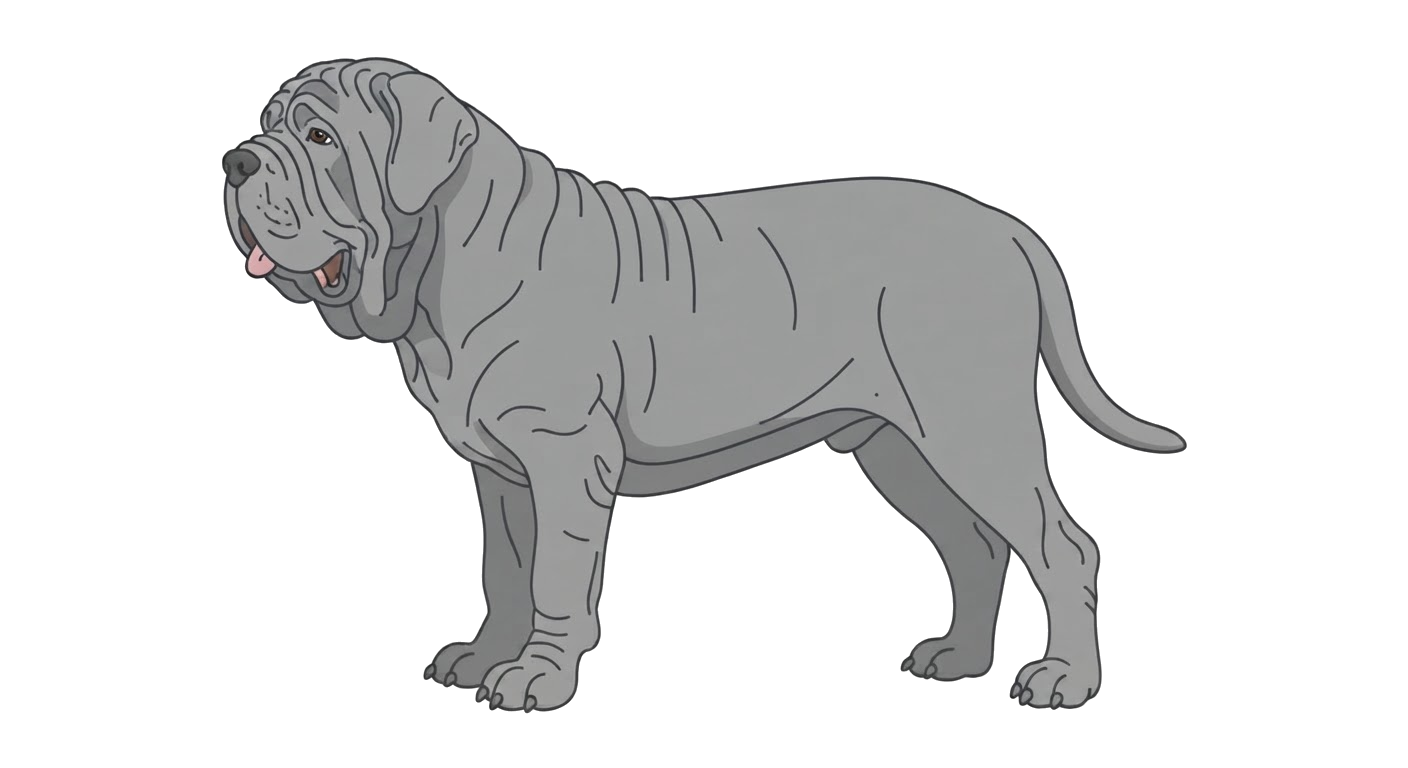
Grey (blue)
Standard colour
The most iconic colour, often called blue by breeders.
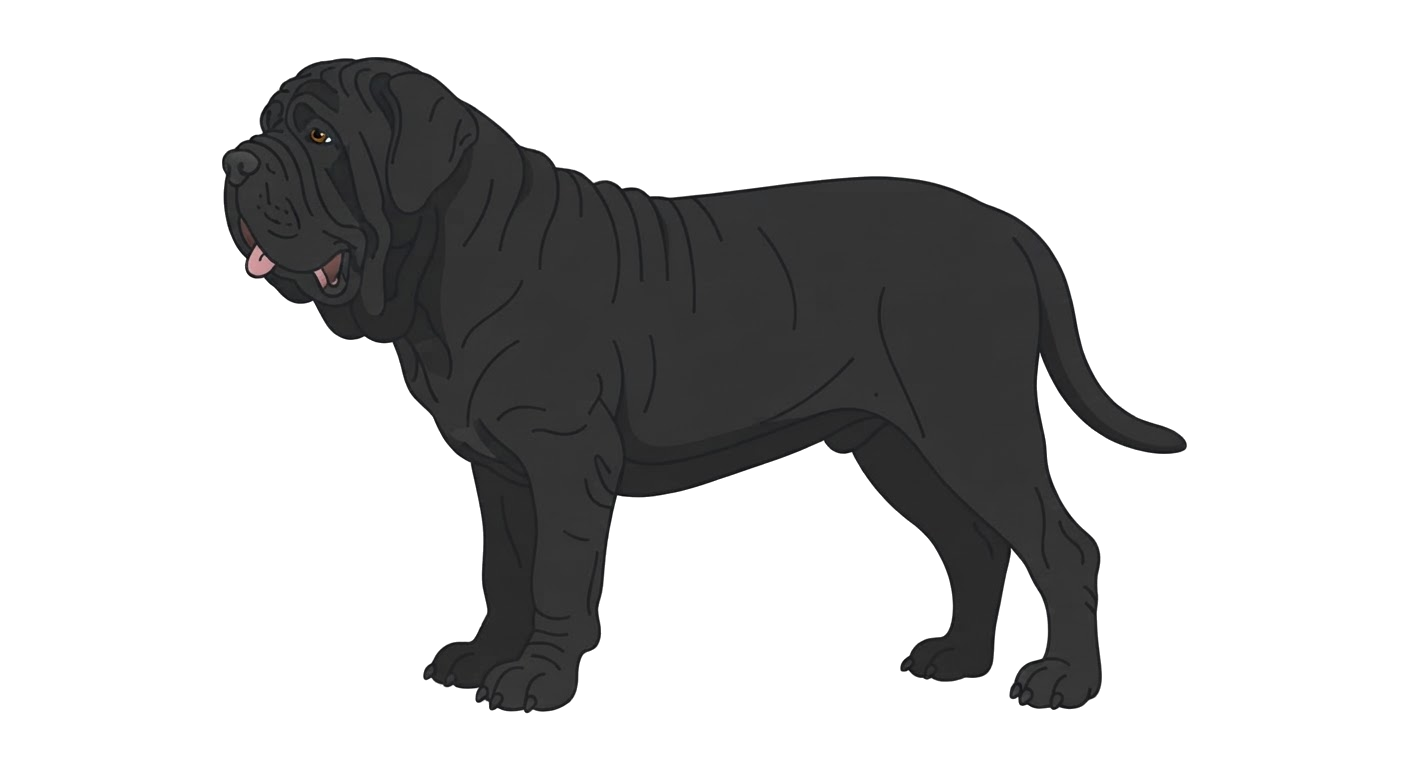
Black
Standard colour
A solid, deep black coat.
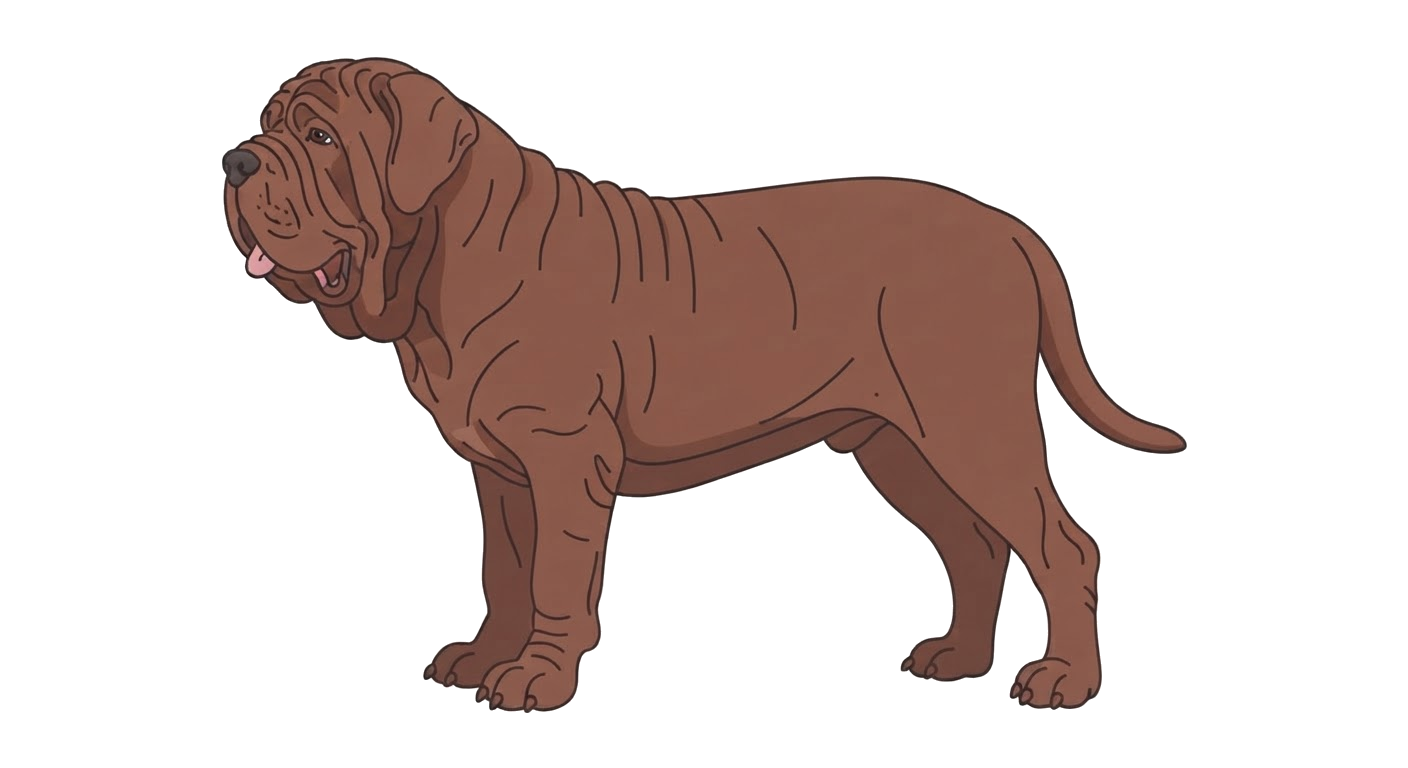
Mahogany
Standard colour
A rich reddish-brown, less common than grey or black.
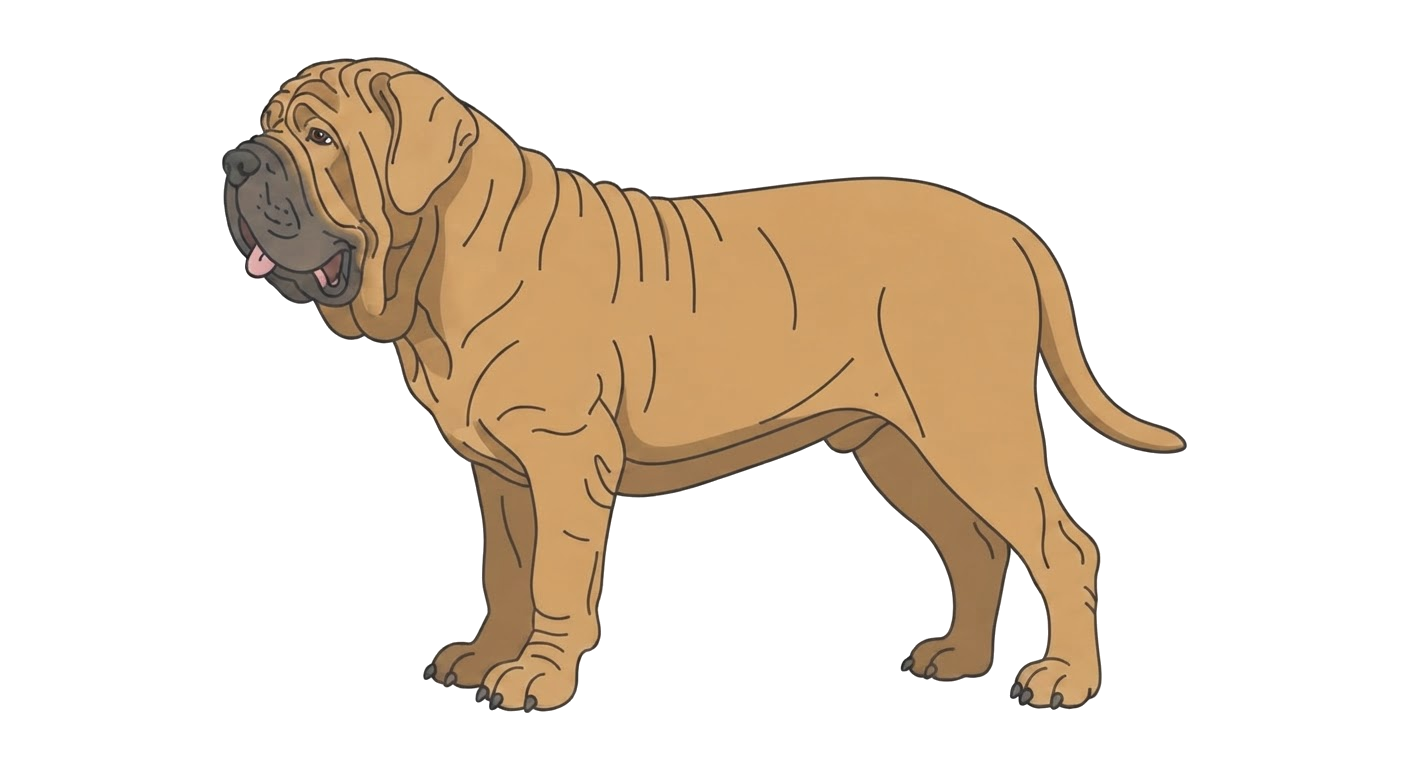
Tawny (fawn)
Standard colour
A warm fawn shade, sometimes with brindling.
Timeline
History & development
Roman era
Ancient ancestry
Molossus-type dogs used by Roman legions are considered the ancestors of the modern breed.
Middle Ages
Farm guardian role
Descendants of these dogs continued working as estate and farm guardians around Naples.
1946
Breed rediscovery
Italian breeder Piero Scanziani sought out surviving examples and began formalising the breed.
1949
Standard written
The first official breed standard was drawn up, cementing the modern Neapolitan Mastiff type.
1950s onward
The breed today
Kennel club registrations settled into a steady pattern and the Neapolitan Mastiff moved from a working specialist to a family companion, with breed clubs in the UK and abroad now focused on health testing and keeping true type alive.
Reference
Breed standard summary
- body
- Long, massive, with a broad deep chest.
- coat
- Short, dense, and glossy.
- ears
- Small in relation to the head, often cropped historically, natural today.
- eyes
- Deep-set, expressive, partly hidden by loose skin.
- gait
- Slow, rolling, bear-like movement.
- head
- Large, broad, with heavy wrinkling and deep folds.
- size
- Giant, 60-75cm at the shoulder.
- tail
- Thick at the root, docked traditionally, carried low at rest.
- colour
- Grey (blue), Black, Mahogany, Tawny (fawn). Colours outside this list are seen but are not accepted by the kennel clubs.
- temperament
- Typical of the breed: strongest in independence, trainability, grooming. Nervousness or aggression are serious faults in the show ring and in the home.
- general appearance
- A massive, imposing dog with abundant loose skin and a heavy, powerful frame.
Health
What to screen for
Green means little to worry about, amber means ask the breeder for test results, red means manage it actively.
Hip and elbow dysplasia
Watch closely
Very common in giant breeds; insist on hip and elbow scores for both parents.
Cherry eye and entropion
Low concern
Loose facial skin predisposes to eyelid problems; ask about eye history in the line.
Bloat (gastric torsion)
Watch closely
Feed smaller meals and avoid vigorous exercise around feeding times.
Cardiomyopathy
Watch closely
Ask for a recent cardiac check, as heart issues occur in some lines.
General information only — always speak to your vet about your own dog.
From real owners
Dogs like this
Neapolitan Mastiffs added by PawPoint members through their pet passports. Share yours to appear here.
Loading the wall…
Made for the Neapolitan Mastiff
The book, plus prints, hoodies and mugs using our own Neapolitan Mastiff illustration — and one everyday accessory that suits any dog.

The book
Pawpoint: The Complete Dog Breed Book
Every officially recognised breed plus the unofficial ones nobody else documents. 400+ pages, hardback, printed and shipped from the UK.
Own stock — shipped by us
Framed poster
Neapolitan Mastiff Framed Poster
Museum-weight print of our Neapolitan Mastiff illustration, framed or unframed.
Printed to order
Hoodie
Neapolitan Mastiff Hoodie
Heavyweight hoodie carrying the Neapolitan Mastiff illustration on the chest.
Printed to order
Mug
Neapolitan Mastiff Mug
Ceramic mug with the Neapolitan Mastiff illustration wrapped around it.
Printed to order
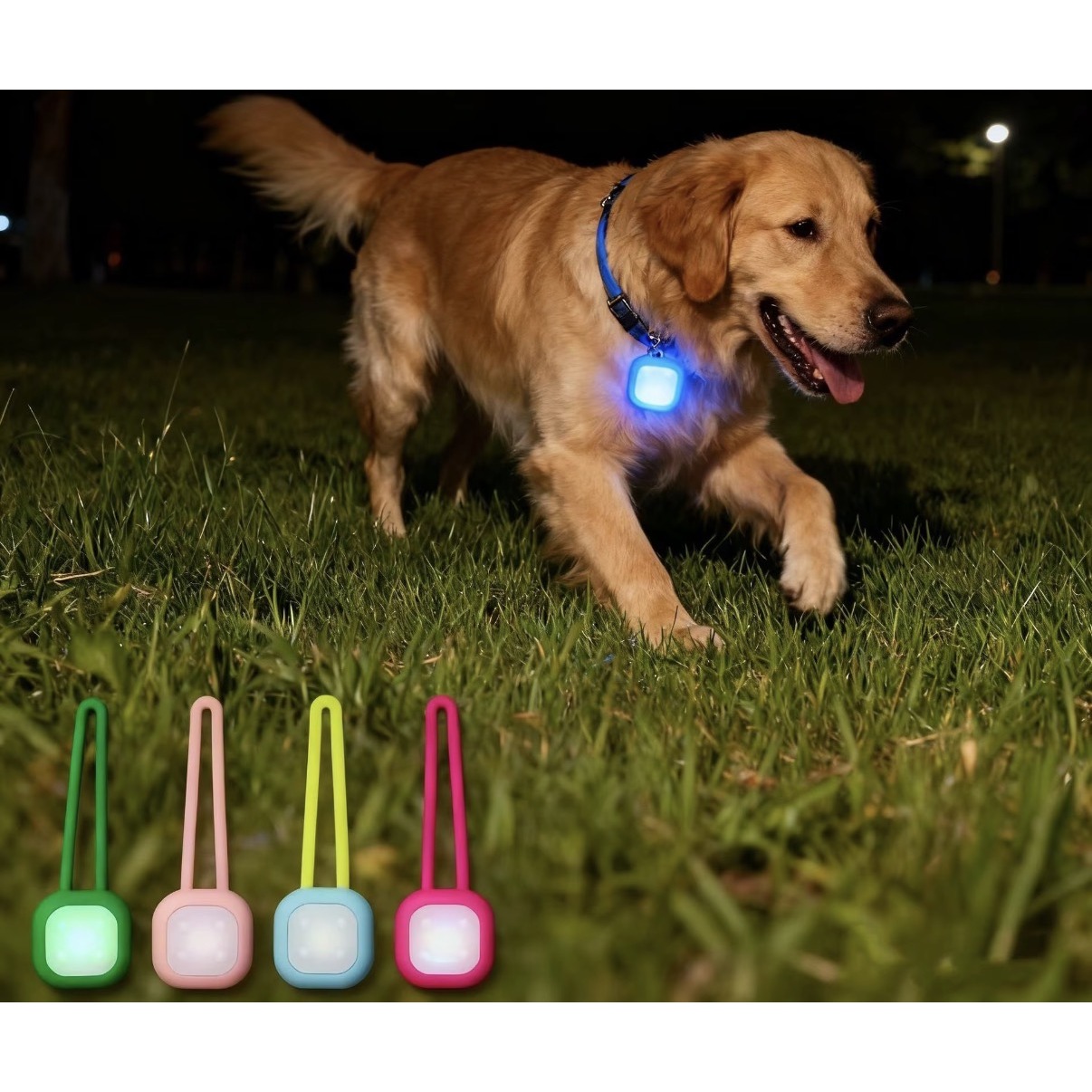
Accessory
LED Reflective Lead Light
Rechargeable clip-on light for dark walks.
Fits any dog

Pawpoint on YouTube
Watch the full Neapolitan Mastiff video
Breed deep-dives, history and honest ownership talk. New film every week.
Watch now