
New Zealand Huntaway
HUNT-uh-way
New Zealand· Sheep stations of the North and South Islands
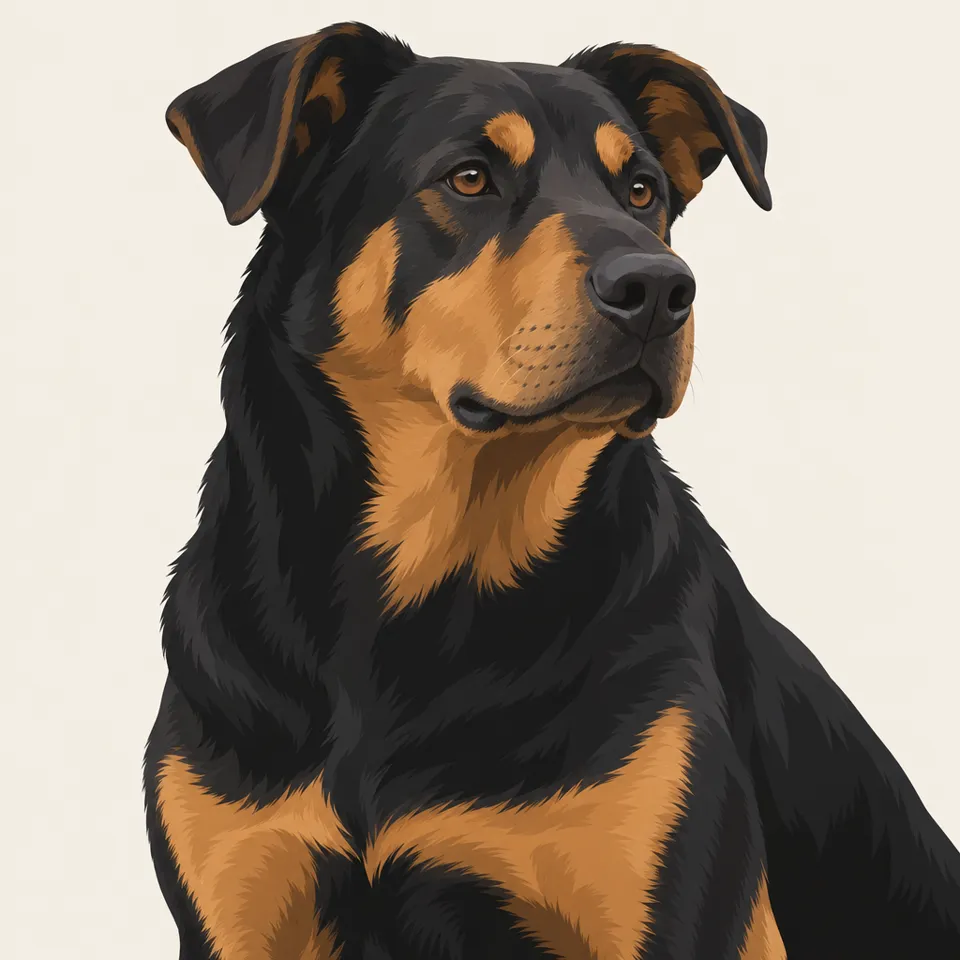
The New Zealand Huntaway is a large, vocal herding dog developed in New Zealand to drive sheep across vast hill-country stations.
At a glance
Quick facts
- Size
- Large
- Exercise needs
- 2 hours+ per day
- Home size suited to
- Large, rural preferred
- Grooming frequency
- Weekly brush
- Coat length
- Short to medium
- Sheds
- Yes
- Lifespan
- 12-14 years
- Town or country
- Country essential
- Garden size needed
- Large
Where it comes from
Origins of the New Zealand Huntaway
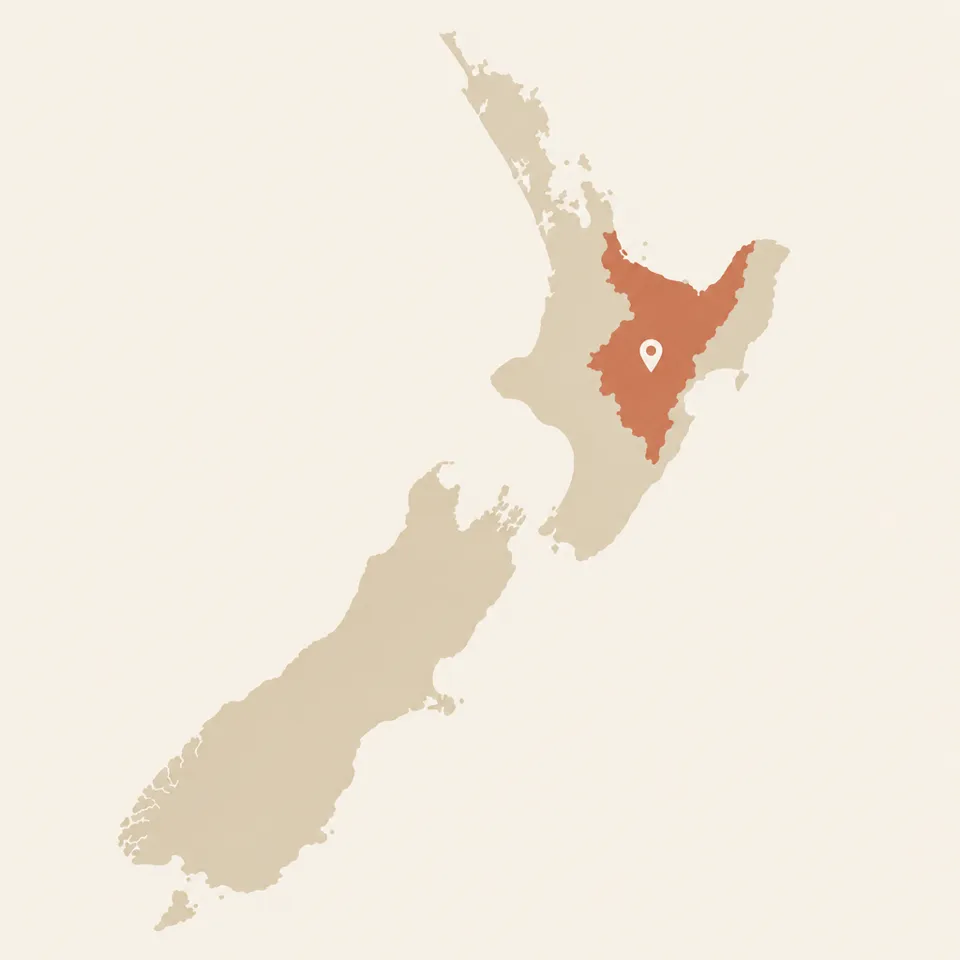
New Zealand's vast sheep stations, carved into steep hills and high country, demanded a dog that could shift thousands of sheep where a quietly working Border Collie could not be seen or heard. Farmers bred a big, hardy dog that works ahead of the flock and uses a deep, carrying bark to move sheep across ridges and gullies. The Huntaway is the result: a herding dog built for voice, stamina and rough ground.
- Region
- Sheep stations of the North and South Islands
- Climate it was bred for
- Temperate, wet hill country and high-country pasture
- Original job
- Driving huge flocks of sheep with voice and presence across steep hill country
The long read
About the breed
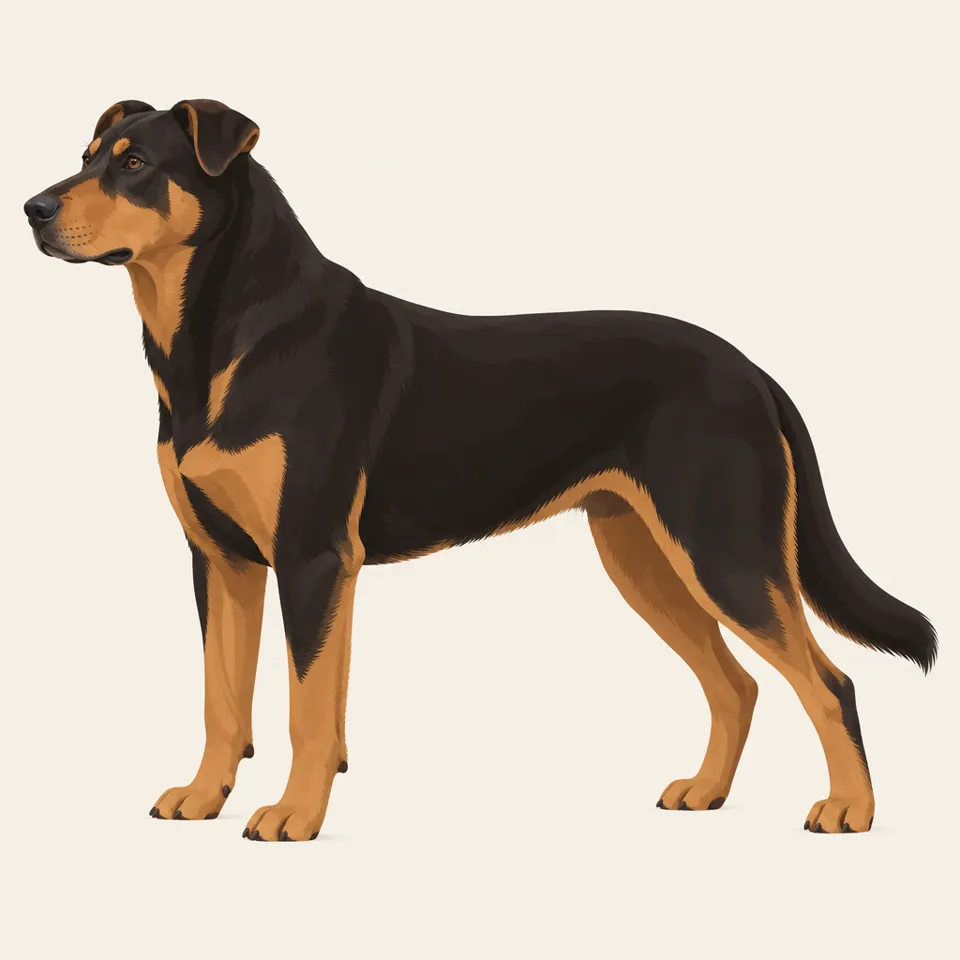
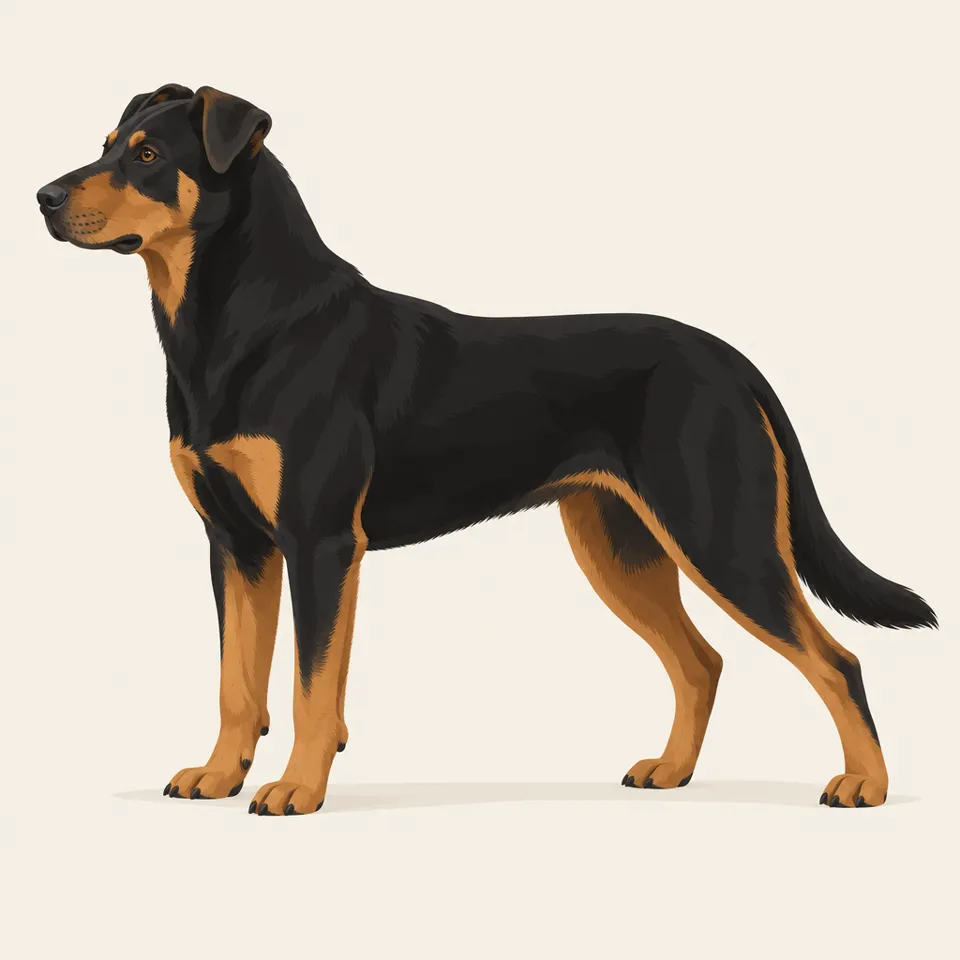
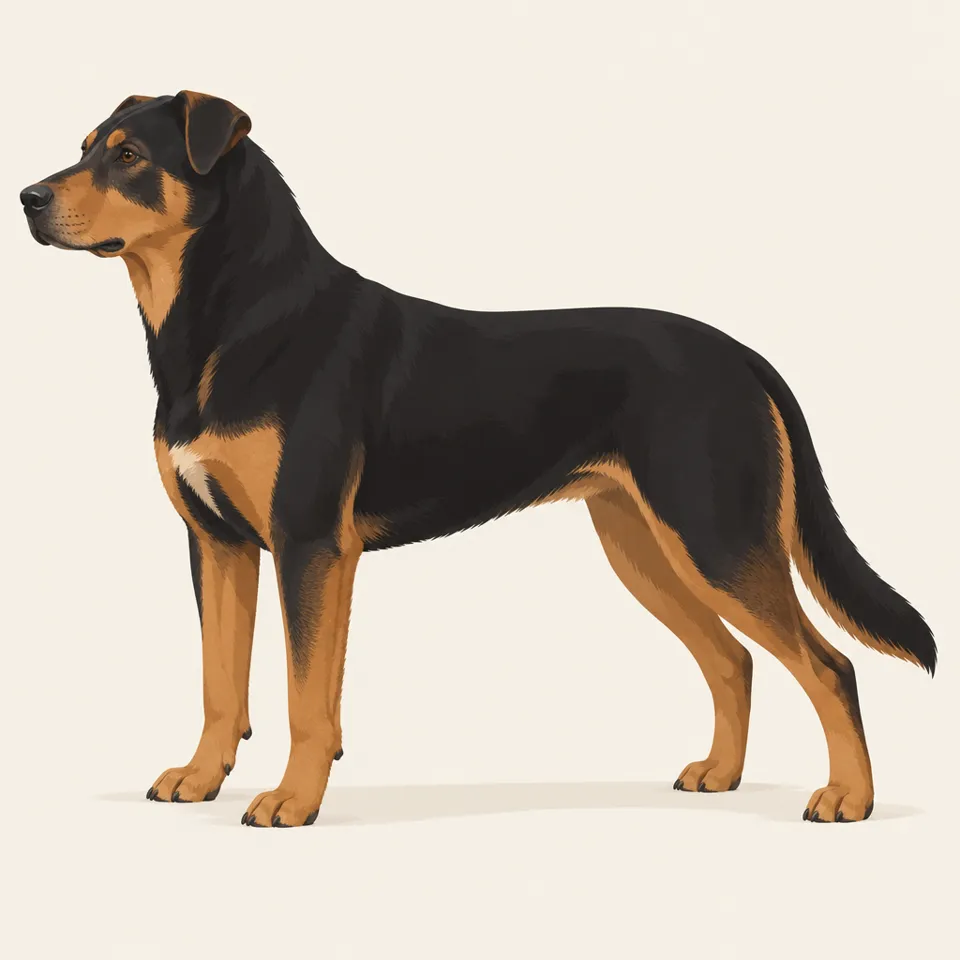
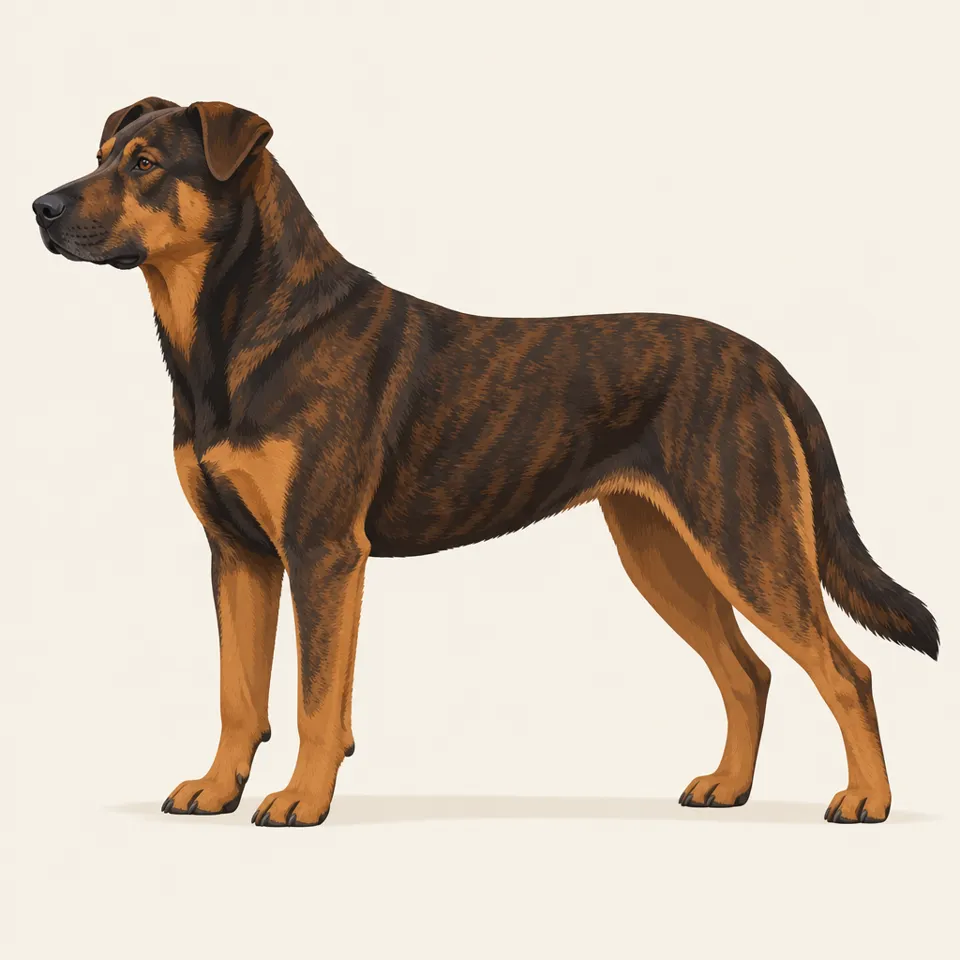
Where the Border Collie works silently and close, the Huntaway was bred to work big country: steep ridges, gullies and flocks numbering in the thousands. Its defining tool is a deep, sustained bark, used on command to push sheep forward, and its build reflects the job — strong-boned, sure-footed and tireless over rough ground. Coats range from smooth to rough, and colour is unimportant to shepherds, so black and tan is most common but many combinations appear.
Living with a Huntaway means living with a dog bred to think and to use its voice. They are friendly, biddable and even-tempered with people, but they need real work or serious exercise, and the bark that moves a flock of two thousand sheep will not be popular in a terraced street. They thrive in rural homes with space and a job, even if that job is sport or long days on the hill.
The Huntaway remains first and foremost a working dog, and most are still found on New Zealand and Australian farms, with a growing number in Britain. The Kennel Club recognised the breed in 2013, placing it in the Pastoral group, though New Zealand's own registry still records working ability rather than appearance. Shearing-shed trials and 'huntaway' classes at sheepdog trials keep the working standard honest.
Outside the standard
Other colours
Dilute coats you will see advertised. They are the same breed, but no kennel club accepts them.
Not in the standard
Not in the standard
Not in the standard
Not in the standard
Timeline
History & development
Late 1800s
Station dogs
Sheep farming booms in New Zealand and farmers cross collies with larger, louder dogs to shift huge flocks over hill country.
Early 1900s
A recognisable type
The big, barking 'huntaway' becomes a fixture on stations, bred for voice, stamina and steady nerves rather than looks.
1960s
Trial classes
Dedicated huntaway events appear at New Zealand sheepdog trials, cementing the dog's role as a distinct working type.
2013
Kennel Club recognition
The Kennel Club formally recognises the New Zealand Huntaway in the Pastoral group, the breed's first major registry listing.
2020s
Still a worker
The breed remains overwhelmingly a farm dog, with working registries in New Zealand valuing ability over conformation.
Reference
Breed standard summary
- body
- Deep chest, strong level back, muscular loin; built for sustained work over steep ground.
- coat
- Smooth, short or rough varieties; dense and weather-resistant.
- ears
- Medium, set fairly high; semi-erect or folding forward when attentive.
- eyes
- Medium, set well apart, brown; keen and intelligent expression.
- head
- Broad skull with a moderate stop; muzzle strong and tapering; jaws strong with a scissor bite.
- size
- Dogs typically 58-66cm, bitches 56-63cm; weight roughly 25-45kg depending on working type.
- colour
- Most commonly black and tan; also black, tricolour and brindle, with or without white markings.
- temperament
- Intelligent, willing and even-tempered; works with voice and initiative; friendly with people and steady under pressure.
- general appearance
- Large, strong, well-muscled herding dog of athletic build, combining power with agility; alert and intelligent in expression.
Health
What to screen for
Green means little to worry about, amber means ask the breeder for test results, red means manage it actively.
General information only — always speak to your vet about your own dog.
From real owners
New Zealand Huntaways in the PAWPOINT Pack
New Zealand Huntaways added by PawPoint members through their pet passports. Share yours to appear here.
Loading the wall…
Made for the New Zealand Huntaway
The book, plus hoodies, tees and mugs featuring the New Zealand Huntaway.