North American Mastiff
NORTH uh-MERR-ih-kuhn MASS-tif
United States· United States, chiefly the West Coast
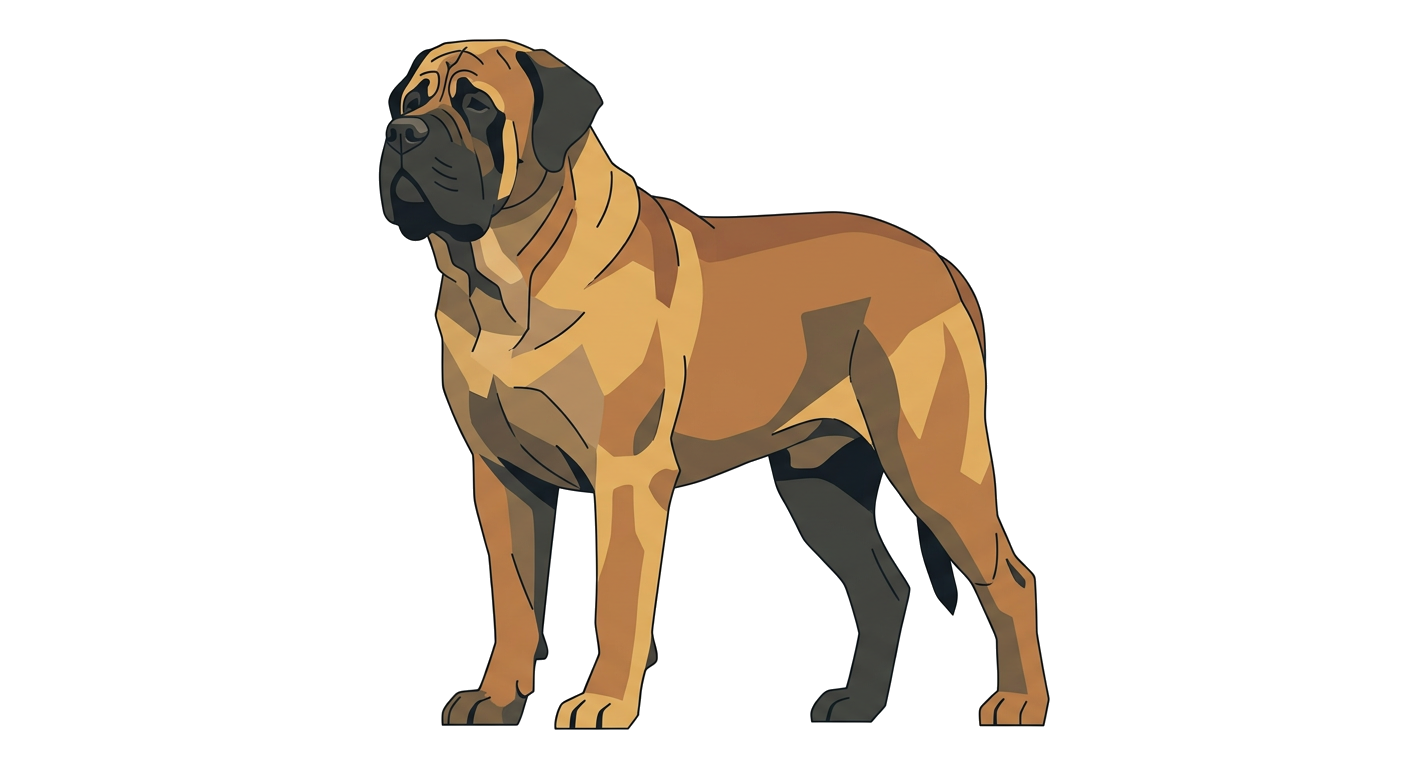
The North American Mastiff is an emerging, non-standardised composite molosser developed primarily along the West Coast of the United States. Originating in private breeding programmes under developmental names such as the 'Deboar X', the strain was established by blending several heavy working and guardian breeds, notably the Boerboel, Dogue de Bordeaux, Cane Corso, Neapolitan Mastiff, and the Alapaha Blue Blood Bulldog. Breeders report that ancestral foundation stock was chosen to produce a substantial, athletic guardian with reduced exaggerated features compared to some historical European mastiffs.
At a glance
Quick facts
Size
Giant
Exercise needs
Moderate (45–60 minutes daily)
Home size suited to
Large house
Grooming frequency
Low
Coat length
Short
Sheds
Moderate
Lifespan
8–11 years
Town or country
Suburban or rural
Garden size needed
Large secure garden
Where it comes from
Origins of the North American Mastiff
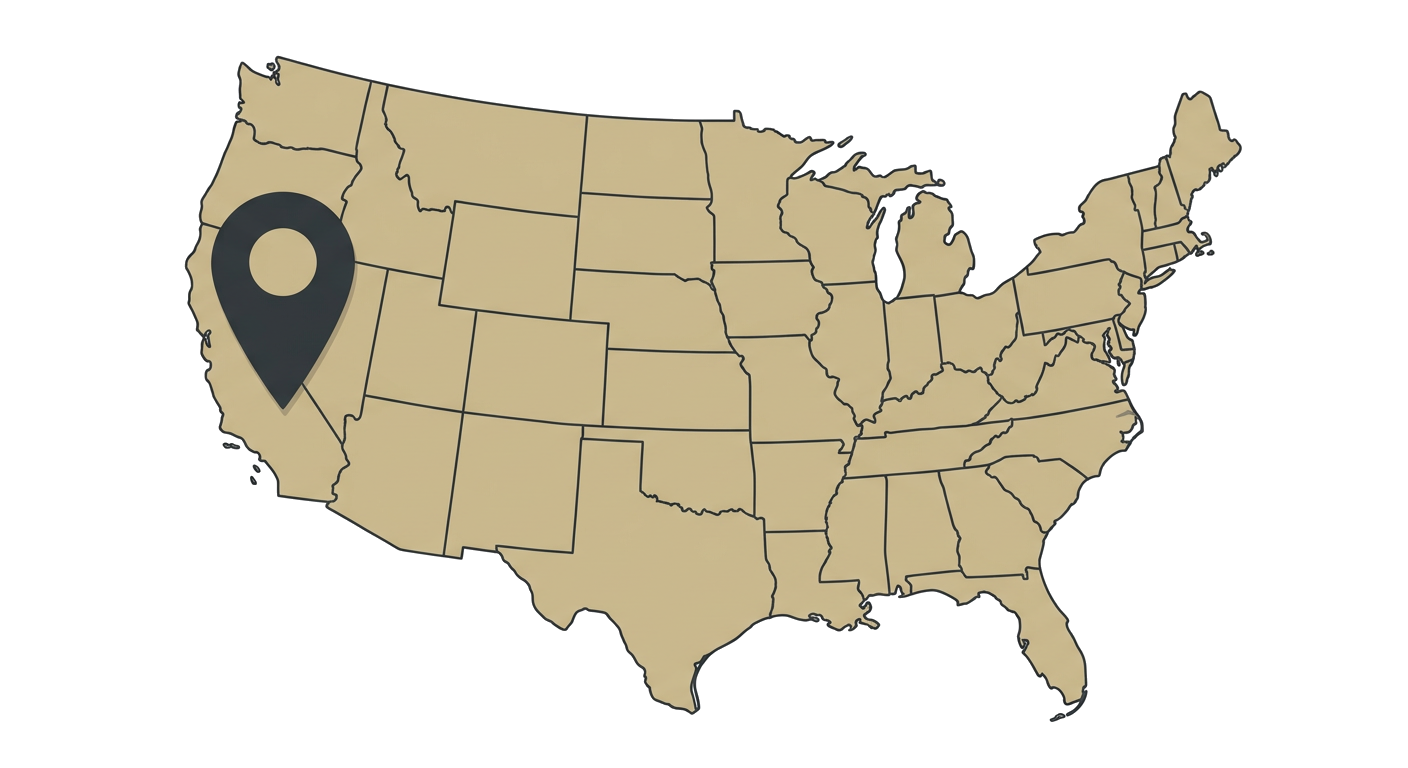
Developed primarily along the West Coast of the United States as a composite heavy molosser strain.
- Region
- United States, chiefly the West Coast
- Climate it was bred for
- Temperate to warm continental
- Original job
- Estate guardian and companion
The long read
About the breed
Physically, the dogs are massive, heavy-boned, and strongly muscled, bred primarily for personal and estate protection alongside domestic companionship. Developers of the type explicitly state that no American Bully XL, American Pit Bull Terrier, or related bull-and-terrier breeds were utilised in the foundation stock, aiming instead for pure molosser and historical catch-dog lineages. Visibility and public interest in the strain increased noticeably from 2020 onwards through digital platforms and enthusiast registries.
Because the North American Mastiff is in an early stage of breed establishment, significant variations in conformation, size, and head type remain across different bloodlines. The breed is not recognised by the Fédération Cynologique Internationale (FCI), The Kennel Club (UK), or the American Kennel Club (AKC), and documentation regarding pedigrees and long-term health outcomes is largely maintained by individual breeders rather than established statutory bodies.
Illustrated breed standard
The points of the breed
Hover or tap a numbered point to read what the standard asks for.
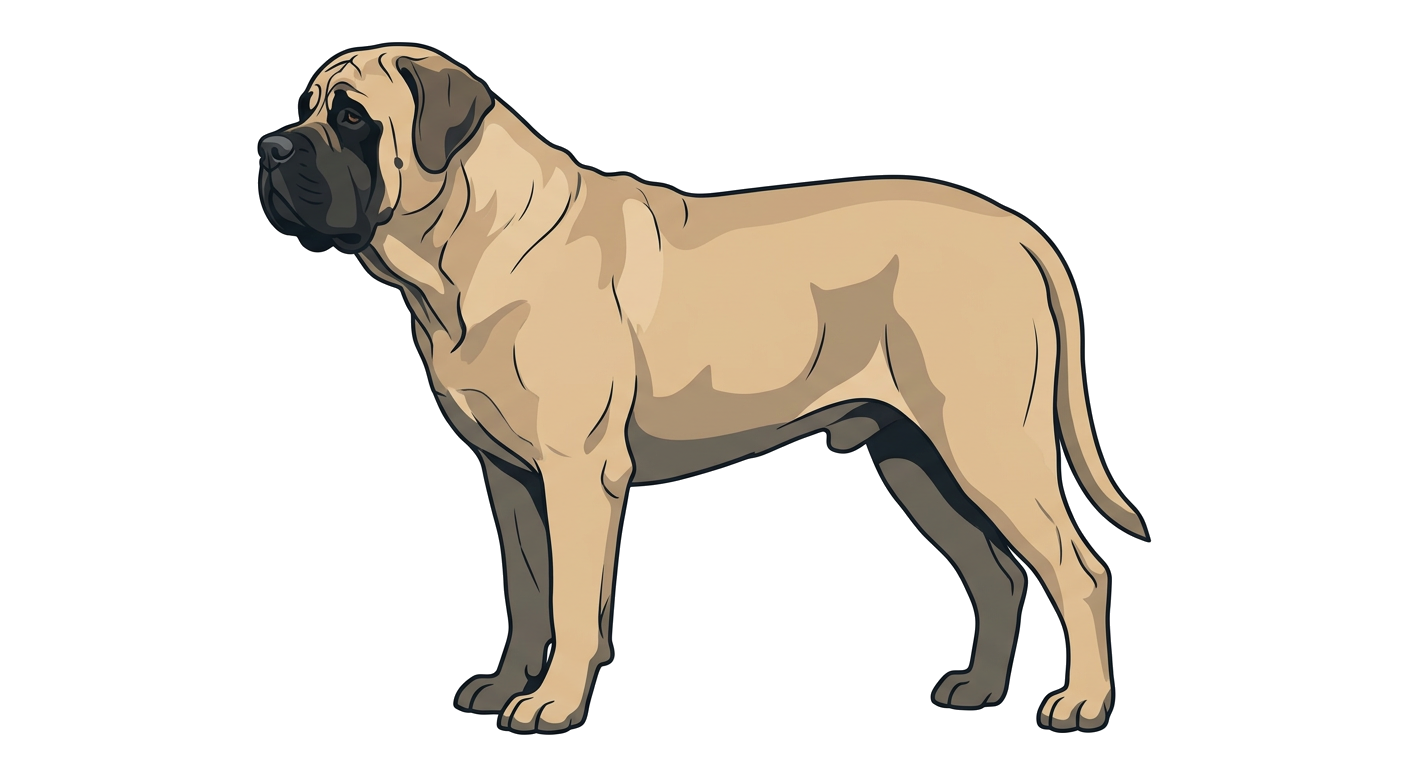
Point 1
Skull
The North American Mastiff's skull is judged on balance rather than size — proportionate to the body, with a clean cheek and a stop typical of the breed. Coarseness or an over-refined head are both faulted.
Colours & patterns
Recognised coats
Which coats the standard accepts — and which are simply popular.
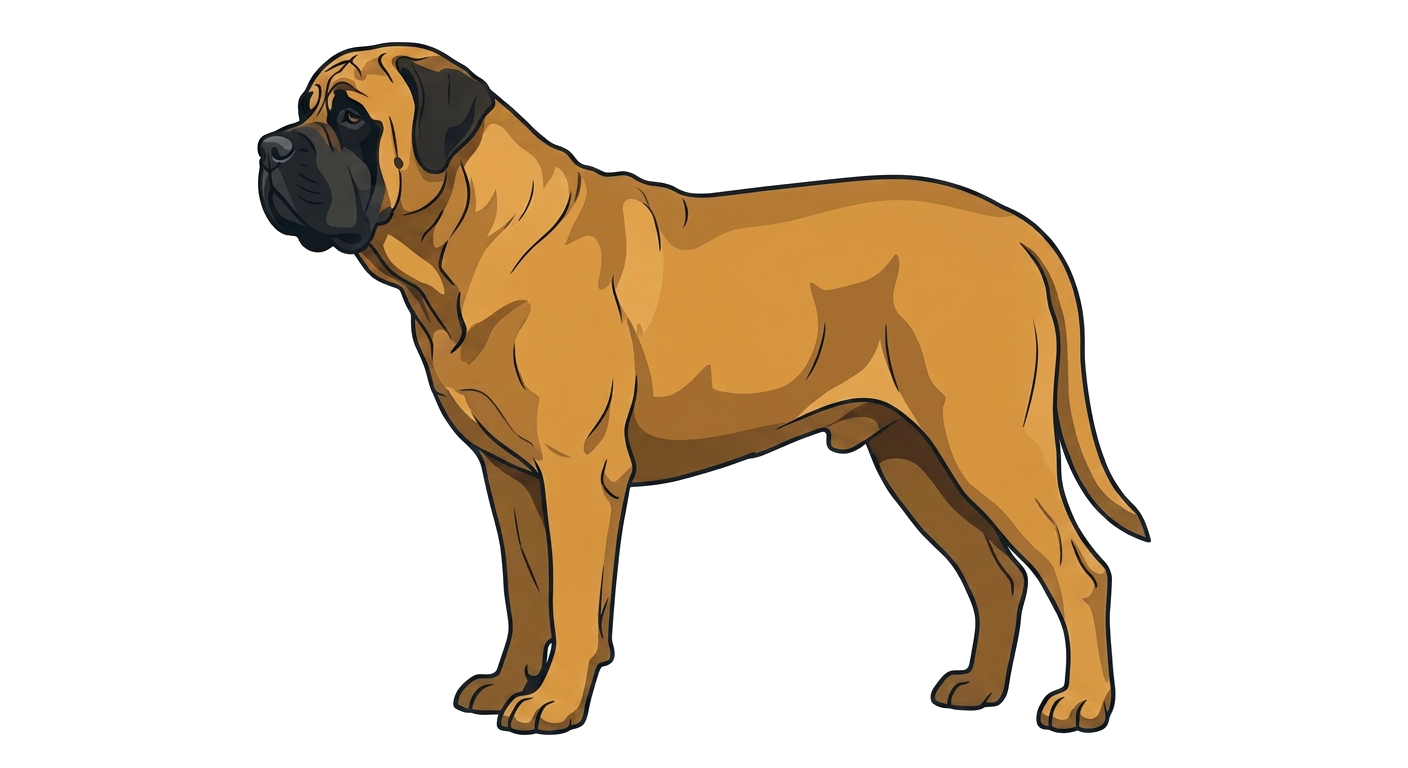
Fawn with Black Mask
Standard colour
Ranges from light sandy fawn to deep golden, typically accompanied by dark masking on the muzzle.
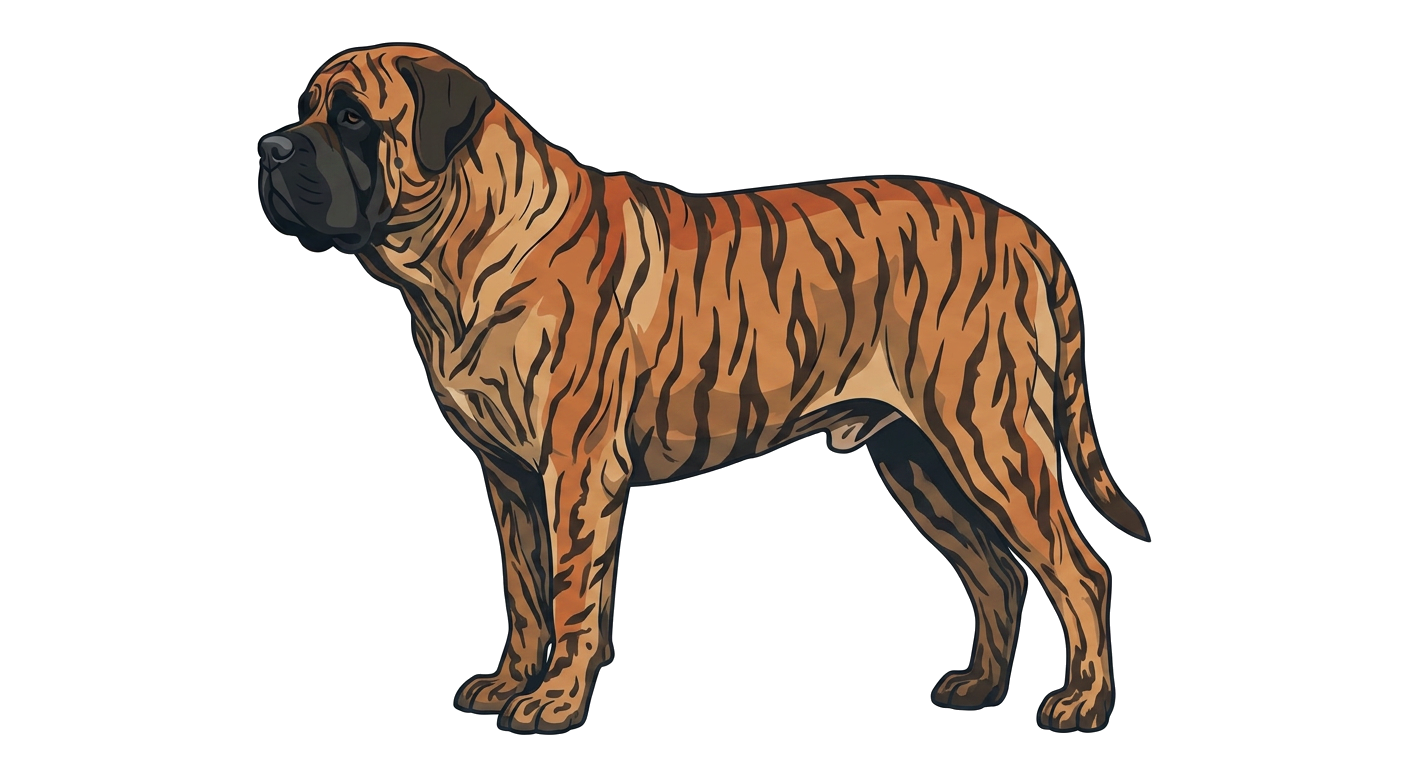
Brindle
Standard colour
Dark stripes over a fawn or red base, a common pattern inherited from ancestral foundation breeds.
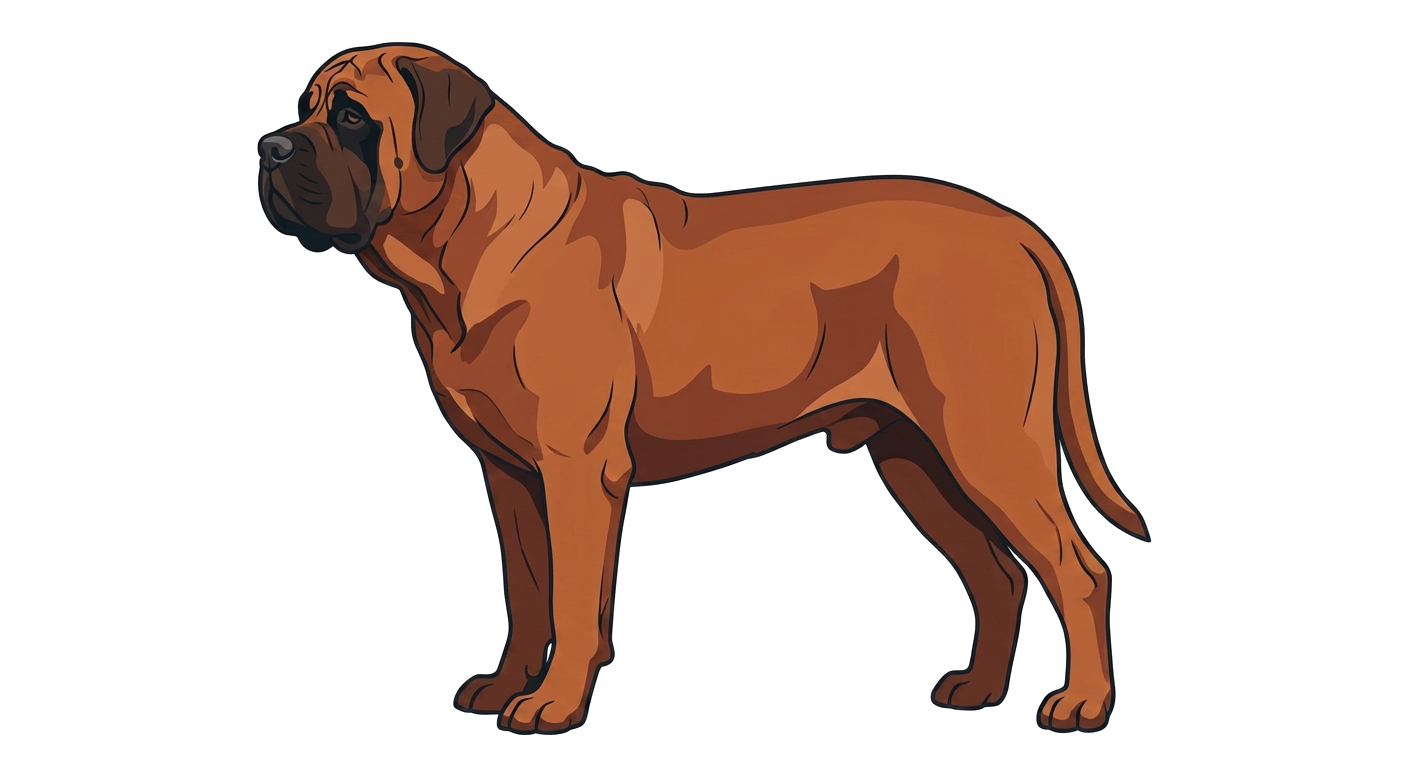
Red Fawn
Standard colour
Rich mahogany to warm copper tone, often inherited through Dogue de Bordeaux and Boerboel lineages.
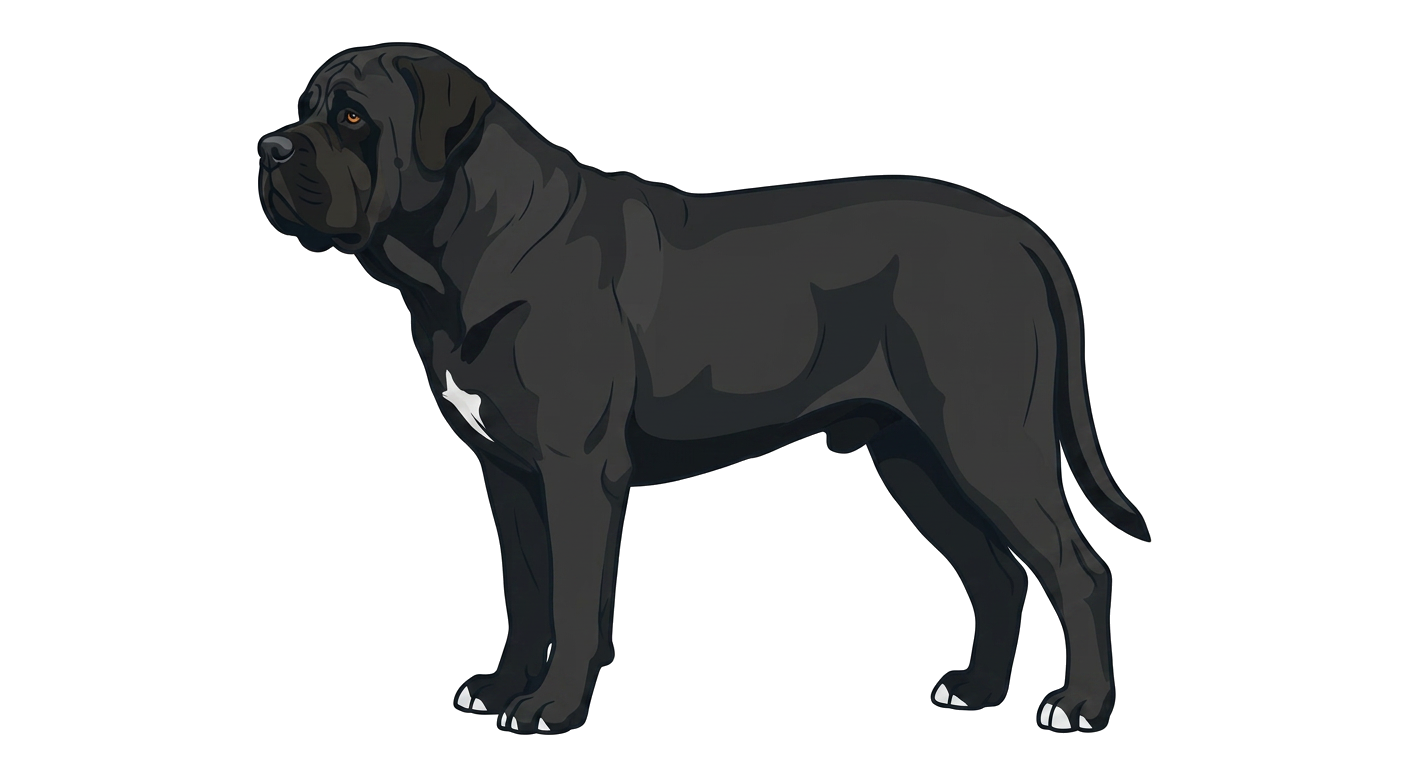
Solid Black
Standard colour
Solid black coat with minimal white markings permitted on the chest or toes.
Timeline
History & development
c. 2010s
Foundation crosses
Initial development begins under the working designation 'Deboar X', crossing Boerboel, Dogue de Bordeaux, Cane Corso, and other molossers to create a large-scale protection dog.
2020
Transition to current name
Breeders formally transition from earlier project names to 'North American Mastiff', establishing informal breed registers and gaining public visibility online.
Present
Ongoing development
The type remains an unrecognised composite breed, with multiple breeding programmes working towards greater physical consistency and establishing multi-generational pedigrees.
Reference
Breed standard summary
- body
- Substantial and compact to moderately long, featuring a broad, deep chest reaching at least to the elbows, a level back, and a strong, muscular loin.
- coat
- Short, smooth, and dense, lying close to the body with sufficient undercoat to provide basic weather resistance.
- ears
- Medium-sized, set high and wide, hanging flat against the cheeks in their natural state; cropping is practised in regions where legally permissible.
- eyes
- Medium in size, set wide apart, oval to slightly almond-shaped, ranging in colour from hazel to dark brown in harmony with coat pigmentation.
- gait
- Powerful, smooth, and purposeful, showing good reach and drive appropriate for a dog of heavy substance.
- head
- Broad, heavy, and roughly cuboid, with moderate skin wrinkling on the forehead when alert, but without excessive dewlap or loose folds obscuring vision.
- size
- Height typically ranges from 65 to 76 cm at the withers, with mature weights generally falling between 55 and 80 kg or more depending on sex and bloodline.
- tail
- Thick at the base and tapering towards the tip, reaching approximately to the hocks when natural, carried low in repose and with a slight upward curve when moving.
- colour
- Fawn, red, brindle, black, or blue, frequently accompanied by a dark mask; limited white markings on the chest and toes are commonly seen.
- muzzle
- Deep and broad, approximately one-third the length of the total head, ending in a wide nose with open nostrils; flews are moderately developed.
- temperament
- Confident, watchful, and deeply attached to its household, displaying natural guarding instincts and an aloof, discerning attitude towards strangers.
- general appearance
- A massive, powerful, and imposing molosser of substantial bone and muscular development, carrying itself with steady confidence.
Health
What to screen for
Green means little to worry about, amber means ask the breeder for test results, red means manage it actively.
Hip and Elbow Dysplasia
Screen for it
Common structural vulnerability in giant, rapidly growing molosser composites; screening of breeding stock is critical.
Gastric Dilatation-Volvulus (Bloat)
Screen for it
Deep-chested anatomy places this type at elevated risk for acute, life-threatening stomach torsion.
Dilated Cardiomyopathy (DCM)
Screen for it
Reported across ancestral mastiff lineages; echocardiographic screening helps identify cardiac enlargement early.
Entropion and Ectropion
Watch closely
Loose facial skin can occasionally cause eyelid inversions or reversions, requiring corrective ophthalmic intervention.
General information only — always speak to your vet about your own dog.
From real owners
Dogs like this
North American Mastiffs added by PawPoint members through their pet passports. Share yours to appear here.
Loading the wall…
Made for the North American Mastiff
The book, plus prints, hoodies and mugs using our own North American Mastiff illustration — and one everyday accessory that suits any dog.

The book
Pawpoint: The Complete Dog Breed Book
Every officially recognised breed plus the unofficial ones nobody else documents. 400+ pages, hardback, printed and shipped from the UK.
Own stock — shipped by us
Framed poster
North American Mastiff Framed Poster
Museum-weight print of our North American Mastiff illustration, framed or unframed.
Printed to order
Hoodie
North American Mastiff Hoodie
Heavyweight hoodie carrying the North American Mastiff illustration on the chest.
Printed to order
Mug
North American Mastiff Mug
Ceramic mug with the North American Mastiff illustration wrapped around it.
Printed to order
Accessory
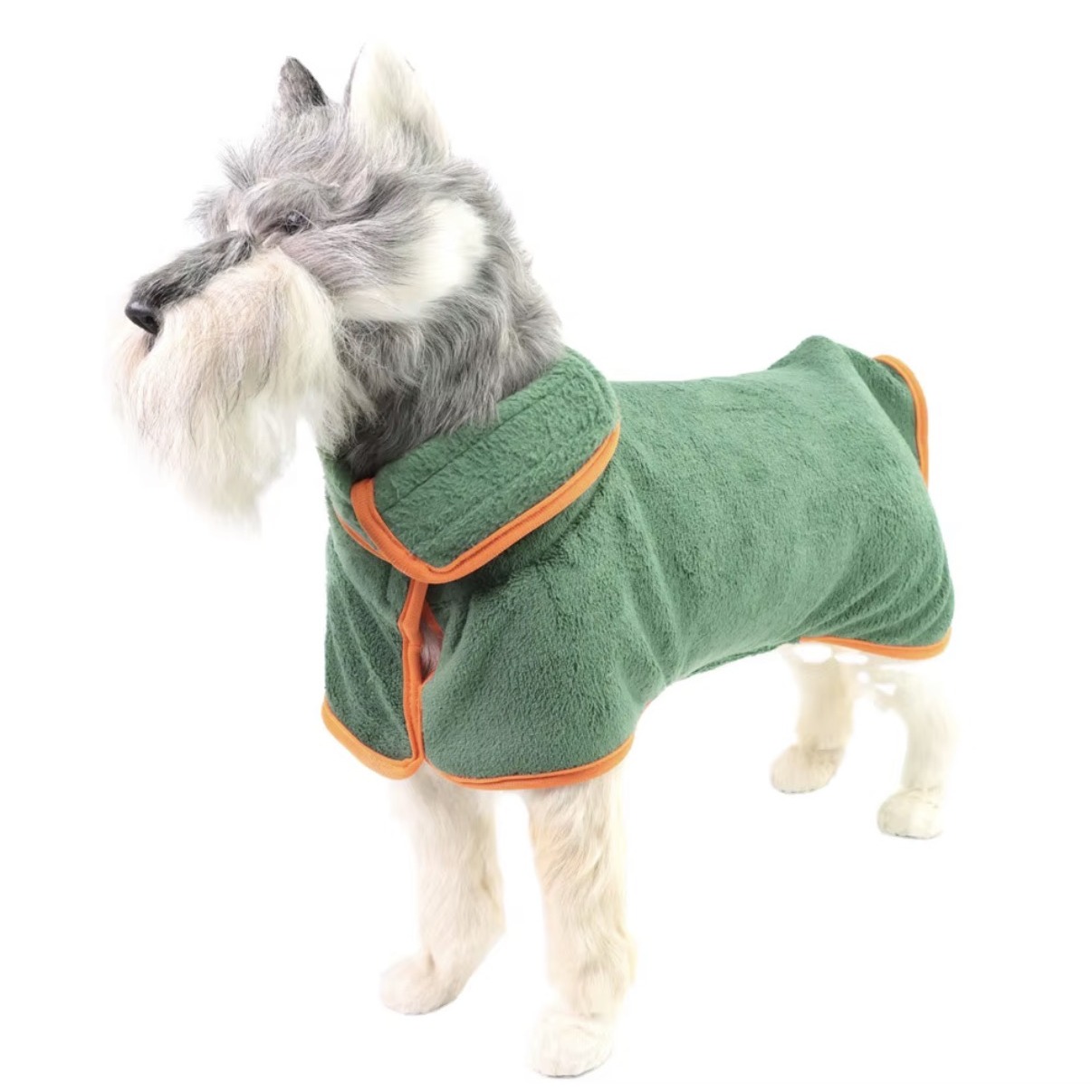
Drying Towel Robe
Microfibre robe that soaks up a wet-walk shake.
Fits any dog
Pawpoint on YouTube
Watch the full North American Mastiff video
Breed deep-dives, history and honest ownership talk. New film every week.
Watch now