Norwegian Buhund
NOR-way-jun BOO-hund
Norway· Rural Norway
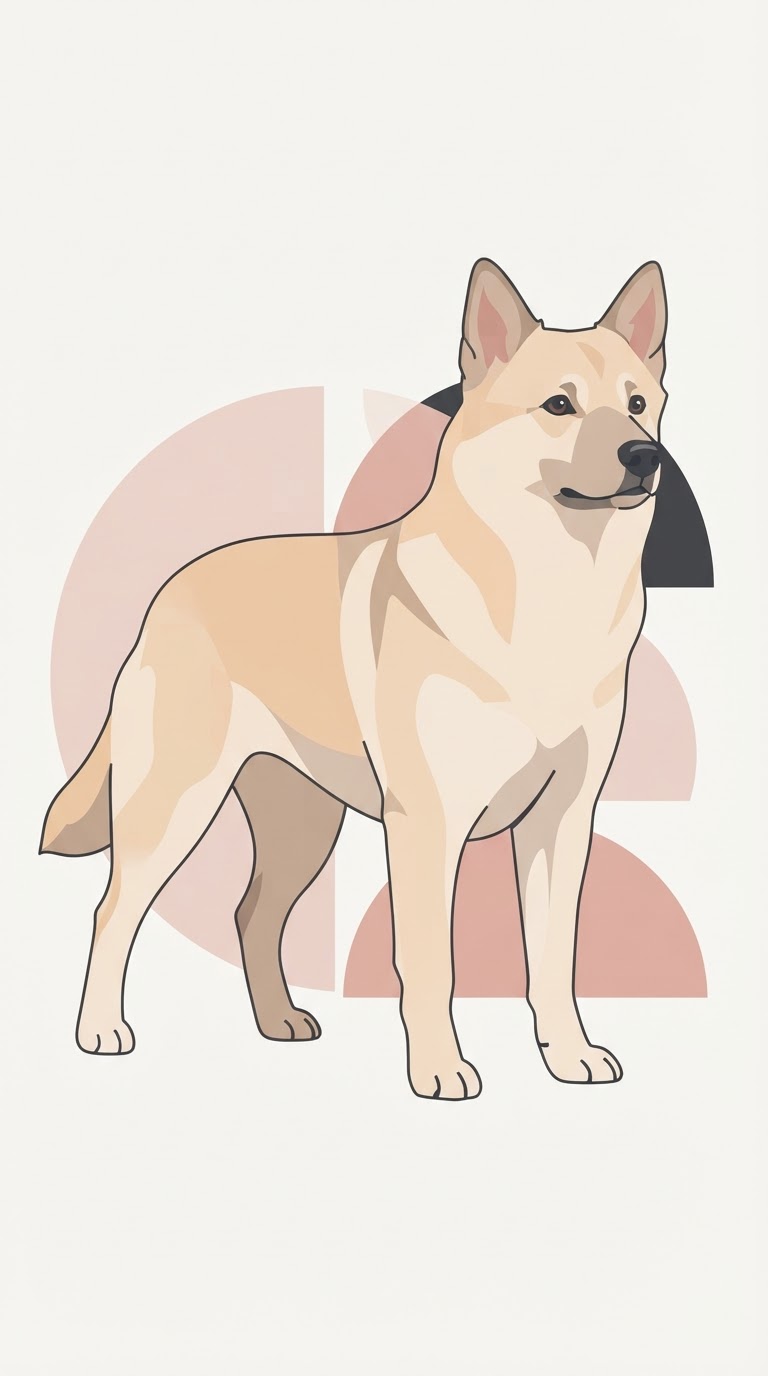
The Norwegian Buhund is a medium-sized, spitz-type herding dog from Norway, bred to work sheep and cattle on farms and to guard homesteads through the long Scandinavian winters.
At a glance
Quick facts
Size
Medium
Exercise needs
60-90 minutes daily
Home size suited to
Small to medium home
Grooming frequency
Weekly brush, hand-strip a few times a year
Coat length
Wiry
Sheds
Yes, heavily when moulting
Lifespan
12-15 years
Town or country
Happiest in the country
Garden size needed
Small to medium
Where it comes from
Origins of the Norwegian Buhund
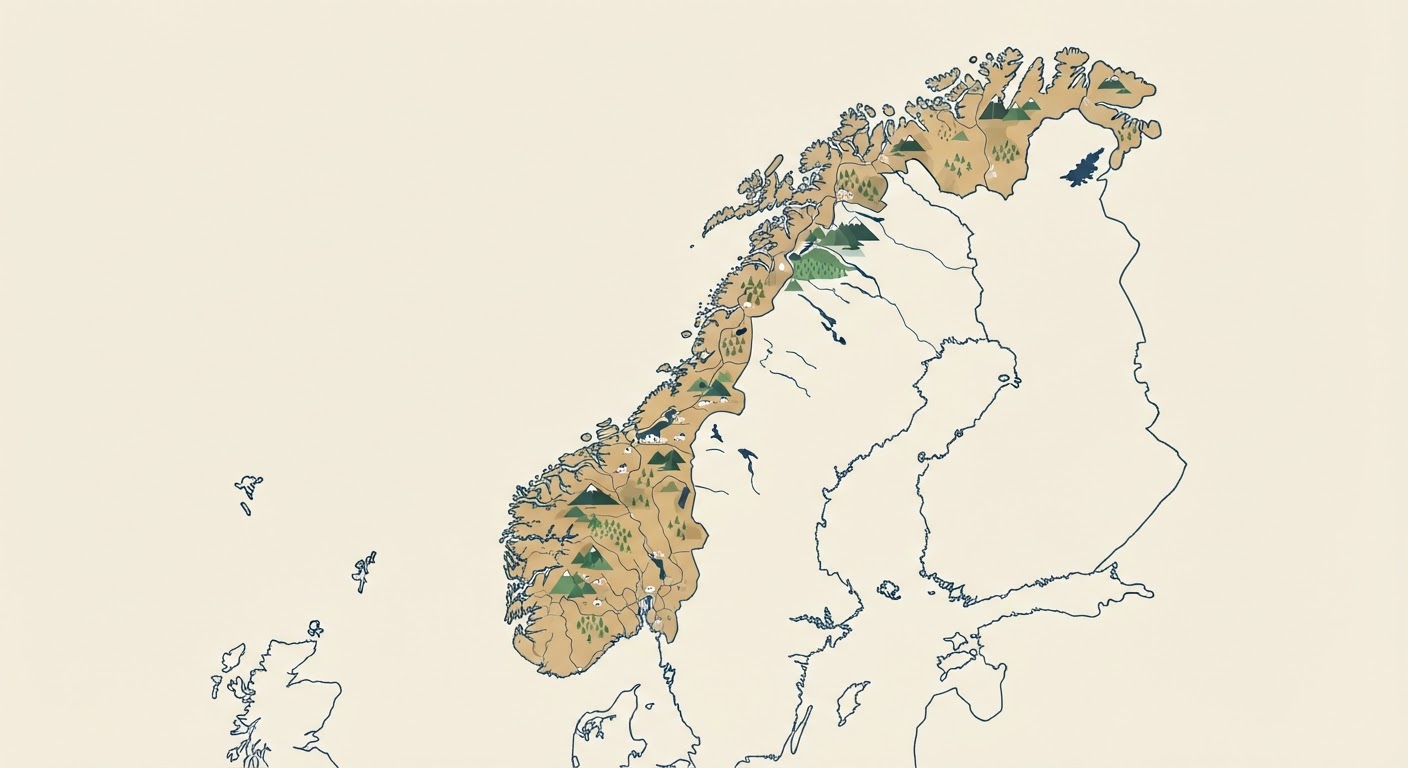
Descended from spitz-type dogs that may have travelled with the Vikings, the Buhund was shaped by centuries of farm life in Norway, where a hardy, weatherproof dog was needed to herd livestock and guard homesteads through long, cold winters.
- Region
- Rural Norway
- Climate it was bred for
- Cold Scandinavian winters
- Original job
- Herding livestock and guarding farms
The long read
About the breed
The breed's ancestors are thought to have travelled with the Vikings, and remains of similar spitz-type dogs have been found in Viking graves in Norway. For centuries it worked on Norwegian farms as an all-purpose farm dog, herding livestock, guarding property and sometimes hunting, its dense coat allowing it to work outdoors in harsh winter conditions. The modern breed was standardised in the 1920s and 1930s as Norwegian fanciers began organising dog shows and formal breed clubs.
Living with a Norwegian Buhund means living with an energetic, biddable, endlessly cheerful dog that wants to be busy. It is highly trainable and excels at obedience and agility, and its herding background means it thrives with a job to do, whether that is formal training, hiking, or simply keeping close tabs on family movements around the house. It is generally good with children and sociable with other dogs, though its herding instinct can show up as gentle nipping at heels if not redirected.
The double coat sheds a great deal, particularly during seasonal changes, and needs brushing several times a week to manage loose hair. Exercise needs are considerable — this is a breed built for a working day outdoors, and it does not do well cooped up with nothing to occupy it.
Today the Norwegian Buhund remains relatively rare outside Scandinavia but is gaining a following among active owners looking for an intelligent, versatile companion suited to dog sports as much as farm work.
Living with one
Temperament & needs
Our own ratings, based on the breed standard and how these dogs behave in ordinary homes.
Friendliness
4/5
How openly the Norwegian Buhund greets people it does not know.
Trainability
5/5
Quick-witted and eager to work with its handler.
Energy
5/5
Highly active and needs a proper daily outlet.
Barking
4/5
Alert and vocal, a natural watchdog instinct.
Grooming
3/5
Sheds heavily and needs regular brushing.
Suits a first-time owner
3/5
How forgiving the Norwegian Buhund is for someone taking on their first dog.
Sociability
4/5
Friendly and good with children and other dogs.
Independence
2/5
Prefers to work closely with its owner rather than alone.
Illustrated breed standard
The points of the breed
Hover or tap a numbered point to read what the standard asks for.
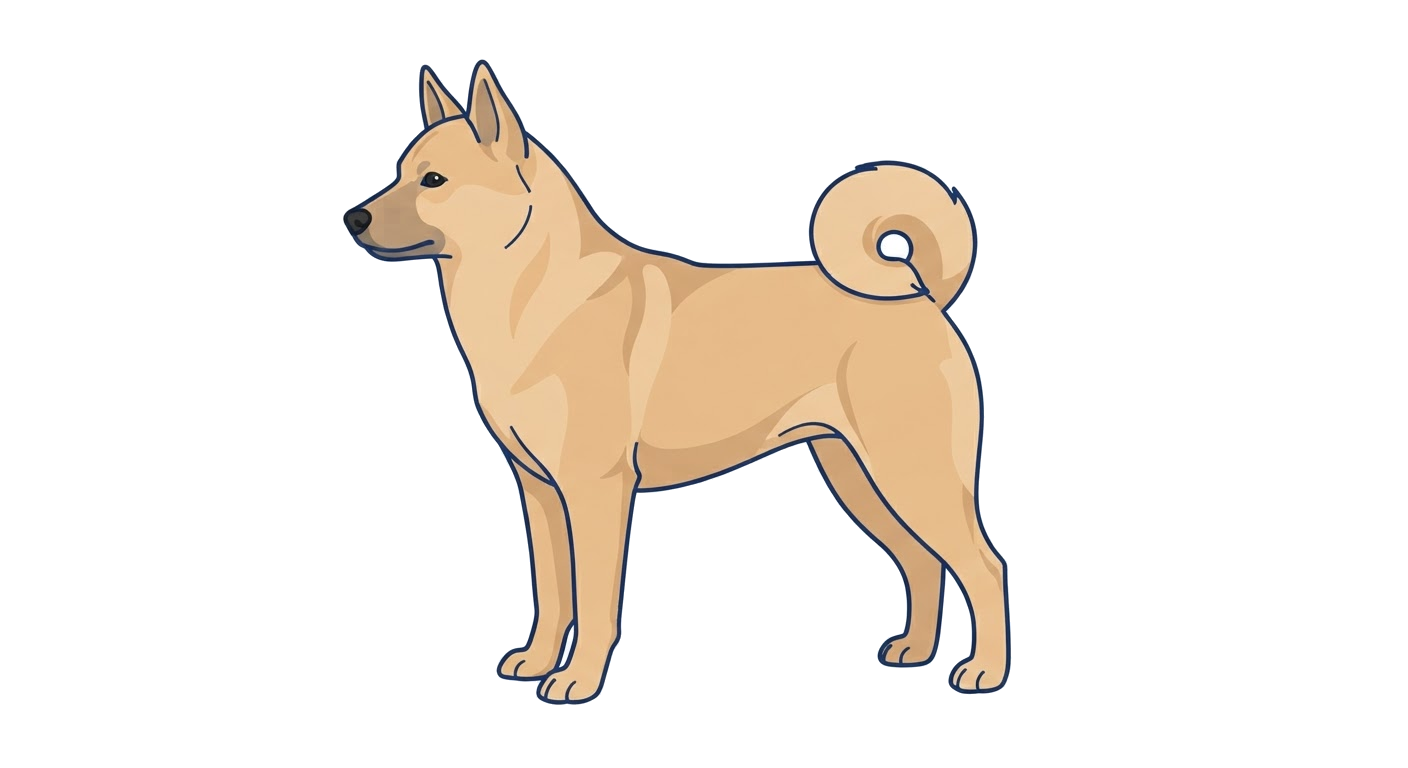
Point 1
Skull
The Norwegian Buhund's skull is judged on balance rather than size — proportionate to the body, with a clean cheek and a stop typical of the breed. Coarseness or an over-refined head are both faulted.
Colours & patterns
Recognised coats
Which coats the standard accepts — and which are simply popular.
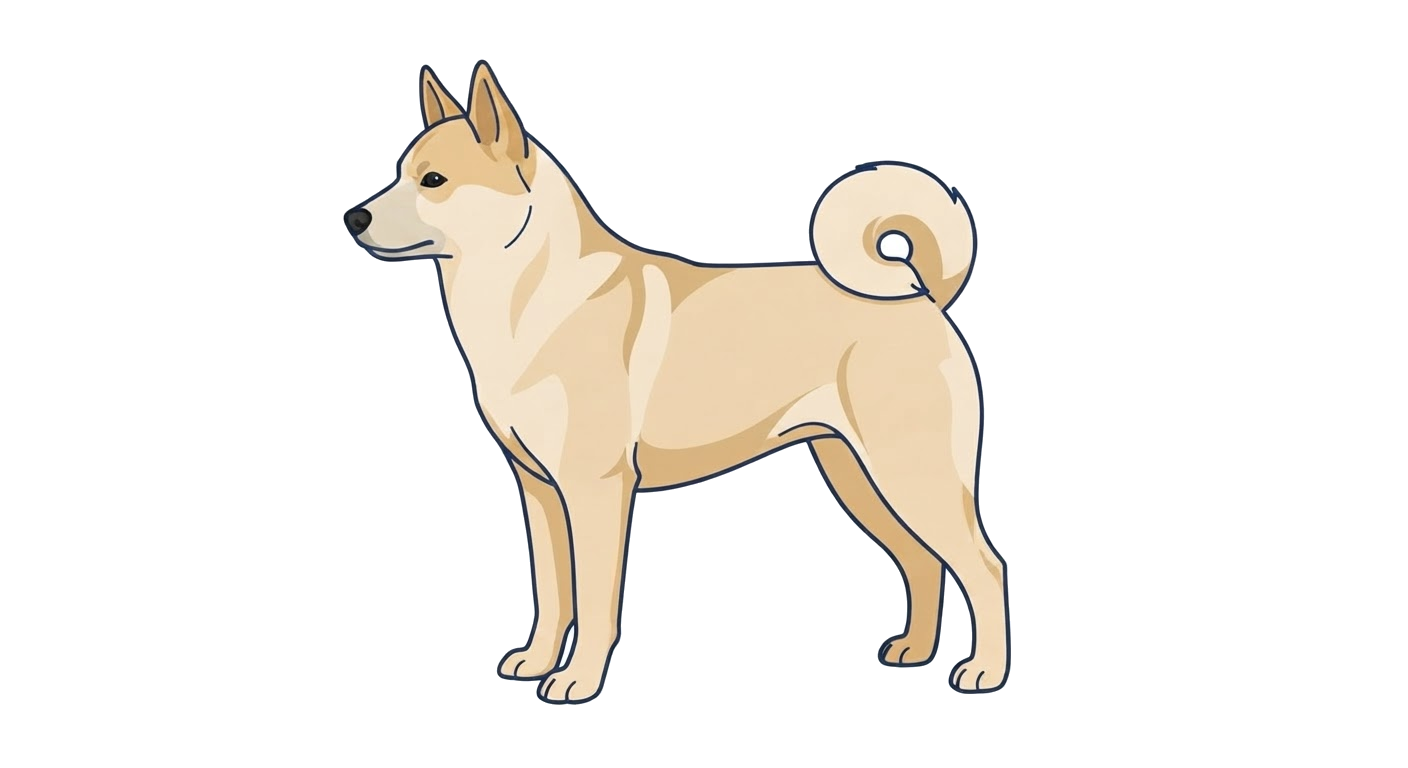
Wheaten
Standard colour
The most common colour, ranging from pale to red-gold.
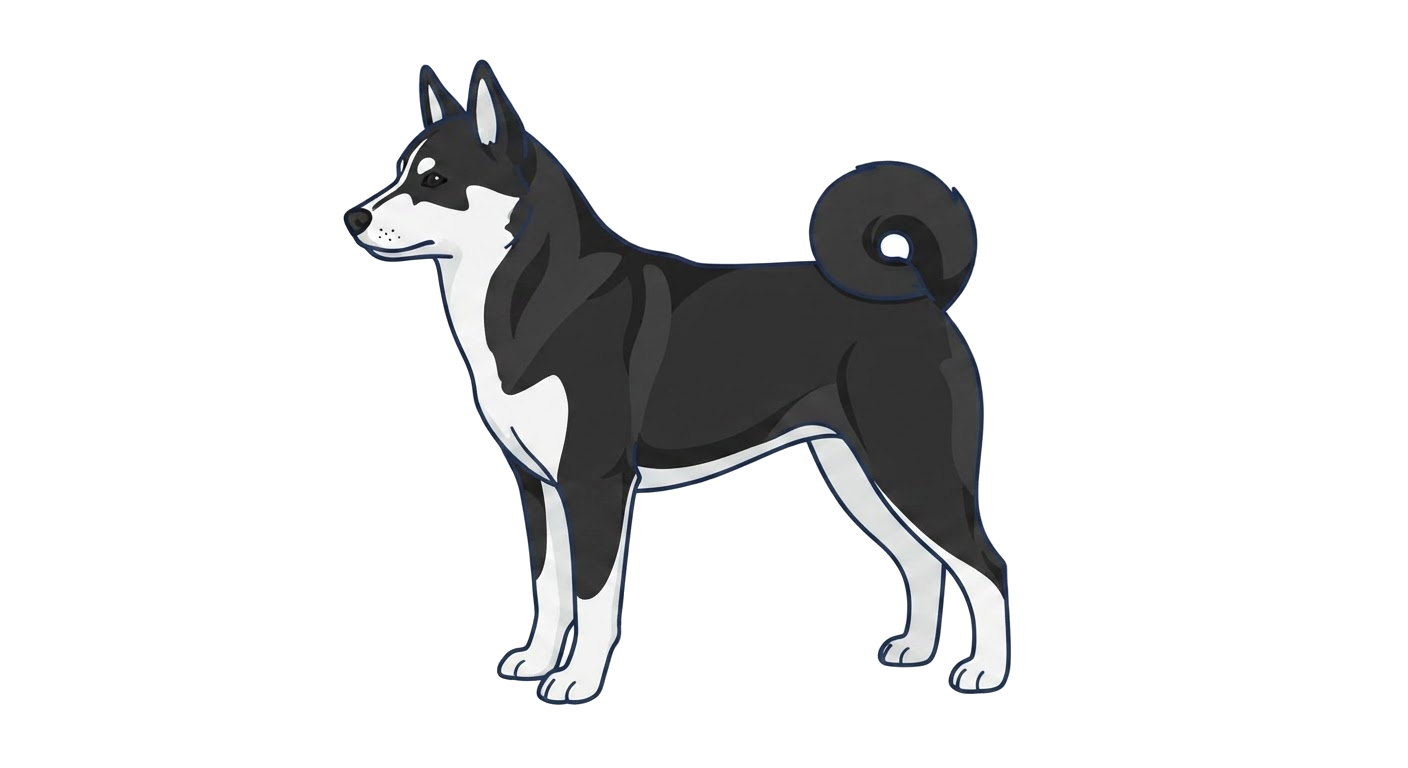
Black
Standard colour
A solid black coat, fully accepted in the standard.
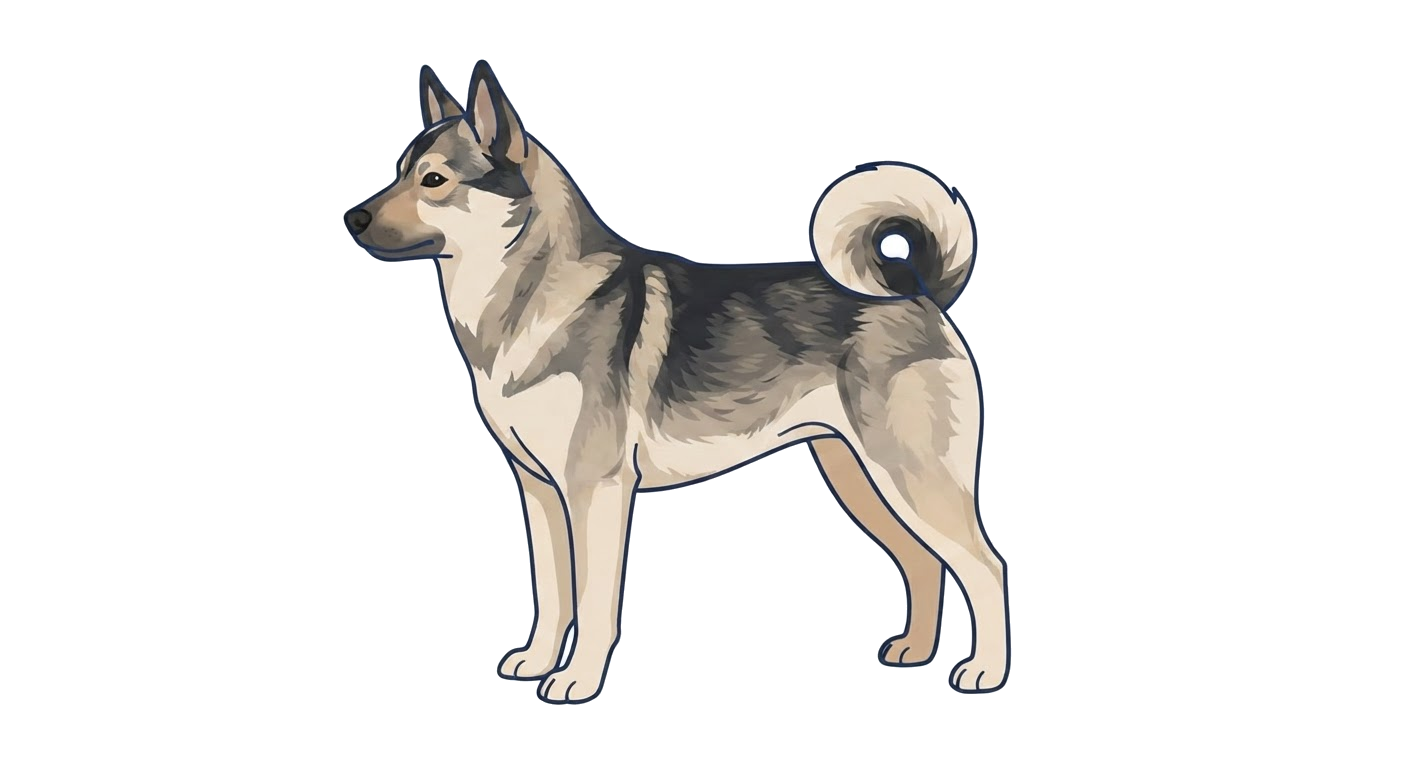
Wolf sable
Standard colour
A grizzled grey-brown shade resembling wild canid colouring.
Timeline
History & development
Viking age
Ancient origins
Spitz-type dogs resembling the Buhund are found in Viking-era graves in Norway.
1920s
Formal standardisation
Norwegian fanciers begin organising the breed and holding shows for farm-type spitz dogs.
1939
Norwegian Kennel Club recognition
The Buhund is formally recognised as a distinct breed in Norway.
1980s
UK introduction
The breed becomes established in Britain in small numbers, with Kennel Club recognition following.
Reference
Breed standard summary
- body
- Short, strong back with good depth of chest.
- coat
- Dense, harsh outer coat with soft undercoat.
- ears
- Erect, pointed, very mobile.
- eyes
- Dark brown, oval, with a friendly, alert expression.
- gait
- Light, quick, and effortless.
- head
- Light, wedge-shaped, with a moderate stop.
- size
- Medium, 41-47cm at the shoulder.
- tail
- Set high, tightly curled over the back.
- colour
- Wheaten, Black, Wolf sable. Colours outside this list are seen but are not accepted by the kennel clubs.
- temperament
- Typical of the breed: strongest in energy, trainability, sociability. Nervousness or aggression are serious faults in the show ring and in the home.
- general appearance
- A light, agile spitz-type dog, sturdy and squarely built.
Health
What to screen for
Green means little to worry about, amber means ask the breeder for test results, red means manage it actively.
Hip dysplasia
Screen for it
Ask breeders for hip scores on both parents.
Progressive retinal atrophy
Screen for it
Request eye test certification before buying a puppy.
Hereditary cataracts
Screen for it
Included in standard eye screening panels for the breed.
Cerebellar ataxia
Watch closely
A rare neurological condition; ask if the line has been genetically tested.
General information only — always speak to your vet about your own dog.
From real owners
Dogs like this
Norwegian Buhunds added by PawPoint members through their pet passports. Share yours to appear here.
Loading the wall…
Made for the Norwegian Buhund
The book, plus prints, hoodies and mugs using our own Norwegian Buhund illustration — and one everyday accessory that suits any dog.

The book
Pawpoint: The Complete Dog Breed Book
Every officially recognised breed plus the unofficial ones nobody else documents. 400+ pages, hardback, printed and shipped from the UK.
Own stock — shipped by us
Framed poster
Norwegian Buhund Framed Poster
Museum-weight print of our Norwegian Buhund illustration, framed or unframed.
Printed to order
Hoodie
Norwegian Buhund Hoodie
Heavyweight hoodie carrying the Norwegian Buhund illustration on the chest.
Printed to order
Mug
Norwegian Buhund Mug
Ceramic mug with the Norwegian Buhund illustration wrapped around it.
Printed to order
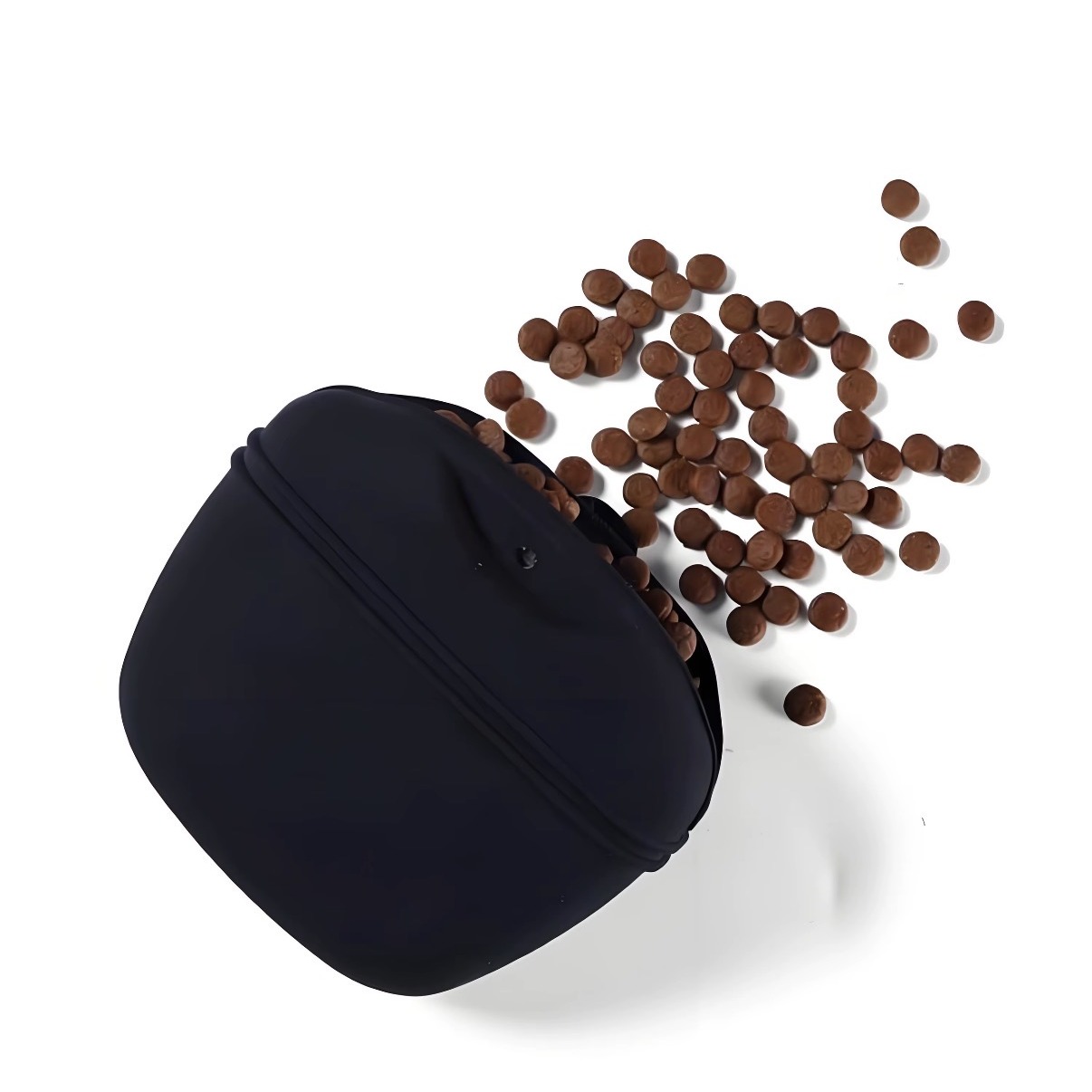
Accessory
Treat Pouch
Magnetic-close belt pouch for training sessions.
Fits any dog
Pawpoint on YouTube
Watch the full Norwegian Buhund video
Breed deep-dives, history and honest ownership talk. New film every week.
Watch now