Norwegian Elkhound
nor-WEE-juhn ELK-hownd
Norway· Rural Norway
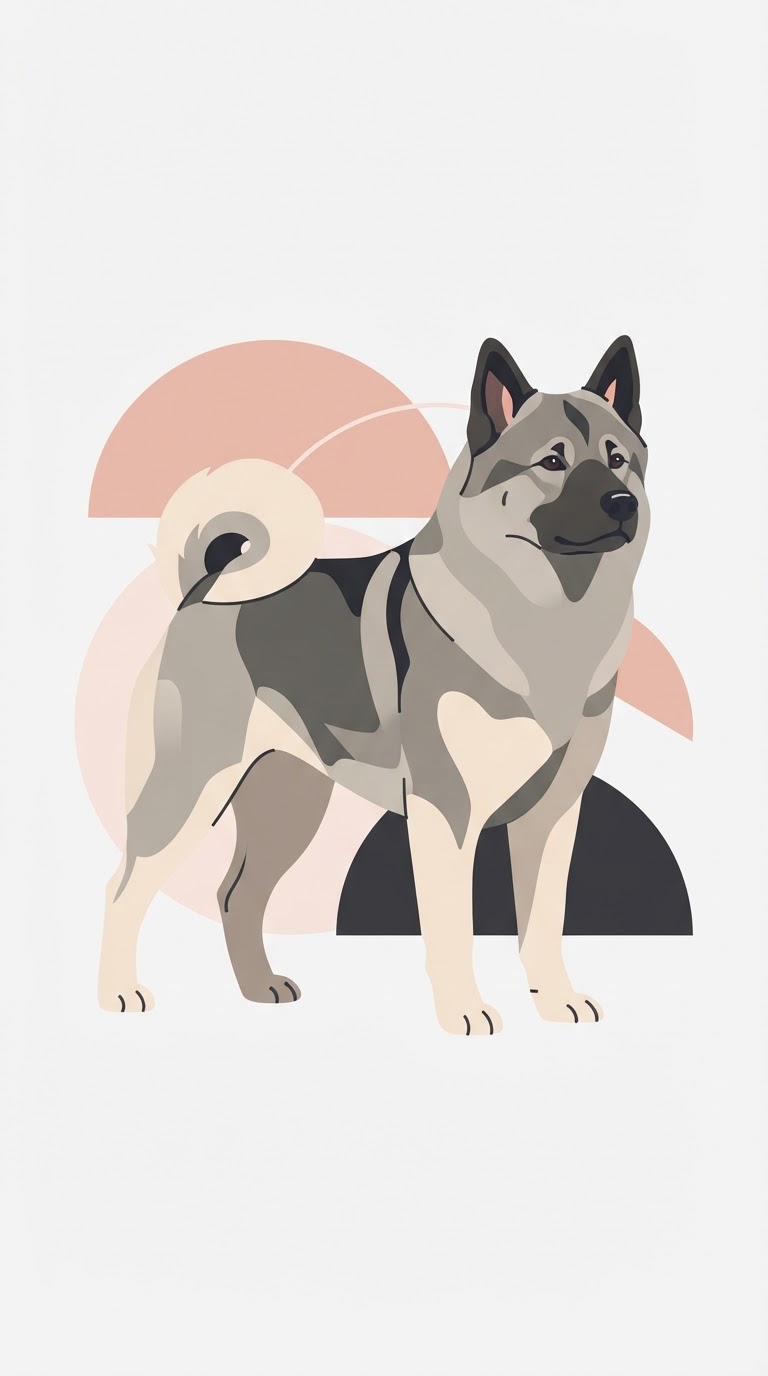
The Norwegian Elkhound is an ancient spitz-type hunting dog from Norway, bred to track and hold moose and other large game at bay until hunters arrived.
At a glance
Quick facts
Size
Medium
Exercise needs
60-90 minutes daily
Home size suited to
Small to medium home
Grooming frequency
Twice weekly brush
Coat length
Medium
Sheds
Yes, heavily when moulting
Lifespan
12-15 years
Town or country
Happiest in the country
Garden size needed
Small to medium
Where it comes from
Origins of the Norwegian Elkhound
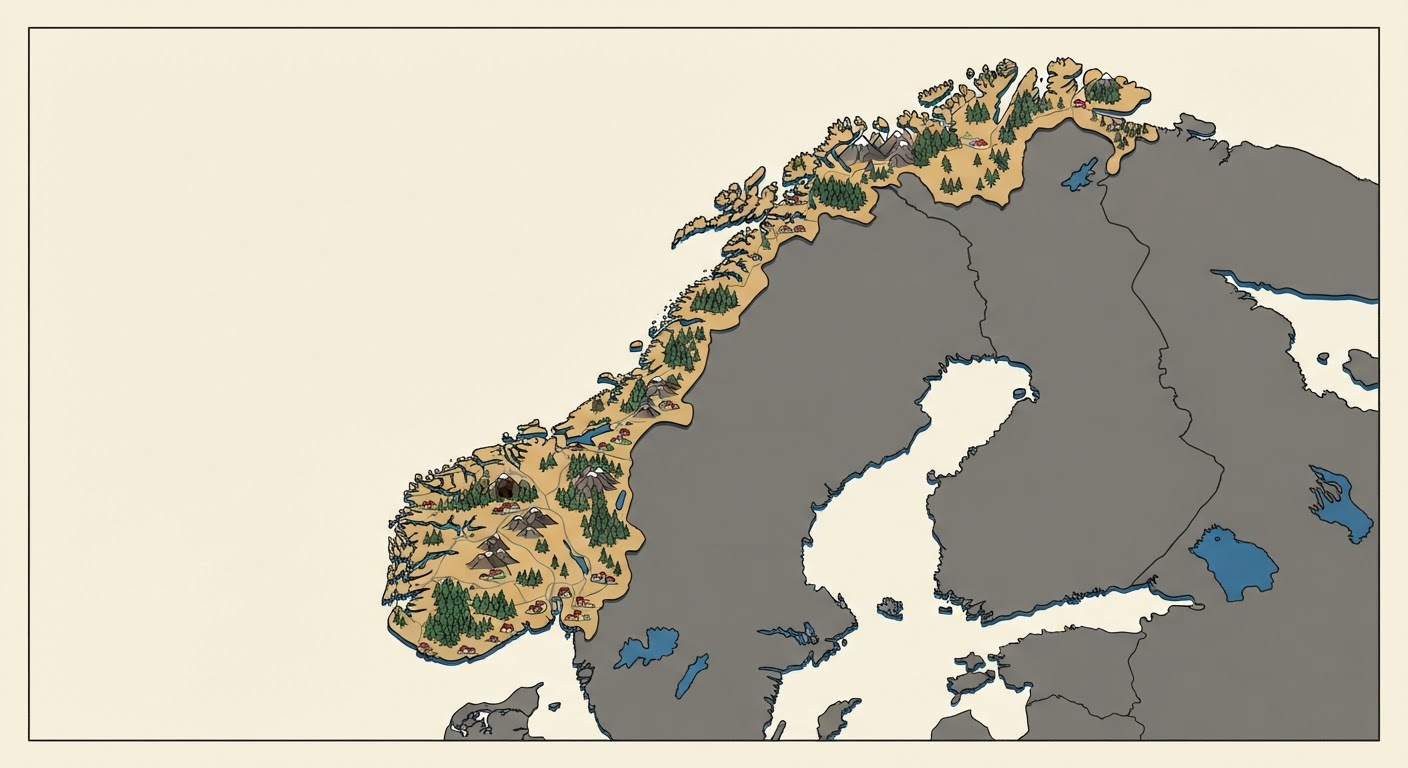
One of the oldest breeds in existence, the Elkhound developed in the forests and mountains of Norway, where it needed stamina, a thick coat and real nerve to track and hold dangerous game such as elk until hunters could catch up.
- Region
- Rural Norway
- Climate it was bred for
- Cold, mountainous Scandinavian terrain
- Original job
- Tracking and holding elk and moose at bay
The long read
About the breed
Remains of elkhound-type dogs have been found in Norwegian graves dating back over four thousand years, making this one of the oldest identifiable dog breeds still worked in something close to its original role. Traditionally used to hunt elk, the breed's job was not to kill but to track quarry silently, then bark to hold it in place, circling and dodging while the animal's attention stayed fixed on the dog rather than the approaching hunter. This demanded intelligence, stamina and considerable courage, since an elk or moose can be lethal if it charges.
Living with a Norwegian Elkhound means living with a bold, independent, thickly coated dog built for cold-weather stamina. It is loyal and affectionate with its family but can be reserved with strangers, and its hunting background means a strong prey drive and a tendency to roam if let off lead near wildlife. Training benefits from patience, since the breed's independent streak can make it selectively deaf when something more interesting is happening nearby.
The dense double coat is built to shed water and insulate against cold, and it sheds copiously, especially during the twice-yearly coat blow, requiring daily brushing during those periods. Exercise needs are substantial — this is a working hunting dog, not a lapdog, and it needs a good hour or more of activity daily to stay content and avoid destructive behaviour.
Today the Norwegian Elkhound remains Norway's national dog and continues to be used for hunting in Scandinavia, while elsewhere it is kept mainly as a hardy, characterful companion for active households.
Living with one
Temperament & needs
Our own ratings, based on the breed standard and how these dogs behave in ordinary homes.
Friendliness
3/5
How openly the Norwegian Elkhound greets people it does not know.
Trainability
3/5
Intelligent but independent, benefits from patient training.
Energy
5/5
A tireless working dog that needs substantial daily exercise.
Barking
4/5
Barks as part of its traditional hunting method.
Grooming
4/5
Heavy seasonal shedding needs daily brushing during coat blow.
Suits a first-time owner
2/5
How forgiving the Norwegian Elkhound is for someone taking on their first dog.
Sociability
3/5
Loyal to family but reserved with strangers.
Independence
4/5
Bred to work at a distance from the hunter, making its own decisions.
Illustrated breed standard
The points of the breed
Hover or tap a numbered point to read what the standard asks for.
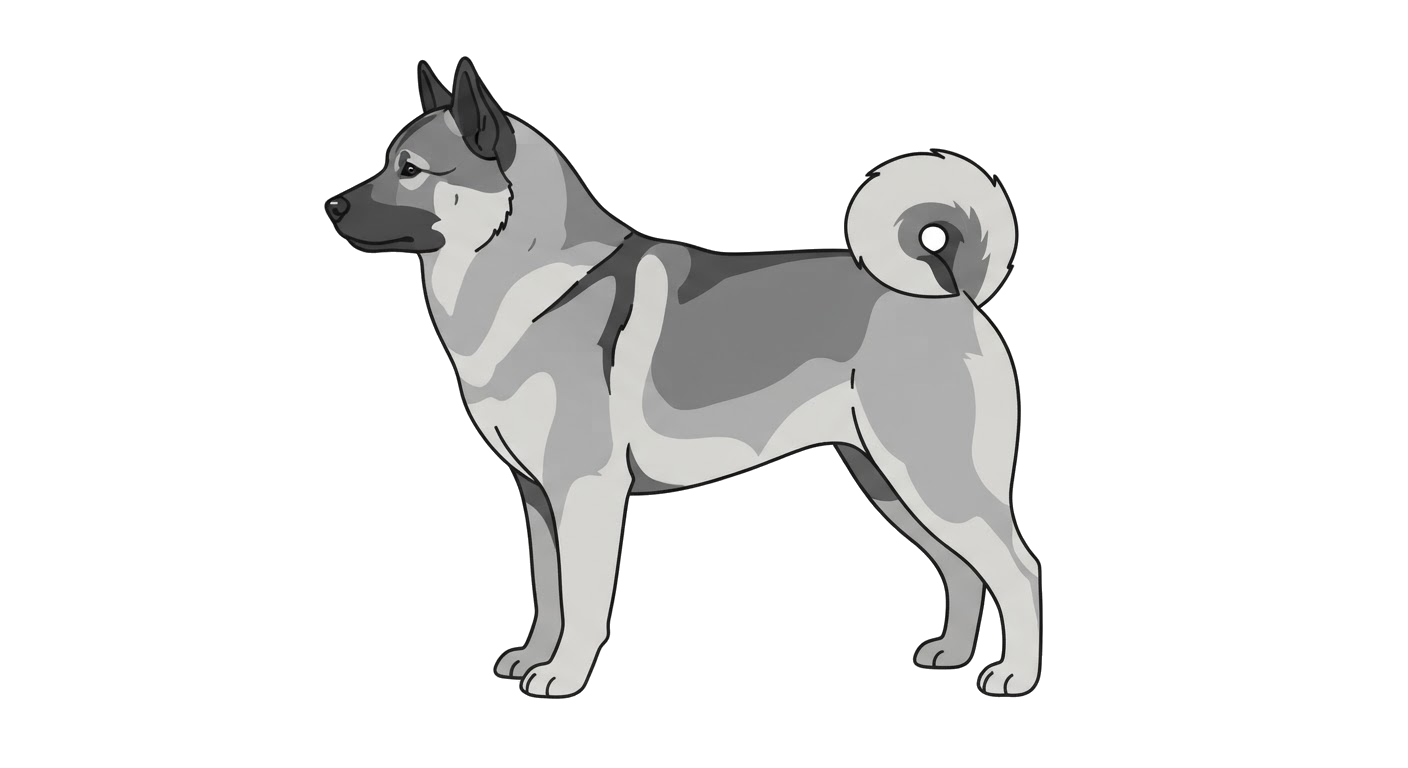
Point 1
Skull
The Norwegian Elkhound's skull is judged on balance rather than size — proportionate to the body, with a clean cheek and a stop typical of the breed. Coarseness or an over-refined head are both faulted.
Colours & patterns
Recognised coats
Which coats the standard accepts — and which are simply popular.
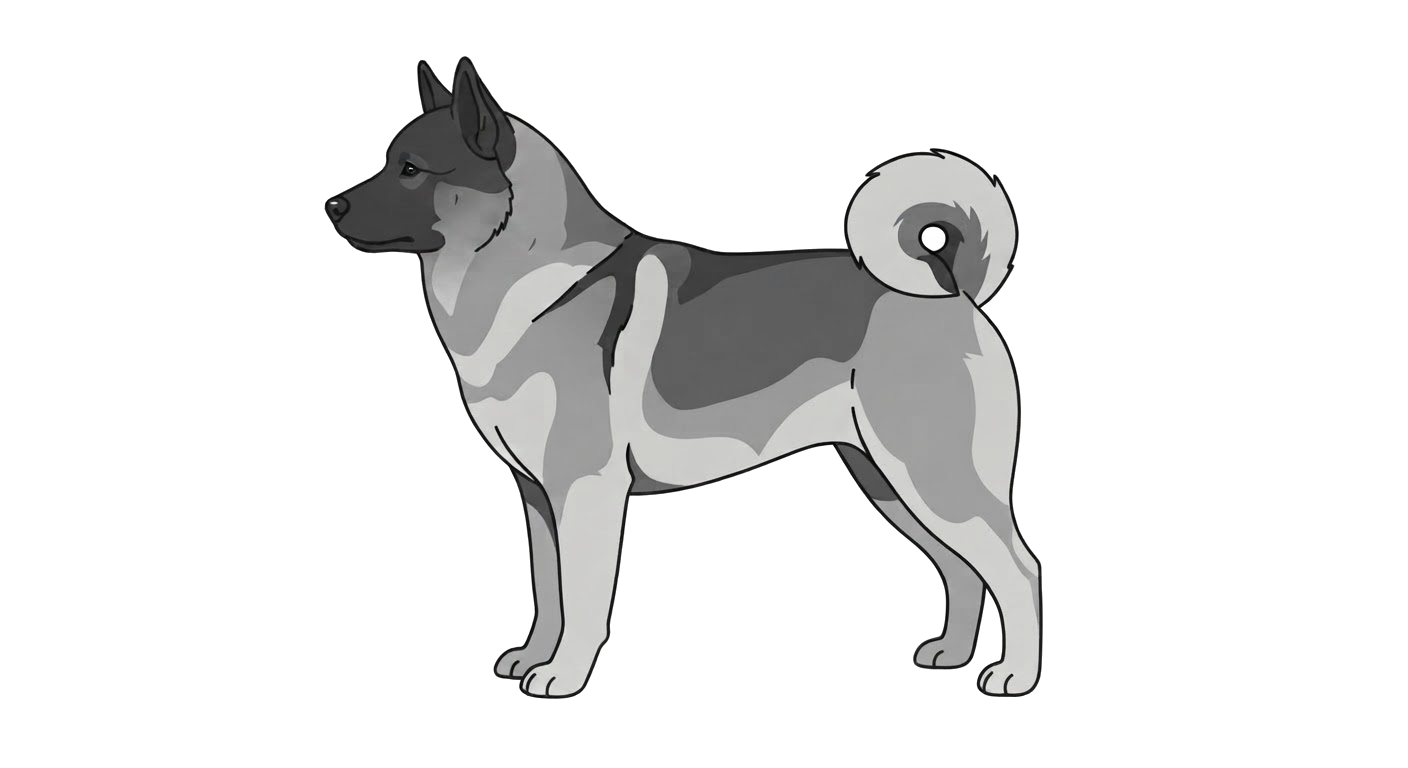
Grey
Standard colour
The only standard colour, a grizzled grey with black tipping.
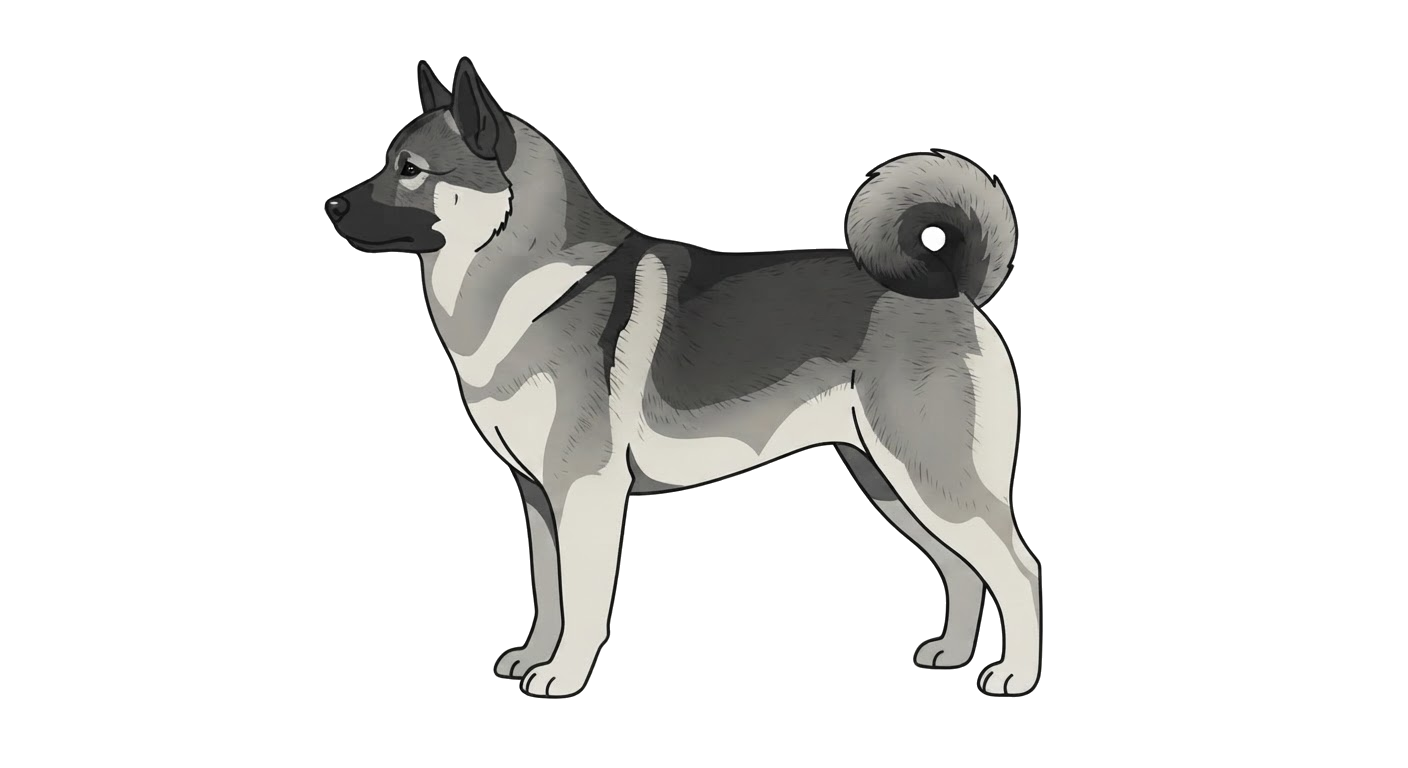
Black-tipped grey
Standard colour
A darker variation of the standard grey, common in working lines.
Timeline
History & development
c.5000 BC
Ancient origins
Skeletal remains of elkhound-type dogs are found in Norwegian Stone Age burial sites.
Viking age
Companion and hunter
The breed accompanies Norse hunters and farmers, valued for its courage against large game.
1877
First breed standard
The Norwegian Hunters Association draws up the first written standard for the breed.
1901
UK recognition
The Kennel Club recognises the Norwegian Elkhound, and the breed spreads across Europe.
1950s onward
The breed today
Kennel club registrations settled into a steady pattern and the Norwegian Elkhound moved from a working specialist to a family companion, with breed clubs in the UK and abroad now focused on health testing and keeping true type alive.
Reference
Breed standard summary
- body
- Short, deep chest with a strong straight back.
- coat
- Thick, coarse outer coat with a soft, dense undercoat.
- ears
- Erect, set high, very mobile.
- eyes
- Dark brown, medium size, with a bold, friendly expression.
- gait
- Light, elastic, and effortless, covering ground efficiently.
- head
- Broad, wedge-shaped, with a moderate stop.
- size
- Medium, 46-52cm at the shoulder.
- tail
- Set high, tightly curled over the back.
- colour
- Grey, Black-tipped grey. Colours outside this list are seen but are not accepted by the kennel clubs.
- temperament
- Typical of the breed: strongest in energy, independence, barking. Nervousness or aggression are serious faults in the show ring and in the home.
- general appearance
- A compact, robust spitz-type dog of square proportion, silver-grey in colour.
Health
What to screen for
Green means little to worry about, amber means ask the breeder for test results, red means manage it actively.
Hip dysplasia
Screen for it
Ask for hip scores on both parents before buying.
Progressive retinal atrophy
Screen for it
Request current eye test certification from the breeder.
Fanconi syndrome
Screen for it
A kidney condition seen in the breed; ask if the line has been screened.
Sebaceous cysts
Low concern
Common but usually harmless; have any new lumps checked by a vet.
General information only — always speak to your vet about your own dog.
From real owners
Dogs like this
Norwegian Elkhounds added by PawPoint members through their pet passports. Share yours to appear here.
Loading the wall…
Made for the Norwegian Elkhound
The book, plus prints, hoodies and mugs using our own Norwegian Elkhound illustration — and one everyday accessory that suits any dog.

The book
Pawpoint: The Complete Dog Breed Book
Every officially recognised breed plus the unofficial ones nobody else documents. 400+ pages, hardback, printed and shipped from the UK.
Own stock — shipped by us
Framed poster
Norwegian Elkhound Framed Poster
Museum-weight print of our Norwegian Elkhound illustration, framed or unframed.
Printed to order
Hoodie
Norwegian Elkhound Hoodie
Heavyweight hoodie carrying the Norwegian Elkhound illustration on the chest.
Printed to order
Mug
Norwegian Elkhound Mug
Ceramic mug with the Norwegian Elkhound illustration wrapped around it.
Printed to order
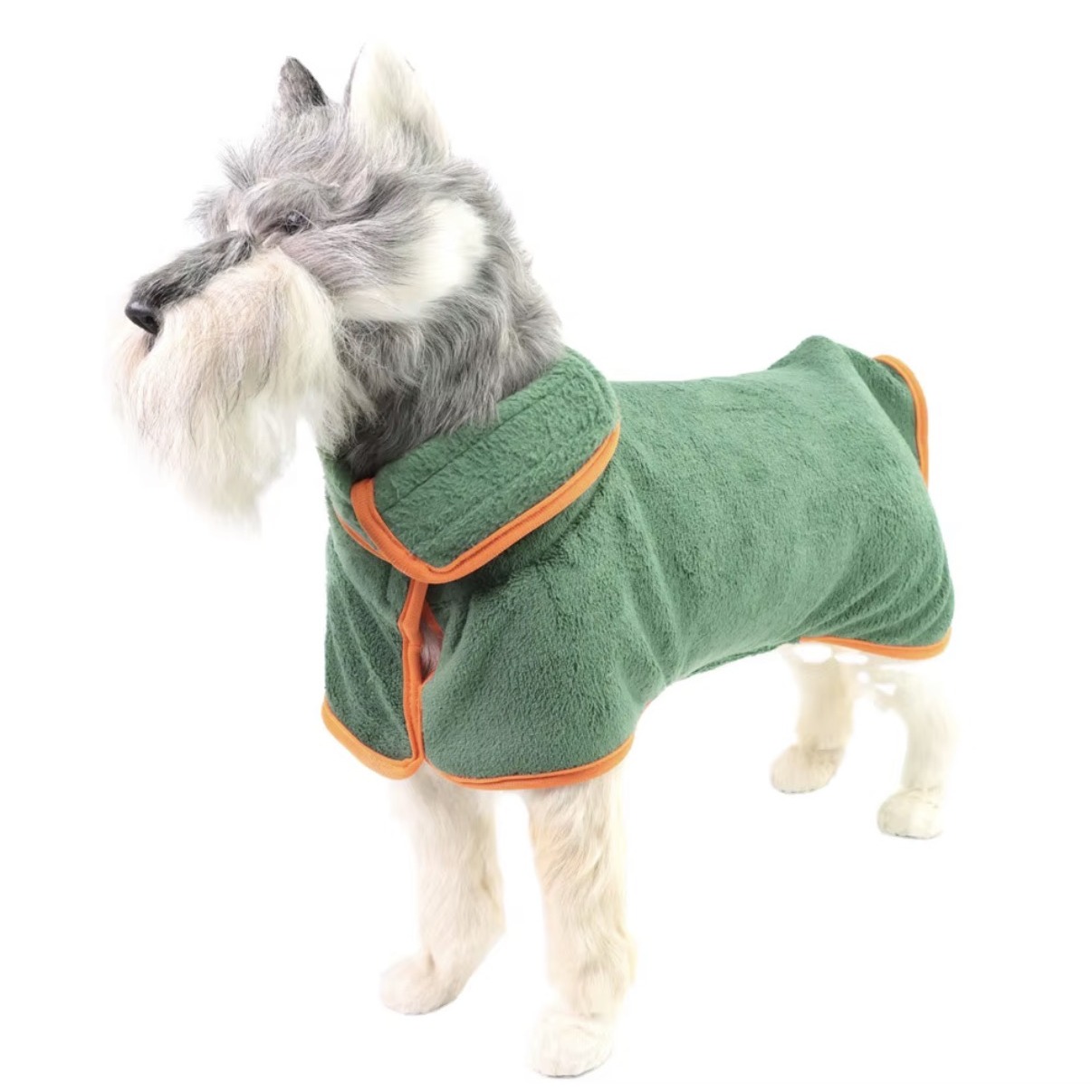
Accessory
Drying Towel Robe
Microfibre robe that soaks up a wet-walk shake.
Fits any dog
Pawpoint on YouTube
Watch the full Norwegian Elkhound video
Breed deep-dives, history and honest ownership talk. New film every week.
Watch now