
Norwich Terrier
NOR-ij TER-ee-uhr
England· Norwich and Cambridge, East Anglia
The Norwich Terrier is a small, prick-eared earth dog from East Anglia, sharing its history with the Norfolk Terrier until the two were split into separate breeds in 1964.
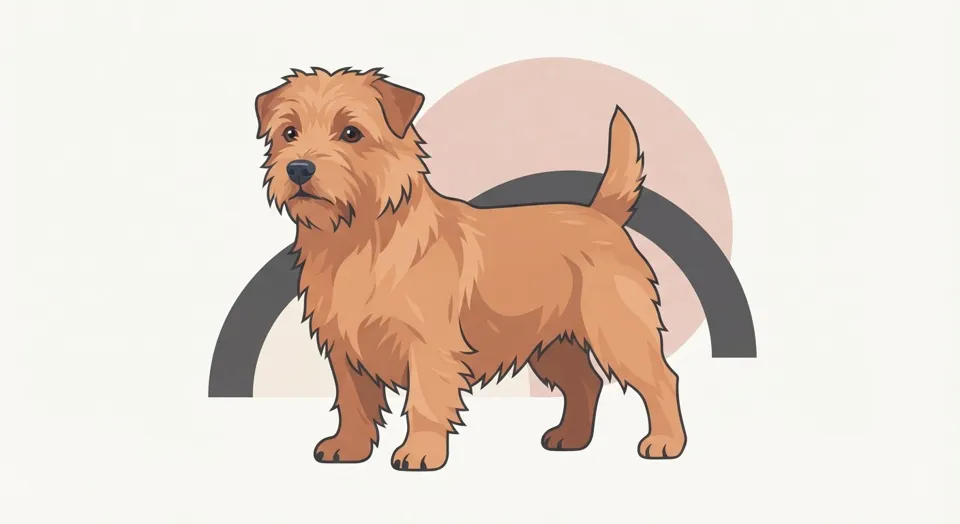
At a glance
Quick facts
- Size
- Small
- Exercise needs
- 45-60 minutes daily
- Home size suited to
- Flat or any size home
- Grooming frequency
- Weekly brush, hand-strip a few times a year
- Coat length
- Wiry
- Sheds
- Little, needs stripping instead
- Lifespan
- 13-15 years
- Town or country
- Either, with enough exercise
- Garden size needed
- None needed
Where it comes from
Origins of the Norwich Terrier
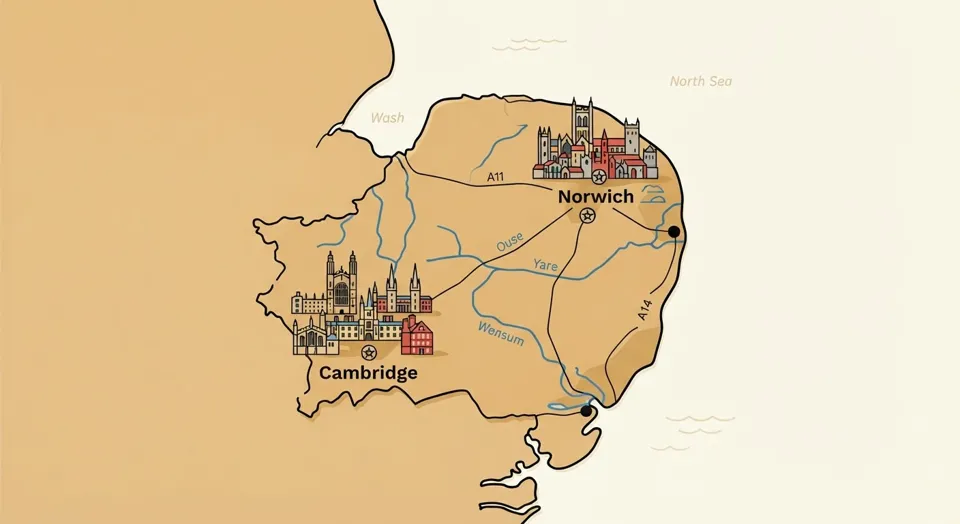
Developed around Norwich and Cambridge, this small terrier was kept by students and stable staff to rid buildings of rats and to bolt foxes from their earths on hunting days, work that demanded a fearless, compact dog.
- Region
- Norwich and Cambridge, East Anglia
- Climate it was bred for
- Cool, damp East Anglian countryside
- Original job
- Ratting and bolting foxes from earths
The long read
About the breed
The breed developed around Norwich and Cambridge in the late nineteenth century among stable lads and Cambridge undergraduates, who favoured small, game terriers for ratting and for bolting foxes from their earths during hunts. One influential early dog, a terrier named "Rags" kept at Cambridge, is credited with founding much of the type's popularity among students, who took the little terriers home with them across England and eventually abroad. For decades prick-eared and drop-eared dogs were shown together as a single breed before the Kennel Club separated them, with the Norwich name going to the prick-eared type.
Living with a Norwich Terrier means living with a small dog of considerable spirit. It is affectionate, sociable and generally good with children, often more biddable day to day than some other terrier breeds, though it retains a strong instinct to chase and dig. It is intelligent and enjoys training, but its curiosity can override recall around interesting scents, so off-lead work needs a secure, enclosed space until reliability is proven.
The wiry coat is low-maintenance in terms of washing but needs hand-stripping a couple of times a year to keep its harsh texture and prevent it becoming soft and dull. Exercise needs are moderate, met by daily walks and playtime, and the breed enjoys earth dog trials and other activities that tap into its terrier instincts.
Today the Norwich Terrier is a popular, cheerful companion breed, prized for combining a small size with genuine terrier grit and a notably sociable, un-snappy temperament.
Living with one
Temperament & needs
Our own ratings, based on the breed standard and how these dogs behave in ordinary homes.
Friendliness
4/5
How openly the Norwich Terrier greets people it does not know.
Trainability
3/5
Bright and biddable but easily distracted by scent.
Energy
4/5
Busy and playful, enjoys digging and exploring.
Barking
3/5
Alert and will bark at anything unusual.
Grooming
3/5
Wiry coat needs hand-stripping a couple of times a year.
Suits a first-time owner
3/5
How forgiving the Norwich Terrier is for someone taking on their first dog.
Sociability
4/5
Notably friendly and good with children.
Independence
3/5
A confident terrier that likes to investigate on its own terms.
Illustrated breed standard
The points of the breed
Hover or tap a numbered point to read what the standard asks for.
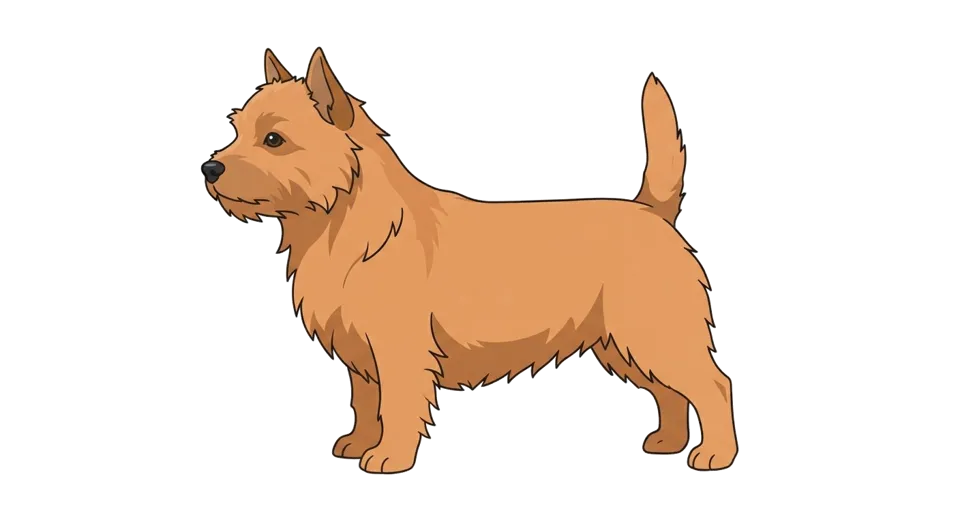
Point 1
Skull
The Norwich Terrier's skull is judged on balance rather than size — proportionate to the body, with a clean cheek and a stop typical of the breed. Coarseness or an over-refined head are both faulted.
Colours & patterns
Recognised coats
Which coats the standard accepts — and which are simply popular.
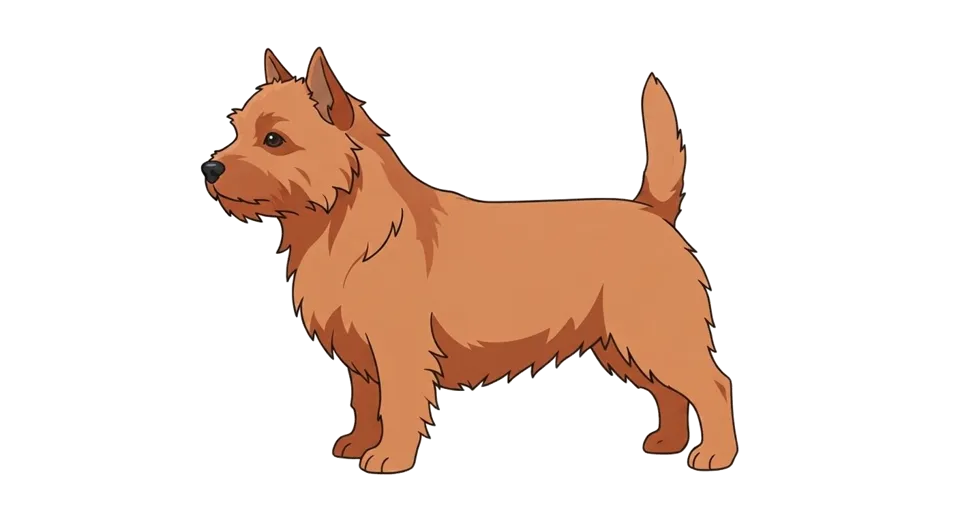
Red
Standard colour
A warm red, one of the most popular colours.
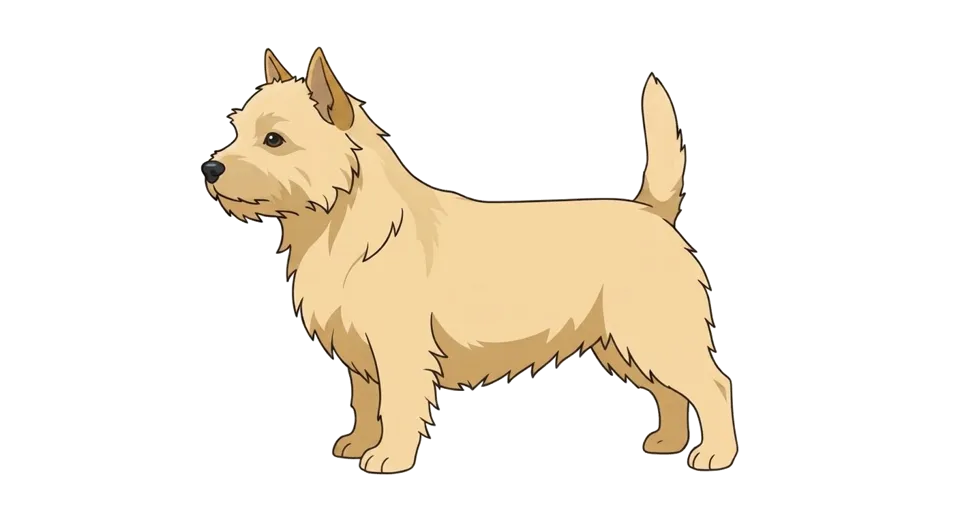
Wheaten
Standard colour
A pale straw shade.
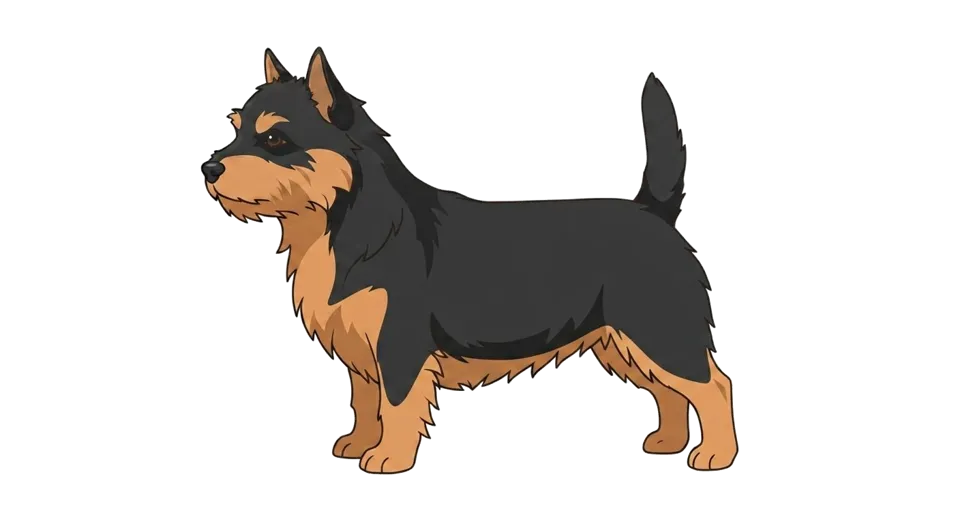
Black and tan
Standard colour
Black body with tan markings, less common.
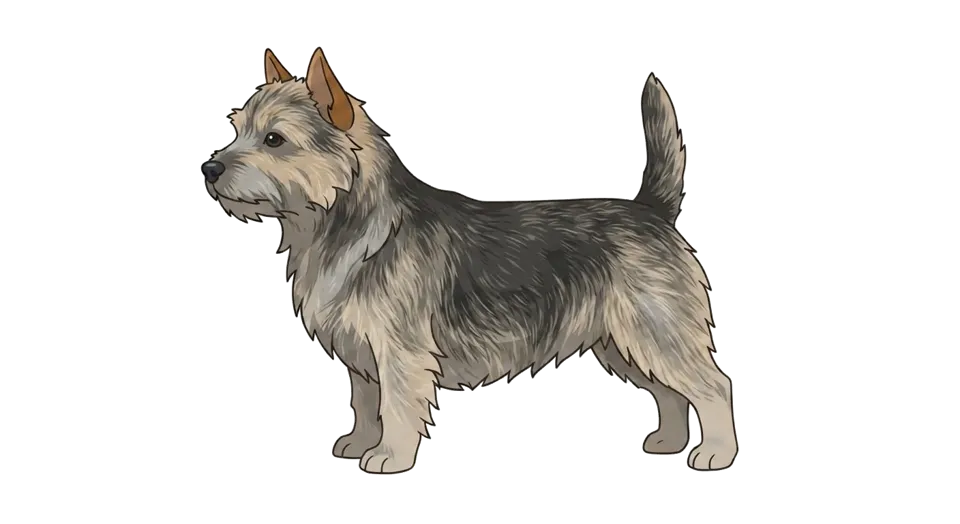
Grizzle
Standard colour
A mixture of red and black hairs giving a mottled look.
Timeline
History & development
1880s
Cambridge popularity
Small terriers, including one named Rags, become popular pets among Cambridge students.
1932
Kennel Club recognition
The Kennel Club recognises the breed under the name Norwich Terrier, covering both ear types.
1964
Split from Norfolk Terrier
Prick-eared dogs retain the Norwich name while drop-eared dogs become the Norfolk Terrier.
1979
American recognition
The American Kennel Club recognises the Norwich Terrier as a distinct breed from the Norfolk.
Reference
Breed standard summary
- body
- Short-coupled, compact, with good rib spring.
- coat
- Hard, wiry, lying close to the body.
- ears
- Erect, small, pointed.
- eyes
- Small, dark, oval, with a keen, alert expression.
- gait
- Low, driving, and true.
- head
- Slightly rounded, wide skull, strong muzzle.
- size
- Small, 25-26cm at the shoulder.
- tail
- Medium docked or natural, carried erect.
- colour
- Red, Wheaten, Black and tan, Grizzle. Colours outside this list are seen but are not accepted by the kennel clubs.
- temperament
- Typical of the breed: strongest in energy, sociability, trainability. Nervousness or aggression are serious faults in the show ring and in the home.
- general appearance
- A small, low, compact working terrier of great sturdiness.
Health
What to screen for
Green means little to worry about, amber means ask the breeder for test results, red means manage it actively.
Upper airway syndrome
Watch closely
Some lines have narrowed airways; ask breeders about breathing checks.
Patellar luxation
Screen for it
Request a patella check for both parents.
Mitral valve disease
Watch closely
A heart murmur check is worthwhile in older breeding dogs.
Hip dysplasia
Low concern
Uncommon but worth checking hip health if it appears in a specific line.
General information only — always speak to your vet about your own dog.
From real owners
Norwich Terriers in the PAWPOINT Pack
Norwich Terriers added by PawPoint members through their pet passports. Share yours to appear here.
Loading the wall…
Made for the Norwich Terrier
The book, plus hoodies, tees and mugs featuring the Norwich Terrier.