
Parson Russell Terrier
PAR-suhn RUSS-uhl TER-ee-uhr
England· Devon, West Country
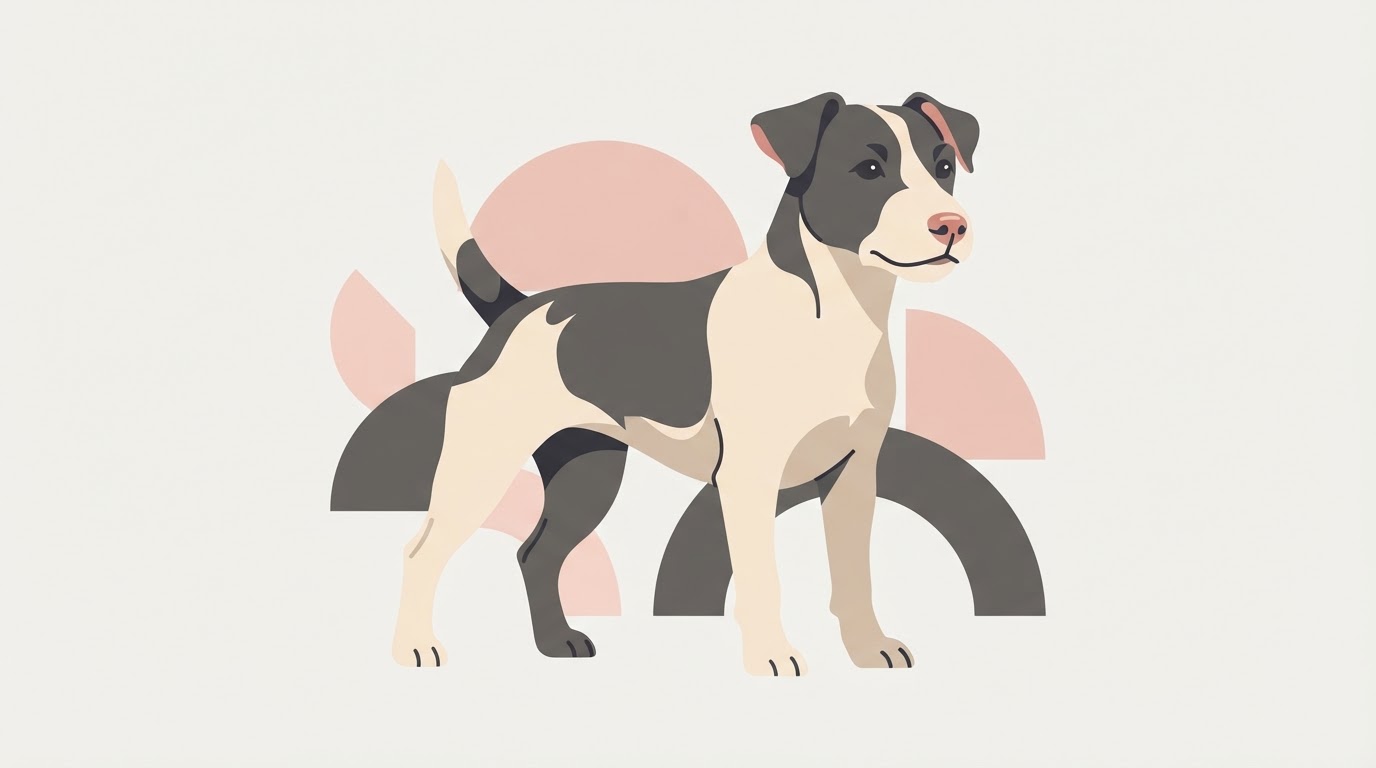
The Parson Russell Terrier is a lively, square-built earth terrier developed in the English West Country by Reverend John Russell for fox hunting, closely related to but distinct from the shorter-legged Jack Russell Terrier.
At a glance
Quick facts
Size
Small
Exercise needs
60-90 minutes daily
Home size suited to
Flat or small home
Grooming frequency
Weekly brush, hand-strip a few times a year
Coat length
Wiry
Sheds
Yes, heavily when moulting
Lifespan
13-15 years
Town or country
Either, with enough exercise
Garden size needed
Small garden or none
Where it comes from
Origins of the Parson Russell Terrier
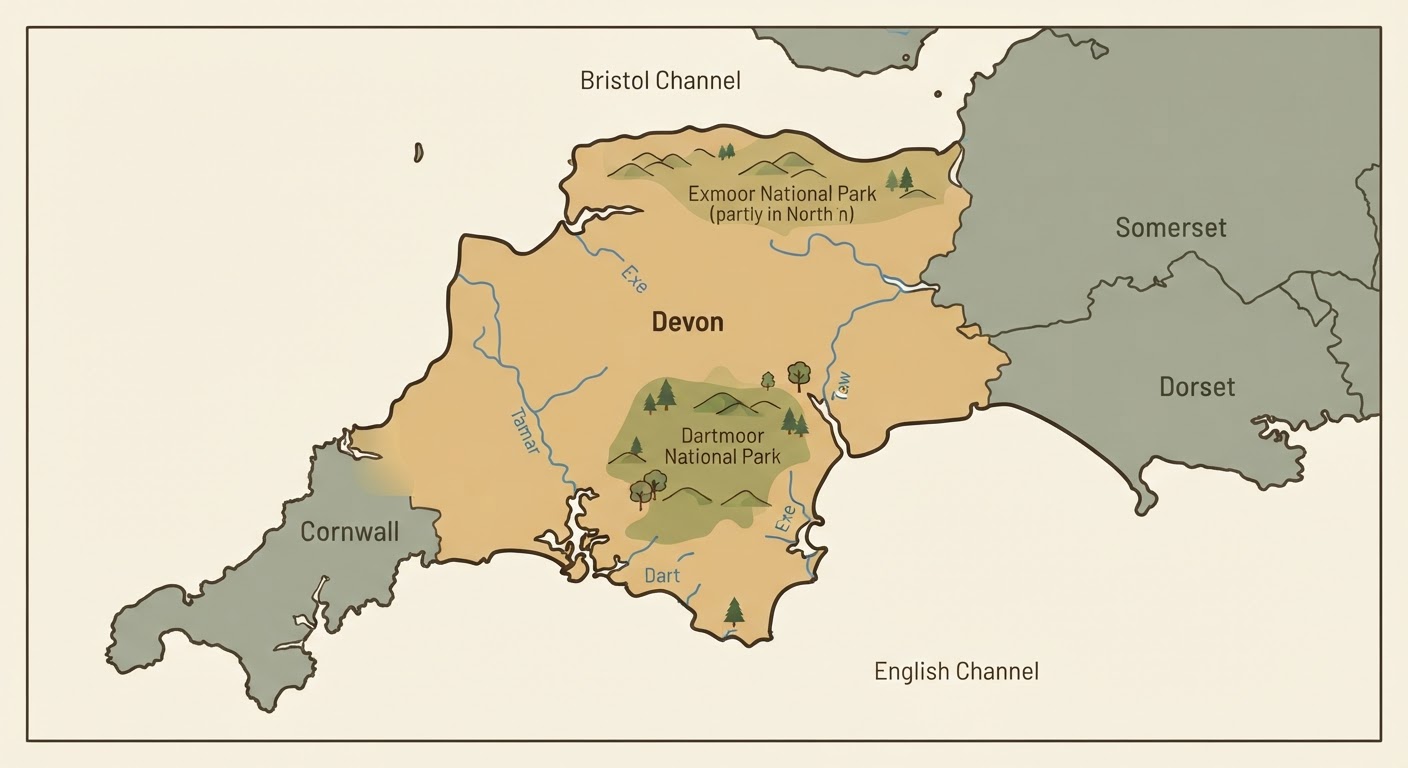
Bred in Devon by Reverend John Russell, this terrier needed the leg length to keep pace with hounds and horses across rough West Country ground, while remaining compact enough to follow a fox underground.
- Region
- Devon, West Country
- Climate it was bred for
- Cool, wet English countryside
- Original job
- Bolting foxes during mounted hunts
The long read
About the breed
Reverend Russell, a nineteenth-century clergyman and keen fox hunter in Devon, bred terriers specifically to run with hounds and then go to ground to bolt foxes, prizing a leggy, athletic dog that could keep pace with horses over rough terrain while still being small enough to work underground. The breed carries his name and reflects his original vision of a terrier bred for stamina and function rather than appearance. Over the twentieth century breeders formalised the type into a taller, more standardised dog than the varied Jack Russells still bred largely to working ability rather than a strict standard.
Living with a Parson Russell Terrier means living with an extremely energetic, intelligent, and often headstrong dog that needs a proper job or serious daily exercise to stay content. It is affectionate with its family but can be feisty with other dogs, particularly of the same sex, and its strong prey drive means small pets and unsecured gardens are a real risk. Training benefits enormously from starting early and staying consistent, since the breed is sharp enough to learn quickly but also to find its own entertainment if bored.
The smooth or broken coat needs only occasional brushing, making grooming one of the easier aspects of ownership. Exercise, by contrast, is considerable — this is not a breed suited to a sedentary household, and a bored Parson Russell will dig, chew and escape with impressive determination.
Today the Parson Russell Terrier is kept mainly as an active companion and competes successfully in agility and earth dog trials, retaining much of the working drive its founder originally bred for.
Living with one
Temperament & needs
Our own ratings, based on the breed standard and how these dogs behave in ordinary homes.
Friendliness
3/5
How openly the Parson Russell Terrier greets people it does not know.
Trainability
4/5
Sharp and capable, though can be strong-willed.
Energy
5/5
Extremely active and needs significant daily exercise.
Barking
3/5
Alert and vocal, especially when excited.
Grooming
2/5
Smooth or broken coat needs only occasional brushing.
Suits a first-time owner
2/5
How forgiving the Parson Russell Terrier is for someone taking on their first dog.
Sociability
3/5
Affectionate with family, can be feisty with other dogs.
Independence
4/5
A confident, self-reliant working terrier at heart.
Illustrated breed standard
The points of the breed
Hover or tap a numbered point to read what the standard asks for.
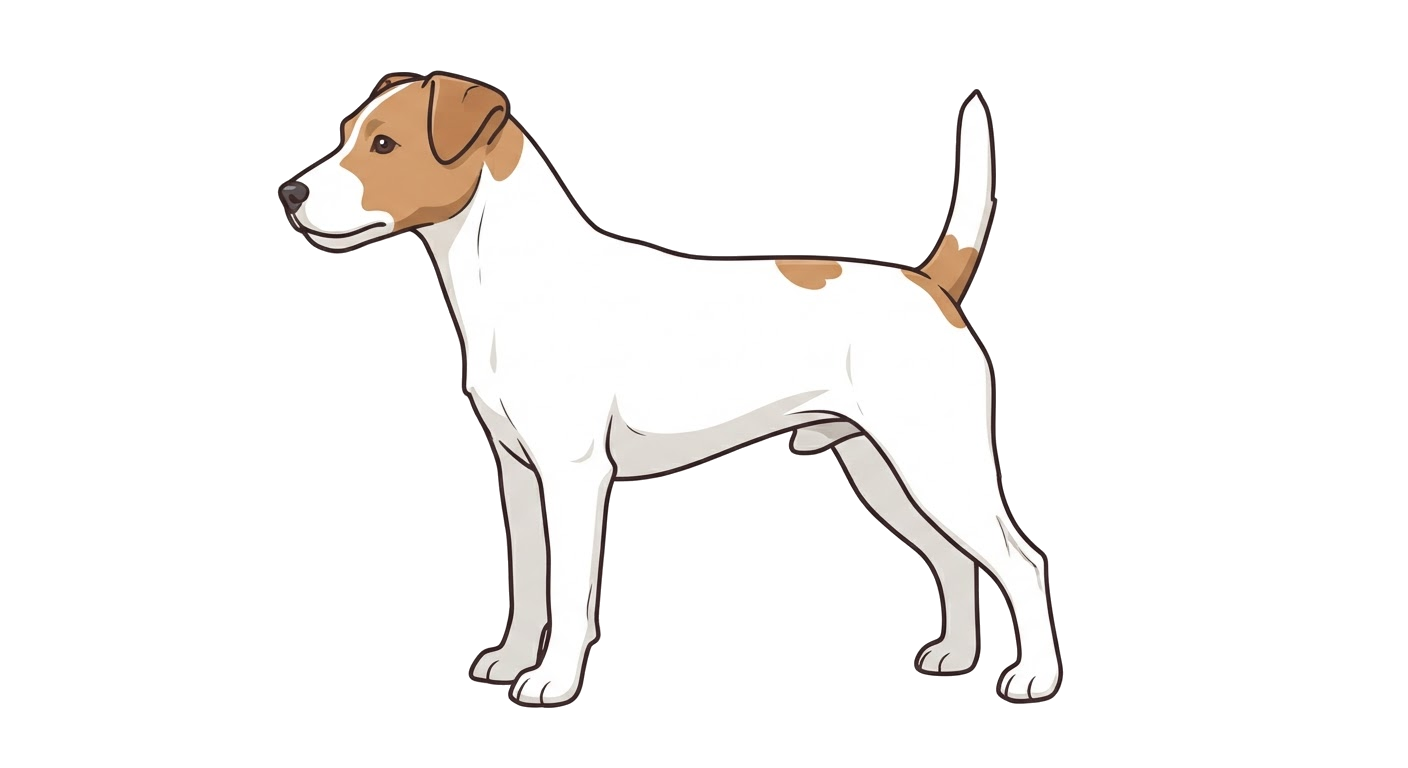
Point 1
Skull
The Parson Russell Terrier's skull is judged on balance rather than size — proportionate to the body, with a clean cheek and a stop typical of the breed. Coarseness or an over-refined head are both faulted.
Colours & patterns
Recognised coats
Which coats the standard accepts — and which are simply popular.
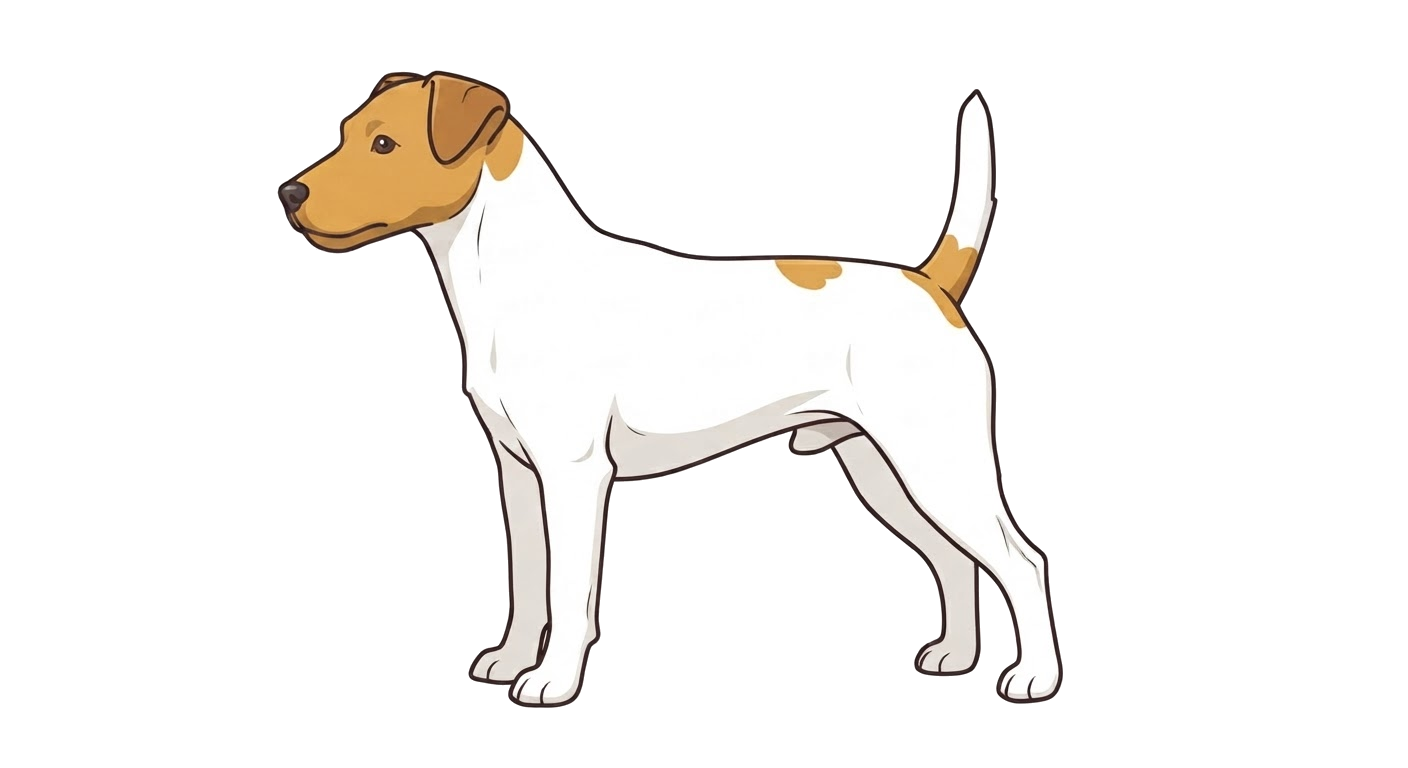
White and tan
Standard colour
Predominantly white with tan markings, a classic combination.
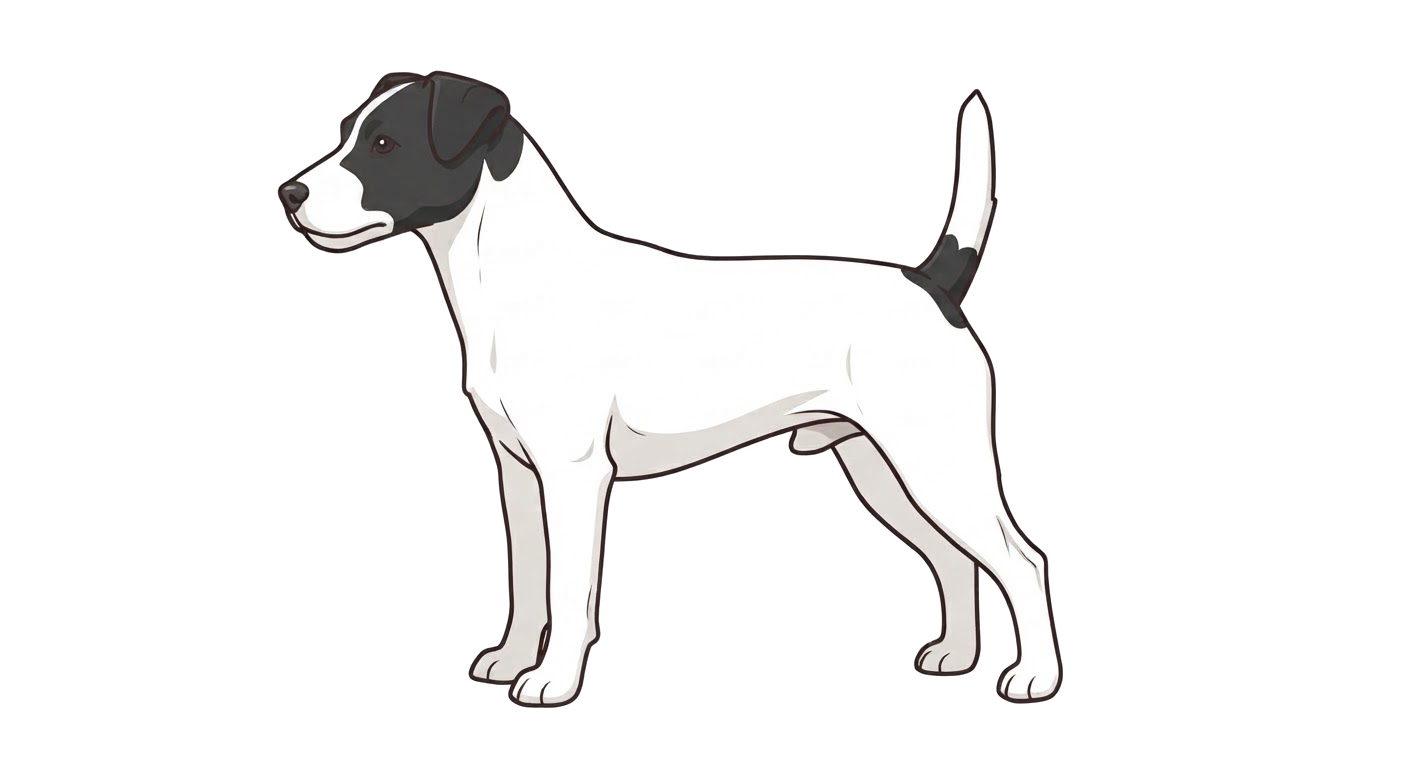
White and black
Standard colour
White with black patches, also fully accepted.
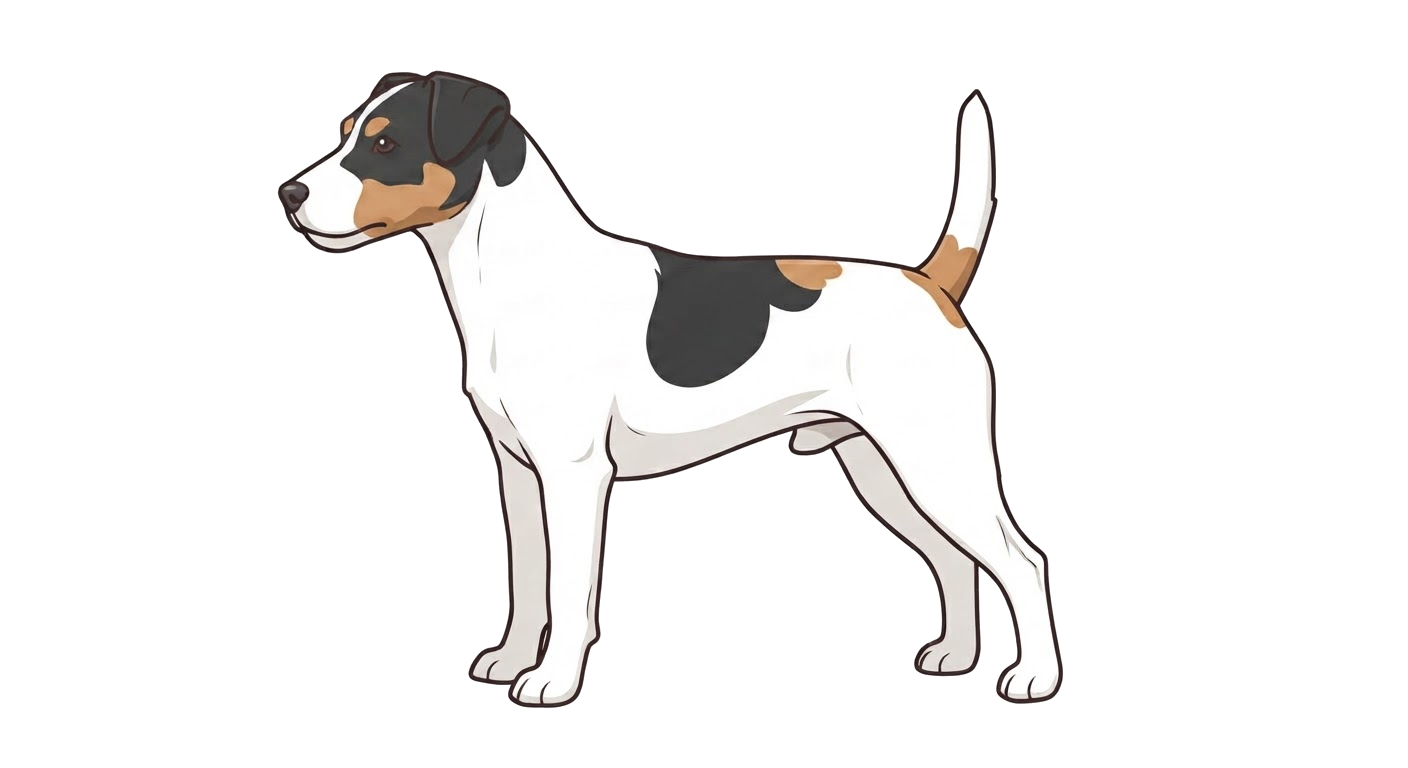
White, black and tan
Standard colour
A tricolour combination seen in many working lines.
Outside the standard
Other colours
Dilute coats you will see advertised. They are the same breed, but no kennel club accepts them.
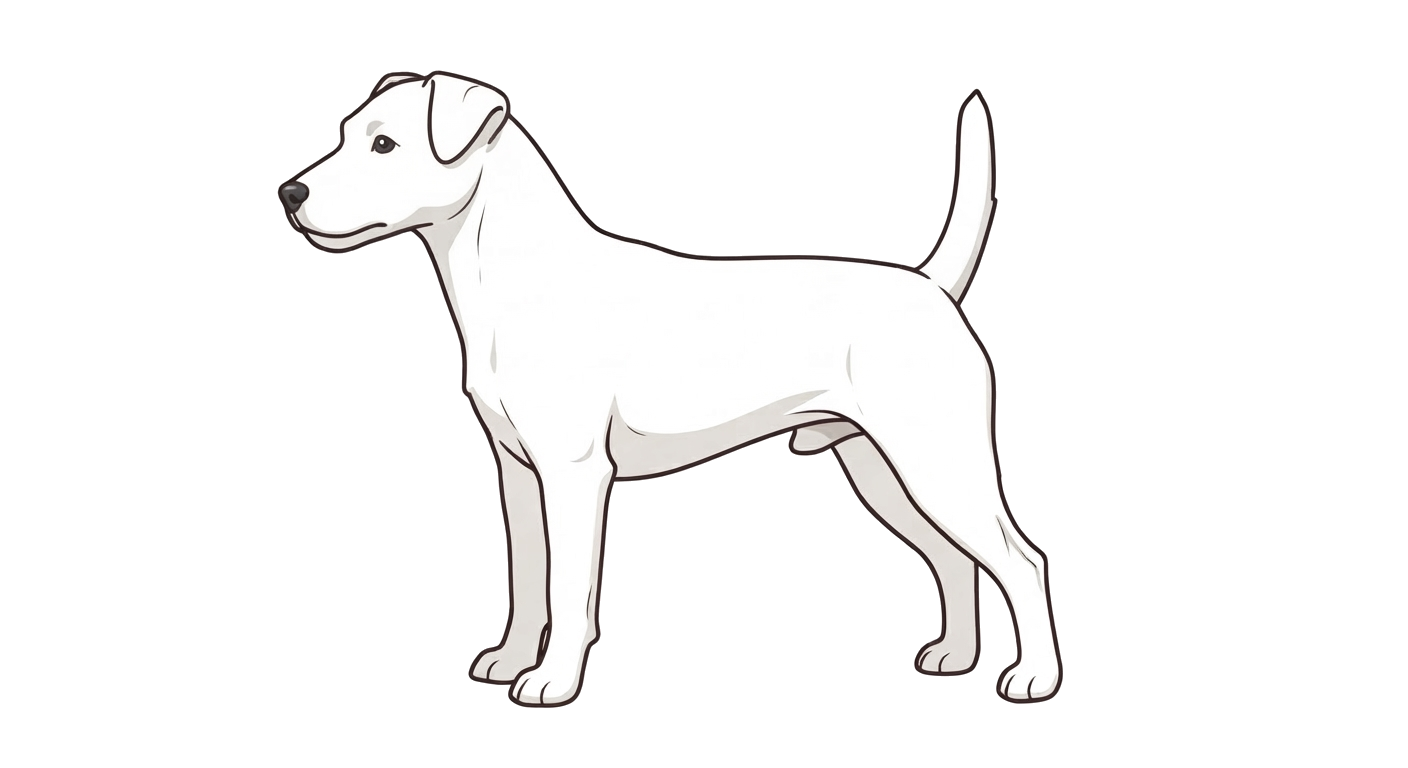
Solid white
Not in the standard
Rare and not typical, the standard calls for a predominantly white dog with markings.
Timeline
History & development
1819
Reverend Russell begins breeding
John Russell acquires his foundation terrier bitch, Trump, and begins developing his working line.
1894
Breed club formed
Fanciers form early clubs to promote and describe the Russell terrier type.
1990
UK Kennel Club recognition
The Kennel Club recognises the Parson Jack Russell Terrier as a distinct breed.
2003
Renamed Parson Russell Terrier
The breed's official name is shortened, distinguishing it from the unregistered Jack Russell Terrier.
Reference
Breed standard summary
- body
- Compact, athletic, with a flexible spine.
- coat
- Smooth or broken, dense and weatherproof.
- ears
- Small, V-shaped, dropped forward.
- eyes
- Small, dark, almond-shaped, keen expression.
- gait
- Free, effortless, covers ground well.
- head
- Flat skull, moderate stop, strong jaw.
- size
- Small, 33-36cm at the shoulder.
- tail
- Set high, docked or natural, carried erect.
- colour
- White and tan, White and black, White, black and tan. Colours outside this list are seen but are not accepted by the kennel clubs.
- temperament
- Typical of the breed: strongest in energy, trainability, independence. Nervousness or aggression are serious faults in the show ring and in the home.
- general appearance
- A workmanlike, active, agile terrier of squarish proportion, built for stamina.
Health
What to screen for
Green means little to worry about, amber means ask the breeder for test results, red means manage it actively.
Patellar luxation
Screen for it
Ask breeders for a patella check on the parents.
Lens luxation
Watch closely
A genetic eye test is available and worth requesting.
Primary lens luxation (PLL)
Watch closely
DNA testing can identify carriers before breeding.
Deafness
Watch closely
Occasional in predominantly white dogs; a BAER test can confirm hearing.
General information only — always speak to your vet about your own dog.
From real owners
Dogs like this
Parson Russell Terriers added by PawPoint members through their pet passports. Share yours to appear here.
Loading the wall…
Made for the Parson Russell Terrier
The book, plus prints, hoodies and mugs using our own Parson Russell Terrier illustration — and one everyday accessory that suits any dog.

The book
Pawpoint: The Complete Dog Breed Book
Every officially recognised breed plus the unofficial ones nobody else documents. 400+ pages, hardback, printed and shipped from the UK.
Own stock — shipped by us
Framed poster
Parson Russell Terrier Framed Poster
Museum-weight print of our Parson Russell Terrier illustration, framed or unframed.
Printed to order
Hoodie
Parson Russell Terrier Hoodie
Heavyweight hoodie carrying the Parson Russell Terrier illustration on the chest.
Printed to order
Mug
Parson Russell Terrier Mug
Ceramic mug with the Parson Russell Terrier illustration wrapped around it.
Printed to order
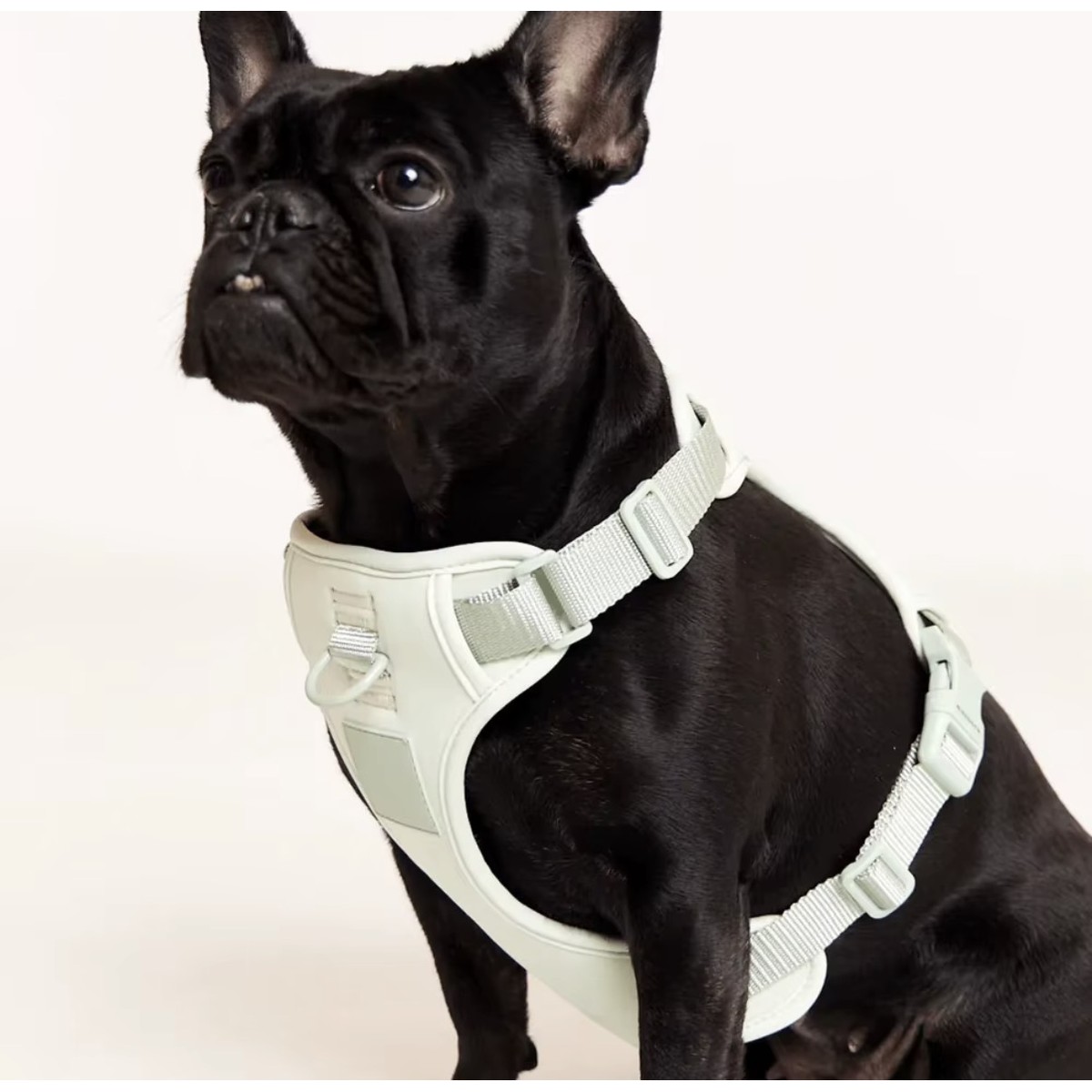
Accessory
Adjustable Harness (S/M/L)
Fully adjustable chest and girth straps — no fixed sizing.
Fits any dog

Pawpoint on YouTube
Watch the full Parson Russell Terrier video
Breed deep-dives, history and honest ownership talk. New film every week.
Watch now