
Pashmi Hound
PAHSH-mee HOWND
India· Maharashtra and Karnataka, India
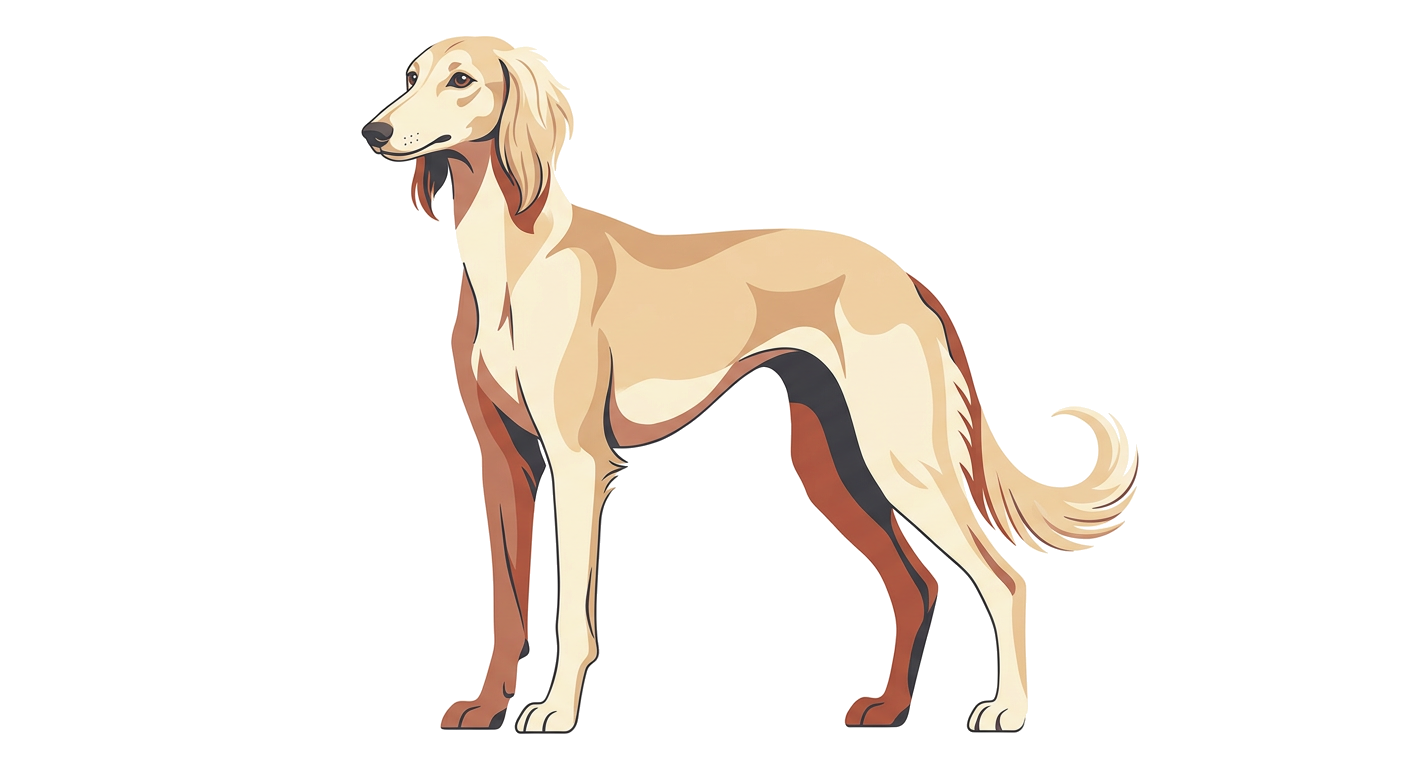
The Pashmi Hound, sometimes referred to as the feathered Caravan Hound or Mudhol Hound, is a rare indigenous Indian sighthound native to the Deccan Plateau, particularly within Maharashtra and northern Karnataka. Characterised by its lean, aerodynamic silhouette and distinctive silky feathering on the ears, limbs, and tail, the breed was traditionally used by nomadic pastoralists and rural hunters for coursing fast-moving quarry across arid plains.
At a glance
Quick facts
Size
Medium to large
Exercise needs
High; requires daily runs in secure areas
Home size suited to
Spacious home with secure grounds
Grooming frequency
Weekly brushing of feathering
Coat length
Short with medium feathering
Sheds
Moderate
Lifespan
11–14 years
Town or country
Country or semi-rural
Garden size needed
Large and securely fenced
Where it comes from
Origins of the Pashmi Hound
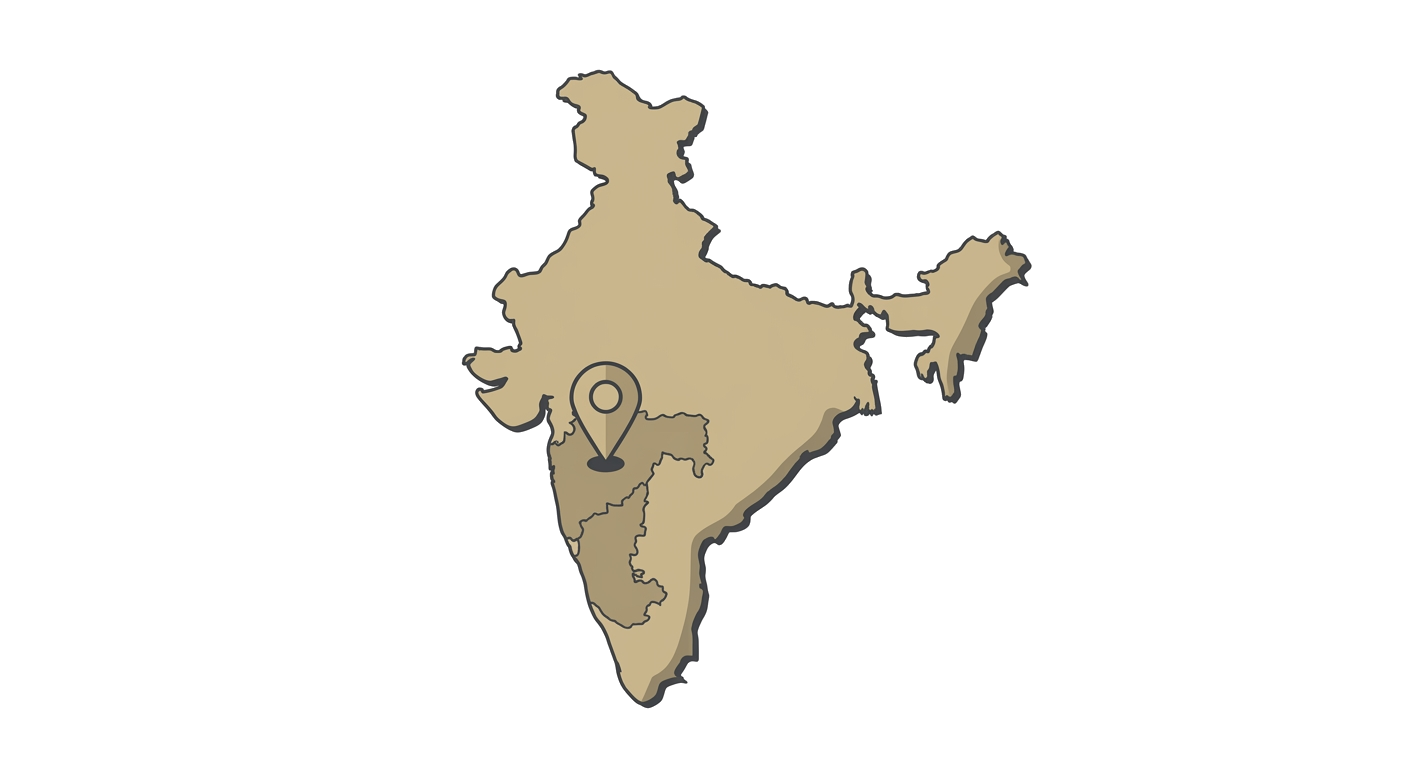
Developed across the Deccan Plateau of Maharashtra and Karnataka as a swift coursing hound.
- Region
- Maharashtra and Karnataka, India
- Climate it was bred for
- Semi-arid Deccan Plateau
- Original job
- Coursing hare, small deer, and game across open terrain
The long read
About the breed
Historically, the breed shares deep ancestral links with Central Asian and Middle Eastern sighthounds, such as the Saluki and Tazi, which were brought to the Indian subcontinent via ancient trade routes and military incursions. Over centuries, these hounds adapted to the harsh conditions of the Deccan region, developing exceptional speed, sharp eyesight, and resilient working stamina. While closely aligned with the smooth-coated Mudhol Hound, the Pashmi is distinguished primarily by its silky furnishings.
Today, the Pashmi Hound remains uncommon outside its native rural heartland, with formal pedigree records and population surveys being relatively sparse. Dedicated conservationists and regional enthusiasts in India have undertaken efforts to document and preserve the breed, valuing its keen coursing instincts, reserved demeanour, and natural adaptation to dry, warm climates.
Illustrated breed standard
The points of the breed
Hover or tap a numbered point to read what the standard asks for.
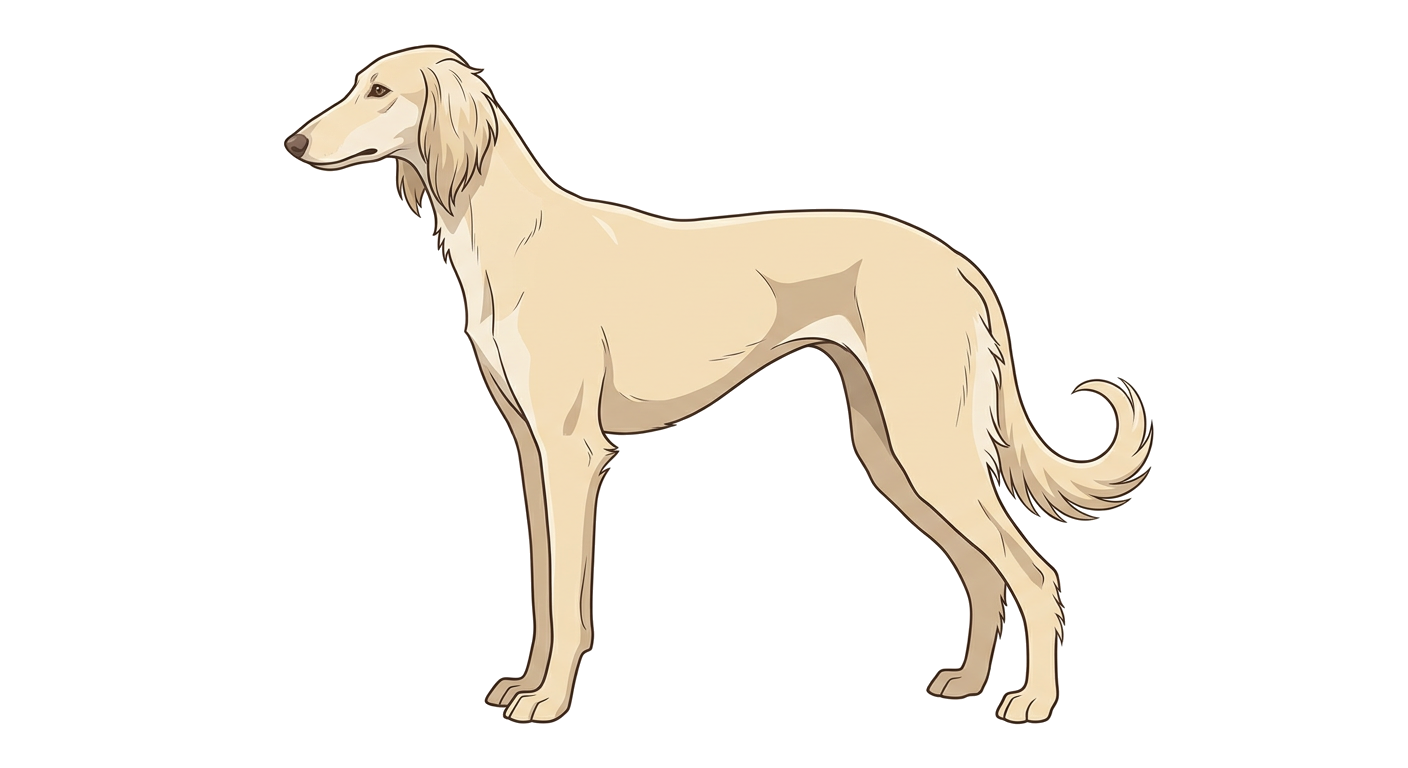
Point 1
Skull
The Pashmi Hound's skull is judged on balance rather than size — proportionate to the body, with a clean cheek and a stop typical of the breed. Coarseness or an over-refined head are both faulted.
Colours & patterns
Recognised coats
Which coats the standard accepts — and which are simply popular.
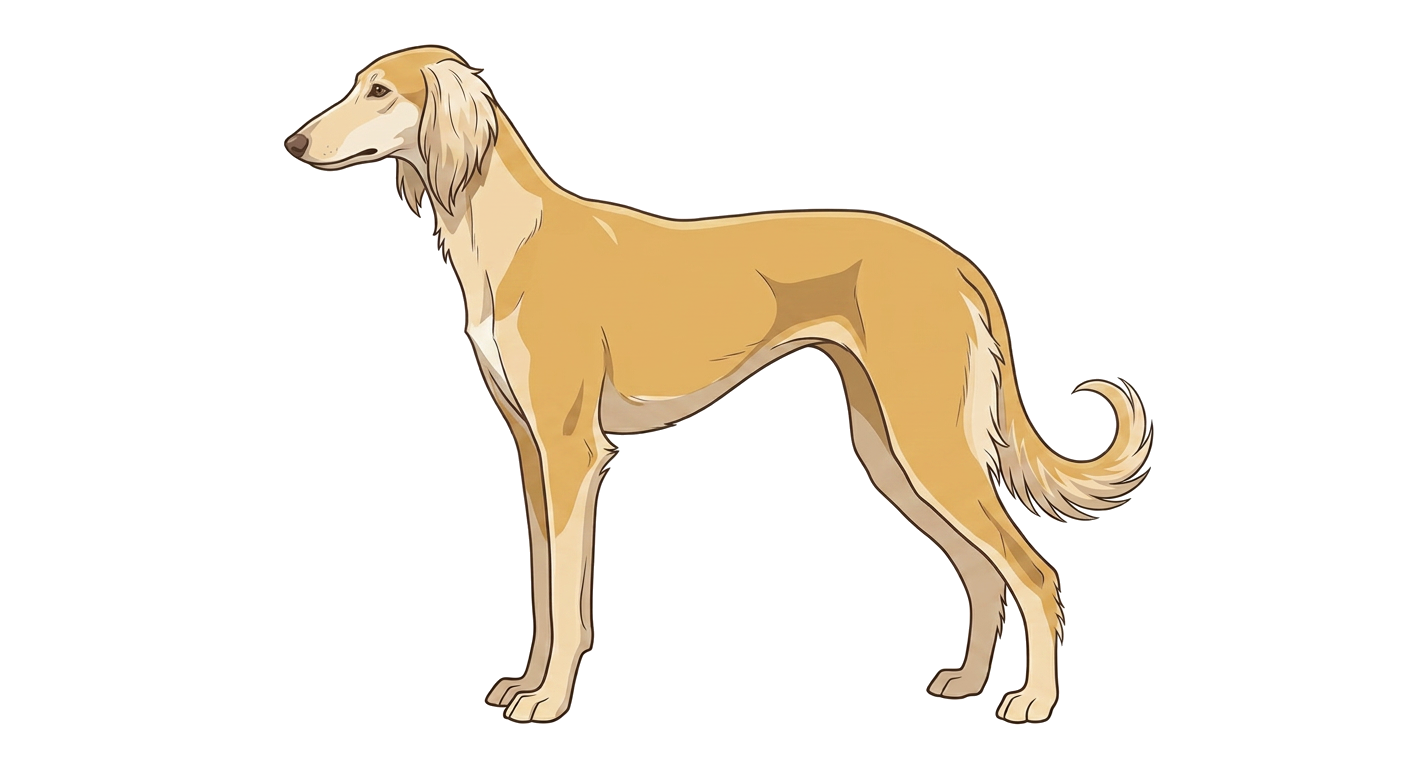
Cream & Fawn
Standard colour
Ranging from light sand to rich golden fawn, often with lighter feathering.
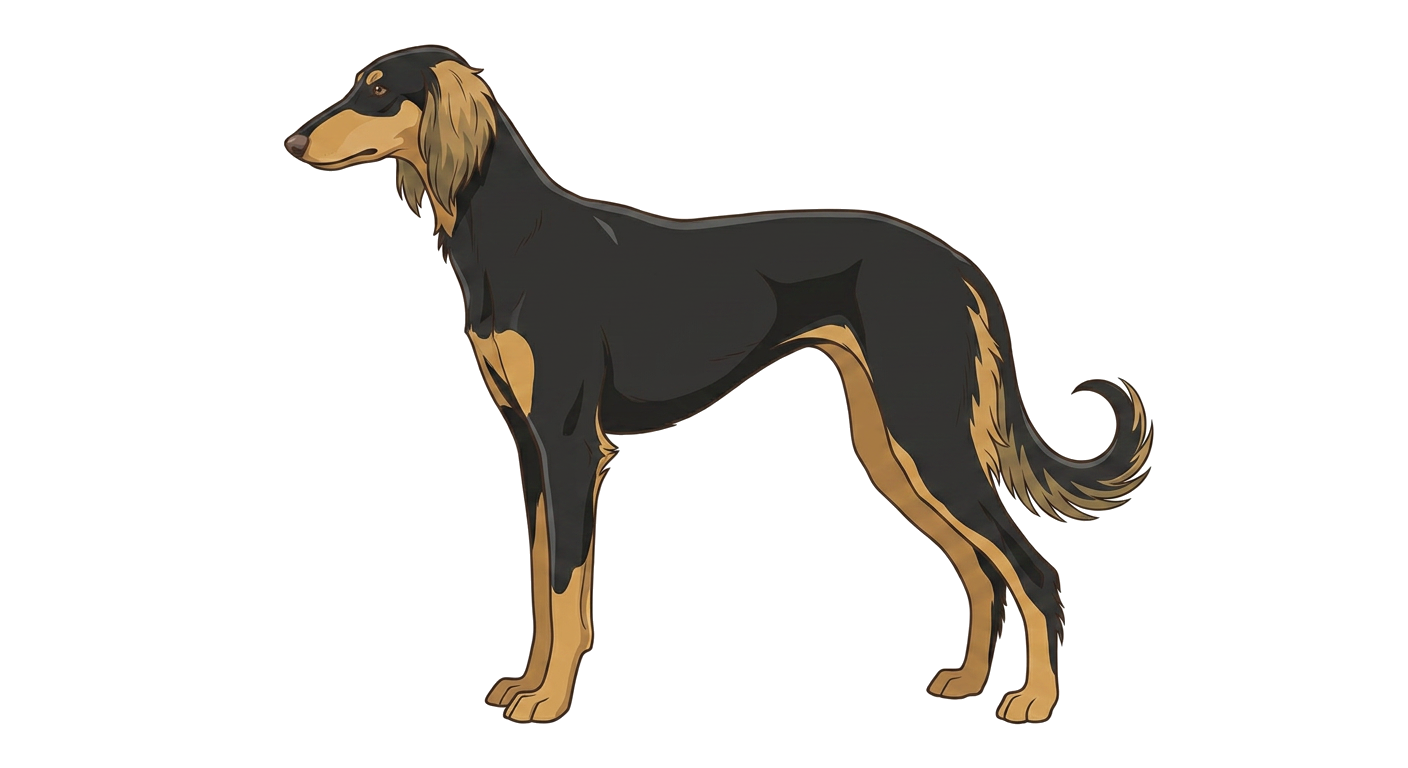
Black & Tan
Standard colour
Black base coat with tan points on the muzzle, limbs, and beneath the tail.
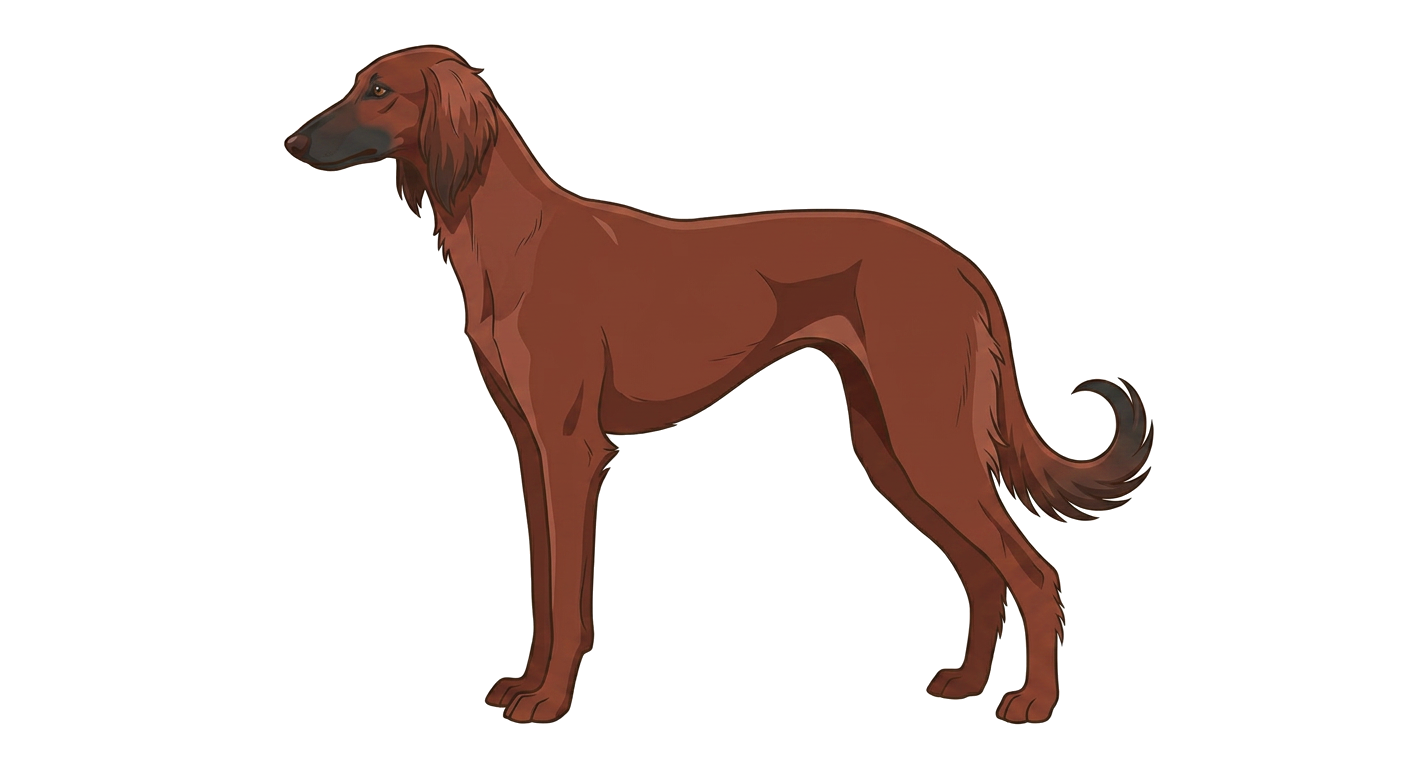
Red & Mahogany
Standard colour
Deep reddish-brown tones across the body, occasionally with dark muzzle shading.
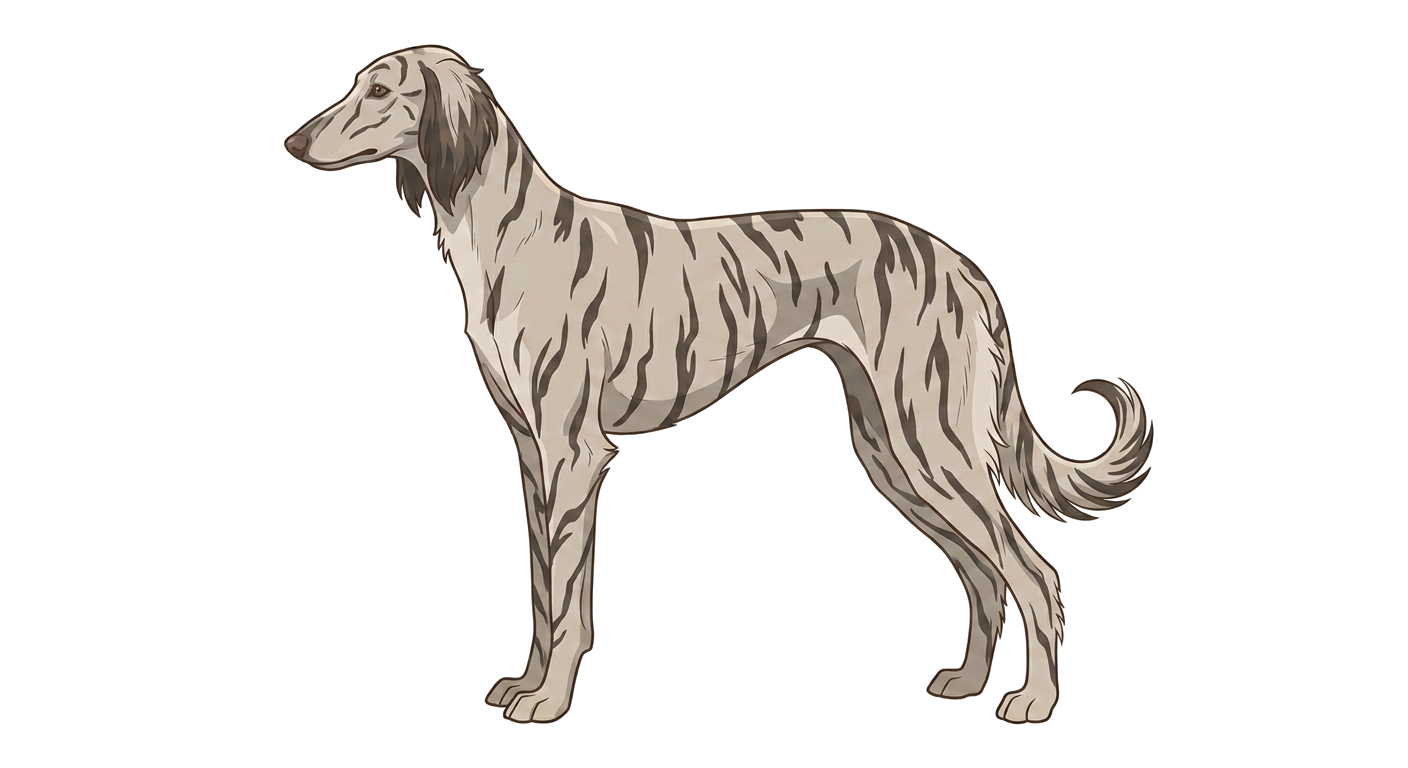
Brindle
Standard colour
Dark irregular striping over a lighter fawn or grey base coat.
Timeline
History & development
c. 14th Century
Arrival via Trade Routes
Saluki and Tazi-type sighthounds brought along trade and military routes into the Deccan region began interbreeding with native dogs, establishing feathered hunting stock.
18th–19th Century
Working Field Companion
Nomadic pastoralists and regional rulers across Maharashtra utilised the feathered hounds to hunt hare and gazelle, valuing their endurance and heat tolerance.
Late 20th Century
Divergence in Recognition
While smooth-coated specimens were largely unified under the Mudhol Hound banner, regional breeders maintained the feathered Pashmi as a distinct aesthetic variety.
2010s–Present
Modern Revival Efforts
Indigenous dog breed preservation initiatives in India brought renewed attention to the Pashmi Hound, seeking to document bloodlines and stabilise numbers.
Reference
Breed standard summary
- body
- Narrow and deeply ribbed with a prominent tuck-up, strong arched loin, and straight, supple topline.
- coat
- Short and smooth over the main torso, with noticeable silky feathering on the ears, rear of the legs, and underside of the tail.
- ears
- Medium-length, pendant, set moderately high, and adorned with long, silky feathering.
- eyes
- Oval-shaped, set slightly obliquely, dark to hazel in colour, with a keen and distant expression.
- gait
- Effortless, low-reaching, and springy trot, shifting to a high-speed, flexible double-suspension gallop.
- head
- Long, narrow, and tapering cleanly towards the nose without exaggerated stop.
- size
- Height typically ranges from 56 to 71 cm at the withers; weight generally spans 20 to 30 kg.
- tail
- Long, low-set, curved slightly upward towards the tip, and richly fringed with silky hair.
- colour
- Varied, including cream, fawn, red, black-and-tan, and brindle, often with white markings on the chest and feet.
- muzzle
- Slender and strong, with tight lips and a full scissor bite.
- temperament
- Aloof and reserved with strangers, fiercely loyal to its handler, independent, and possessing a strong hunting drive.
- general appearance
- A graceful, lean, and athletic sighthound of medium-to-large build, exhibiting speed, stamina, and distinctive silky feathering on the extremities.
Health
What to screen for
Green means little to worry about, amber means ask the breeder for test results, red means manage it actively.
Gastric Dilatation-Volvulus (Bloat)
Screen for it
The deep-chested conformation creates a potential vulnerability to acute stomach torsion.
Anaesthesia Sensitivity
Screen for it
Typical sighthound physiology requires adjusted dosing protocols for certain anaesthetic agents.
Musculoskeletal Injuries
Watch closely
High-speed sprinting over rough or uneven ground may lead to footpad damage, toe fractures, or sprains.
Sensitivity to Cold
Watch closely
Low body fat and a fine coat offer limited insulation against damp or freezing climates.
General information only — always speak to your vet about your own dog.
From real owners
Dogs like this
Pashmi Hounds added by PawPoint members through their pet passports. Share yours to appear here.
Loading the wall…
Made for the Pashmi Hound
The book, plus prints, hoodies and mugs using our own Pashmi Hound illustration — and one everyday accessory that suits any dog.
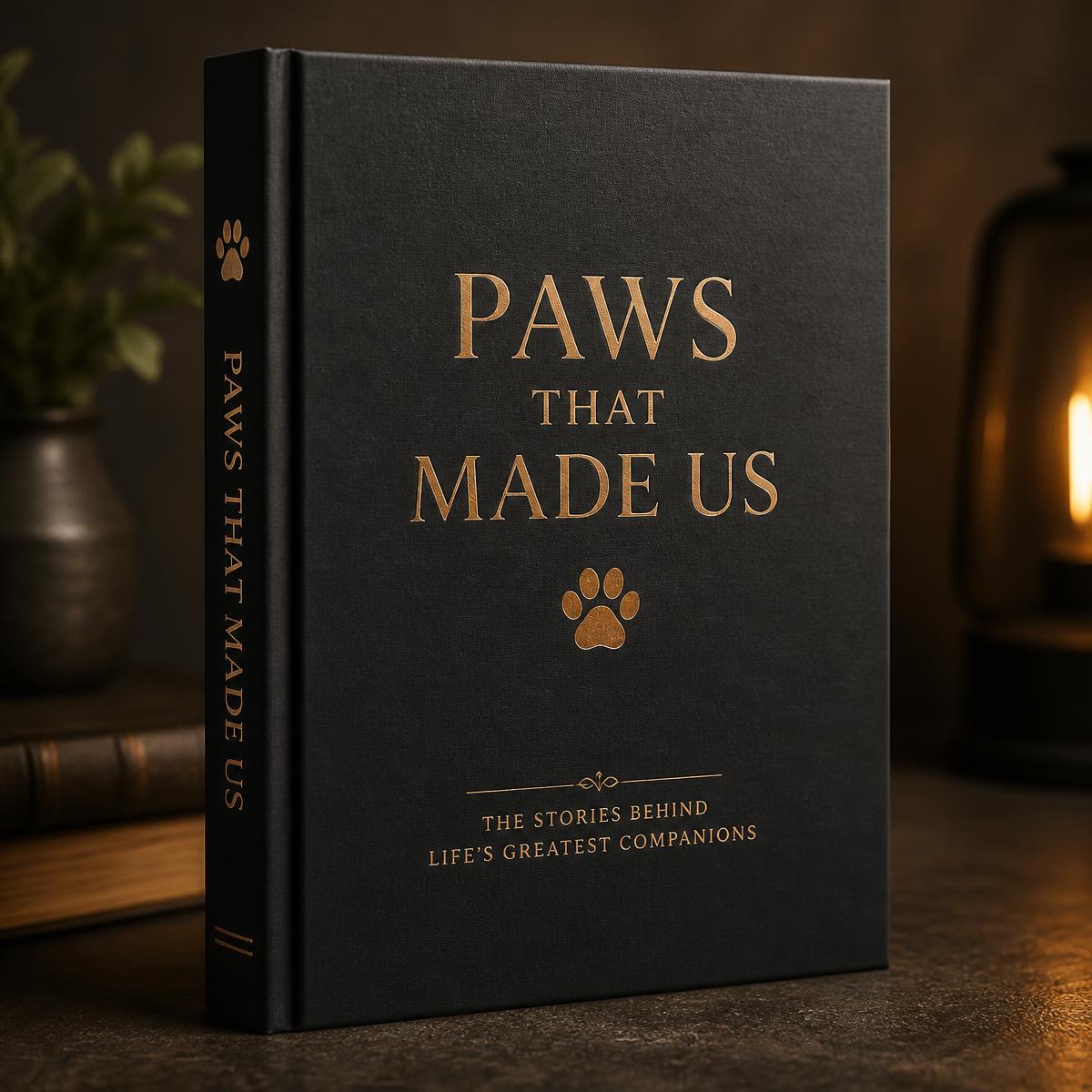
The book
Pawpoint: The Complete Dog Breed Book
Every officially recognised breed plus the unofficial ones nobody else documents. 400+ pages, hardback, printed and shipped from the UK.
Own stock — shipped by us
Framed poster
Pashmi Hound Framed Poster
Museum-weight print of our Pashmi Hound illustration, framed or unframed.
Printed to order
Hoodie
Pashmi Hound Hoodie
Heavyweight hoodie carrying the Pashmi Hound illustration on the chest.
Printed to order
Mug
Pashmi Hound Mug
Ceramic mug with the Pashmi Hound illustration wrapped around it.
Printed to order
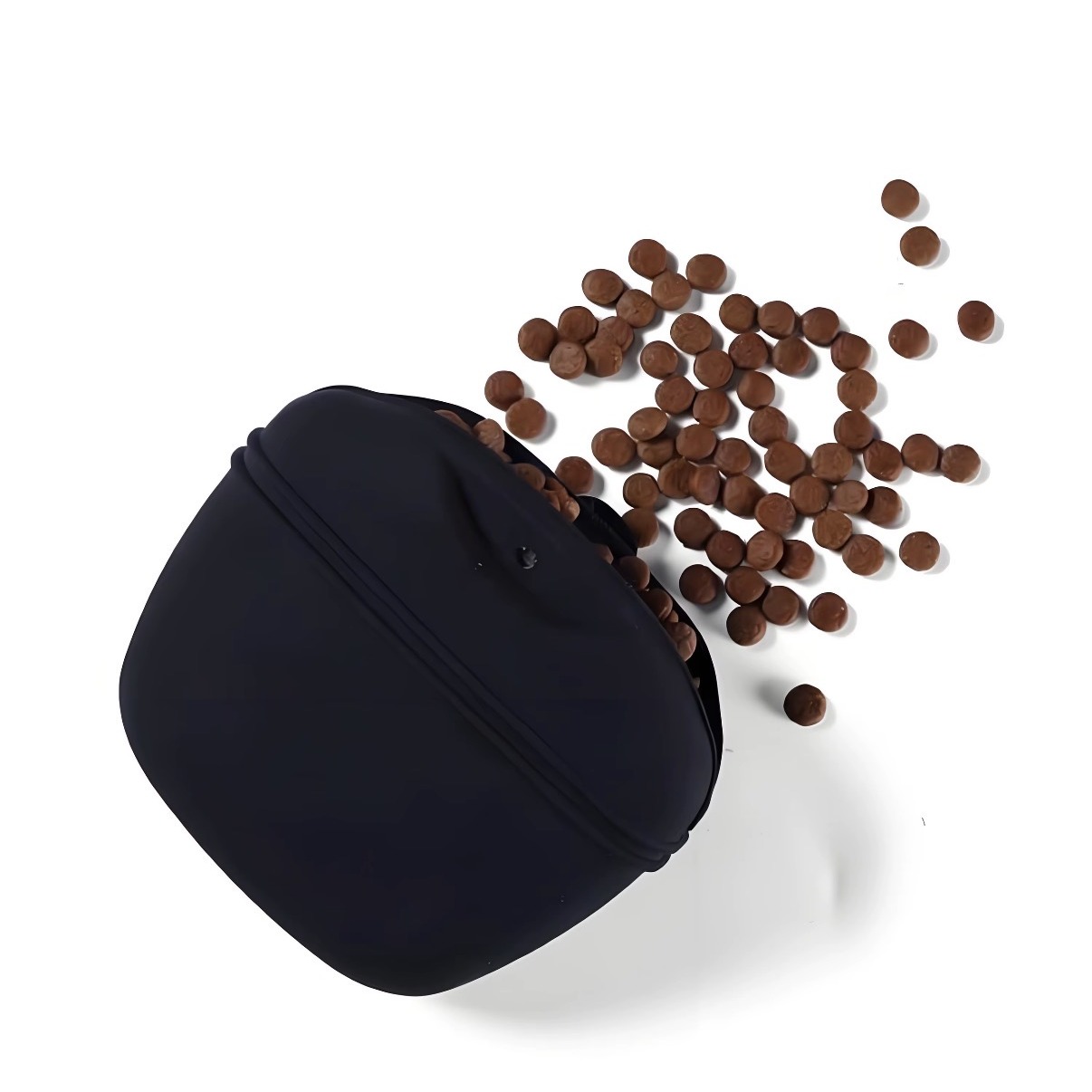
Accessory
Treat Pouch
Magnetic-close belt pouch for training sessions.
Fits any dog

Pawpoint on YouTube
Watch the full Pashmi Hound video
Breed deep-dives, history and honest ownership talk. New film every week.
Watch now