
Pekingese
PEE-kin-eez
China· Forbidden City, Beijing
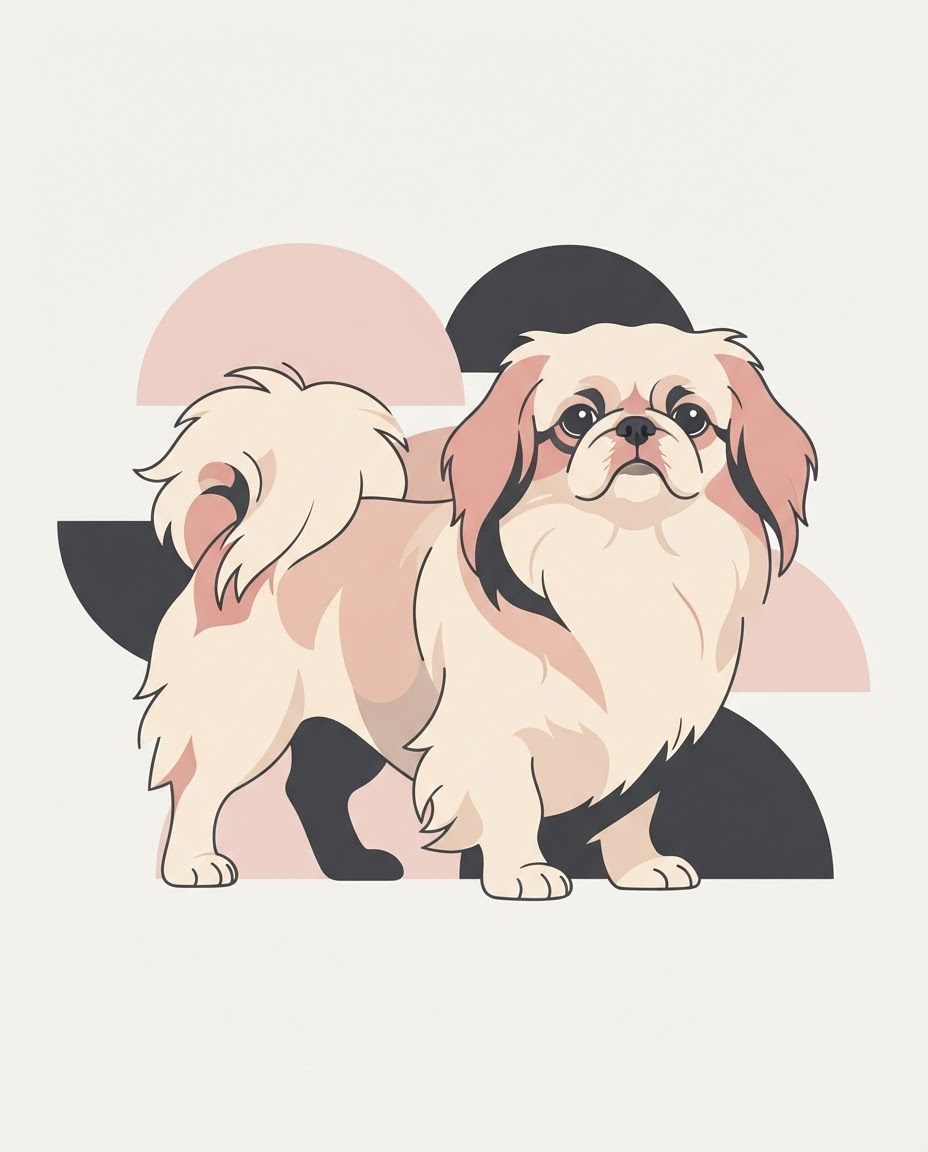
The Pekingese is a small, heavily coated toy breed from Imperial China, bred for centuries as a companion to Chinese emperors and kept exclusively within the walls of the Forbidden City.
At a glance
Quick facts
Size
Toy
Exercise needs
20-30 minutes daily
Home size suited to
Flat or any size home
Grooming frequency
Daily brushing
Coat length
Long
Sheds
Yes, heavily when moulting
Lifespan
12-14 years
Town or country
Either, happy in town
Garden size needed
None needed
Where it comes from
Origins of the Pekingese
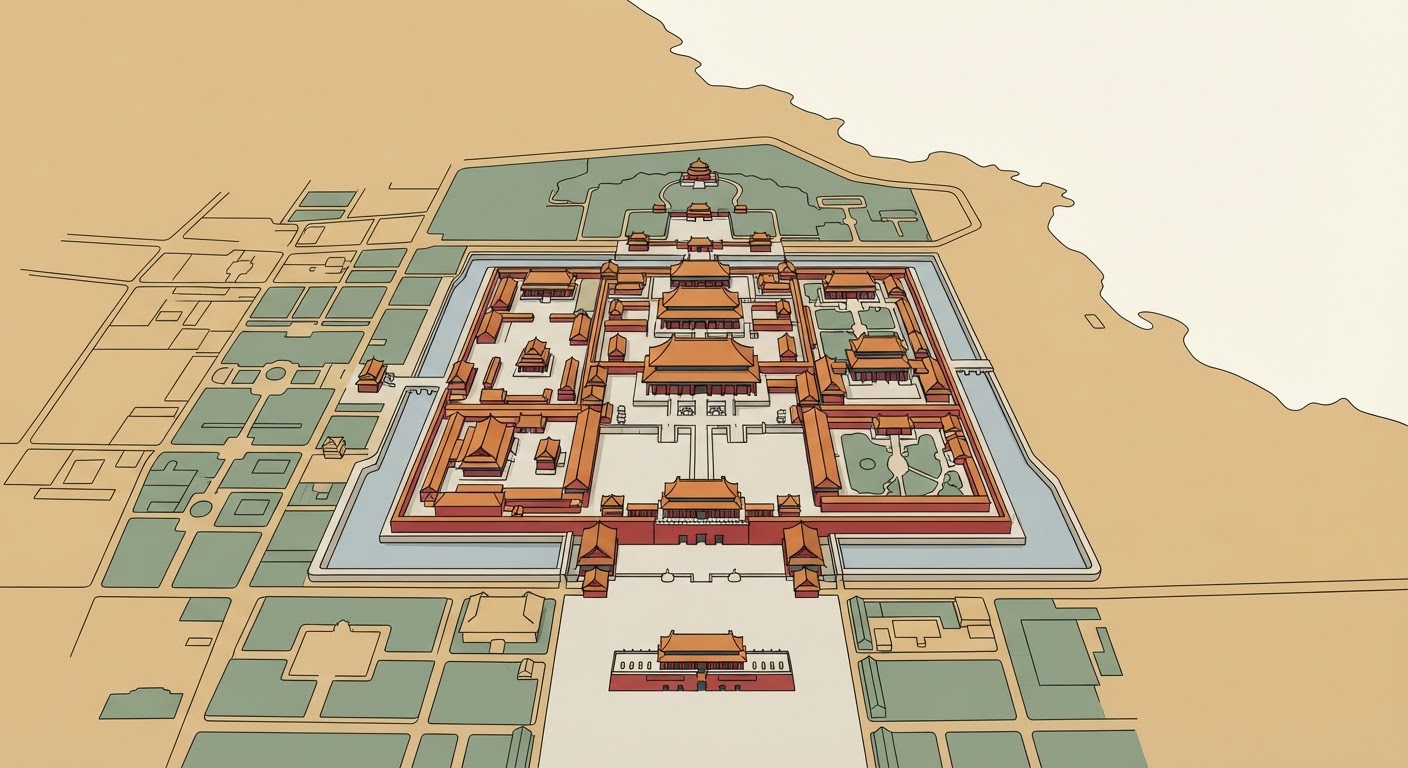
Bred exclusively within the Forbidden City for Chinese emperors, the Pekingese never had a working role outside companionship, its entire existence shaped by centuries of pampered palace life rather than any outdoor labour.
- Region
- Forbidden City, Beijing
- Climate it was bred for
- Temperate, indoor palace living
- Original job
- Companion to Chinese imperial court
The long read
About the breed
According to tradition, Pekingese were sacred dogs in the Chinese imperial court, believed to have descended symbolically from a legendary union of a lion and a marmoset, and their small size and dignified bearing were meant to embody a "lion dog" in miniature. Theft of a Pekingese from the palace was historically punishable by death, and the breed remained almost unknown outside China until British troops looted the Old Summer Palace in 1860, taking dogs back to Britain, including one presented to Queen Victoria.
Living with a Pekingese means living with a dignified, sometimes stubborn companion who is fully aware of its own importance. It is affectionate with its chosen people but can be aloof with strangers, and it is not a breed that responds well to being rushed or handled roughly. Training requires patience, since the breed's independent streak, inherited from centuries as a pampered palace dog rather than a working animal, makes it less biddable than many companion breeds.
The long, flowing double coat requires daily brushing to prevent matting, particularly around the ears, legs and britches, and the breed's flat face means it is prone to overheating and breathing difficulty, so exercise needs to be gentle and never in hot weather. Its short legs and heavy coat suit sedate walks rather than vigorous exercise, matching its generally calm indoor temperament.
Today the Pekingese remains a popular show and companion breed, though its brachycephalic features have drawn increasing scrutiny, and responsible breeders are working to moderate the extreme flat face for better health and breathing.
Living with one
Temperament & needs
Our own ratings, based on the breed standard and how these dogs behave in ordinary homes.
Friendliness
3/5
How openly the Pekingese greets people it does not know.
Trainability
2/5
Independent and can be stubborn about following commands.
Energy
2/5
Calm and content with short, gentle walks.
Barking
3/5
Will announce visitors but not constantly noisy.
Grooming
5/5
Long double coat needs daily brushing.
Suits a first-time owner
3/5
How forgiving the Pekingese is for someone taking on their first dog.
Sociability
3/5
Devoted to its family but often aloof with strangers.
Independence
4/5
Carries itself with dignified self-assurance.
Illustrated breed standard
The points of the breed
Hover or tap a numbered point to read what the standard asks for.
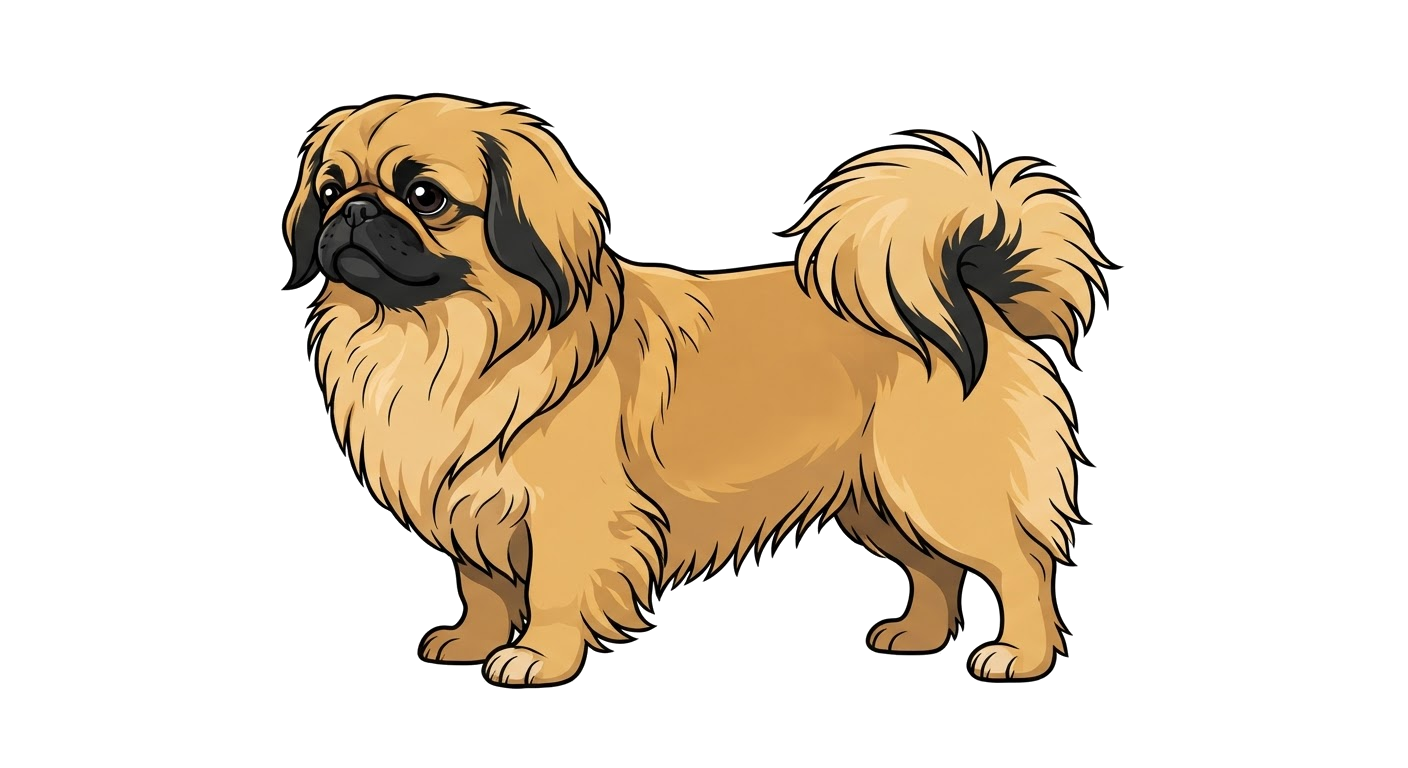
Point 1
Skull
The Pekingese's skull is judged on balance rather than size — proportionate to the body, with a clean cheek and a stop typical of the breed. Coarseness or an over-refined head are both faulted.
Colours & patterns
Recognised coats
Which coats the standard accepts — and which are simply popular.
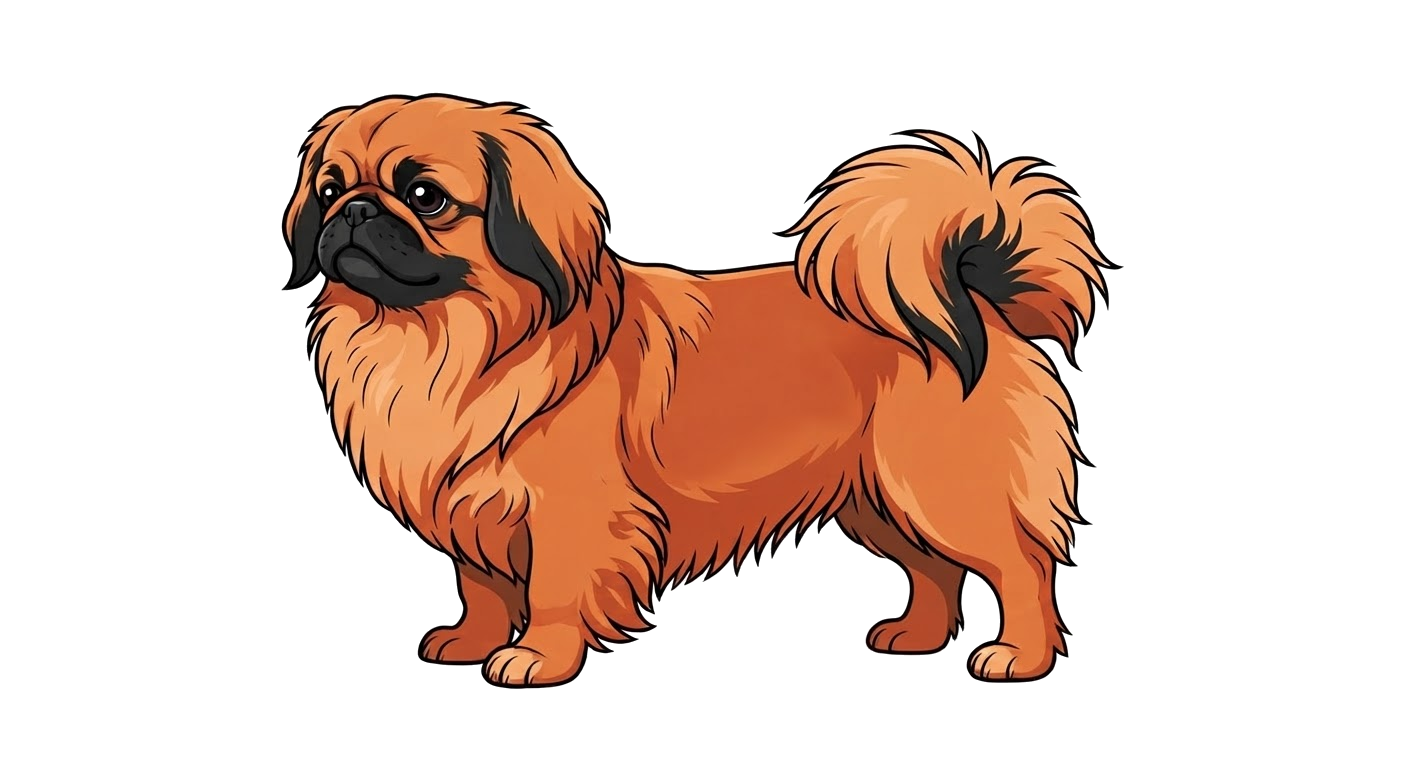
Red and gold
Standard colour
The most common and traditionally favoured colour.
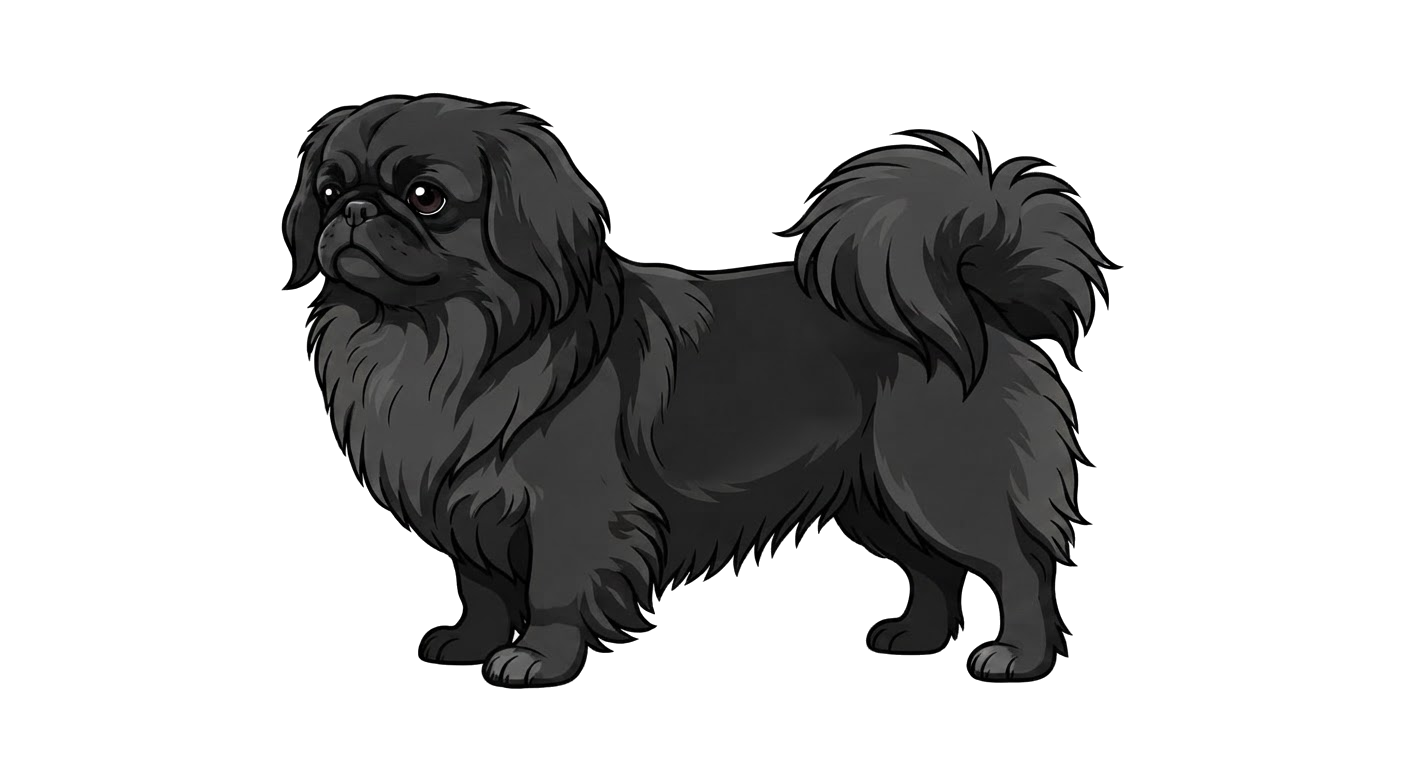
Black
Standard colour
A solid black coat, less common but accepted.
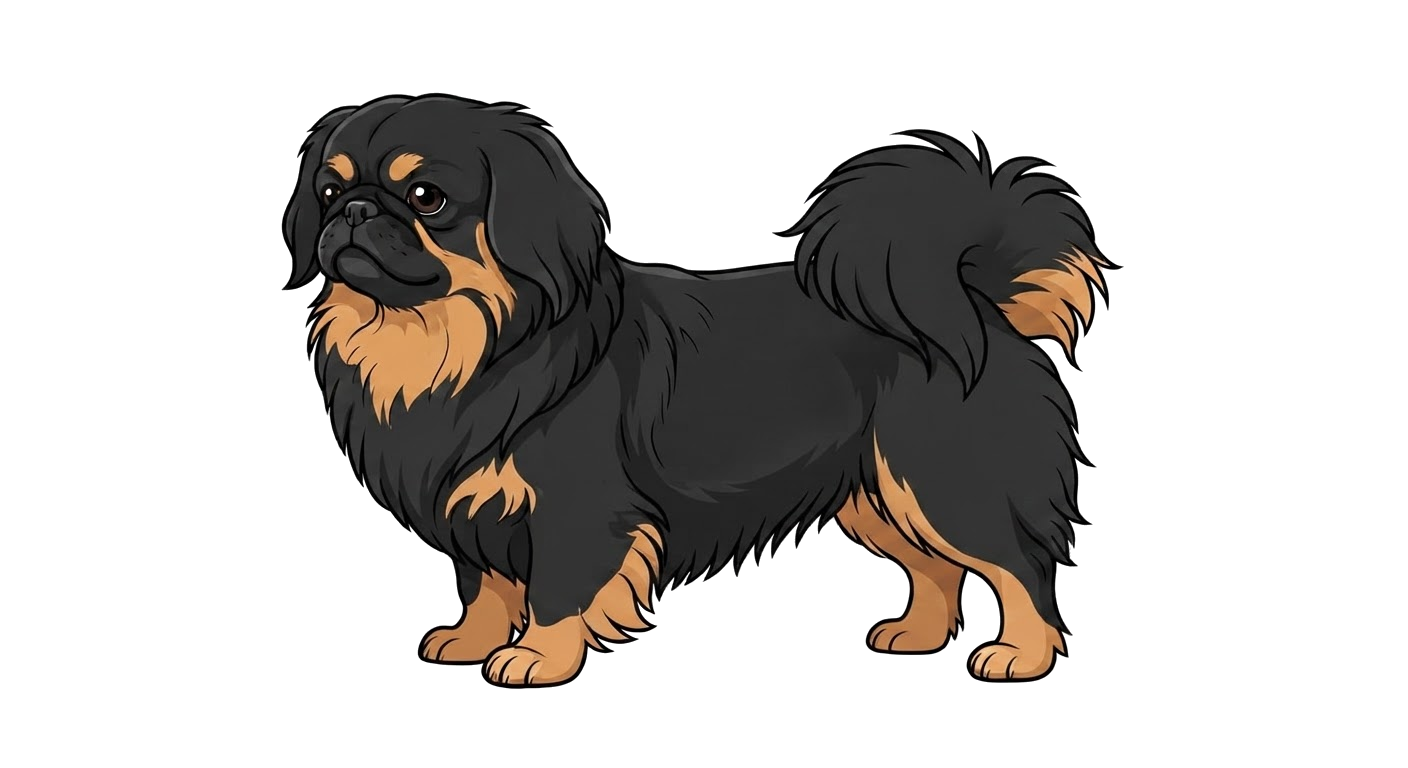
Black and tan
Standard colour
Black body with tan points.
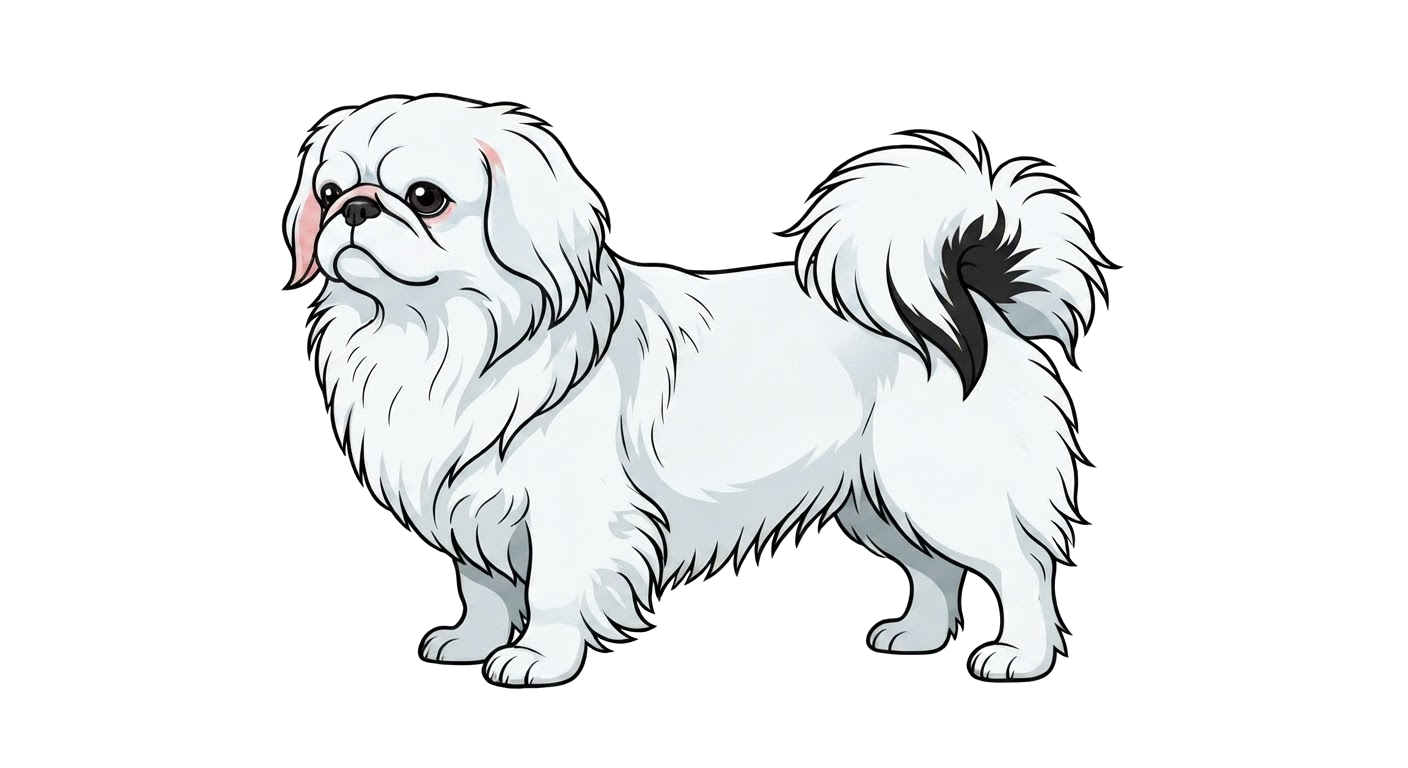
White
Standard colour
A rare cream-white shade, fully accepted in the standard.
Timeline
History & development
8th century
Ancient Chinese origins
Small companion dogs resembling the Pekingese are recorded at the Chinese imperial court.
1860
Arrival in Britain
British troops take Pekingese dogs from the Old Summer Palace, including one presented to Queen Victoria.
1893
Kennel Club recognition
The breed is formally recognised in the United Kingdom.
1906
American Kennel Club recognition
The Pekingese is recognised in the United States and quickly gains popularity.
1950s onward
The breed today
Kennel club registrations settled into a steady pattern and the Pekingese moved from a working specialist to a family companion, with breed clubs in the UK and abroad now focused on health testing and keeping true type alive.
Reference
Breed standard summary
- body
- Short, stocky, with a broad chest.
- coat
- Long, coarse, straight outer coat with a thick undercoat.
- ears
- Heart-shaped, set level with the skull, feathered.
- eyes
- Large, dark, round, prominent.
- gait
- Slow, rolling, dignified movement.
- head
- Massive, broad skull, flat face.
- size
- Toy, 15-23cm at the shoulder.
- tail
- Set high, carried tightly curled over the back.
- colour
- Red and gold, Black, Black and tan, White. Colours outside this list are seen but are not accepted by the kennel clubs.
- temperament
- Typical of the breed: strongest in grooming, independence, sociability. Nervousness or aggression are serious faults in the show ring and in the home.
- general appearance
- A small, well-balanced, thickset dog of dignified, leonine bearing.
Health
What to screen for
Green means little to worry about, amber means ask the breeder for test results, red means manage it actively.
Brachycephalic airway syndrome
Watch closely
Ask breeders about breathing tests and avoid dogs with extremely flat faces or noisy breathing.
Corneal ulcers
Screen for it
Prominent eyes are vulnerable to scratches; check regularly and treat promptly.
Intervertebral disc disease
Watch closely
Avoid letting the dog jump from height to protect its long back.
Heatstroke risk
Watch closely
Never exercise in warm weather and always provide shade and water.
General information only — always speak to your vet about your own dog.
From real owners
Dogs like this
Pekingeses added by PawPoint members through their pet passports. Share yours to appear here.
Loading the wall…
Made for the Pekingese
The book, plus prints, hoodies and mugs using our own Pekingese illustration — and one everyday accessory that suits any dog.
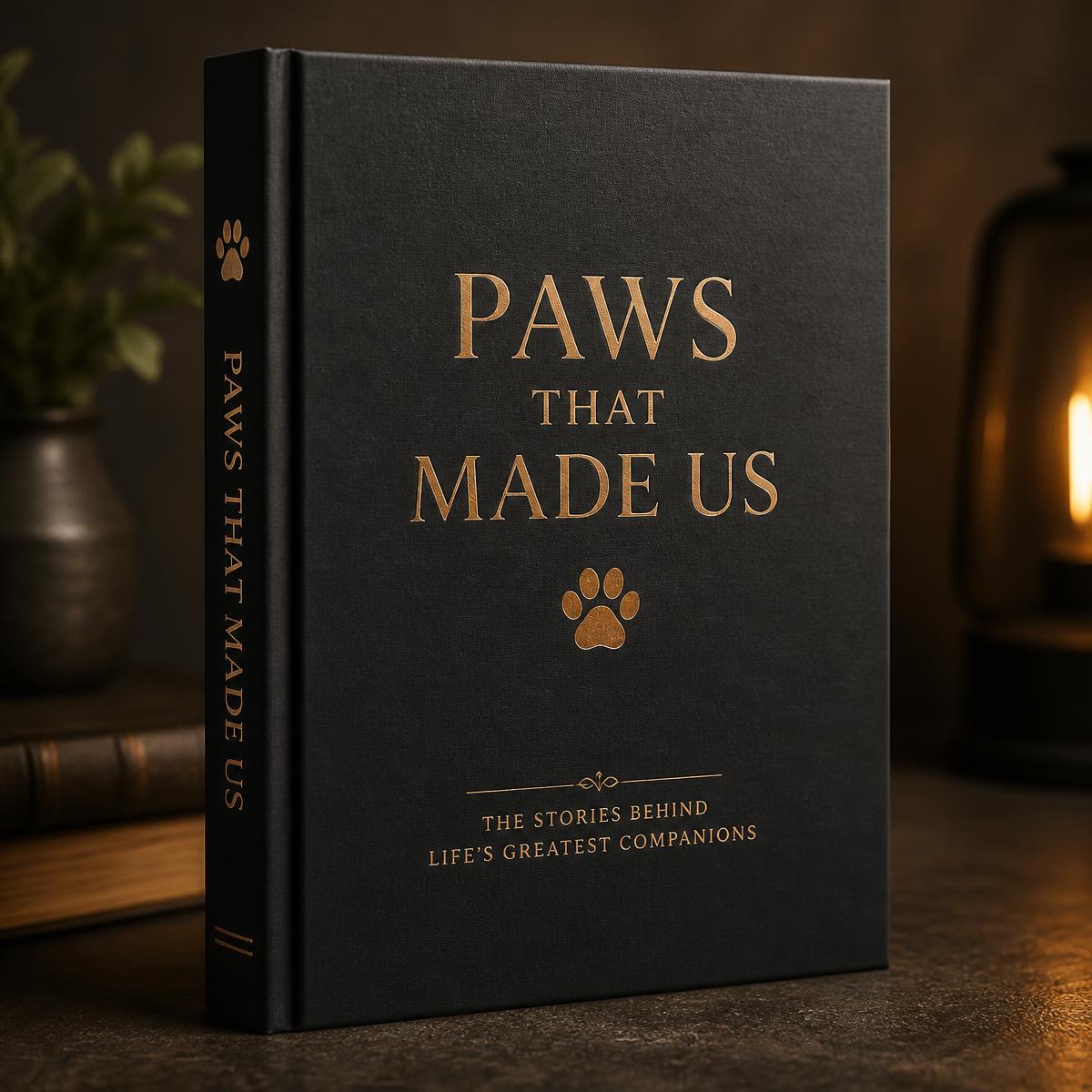
The book
Pawpoint: The Complete Dog Breed Book
Every officially recognised breed plus the unofficial ones nobody else documents. 400+ pages, hardback, printed and shipped from the UK.
Own stock — shipped by us
Framed poster
Pekingese Framed Poster
Museum-weight print of our Pekingese illustration, framed or unframed.
Printed to order
Hoodie
Pekingese Hoodie
Heavyweight hoodie carrying the Pekingese illustration on the chest.
Printed to order
Mug
Pekingese Mug
Ceramic mug with the Pekingese illustration wrapped around it.
Printed to order
Accessory
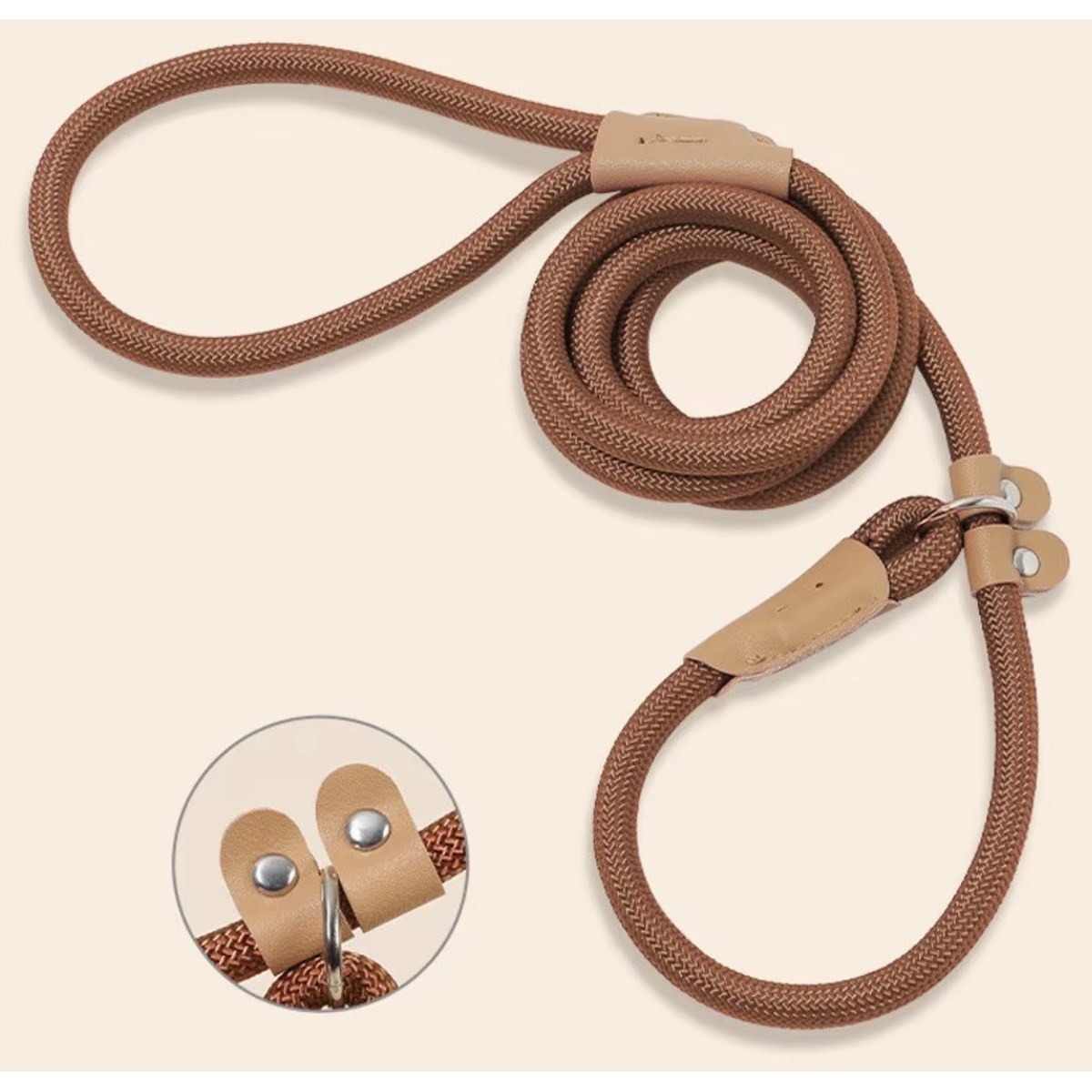
Rope Slip Lead
Braided rope lead with a leather stop, 150cm. Good for training walks.
Fits any dog
Pawpoint on YouTube
Watch the full Pekingese video
Breed deep-dives, history and honest ownership talk. New film every week.
Watch now