
Pointer
POYN-tuhr
England· Rural England (moor and lowland shooting estates)
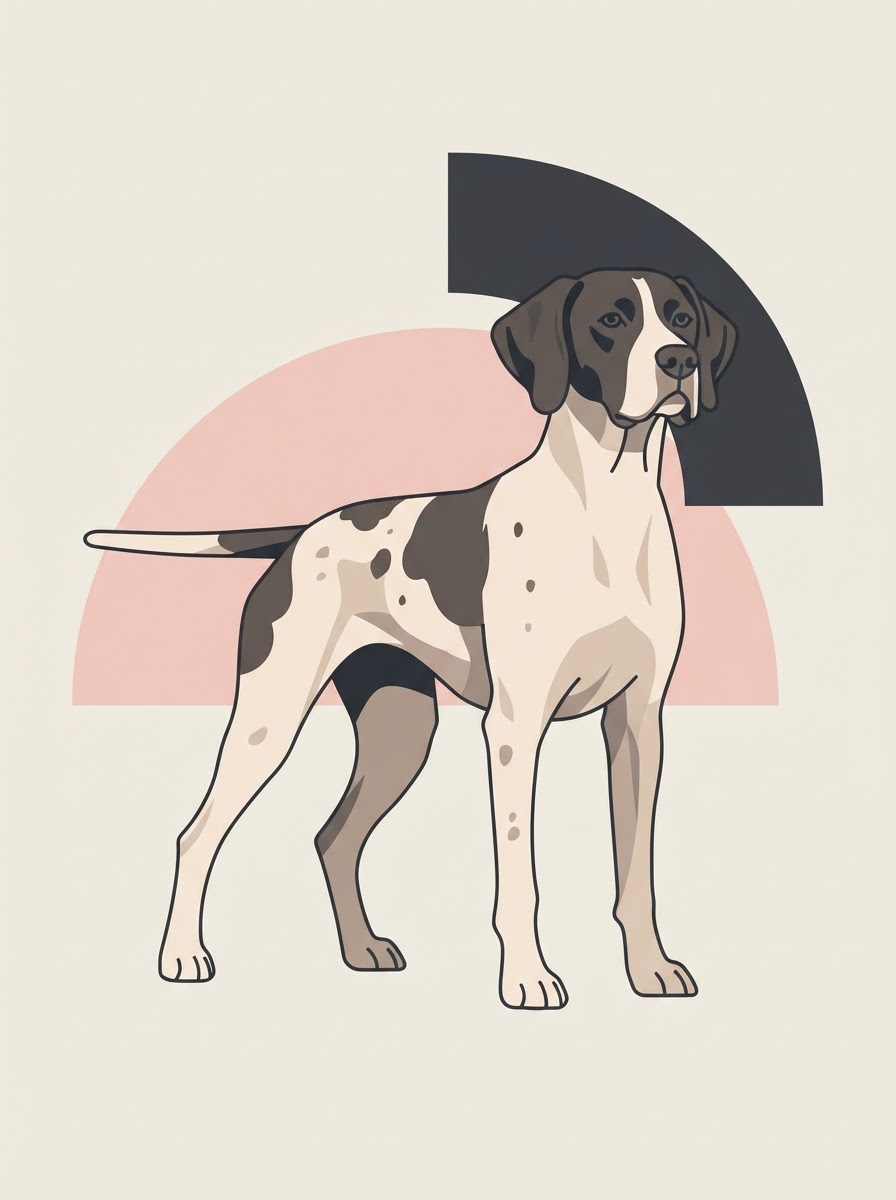
The Pointer is an English gundog bred to find upland game birds and stand rigidly still to mark their location for the gun.
At a glance
Quick facts
Size
Large
Exercise needs
2+ hours daily, off-lead running
Home size suited to
Medium to large home
Grooming frequency
Weekly brush
Coat length
Short
Sheds
Yes, heavily when moulting
Lifespan
12-14 years
Town or country
Either, with enough exercise
Garden size needed
Medium or larger
Where it comes from
Origins of the Pointer
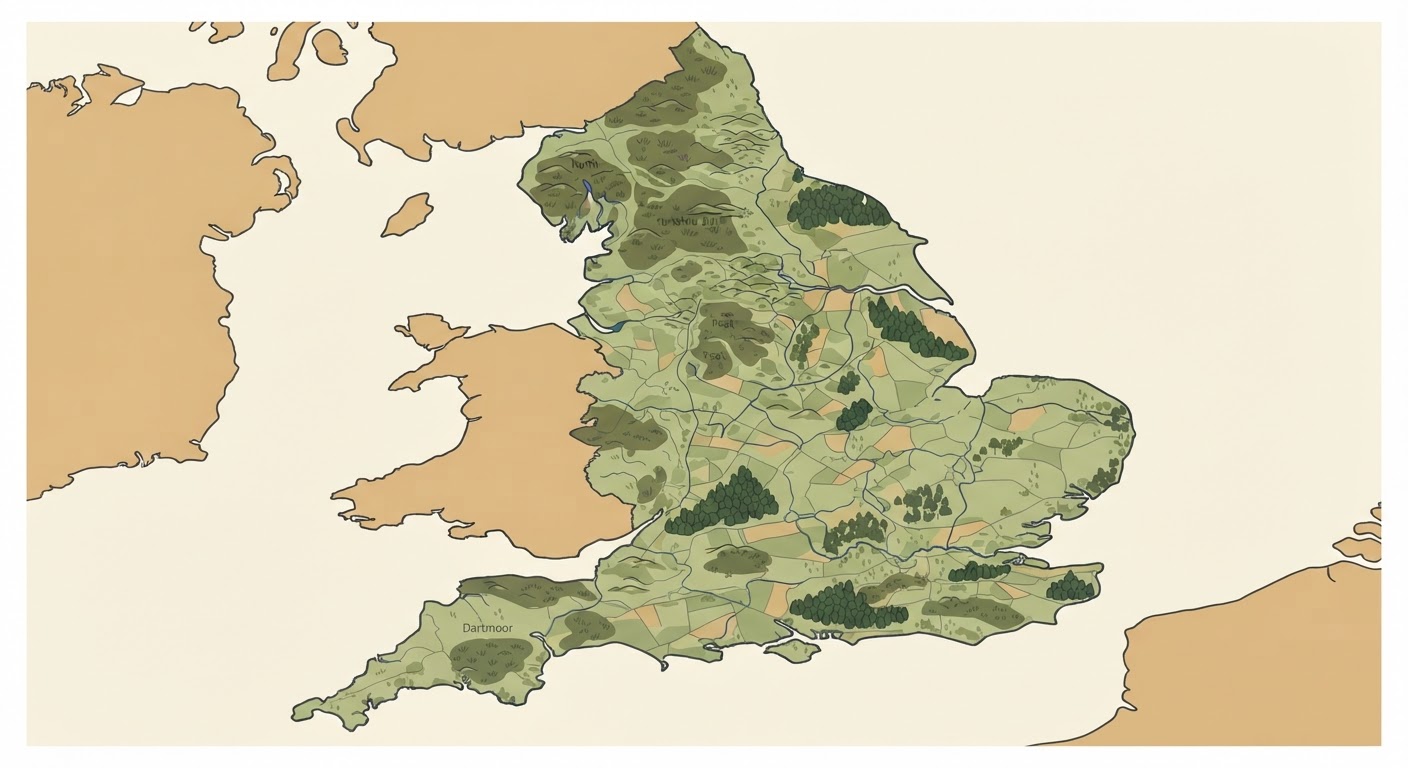
Developed on English shooting estates from the mid-1600s onward, where wide open moor and farmland demanded a dog that could range at speed and hold a bird's position from a distance. The damp, mild climate suited a short coat built for speed rather than warmth.
- Region
- Rural England (moor and lowland shooting estates)
- Climate it was bred for
- Temperate, damp, mild winters
- Original job
- Locating and pointing game birds for the gun
The long read
About the breed
The breed took shape in the 1650s and 1700s on the estates and moors of England, where huntsmen wanted a dog that would range far ahead, catch the scent of partridge or grouse on the wind, and then freeze in a poised, front-paw-lifted stance rather than flush the bird itself. Early Pointers were crossed with Foxhound, Greyhound and Bloodhound blood to sharpen nose and stamina, and by the Victorian era the type seen today, lean, muscular, short-coated, was well fixed. The name comes directly from that pointing stance, which is instinctive rather than taught, though steadiness still needs training.
Living with a Pointer means living with an athlete. The breed covers ground at a fast, driving gallop and needs proper off-lead running most days, not a stroll round the block; a bored, under-exercised Pointer becomes destructive and restless. Coat care is minimal, a weekly wipe-down and the odd bath, but the short coat gives little insulation, so Pointers feel the cold on damp English winter days and often want a coat outdoors. They are affectionate and biddable with their own family, sensitive to a raised voice, and generally good with children who respect an excitable dog.
Today the Pointer is still worked on shoots across Britain and Europe, and field trial lines remain closer to the working original than showbred lines bred more for outline than stamina. As a pet it suits an active household with secure fencing or reliable recall training, since the hunting drive to follow a scent over the horizon has not been bred out.
Living with one
Temperament & needs
Our own ratings, based on the breed standard and how these dogs behave in ordinary homes.
Friendliness
4/5
How openly the Pointer greets people it does not know.
Trainability
4/5
Keen to work but sensitive to harsh handling.
Energy
5/5
Needs a genuine daily run, not a walk.
Barking
2/5
Not a natural barker.
Grooming
1/5
Short coat needs only a weekly wipe.
Suits a first-time owner
3/5
How forgiving the Pointer is for someone taking on their first dog.
Sociability
4/5
Affectionate with family, polite with strangers.
Independence
3/5
Will follow a scent a long way if allowed.
Illustrated breed standard
The points of the breed
Hover or tap a numbered point to read what the standard asks for.
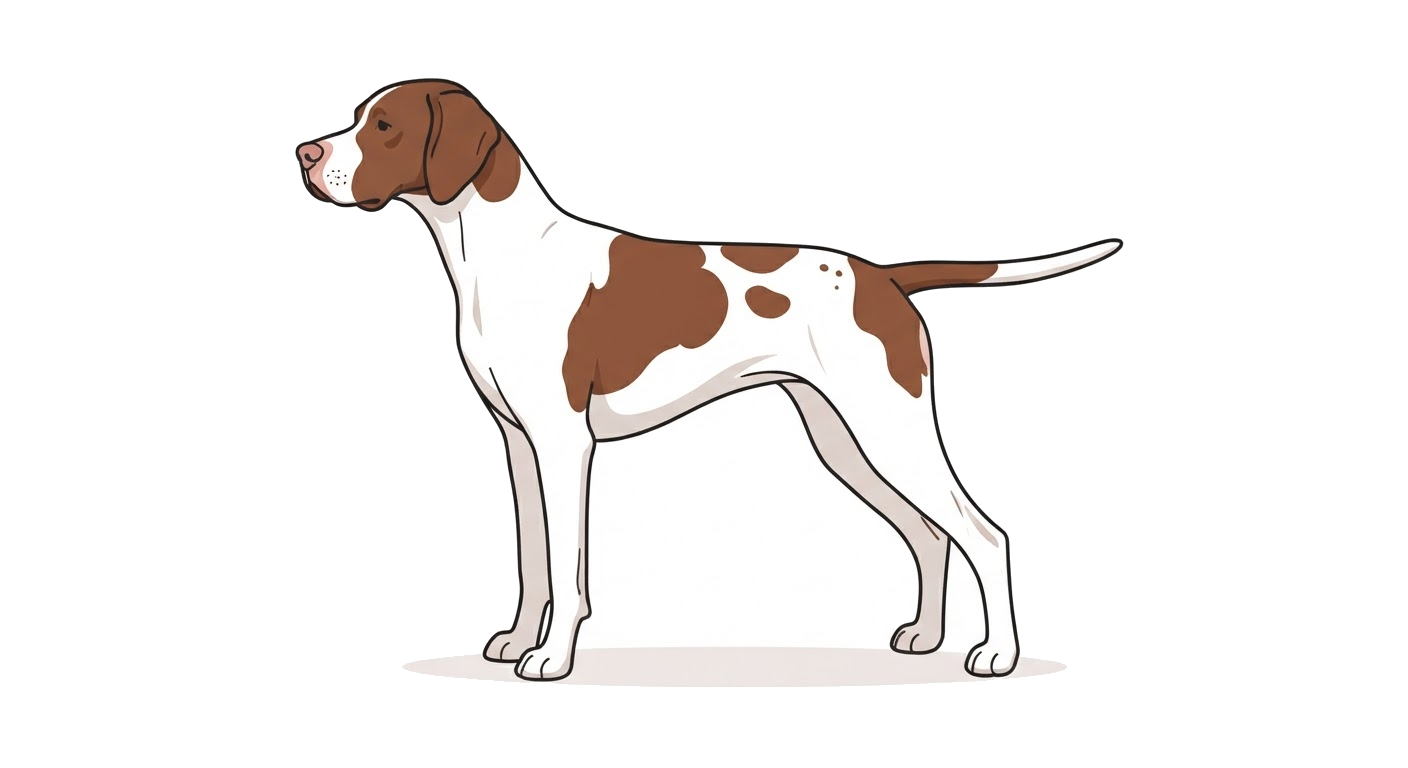
Point 1
Skull
The Pointer's skull is judged on balance rather than size — proportionate to the body, with a clean cheek and a stop typical of the breed. Coarseness or an over-refined head are both faulted.
Colours & patterns
Recognised coats
Which coats the standard accepts — and which are simply popular.
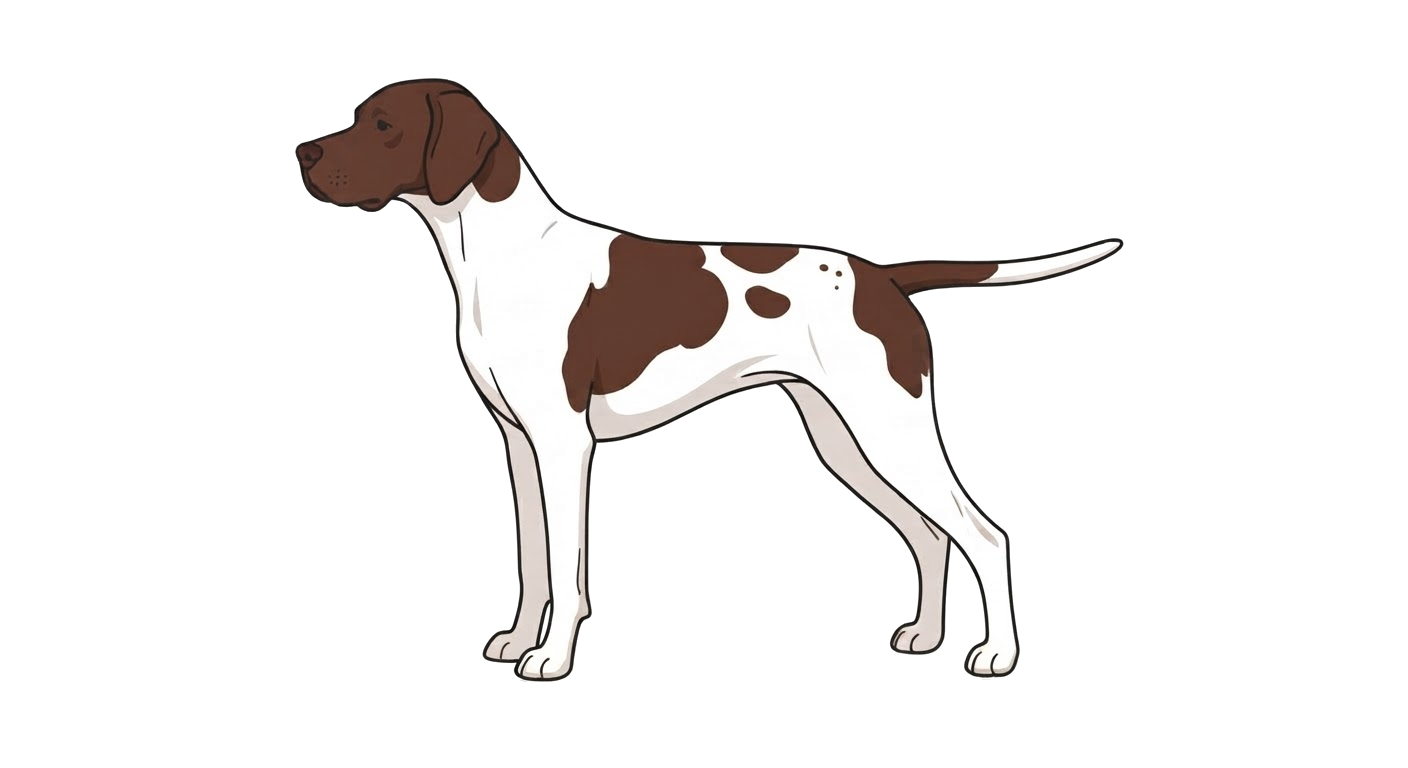
Liver and white
Standard colour
One of the classic show and field colours.
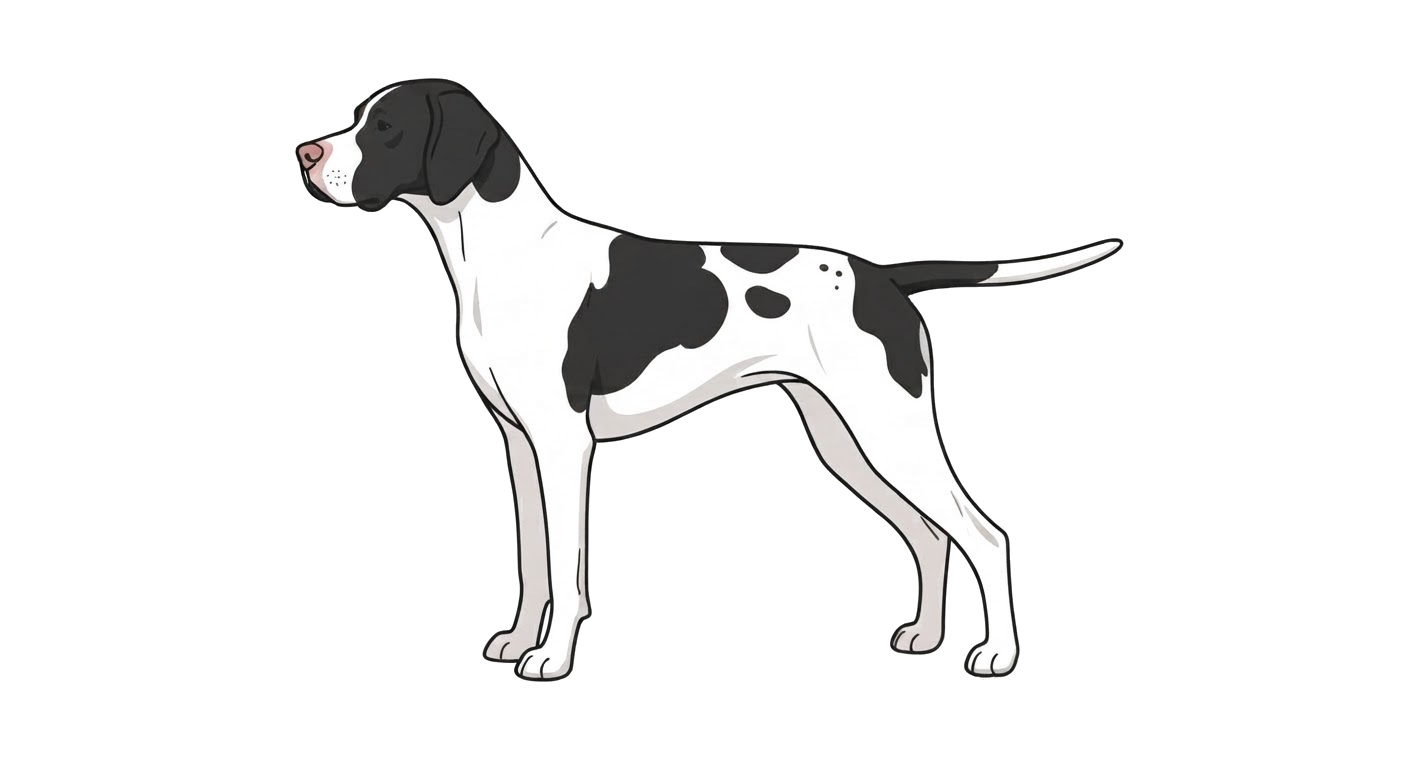
Black and white
Standard colour
Common working-line colour.
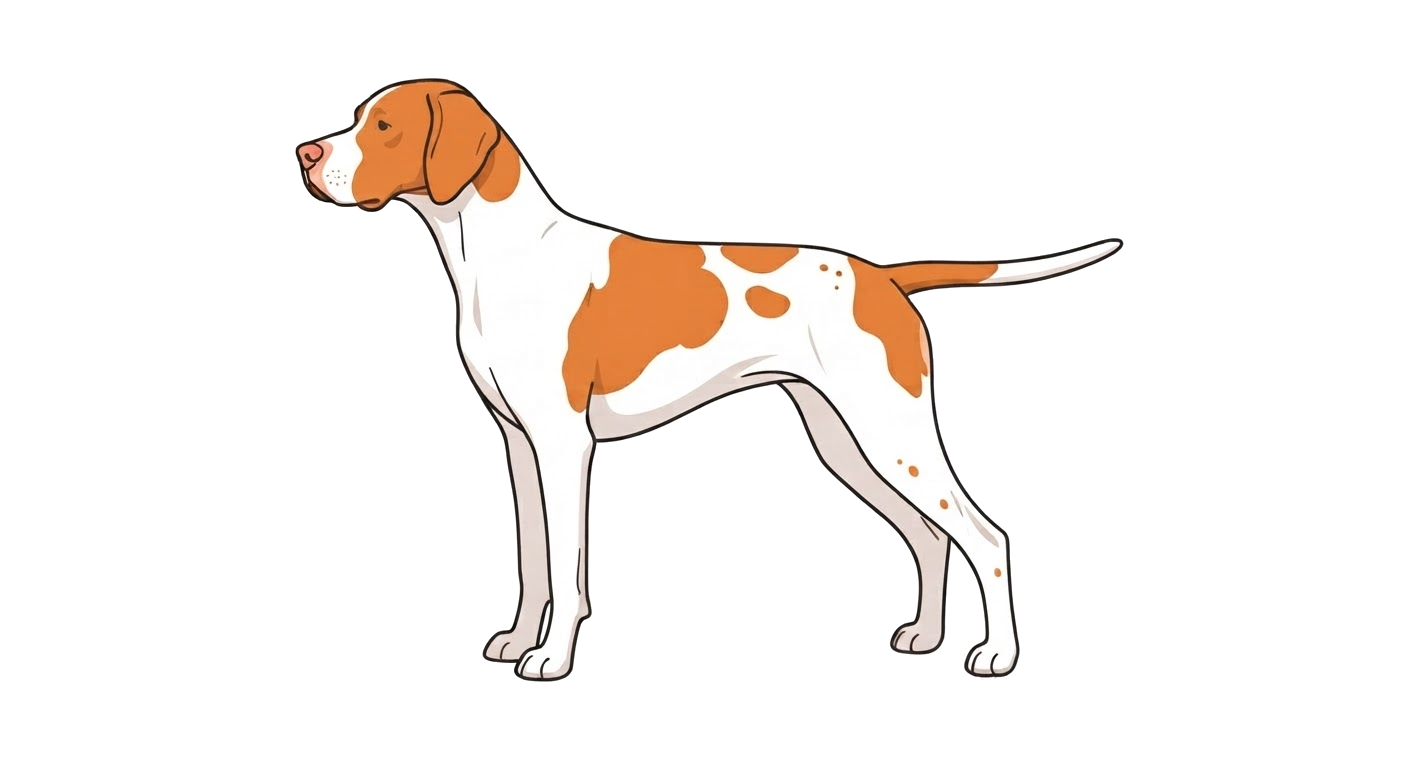
Orange and white
Standard colour
Lighter patched variant.
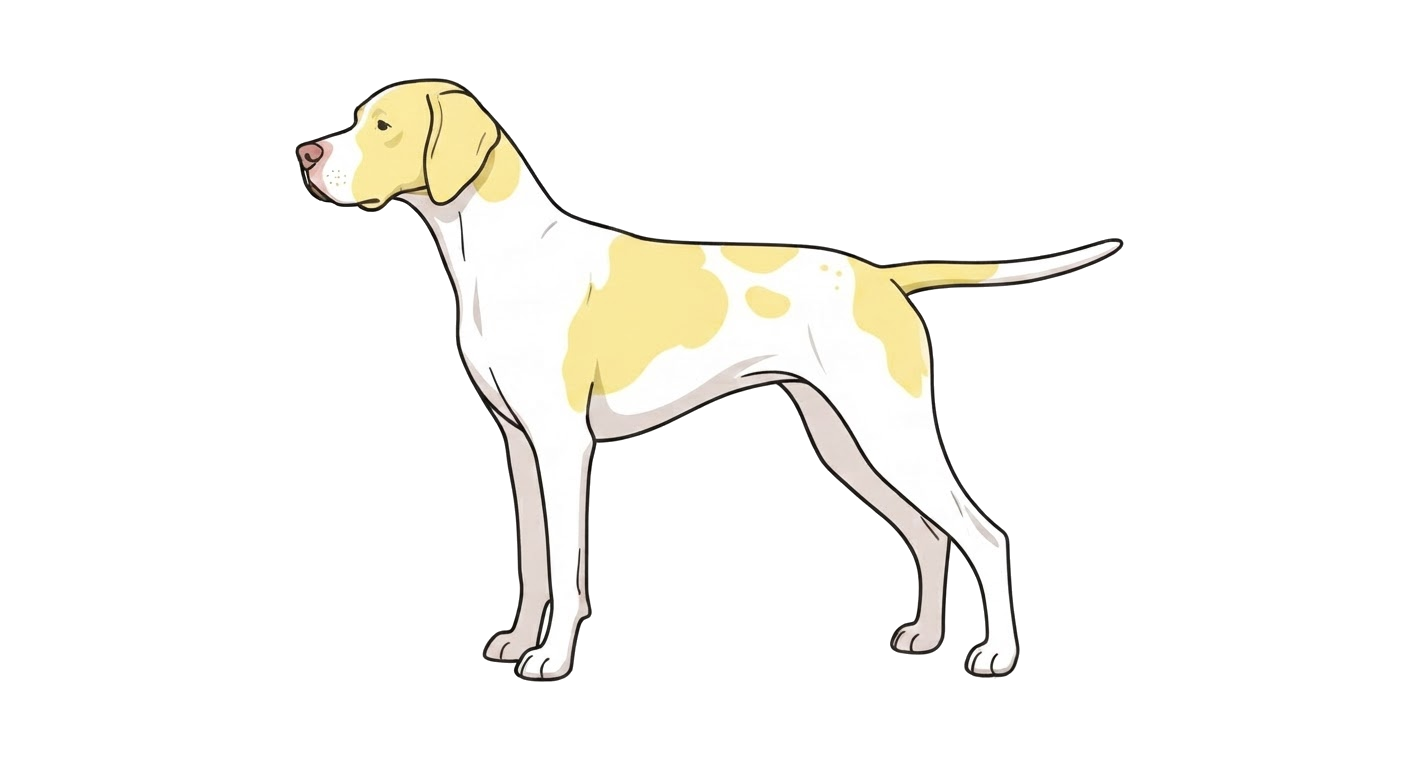
Lemon and white
Standard colour
Paler patched variant, less common.
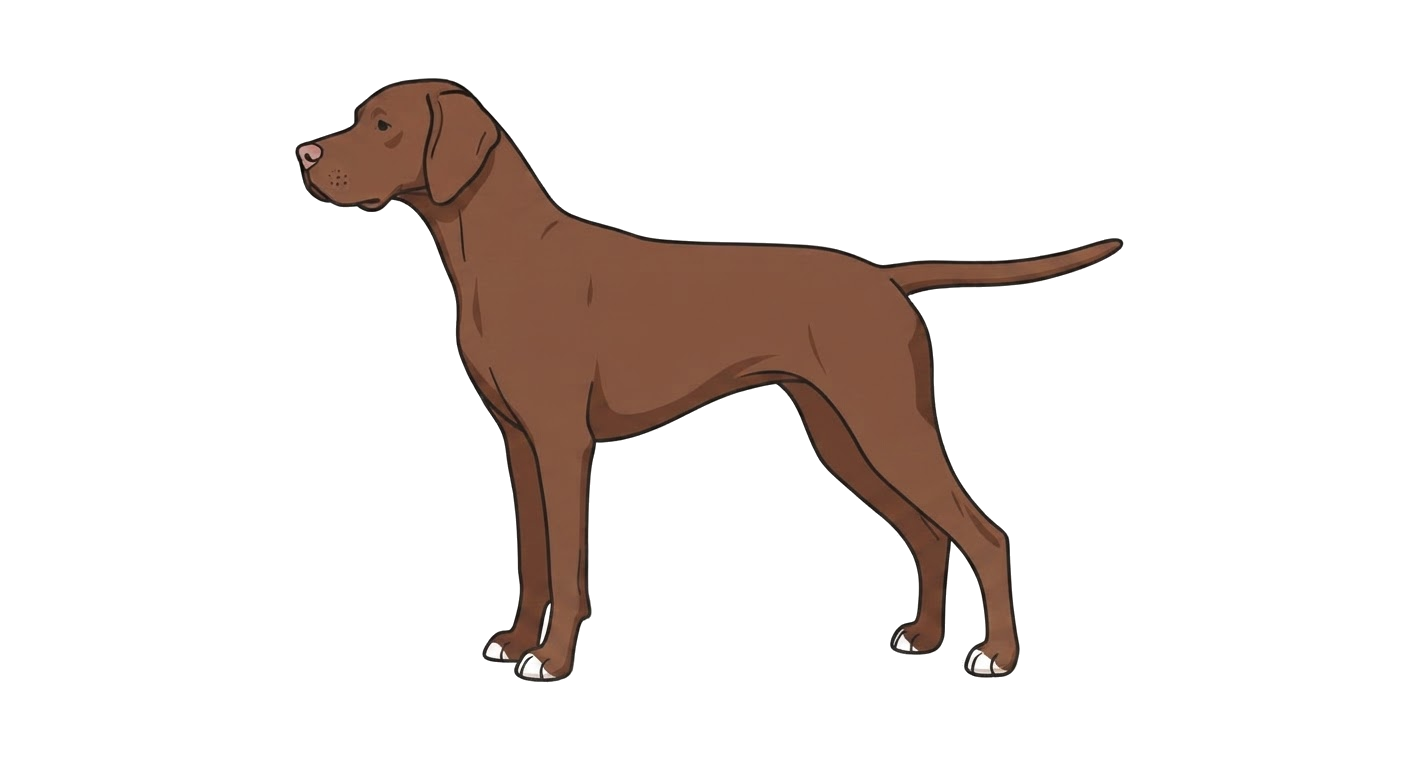
Solid liver
Standard colour
Self-coloured, seen less often than patched dogs.
Timeline
History & development
1650s
Early development
English sportsmen begin breeding dogs specifically to point and hold game for the gun rather than flush it.
1700s
Outcrossing for refinement
Foxhound, Greyhound and Bloodhound blood is introduced to add speed, nose and stamina.
1800s
Type fixed
The lean, short-coated Pointer familiar today becomes standardised across English shooting estates.
1878
Kennel Club recognition
The breed is formally recognised and shown as field trials and dog shows grow in popularity.
1950s onward
The breed today
Kennel club registrations settled into a steady pattern and the Pointer moved from a working specialist to a family companion, with breed clubs in the UK and abroad now focused on health testing and keeping true type alive.
Reference
Breed standard summary
- body
- Deep chest, strong loin, muscular hindquarters.
- coat
- Short, dense, with a sheen.
- ears
- Set on high, thin, hanging close to the head.
- eyes
- Round, expressive, dark hazel to brown.
- gait
- Free, driving, ground-covering.
- head
- Medium length, slight stop, no fleshiness.
- size
- Large
- tail
- Tapering, carried level with the back when working.
- colour
- Liver and white, Black and white, Orange and white, Lemon and white, Solid liver. Colours outside this list are seen but are not accepted by the kennel clubs.
- temperament
- Typical of the breed: strongest in energy, trainability, sociability. Nervousness or aggression are serious faults in the show ring and in the home.
- general appearance
- Alert, elegant, athletic build with a distinctive pointing stance.
Health
What to screen for
Green means little to worry about, amber means ask the breeder for test results, red means manage it actively.
Hip dysplasia
Screen for it
Ask for BVA/KC hip scores on both parents.
Elbow dysplasia
Screen for it
Elbow-scored parents reduce risk.
Skin sensitivity
Screen for it
Thin coat means care with sun and cold.
Heart disease
Watch closely
Ask breeders about cardiac screening history.
General information only — always speak to your vet about your own dog.
From real owners
Dogs like this
Pointers added by PawPoint members through their pet passports. Share yours to appear here.
Loading the wall…
Made for the Pointer
The book, plus prints, hoodies and mugs using our own Pointer illustration — and one everyday accessory that suits any dog.

The book
Pawpoint: The Complete Dog Breed Book
Every officially recognised breed plus the unofficial ones nobody else documents. 400+ pages, hardback, printed and shipped from the UK.
Own stock — shipped by us
Framed poster
Pointer Framed Poster
Museum-weight print of our Pointer illustration, framed or unframed.
Printed to order
Hoodie
Pointer Hoodie
Heavyweight hoodie carrying the Pointer illustration on the chest.
Printed to order
Mug
Pointer Mug
Ceramic mug with the Pointer illustration wrapped around it.
Printed to order
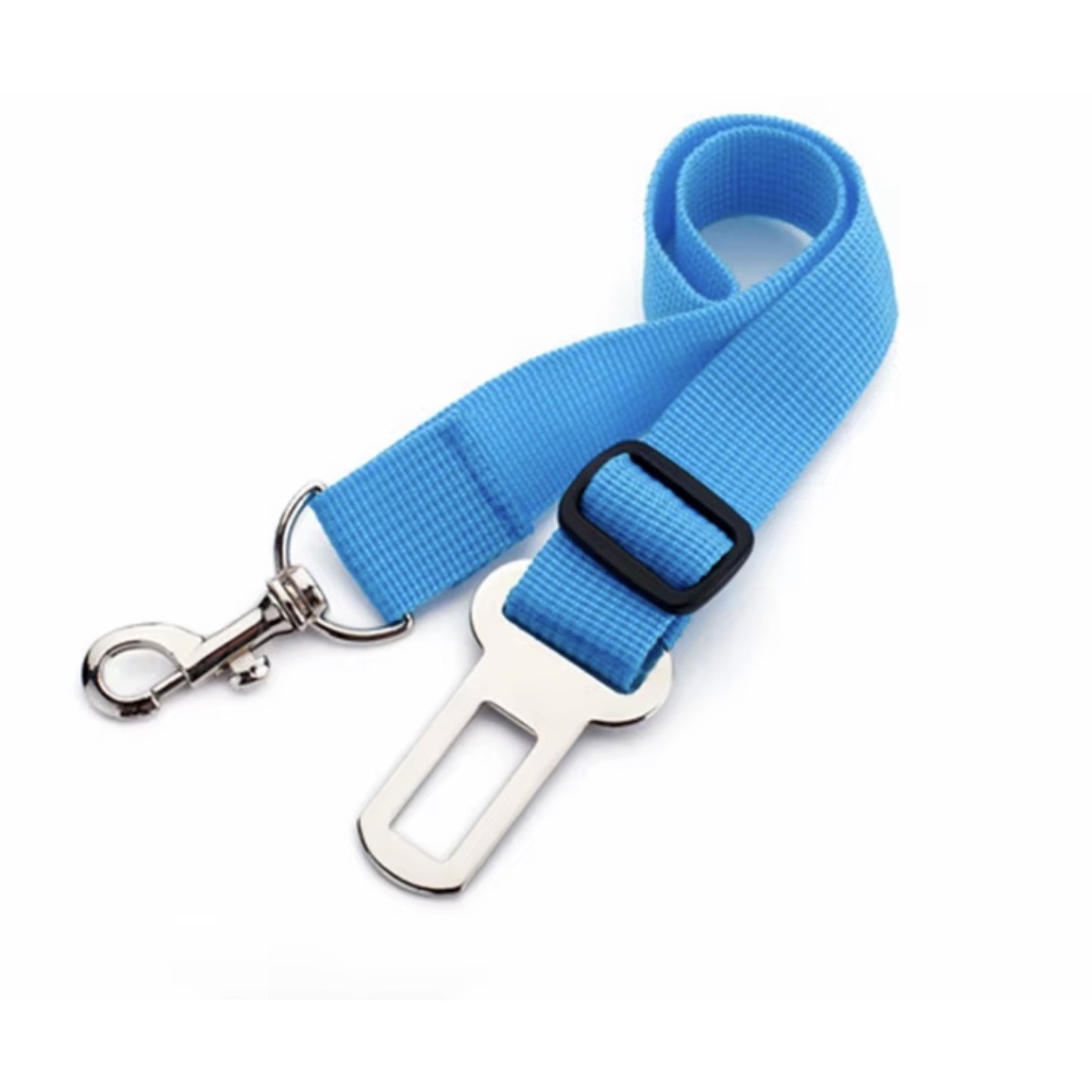
Accessory
Car Seatbelt Restraint
Clips any harness to a standard seatbelt buckle.
Fits any dog

Pawpoint on YouTube
Watch the full Pointer video
Breed deep-dives, history and honest ownership talk. New film every week.
Watch now