
Poitevin
pwah-tuh-VAN
France· Poitou, western France
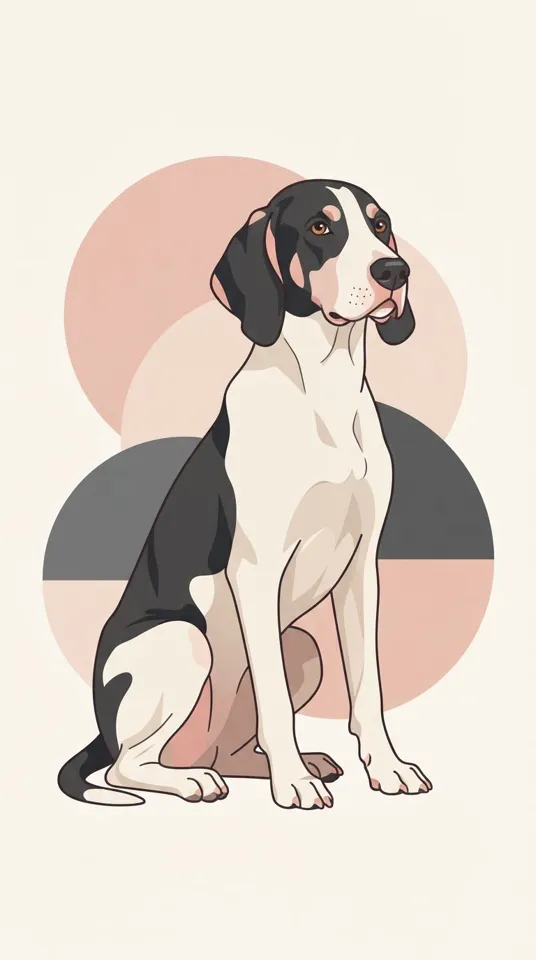
The Poitevin is a large, elegant French scenthound originally developed for hunting wolves in Poitou.
At a glance
Quick facts
- Size
- Large
- Exercise needs
- 2 hours+ per day
- Home size suited to
- Large
- Grooming frequency
- Weekly brush
- Coat length
- Short
- Sheds
- Yes
- Lifespan
- 10-12 years
- Town or country
- Country preferred
- Garden size needed
- Large
Where it comes from
Origins of the Poitevin
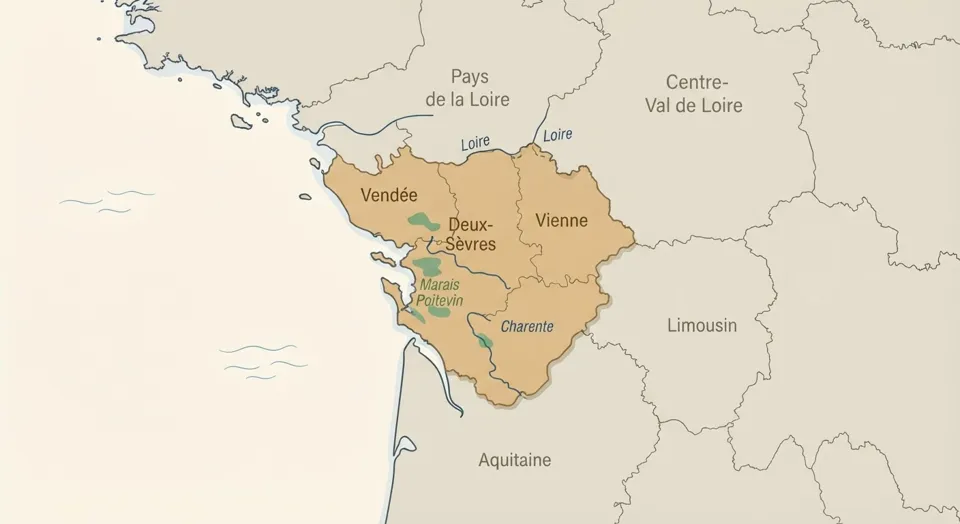
Developed in Poitou for hunting wolves, the Poitevin needed speed, stamina and courage to run large predators to ground across open and wooded country. As wolf numbers declined it was redirected towards deer and wild boar, refining its need for both pace and toughness. Its history is tightly bound to the region's noble hunting estates and their large mounted packs. Few breeds retain such a direct link to hunting a specific quarry now extinct in the area.
- Region
- Poitou, western France
- Climate it was bred for
- Mixed farmland and forest of western France
- Original job
- Pack hunting wolf and later deer and wild boar
The long read
About the breed
Its work demanded speed and stamina across open and wooded country, along with the courage to pursue dangerous quarry as part of a large pack, qualities later applied to hunting deer and wild boar.
It is an energetic, sociable dog that needs a great deal of exercise and space, and is best suited to experienced owners involved in organised hunting rather than typical pet homes.
The breed remains rare and is kept almost exclusively by French hunting packs today.
Living with one
Temperament & needs
Our own ratings, based on the breed standard and how these dogs behave in ordinary homes.
Friendliness
3/5
How openly the Poitevin greets people it does not know.
Trainability
3/5
How readily the breed takes to training in an ordinary home.
Energy
3/5
How much daily exercise and stimulation the breed expects.
Barking
3/5
How vocal the breed tends to be day to day.
Grooming
3/5
How much coat work the breed needs to stay comfortable.
Suits a first-time owner
3/5
How forgiving the Poitevin is for someone taking on their first dog.
Illustrated breed standard
The points of the breed
Hover or tap a numbered point to read what the standard asks for.
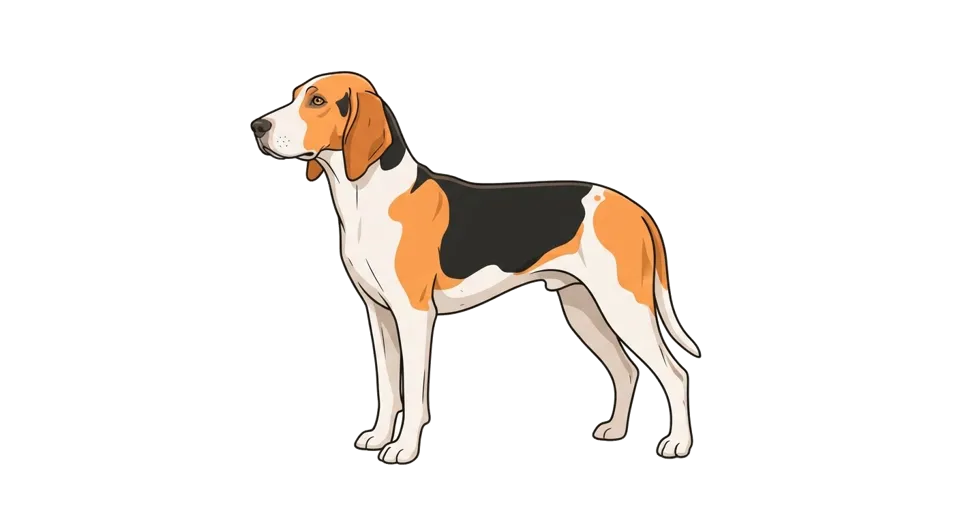
Point 1
Skull
The Poitevin's skull is judged on balance rather than size — proportionate to the body, with a clean cheek and a stop typical of the breed. Coarseness or an over-refined head are both faulted.
Timeline
History & development
1600s
Wolf-hunting origins
Poitevin nobility developed packs of hounds specifically to hunt wolves in the region.
1842
Rabies epidemic loss
A rabies outbreak forced the destruction of most of the pack, nearly ending the breed.
1850s
Rebuilding the breed
Breeders restored the type using surviving stock and related French hounds.
1914-1945
Wartime decline
Both World Wars again reduced numbers severely.
1990s
Conservation programme
Specialist breed clubs have since worked to stabilise and preserve the Poitevin.
Reference
Breed standard summary
- body
- Long-legged, deep-chested with a level topline.
- coat
- Short, fine and close.
- ears
- Fine, set at eye level, of moderate length.
- eyes
- Dark, bright and expressive.
- head
- Long and narrow with a slightly domed skull.
- size
- Dogs and bitches 60-70cm
- colour
- Tricolour, typically white, black and tan.
- temperament
- Bold, energetic and sociable, with great stamina.
- general appearance
- A tall, elegant, athletic hound of noble bearing built for speed and endurance.
Health
What to screen for
Green means little to worry about, amber means ask the breeder for test results, red means manage it actively.
General information only — always speak to your vet about your own dog.
From real owners
Poitevins in the PAWPOINT Pack
Poitevins added by PawPoint members through their pet passports. Share yours to appear here.
Loading the wall…
Made for the Poitevin
The book, plus hoodies, tees and mugs featuring the Poitevin.