
Polish Lowland Sheepdog
"POL-ish LOW-land SHEEP-dog" (Polish: Polski Owczarek Nizinny, "POL-skee ov-CHAR-ek nee-ZEEN-nee")
Poland· Central Polish lowlands
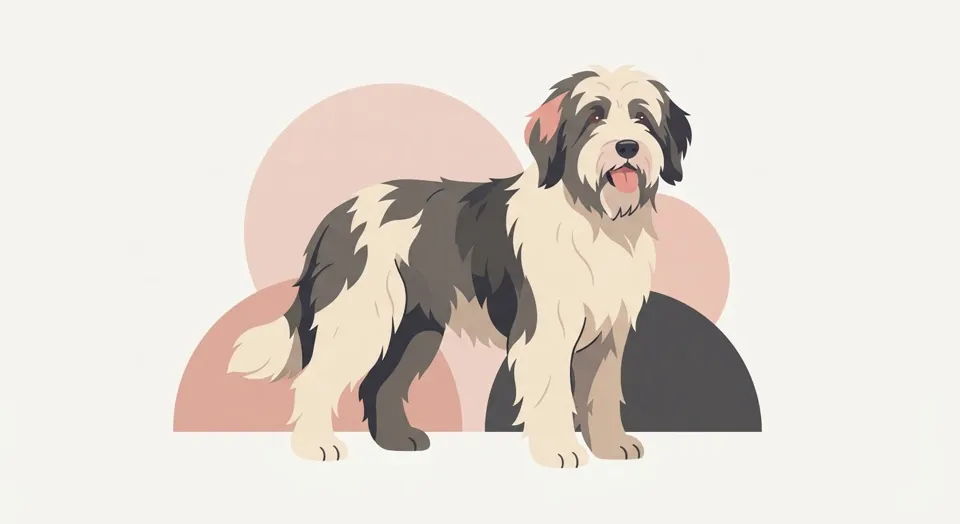
The Polish Lowland Sheepdog, known in Poland as the Polski Owczarek Nizinny or PON, is a shaggy, medium-sized herding dog bred to work sheep on the lowland plains of central Poland.
At a glance
Quick facts
- Size
- Medium
- Exercise needs
- 1 hour daily plus mental stimulation
- Home size suited to
- Small to medium home
- Grooming frequency
- Daily brushing
- Coat length
- Long
- Sheds
- Yes, heavily when moulting
- Lifespan
- 12-14 years
- Town or country
- Happiest in the country
- Garden size needed
- Small to medium
Where it comes from
Origins of the Polish Lowland Sheepdog
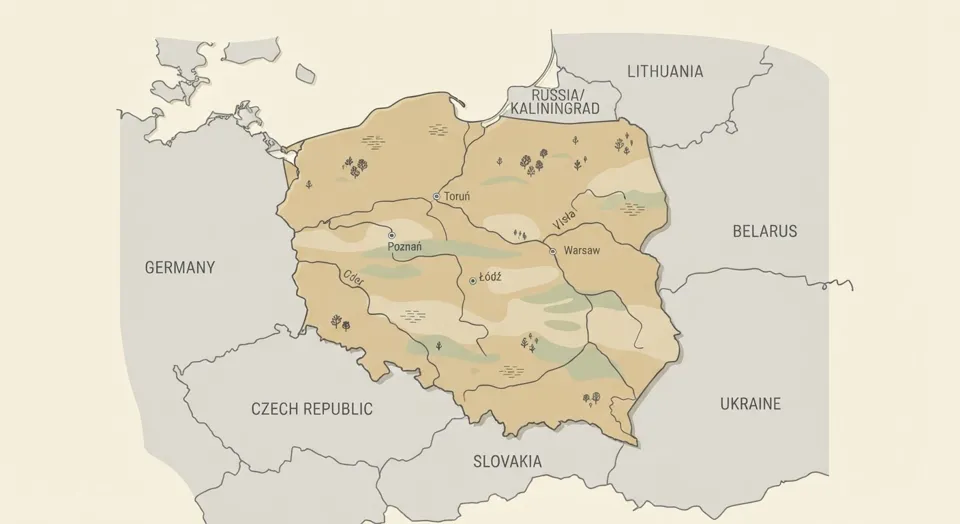
Bred on the flat farmland of central Poland, where flocks needed a dog able to work long hours in open country and cold weather. The thick double coat protected against harsh Polish winters while the dog's independence suited working at a distance from the shepherd.
- Region
- Central Polish lowlands
- Climate it was bred for
- Continental, cold winters, warm summers
- Original job
- Herding sheep and guarding farms
The long read
About the breed
The breed's ancestry stretches back several centuries, likely linked to Central Asian herding dogs brought west along trade routes and crossed with local Polish stock, alongside the related Puli of Hungary. PONs worked as all-purpose farm dogs, herding sheep, guarding property and keeping vermin down, valued as much for grit and independence as for looks. The Second World War nearly wiped the breed out, and it survived through the efforts of a small number of Polish breeders working from a handful of surviving dogs in the 1940s and 1950s.
Living with a PON means managing a genuinely clever, sometimes stubborn dog that thinks for itself. The long, shaggy double coat needs brushing two or three times a week to prevent matting, more if the dog is active outdoors, and many owners choose a shorter trim for easier upkeep. PONs are watchful and can be vocal with strangers, a legacy of their guarding role, but they are affectionate and often very attached to their own family. They need consistent, patient training and enough mental and physical activity to avoid boredom.
Today the PON is Poland's national dog breed and has a small but dedicated following in Britain and further afield, mostly in herding, agility and companion homes. It suits owners who enjoy a dog with genuine working intelligence and do not mind a serious grooming commitment.
Living with one
Temperament & needs
Our own ratings, based on the breed standard and how these dogs behave in ordinary homes.
Friendliness
3/5
How openly the Polish Lowland Sheepdog greets people it does not know.
Trainability
3/5
Intelligent but can be stubborn without consistency.
Energy
3/5
Moderate exercise needs, enjoys herding-style games.
Barking
4/5
Alert and vocal when guarding territory.
Grooming
5/5
Long double coat needs frequent brushing.
Suits a first-time owner
3/5
How forgiving the Polish Lowland Sheepdog is for someone taking on their first dog.
Sociability
3/5
Loyal to family, reserved with strangers.
Independence
4/5
Bred to think for itself while working.
Illustrated breed standard
The points of the breed
Hover or tap a numbered point to read what the standard asks for.
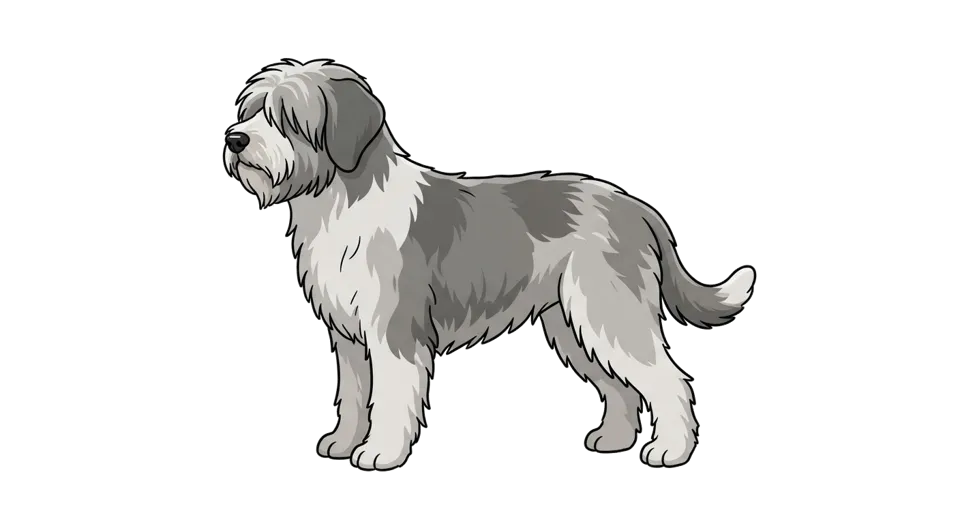
Point 1
Skull
The Polish Lowland Sheepdog's skull is judged on balance rather than size — proportionate to the body, with a clean cheek and a stop typical of the breed. Coarseness or an over-refined head are both faulted.
Colours & patterns
Recognised coats
Which coats the standard accepts — and which are simply popular.
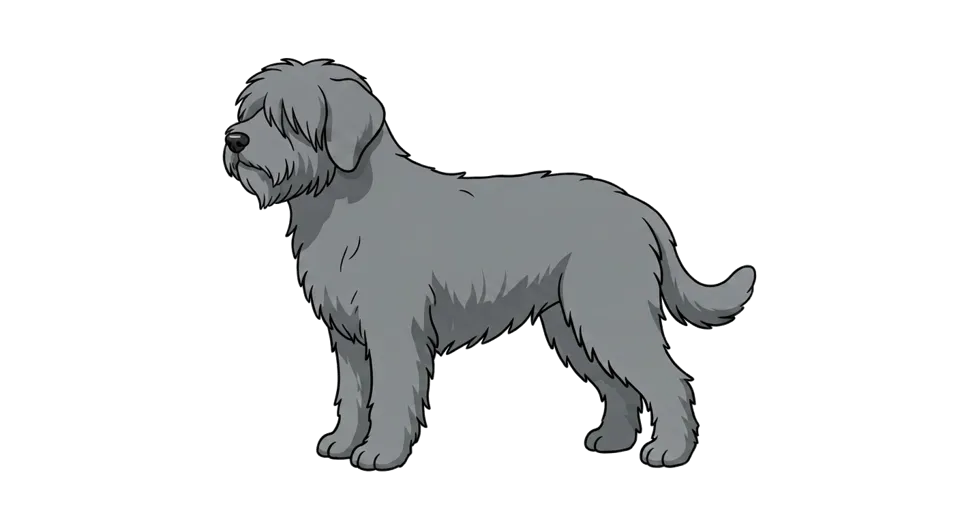
Grey and white
Standard colour
One of the most common colourings.
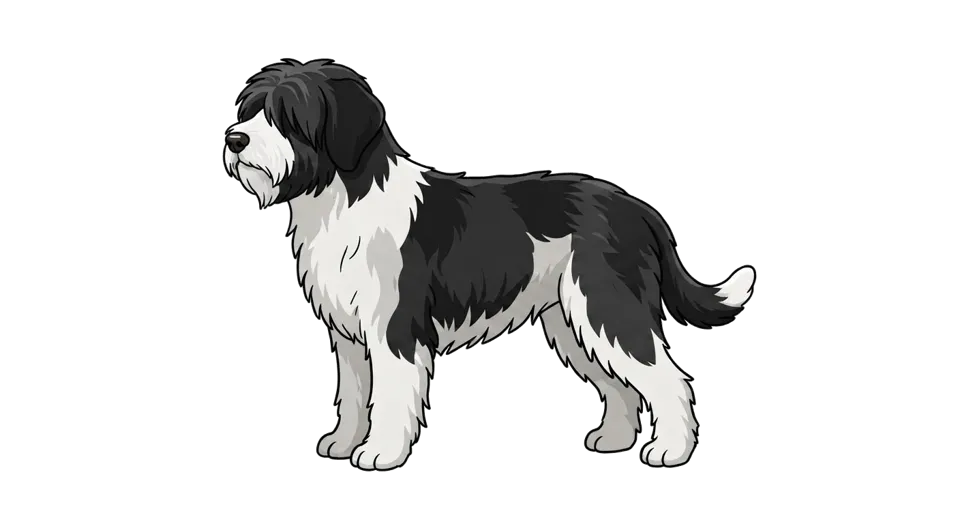
Black and white
Standard colour
Classic patched colouring.
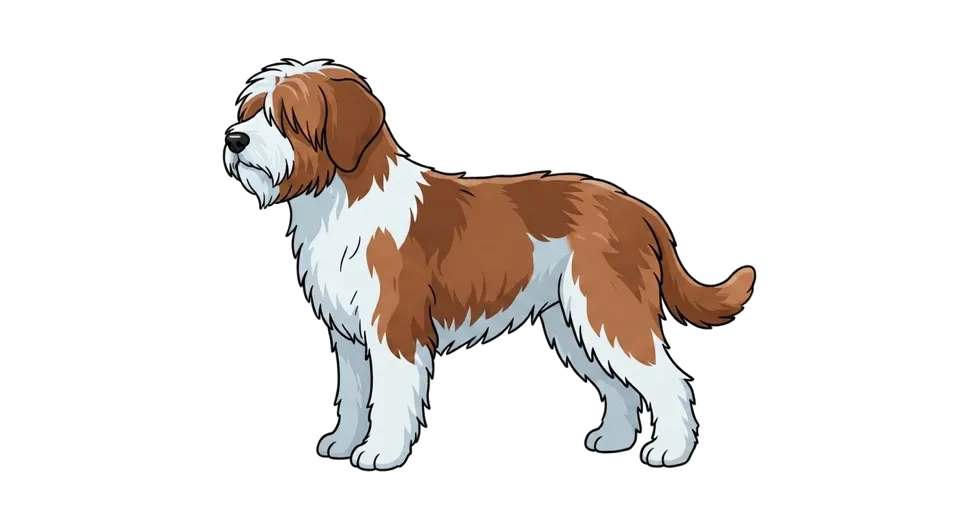
Chestnut and white
Standard colour
Warmer patched variant.
Outside the standard
Other colours
Dilute coats you will see advertised. They are the same breed, but no kennel club accepts them.
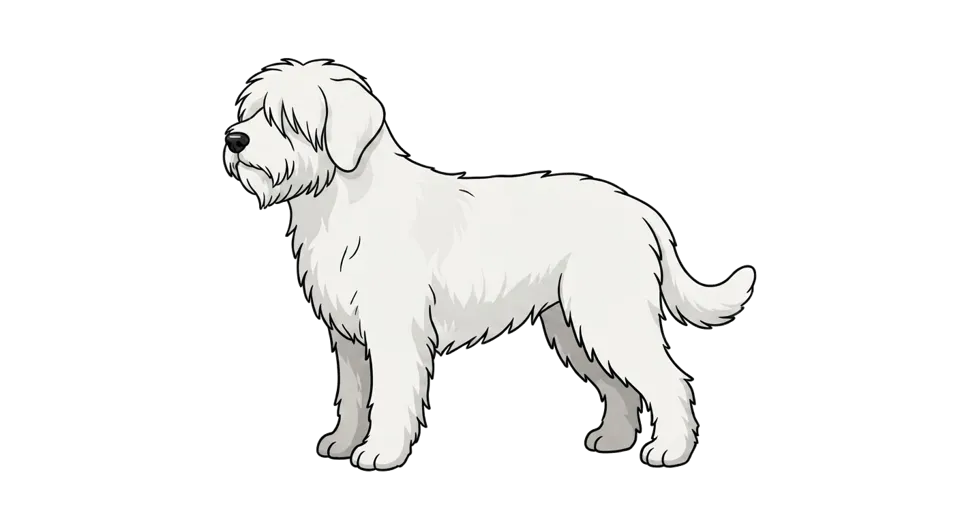
All white
Not in the standard
Not typical of the breed standard.
Timeline
History & development
1500s
Early ancestry
Herding dogs from Central Asia are thought to mix with local Polish stock, forming the ancestor of the PON.
1800s
Farm dog of the plains
The breed becomes a fixture of Polish lowland farms, herding and guarding livestock.
1940s
Near extinction
The Second World War devastates the breed's population across Poland.
1950s
Revival
Breeder Danuta Hryniewicz rebuilds the population from surviving dogs, saving the breed.
2001
International recognition
The FCI standard is finalised and the breed gains wider recognition abroad.
Reference
Breed standard summary
- body
- Slightly longer than tall, well-muscled.
- coat
- Long, dense, shaggy double coat.
- ears
- Heart-shaped, hanging, well feathered.
- eyes
- Hazel to dark brown, hidden by the coat.
- gait
- Free and springy.
- head
- Broad, hidden under abundant hair, with a fringe over the eyes.
- size
- Medium
- tail
- Low set, may be carried level or curled when alert.
- colour
- Grey and white, Black and white, Chestnut and white. Colours outside this list are seen but are not accepted by the kennel clubs.
- temperament
- Typical of the breed: strongest in grooming, independence, barking. Nervousness or aggression are serious faults in the show ring and in the home.
- general appearance
- Medium, sturdy, shaggy-coated herding dog.
Health
What to screen for
Green means little to worry about, amber means ask the breeder for test results, red means manage it actively.
Hip dysplasia
Screen for it
Ask for hip scores on breeding stock.
Progressive retinal atrophy
Screen for it
DNA testing available and recommended.
Cataracts
Low concern
Regular eye checks recommended through adulthood.
General information only — always speak to your vet about your own dog.
From real owners
Polish Lowland Sheepdogs in the PAWPOINT Pack
Polish Lowland Sheepdogs added by PawPoint members through their pet passports. Share yours to appear here.
Loading the wall…
Made for the Polish Lowland Sheepdog
The book, plus hoodies, tees and mugs featuring the Polish Lowland Sheepdog.