Poodle (Toy)
POO-duhl TOY
France· France (urban companion breeding)
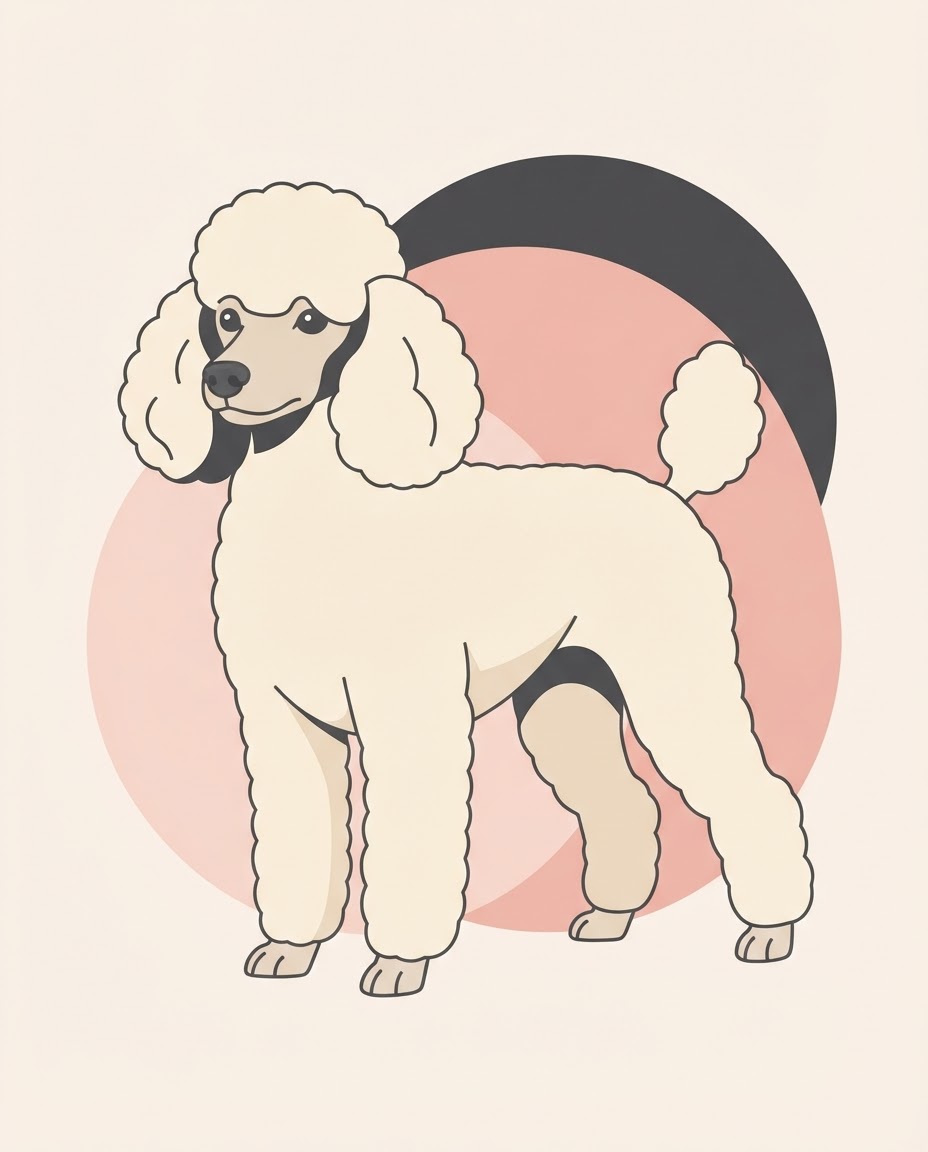
The Toy Poodle is the smallest of the three Poodle sizes, bred down from the Miniature for those wanting all the breed's intelligence and low-shedding coat in a lap-sized dog.
At a glance
Quick facts
Size
Toy
Exercise needs
20-30 minutes daily
Home size suited to
Flat or any size home
Grooming frequency
Weekly brush, hand-strip a few times a year
Coat length
Wiry
Sheds
Very little
Lifespan
12-15 years
Town or country
Either, happy in town
Garden size needed
None needed
Where it comes from
Origins of the Poodle (Toy)
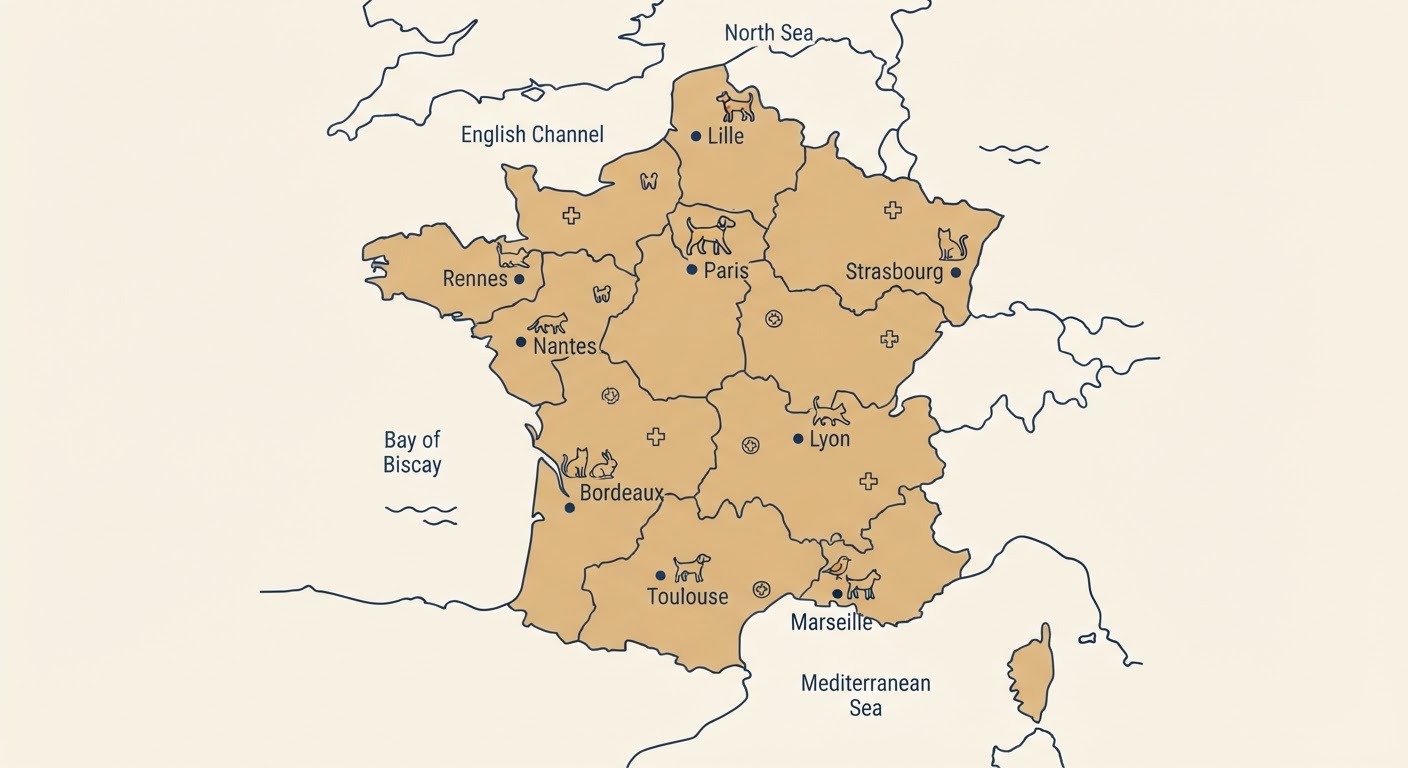
Bred smaller still from the Miniature Poodle in France, the Toy was shaped for city life and salons rather than fieldwork, prized for portability alongside the breed's characteristic intelligence and low-shedding coat.
- Region
- France (urban companion breeding)
- Climate it was bred for
- Temperate
- Original job
- Companionship
The long read
About the breed
Poodles began as German and French water retrievers, and as the type was refined in France it was progressively bred smaller, first to the Miniature and then, by the early 1900s, to the Toy, developed mainly as a companion for city and salon life rather than any working role. The Toy retained the sharp intelligence of its larger relatives while losing the size needed for serious retrieving work, and it quickly became fashionable among people who wanted a portable, clever dog that could live comfortably in small households.
Living with a Toy Poodle means managing a dog with a big personality in a small body. They are quick learners, often excelling at tricks and obedience, and form close bonds with their owners, sometimes becoming anxious if left alone too often. The curly coat sheds very little, which helps some allergy sufferers, but mats easily and needs professional clipping every six to eight weeks plus regular home brushing. Because of their small size, Toy Poodles are vulnerable to injury from rough play, falls, or larger dogs, and need careful supervision around young children.
Today the Toy Poodle is a popular companion breed and one of the most common Poodle sizes used in "doodle" crossbreeding for a low-shedding, small-statured mix. It suits owners after a portable, intelligent dog who can commit to regular grooming and gentle, consistent handling.
Living with one
Temperament & needs
Our own ratings, based on the breed standard and how these dogs behave in ordinary homes.
Friendliness
4/5
How openly the Poodle (Toy) greets people it does not know.
Trainability
5/5
Extremely quick to learn.
Energy
3/5
Enjoys play and short walks.
Barking
3/5
Can bark when excited or anxious.
Grooming
5/5
Needs professional clipping every six to eight weeks.
Suits a first-time owner
4/5
How forgiving the Poodle (Toy) is for someone taking on their first dog.
Sociability
4/5
Bonds closely, can be anxious if left alone.
Independence
1/5
Prefers to be near its owner.
Illustrated breed standard
The points of the breed
Hover or tap a numbered point to read what the standard asks for.
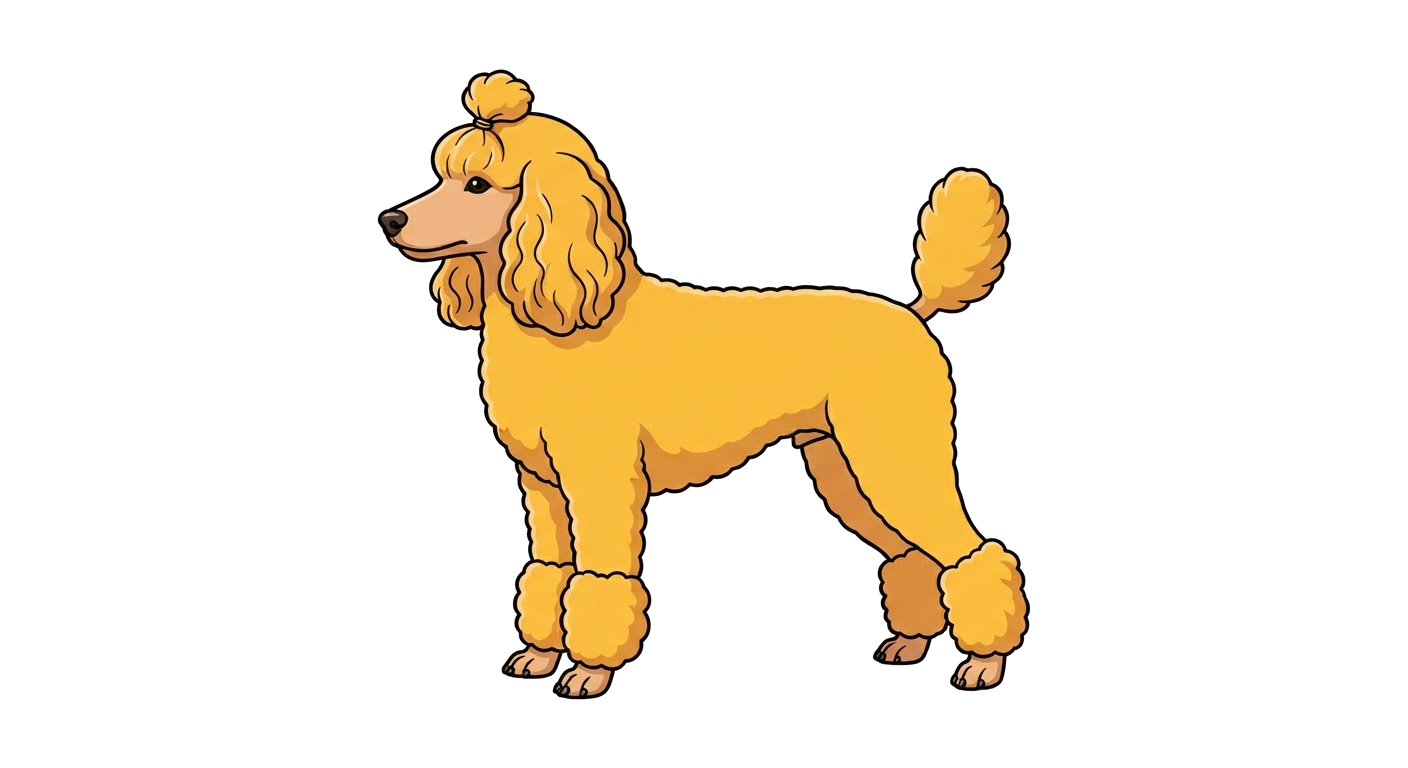
Point 1
Skull
The Poodle (Toy)'s skull is judged on balance rather than size — proportionate to the body, with a clean cheek and a stop typical of the breed. Coarseness or an over-refined head are both faulted.
Colours & patterns
Recognised coats
Which coats the standard accepts — and which are simply popular.
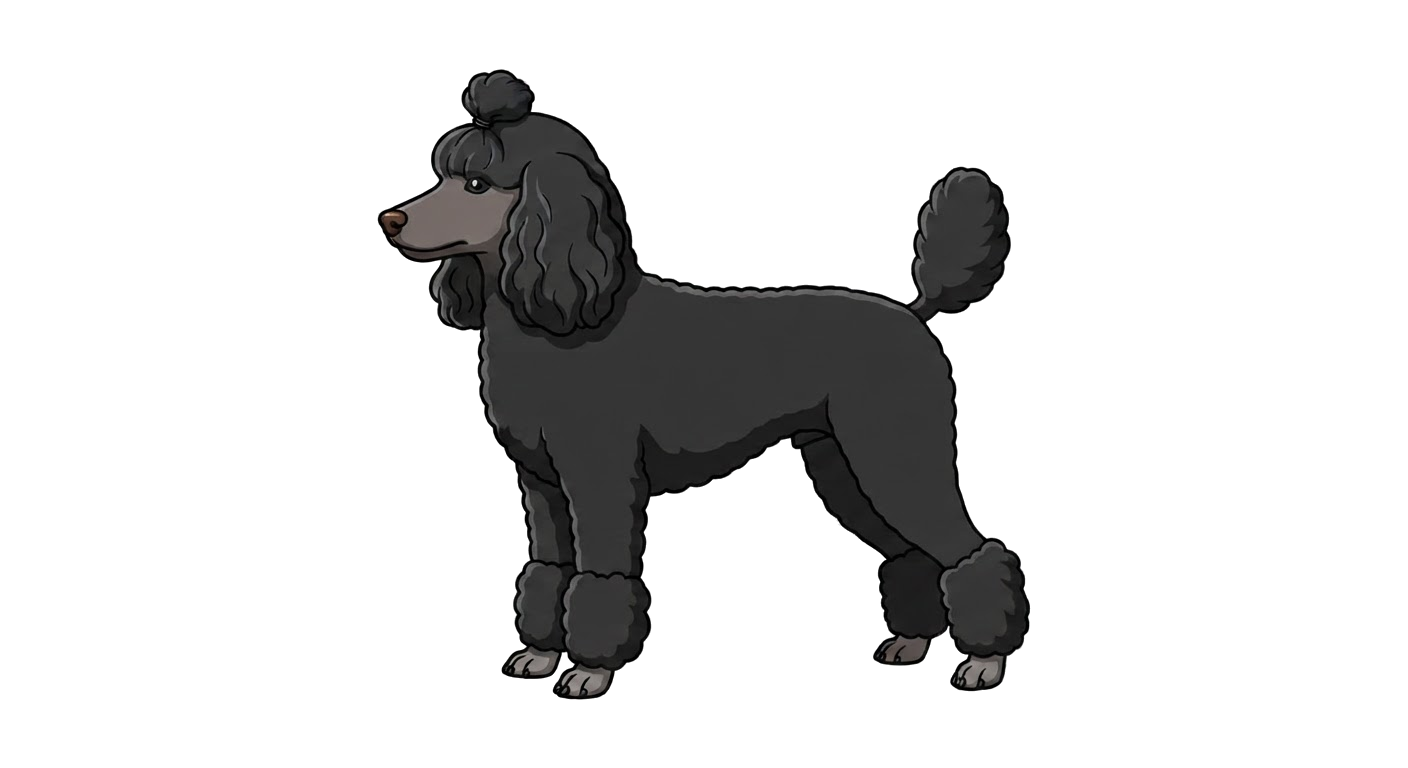
Black
Standard colour
Common solid colour.
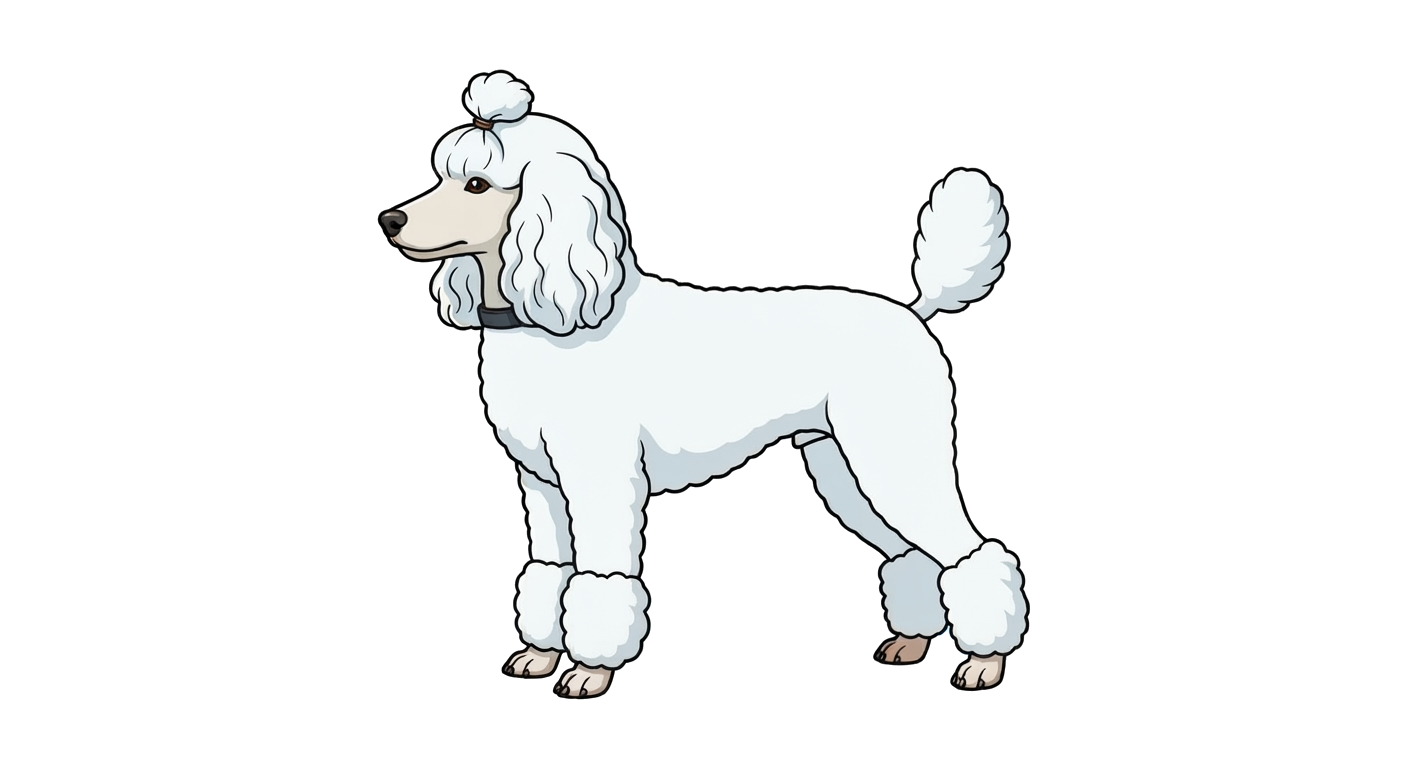
White
Standard colour
Classic solid colour.
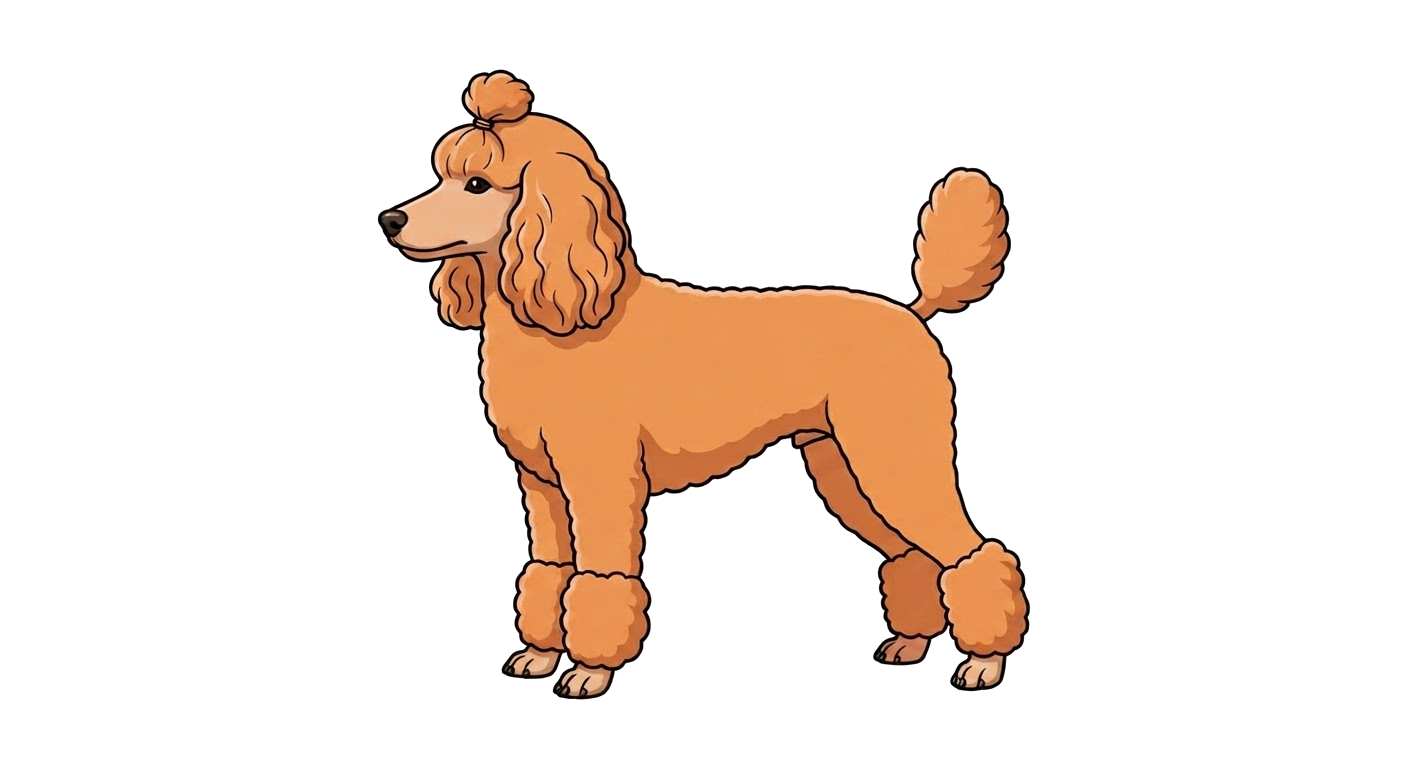
Apricot
Standard colour
Popular warm shade.
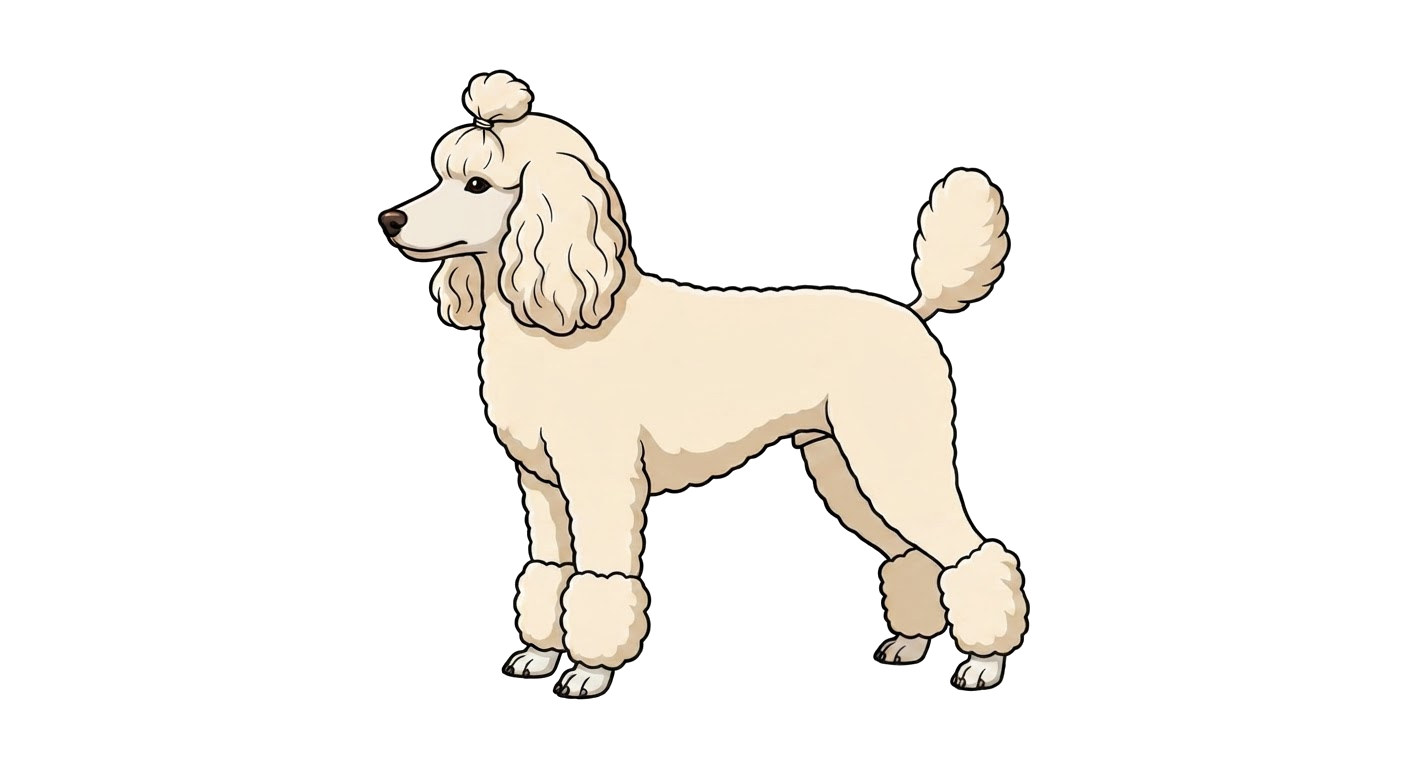
Cream
Standard colour
Pale, soft tone.
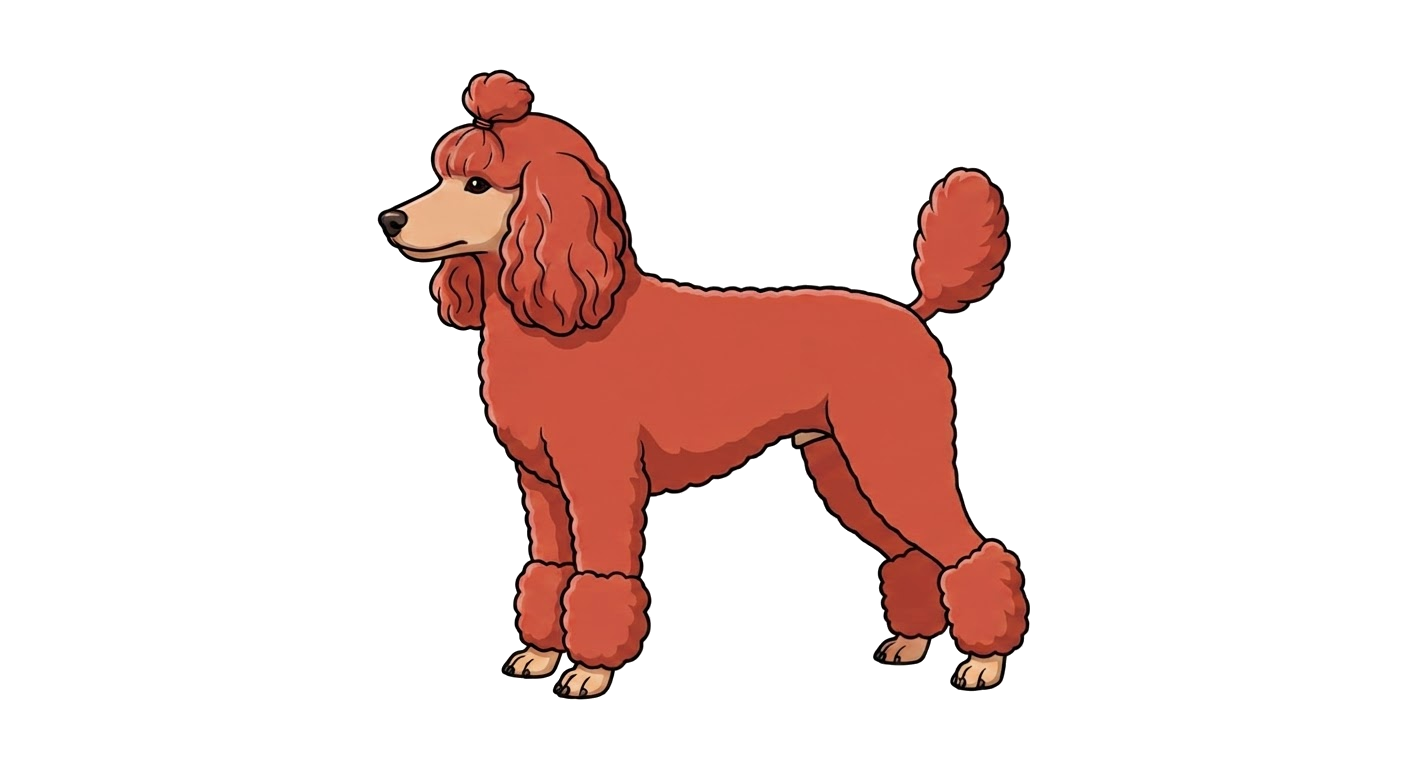
Red
Standard colour
Deep colour that can fade with age.
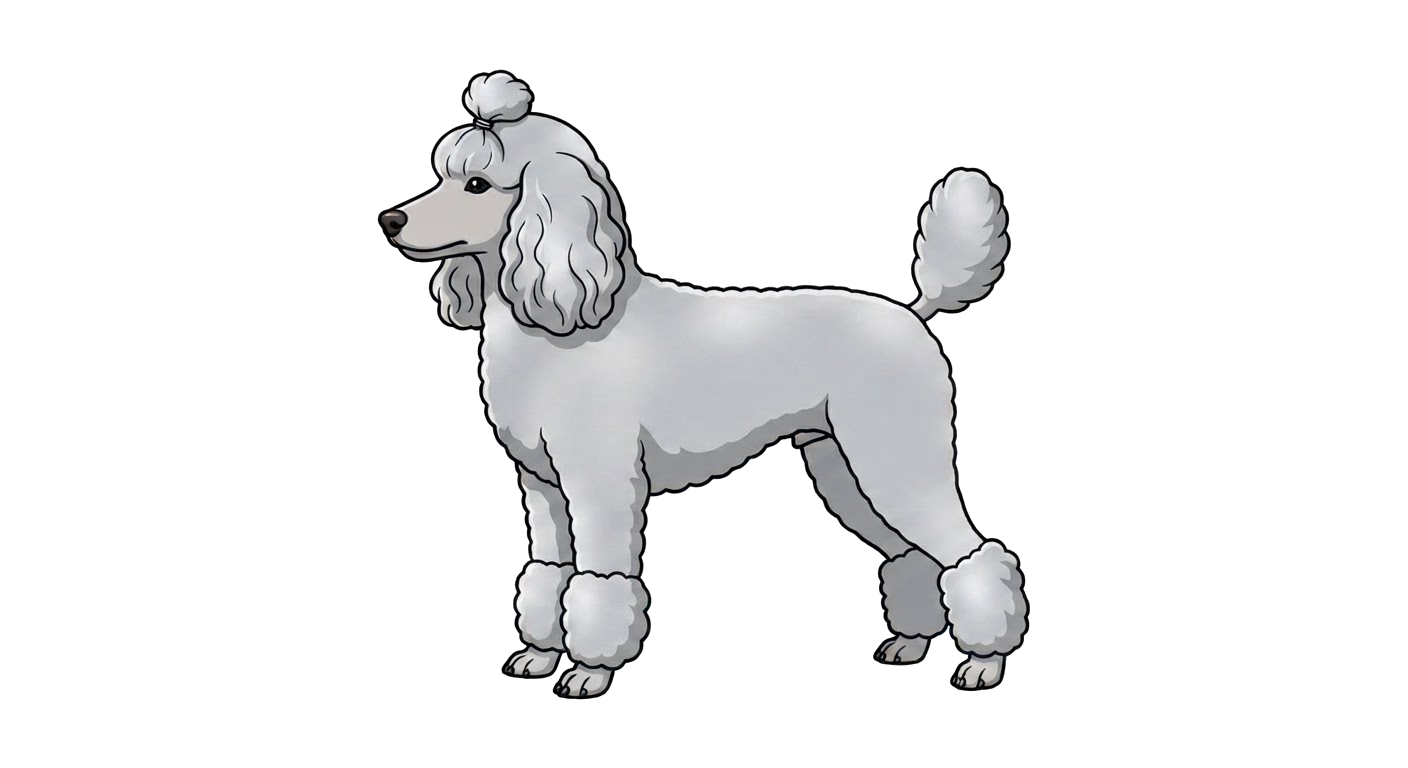
Silver
Standard colour
Diluted grey, born darker and clears over time.
Timeline
History & development
early 1900s
Smallest size developed
Breeders in France develop the Toy size from the Miniature Poodle for companionship rather than work.
1900s
Fashionable companion
The Toy Poodle becomes popular among city dwellers wanting a clever, portable dog.
1957
Separate size recognition
Kennel clubs formalise size divisions within the Poodle breed, including Toy.
Present day
Doodle crossbreeding
The Toy Poodle becomes a common parent breed in small designer crossbreeds.
Reference
Breed standard summary
- body
- Well-proportioned, squarely built.
- coat
- Dense, curly, harsh texture.
- ears
- Hanging close to the head, well feathered.
- eyes
- Dark, oval, alert expression.
- gait
- Light and springy.
- head
- Long, fine, slight peak at the back of the skull.
- size
- Toy
- tail
- Set high, carried up.
- colour
- Black, White, Apricot, Cream, Red, Silver. Colours outside this list are seen but are not accepted by the kennel clubs.
- temperament
- Typical of the breed: strongest in trainability, grooming, sociability. Nervousness or aggression are serious faults in the show ring and in the home.
- general appearance
- Small, elegant, proud carriage.
Health
What to screen for
Green means little to worry about, amber means ask the breeder for test results, red means manage it actively.
Luxating patella
Screen for it
Ask for knee checks on breeding stock.
Progressive retinal atrophy
Screen for it
DNA testing available and recommended.
Legg-Calve-Perthes disease
Low concern
Occasionally seen in small breeds; watch for lameness in young dogs.
Dental disease
Low concern
Small jaws are prone to crowding; regular dental care matters.
General information only — always speak to your vet about your own dog.
From real owners
Dogs like this
Poodle (Toy)s added by PawPoint members through their pet passports. Share yours to appear here.
Loading the wall…
Made for the Poodle (Toy)
The book, plus prints, hoodies and mugs using our own Poodle (Toy) illustration — and one everyday accessory that suits any dog.
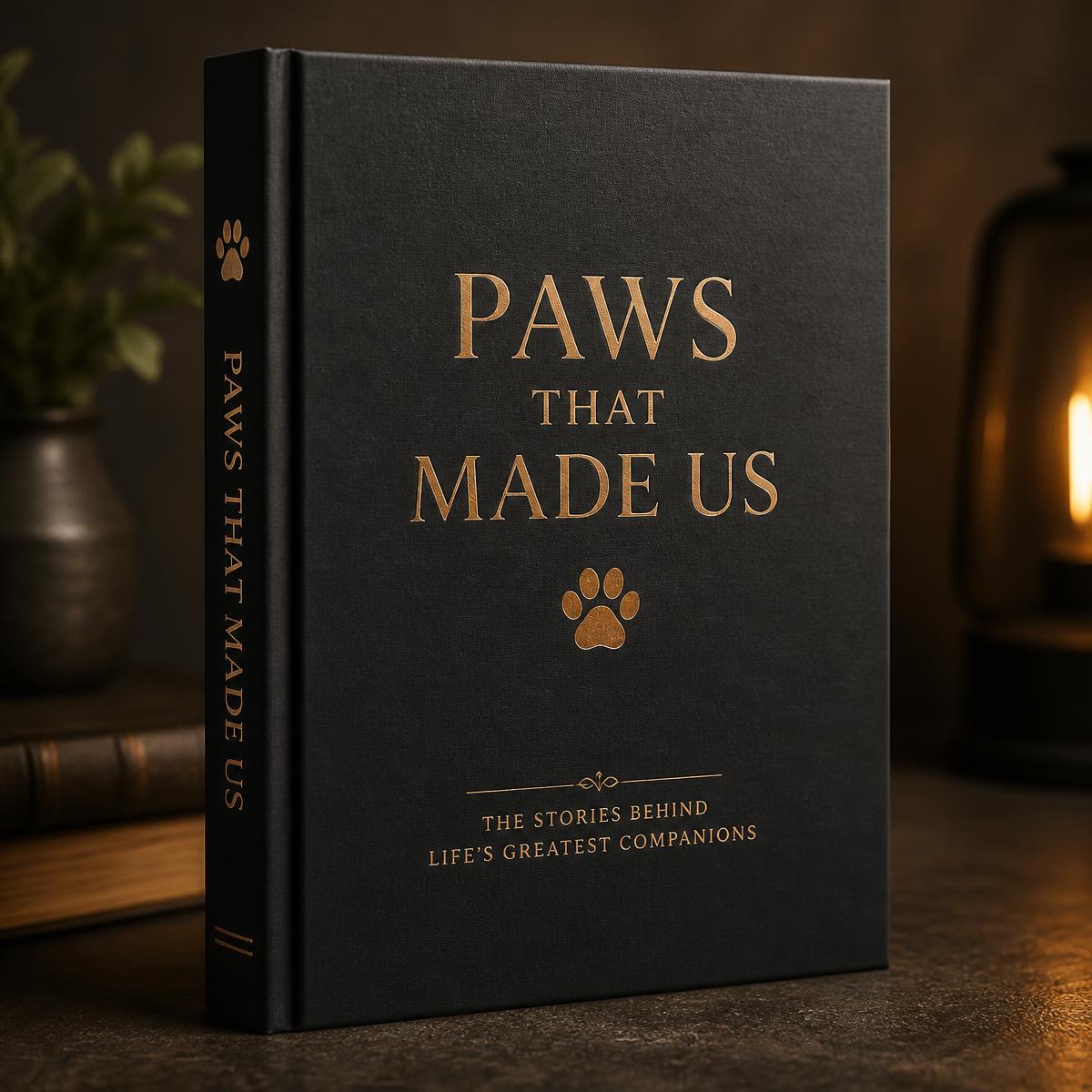
The book
Pawpoint: The Complete Dog Breed Book
Every officially recognised breed plus the unofficial ones nobody else documents. 400+ pages, hardback, printed and shipped from the UK.
Own stock — shipped by us
Framed poster
Poodle (Toy) Framed Poster
Museum-weight print of our Poodle (Toy) illustration, framed or unframed.
Printed to order
Hoodie
Poodle (Toy) Hoodie
Heavyweight hoodie carrying the Poodle (Toy) illustration on the chest.
Printed to order
Mug
Poodle (Toy) Mug
Ceramic mug with the Poodle (Toy) illustration wrapped around it.
Printed to order
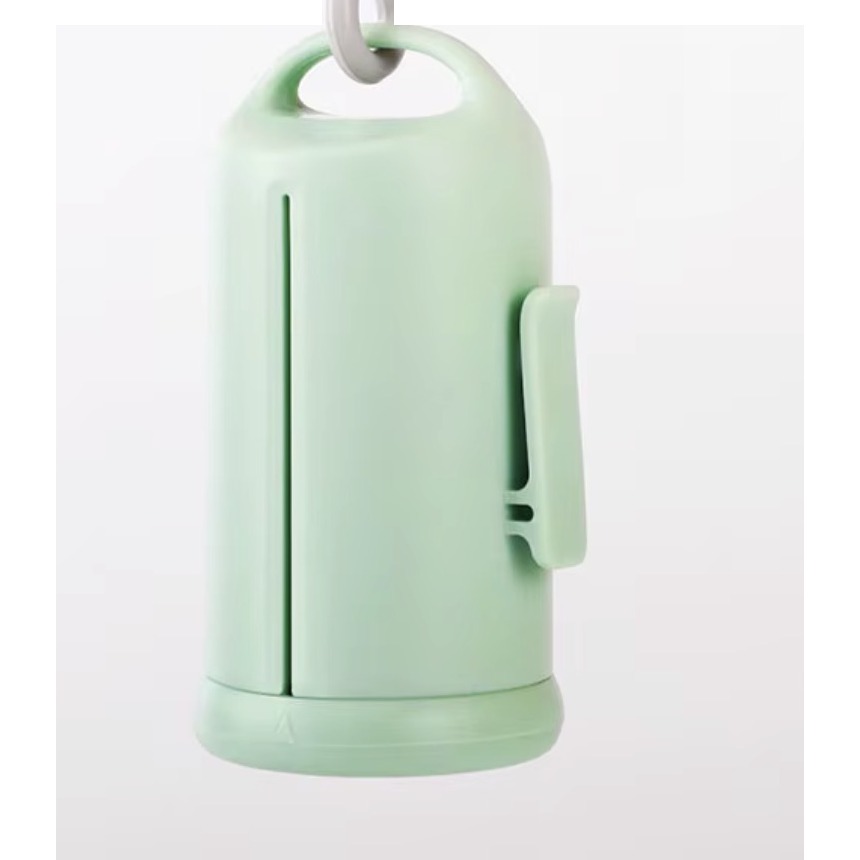
Accessory
Waste Bag Dispenser
Clips to the lead, holds one standard roll.
Fits any dog
Pawpoint on YouTube
Watch the full Poodle (Toy) video
Breed deep-dives, history and honest ownership talk. New film every week.
Watch now