
Portuguese Podengo
"por-too-GEEZ po-DEN-goo"
Portugal· Rural Portugal (scrubland regions)
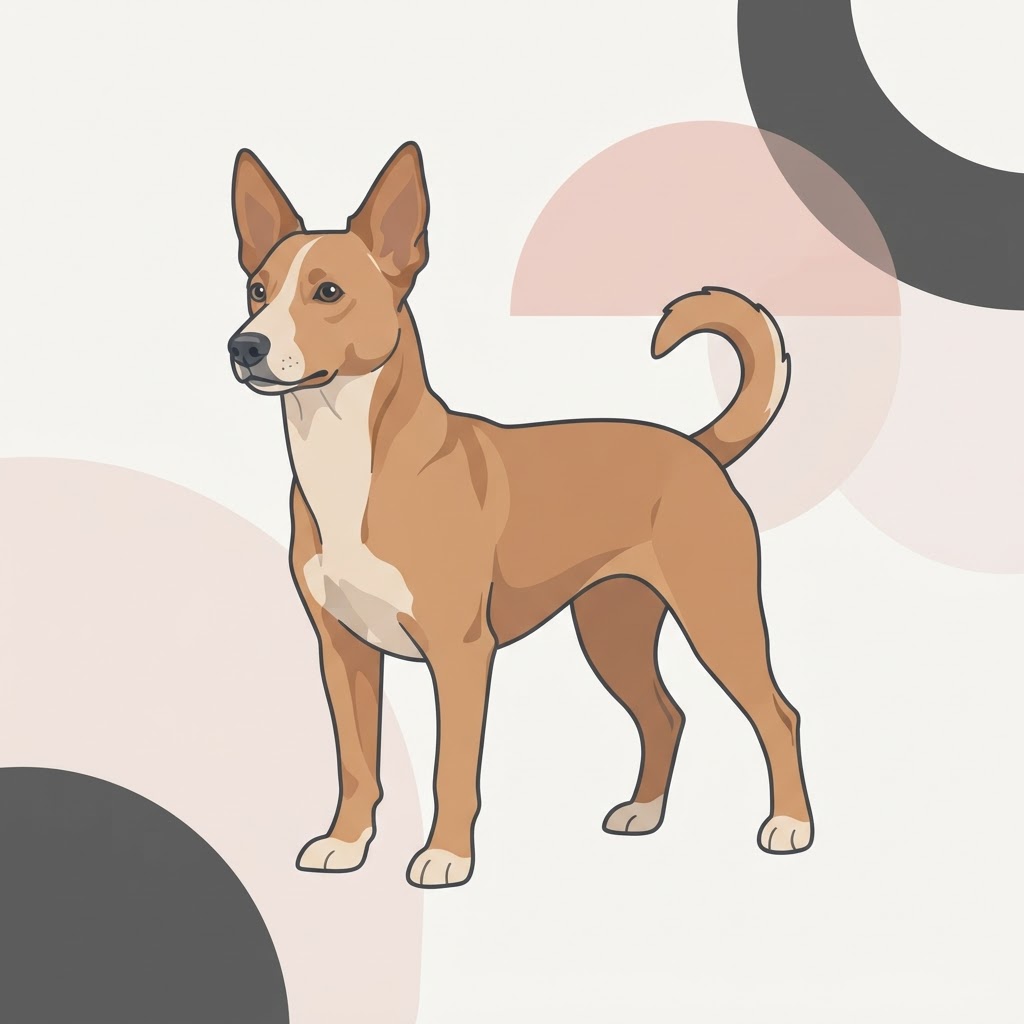
The Portuguese Podengo is an ancient sighthound-type breed from Portugal, bred in three sizes to hunt rabbits by sight, scent and sound across scrubland and rocky terrain.
At a glance
Quick facts
Size
Medium
Exercise needs
1+ hour daily
Home size suited to
Small to medium home
Grooming frequency
Weekly brush, hand-strip a few times a year
Coat length
Wiry
Sheds
Little, needs stripping instead
Lifespan
12-15 years
Town or country
Happiest in the country
Garden size needed
Small to medium
Where it comes from
Origins of the Portuguese Podengo
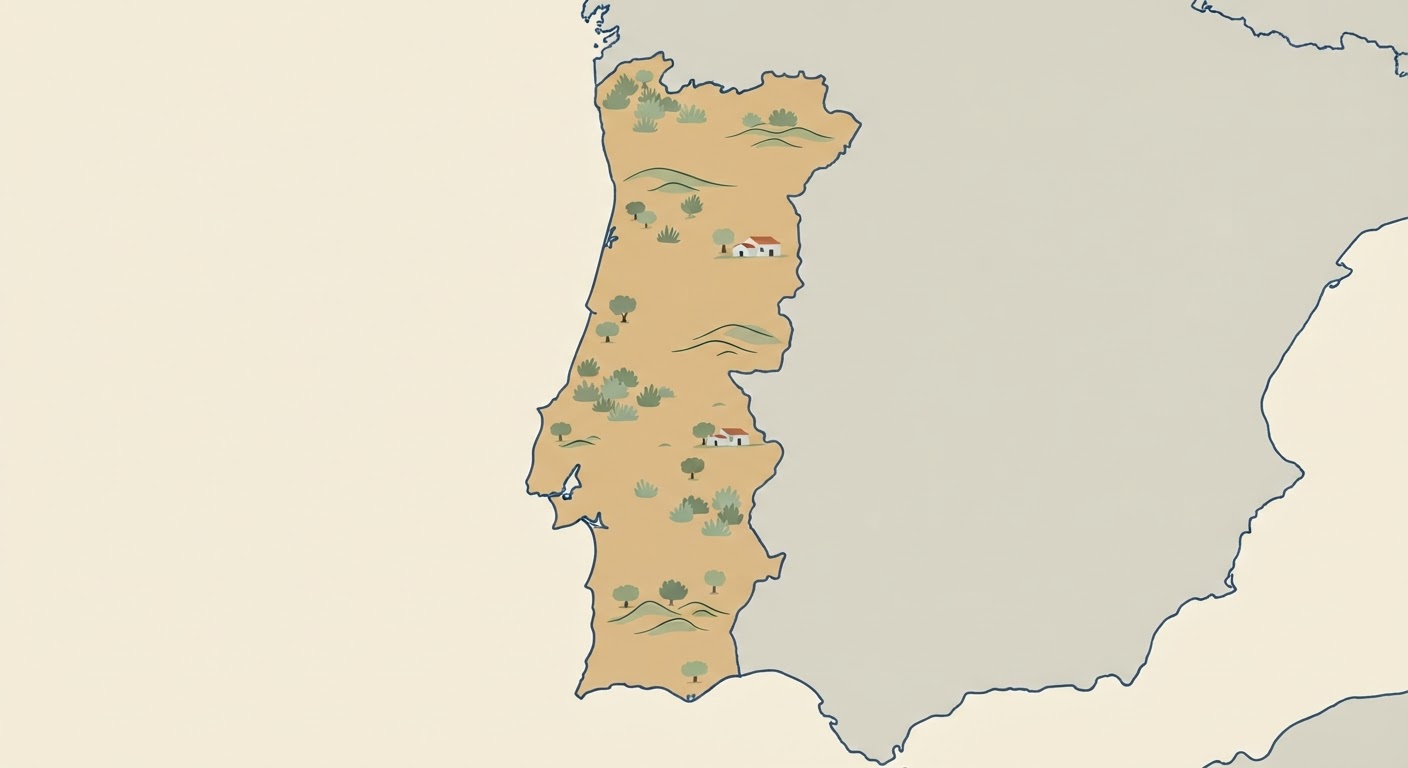
Shaped by centuries of rabbit hunting across Portuguese scrubland and rocky terrain, where a tough, agile dog able to work through dense mato mattered far more than refined looks. Three sizes developed to suit different quarry and cover.
- Region
- Rural Portugal (scrubland regions)
- Climate it was bred for
- Mediterranean, dry, warm summers
- Original job
- Hunting rabbits in packs
The long read
About the breed
The breed's ancestors likely arrived in the Iberian Peninsula with Phoenician traders over two thousand years ago, and the Podengo developed regionally across Portugal as a practical rabbit-hunting dog, working in packs to flush and course game through dense scrub (mato) where a fast, wiry, tough dog with a keen nose mattered more than elegant lines. The three sizes, Pequeno (small), Medio (medium) and Grande (large), developed for different terrain and quarry, with the Pequeno commonly used to hunt in burrows and dense undergrowth.
Living with a Podengo means living with a dog that is alert, energetic and often quite vocal, a legacy of pack hunting where noise helped coordinate the group and flush game. They come in both smooth and wire coats, both low maintenance, needing only occasional brushing. Podengos are intelligent and can be independent-minded, and their strong prey drive means recall around small animals needs careful management; secure fencing is essential as they are enthusiastic and persistent chasers. With their own family they tend to be affectionate and playful, and the Pequeno in particular has become popular purely as a companion.
Today the Pequeno and Medio sizes are increasingly seen outside Portugal as companion dogs, while the Grande remains rarer and closer to its working roots. The breed suits active owners who enjoy a characterful, alert dog and can provide secure outdoor space and consistent training.
Living with one
Temperament & needs
Our own ratings, based on the breed standard and how these dogs behave in ordinary homes.
Friendliness
3/5
How openly the Portuguese Podengo greets people it does not know.
Trainability
3/5
Intelligent but independent-minded.
Energy
5/5
Needs vigorous daily exercise and mental stimulation.
Barking
4/5
Vocal, used noise to coordinate pack hunting.
Grooming
2/5
Smooth or wire coat needs only occasional brushing.
Suits a first-time owner
2/5
How forgiving the Portuguese Podengo is for someone taking on their first dog.
Sociability
3/5
Affectionate with family, wary of unfamiliar dogs.
Independence
4/5
Bred to work at a distance from the hunter.
Illustrated breed standard
The points of the breed
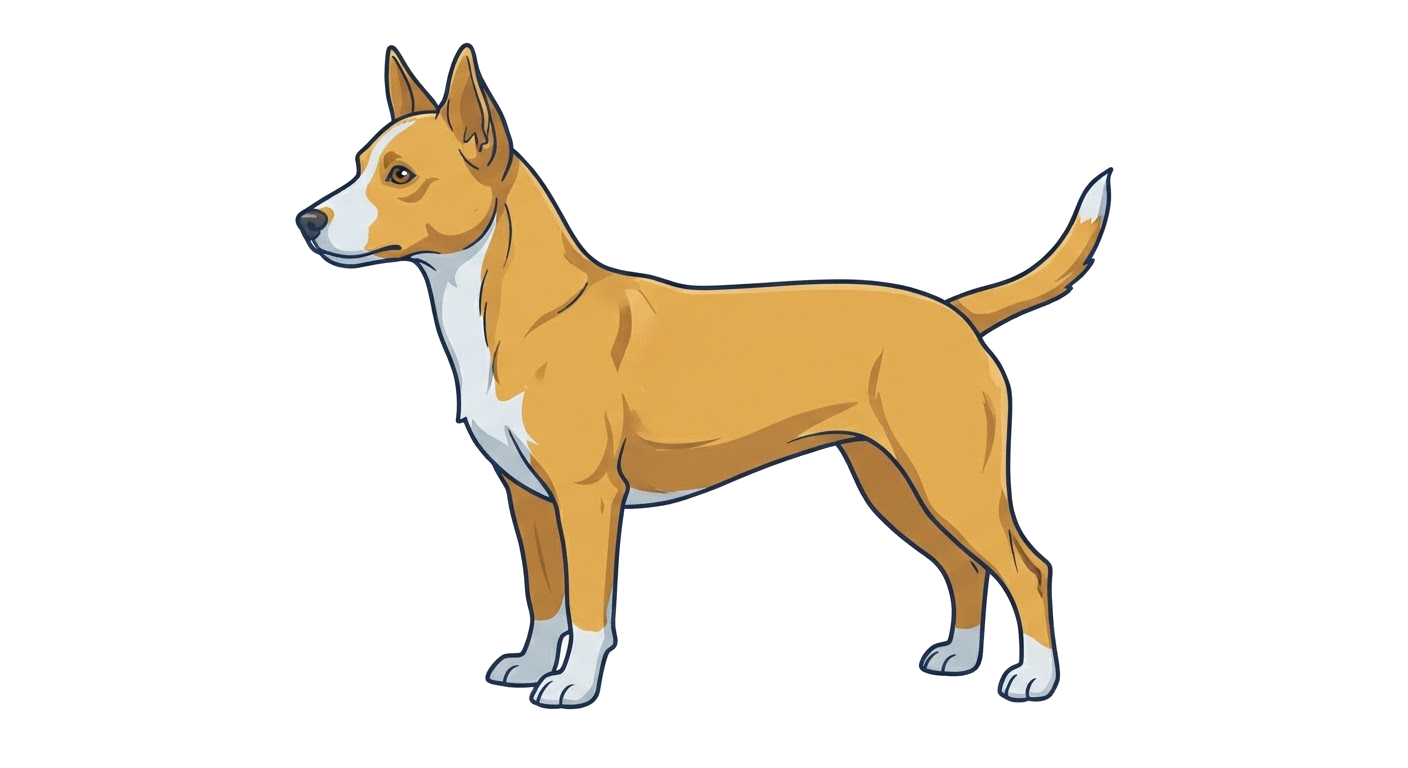
Hover or tap a numbered point to read what the standard asks for.
Point 1
Skull
The Portuguese Podengo's skull is judged on balance rather than size — proportionate to the body, with a clean cheek and a stop typical of the breed. Coarseness or an over-refined head are both faulted.
Colours & patterns
Recognised coats
Which coats the standard accepts — and which are simply popular.
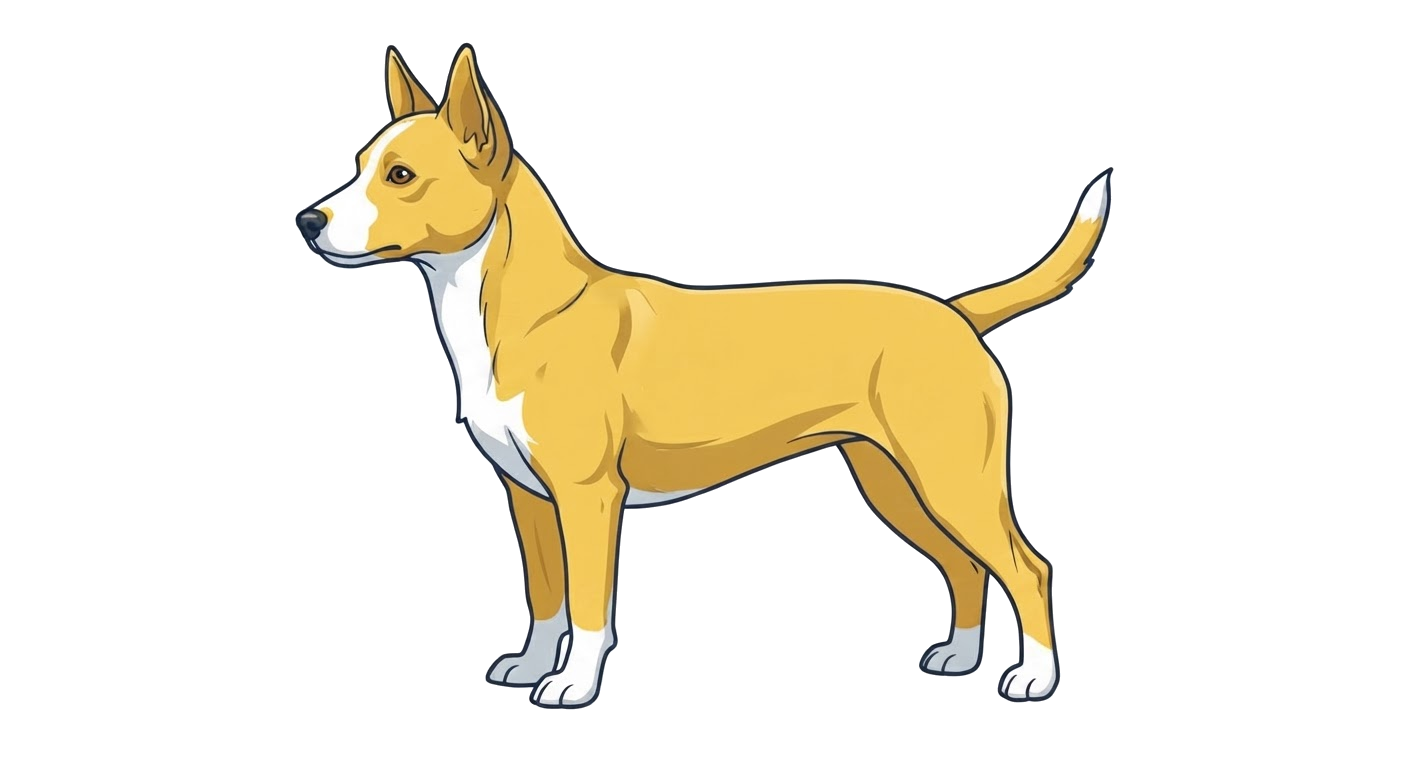
Yellow
Standard colour
Common solid colour.
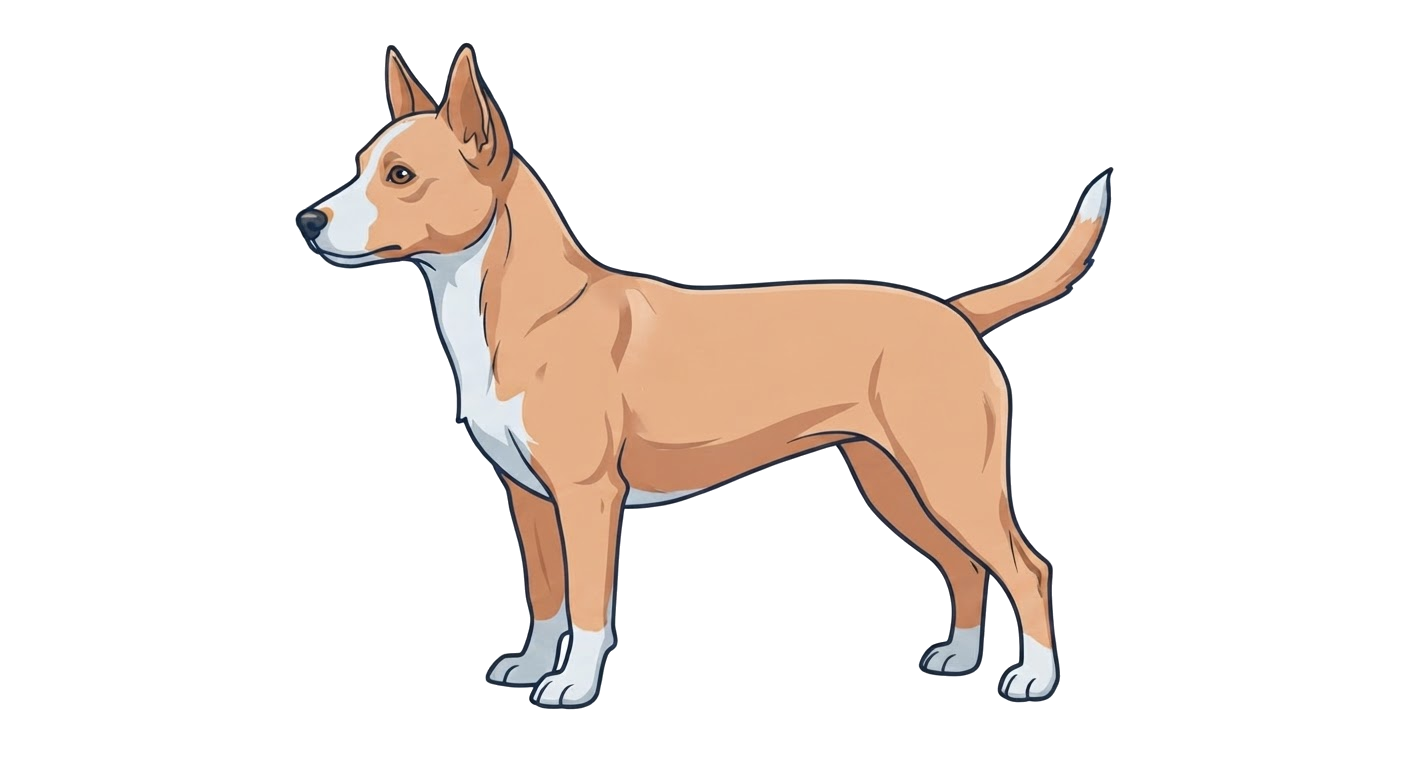
Fawn
Standard colour
Warm tan shade.
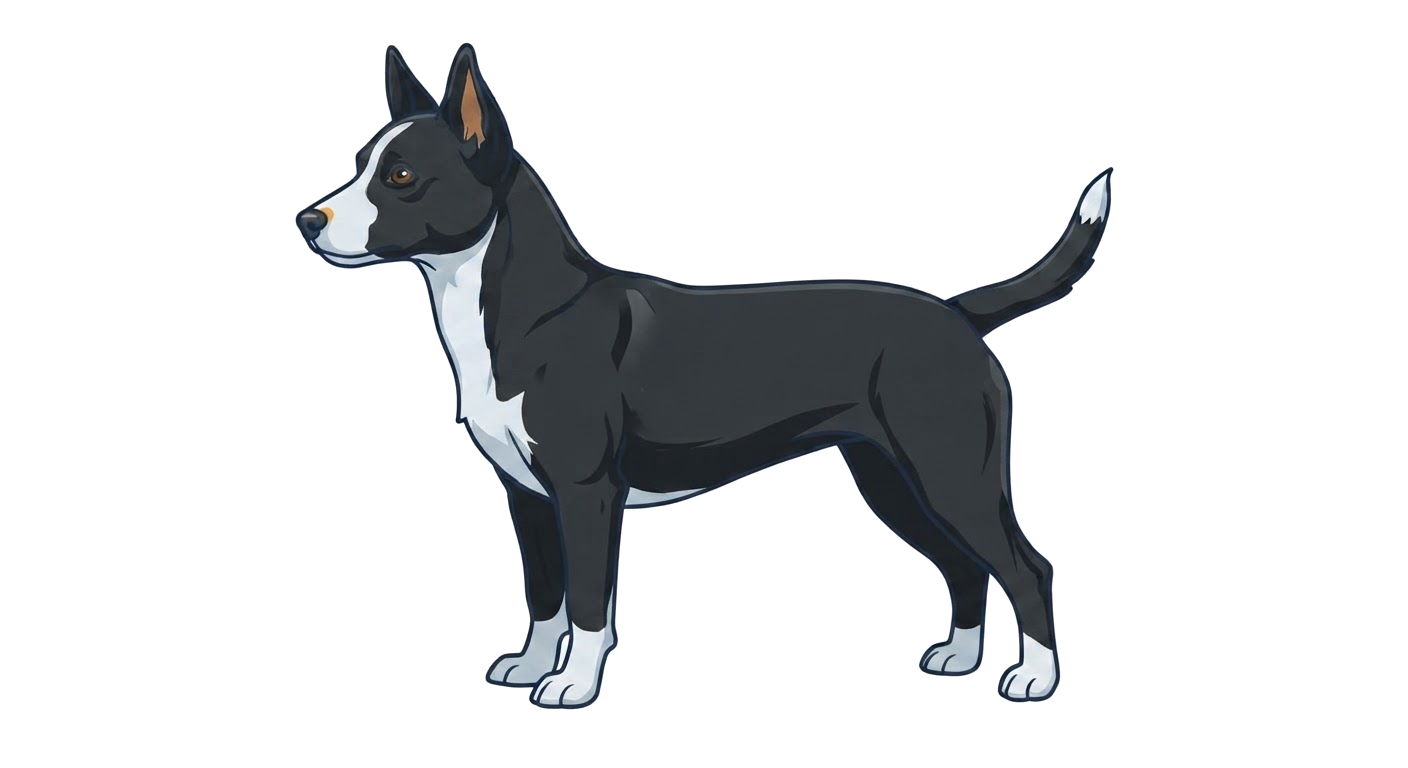
Black
Standard colour
Solid, less common than fawn or yellow.
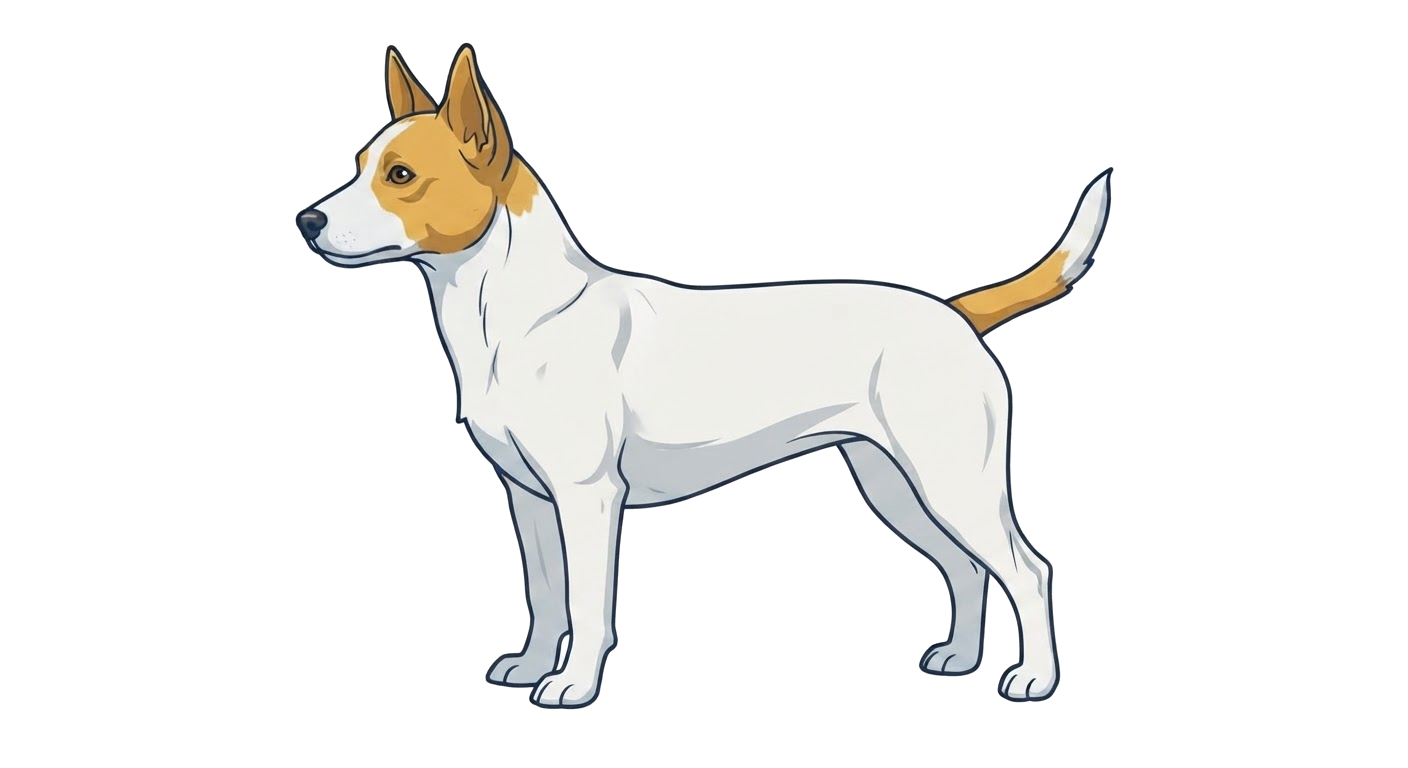
White with markings
Standard colour
White base with patches of colour.
Timeline
History & development
antiquity
Phoenician-era origins
Ancestors of the breed likely arrive in the Iberian Peninsula with Phoenician traders.
medieval period
Regional development
Podengos develop regionally across Portugal as pack-hunting rabbit dogs.
1954
Standard established
The Portuguese Kennel Club formalises the breed standard covering all three sizes.
2000s
International spread
Pequeno and Medio Podengos begin to gain popularity as companion dogs outside Portugal.
Reference
Breed standard summary
- body
- Rectangular, well-muscled, slight tuck-up.
- coat
- Smooth or wire, weather-resistant.
- ears
- Erect, triangular, highly mobile.
- eyes
- Small, almond-shaped, honey to brown.
- gait
- Light, elastic, energetic.
- head
- Pyramidal, wedge-shaped, flat skull.
- size
- Small to medium depending on variety
- tail
- Thick at the base, tapering, carried in a sickle curve.
- colour
- Yellow, Fawn, Black, White with markings. Colours outside this list are seen but are not accepted by the kennel clubs.
- temperament
- Typical of the breed: strongest in energy, independence, barking. Nervousness or aggression are serious faults in the show ring and in the home.
- general appearance
- Lean, wedge-headed, alert hunting dog in three sizes.
Health
What to screen for
Green means little to worry about, amber means ask the breeder for test results, red means manage it actively.
Patella luxation
Screen for it
Ask for knee checks on breeding stock.
Progressive retinal atrophy
Screen for it
DNA testing recommended where available.
Dental crowding
Low concern
Common in smaller sizes; monitor with regular checks.
General information only — always speak to your vet about your own dog.
From real owners
Dogs like this
Portuguese Podengos added by PawPoint members through their pet passports. Share yours to appear here.
Loading the wall…
Made for the Portuguese Podengo
The book, plus prints, hoodies and mugs using our own Portuguese Podengo illustration — and one everyday accessory that suits any dog.

The book
Pawpoint: The Complete Dog Breed Book
Every officially recognised breed plus the unofficial ones nobody else documents. 400+ pages, hardback, printed and shipped from the UK.
Own stock — shipped by us
Framed poster
Portuguese Podengo Framed Poster
Museum-weight print of our Portuguese Podengo illustration, framed or unframed.
Printed to order
Hoodie
Portuguese Podengo Hoodie
Heavyweight hoodie carrying the Portuguese Podengo illustration on the chest.
Printed to order
Mug
Portuguese Podengo Mug
Ceramic mug with the Portuguese Podengo illustration wrapped around it.
Printed to order
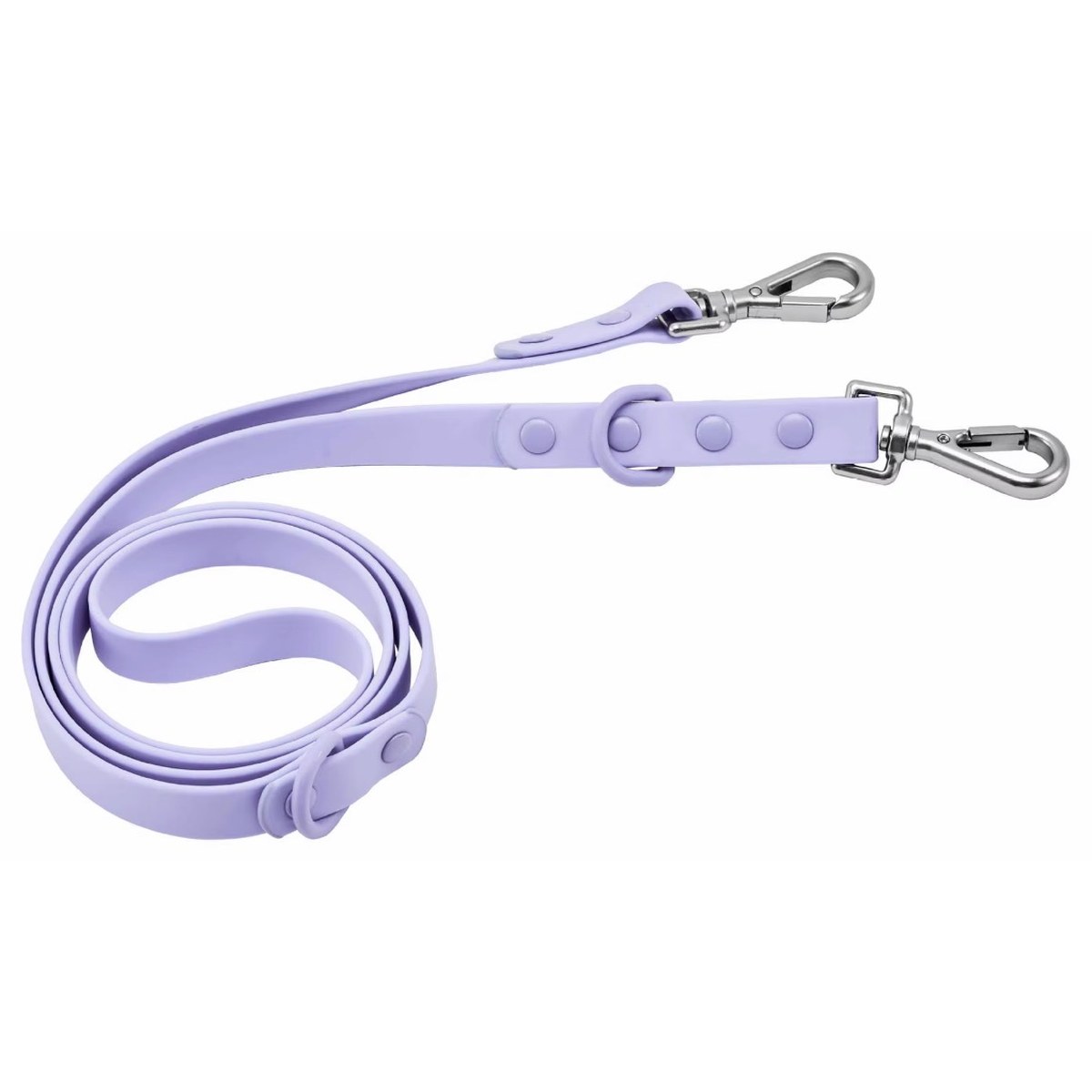
Accessory
Standard Lead
Padded-handle 1.2m lead in Pawpoint tan.
Fits any dog

Pawpoint on YouTube
Watch the full Portuguese Podengo video
Breed deep-dives, history and honest ownership talk. New film every week.
Watch now