
Portuguese Water Dog
POR-chuh-geez WAW-tuhr
Portugal· Algarve coast, Portugal
The Portuguese Water Dog is a strong, curly-coated working breed developed along Portugal's Atlantic coast to help fishermen by retrieving nets, herding fish and carrying messages between boats.

At a glance
Quick facts
- Size
- Medium
- Exercise needs
- 1.5+ hours daily including swimming where possible
- Home size suited to
- Small to medium home
- Grooming frequency
- Brush every other day, clip regularly
- Coat length
- Curly
- Sheds
- Very little
- Lifespan
- 11-13 years
- Town or country
- Either, with enough exercise
- Garden size needed
- Small to medium
Where it comes from
Origins of the Portuguese Water Dog
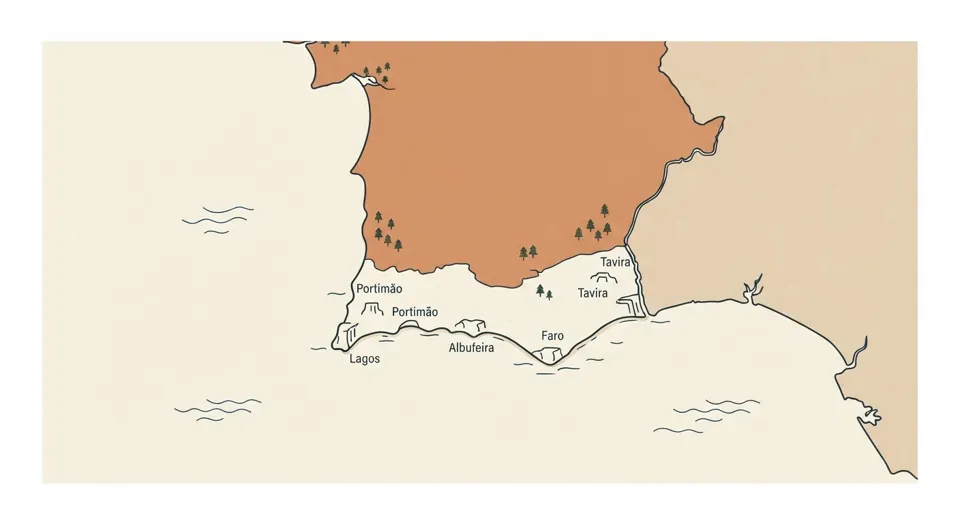
Worked the fishing fleets of Portugal's Algarve coast for centuries, diving and swimming in the Atlantic to retrieve nets and herd fish. The coastal, often rough water shaped a dog built for strength and stamina in the sea.
- Region
- Algarve coast, Portugal
- Climate it was bred for
- Mediterranean coastal, mild and windy
- Original job
- Retrieving fishing nets and herding fish
The long read
About the breed
For centuries the breed worked the fishing fleets out of the Algarve and other Portuguese coastal towns, diving to retrieve broken nets, herding fish into nets, and swimming messages and equipment between boats and shore, a job that demanded strength, stamina and total comfort in rough water. The traditional working clip, hair left long over the chest and hindquarters, shaved short elsewhere, mirrors the Poodle's for the same reason: warmth where it mattered, minimal drag while swimming. As Portugal's fishing industry mechanised through the 20th century the breed nearly disappeared, saved chiefly through the efforts of Vasco Bensaude, who began an organised breeding programme in the 1930s from the surviving working dogs.
Living with a Portuguese Water Dog means living with an energetic, water-obsessed, highly trainable dog. They need substantial daily exercise, ideally including swimming, and enough mental engagement to satisfy a genuinely working mind, otherwise boredom shows up as chewing or excessive barking. The curly, dense coat does not shed much, appealing to some allergy sufferers, but mats without regular brushing and needs clipping every couple of months. They are typically very people-oriented, good with children, and thrive in a household that treats them as an active participant in daily life rather than a decoration.
Today the breed is popular as a family companion, notably kept by the Obama family in the White House, and remains active in dock diving and water trial sports. It suits owners with time for real exercise, water access if possible, and a taste for a clever, engaged dog.
Living with one
Temperament & needs
Our own ratings, based on the breed standard and how these dogs behave in ordinary homes.
Friendliness
5/5
How openly the Portuguese Water Dog greets people it does not know.
Trainability
5/5
Highly intelligent, eager to work.
Energy
5/5
Needs vigorous daily exercise, ideally swimming.
Barking
3/5
Can bark from boredom without enough exercise.
Grooming
4/5
Curly coat needs clipping every couple of months.
Suits a first-time owner
3/5
How forgiving the Portuguese Water Dog is for someone taking on their first dog.
Sociability
5/5
Very people-oriented, good with children.
Independence
2/5
Prefers to be involved in family activity.
Illustrated breed standard
The points of the breed
Hover or tap a numbered point to read what the standard asks for.
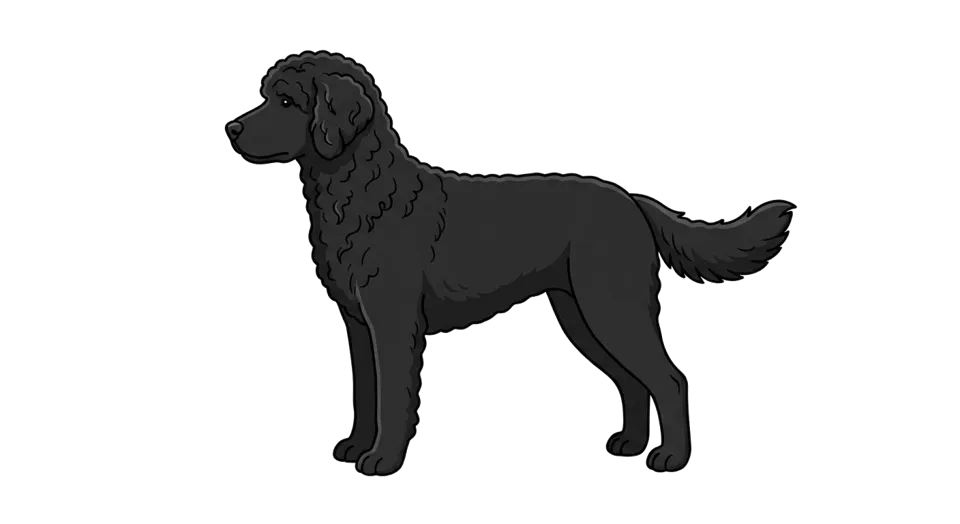
Point 1
Skull
The Portuguese Water Dog's skull is judged on balance rather than size — proportionate to the body, with a clean cheek and a stop typical of the breed. Coarseness or an over-refined head are both faulted.
Colours & patterns
Recognised coats
Which coats the standard accepts — and which are simply popular.
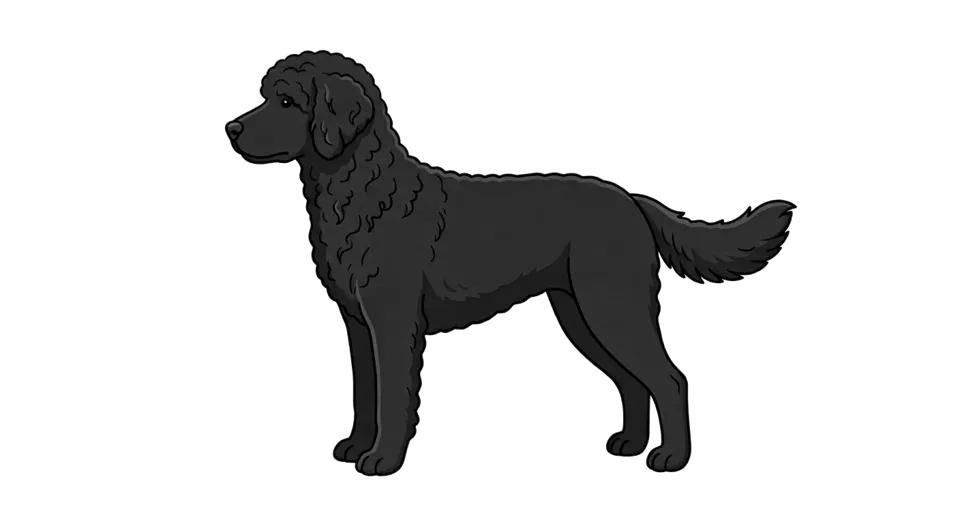
Black
Standard colour
Common solid colour, sometimes with white markings.

Brown
Standard colour
Rich solid brown.
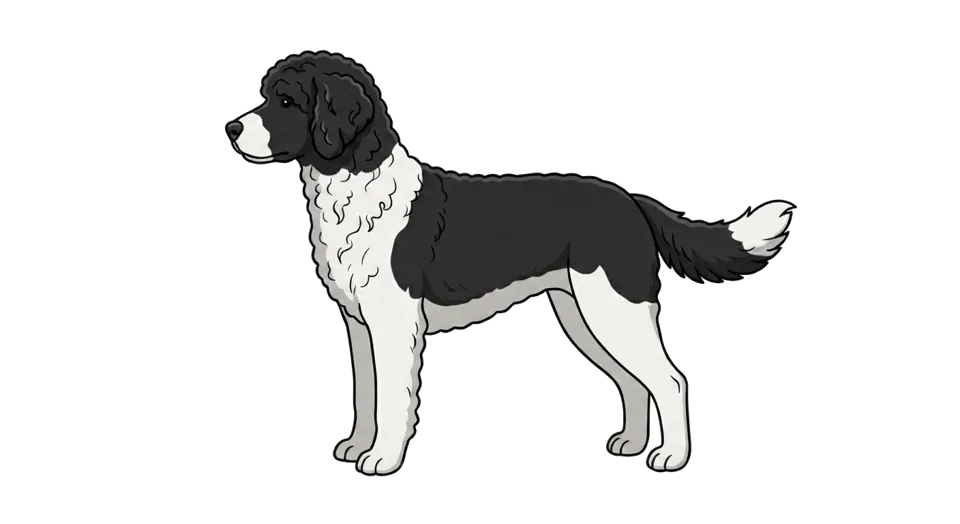
Black and white
Standard colour
Common patched combination.

White
Standard colour
Less common, solid white.
Timeline
History & development
medieval period
Working origins
The breed develops along Portugal's Atlantic coast to assist fishermen with nets and messages.
1930s
Vasco Bensaude's programme
Vasco Bensaude begins an organised breeding programme to save the declining working population.
1972
US recognition
The American Kennel Club recognises the breed as fanciers establish it outside Portugal.
2009
White House fame
The Obama family's Portuguese Water Dogs bring the breed significant public attention.
Reference
Breed standard summary
- body
- Broad chest, well-sprung ribs.
- coat
- Curly or wavy, single-coated, dense.
- ears
- Heart-shaped, set above eye level.
- eyes
- Round to slightly almond, black or brown.
- gait
- Powerful, well-coordinated.
- head
- Large, well-proportioned to the body.
- size
- Medium
- tail
- Thick at the base, carried in a curl over the back when alert.
- colour
- Black, Brown, Black and white, White. Colours outside this list are seen but are not accepted by the kennel clubs.
- temperament
- Typical of the breed: strongest in energy, trainability, sociability. Nervousness or aggression are serious faults in the show ring and in the home.
- general appearance
- Robust, medium-sized, well-proportioned working dog.
Health
What to screen for
Green means little to worry about, amber means ask the breeder for test results, red means manage it actively.
Hip dysplasia
Screen for it
Ask for hip scores on both parents.
GM1 storage disease
Watch closely
DNA test both parents; a serious inherited condition in the breed.
Progressive retinal atrophy
Screen for it
DNA testing available and recommended.
Juvenile dilated cardiomyopathy
Watch closely
Ask about cardiac screening history in the line.
General information only — always speak to your vet about your own dog.
From real owners
Portuguese Water Dogs in the PAWPOINT Pack
Portuguese Water Dogs added by PawPoint members through their pet passports. Share yours to appear here.
Loading the wall…
Made for the Portuguese Water Dog
The book, plus hoodies, tees and mugs featuring the Portuguese Water Dog.