
Presa Canario
"PRAY-sa can-AH-ree-oh"
Spain· Gran Canaria, Canary Islands
The Presa Canario, or Perro de Presa Canario, is a large, powerful molosser from the Canary Islands, originally bred for guarding livestock and property and, historically, for catch work with cattle.

At a glance
Quick facts
- Size
- Giant
- Exercise needs
- 1 hour daily, structured
- Home size suited to
- Large home with space to stretch out
- Grooming frequency
- Weekly brush, hand-strip a few times a year
- Coat length
- Wiry
- Sheds
- Little, needs stripping instead
- Lifespan
- 9-11 years
- Town or country
- Better suited to the country
- Garden size needed
- Large and securely fenced
Where it comes from
Origins of the Presa Canario

Developed on Gran Canaria from crosses of native farm dogs with imported mastiff and bulldog stock brought by British traders. The island's isolated smallholdings needed a powerful, self-reliant guardian capable of holding cattle and defending remote farms.
- Region
- Gran Canaria, Canary Islands
- Climate it was bred for
- Subtropical, dry, warm year-round
- Original job
- Guarding livestock and property, cattle work
The long read
About the breed
The breed developed on Gran Canaria from the 1800s through crosses of native Canary farm dogs (Bardino Majorero) with imported mastiff-type dogs, including English bulldog and mastiff stock, brought over during trade with Britain. The result was a heavy-boned, muscular guardian used to hold cattle and protect isolated farms, a role suited to the island's remote terrain and scattered smallholdings. Like several other molosser breeds, the Presa Canario was also historically used in dog fighting, a practice now illegal, which shaped both its reputation and, in some lines, its temperament.
Living with a Presa Canario is a serious commitment that suits only experienced dog owners. The breed is powerful, territorial by instinct, and requires early, extensive socialisation and firm, consistent training from a confident handler; without this, its guarding instincts can become a liability. Exercise needs are moderate but structured activity and mental engagement matter for a dog this large and strong-willed. Coat care is minimal, just occasional brushing, but the breed's size and strength mean secure containment, careful management around strangers and other animals, and awareness of breed-specific legislation are essential considerations before taking one on.
Today the Presa Canario is recognised by some kennel clubs and is banned or restricted in several countries due to its size and guarding intensity. It remains a working farm and guard dog in parts of the Canary Islands and suits only committed, experienced owners with the resources for thorough training and secure housing.
Living with one
Temperament & needs
Our own ratings, based on the breed standard and how these dogs behave in ordinary homes.
Friendliness
2/5
How openly the Presa Canario greets people it does not know.
Trainability
3/5
Capable but needs an experienced, consistent handler.
Energy
3/5
Moderate needs but benefits from structured activity.
Barking
2/5
Not prone to nuisance barking but will alert.
Grooming
1/5
Short coat needs only occasional brushing.
Suits a first-time owner
3/5
How forgiving the Presa Canario is for someone taking on their first dog.
Sociability
2/5
Territorial and reserved with strangers by instinct.
Independence
4/5
Strong-willed, bred to make guarding decisions alone.
Illustrated breed standard
The points of the breed
Hover or tap a numbered point to read what the standard asks for.
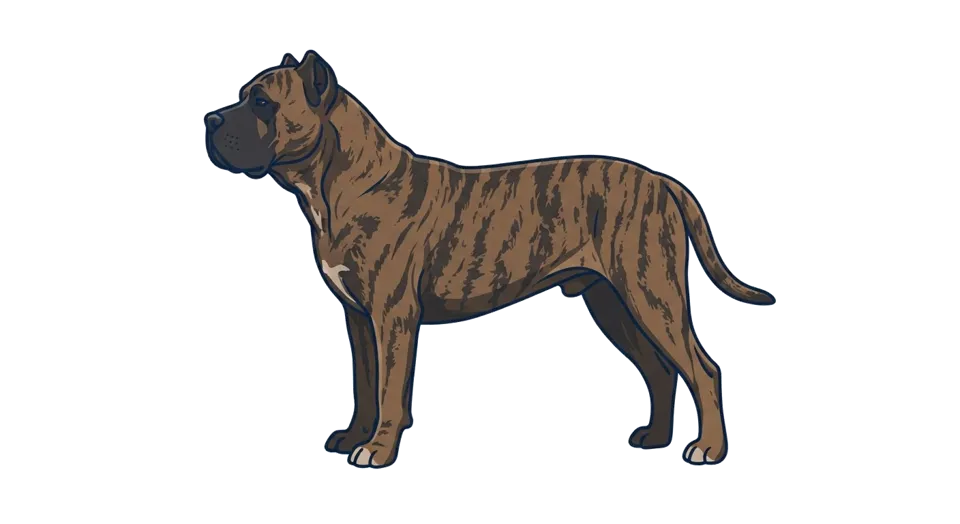
Point 1
Skull
The Presa Canario's skull is judged on balance rather than size — proportionate to the body, with a clean cheek and a stop typical of the breed. Coarseness or an over-refined head are both faulted.
Colours & patterns
Recognised coats
Which coats the standard accepts — and which are simply popular.

Fawn
Standard colour
Common brindle base colour.
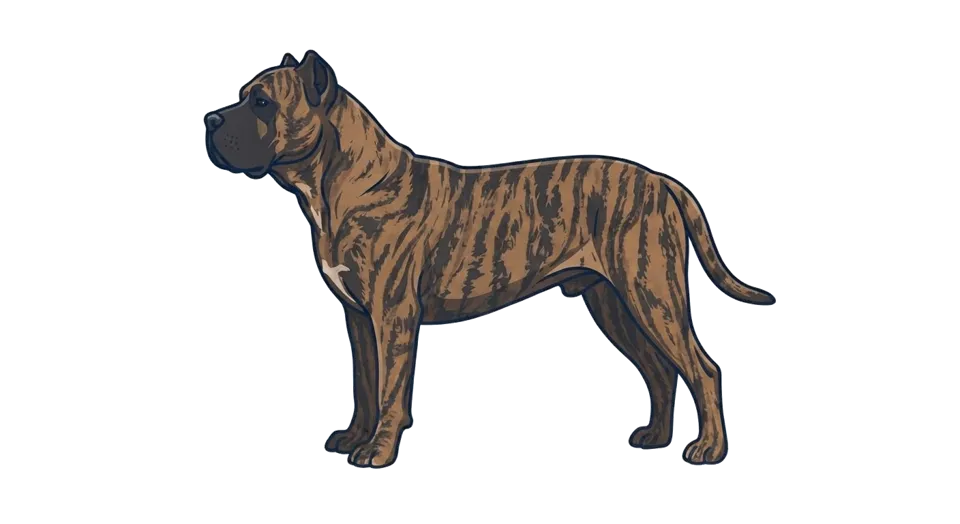
Brindle
Standard colour
Most typical and traditional colouring.
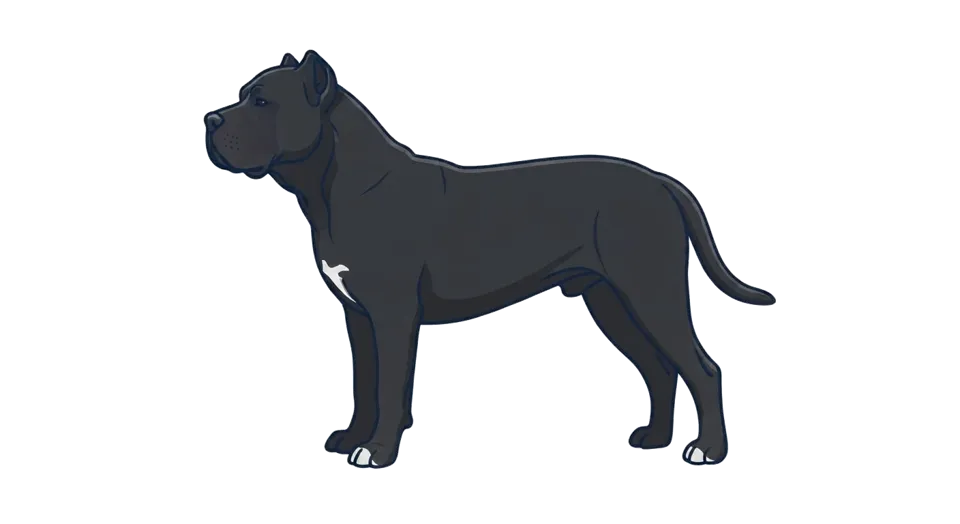
Black
Standard colour
Solid colour, less common.

Fawn with black mask
Standard colour
Classic combination seen in working lines.
Timeline
History & development
1800s
Island crossbreeding
Native Canary farm dogs are crossed with imported mastiff and bulldog stock traded from Britain.
early 1900s
Guard and catch dog role
The breed becomes established as a farm guardian and cattle-working dog across Gran Canaria.
1940s-1960s
Decline
Changing farm practices and legal restrictions on dog fighting reduce the working population significantly.
1970s-1980s
Revival efforts
Breed enthusiasts on the Canary Islands work to rebuild numbers and formalise a standard.
Reference
Breed standard summary
- body
- Rectangular, deep chest, muscular.
- coat
- Short, harsh, flat, close-fitting.
- ears
- Naturally dropped, often cropped in some countries though not recommended.
- eyes
- Medium, oval, dark to medium brown.
- gait
- Powerful, balanced, cat-like agility for its size.
- head
- Large, square, pronounced stop.
- size
- Giant
- tail
- Thick at the base, tapering.
- colour
- Fawn, Brindle, Black, Fawn with black mask. Colours outside this list are seen but are not accepted by the kennel clubs.
- temperament
- Typical of the breed: strongest in independence, energy, trainability. Nervousness or aggression are serious faults in the show ring and in the home.
- general appearance
- Massive, powerful, well-balanced molosser.
Health
What to screen for
Green means little to worry about, amber means ask the breeder for test results, red means manage it actively.
Hip dysplasia
Watch closely
Large, heavy breed; insist on hip scores for both parents.
Elbow dysplasia
Screen for it
Ask for elbow scoring certificates.
Bloat
Watch closely
Deep-chested; feed smaller meals and avoid exercise straight after eating.
Skin conditions
Low concern
Short coat generally low maintenance but check for irritation.
General information only — always speak to your vet about your own dog.
From real owners
Presa Canarios in the PAWPOINT Pack
Presa Canarios added by PawPoint members through their pet passports. Share yours to appear here.
Loading the wall…
Made for the Presa Canario
The book, plus hoodies, tees and mugs featuring the Presa Canario.