
Pug
PUG
China· Imperial China
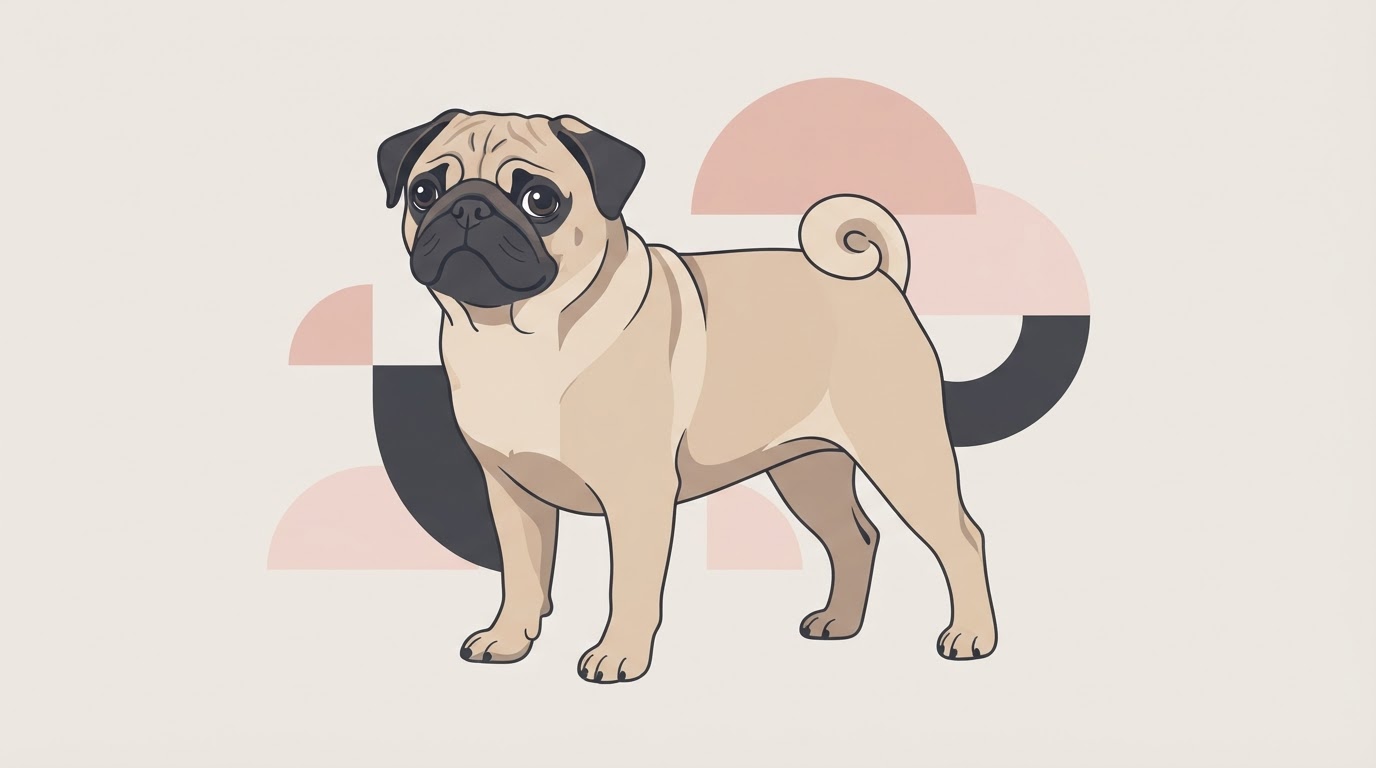
The Pug is a small, square, flat-faced companion breed originating in China, where it was bred purely to be a lap dog for the imperial court, and later carried to Europe by Dutch traders.
At a glance
Quick facts
Size
Small
Exercise needs
20-30 minutes daily, avoiding heat
Home size suited to
Flat or small home
Grooming frequency
Weekly brush
Coat length
Short
Sheds
Yes, heavily when moulting
Lifespan
12-15 years
Town or country
Either, happy in town
Garden size needed
Small garden or none
Where it comes from
Origins of the Pug

Bred purely for companionship in the imperial courts of ancient China, the Pug had no working role at all; its flat face and compact size were selected for appearance and lap-dog suitability rather than any outdoor function.
- Region
- Imperial China
- Climate it was bred for
- Varied, historically indoor palace life
- Original job
- Companion to Chinese imperial court
The long read
About the breed
Pugs date back at least to the Han dynasty and were kept by Chinese emperors as prized indoor companions, some housed in considerable luxury with their own guards. The Dutch East India Company brought Pugs to Europe in the 16th century, and the breed became a favourite of European royalty, most famously William of Orange, whose Pug supposedly warned him of an assassination attempt in 1572, and later Josephine Bonaparte, who kept a Pug named Fortune as a confidant during her imprisonment. Queen Victoria's fondness for the breed in the 19th century further cemented its popularity in Britain.
Living with a Pug means managing a breed with real charm and real physical limitations. The flat face, a feature of its brachycephalic structure, restricts airflow and makes many Pugs prone to breathing difficulty, snoring, and overheating in warm weather or with exertion; walks should be modest and never in heat, and swimming is generally unsafe. Pugs are affectionate, comical and eager to be near their people, generally good with children and other pets, but they overeat readily and gain weight fast, so portion control matters. The coat sheds more than the short length suggests and needs regular brushing.
Today the Pug remains one of the most recognisable toy breeds, and increasing awareness of brachycephalic health problems has pushed some breeders to select for slightly longer muzzles and more open nostrils. It suits owners who want a calm, devoted companion and are prepared to manage the health trade-offs of a flat-faced breed carefully, including choosing a breeder who prioritises breathing function.
Living with one
Temperament & needs
Our own ratings, based on the breed standard and how these dogs behave in ordinary homes.
Friendliness
5/5
How openly the Pug greets people it does not know.
Trainability
3/5
Willing but can be food-motivated and stubborn.
Energy
2/5
Low to moderate needs, prone to overheating on exertion.
Barking
2/5
Generally quiet, more prone to snoring than barking.
Grooming
3/5
Short coat sheds more than expected; regular brushing needed.
Suits a first-time owner
4/5
How forgiving the Pug is for someone taking on their first dog.
Sociability
5/5
Extremely people-oriented and affectionate.
Independence
1/5
Wants to be close to its owner at all times.
Illustrated breed standard
The points of the breed
Hover or tap a numbered point to read what the standard asks for.
Point 1
Skull
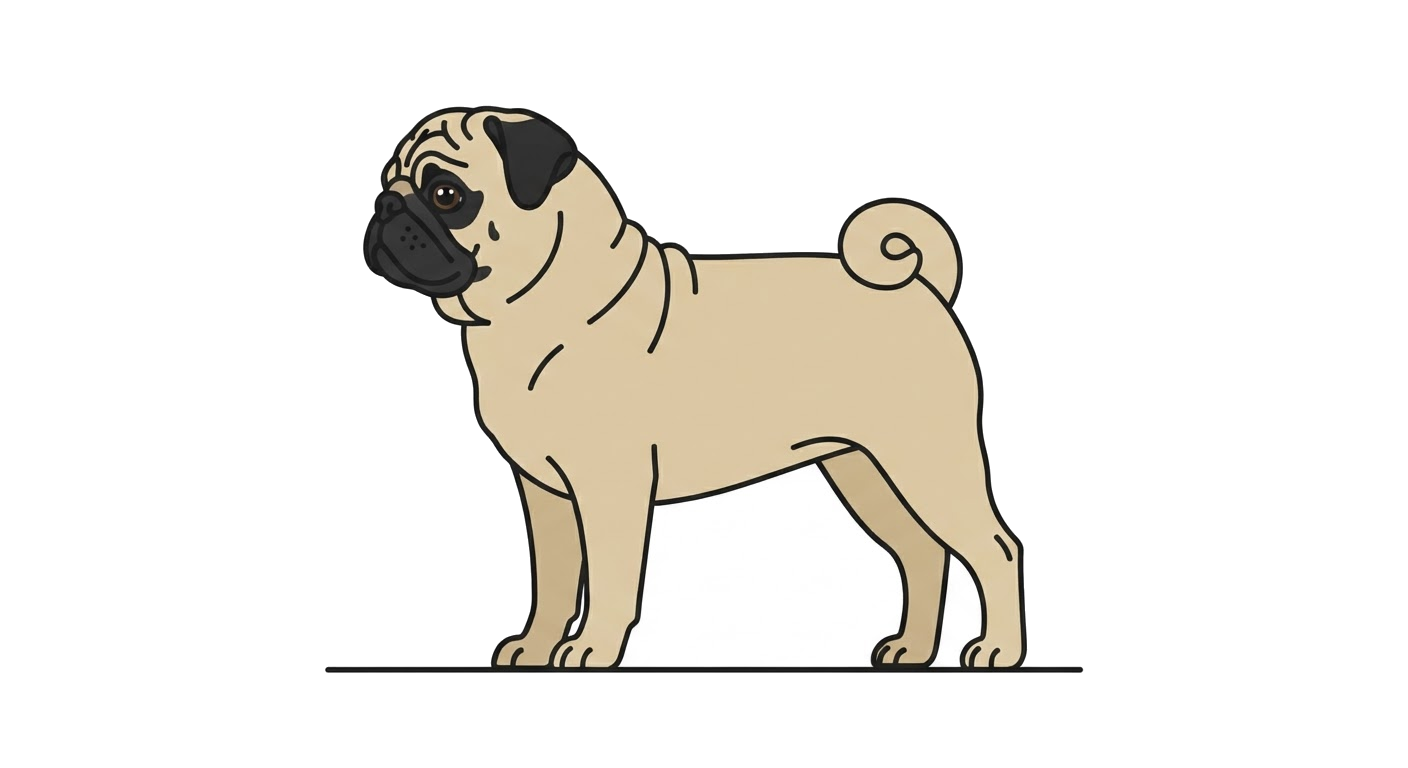
The Pug's skull is judged on balance rather than size — proportionate to the body, with a clean cheek and a stop typical of the breed. Coarseness or an over-refined head are both faulted.
Colours & patterns
Recognised coats
Which coats the standard accepts — and which are simply popular.
Fawn
Standard colour
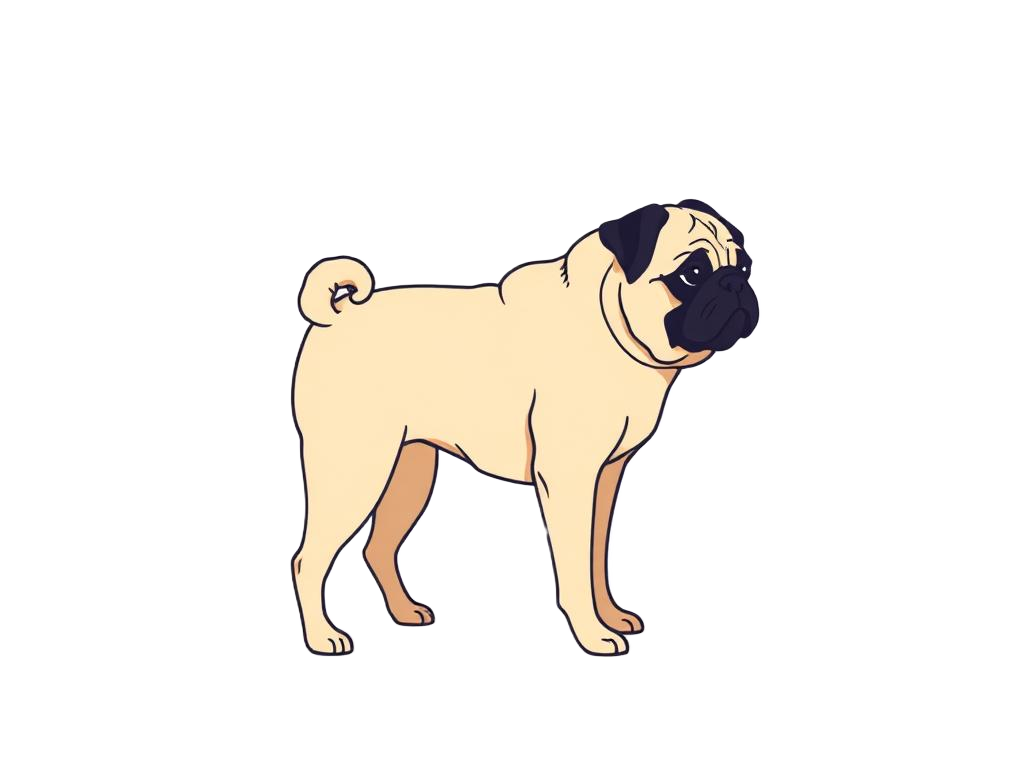
Most common colour, with a black mask.
Black
Standard colour
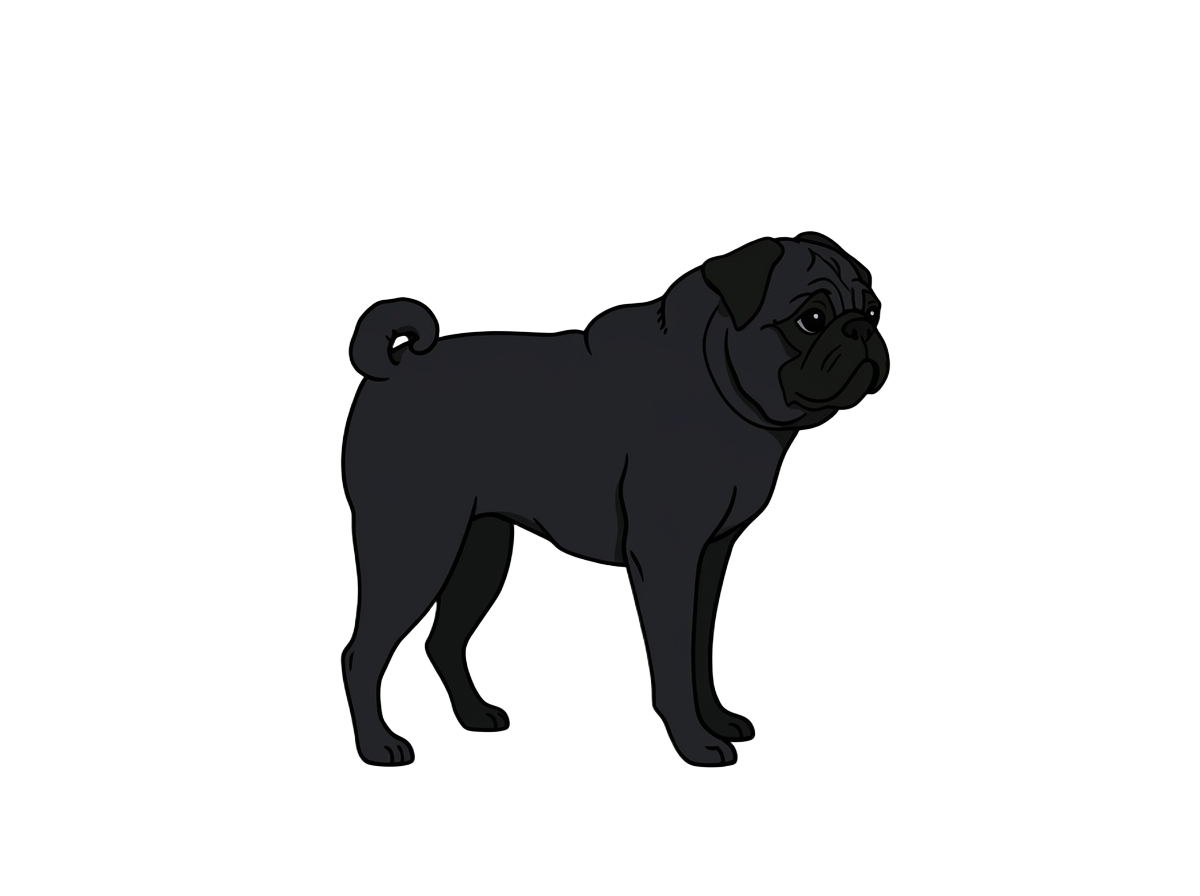
Solid colour, less common than fawn.
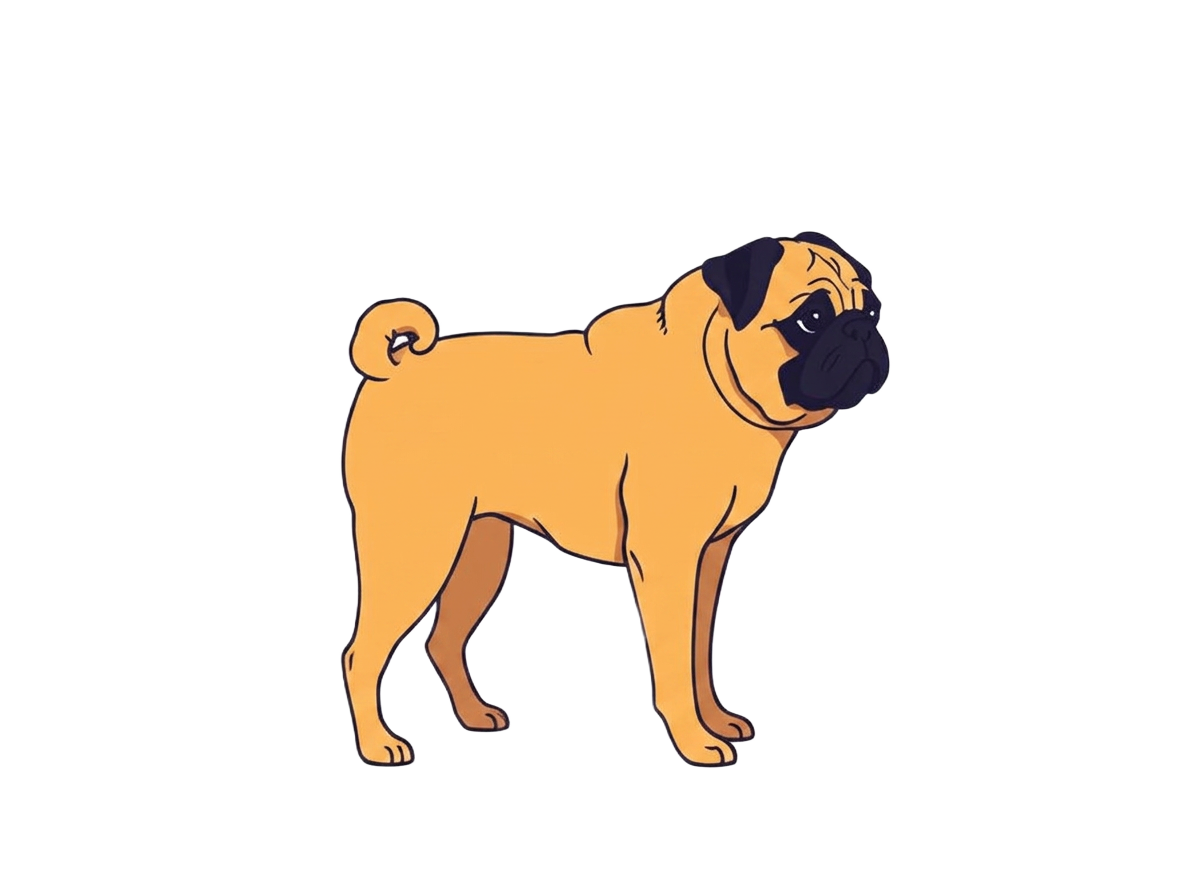
Apricot
Standard colour
Warmer variant of fawn.
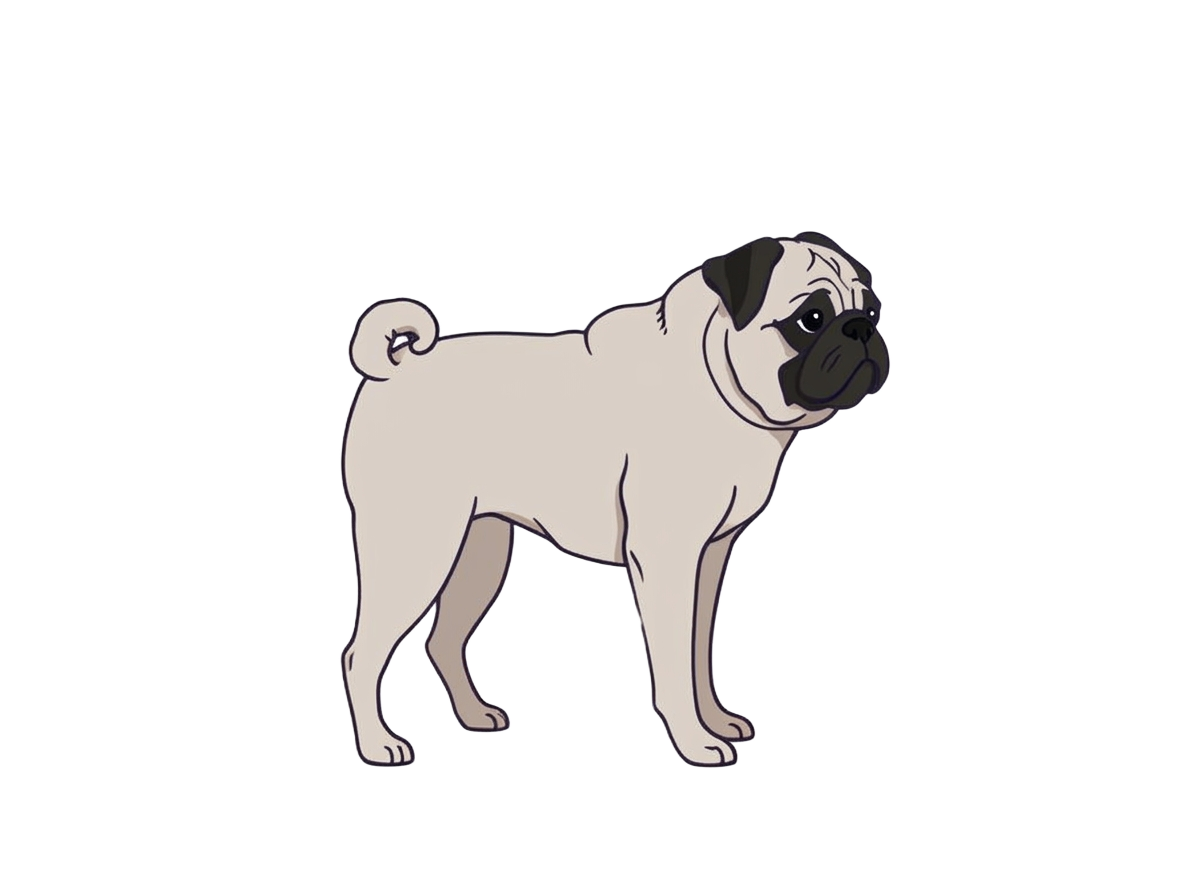
Silver fawn
Standard colour
Paler, cooler-toned fawn.
Timeline
History & development
Han dynasty
Ancient Chinese origins
Pug-type dogs are kept as prized companions in the Chinese imperial court.
1500s
Arrival in Europe
Dutch traders bring Pugs to Europe, where they become fashionable among royalty.
1572
William of Orange legend
A Pug is said to have alerted William of Orange to an assassination attempt, becoming a symbol in the Netherlands.
1800s
Victorian popularity
Queen Victoria's fondness for Pugs boosts the breed's popularity across Britain.
2000s
Health reform efforts
Growing concern over brachycephalic health issues leads some breeders to select for improved airways.
Reference
Breed standard summary
- body
- Short, compact, wide chest.
- coat
- Fine, smooth, short and glossy.
- ears
- Thin, small, either rose or button shaped.
- eyes
- Large, round, dark, prominent.
- gait
- Jaunty, sound, and confident.
- head
- Large, round, no indication of coarseness.
- size
- Small
- tail
- Curled tightly over the hip.
- colour
- Fawn, Black, Apricot, Silver fawn. Colours outside this list are seen but are not accepted by the kennel clubs.
- temperament
- Typical of the breed: strongest in sociability, trainability, grooming. Nervousness or aggression are serious faults in the show ring and in the home.
- general appearance
- Square, cobby, compact with a large round head.
Health
What to screen for
Green means little to worry about, amber means ask the breeder for test results, red means manage it actively.
Brachycephalic obstructive airway syndrome
Watch closely
Choose a breeder selecting for open nostrils and longer muzzles; avoid heat and overexertion.
Obesity
Watch closely
Prone to overeating; strict portion control needed.
Hemivertebrae
Screen for it
Can affect the screw tail's spine; ask about spinal history.
Eye injuries
Screen for it
Prominent eyes are vulnerable to scratches and ulcers.
General information only — always speak to your vet about your own dog.
From real owners
Dogs like this
Pugs added by PawPoint members through their pet passports. Share yours to appear here.
Loading the wall…
Made for the Pug
The book, plus prints, hoodies and mugs using our own Pug illustration — and one everyday accessory that suits any dog.
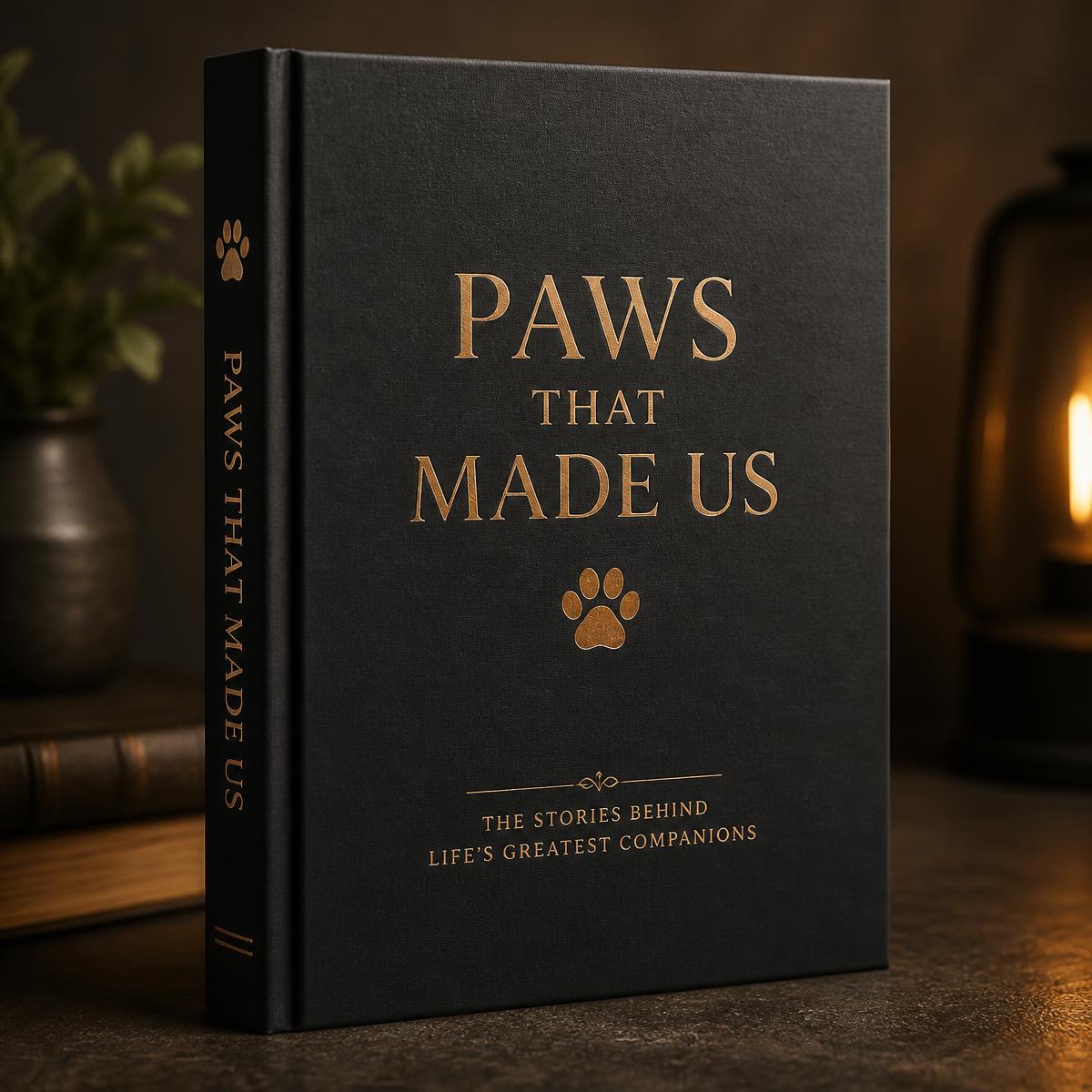
The book
Pawpoint: The Complete Dog Breed Book
Every officially recognised breed plus the unofficial ones nobody else documents. 400+ pages, hardback, printed and shipped from the UK.
Own stock — shipped by us
Framed poster
Pug Framed Poster
Museum-weight print of our Pug illustration, framed or unframed.
Printed to order
Hoodie
Pug Hoodie
Heavyweight hoodie carrying the Pug illustration on the chest.
Printed to order
Mug
Pug Mug
Ceramic mug with the Pug illustration wrapped around it.
Printed to order
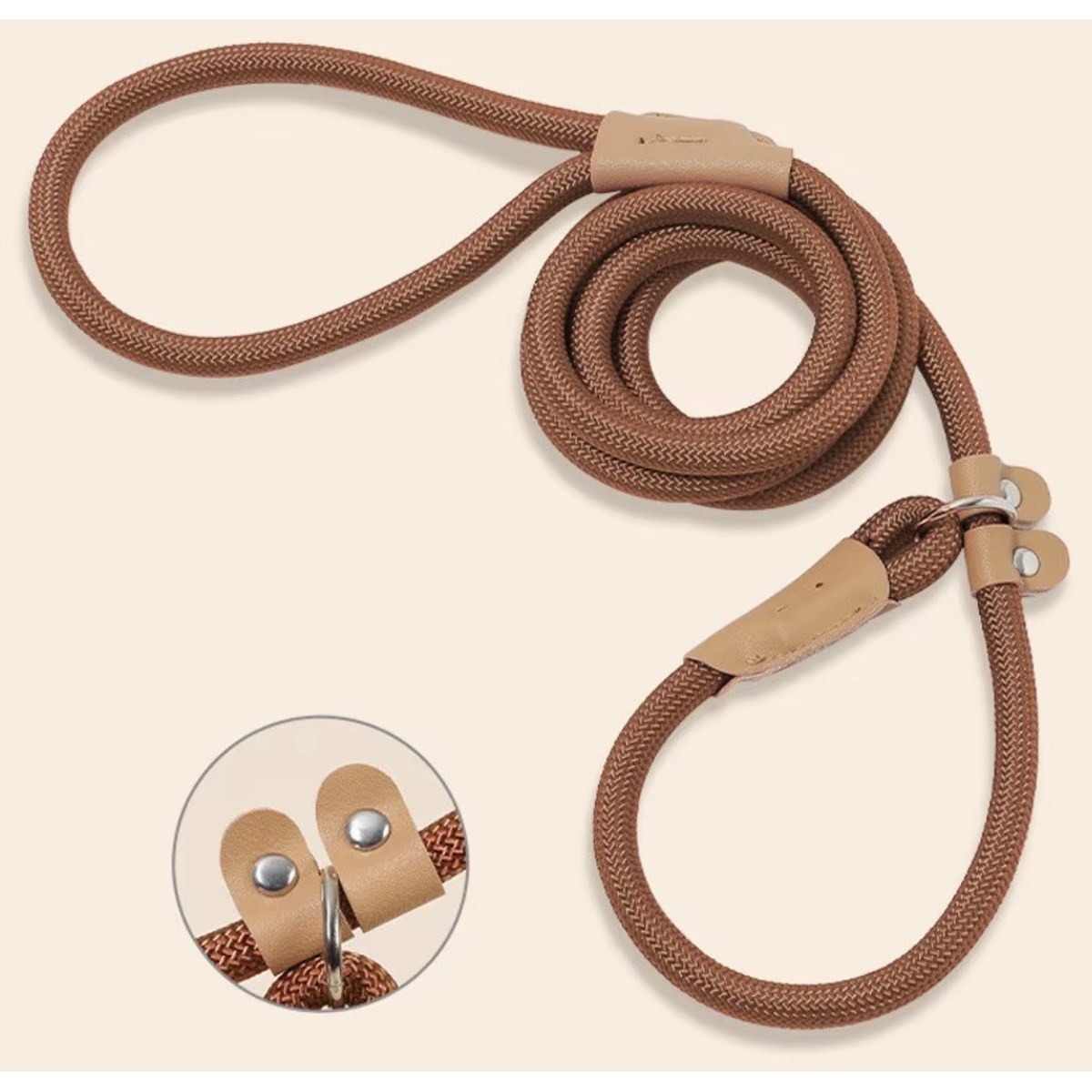
Accessory
Rope Slip Lead
Braided rope lead with a leather stop, 150cm. Good for training walks.
Fits any dog
Pawpoint on YouTube
Watch the full Pug video
Breed deep-dives, history and honest ownership talk. New film every week.
Watch now