
Rottweiler
"ROT-vy-ler"
Germany· Rottweil, Baden-Wurttemberg
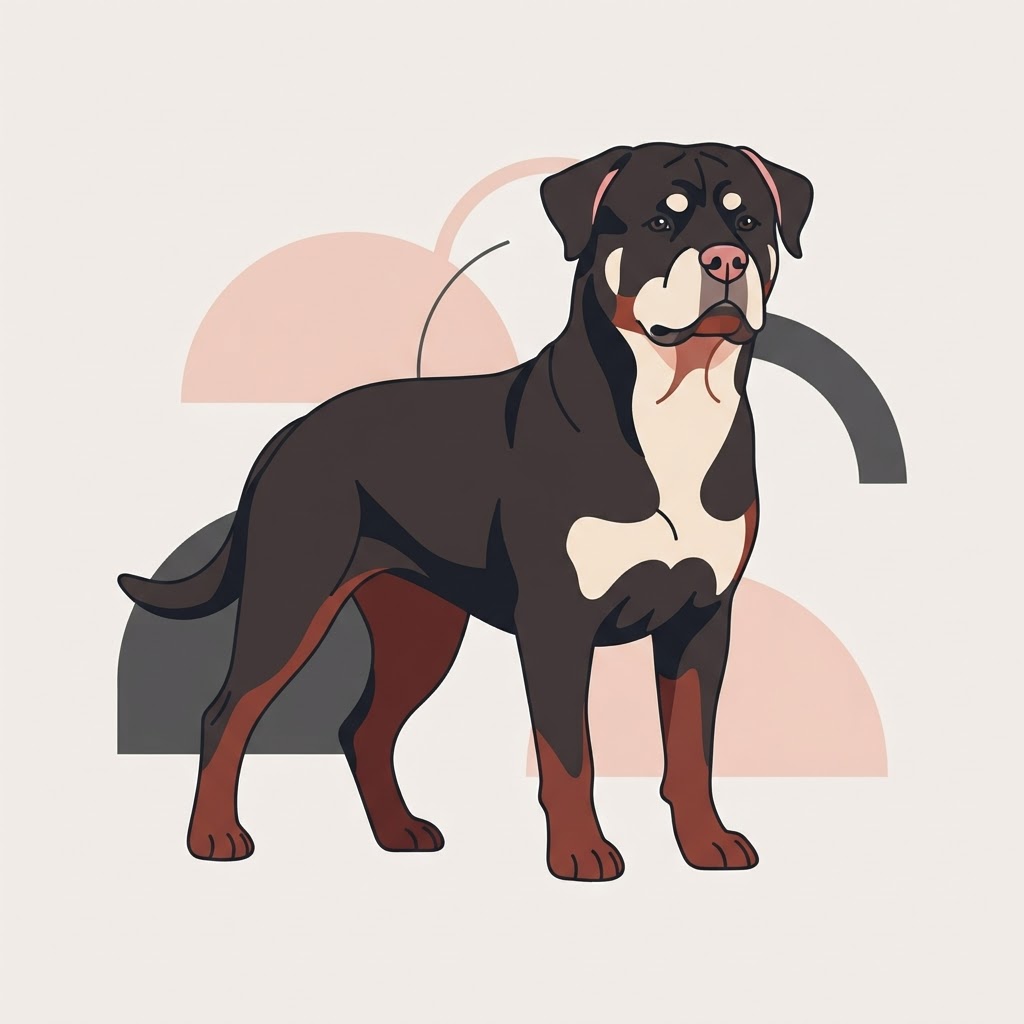
The Rottweiler is a large, powerful working breed from the German town of Rottweil, descended from Roman drover dogs and used for centuries to herd and guard cattle and later to pull carts for butchers.
At a glance
Quick facts
Size
Large
Exercise needs
1+ hour daily, structured
Home size suited to
Medium to large home
Grooming frequency
Twice weekly brush
Coat length
Medium
Sheds
Yes, heavily when moulting
Lifespan
9-10 years
Town or country
Either, with enough exercise
Garden size needed
Medium or larger
Where it comes from
Origins of the Rottweiler
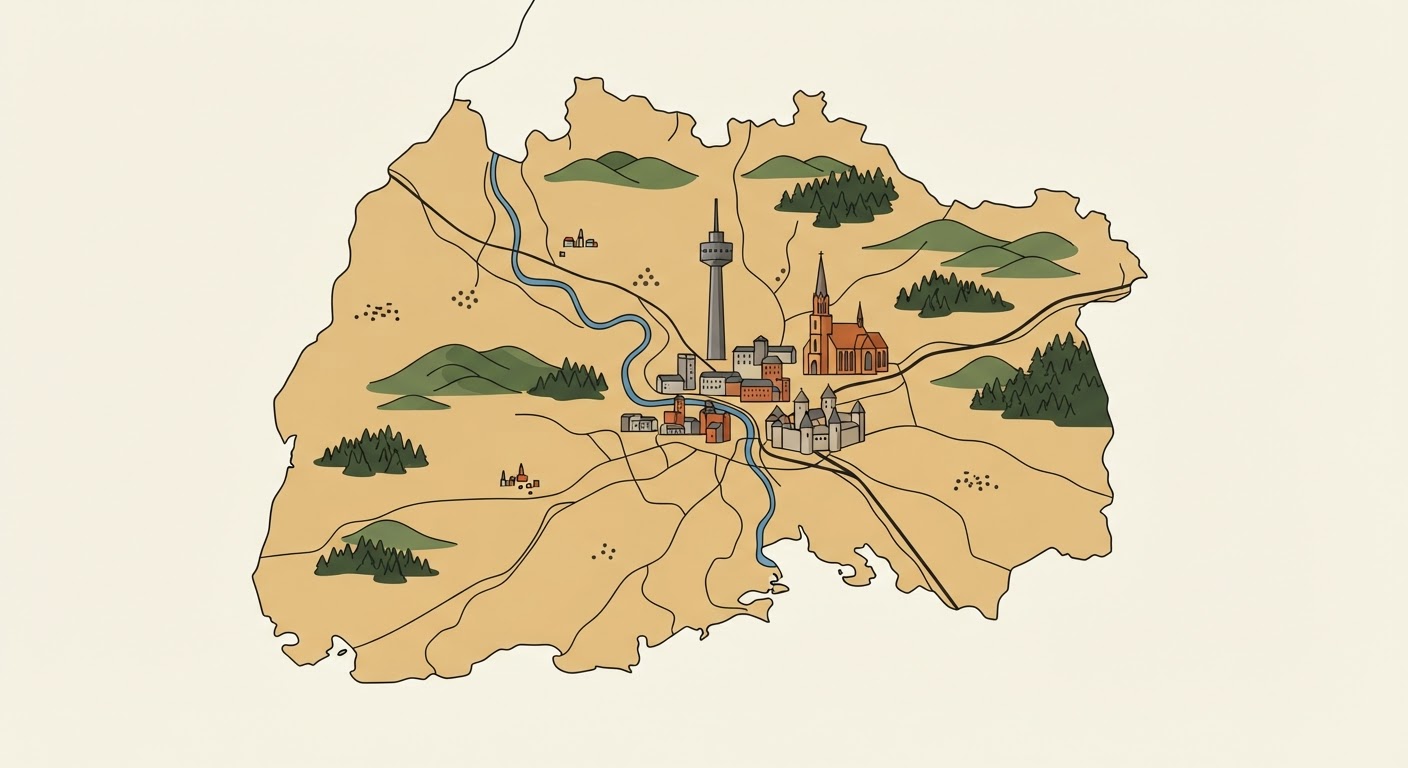
Descended from Roman drover dogs that settled around Rottweil, a medieval cattle-trading town in southern Germany. The role of driving herds to market and guarding drovers' earnings shaped a powerful, steady, protective dog.
- Region
- Rottweil, Baden-Wurttemberg
- Climate it was bred for
- Temperate, continental
- Original job
- Driving and guarding cattle, later cart pulling
The long read
About the breed
The breed's ancestors are thought to be Mastiff-type dogs brought north by Roman legions to help drive and guard cattle herds along the march, some of which settled in the area around Rottweil in southern Germany. As the town became a livestock trading centre in the Middle Ages, local dogs were bred to drive cattle to market and guard the drovers' takings, often carrying purses tied round their necks, giving the breed its old name "Rottweil butcher's dog" (Rottweiler Metzgerhund). The rise of rail transport in the 1800s made cattle droving and the breed largely obsolete, and Rottweiler numbers dropped so low that by 1900 the breed was nearly extinct in its home region, before dedicated breed clubs rebuilt the population through the early 20th century.
Living with a Rottweiler means living with a large, confident, protective dog that needs serious training and early socialisation from a capable owner. They are typically calm and steady rather than hyperactive, but their size and natural guarding instinct mean poor training or socialisation can create real problems, and several countries include the breed under breed-specific legislation. Coat care is straightforward, just regular brushing, but exercise and structured mental work matter enormously for a dog this powerful and intelligent. With their own family, well-raised Rottweilers are typically affectionate, loyal and good with children.
Today the Rottweiler works in police, military, search and rescue and therapy roles alongside its life as a family companion, and it remains one of the most popular large breeds worldwide. It suits experienced, committed owners prepared for thorough training, secure containment, and the significant size and strength of the adult dog.
Living with one
Temperament & needs
Our own ratings, based on the breed standard and how these dogs behave in ordinary homes.
Friendliness
3/5
How openly the Rottweiler greets people it does not know.
Trainability
4/5
Intelligent and capable, needs consistent, confident handling.
Energy
3/5
Moderate needs but benefits from structured daily exercise.
Barking
2/5
Not prone to nuisance barking but will alert to threats.
Grooming
2/5
Short coat needs regular but not intensive brushing.
Suits a first-time owner
3/5
How forgiving the Rottweiler is for someone taking on their first dog.
Sociability
3/5
Affectionate with family, naturally protective of strangers.
Independence
3/5
Confident and self-assured.
Illustrated breed standard
The points of the breed
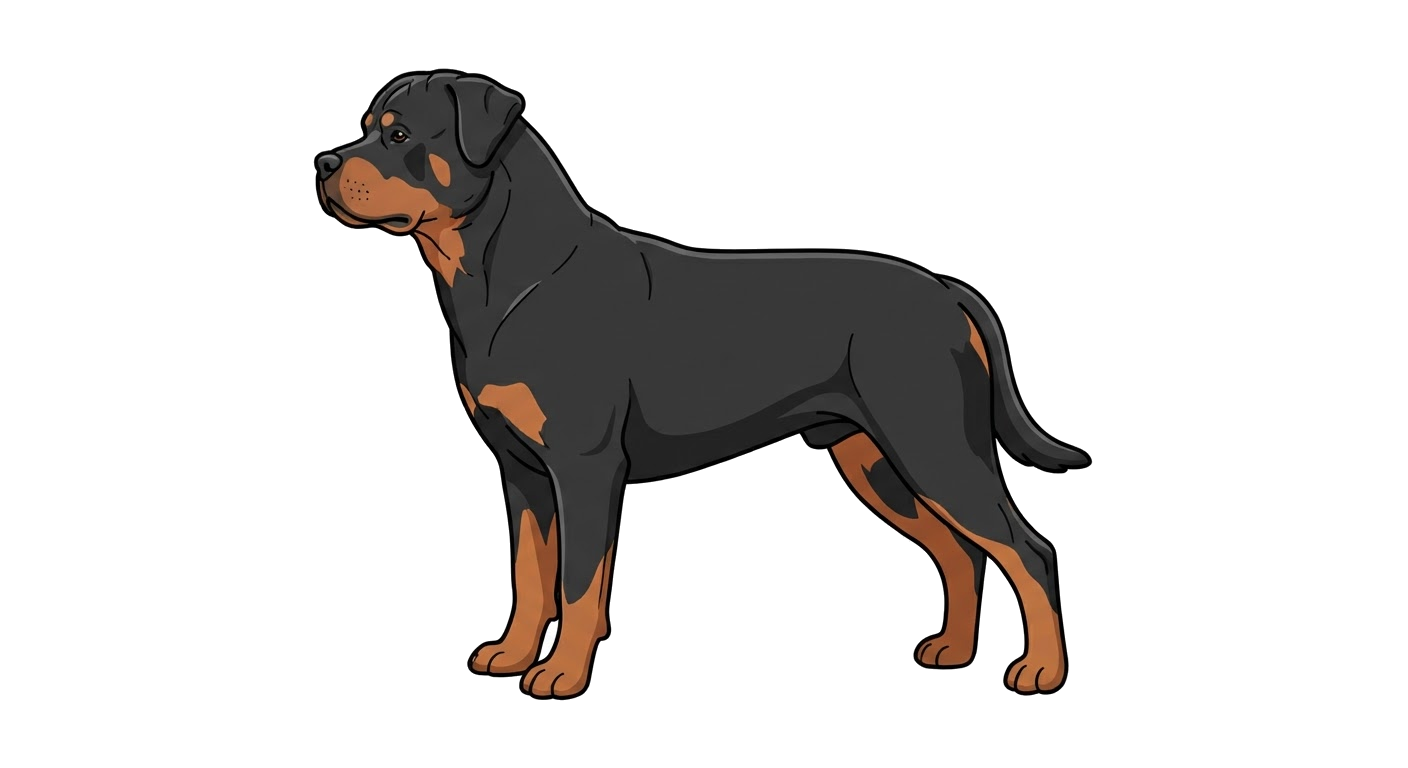
Hover or tap a numbered point to read what the standard asks for.
Point 1
Skull
The Rottweiler's skull is judged on balance rather than size — proportionate to the body, with a clean cheek and a stop typical of the breed. Coarseness or an over-refined head are both faulted.
Colours & patterns
Recognised coats
Which coats the standard accepts — and which are simply popular.
Black and tan
Standard colour
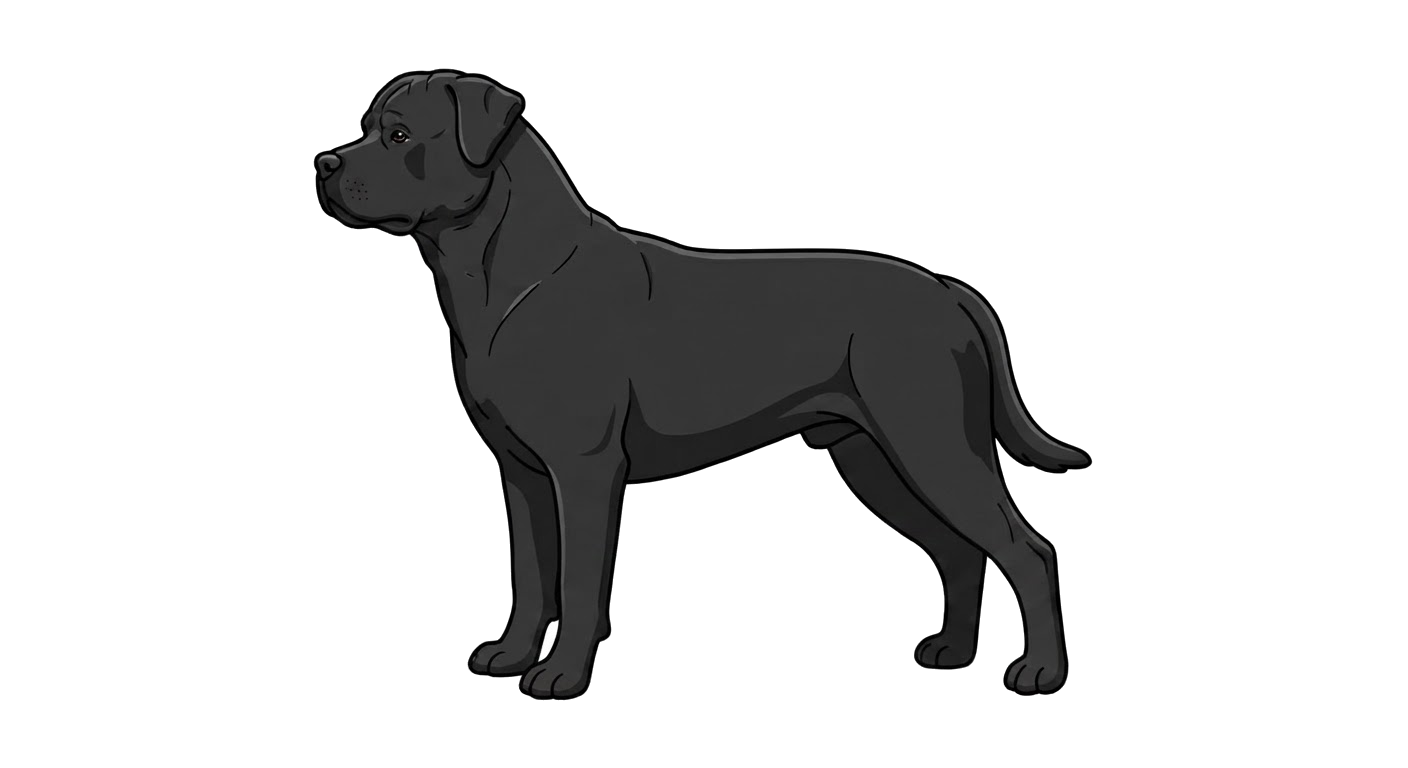
The only standard colour combination.
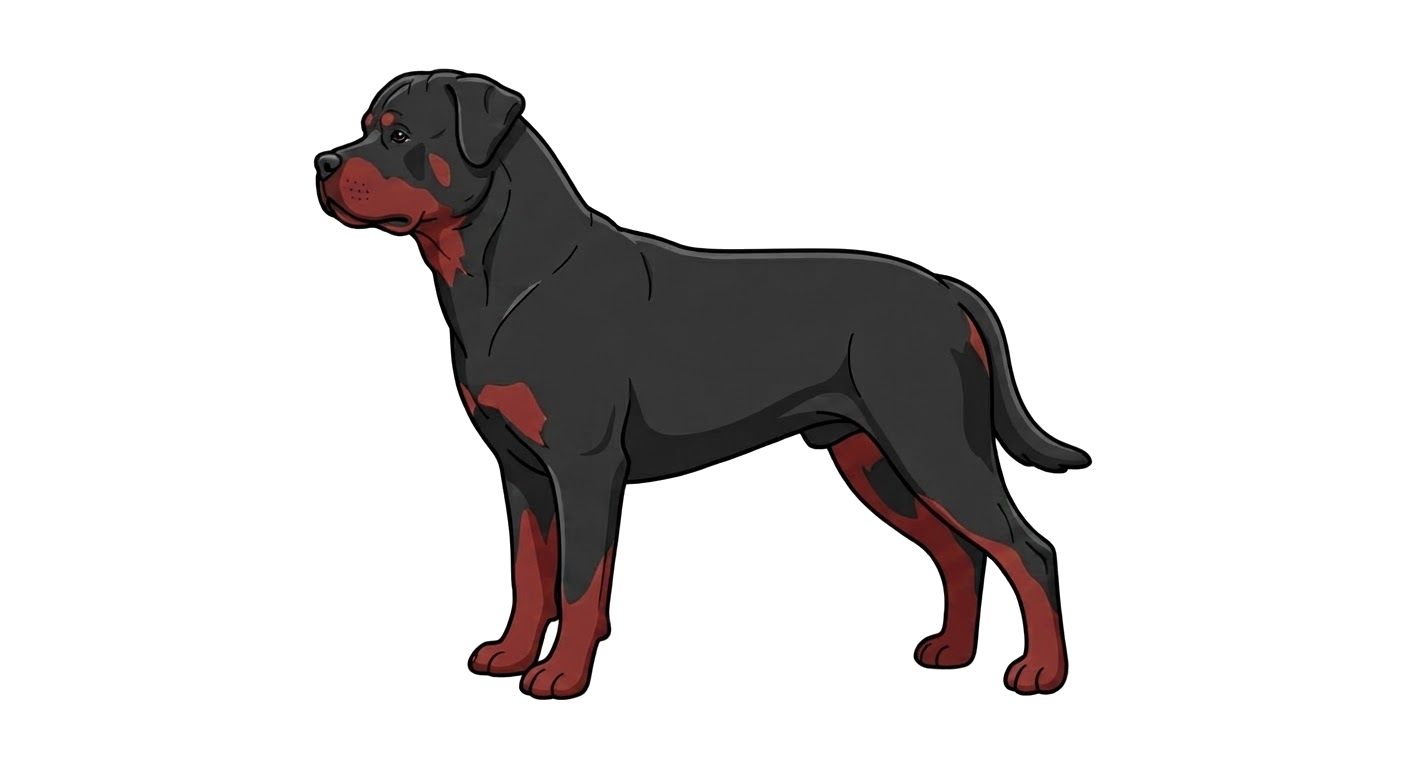
Black and mahogany
Standard colour
A deeper reddish variation of the tan markings.
Timeline
History & development
Roman era
Drover dog ancestry
Roman legions bring Mastiff-type dogs north to drive and guard cattle, some settling near Rottweil.
medieval period
Butcher's dog role
Rottweil becomes a cattle trading hub, and local dogs drive herds and guard drovers' money.
1800s
Near extinction
Rail transport replaces cattle droving, and the breed's numbers collapse.
1907
Breed club founded
The first Rottweiler breed club is established in Germany to rebuild the population.
1936
UK recognition
The Kennel Club recognises the breed in Britain.
1950s onward
The breed today
Kennel club registrations settled into a steady pattern and the Rottweiler moved from a working specialist to a family companion, with breed clubs in the UK and abroad now focused on health testing and keeping true type alive.
Reference
Breed standard summary
- body
- Deep chest, strong back, compact.
- coat
- Straight, coarse, medium length, with an undercoat.
- ears
- Pendant, triangular, set high.
- eyes
- Medium, almond-shaped, dark brown.
- gait
- Powerful, harmonious, ground-covering trot.
- head
- Broad between the ears, medium length.
- size
- Large
- tail
- Docking traditional in some countries, natural elsewhere, carried level.
- colour
- Black and tan, Black and mahogany. Colours outside this list are seen but are not accepted by the kennel clubs.
- temperament
- Typical of the breed: strongest in trainability, energy, sociability. Nervousness or aggression are serious faults in the show ring and in the home.
- general appearance
- Medium-large, powerful, compact, robust.
Health
What to screen for
Green means little to worry about, amber means ask the breeder for test results, red means manage it actively.
Hip dysplasia
Watch closely
Large, heavy breed; insist on hip scores for both parents.
Elbow dysplasia
Screen for it
Ask for elbow scoring certificates.
Osteosarcoma
Screen for it
Bone cancer risk is elevated in the breed; monitor for unexplained lameness.
Bloat
Watch closely
Deep-chested; feed smaller meals and rest after eating.
General information only — always speak to your vet about your own dog.
From real owners
Dogs like this
Rottweilers added by PawPoint members through their pet passports. Share yours to appear here.
Loading the wall…
Made for the Rottweiler
The book, plus prints, hoodies and mugs using our own Rottweiler illustration — and one everyday accessory that suits any dog.

The book
Pawpoint: The Complete Dog Breed Book
Every officially recognised breed plus the unofficial ones nobody else documents. 400+ pages, hardback, printed and shipped from the UK.
Own stock — shipped by us
Framed poster
Rottweiler Framed Poster
Museum-weight print of our Rottweiler illustration, framed or unframed.
Printed to order
Hoodie
Rottweiler Hoodie
Heavyweight hoodie carrying the Rottweiler illustration on the chest.
Printed to order
Mug
Rottweiler Mug
Ceramic mug with the Rottweiler illustration wrapped around it.
Printed to order
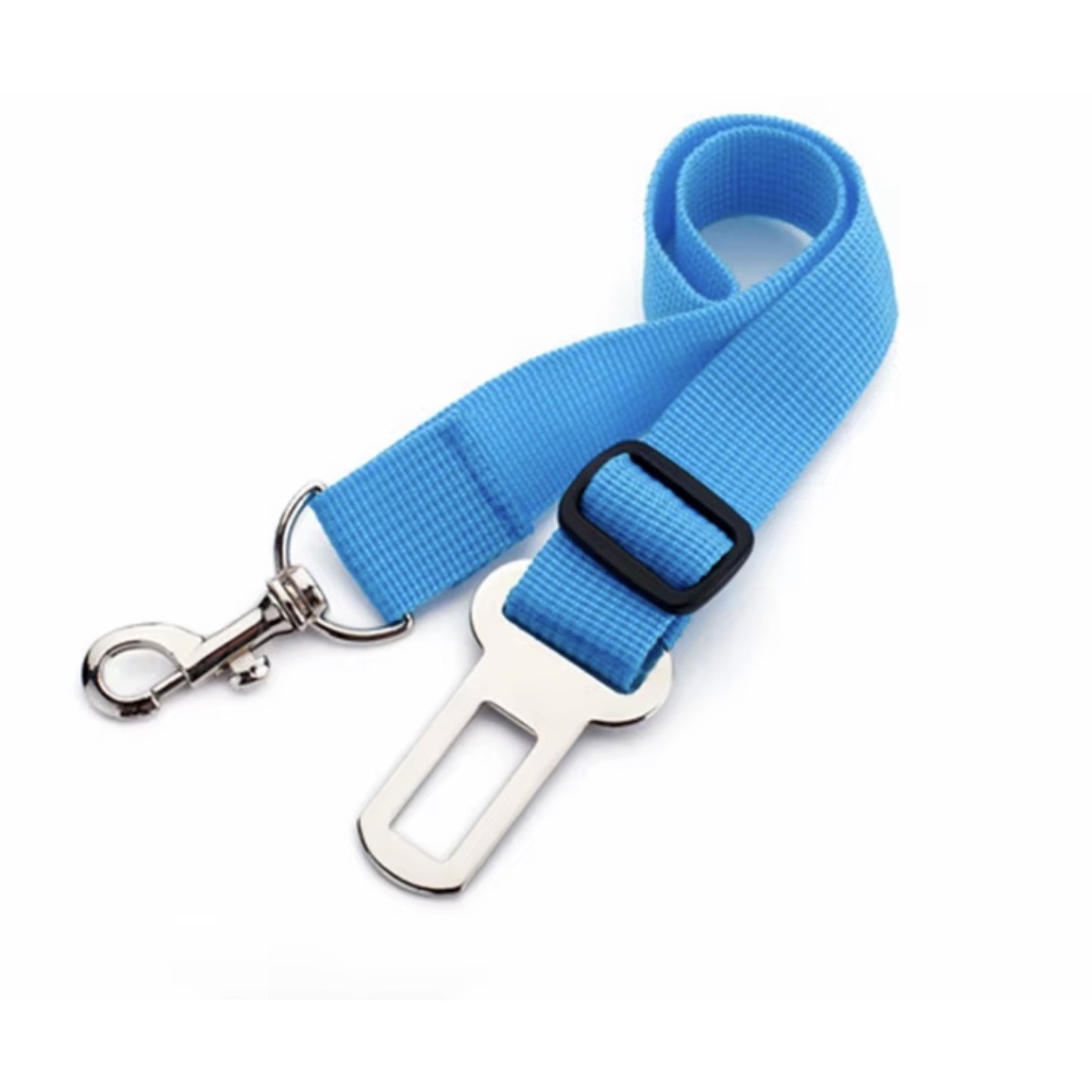
Accessory
Car Seatbelt Restraint
Clips any harness to a standard seatbelt buckle.
Fits any dog
Pawpoint on YouTube
Watch the full Rottweiler video
Breed deep-dives, history and honest ownership talk. New film every week.
Watch now