
Russian Black Terrier
RUSH-uhn BLAK TER-ee-uhr
Russia· Soviet Union (Red Star kennel, near Moscow)
The Russian Black Terrier, or Chornyi Terrier, is a large, powerful working breed developed in the Soviet Union to serve as a military and guard dog, built from a deliberate mix of some seventeen breeds.
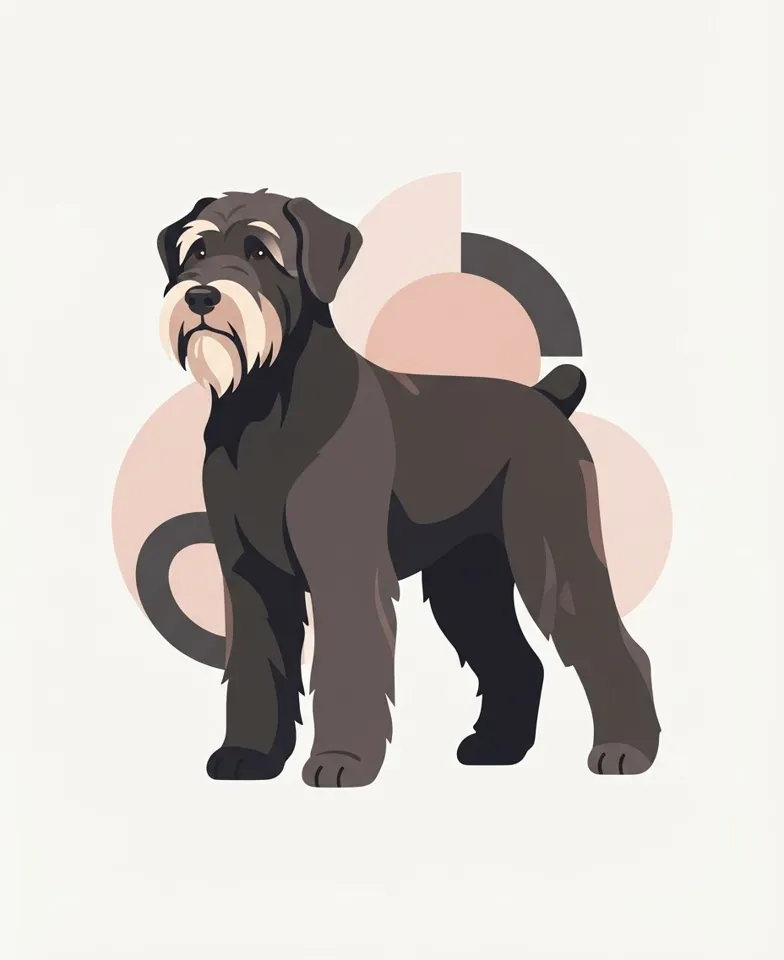
At a glance
Quick facts
- Size
- Giant
- Exercise needs
- 1 hour daily, structured
- Home size suited to
- Large home with space to stretch out
- Grooming frequency
- Weekly brush, hand-strip a few times a year
- Coat length
- Wiry
- Sheds
- Yes, heavily when moulting
- Lifespan
- 10-11 years
- Town or country
- Better suited to the country
- Garden size needed
- Large and securely fenced
Where it comes from
Origins of the Russian Black Terrier
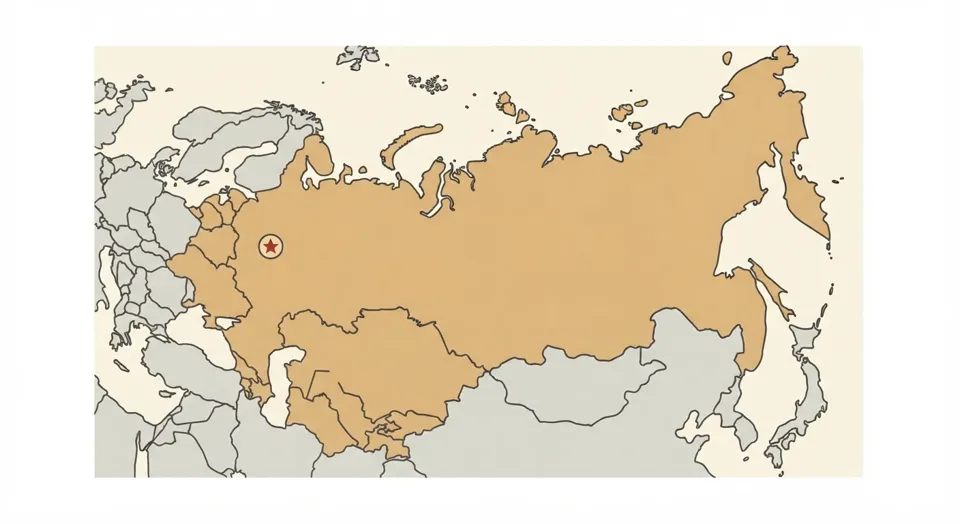
Created deliberately at the Soviet Red Star military kennel from a mix of seventeen breeds, aimed at producing a dog tough enough for guard and patrol work across Russia's harsh, cold climate. The thick double coat reflects that need for weather resistance.
- Region
- Soviet Union (Red Star kennel, near Moscow)
- Climate it was bred for
- Cold, harsh continental winters
- Original job
- Military and guard work
The long read
About the breed
The breed was created after the Second World War at the Red Star kennel, a Soviet military breeding programme tasked with producing a hardy, versatile working dog suited to guarding, patrol and military work across the harsh Russian climate. Breeders crossed Giant Schnauzer, Airedale Terrier, Rottweiler, Newfoundland and other breeds to combine size, coat protection, trainability and a stable temperament, and the resulting Chornyi Terrier entered Soviet military and border guard service by the 1950s, later spreading to civilian ownership as breeding programmes stabilised the type.
Living with a Russian Black Terrier means living with a large, confident, protective dog bred specifically for working reliability rather than companionship, though it adapts well to family life with proper training. They are typically calm and controlled, less reactive than some guarding breeds, but their size and natural wariness of strangers mean early, extensive socialisation and consistent training are essential. The thick, wiry double coat needs regular brushing and professional grooming every couple of months to prevent matting. They are usually deeply loyal to their family and good with children they are raised alongside, while remaining naturally suspicious of unfamiliar people and dogs.
Today the breed serves in guarding, military and police roles in Russia and elsewhere, alongside a smaller population kept as companions and show dogs internationally. It suits experienced owners with space, a serious approach to training, and the time to manage the grooming needs of a large, thickly coated dog.
Living with one
Temperament & needs
Our own ratings, based on the breed standard and how these dogs behave in ordinary homes.
Friendliness
2/5
How openly the Russian Black Terrier greets people it does not know.
Trainability
4/5
Bred for working reliability, responds well to consistent handling.
Energy
3/5
Moderate needs, benefits from structured exercise and training.
Barking
2/5
Alert but not prone to excessive barking.
Grooming
5/5
Thick wiry coat needs regular brushing and professional grooming.
Suits a first-time owner
3/5
How forgiving the Russian Black Terrier is for someone taking on their first dog.
Sociability
2/5
Loyal to family, naturally wary of strangers.
Independence
3/5
Confident and capable of working with some autonomy.
Illustrated breed standard
The points of the breed
Hover or tap a numbered point to read what the standard asks for.
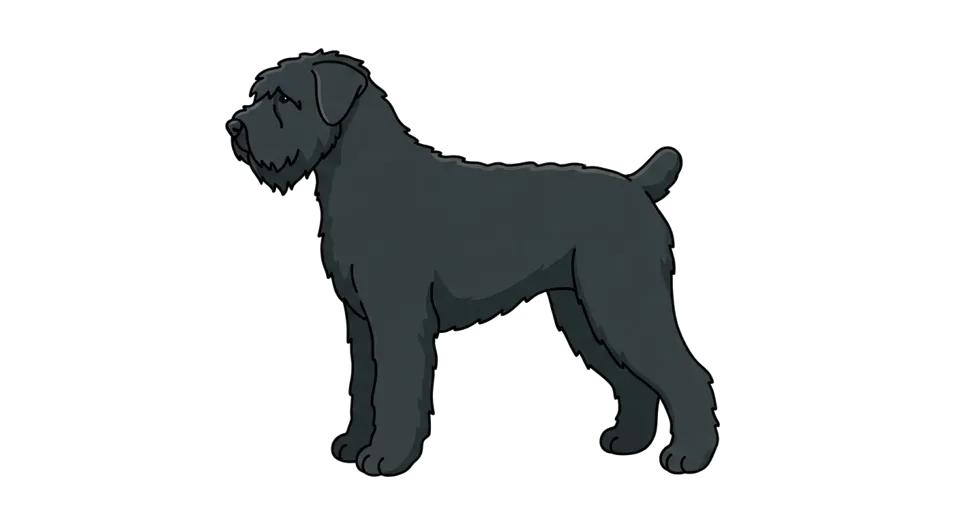
Point 1
Skull
The Russian Black Terrier's skull is judged on balance rather than size — proportionate to the body, with a clean cheek and a stop typical of the breed. Coarseness or an over-refined head are both faulted.
Colours & patterns
Recognised coats
Which coats the standard accepts — and which are simply popular.
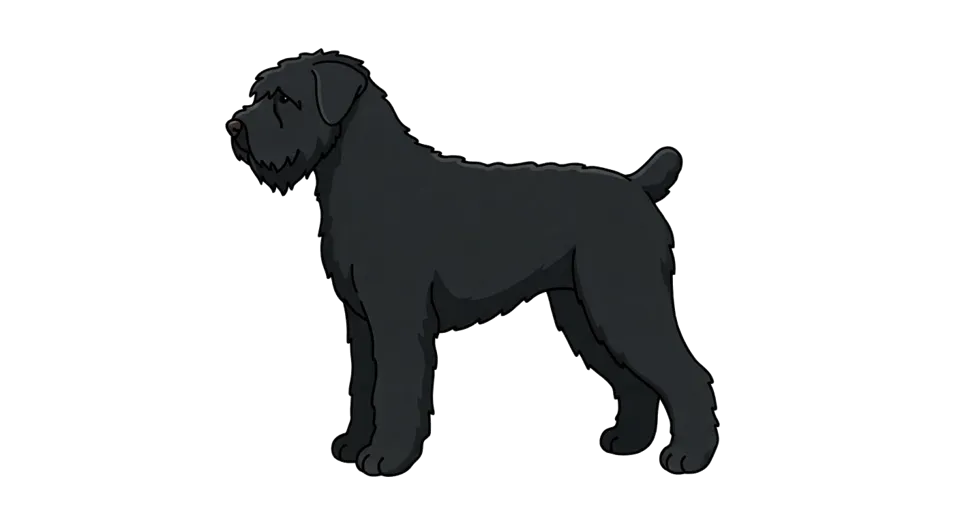
Black
Standard colour
The defining and most common colour.
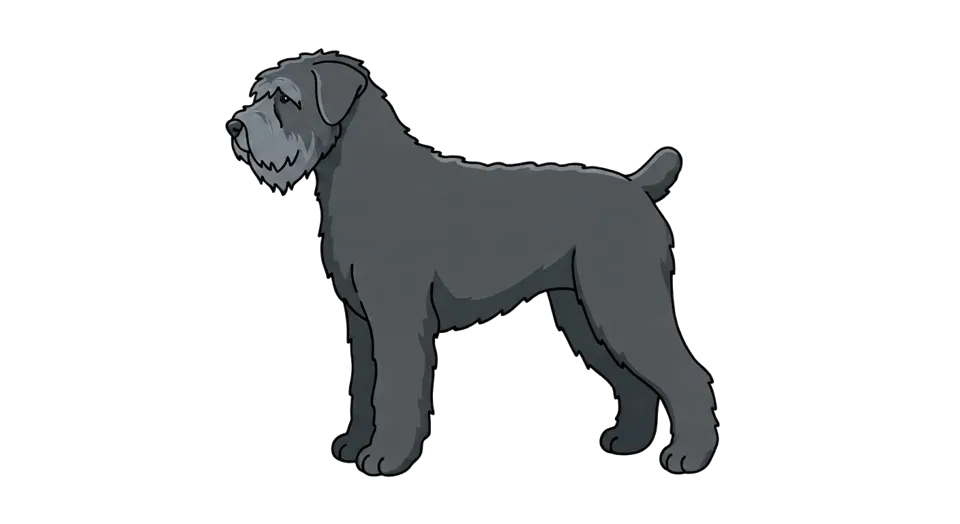
Black with grey hairs
Standard colour
Salt-and-pepper effect within the black coat, still accepted.
Timeline
History & development
1930s-1940s
Origins of the programme
The Soviet military begins developing working dog breeds suited to guard and patrol duties.
post-1945
Red Star kennel breeding
Breeders at the Red Star kennel cross around seventeen breeds to create a hardy new working type.
1950s
Military and border service
The Chornyi Terrier enters service with the Soviet military and border guards.
1980s
Civilian and international spread
The breed stabilises and spreads to civilian ownership and international kennel clubs.
2004
FCI recognition
The Russian Black Terrier gains full international recognition from the FCI.
Reference
Breed standard summary
- body
- Rectangular, deep chest, strong back.
- coat
- Thick, wiry, double-coated with a beard and eyebrows.
- ears
- Triangular, hanging close to the cheeks.
- eyes
- Small, oval, dark, deep-set.
- gait
- Free, powerful, ground-covering.
- head
- Massive, rectangular, well-furnished with hair.
- size
- Giant
- tail
- Docked traditionally or carried naturally, set high.
- colour
- Black, Black with grey hairs. Colours outside this list are seen but are not accepted by the kennel clubs.
- temperament
- Typical of the breed: strongest in grooming, trainability, energy. Nervousness or aggression are serious faults in the show ring and in the home.
- general appearance
- Large, powerful, well-muscled, imposing.
Health
What to screen for
Green means little to worry about, amber means ask the breeder for test results, red means manage it actively.
Hip dysplasia
Watch closely
Large, heavy breed; insist on hip scores for both parents.
Elbow dysplasia
Screen for it
Ask for elbow scoring certificates.
Progressive retinal atrophy
Screen for it
DNA testing available and recommended.
Bloat
Watch closely
Deep-chested; feed smaller meals and rest after eating.
General information only — always speak to your vet about your own dog.
From real owners
Russian Black Terriers in the PAWPOINT Pack
Russian Black Terriers added by PawPoint members through their pet passports. Share yours to appear here.
Loading the wall…
Made for the Russian Black Terrier
The book, plus hoodies, tees and mugs featuring the Russian Black Terrier.