
Saluki
sah-LOO-kee
Middle East· Arabian Peninsula and Fertile Crescent
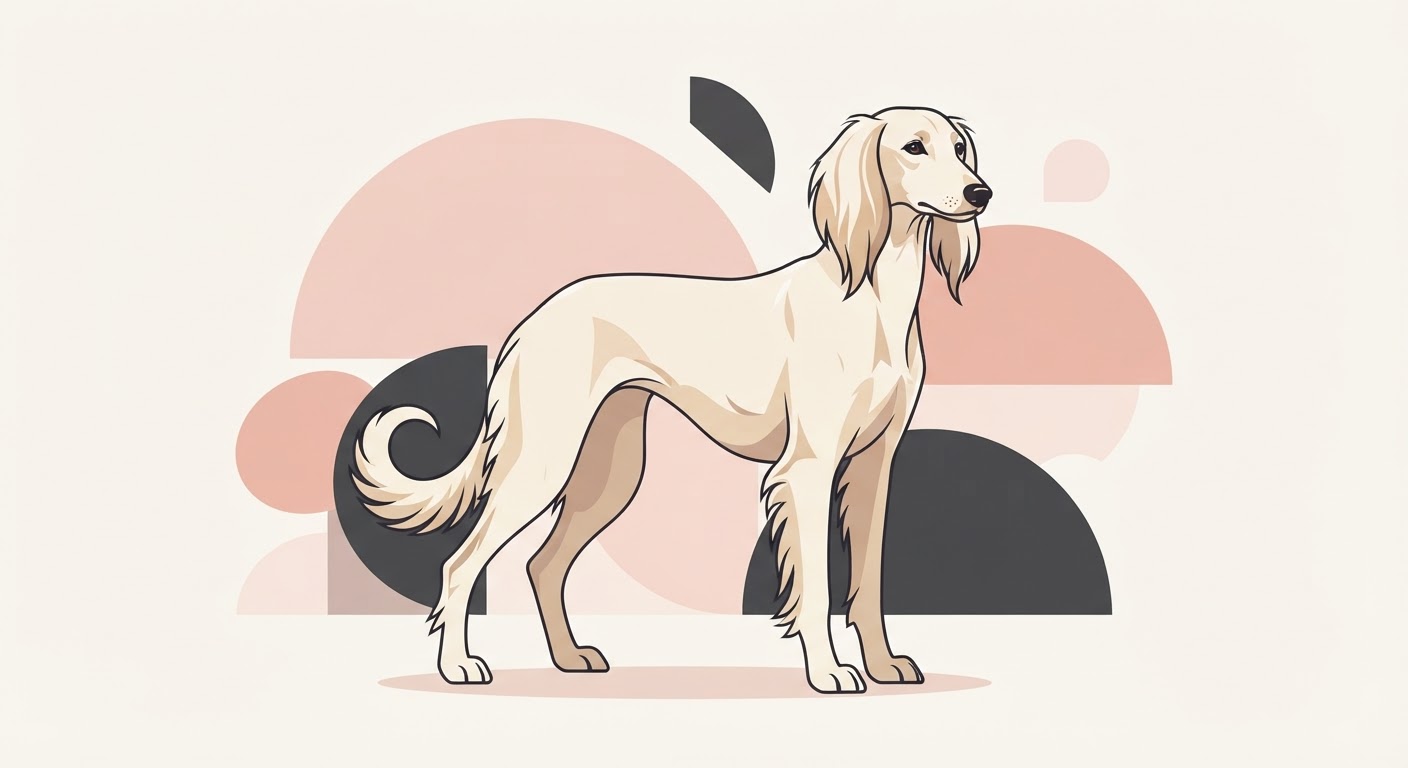
The Saluki is one of the oldest known sighthound breeds, a slender, silky-coated desert hunter built for tireless speed across open ground, prized across the Middle East for millennia as a hunting companion rather than a mere possession.
At a glance
Quick facts
Size
Large
Exercise needs
60+ minutes daily with free-run opportunity
Home size suited to
Large home with space to stretch out
Grooming frequency
Daily brushing
Coat length
Long
Sheds
Yes
Lifespan
12–14 years
Town or country
Happiest in the country
Garden size needed
Large and securely fenced
Where it comes from
Origins of the Saluki
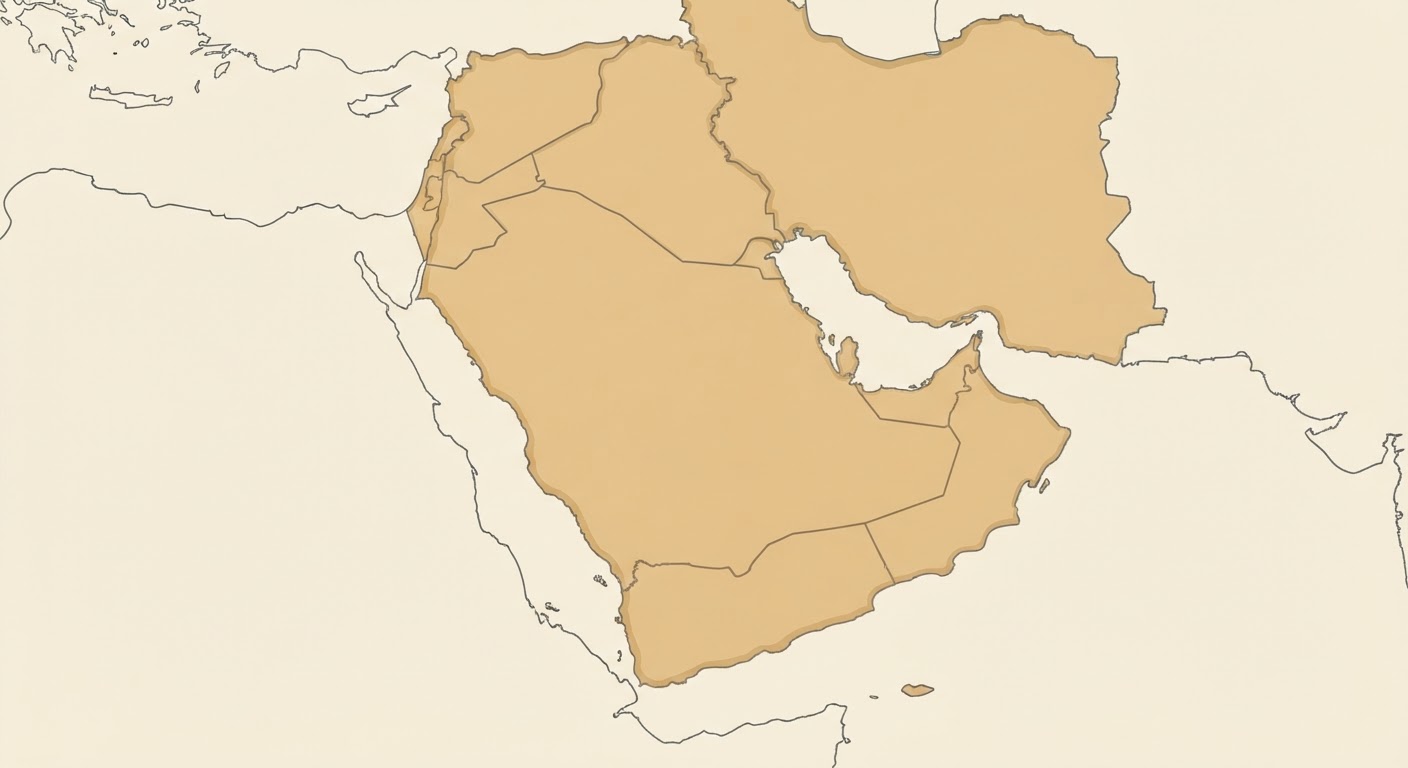
Bred by Bedouin tribes to run down gazelle across vast stretches of desert, the Saluki's deep chest and long legs are built for sustained speed in punishing heat.
- Region
- Arabian Peninsula and Fertile Crescent
- Climate it was bred for
- Hot, arid desert
- Original job
- Coursing gazelle and hare across open desert
Living with one
Temperament & needs
Our own ratings, based on the breed standard and how these dogs behave in ordinary homes.
Friendliness
3/5
How openly the Saluki greets people it does not know.
Trainability
2/5
Intelligent but independent, and unmoved by repetitive drilling.
Energy
4/5
Needs room to gallop; a securely fenced area is essential as recall around game is unreliable.
Barking
1/5
Notably quiet, rarely barks without strong reason.
Grooming
2/5
Silky coat and feathering need weekly brushing, more during moults.
Suits a first-time owner
2/5
How forgiving the Saluki is for someone taking on their first dog.
Sociability
3/5
Gentle and reserved, often aloof with strangers rather than outgoing.
Independence
5/5
A true sighthound temperament, self-contained and not needy.
Illustrated breed standard
The points of the breed
Hover or tap a numbered point to read what the standard asks for.
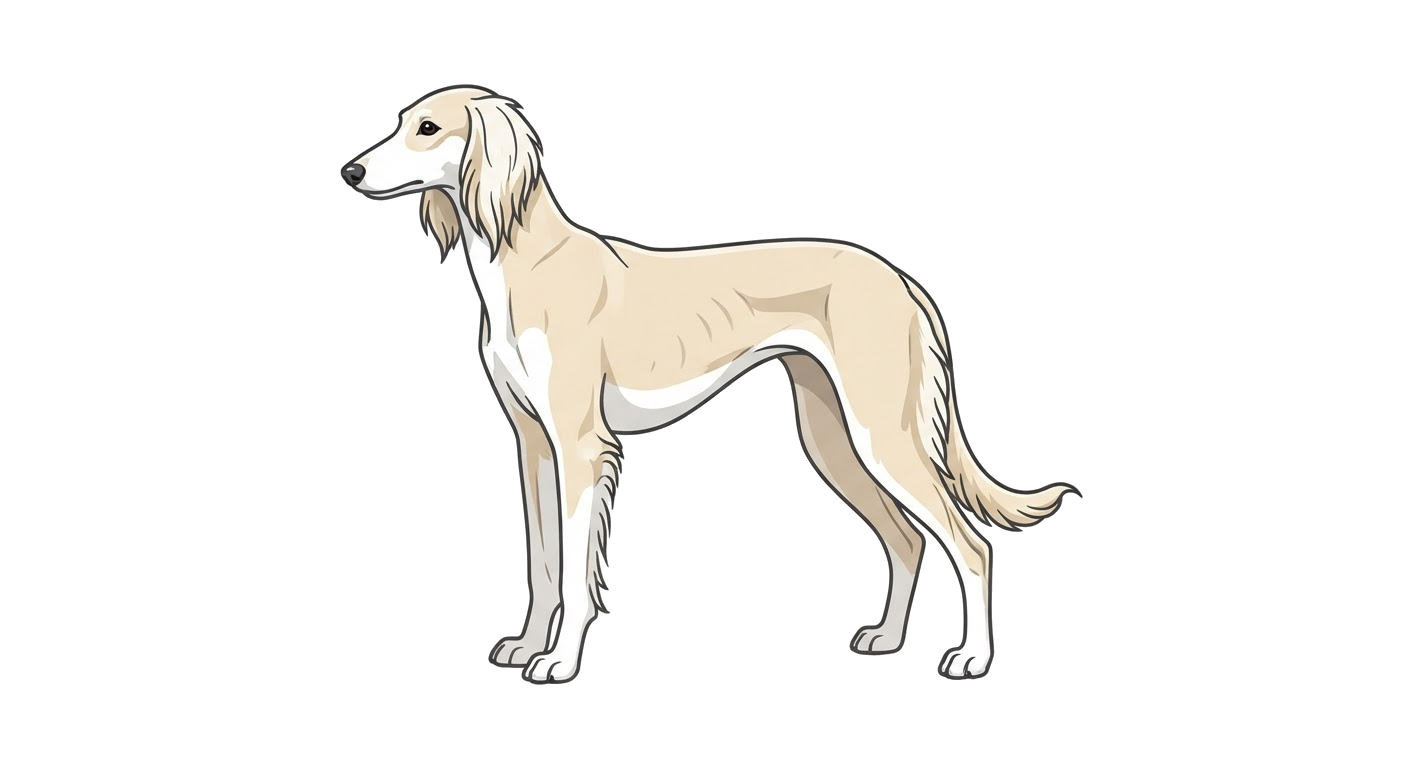
Point 1
Skull
The Saluki's skull is judged on balance rather than size — proportionate to the body, with a clean cheek and a stop typical of the breed. Coarseness or an over-refined head are both faulted.
Colours & patterns
Recognised coats
Which coats the standard accepts — and which are simply popular.
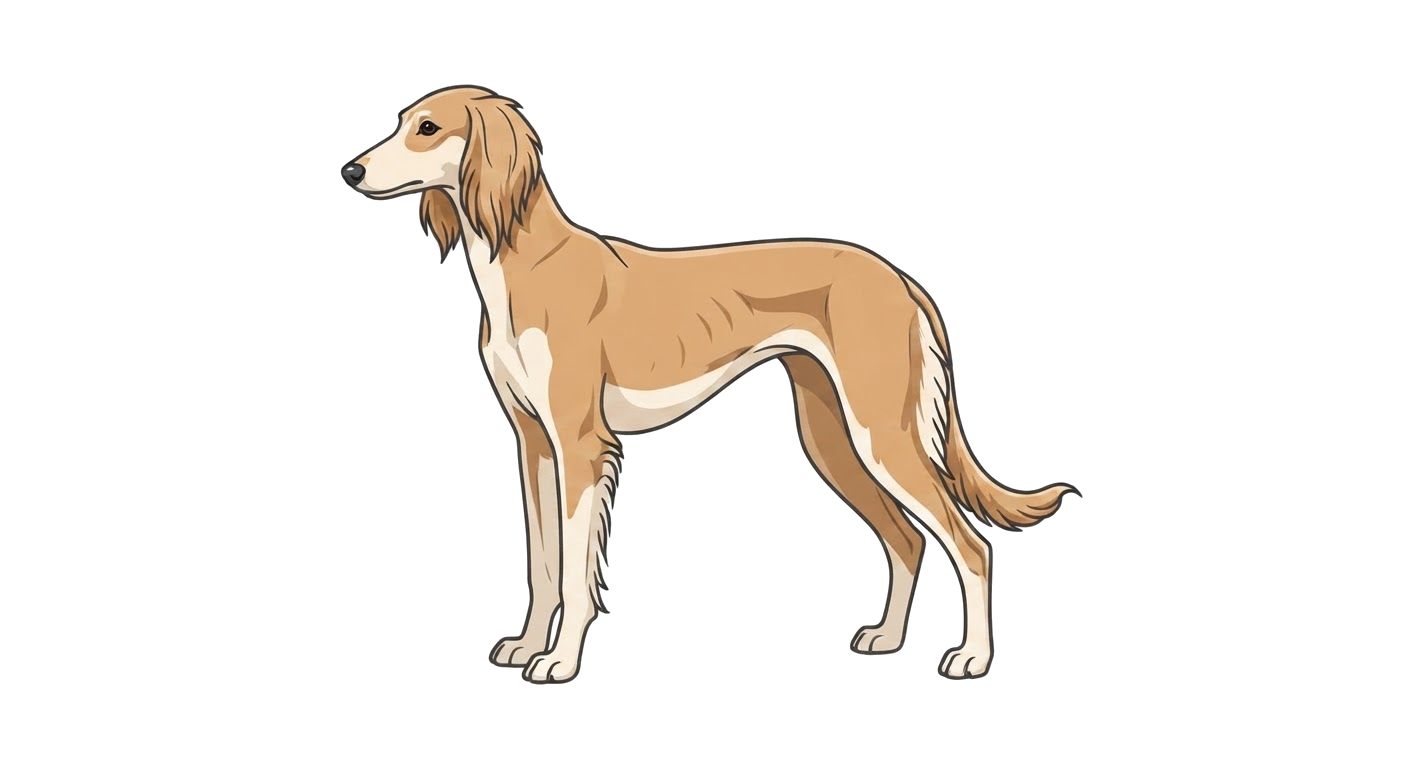
Fawn
Standard colour
One of the most common and traditional Saluki colours.
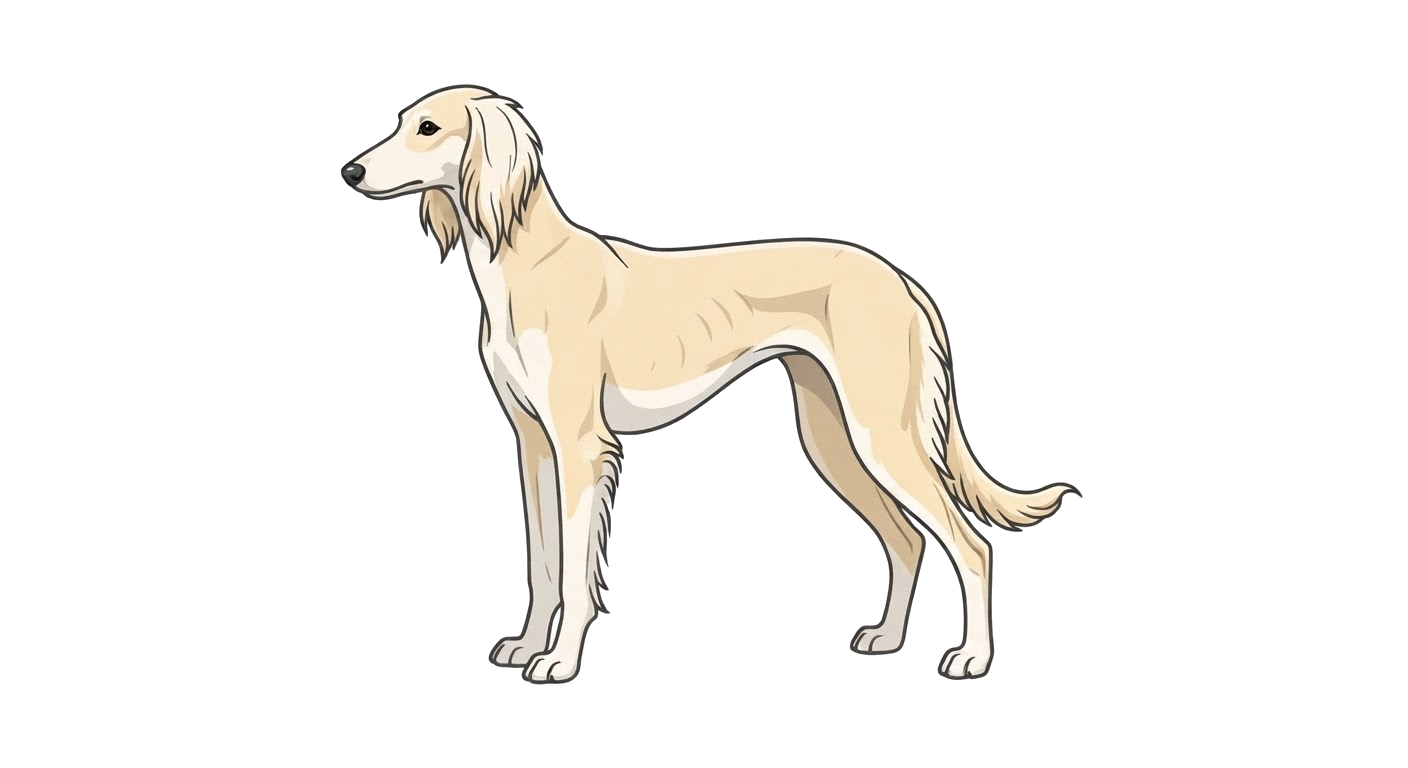
Cream
Standard colour
A pale, sandy tone well suited to desert camouflage.
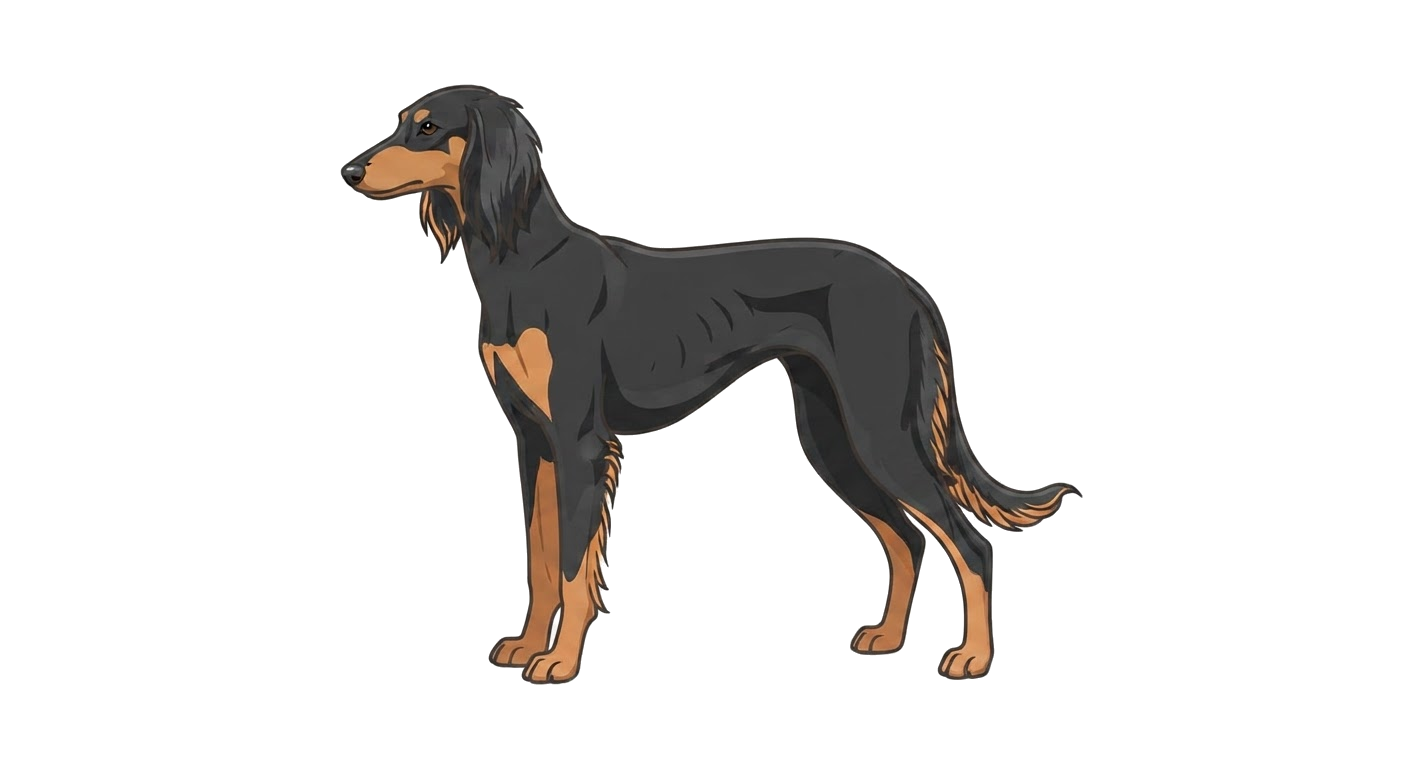
Black and Tan
Standard colour
A striking bicolour combination seen in many lines.
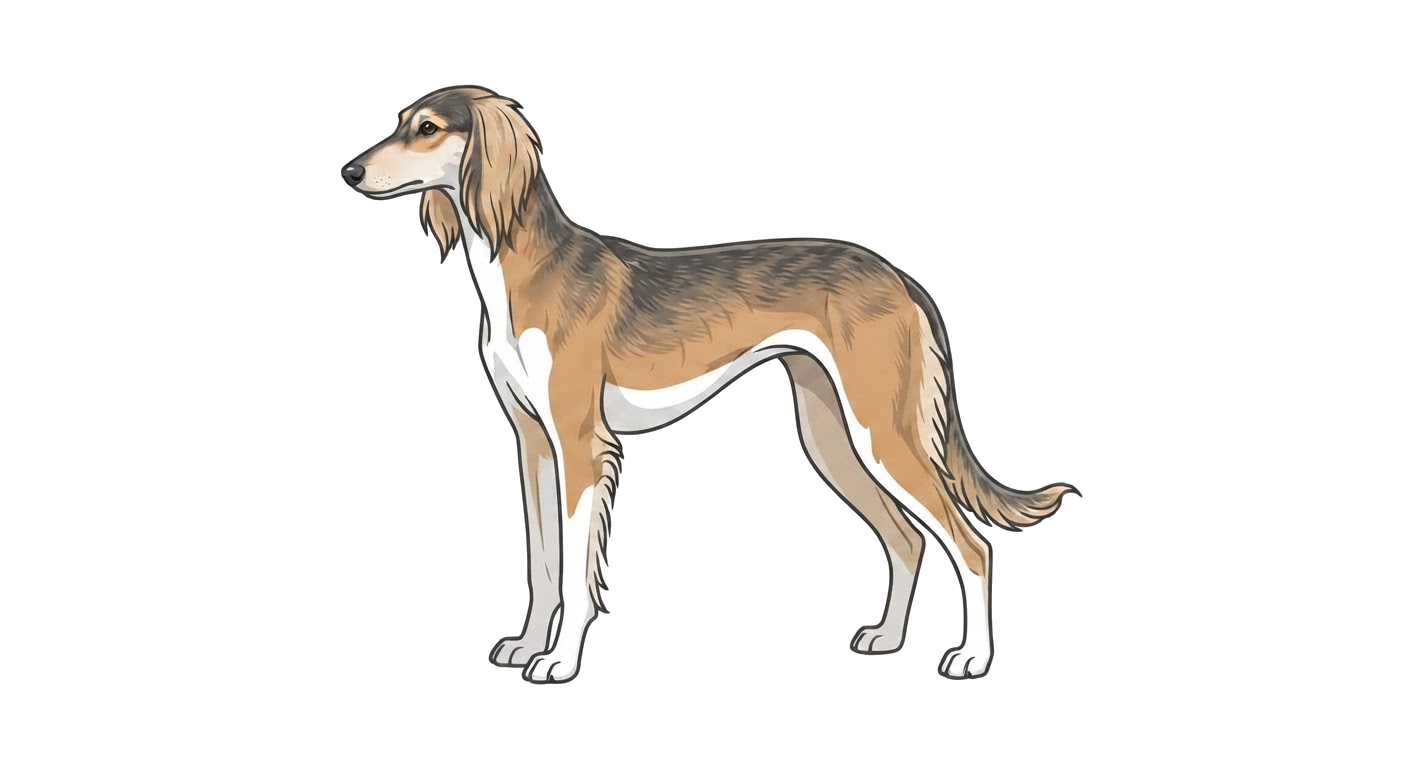
Grizzle and Tan
Standard colour
A grey-brown grizzled pattern with tan points.
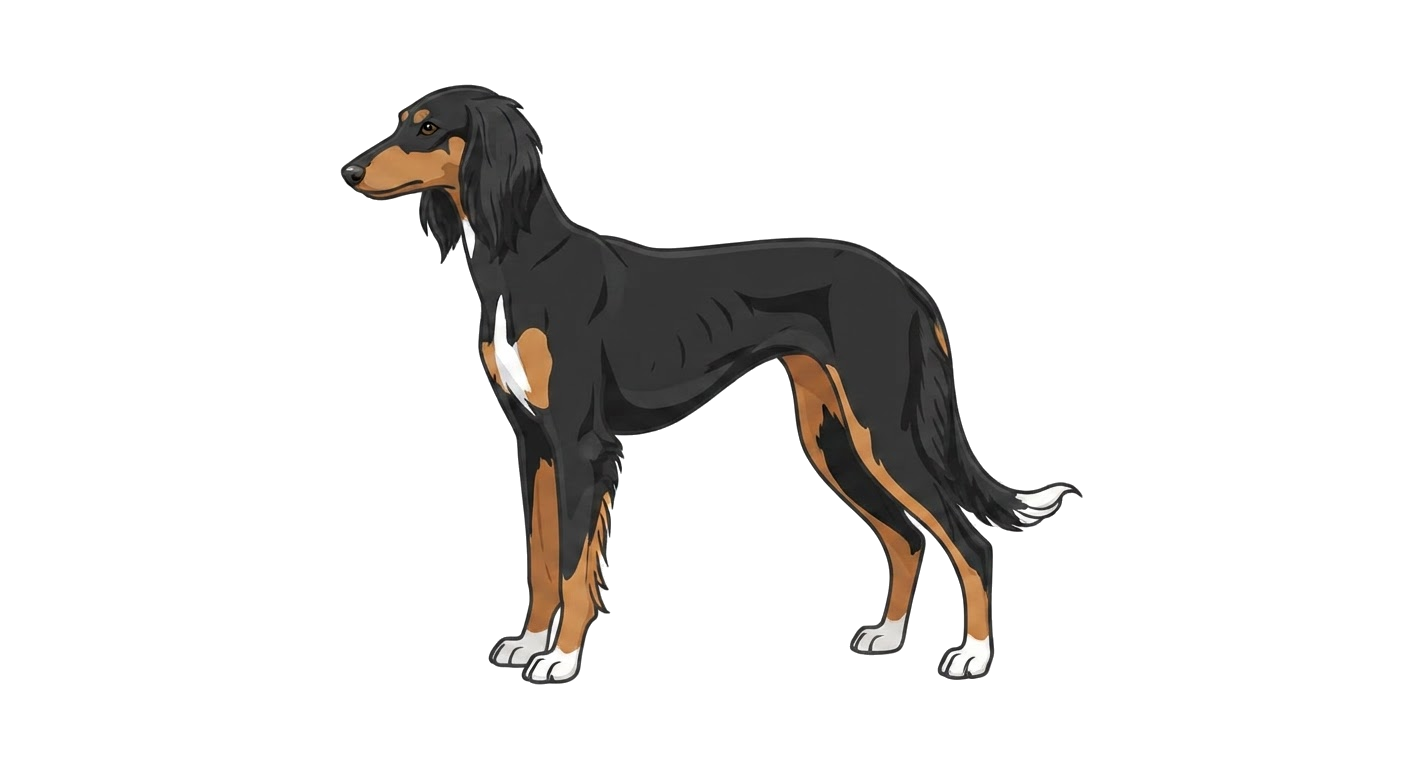
Tricolour
Standard colour
White, black and tan combined, also known as parti-colour.
Timeline
History & development
c.7000 BC
Ancient depictions
Images resembling Salukis appear on Sumerian carvings and Egyptian tombs, among the earliest depictions of any dog breed.
Middle Ages
The Royal Dog of Egypt
Bedouin tribes considered the Saluki a gift from Allah, exempt from the usual restrictions on dogs as unclean animals.
1840s
Arrival in Britain
Salukis began appearing in Britain via travellers and diplomats returning from the Middle East.
1923
Kennel Club recognition
The Saluki was formally recognised by the Kennel Club in Britain.
1950s onward
The breed today
Kennel club registrations settled into a steady pattern and the Saluki moved from a working specialist to a family companion, with breed clubs in the UK and abroad now focused on health testing and keeping true type alive.
Reference
Breed standard summary
- body
- Long, deep chest, well-arched loin.
- coat
- Smooth and silky, feathering on legs, ears and tail.
- ears
- Long, mobile, covered in silky hair.
- eyes
- Dark to hazel, large, oval, expressive.
- gait
- Smooth, effortless, showing great extension.
- head
- Long and narrow, moderate width between the ears.
- size
- 58–71cm at the shoulder.
- tail
- Long, set low, carried in a curve, feathered.
- colour
- Fawn, Cream, Black and Tan, Grizzle and Tan, Tricolour. Colours outside this list are seen but are not accepted by the kennel clubs.
- temperament
- Typical of the breed: strongest in independence, energy, sociability. Nervousness or aggression are serious faults in the show ring and in the home.
- general appearance
- Graceful and symmetrical, showing great speed and endurance combined with strength.
Health
What to screen for
Green means little to worry about, amber means ask the breeder for test results, red means manage it actively.
Hyperthyroidism/thyroid issues
Screen for it
Ask breeders whether thyroid panels are run on breeding stock.
Sighthound anaesthesia sensitivity
Screen for it
Inform any vet in advance, as Salukis metabolise some anaesthetics differently.
Heart conditions
Watch closely
Request cardiac screening results, as some lines carry dilated cardiomyopathy risk.
Low body fat injury risk
Low concern
Thin skin and little fat mean cuts happen easily on rough ground; check coat after runs.
General information only — always speak to your vet about your own dog.
From real owners
Dogs like this
Salukis added by PawPoint members through their pet passports. Share yours to appear here.
Loading the wall…
Made for the Saluki
The book, plus prints, hoodies and mugs using our own Saluki illustration — and one everyday accessory that suits any dog.

The book
Pawpoint: The Complete Dog Breed Book
Every officially recognised breed plus the unofficial ones nobody else documents. 400+ pages, hardback, printed and shipped from the UK.
Own stock — shipped by us
Framed poster
Saluki Framed Poster
Museum-weight print of our Saluki illustration, framed or unframed.
Printed to order
Hoodie
Saluki Hoodie
Heavyweight hoodie carrying the Saluki illustration on the chest.
Printed to order
Mug
Saluki Mug
Ceramic mug with the Saluki illustration wrapped around it.
Printed to order
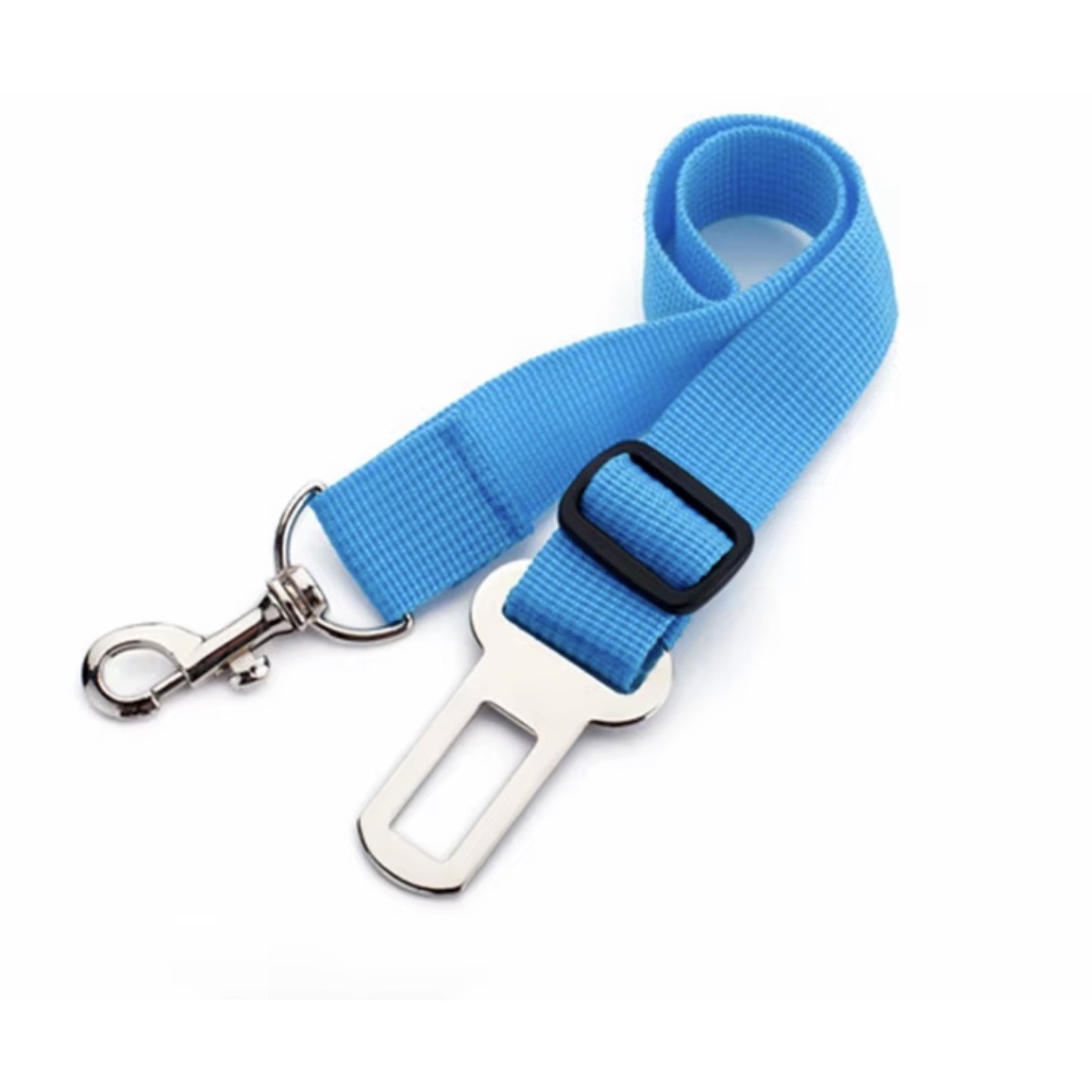
Accessory
Car Seatbelt Restraint
Clips any harness to a standard seatbelt buckle.
Fits any dog

Pawpoint on YouTube
Watch the full Saluki video
Breed deep-dives, history and honest ownership talk. New film every week.
Watch now