
Schipperke
SKIP-er-kee
Belgium· Flanders
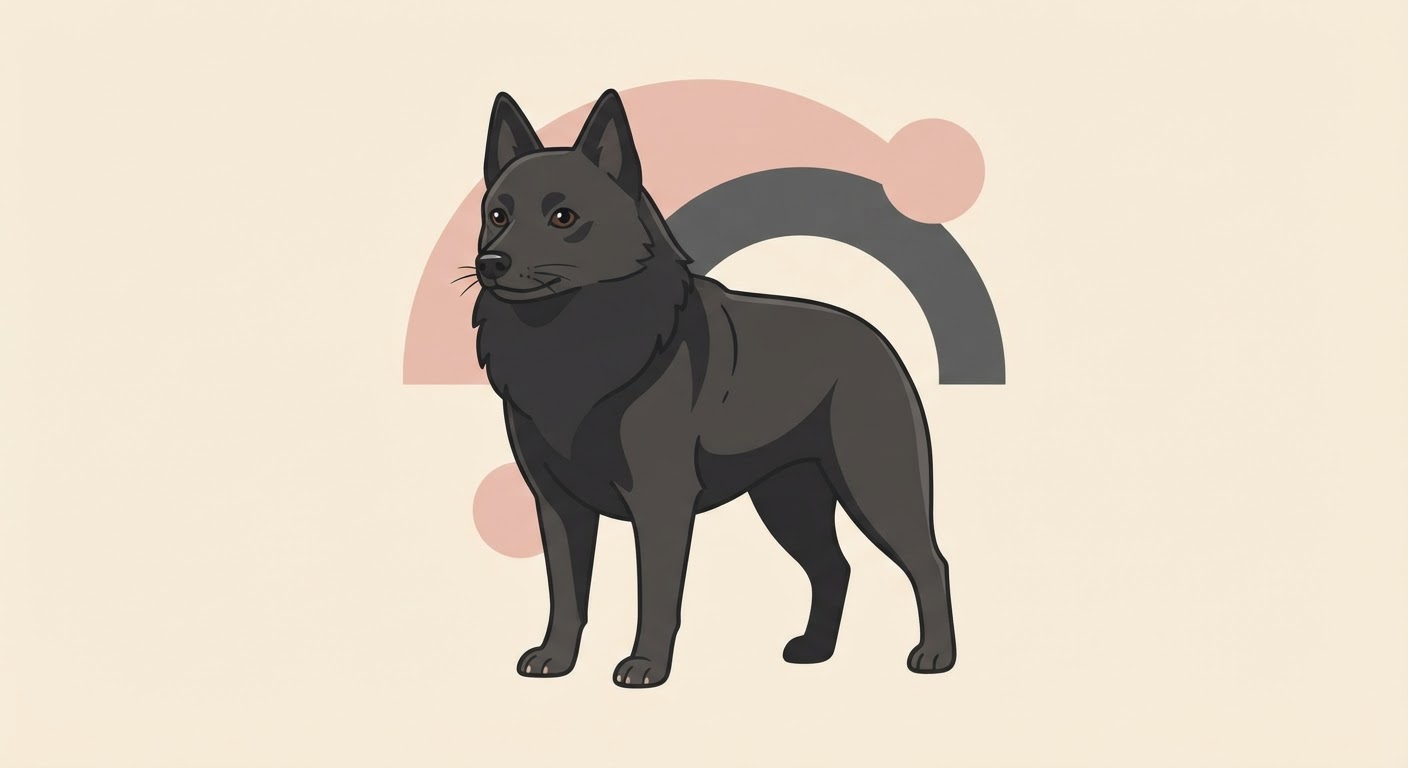
The Schipperke is a small, tailless, jet-black Belgian breed once kept as a watchdog and ratter on barges and in workshops, built compact and alert with a fox-like face and a boundless curiosity about everything happening around it.
At a glance
Quick facts
Size
Small
Exercise needs
45–60 minutes daily
Home size suited to
Flat or small home
Grooming frequency
Weekly brush, hand-strip a few times a year
Coat length
Wiry
Sheds
Yes, heavily when moulting
Lifespan
13–15 years
Town or country
Either, happy in town
Garden size needed
Small garden or none
Where it comes from
Origins of the Schipperke
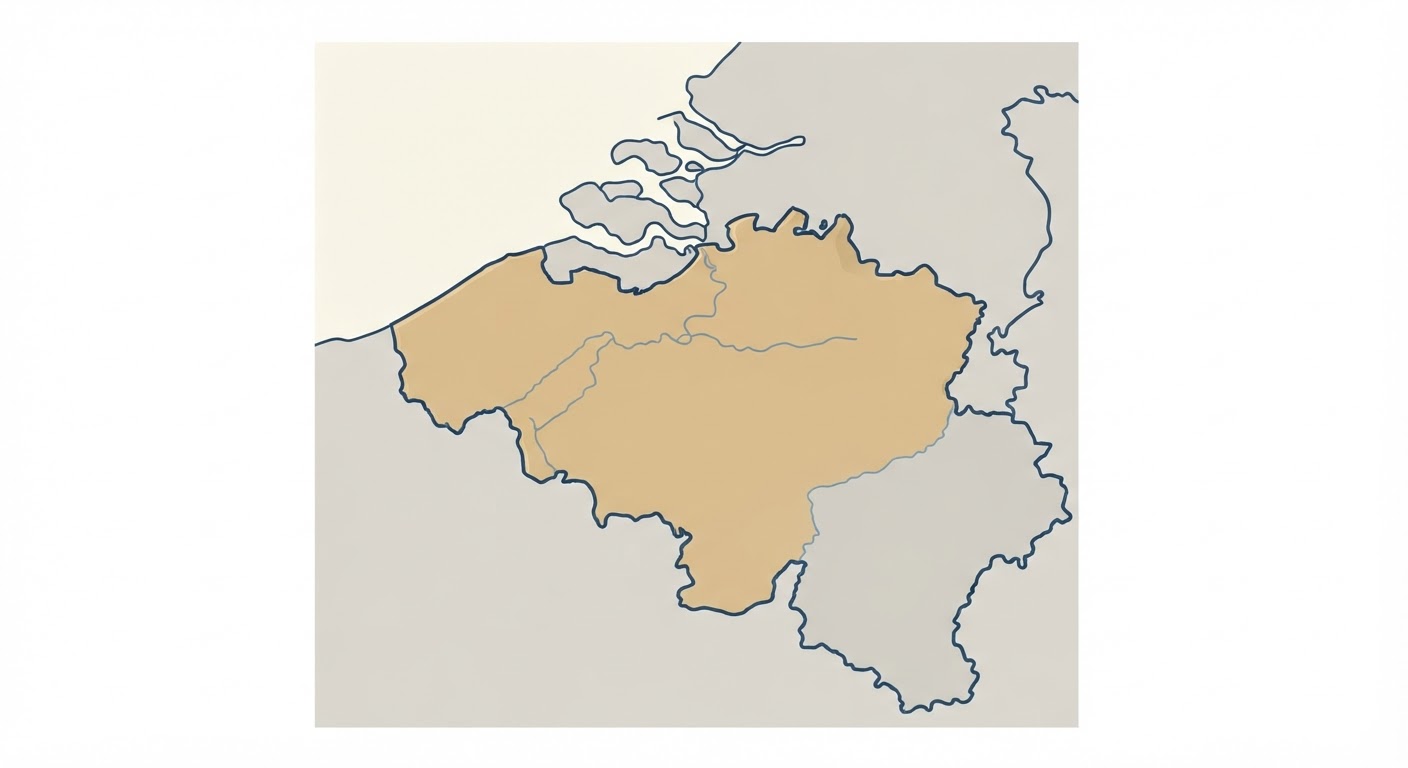
Kept aboard canal barges in Flanders, the Schipperke earned its name, roughly "little boatman", by guarding cargo and keeping vermin down along Belgium's busy waterways.
- Region
- Flanders
- Climate it was bred for
- Cool, damp lowland canals
- Original job
- Guarding barges and workshops, ratting
Living with one
Temperament & needs
Our own ratings, based on the breed standard and how these dogs behave in ordinary homes.
Friendliness
3/5
How openly the Schipperke greets people it does not know.
Trainability
3/5
Sharp and quick to learn, though independent-minded about following orders.
Energy
4/5
Compact but tireless, needs daily walks plus mental stimulation.
Barking
4/5
An enthusiastic watchdog that barks at anything unusual.
Grooming
3/5
Dense double coat needs weekly brushing, more during seasonal moults.
Suits a first-time owner
2/5
How forgiving the Schipperke is for someone taking on their first dog.
Sociability
3/5
Loyal to its family, watchful and reserved with strangers.
Independence
4/5
A confident little dog that makes its own decisions readily.
Illustrated breed standard
The points of the breed
Hover or tap a numbered point to read what the standard asks for.
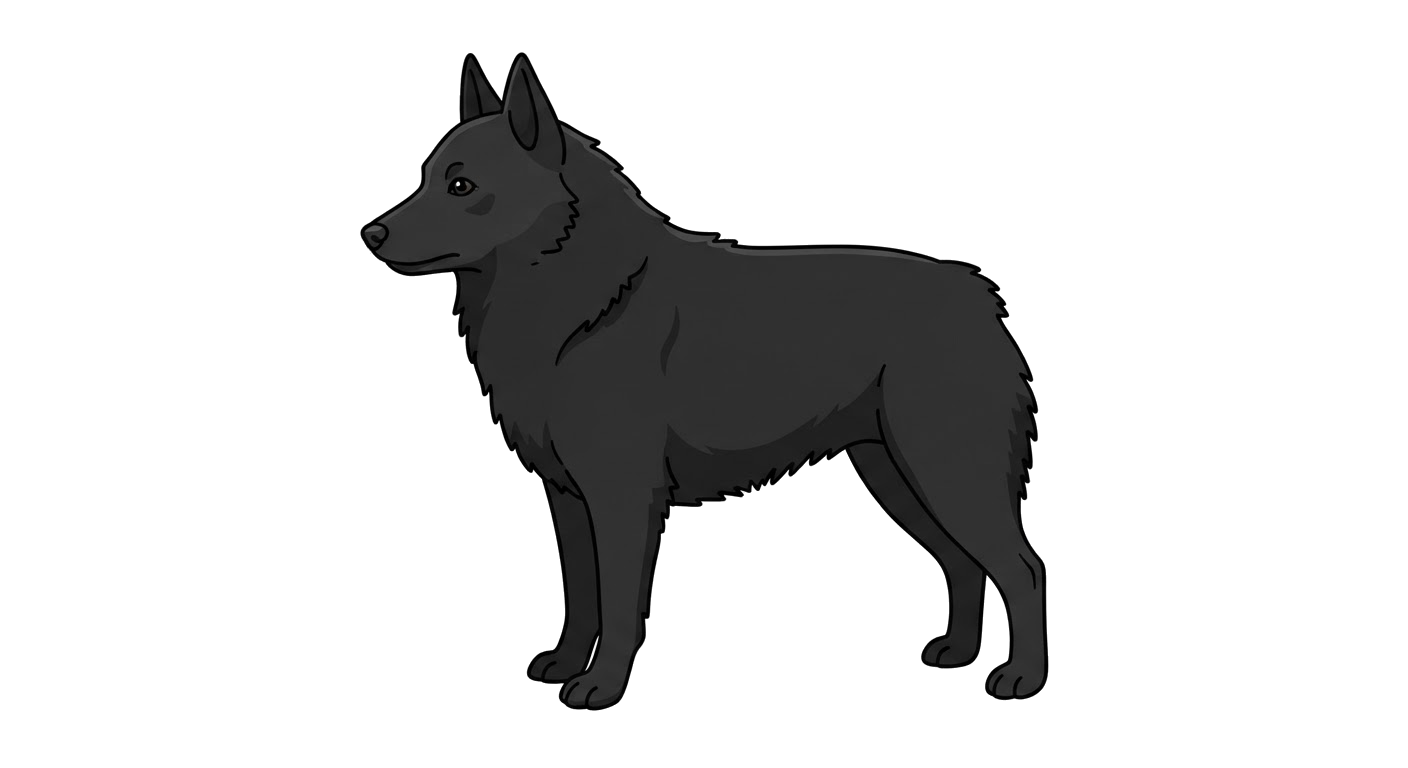
Point 1
Skull
The Schipperke's skull is judged on balance rather than size — proportionate to the body, with a clean cheek and a stop typical of the breed. Coarseness or an over-refined head are both faulted.
Colours & patterns
Recognised coats
Which coats the standard accepts — and which are simply popular.
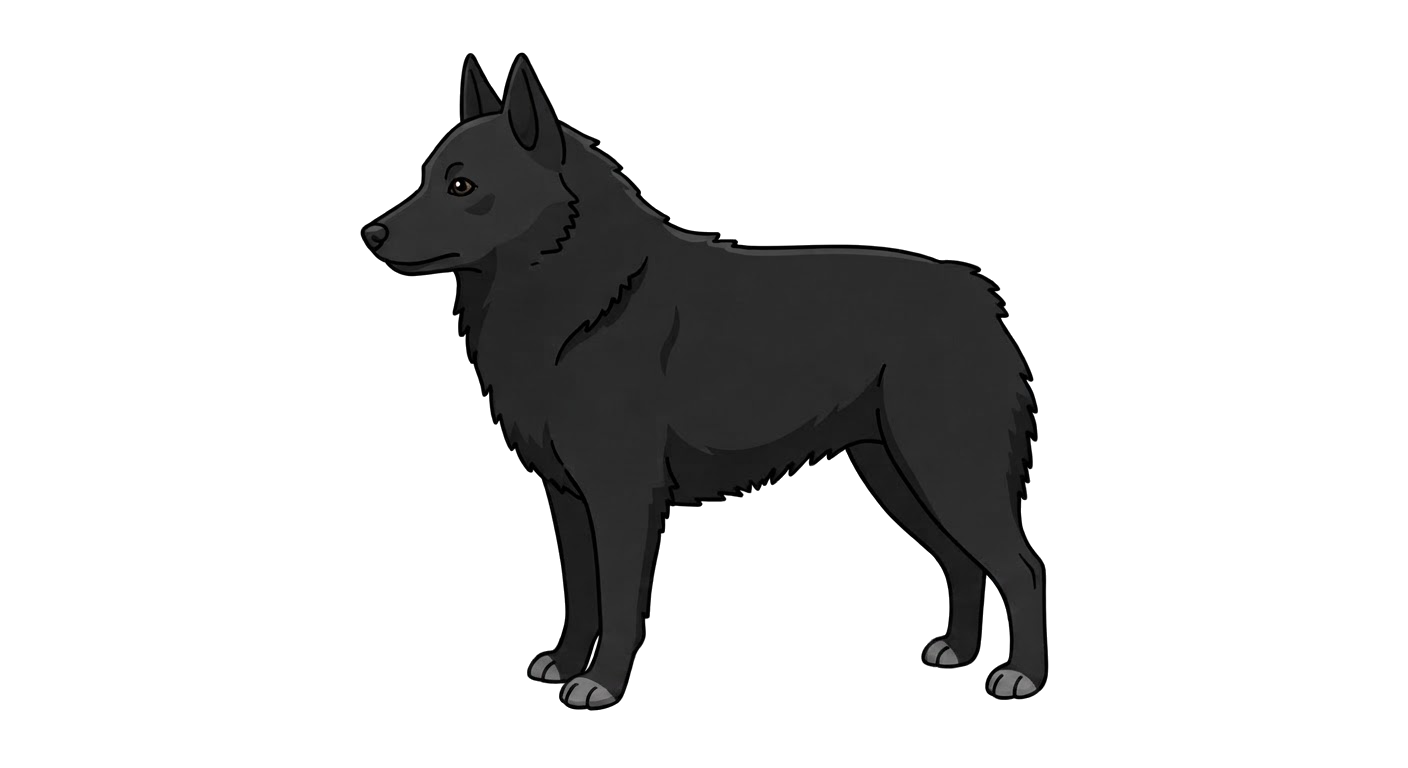
Black
Standard colour
The only colour recognised by the UK Kennel Club standard.
Outside the standard
Other colours
Dilute coats you will see advertised. They are the same breed, but no kennel club accepts them.
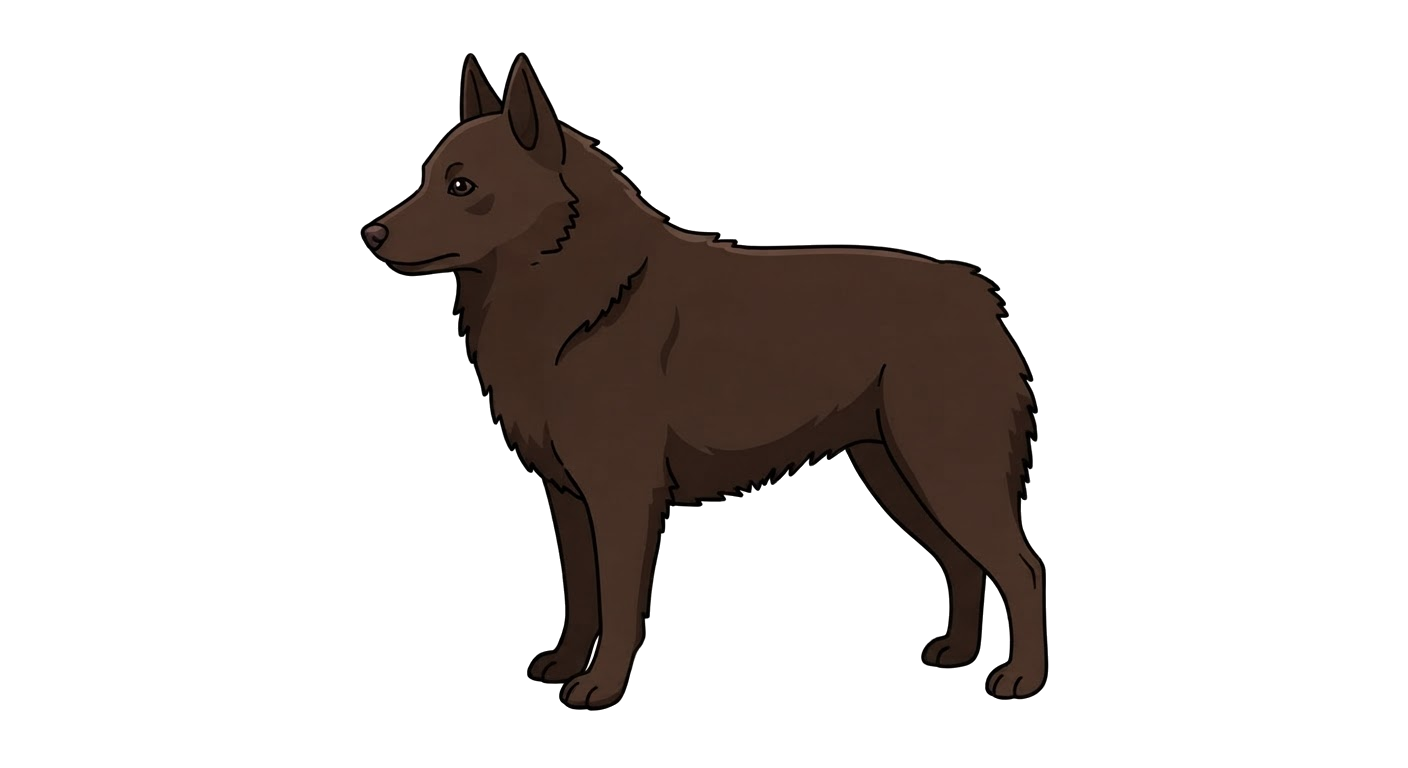
Chocolate
Not in the standard
Seen in some non-UK registries but not accepted here.
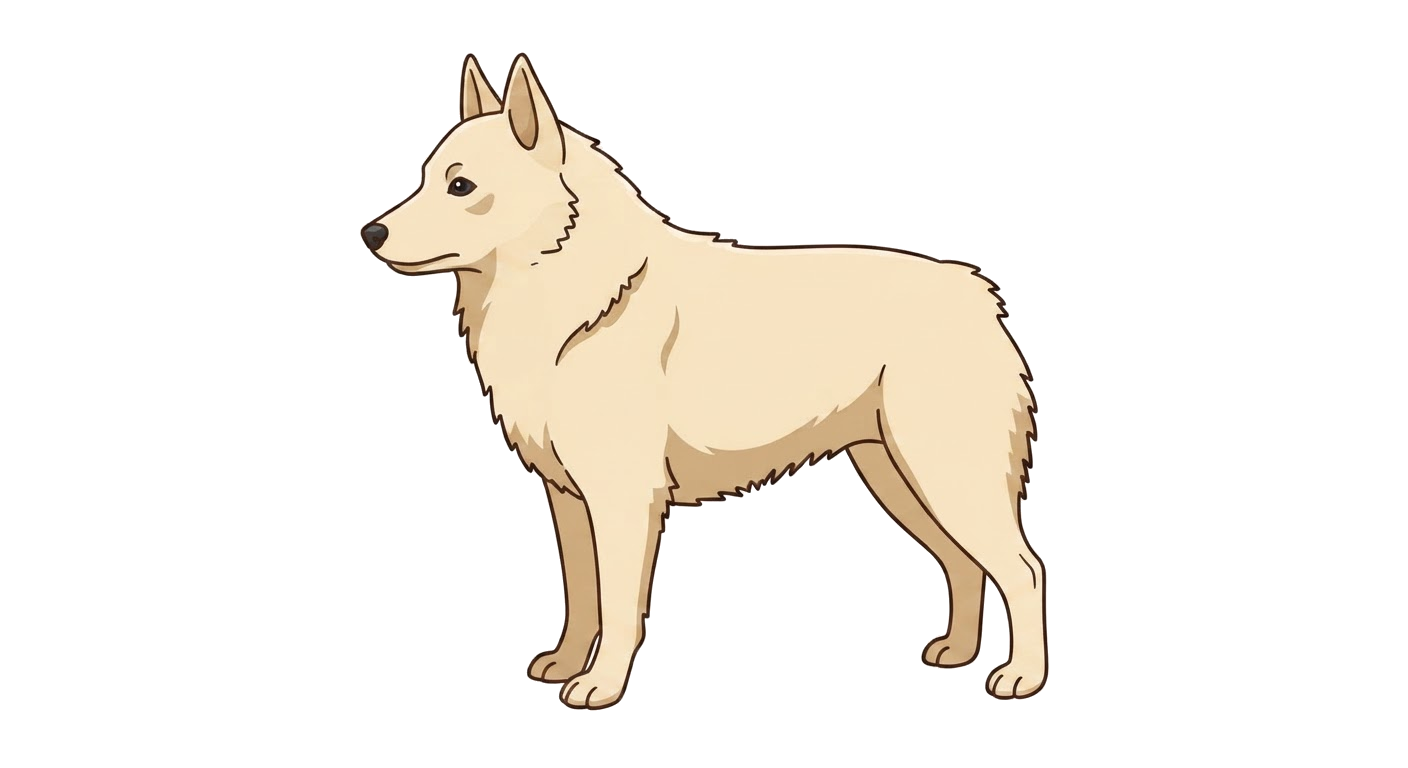
Cream
Not in the standard
Occasionally produced but well outside the breed standard.
Timeline
History & development
1600s
Guild dog of Flanders
Small black spitz-type dogs were kept by tradesmen's guilds in Belgium as vermin controllers and watchdogs.
1690
The Antwerp shoemakers' collars
A well-known story recounts shoemakers' guild collars being made for local Schipperkes, an early sign of the breed's popularity.
1888
First breed club
Belgian fanciers founded a club and wrote the first breed standard.
1904
UK Kennel Club recognition
The Schipperke was recognised in Britain in the early 20th century.
1950s onward
The breed today
Kennel club registrations settled into a steady pattern and the Schipperke moved from a working specialist to a family companion, with breed clubs in the UK and abroad now focused on health testing and keeping true type alive.
Reference
Breed standard summary
- body
- Short, thickset, broad chest.
- coat
- Abundant, dense, harsh, forming a distinct ruff and culottes.
- ears
- Small, triangular, erect, high set.
- eyes
- Dark brown, small, oval.
- gait
- Light, agile, proud carriage.
- head
- Foxy in type, tapering to the nose.
- size
- 23–33cm at the withers.
- tail
- Customarily very short or absent.
- colour
- Black. Colours outside this list are seen but are not accepted by the kennel clubs.
- temperament
- Typical of the breed: strongest in energy, independence, barking. Nervousness or aggression are serious faults in the show ring and in the home.
- general appearance
- Small, tailless, cobby dog, alert and full of self-importance.
Health
What to screen for
Green means little to worry about, amber means ask the breeder for test results, red means manage it actively.
Patellar luxation
Screen for it
Ask for a veterinary patella grading on breeding stock.
Progressive retinal atrophy
Screen for it
Request annual eye test certificates from the parents.
Hip dysplasia
Screen for it
Ask for hip scores where available, though less common than in larger breeds.
Mucopolysaccharidosis (MPS IIIB)
Watch closely
A DNA test exists; ask breeders to confirm both parents are clear or tested.
General information only — always speak to your vet about your own dog.
From real owners
Dogs like this
Schipperkes added by PawPoint members through their pet passports. Share yours to appear here.
Loading the wall…
Made for the Schipperke
The book, plus prints, hoodies and mugs using our own Schipperke illustration — and one everyday accessory that suits any dog.

The book
Pawpoint: The Complete Dog Breed Book
Every officially recognised breed plus the unofficial ones nobody else documents. 400+ pages, hardback, printed and shipped from the UK.
Own stock — shipped by us
Framed poster
Schipperke Framed Poster
Museum-weight print of our Schipperke illustration, framed or unframed.
Printed to order
Hoodie
Schipperke Hoodie
Heavyweight hoodie carrying the Schipperke illustration on the chest.
Printed to order
Mug
Schipperke Mug
Ceramic mug with the Schipperke illustration wrapped around it.
Printed to order
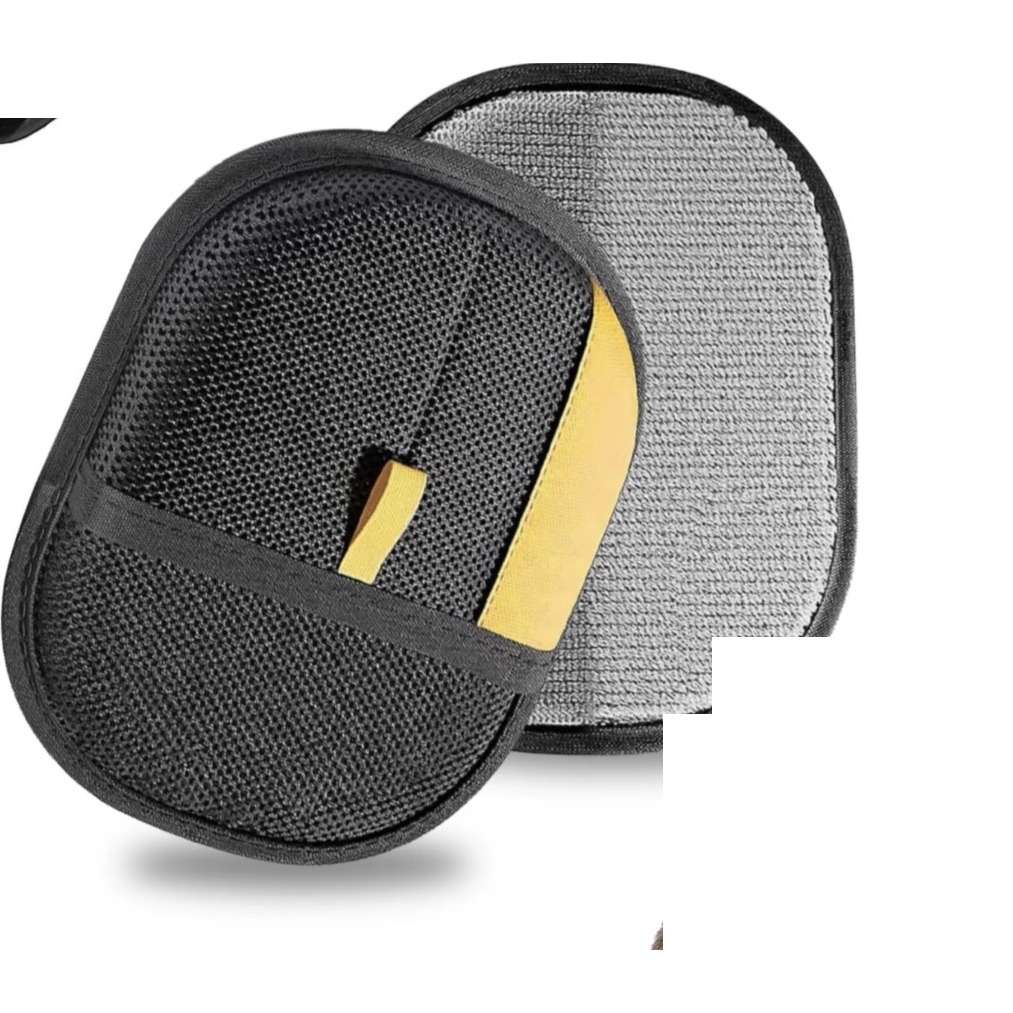
Accessory
Slicker & Deshedding Brush
Self-cleaning slicker head for coats of every length.
Fits any dog
Pawpoint on YouTube
Watch the full Schipperke video
Breed deep-dives, history and honest ownership talk. New film every week.
Watch now