
Schnauzer
SHNOW-tser
Germany· Bavaria and Württemberg
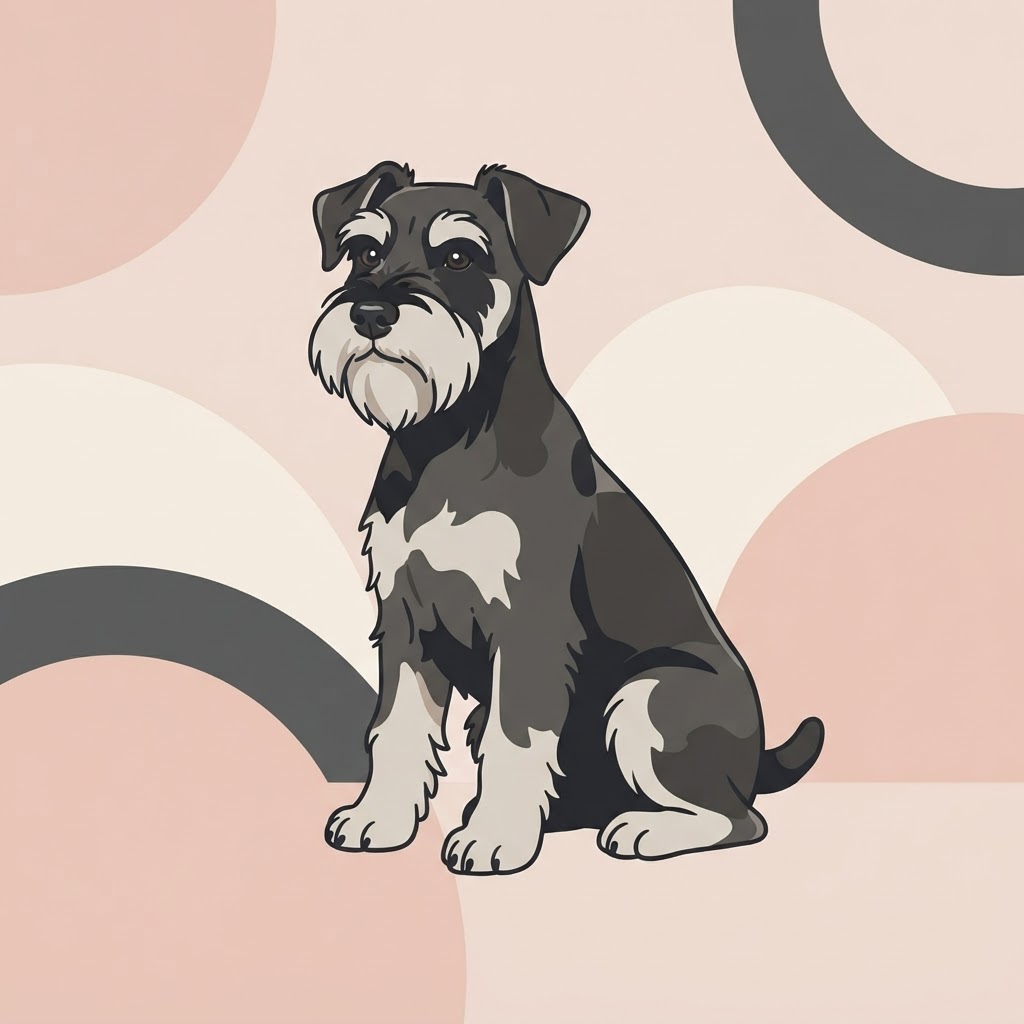
The Schnauzer, sometimes called the Standard Schnauzer to distinguish it from its Miniature and Giant relatives, is a wiry-coated German breed with a distinctive bearded muzzle and bushy eyebrows, originally an all-purpose farm and stable dog.
At a glance
Quick facts
Size
Medium
Exercise needs
60 minutes daily
Home size suited to
Small to medium home
Grooming frequency
Weekly brush, hand-strip a few times a year
Coat length
Wiry
Sheds
Yes, heavily when moulting
Lifespan
13–16 years
Town or country
Either, happy in town
Garden size needed
Small to medium
Where it comes from
Origins of the Schnauzer
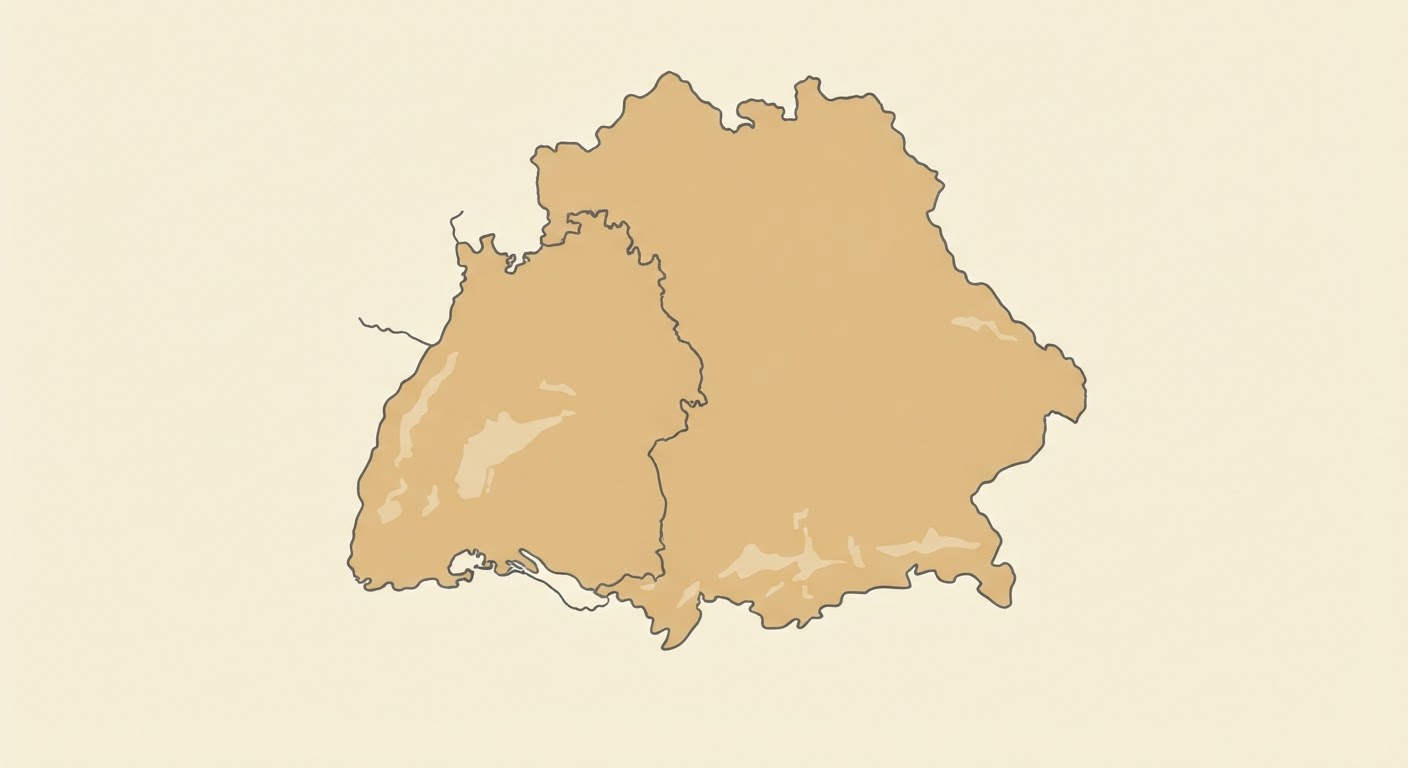
Working alongside farmers and coachmen in southern Germany, the Schnauzer's wiry coat and sturdy build suited long hours guarding stables and controlling vermin around working yards.
- Region
- Bavaria and Württemberg
- Climate it was bred for
- Temperate central European
- Original job
- Ratting, guarding stables and yards, herding
Living with one
Temperament & needs
Our own ratings, based on the breed standard and how these dogs behave in ordinary homes.
Friendliness
3/5
How openly the Schnauzer greets people it does not know.
Trainability
4/5
Intelligent and biddable with consistent, confident handling.
Energy
4/5
An active, sturdy dog that needs a proper daily walk and a job to do.
Barking
3/5
Alert and vocal enough to make a decent watchdog.
Grooming
4/5
Wiry coat needs regular hand-stripping or clipping, plus beard care after meals.
Suits a first-time owner
3/5
How forgiving the Schnauzer is for someone taking on their first dog.
Sociability
3/5
Loyal and affectionate at home, naturally watchful with strangers.
Independence
3/5
Capable of thinking for itself but keen to work with its owner.
Illustrated breed standard
The points of the breed
Hover or tap a numbered point to read what the standard asks for.
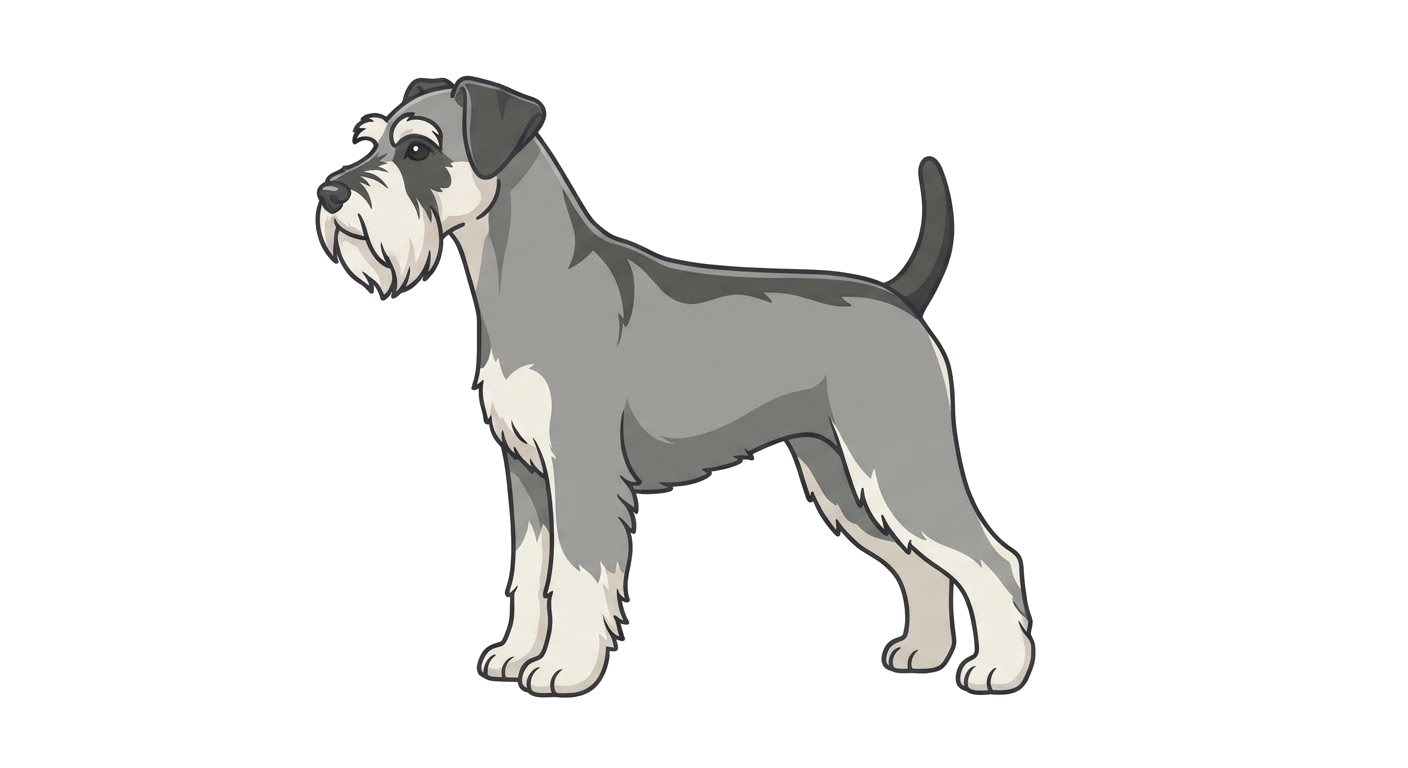
Point 1
Skull
The Schnauzer's skull is judged on balance rather than size — proportionate to the body, with a clean cheek and a stop typical of the breed. Coarseness or an over-refined head are both faulted.
Colours & patterns
Recognised coats
Which coats the standard accepts — and which are simply popular.
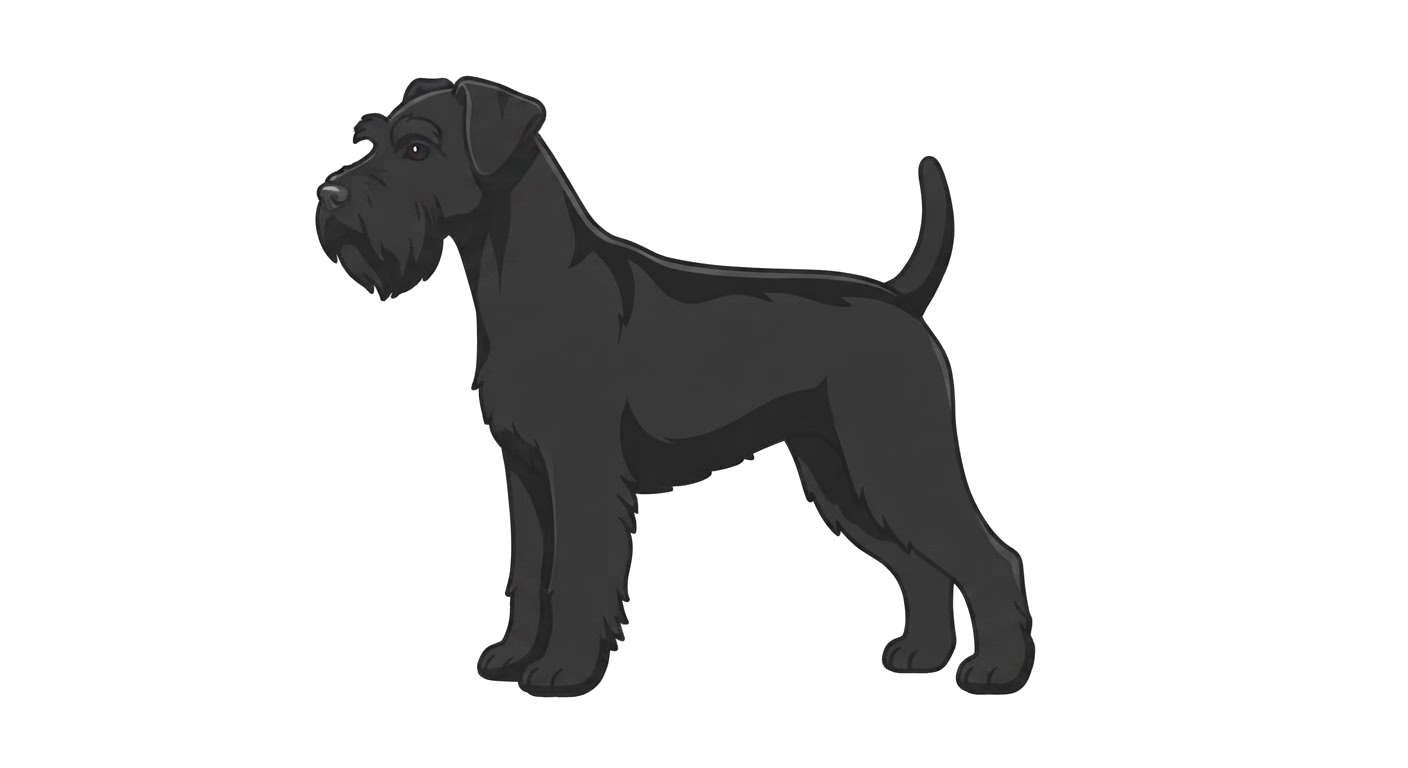
Solid Black
Standard colour
A dense, glossy black is one of the two standard colours.
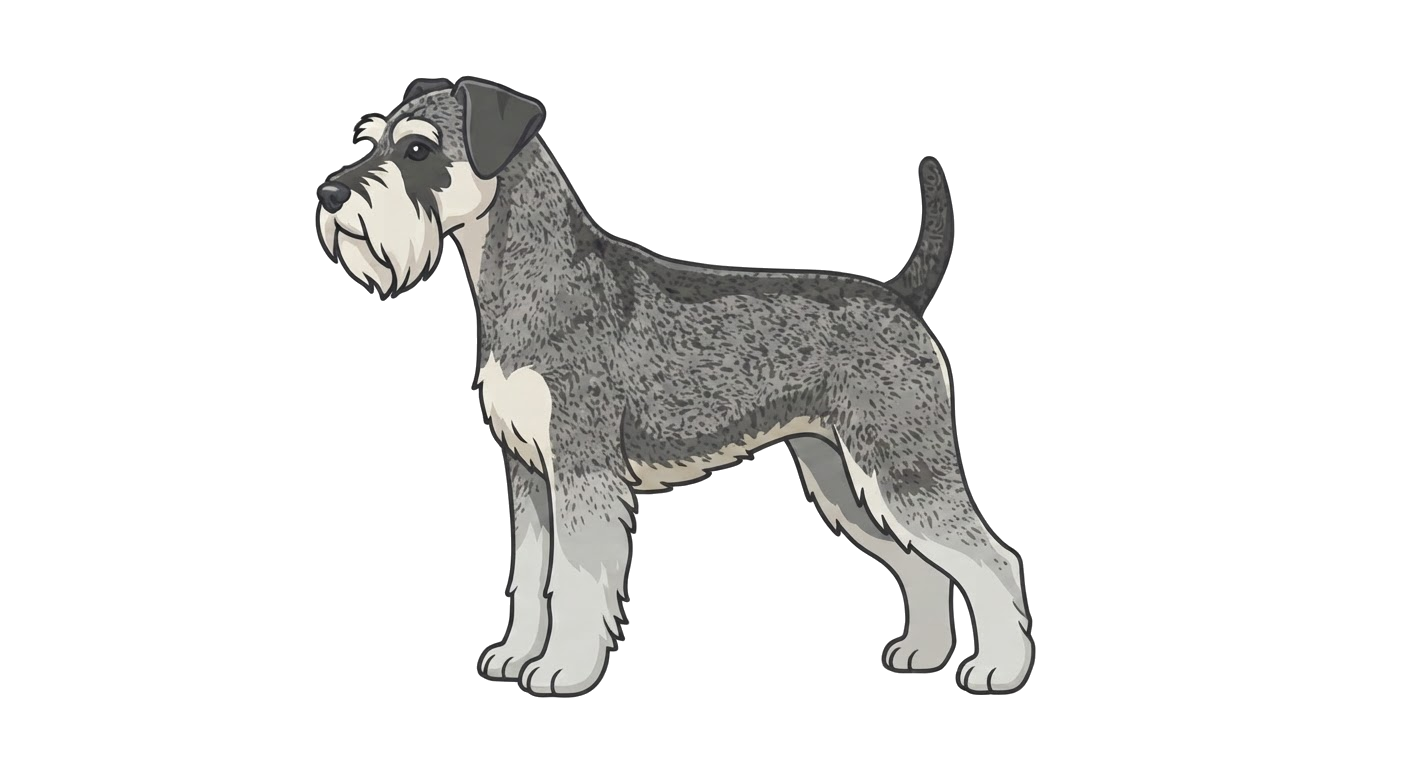
Pepper and Salt
Standard colour
A banded grey-and-black pattern typical of the breed.
Outside the standard
Other colours
Dilute coats you will see advertised. They are the same breed, but no kennel club accepts them.
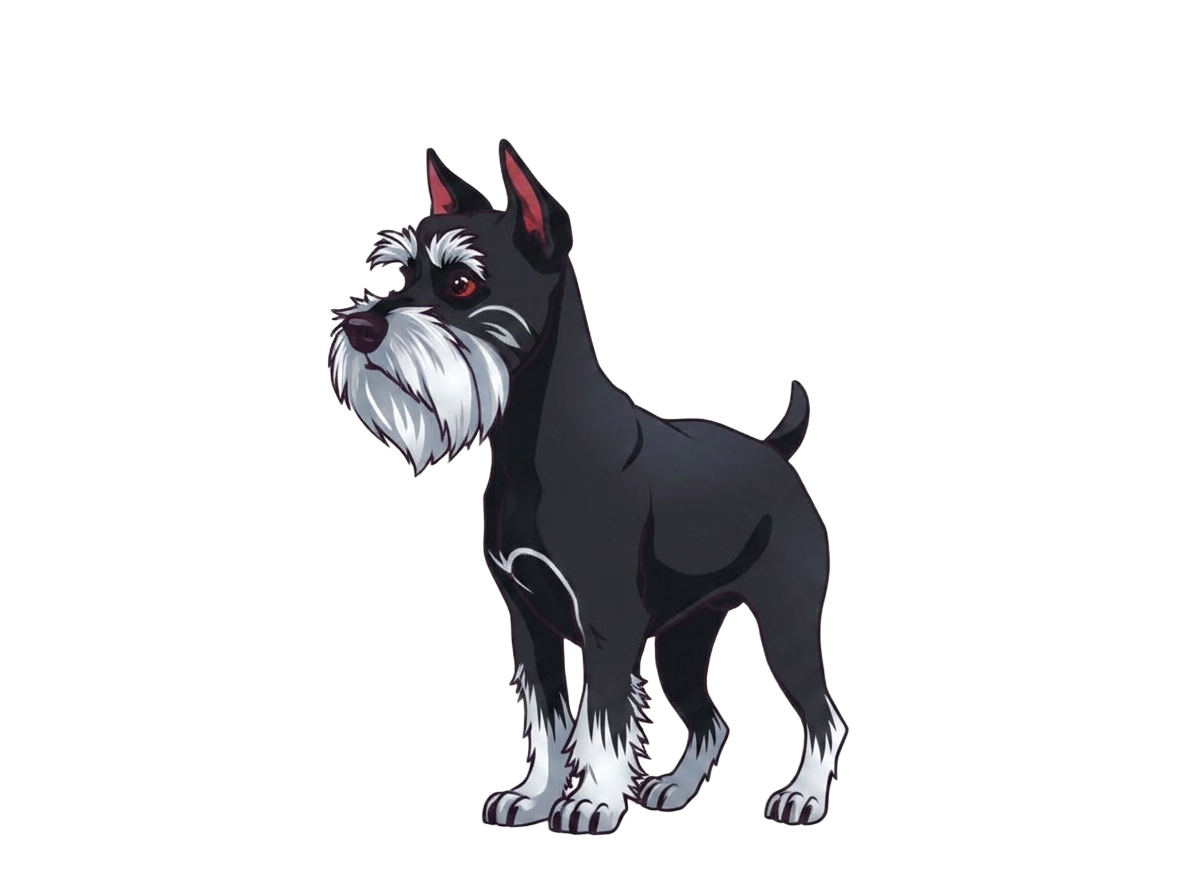
Black and Silver
Not in the standard
Seen in related Schnauzer varieties but not this breed's UK standard.
Timeline
History & development
1400s
Early depictions
Dogs resembling Schnauzers appear in German and Dutch art, kept as ratters and yard dogs.
1879
First show entry
A Schnauzer named Schnauzer won a class at a Hanover dog show, later lending the breed its name.
1907
Breed club founded
German fanciers established the Pinscher-Schnauzer Klub to standardise the breed.
1926
Arrival in Britain
The breed began to be imported and shown in the UK in the interwar years.
1950s onward
The breed today
Kennel club registrations settled into a steady pattern and the Schnauzer moved from a working specialist to a family companion, with breed clubs in the UK and abroad now focused on health testing and keeping true type alive.
Reference
Breed standard summary
- body
- Square in proportion, deep chest, strong loin.
- coat
- Hard, wiry topcoat with dense undercoat.
- ears
- Small, V-shaped, folded forward.
- eyes
- Dark, oval, medium-sized.
- gait
- Balanced, ground-covering trot.
- head
- Strong, elongated, with bushy eyebrows and beard.
- size
- 45–50cm at the withers.
- tail
- Traditionally carried high, moderate length.
- colour
- Solid Black, Pepper and Salt. Colours outside this list are seen but are not accepted by the kennel clubs.
- temperament
- Typical of the breed: strongest in energy, trainability, grooming. Nervousness or aggression are serious faults in the show ring and in the home.
- general appearance
- Robust, sturdily built, square-proportioned dog with a bearded muzzle.
Health
What to screen for
Green means little to worry about, amber means ask the breeder for test results, red means manage it actively.
Hip dysplasia
Screen for it
Ask for hip scores under the official scheme before buying.
Von Willebrand's disease
Watch closely
Request DNA test results, as this clotting disorder is known in the breed.
Eye disorders
Screen for it
Ask for annual eye certification from breeding stock.
Pancreatitis
Watch closely
Avoid fatty scraps and table food, as the breed can be prone to flare-ups.
General information only — always speak to your vet about your own dog.
From real owners
Dogs like this
Schnauzers added by PawPoint members through their pet passports. Share yours to appear here.
Loading the wall…
Made for the Schnauzer
The book, plus prints, hoodies and mugs using our own Schnauzer illustration — and one everyday accessory that suits any dog.

The book
Pawpoint: The Complete Dog Breed Book
Every officially recognised breed plus the unofficial ones nobody else documents. 400+ pages, hardback, printed and shipped from the UK.
Own stock — shipped by us
Framed poster
Schnauzer Framed Poster
Museum-weight print of our Schnauzer illustration, framed or unframed.
Printed to order
Hoodie
Schnauzer Hoodie
Heavyweight hoodie carrying the Schnauzer illustration on the chest.
Printed to order
Mug
Schnauzer Mug
Ceramic mug with the Schnauzer illustration wrapped around it.
Printed to order
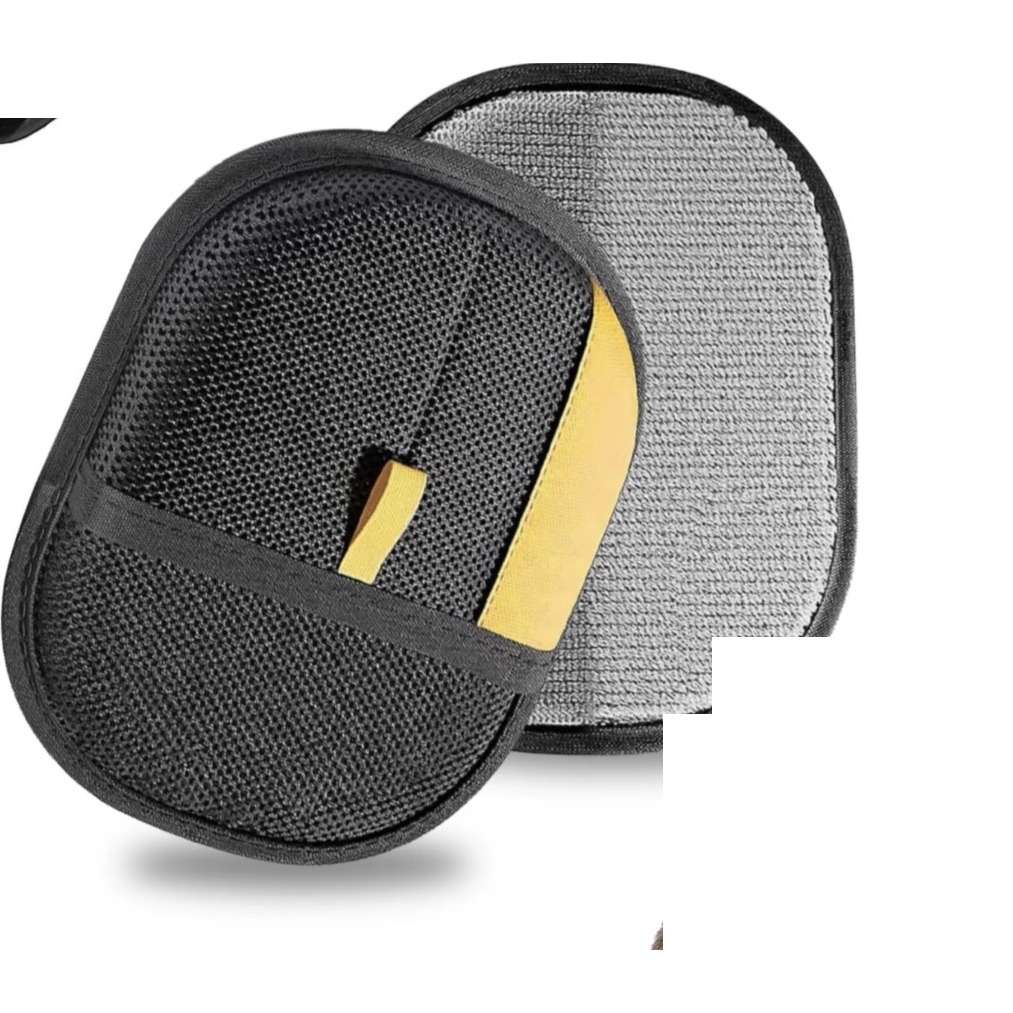
Accessory
Slicker & Deshedding Brush
Self-cleaning slicker head for coats of every length.
Fits any dog
Pawpoint on YouTube
Watch the full Schnauzer video
Breed deep-dives, history and honest ownership talk. New film every week.
Watch now